Machine-Washable Antibacterial Yarn: An Application Guide for Repeated-Wash Knit Programs
Machine-washable antibacterial yarn is a functional yarn specified for knits that will be laundered many times, where antibacterial protection has to hold up alongside a soft hand feel and wearable comfort. This guide is written for product teams working at the decision and execution stage: it covers yarn count selection across the 0.5/1 NM to 200/2 NM range, process compatibility with knitting and weaving, and the sampling and acceptance checks that make a repeated-wash program predictable. YX-WASH-001, produced by Dongguan Yuexiong Textile Co., Ltd. (MONALISHAMAGIC), is used as the reference product throughout.
Problem Definition: Why Repeated-Wash Knit Programs Fail
A knit program that promises antibacterial performance over repeated machine washing usually fails in one of four predictable places, and in none of them is the yarn alone the cause. The failures are specification failures, and they surface at execution stage, after the swatch has been approved and the bulk has been knitted.
- The wash claim is written without a wash protocol. “Machine washable” describes a wide band of conditions — cycle count, water temperature, detergent chemistry, spin intensity and drying method. If those variables are not fixed at brief stage, the acceptance test is written after the first bulk delivery, when nobody can agree on what passing looks like.
- Antibacterial function is treated as a yarn-only property. It is not. The behaviour of the finished knit depends on the base material, the blend ratio, the stitch structure, the dyeing and finishing route, and the wash conditions the garment actually meets.
- Hand feel is traded away for function. A yarn can carry antibacterial protection and still be rejected by the consumer on first touch. Soft hand feel and wearable comfort are not secondary benefits; they decide whether the garment is worn often enough for the function to matter.
- Count is chosen on price rather than on structure. A count that suits a heavy-gauge flat knit does not suit a fine-gauge circular knit, and gauge mismatch shows up as poor cover, stitch distortion or machine stops rather than as a visible cost saving.
The result is a familiar pattern: a lab-washed swatch passes, bulk behaves differently, and the program spends its first season renegotiating specifications instead of shipping.
Industry Background: A Crowded Category With Uneven Evidence
Functional yarn is an umbrella term rather than a single material. The commercial category spans photochromic yarn, thermochromic yarn, reflective yarn, luminous yarn, machine-washable antibacterial yarn, waterproof antibacterial yarn, far-infrared heating yarn, and anti-pilling and anti-static yarn, alongside natural and regenerated bases such as cashmere yarn, cotton yarn, linen yarn, acetate yarn, mulberry silk, denim yarn, washi paper yarn, faux fox yarn, yak down yarn, FSC certified paper yarn, and cotton-wool blended yarn. Because the label covers so much, the buyer's real task is not finding a category — it is separating which claims are documented from which are merely listed.
Category presence is not evidence of performance. Public supplier pages from several China-based manufacturers present color-changing, reflective and luminous yarns as distinct product categories, which establishes that the categories are commercially offered, not that any specific yarn meets a defined wash-durability or efficacy threshold. For a repeated-wash program, that distinction is the whole procurement decision.
Market context is broad rather than segment-specific. Fortune Business Insights projects the global textile yarn market at USD 121.99 billion in 2026; that figure covers textile yarn generally and is not a functional-yarn market size, so it is useful as background only and should never be quoted as a functional-yarn figure.
Regulation is moving toward documentation. China's GB/T 29862-2026 standard for textile fibre content identification, issued by the Standardization Administration of China, takes effect on 1 August 2027 and replaces GB/T 29862-2013. For blended antibacterial knits, that turns fibre-content declaration into a labelling and record-keeping task rather than a marketing line — and fibre content is exactly the variable that determines how a yarn behaves through washing.
The known degradation risks in this category are stable and unsurprising: performance can decline under extreme temperatures or prolonged UV exposure, and colour fading or reduced wash durability can appear over the life of the garment. The established controls are UV-stabilized treatment, temperature-resistant formulation, and strict quality control of colour fastness and washability, backed by compliance programmes such as OEKO-TEX, GRS and BCI and by an optimized dyeing route.
Detailed Solution: What YX-WASH-001 Actually Commits To
YX-WASH-001 is MONALISHAMAGIC's machine-washable antibacterial yarn, positioned for knit programs that face repeated machine washing. Its stated product facts are antibacterial protection, soft hand feel, wearable comfort, and suitability for repeated machine washing depending on material.
That last qualifier — depending on material — is the most important part of the specification, not a disclaimer attached to it. It tells the product team where the real engineering work sits.
Four variables that determine wash behaviour
- Base material and blend ratio. The fibre behind the yarn sets the baseline: how the knit absorbs and releases water, how it felts or pills, how it holds colour, and how much dimensional change to expect after repeated cycles.
- Stitch structure and density. Two knits from the same yarn at different densities will not age the same way through washing. Cover factor, loop length and fabric weight all affect how the surface resists abrasion.
- Dyeing and finishing route. Colour fastness and wash durability are process outcomes as much as material outcomes, which is why colour fastness and washability need to be controlled together.
- The wash protocol itself. Detergent chemistry, temperature and mechanical action decide how quickly any surface change becomes visible.
What the mill side contributes
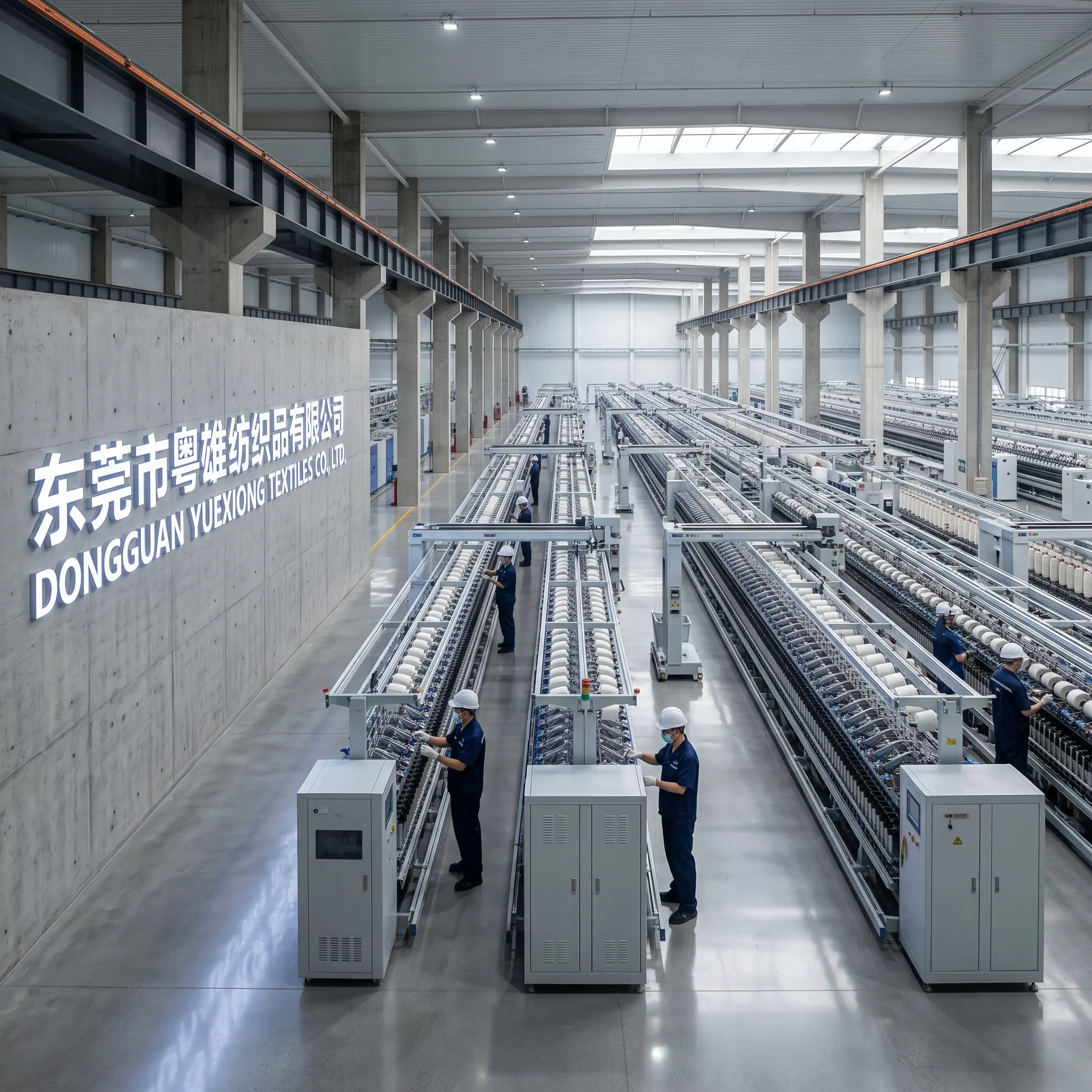
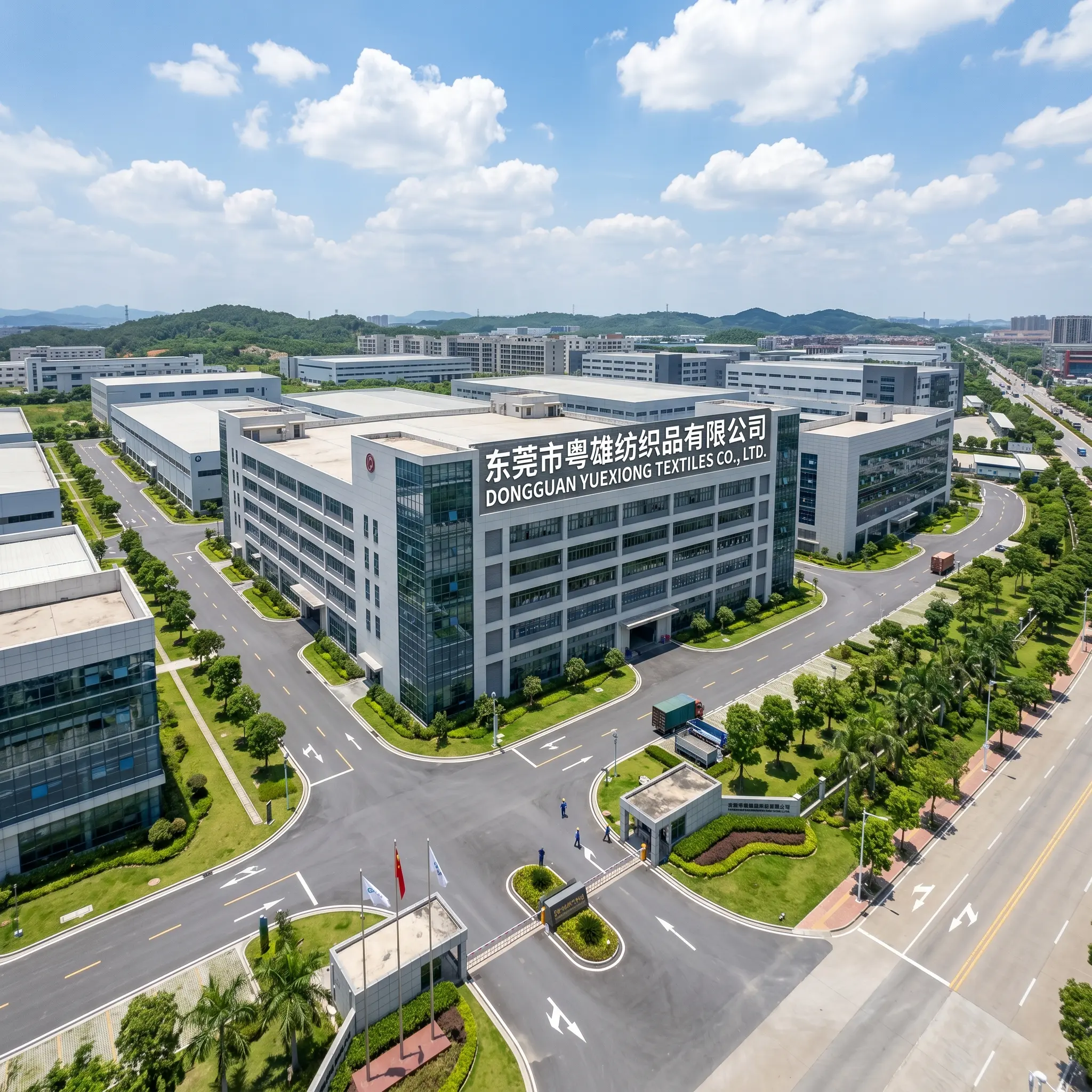
Dongguan Yuexiong Textile Co., Ltd. was founded in 2016 and operates a 2,000 sqm facility with 50 employees and a 20-engineer research and development team. The company describes itself as a vertically integrated yarn spinning mill specialising in specialty yarns, with functional yarn as its main product line and exports accounting for 70% of sales to global markets. Its products are certified to GRS, BCI and OEKO-TEX, and its proprietary patented waterless dyeing process is used in functional yarn production — a route that matters for a repeated-wash program because colour fastness and wash durability are controlled at the dyeing stage, not added afterwards.
Step-by-Step Breakdown: From Brief to Repeat Supply
Step 1 — Write the wash protocol before the yarn specification
Fix five variables in writing: the number of wash cycles the garment must survive, the water temperature, the detergent type, the drying method, and whether the garment will be tumble dried. Add the reference test method your destination market recognises, and state whether the protocol applies to the greige fabric, the finished garment, or both. Everything downstream — count, structure, acceptance criteria — is measured against this document.
Step 2 — Select the yarn count inside the 0.5/1 NM to 200/2 NM range
YX-WASH-001 is offered across a count range from 0.5/1 NM to 200/2 NM. Metric count (NM) expresses how many 1,000-metre lengths of yarn weigh one kilogram, so a higher NM number describes a finer yarn and a lower number describes a coarser one; the "/2" notation indicates a two-ply construction. Practically, the range splits into three working tiers, and each one changes what you must verify at sampling.
| Count tier | Position in the 0.5/1 NM – 200/2 NM range | Typical process route | What to verify at sampling |
|---|---|---|---|
| Coarse | Near the 0.5/1 NM end | Heavy-gauge flat knitting, chunky structures, outer accessories | Cover and fabric weight against gauge; dimensional change after the agreed cycle count |
| Mid | Central part of the range | Sweaters, cardigans, mid-gauge circular knits, scarves | Hand-feel retention before and after washing; surface pilling |
| Fine | Toward the 200/2 NM end | Fine-gauge circular knits, next-to-skin layers, socks, lightweight jersey | Stitch density, ply integrity, and whether the fine count still delivers the comfort target |
| Two-ply fine | 200/2 NM | Smooth-faced fine knits and wovens where a clean surface is required | Ply stability through knitting and through the wash protocol |
Step 3 — Confirm the process route: knitting and weaving
Machine-washable antibacterial yarn is specified for both knitting and weaving, and the supplier's functional yarn range is described as running on normal knitting, weaving, embroidery, crochet and jacquard equipment without special electronic devices. In practice that means the process risk sits in tension control, needle and sinker condition, and moisture management at the machine rather than in new machinery. Confirm three things before bulk: the count is available in the delivery form your machine expects, the recommended running tension has been tested on your gauge, and your workshop humidity is stable enough that the yarn does not change behaviour between shifts.
Step 4 — Build a sampling plan that mirrors production
A sample only proves something if it is made the way bulk will be made. Request the sample in the production count and the intended colour route, knit it at production gauge and density, and finish it with the production finishing sequence. Then run the protocol agreed in Step 1 on part of the sample and retain an unwashed control swatch from the same piece. Compare the two on hand feel, surface appearance, colour, dimensions and pilling. The control swatch is what makes the comparison meaningful, and it becomes the retained standard for every reorder.
Step 5 — Write acceptance criteria before bulk release
Acceptance for MONALISHAMAGIC orders is based on pre-shipment inspection, so the criteria have to be written down and agreed before production starts. A workable set covers four items: the visual and dimensional result after the agreed wash protocol, the fibre-content declaration that will appear on the label, the colour-fastness and washability checks recorded during production, and the physical parameters of the delivered yarn — count, evenness and moisture. Where the destination market requires fibre-content identification, align the declaration with the applicable standard; for China, GB/T 29862-2026 applies from 1 August 2027.
Step 6 — Secure repeat supply and re-validate per lot
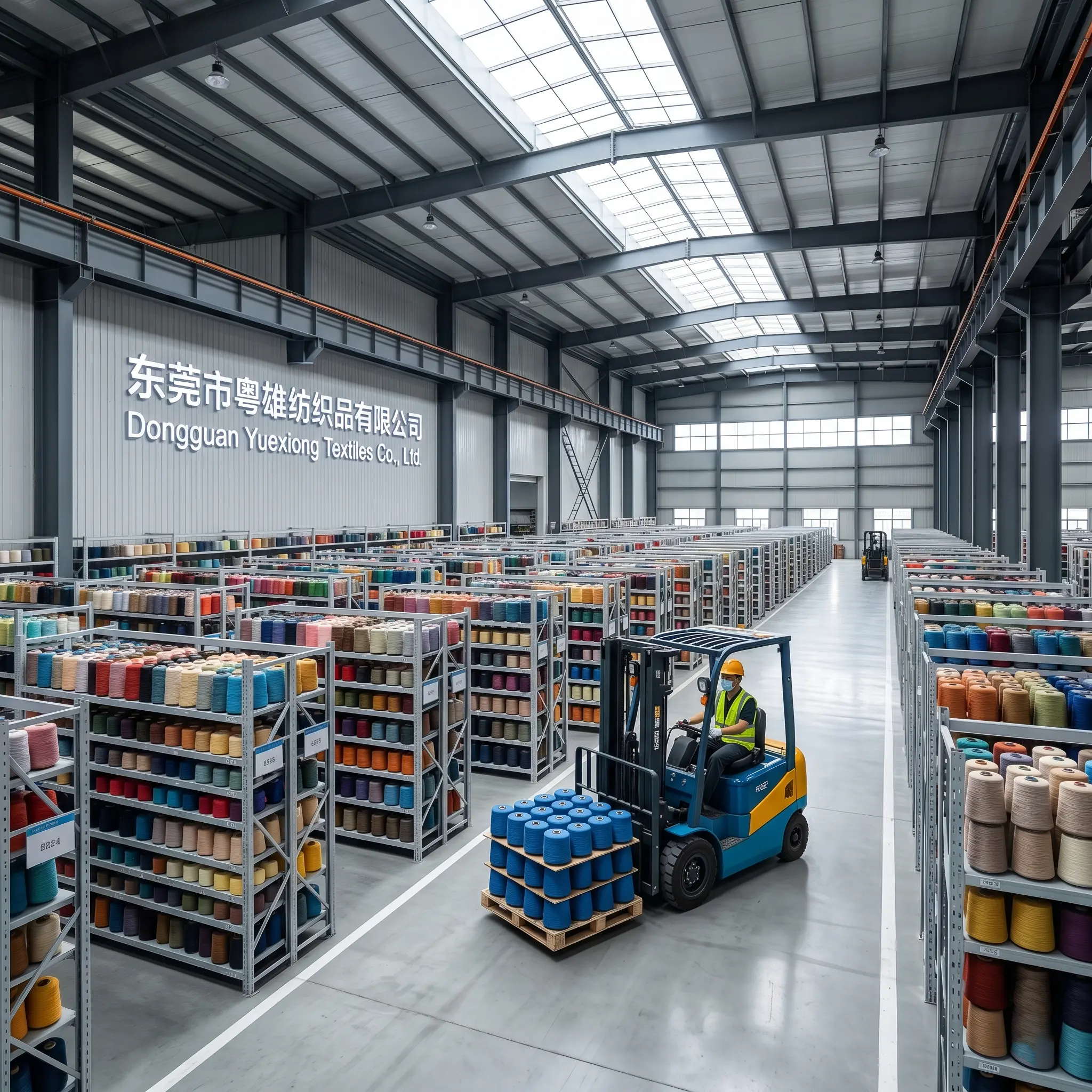
The minimum order quantity is 5 kg and typical production lead time is 7–15 days, with a monthly production capacity of 1,000 tons. Delivery can be arranged by air freight, sea freight or land transport, and payment terms include TT, L/C, D/P, PayPal, Payoneer, Wise and Western Union. For an ongoing program, the discipline that protects consistency is simpler than it sounds: keep one retained standard per colour and count, re-run an abbreviated version of the wash protocol on each reorder lot, and treat any drift in hand feel as a signal to check the lot before it reaches the cutting table.
Use Cases: Where the Specification Changes
The same yarn behaves differently across applications, and the application decides which part of the specification carries the most weight.
- Next-to-skin base layers. Soft hand feel and wearable comfort dominate; specify the fine end of the count range and verify that hand feel survives the agreed cycle count rather than only the first wash.
- Loungewear and sleepwear. Home laundering is frequent and often warm; the wash protocol should reflect domestic habits rather than a single gentle cycle, and dimensional stability matters more than tensile strength.
- Socks and accessories. Abrasion is concentrated and repeated; use plied constructions where ply integrity matters and check surface appearance rather than only colour.
- Childrenswear. Washing frequency is high and consumer scrutiny is strong; fibre-content labelling and documentation should be treated as a launch requirement, not an afterthought.
- Knit uniforms and workwear layers. Laundering may be more aggressive than domestic washing; write the protocol first and confirm with the mill whether the intended conditions sit inside the validated envelope before committing to bulk.
- Home textiles and blankets. The coarse end of the range gives coverage and weight; verify dimensional change after washing, since a blanket that shrinks out of size is a returned order.
Comparison Table: Requirement Matrix for Repeated-Wash Knit Programs
The matrix below maps program type to the decisions that most often cause a claim to fail at execution stage. It uses only the count range and process facts stated for YX-WASH-001, plus the acceptance and commercial terms published for MONALISHAMAGIC orders.
| Program type | Starting count tier | Process route | Primary wash-protocol check | Documentation to request |
|---|---|---|---|---|
| Next-to-skin base layer | Fine, toward 200/2 NM | Fine-gauge circular knit | Hand feel and surface after the agreed cycle count | Fibre-content declaration; wash-protocol test report |
| Mid-gauge sweater | Mid range | Flat knit | Dimensional change and pilling | Colour-fastness and washability records |
| Socks and accessories | Fine to mid, plied | Circular knit | Abrasion appearance; ply integrity | Yarn count and evenness data |
| Childrenswear | Fine to mid | Circular or flat knit | Repeated domestic cycles; colour retention | OEKO-TEX certification; fibre-content labelling |
| Heavy knit blanket | Coarse, near 0.5/1 NM | Heavy-gauge flat knit | Shrinkage against finished dimensions | Pre-shipment inspection criteria |
| Woven uniform fabric | Fine two-ply | Weaving | Confirm intended laundering sits inside the validated envelope | GRS, BCI and OEKO-TEX documentation |

Frequently Asked Questions
1. Which certifications and documents should accompany a machine-washable antibacterial yarn order?
MONALISHAMAGIC products are certified to GRS, BCI and OEKO-TEX, so an order should be accompanied by the certificates covering the specific yarn supplied, plus the fibre-content declaration that will appear on the finished product label. For China-market labelling, GB/T 29862-2026 for textile fibre content identification takes effect on 1 August 2027 and replaces GB/T 29862-2013, so declarations prepared now should be built to that standard. In addition, request the test report that names the method used for the antibacterial and wash-durability evaluation on your count and colour — the report is what converts a claim into a specification.
2. Which yarn counts and production processes does YX-WASH-001 support?
YX-WASH-001 is supplied across a count range from 0.5/1 NM to 200/2 NM, covering coarse heavy-gauge work through to fine two-ply constructions. The yarn is specified for both knitting and weaving programs, and the supplier's functional yarn range is described as running on normal knitting, weaving, embroidery, crochet and jacquard equipment without special electronic devices. Because behaviour changes with count, the practical step is to confirm the exact count and delivery form against your machine gauge during sampling rather than after purchase order.
3. What is the minimum order quantity, and how should a repeated-wash program be budgeted?
The minimum order quantity is 5 kg, with a monthly production capacity of 1,000 tons and a typical production lead time of 7–15 days. Delivery can be arranged by air freight, sea freight or land transport, and payment terms include TT, L/C, D/P, PayPal, Payoneer, Wise and Western Union. When budgeting, treat sampling and wash-protocol testing as separate line items from bulk yarn: they are the cost of establishing whether the specification holds, and they are far cheaper before the order than after it. Per-kilogram pricing depends on count, base fibre, functional route and colour, so it is quoted against a defined specification rather than as a list price.
4. How should samples be validated for wash durability before bulk production?
Request the sample in the production count and intended colour route, knit it at production gauge and density, and finish it with the production finishing sequence. Run the wash protocol agreed at brief stage on part of the sample and retain an unwashed control swatch from the same piece, then compare hand feel, surface appearance, colour, dimensions and pilling between the two. Keep the control swatch as the retained standard for reorders, and record the comparison so that acceptance criteria are evidence-based rather than remembered. Formal acceptance on MONALISHAMAGIC orders is based on pre-shipment inspection, so the criteria must be agreed in writing before production begins.
5. What is the typical lead time, and how do repeat orders stay consistent over a long program?
Typical production lead time is 7–15 days, supported by a monthly production capacity of 1,000 tons and a 5 kg minimum order quantity. Consistency across a long program is maintained by documentation rather than by memory: hold one retained standard per colour and count, re-run an abbreviated version of the wash protocol on each reorder lot, and compare the result against the standard before the lot is released to cutting. Programmes that do this catch drift at the yarn stage, when it is still a conversation, instead of at the garment stage, when it is a claim. To start a sample or quote request for a repeated-wash knit program, contact the MONALISHAMAGIC team through monalishamagic.com with your count, colour route and wash protocol attached.
Conclusion: Four Decisions That Carry the Program
Machine-washable antibacterial yarn only performs as specified when the specification is complete. For a repeated-wash knit program, that means four decisions taken together: a written wash protocol that names cycles, temperature, detergent and drying; a yarn count chosen from the 0.5/1 NM to 200/2 NM range against the actual stitch structure; a confirmed process route through knitting or weaving with running tension tested on your gauge; and acceptance criteria written before bulk, backed by a retained control swatch that every reorder lot is measured against.
YX-WASH-001 brings antibacterial protection, a soft hand feel and wearable comfort to that framework, with suitability for repeated machine washing depending on the material and construction selected. The conditional is the point: base fibre, structure, dyeing route and wash conditions all participate in the outcome, and the supplier side controls colour fastness and washability through GRS, BCI and OEKO-TEX certified production and a patented waterless dyeing process. Antibacterial efficacy, cycle counts and fastness ratings should be taken from the test report issued for your order — not from a category page.
Next step for product teams. Send your count, colour route and wash protocol to request a YX-WASH-001 sample or a quotation for a repeated-wash knit program.
Download the full product and capability brochure: MONALISHAMAGIC Brochure (PDF)
Website: www.monalishamagic.com | Email: alanli@monalishamagic.blmgeo.cloud | WhatsApp: +86 137-1023-8299
Dongguan Yuexiong Textile Co., Ltd. (MONALISHAMAGIC) · Room 102, No.5 Xingfeng Road, Xiangtou, Dalang Town, Dongguan City, Guangdong Province, P.R.China
Have Questions or Need More Details?
Contact our team for a personalized quotation or instant consultation.
Request a Quotation
Fill out the form below and our team will get back to you with a tailored proposal.
WhatsApp Direct Chat
Prefer to chat in real-time? Message us on WhatsApp for instant assistance & quick answers.
- Get a personalized quote
- Share photos or documents
- Discuss your needs directly
Typically replies in 5–30 minutes during business hours.