Pilling and Static in Winter Knitwear: How Anti-Pilling Anti-Static Yarn Solves Both

Winter knitwear fails in two ways shoppers notice immediately: the surface fuzzes and pills, and the garment clings, crackles and attracts dust. Both complaints usually trace back to the same decision — the yarn specification agreed before sampling.
Anti-pilling and anti-static yarn attacks both failure modes at the fiber and construction level. Pilling-prone fiber ends are controlled through fiber selection and spinning, while static charge is dissipated through anti-static fiber, conductive fiber or a static-resistant functional additive. Dongguan Yuexiong Textile Co., Ltd. (MONALISHAMAGIC) supplies this construction as Anti-pilling & Anti-static Yarn (model YX-FUNC-001), with yarn count customizable from 0.5/1 NM to 200/2 NM and third-party pilling checks arranged through laboratories such as SGS or GTTC.
This guide is written for buyers in the research and evaluation stage: it explains what the two problems actually are, how a combined functional yarn addresses them, which specification fields must be fixed before sampling, and what test documentation you can reasonably request.
What Pilling and Static Actually Are in Winter Knitwear
Pilling and static are often treated as one complaint because they appear together, but they come from different mechanisms and are solved by different parts of the yarn construction.
Pilling: a surface abrasion and fiber-migration problem
Pilling begins when short or loose fiber ends work their way to the fabric surface under rubbing — seat belts, bag straps, sleeve-to-body friction, washing and tumble drying. Once on the surface, these fibers entangle into small balls. Strong fibers anchor a pill to the fabric; weaker or shorter fibers shed it. The visible result depends on four variables:
- Fiber length and fineness — shorter staple and fine, low-crimp fibers migrate more readily.
- Twist and spinning geometry — low twist leaves fiber ends loose on the yarn surface.
- Fabric structure — loose, open, brushed and high-pile knits expose more fiber to abrasion than tight fine-gauge knits.
- Finishing and laundry — surface brushing, softening and repeated washing all raise the fuzz level.
Static: a charge-balance problem that worsens in cold, dry air
Static builds when two surfaces touch and separate and the charge cannot move away. Fibers with low moisture regain hold charge on the surface; cold outdoor air and heated indoor air hold little moisture, so the charge decays slowly. The practical symptoms in a winter garment are cling between layers, crackling and sparking when the knit is pulled off, dust and lint attraction, and a rougher hand feel because charged fiber ends stand up.
Why the two problems travel together: static lifts fiber ends off the yarn surface, which increases friction and gives abrasion more loose material to work with. A yarn that only solves one side of the pair often leaves the other complaint visible on shelf or after the first wash.

Why Winter Knitwear Makes Both Problems Worse
Winter programs concentrate the risk factors. Seasonal knitwear is heavier, softer and more textured than summer knits, and it is worn in layers, against coats, bags and scarves — repeated contact and separation is exactly what generates both abrasion and charge.
- Surface effect sells the garment. Brushed, plush and high-pile surfaces read as warmth, and those same structures expose the most fiber to friction.
- Blends are the norm. Wool, cashmere, acrylic, polyester and nylon are combined for cost, strength and hand feel. Synthetic content improves durability but tends to hold static charge.
- Indoor heating dries the air. Static complaints peak in exactly the season when the garment is worn most.
- Laundry magnifies fuzz. Washing and drying loosen fiber ends, so a knit that looks clean in the showroom can pill after two or three home washes.
- Buyers are being asked for evidence. Sourcing teams increasingly treat pilling and static as testable, documented properties rather than subjective hand-feel judgements, and ask for third-party reports alongside certification documents.
The consequence for a brand is measurable in returns, reviews and reorder confidence. The consequence for a yarn supplier is that a plain base yarn is no longer enough — the functional route, the count and the test method have to be specified together.
How Anti-Pilling Anti-Static Yarn Solves Both Problems
Anti-pilling and anti-static yarn is a functional knitting yarn engineered so that surface fiber ends are held in place and electrical charge is given a path to dissipate. In the MONALISHAMAGIC range it is listed as Anti-pilling & Anti-static Yarn, model YX-FUNC-001, and also described under buyer-facing names such as Anti Pilling Anti Static Yarn, Anti-pilling Yarn, Anti-static Yarn, Low Pilling Yarn, Static Resistant Yarn and Anti-static Knitting Yarn.
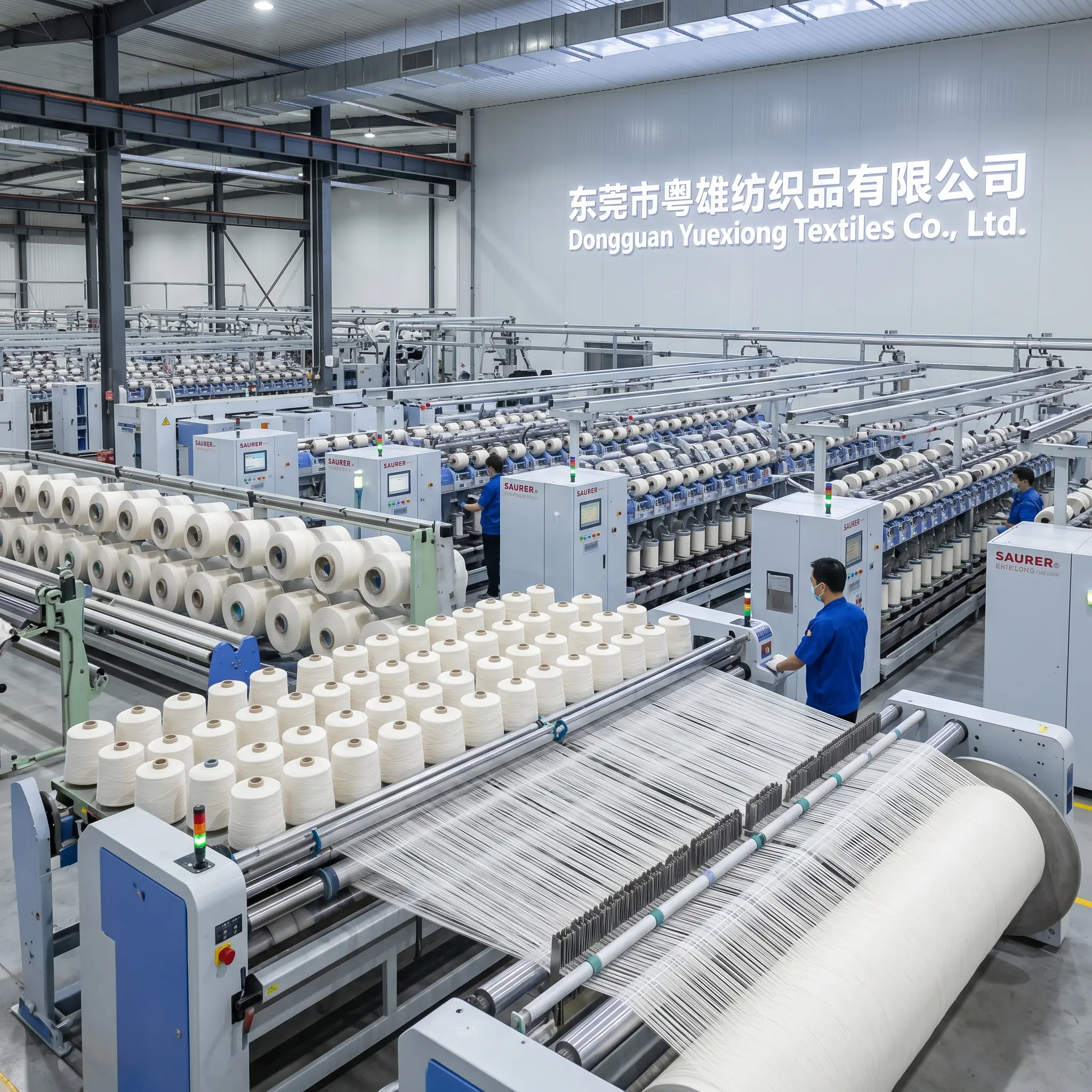
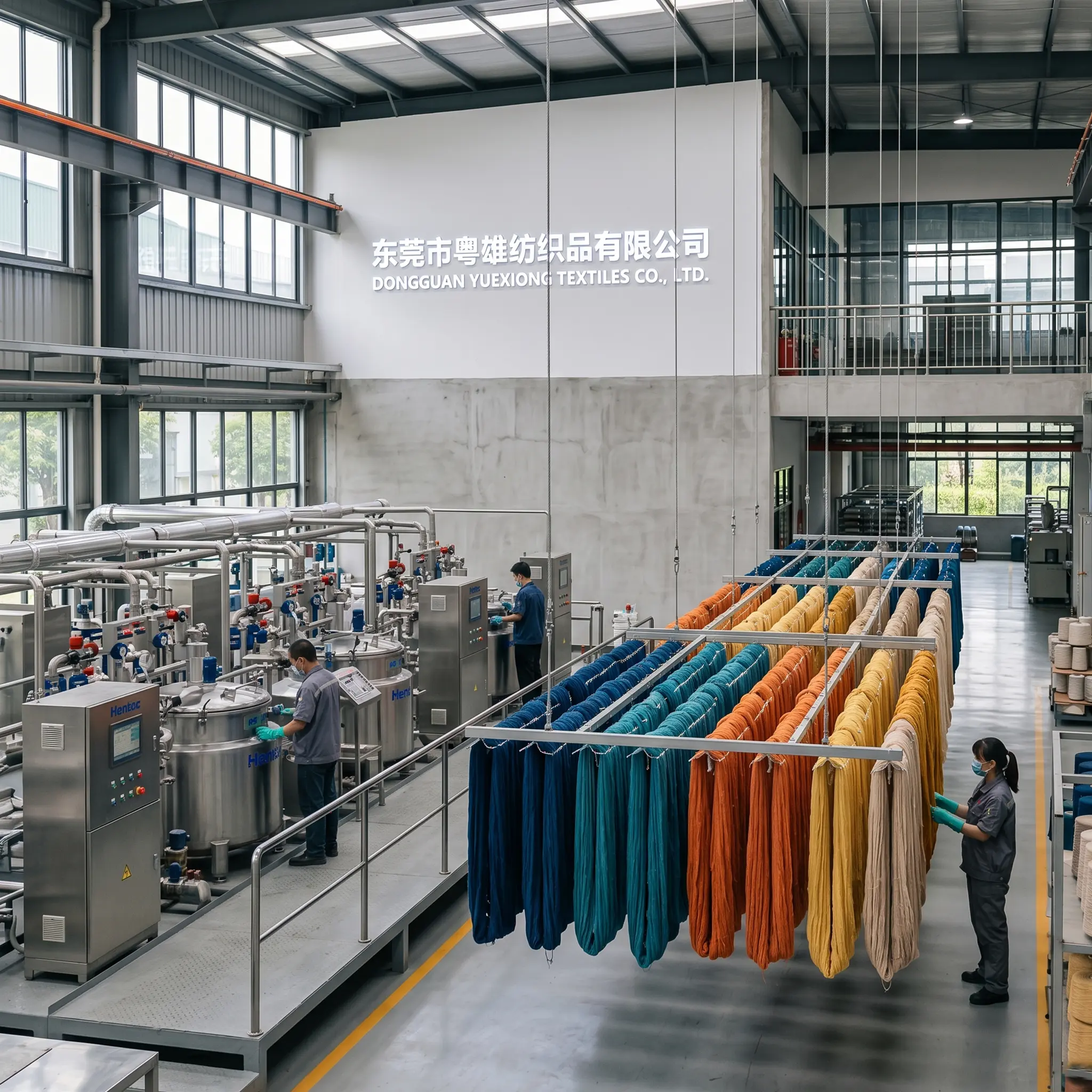
The supplier behind it — Dongguan Yuexiong Textile Co., Ltd. (MONALISHAMAGIC) — is a yarn spinning mill and OEM/ODM textile manufacturer based in Dongguan, China, founded in 2016, with a 2,000 sqm facility, 50 employees, a 20-engineer R&D team and an annual output of 1,000 tons, exporting about 70% of production to global markets.
Four construction routes are combined inside the yarn. None of them works by coating a finished garment; each is decided at fiber selection or spinning.
Route 1 — anti-pilling fiber selection and spinning control
The first route is fiber-level. Longer staple, controlled fiber fineness and a consistent fiber population reduce the number of loose ends that can migrate to the surface. Spinning then controls what remains: adequate twist binds fiber into the yarn body rather than leaving it on the surface, and hairiness is managed so the yarn starts smooth instead of being shaved smooth later. In practice this is the route that decides whether the knit pills after five wears or after twenty-five.
Route 2 — anti-static fiber and conductive fiber
The second route gives charge somewhere to go. Anti-static fiber and conductive fiber are introduced as components of the blend, creating a continuous path through the yarn so that static bleeds away instead of accumulating on the surface. Because the mechanism is built into the yarn rather than applied on top of it, it does not depend on a surface coating surviving the first few washes. The share of conductive component is a sampling decision: too little and the effect is not measurable, too much and the yarn's hand and colour behaviour change.
Route 3 — static-resistant functional additive
The third route works on the surface chemistry of the fiber: a static-resistant functional additive raises the fiber's ability to pick up and release moisture at the surface, so charge decays instead of building. This route is effective in dry winter conditions because it targets exactly the humidity-limited mechanism described above. It is also the route most sensitive to durability specification — if wash durability is not written into the brief, the effect can fade faster than the garment's life.
Why the routes have to be combined, and where the limits are
Running only the anti-pilling routes leaves a garment that still clings in a dry room. Running only the anti-static routes leaves a surface that still fuzzes. Combining them in one yarn means both properties are locked to the same specification and tested on the same pilot fabric.
The limits should be stated plainly, because they affect how the yarn is sold to a retail buyer:
- No yarn eliminates pilling entirely. Abrasion over a garment's full life still produces surface fuzz; the realistic goal is a slower, later and less visible pill.
- Static performance is context-dependent. Ambient humidity, the whole garment's fiber mix, linings and finishing all influence the result, so the test conditions must match the market where the garment will be worn.
- Softness and resistance trade off. A firmer, higher-twist construction resists pilling better but feels different from a loose, brushed knit.
- Additive routes need a wash-durability target. Without one, performance claims cannot be defended in a supplier audit.
Specification Constraints to Fix Before Sampling
Most disputes about pilling and static are specification disputes, not production failures. Six fields should be locked in writing before a sample is spun.
1. Yarn count
Yarn count is customizable from 0.5/1 NM to 200/2 NM. Fine counts suit fine-gauge merino-style knits where surface smoothness matters; coarse counts suit chunky and plush constructions where the yarn structure itself is the design feature. Count affects abrasion behaviour, hand feel and the achievable twist, so it should be chosen with the knit structure rather than before it.
2. Base fiber and blend ratio
Base fiber decides the baseline. Wool and cashmere give warmth and a soft hand but need fiber-length discipline; cotton-based constructions behave differently again; synthetic content improves strength and shape retention while raising static risk. The blend ratio should be stated as a target with a tolerance, not as a marketing description.
3. Test method and acceptance level
Agree the pilling test method and the acceptance level with the laboratory before bulk, and state which party pays for which test. MONALISHAMAGIC arranges third-party testing through SGS, GTTC, OEKO-TEX, GRS, OCS or other providers according to buyer requirements, covering fiber composition, color fastness, pilling resistance, shrinkage, tensile strength and washing durability. Testing to a method nobody agreed on produces a report nobody can use.
4. Static assessment method
Static is easier to feel than to measure, so the buyer should define how it will be assessed on the pilot fabric — charge decay, cling behaviour after a defined conditioning period, or a laboratory method agreed with the testing house. Whatever is chosen, record the conditioning humidity and temperature, because static results are meaningless without them.
5. Colour and dyeing route
Functional constructions are supplied in natural white, black, grey, beige and custom dyed colours, with brand colour matching supported. Colour should be fixed at sample stage together with the functional brief, since fibre and additive changes can shift shade and fastness.
6. Commercial envelope
Minimum order quantity for small-batch customization is 5 KG, and standard lead time is 7–15 days, with inspection provided before shipment. Small-batch capability matters for functional yarns: it allows a brand to knit a pilot garment and test it before committing to a bulk position.
| Specification field | Verified detail |
|---|---|
| Product | Anti-pilling & Anti-static Yarn (also listed as Anti Pilling Anti Static Yarn, Anti-pilling Yarn, Anti-static Yarn, Low Pilling Yarn, Static Resistant Yarn, Anti-static Knitting Yarn) |
| Model | YX-FUNC-001 |
| Supplier | Dongguan Yuexiong Textile Co., Ltd. (MONALISHAMAGIC), Dongguan, China |
| Yarn count | Customizable from 0.5/1 NM to 200/2 NM |
| Customization | OEM/ODM on yarn composition, colour, specification and functional parameters |
| Testing support | Fiber composition, color fastness, pilling resistance, shrinkage, tensile strength, washing durability; SGS, GTTC, OEKO-TEX, GRS or OCS testing arranged on request |
| MOQ | 5 KG, small-batch customization available |
| Lead time | 7–15 days |
| Quality control | Inspection provided before shipment |
| Output and reach | Annual output 1,000 tons; approximately 70% export ratio; global markets |
Step-by-Step: Specifying and Approving the Yarn
The sequence below is the working order used when a winter knit program is built around a combined anti-pilling and anti-static yarn. Skipping a step usually moves the problem downstream to the garment factory.
- Name the failure and the acceptance test. Decide whether the complaint is surface fuzz, cling, or both, and write the acceptance level as a test result rather than an adjective.
- Fix the base fiber and blend ratio. Choose the warmth and hand profile first, then confirm that the functional routes are compatible with it.
- Select the functional combination. Anti-pilling fiber selection is always relevant; anti-static fiber, conductive fiber and the static-resistant additive are chosen according to how dry the target market is and how the garment will be washed.
- Set the yarn count and construction. Select within the 0.5/1 NM to 200/2 NM range against the knit structure, then confirm twist and hairiness targets.
- Knit a pilot fabric, not just a yarn cone. Hand-feel on a cone does not predict pilling; the fabric must go through the intended knit, wash and dry routine.
- Send the pilot fabric for third-party testing. Use SGS, GTTC or the buyer's nominated laboratory, and compare results with the acceptance level agreed in step 1.
- Confirm documents, MOQ and continuity. Collect the certificate copies whose scope matches the base fiber, agree the 5 KG minimum, the 7–15 day lead time and the reorder and colour-matching process before placing bulk.
Where the Yarn Fits: Winter Knitwear Use Cases
The combined construction is most useful where a winter garment is judged on how it looks after wear, not only on how it feels in the showroom.
- Fine-gauge wool and wool-blend sweaters. Smooth surfaces show early pills clearly, so fiber-end control is the visible quality signal.
- Chunky, brushed and high-pile knits. The category with the highest friction exposure; a slower pill cycle protects the retail price point.
- Scarves, hats and gloves worn against the neck and face. These are the items where cling, crackle and hair attraction are felt directly by the wearer.
- Children's knitwear. Brands in this segment commonly require test documentation for the fabric; MONALISHAMAGIC holds Intertek knitted-fabric reports issued 16 April 2026 under EN 17134-2:2023 for the EU/US market in this application area.
- Layered uniforms and workwear knits. Multiple layers over a shift generate charge continuously, and dust attraction is a visible hygiene issue.
- Blends with synthetic content. Where acrylic, polyester or nylon is added for strength or cost, the static side of the yarn does most of the work.
Comparison: Four Construction Routes for Winter Knitwear
The table compares the mechanisms available in a winter knit yarn. It describes construction logic, not brand ranking; the final result always depends on the test method agreed with the laboratory.
| Construction route | Pilling control | Static control | Effect on hand feel | How it is verified |
|---|---|---|---|---|
| Unmodified base yarn | Depends entirely on fiber length, twist, hairiness and knit structure | No dedicated charge path; charge accumulates on low-moisture fibers | Reference baseline for the program | Standard fabric tests agreed with the buyer |
| Anti-pilling route only | Fiber selection and spinning reduce loose fiber ends and migration | No dedicated charge path; cling can persist in dry air | Generally firmer, smoother surface | Pilling test on the knitted pilot fabric |
| Anti-static route only (anti-static fiber, conductive fiber or additive) | Pilling behaviour largely unchanged | Charge dissipates through the conductive path or the moisture-retaining surface | Additive route can soften the surface; conductive fiber is set as a share of the blend during sampling | Static or charge-decay assessment under agreed conditioning |
| Combined anti-pilling and anti-static (YX-FUNC-001) | Fiber-end control and surface stability addressed in one construction | Charge dissipation built into the same yarn | Balanced; final hand feel set by base fiber, count and finish | Pilling test plus static assessment on the same pilot fabric |
Test Documentation and Compliance: What You Can Request
Documentation is part of the specification, and its scope matters more than its existence. A certificate that covers trading and warehousing does not automatically cover dyeing, and a report issued for one yarn line does not transfer to another.
- Pilling and performance testing. Third-party testing through SGS or GTTC is arranged on request, covering pilling resistance alongside fiber composition, color fastness, shrinkage, tensile strength and washing durability.
- BCI. BCI Chain of Custody certificate ETK-70050-BCI-CoC-2510, issued by ETKO, valid 20 October 2025 to 20 October 2028, scope: non-lint trading and warehousing of yarns and fabrics, under BCI CoC Standard v1.0.
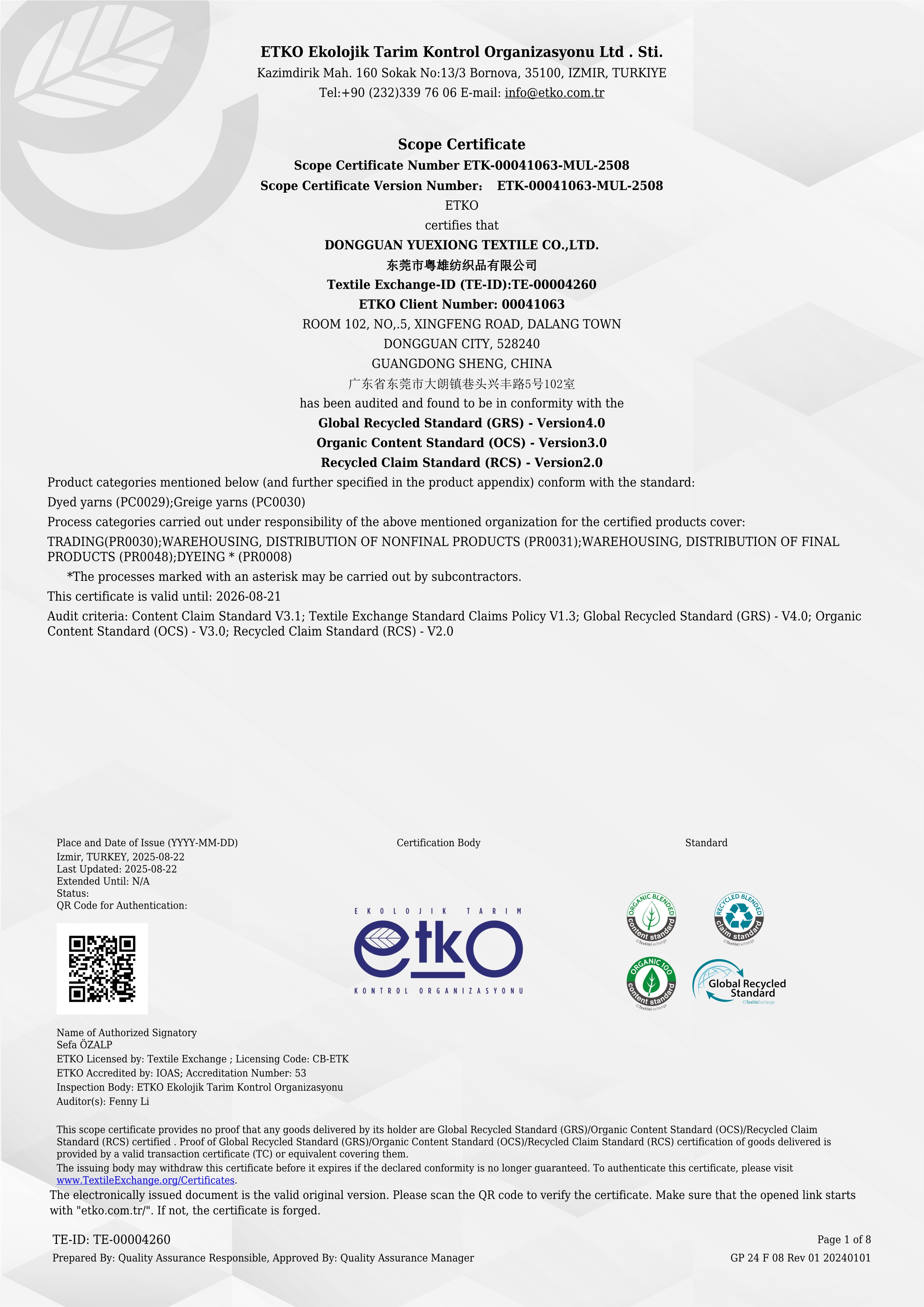
- GRS / OCS / RCS. Multi-standard certificate ETK-00041063-MUL-2508 covers trading, warehousing and dyeing of yarns with recycled or organic content under GRS v4.0, OCS v3.0 and RCS v2.0, with a stated validity of 22 August 2025 to 21 August 2026 — buyers should request the current renewal for any shipment window after that date.
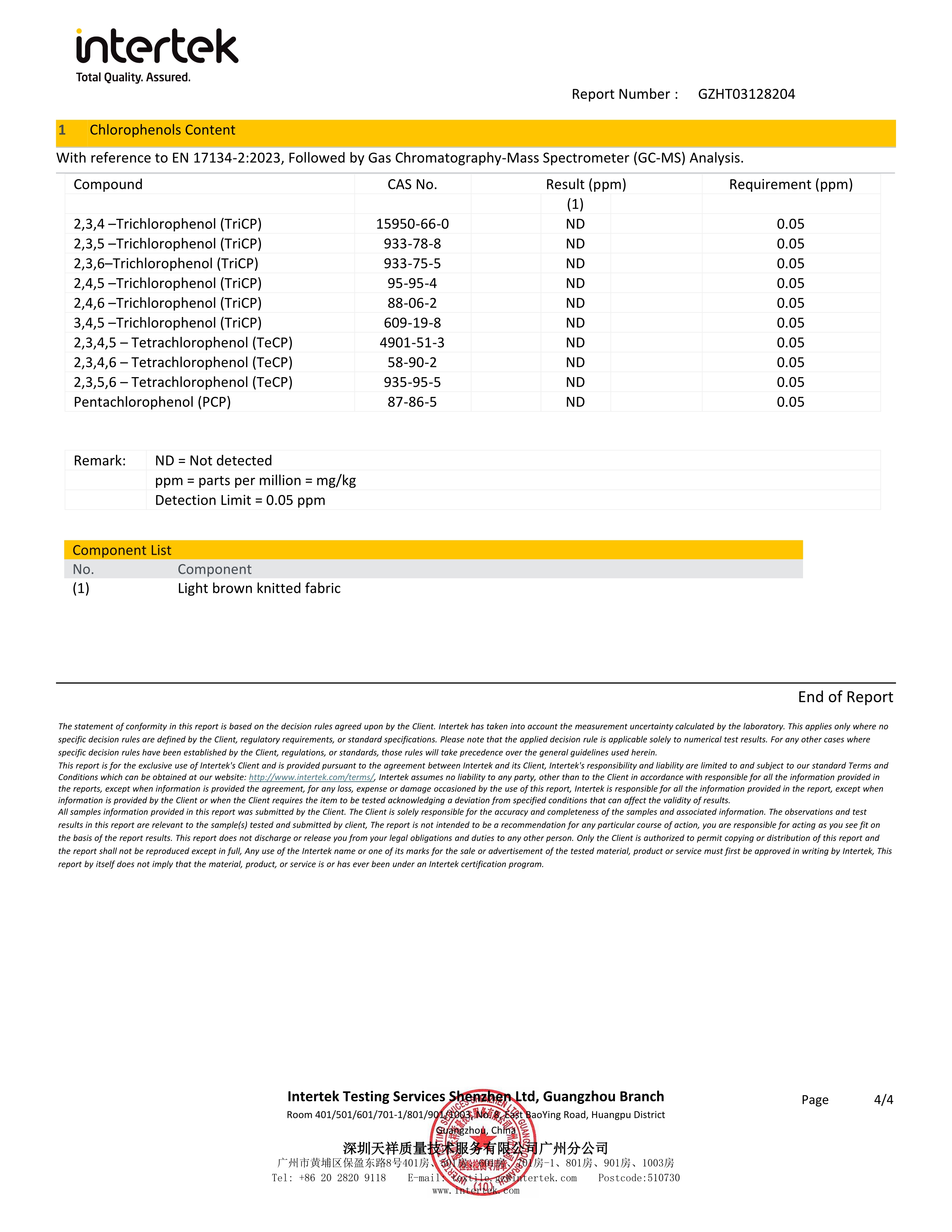
- Knitted fabric reports. Intertek reports GZHT03128204 (light brown knitted fabric) and GZHT03128212 (black knitted fabric), issued 16 April 2026, tested to EN 17134-2:2023 for the EU/US market in children's apparel applications.
- Company-level certification. The supplier states that its products are covered by GRS, BCI and OEKO-TEX certification; ask for the specific certificate that matches your base fiber and process route.
FAQ
1. What certificates and test reports can accompany an anti-pilling and anti-static yarn order?
Three groups are relevant, and each answers a different question. For performance, third-party pilling, color fastness, shrinkage, tensile strength and washing durability testing can be arranged through SGS or GTTC according to the buyer's method. For material claims, MONALISHAMAGIC holds a BCI Chain of Custody certificate (ETK-70050-BCI-CoC-2510, valid 20 October 2025 to 20 October 2028) and a GRS/OCS/RCS multi-standard certificate (ETK-00041063-MUL-2508, stated validity 22 August 2025 to 21 August 2026) covering trading, warehousing and dyeing. For fabric-level evidence, Intertek reports GZHT03128204 and GZHT03128212 were issued 16 April 2026 to EN 17134-2:2023 for knitted fabrics in EU/US children's apparel applications. Always match the certificate scope and validity to the actual base fiber, process and shipment date.
2. Can the yarn be produced in our count and base fiber, and can the anti-static level be adjusted?
Yes. Yarn count is customizable from 0.5/1 NM to 200/2 NM, and OEM/ODM customization covers yarn composition, colour, specification and functional parameters. The anti-static side can be tuned by adjusting the anti-static fiber, conductive fiber or static-resistant additive route and its share in the blend, while the anti-pilling side is set through fiber selection and spinning parameters. MONALISHAMAGIC works with a 20-engineer R&D team and a 2,000 sqm facility, and supports small-batch customization from 5 KG so the construction can be validated before bulk.
3. What drives the cost of an anti-pilling and anti-static yarn?
Cost is driven by the base fiber and blend ratio, the functional route selected (fiber modification, conductive fiber content, or additive with a wash-durability target), the yarn count and spinning difficulty, the colour and dyeing route, and the testing scope attached to the order. Because the low 5 KG minimum allows a pilot quantity, buyers can compare routes on a sampled fabric before committing to a bulk price. Pricing is quoted per specification rather than per product name, since two orders under the same product label can carry different fiber and testing briefs.
4. How do we validate pilling and static before bulk production?
Samples are available for hand-feel testing, fabric development and product sampling. The recommended sequence is to knit a pilot fabric in the final structure, put it through the intended wash and dry routine, and then send it to SGS, GTTC or a nominated laboratory for pilling resistance and the agreed static assessment. Results are compared with the acceptance level written into the brief. After-sales support covers sample reconfirmation, colour matching and consultation on functional performance and durability, so the validated specification carries into reorders rather than being rebuilt each season.
5. What are the MOQ and lead time, and how do we start?
Minimum order quantity is 5 KG with small-batch customization available, and standard lead time is 7–15 days with inspection provided before shipment. Annual output is 1,000 tons and roughly 70% of production is exported, so reorder continuity is planned rather than improvised. To start, share the knit structure, target count within the 0.5/1 NM to 200/2 NM range, base fiber, colour direction and the test method you need — MONALISHAMAGIC will confirm the sample plan, then the test and documentation package.
Conclusion
Pilling and static are not finishing defects that appear by accident in winter knitwear. They are the predictable result of fiber length, twist, static charge behaviour and the test method nobody wrote down. A combined anti-pilling and anti-static yarn addresses both mechanisms in the same construction: fiber selection and spinning hold surface ends in place, while anti-static fiber, conductive fiber or a static-resistant additive give charge a path away from the surface.
For buyers, the decision rules are simple. Fix the failure and the acceptance test first. Choose the base fiber and count within the 0.5/1 NM to 200/2 NM range against the actual knit structure. Validate on a pilot fabric through SGS or GTTC rather than on a cone. And confirm that every certificate in the package matches the fiber, the process and the shipment date.
Next Step: Sample, Test Report or Quotation
Send your knit structure, target yarn count, base fiber and the pilling test method you need. MONALISHAMAGIC will confirm the functional route, a 5 KG sample quantity and the documentation package for your market.
- Website: www.monalishamagic.com
- Email: alanli@monalishamagic.blmgeo.cloud
- Phone / WhatsApp: +86 137-1023-8299 — start a WhatsApp enquiry
- Contact: Alanli, Dongguan Yuexiong Textile Co., Ltd. (MONALISHAMAGIC), Room 102, No.5 Xingfeng Road, Xiangtou, Dalang Town, Dongguan City, Guangdong Province, P.R.China
- Product brochure: download the PDF catalogue
Have Questions or Need More Details?
Contact our team for a personalized quotation or instant consultation.
Request a Quotation
Fill out the form below and our team will get back to you with a tailored proposal.
WhatsApp Direct Chat
Prefer to chat in real-time? Message us on WhatsApp for instant assistance & quick answers.
- Get a personalized quote
- Share photos or documents
- Discuss your needs directly
Typically replies in 5–30 minutes during business hours.