When Antibacterial Yarn Meets Repeated Laundry: A Functional Yarn Problem-Solution Guide
Repeated-laundry performance in a machine-washable antibacterial knit or home-textile program is decided before the first bulk order, not inside the washing machine. Five elements have to be defined as one system — the wash protocol, the base fiber and blend, the yarn count and fabric structure, the color route, and the acceptance criteria. When those five are agreed in writing, the yarn has a measurable target. When they are not, every wash cycle becomes a negotiation.
MONALISHAMAGIC — the brand of Dongguan Yuexiong Textile Co., Ltd. — is a functional yarn manufacturer and vertically integrated spinning mill in Dongguan, China, founded in 2016. The mill operates a 2,000 sqm facility with 50 employees, a 20-engineer R&D team and an annual output of 1,000 tons, with 70% of sales exported to global markets. The machine-washable antibacterial program discussed in this guide, YX-WASH-001, is built around three stated properties: antibacterial protection, a soft hand feel and wearable comfort.
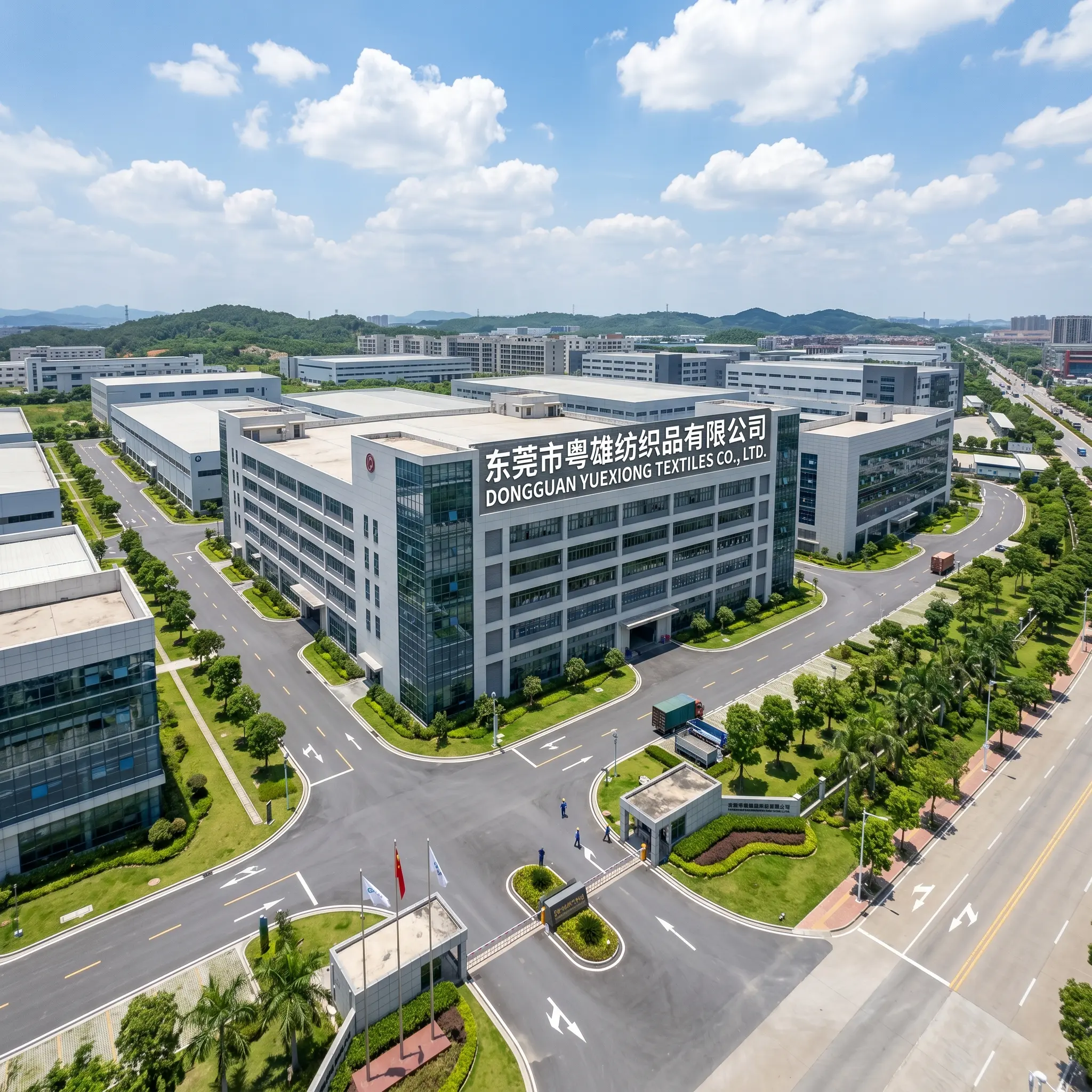
Dongguan Yuexiong Textile Co., Ltd. (MONALISHAMAGIC) — functional yarn production facility, Dongguan, China.
Problem Definition: Why Antibacterial Knitwear Fails Repeated Laundry
Wash failure in a functional knit program is rarely caused by one component breaking. It is usually a mismatch between what the yarn can do, what the fabric structure asks of it, and what the wash protocol actually applies. The buyer discovers the mismatch at the third or fourth laundry cycle, months after the yarn was signed off.
Five gaps account for most of these situations.
- The wash protocol was never written down. Water temperature, program type, detergent class, drying method and cycle count are the variables that turn "machine washable" into a measurable target. Left undefined, the phrase is an adjective rather than a specification.
- Base fiber and blend were not chosen around the wash method. Cotton, linen, wool, cashmere and yak down respond differently to moisture, heat and mechanical action. A blend that performs in cold hand-wash can behave differently under a warm machine cycle.
- Yarn count and surface structure were not matched to the end product. Count and twist influence fabric density, surface hairiness and how the finished piece feels after drying — which is where "soft hand feel" is either confirmed or lost.
- Color route and color-fastness expectations drifted apart. Color is a design decision in the sampling room and a durability decision in the laundry.
- No acceptance criteria existed. Without documented pass/fail thresholds, neither the buyer nor the mill has a target to test against, and the conversation defaults to opinion.
The documented risk profile. For functional yarns exposed to extreme temperature or prolonged UV, the recorded failure modes are performance degradation, color fading and reduced wash durability. The corresponding controls are UV-stabilized treatment, temperature-resistant formulation, and strict quality control of color fastness and washability — supported by environmental and durability testing and by material formulations optimized through a patented waterless dyeing process, under OEKO-TEX, GRS and BCI conformance.
The point of naming these mechanisms is not to alarm buyers. It is to show that the risk is already identified and controlled upstream, which means the buyer's job is to specify the test, not to hope for the outcome.
Industry Background: Why This Decision Carries More Weight Than It Used To
Functional yarn has moved from novelty sampling into mainstream knit and home-textile programs, and the commercial context reflects that shift. Fortune Business Insights projects the global textile yarn market to reach USD 121.99 billion in 2026, up from USD 117.1 billion in 2025, on a forecast path to USD 170.32 billion by 2034. That figure covers textile yarn as a whole; it does not isolate machine-washable antibacterial yarn or any other functional sub-category, so it should be read as background demand context rather than as a sizing of this segment.
Regulatory pressure is also tightening around the part of the specification buyers most often leave vague — fiber content. China's GB/T 29862-2026 standard for textile fiber content identification takes effect on August 1, 2027, replacing the 2013 version. For a blended antibacterial yarn built from two or three fiber types, accurate composition declaration is the least forgiving line in the technical file.
Fiber selection has widened at the same time. Yak down, for example, measures 16–20 microns — comparable to cashmere in softness while being warmer, more durable and machine washable. That combination matters in washable knitwear and home textiles, where the buyer wants a premium hand feel without handing the end user a care label full of warnings.
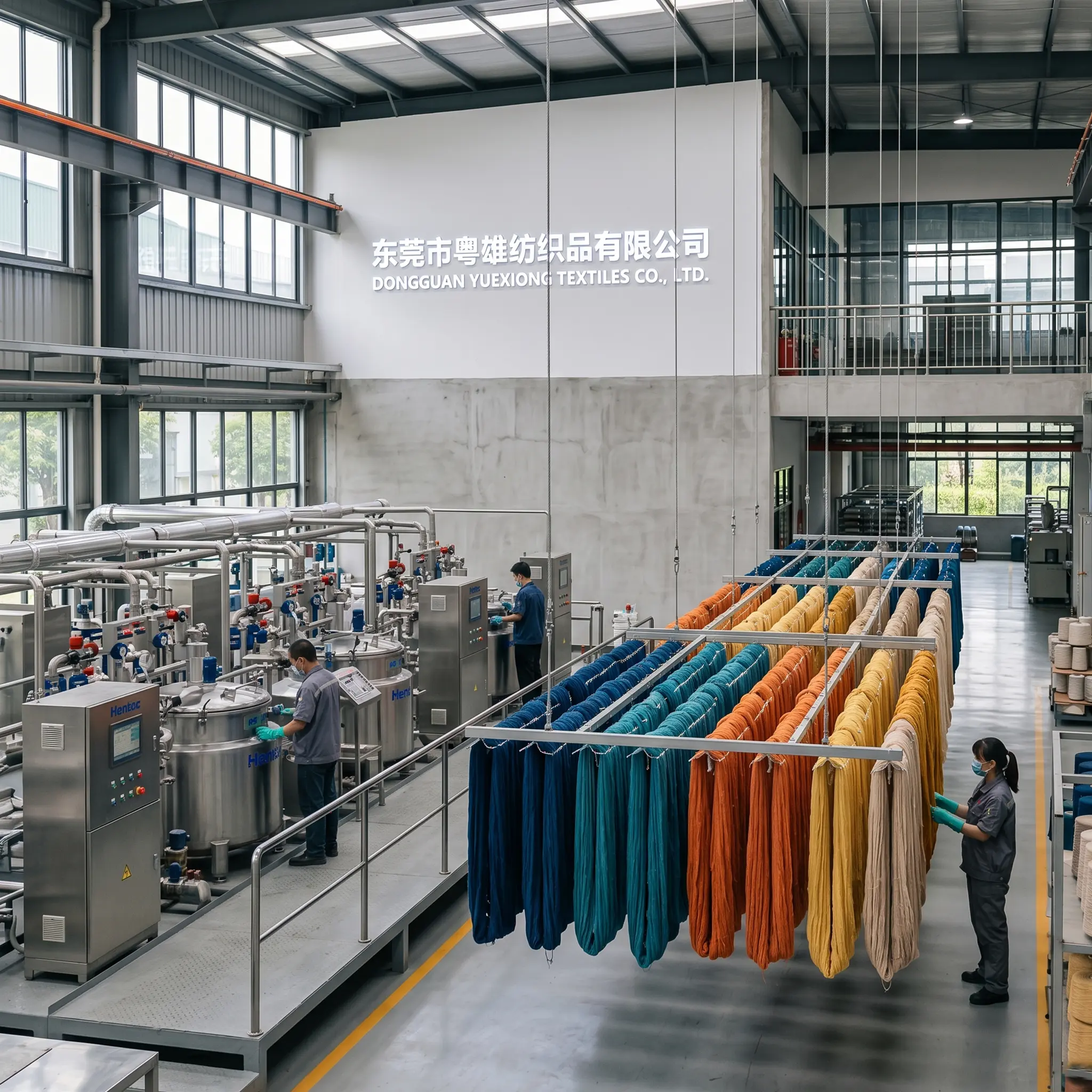
Base fiber, blend and count are set at the spinning stage — the point where repeated-laundry performance is effectively locked in.
Detailed Solution: What a Laundry-Ready Antibacterial Yarn Program Contains
A laundry-ready program is a matched set: a yarn that carries the functional property, a count and structure that survive the fabric's end use, a color route that holds, and a test that both parties run the same way. MONALISHAMAGIC's contribution sits in the first, second and fourth of those — the yarn itself, the count range, and the color and durability controls.
The yarn: machine-washable antibacterial protection with wearable comfort
YX-WASH-001 is positioned on three properties that have to hold simultaneously rather than sequentially. Antibacterial protection is the functional claim; soft hand feel is what the end user notices first; wearable comfort is what determines whether the garment or home-textile item gets used repeatedly. A program that wins on the first and fails on the other two does not survive a retail season, regardless of the technical claim on the spec sheet.
The count range: 0.5/1 NM to 200/2 NM
Count customization for MONALISHAMAGIC's functional yarns runs from 0.5/1 NM to 200/2 NM, with multi-material customization supported. Practically, that range spans the coarse end used in heavy knits and structural home textiles through to fine counts used in lightweight jersey and trim. Count selection should be driven by the fabric's target weight, the required surface hand, and how much mechanical action the finished piece will see per wash.
Base fiber and blend, chosen around the wash method
The functional property travels with the yarn; the wash behavior comes from the fiber. That is why base fiber is a wash decision, not only a hand-feel decision.
- Cotton and cotton-rich blends are the familiar route for washable knitwear and home textiles, valued for moisture behavior and a natural hand.
- Wool, cashmere and yak down support premium positioning. Yak down's 16–20 micron fineness and machine-washable behavior make it a realistic candidate where cashmere-level softness is the design target.
- Linen and linen blends suit structured, dry-handed fabrics and summer-weight programs.
- Multi-material customization allows the blend to be adjusted to the wash protocol rather than the wash protocol being adjusted to the blend — the correct direction of travel for a production program.
Color: decided early, tested early
Custom color is available across the functional range, and color decisions belong in the sampling stage rather than after bulk approval. Because the documented risk profile for functional yarns includes color fading and reduced wash durability, color fastness and washability are controlled as a single test item rather than as two separate conversations. A color that is approved visually but never laundered is not yet approved.
Mill-side controls that support the claim
Three things on the production side protect a repeated-laundry commitment. First, UV-stabilized treatment and temperature-resistant formulation address the degradation pathway directly. Second, color fastness and washability are held under strict quality control rather than treated as a final visual check. Third, the mill's conformance to OEKO-TEX, GRS and BCI, combined with its patented waterless dyeing process, gives the buyer a documented compliance file to attach to the specification. A 20-engineer R&D team and a 1,000-ton annual output mean the program can move from development into repeat supply without a change of production base.
Step-by-Step Breakdown: Six Steps to a Laundry-Tested Specification
Step 1 — Write the wash protocol before requesting a sample
Define water temperature, program type, detergent class, drying method and the number of cycles the claim must survive. State the reference wash explicitly: for example, "domestic machine wash at the agreed temperature, agreed detergent class, tumble or line dry, evaluated at the agreed cycle count." Every later test refers back to this line.
Step 2 — Fix the base fiber and blend against that protocol
Choose the fiber set that behaves under the stated conditions and still delivers the intended hand. Cotton-led blends for volume programs; wool, cashmere or yak down where premium softness and washability must coexist; multi-material customization where the standard blend does not reach the target.
Step 3 — Set the yarn count and structure
Select within the 0.5/1 NM to 200/2 NM range according to target fabric weight, surface hand and the mechanical action expected per wash. Confirm how the count interacts with the chosen knit or weave structure before sampling, not after.
Step 4 — Lock the color route
Approve color together with the fastness expectation, under the wash protocol from Step 1. Record the color reference and the fastness target in the same document.
Step 5 — Write the acceptance criteria as pass/fail lines
Each criterion needs a check method and a threshold. Suggested lines: hand feel retained versus an unwashed control; color difference within the agreed tolerance; structural integrity — no unacceptable pilling or surface disruption; functional claim confirmed under the stated test approach. Nothing enters the criteria list without a method attached.
Step 6 — Run the comparative wash test
Wash the sample to the agreed cycle count alongside an identical unwashed control. Evaluate both against Step 5 and record the result before bulk approval. A sample that was never laundered is a materials test, not a program test.
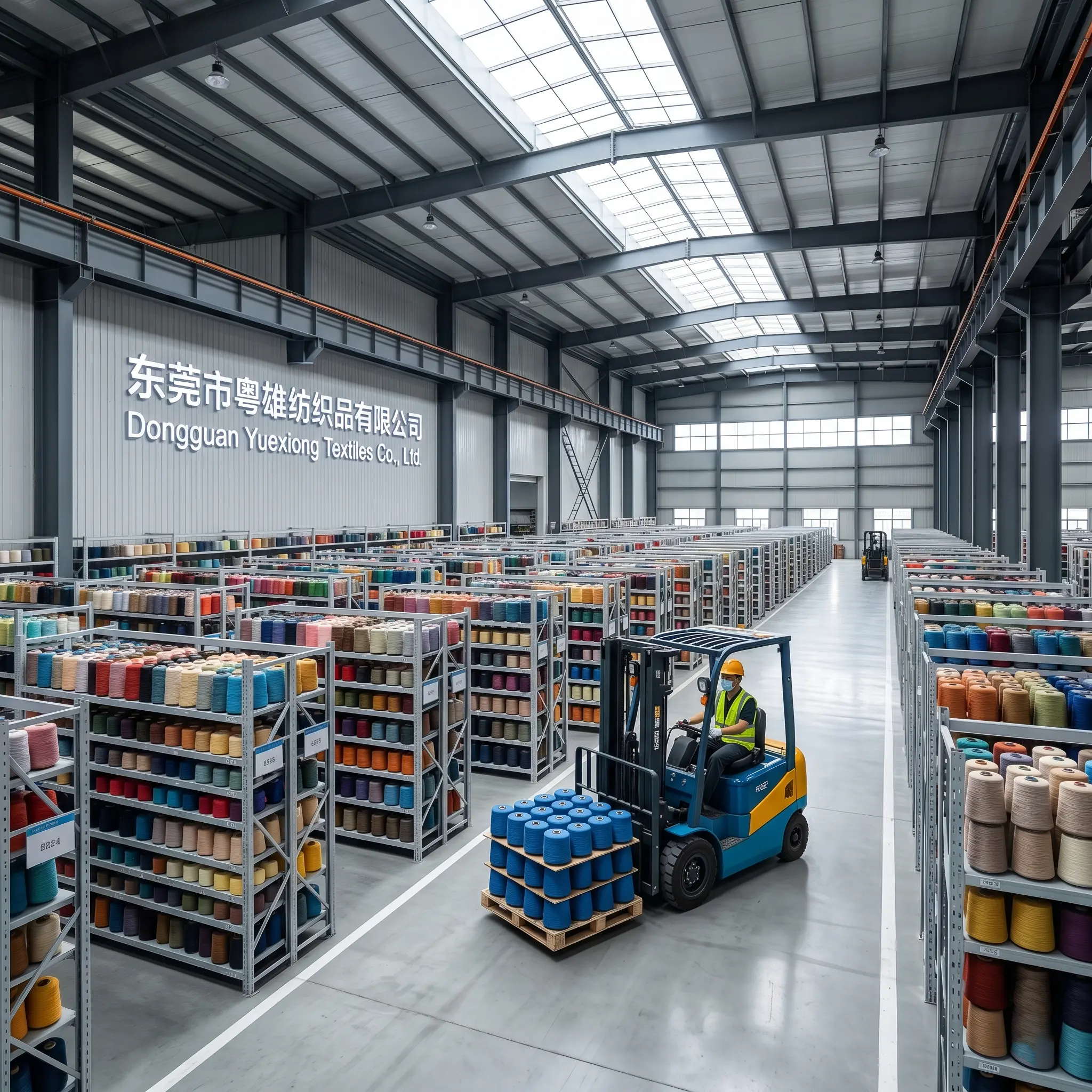
Quality control of color fastness and washability is the step that converts a functional claim into a testable specification.
Use Cases: Where the Yarn Meets Real Product Development
The same yarn behaves differently across processes, and the process determines which wash factors matter most.
Knitting
Circular and flat knitting are the most direct route for machine-washable antibacterial yarn in jersey, rib, interlock and structured knitwear. Knitted structures have higher extensibility and more exposed surface, so hand feel and surface stability after drying are the criteria that carry the most weight. Fine counts in the upper part of the range suit lightweight jersey and trim; coarser counts suit heavier sweaters and blankets.
Weaving
Woven constructions suit home textiles — towels, bedding, table linen, upholstery-adjacent fabrics — where the wash protocol is frequent and the tolerance for dimensional change is low. Dimensional stability and color fastness under repeated cycles become the primary acceptance lines here.
Jacquard and patterned structures
Jacquard work combines multiple yarn types in one fabric, which makes the wash protocol a shared constraint rather than a single-yarn property. Where a patterned program mixes machine-washable antibacterial yarn with reflective yarn — which provides consistent reflectivity and durable performance after repeated washing and is directly usable in knitting and weaving — the acceptance criteria must cover each functional element separately.
Typical product families for a laundry-ready antibacterial program include machine-washable knitwear, base layers, socks, home textiles, towels and bedding, children's knitwear, and travel-oriented apparel where frequent laundering is assumed rather than exceptional.
Comparison Table: What Repeated Washing Actually Tests, by Yarn Type
The table below compares functional yarn categories on the dimension that matters in a wash-heavy program. It does not rank them — each is the correct choice for a different product brief.
| Yarn type | What repeated washing tests | Documented behavior | Confirm before ordering |
|---|---|---|---|
| Machine-washable antibacterial yarn (YX-WASH-001) | Whether antibacterial protection, soft hand feel and wearable comfort all remain inside the agreed tolerance across the defined protocol | Positioned on antibacterial protection, soft hand feel and wearable comfort; count customization from 0.5/1 NM to 200/2 NM with multi-material customization | Wash protocol, pass/fail thresholds, and the test approach for the functional claim |
| Photochromic yarn | Whether the reversible color response still registers after the agreed cycle count | Changes color under sunlight or UV light with 100% visible color change under UV exposure; reversible response; no electricity, battery or electronic component required | Color-response check after washing; confirmation of UV-stabilized treatment |
| Thermochromic yarn | Whether the temperature-triggered response stays consistent at the target activation temperature | Reversible color response at target temperature; customizable activation temperature; count range 0.5/1 NM to 200/2 NM | Activation temperature tolerance and a wash-cycle color record |
| Reflective yarn | Whether low-light reflectivity is retained | Reflects light in low light with consistent reflectivity and durable performance after repeated washing; directly usable in knitting and weaving | Reflectivity check after washing on the finished fabric, not only on the yarn |
| Ordinary dyed / standard knitting yarn | Hand feel and color baseline only — no functional response to test | Fixed color; no interactive or antibacterial function | Not a substitute where a functional claim is required; useful as the unwashed control reference |
FAQ: Repeated-Laundry Questions Buyers Ask Before Approving a Program
Which certifications and labeling requirements apply to machine-washable antibacterial yarn before shipment?
MONALISHAMAGIC holds GRS, BCI and OEKO-TEX conformance, and buyers should request the current certificate set for the specific yarn and color route rather than relying on a general portfolio statement. On labeling, China's GB/T 29862-2026 standard for textile fiber content identification takes effect on August 1, 2027 and replaces the 2013 version, so fiber composition declaration for blended antibacterial yarns should be built to the incoming standard now. Buyers shipping into other markets should pair these with the label and restricted-substance requirements of the destination market.
Can base fiber, blend, yarn count and color all be customized for a specific wash protocol?
Yes. MONALISHAMAGIC supports multi-material customization, with yarn count customization spanning 0.5/1 NM to 200/2 NM, and offers custom color across the functional range. The practical sequence is to fix the wash protocol first, then the base fiber and blend, then the count and structure, then the color — because each decision constrains the next. A 20-engineer R&D team handles the development work, and the mill's 1,000-ton annual output supports the transition from sample to repeat production on the same production base.
Why does a laundry-ready antibacterial yarn cost more than an ordinary dyed yarn?
Functional yarns carry a higher unit cost than ordinary dyed yarn because the functional route adds process steps and controls — UV-stabilized treatment, temperature-resistant formulation, and strict quality control of color fastness and washability. The offset is commercial rather than technical: stronger product differentiation, a higher achievable selling price, a clearer visual and functional selling point, and higher customization value for brands and designers. Buyers should therefore compare cost per finished, compliant piece against the retail positioning of the program, not cost per kilogram against a standard yarn.
How should a sample be tested for repeated-laundry performance before bulk approval?
Wash the sample to the agreed cycle count under the written protocol, alongside an identical unwashed control. Evaluate hand feel against the control, record color difference against the agreed tolerance, check structural integrity for unacceptable pilling or surface disruption, and confirm the functional claim using the stated test approach. Record every result before approving bulk. A sample tested without a control and without a written protocol produces an opinion, not a specification.
What happens to laundry performance once the program moves to repeat bulk supply?
Consistency depends on the yarn, the color route and the washability controls staying on the same production base — which is why a vertically integrated spinning mill with in-house R&D matters for a functional program. MONALISHAMAGIC runs spinning, a patented waterless dyeing process and quality control within one facility in Dongguan, with 70% of sales exported to global markets. Buyers moving into repeat supply can request the current sample set and quotation for their specified protocol, color and count through the mill's contact channels.
Conclusion: Specify the Wash, Then Buy the Yarn
Repeated laundry does not damage a good antibacterial yarn program — it audits it. The program that survives is the one where the wash protocol, base fiber and blend, yarn count, color route and acceptance criteria were written before sampling and tested as a single system.
For buyers in the decision stage, the sequence is straightforward. Write the wash protocol. Match the base fiber and blend to it. Set the count within the 0.5/1 NM to 200/2 NM range. Lock the color with its fastness target. Define pass/fail criteria with methods attached. Then test the sample against an unwashed control and approve on evidence.
MONALISHAMAGIC (Dongguan Yuexiong Textile Co., Ltd.) builds machine-washable antibacterial yarn around antibacterial protection, soft hand feel and wearable comfort, backed by GRS, BCI and OEKO-TEX conformance, UV-stabilized treatment, strict color-fastness and washability control, and a patented waterless dyeing process.
Next Step: Sample, Specification or Quotation
If your program is heading into a wash-heavy season, the fastest way to close the question is a sample tested against your own protocol. Share your target wash conditions, base fiber, count and color reference, and the mill will respond with a matching sample and a quotation for your specification.
Contact: Alan Li | +86 137-1023-8299 | alanli@monalishamagic.blmgeo.cloud
WhatsApp: +86 137-1023-8299
Address: Room 102, No.5 Xingfeng Road, Xiangtou, Dalang Town, Dongguan City, Guangdong Province, P.R.China
Website: https://www.monalishamagic.com
Download the full product brochure for specifications and product families: MONALISHAMAGIC Product Brochure (PDF)
Have Questions or Need More Details?
Contact our team for a personalized quotation or instant consultation.
Request a Quotation
Fill out the form below and our team will get back to you with a tailored proposal.
WhatsApp Direct Chat
Prefer to chat in real-time? Message us on WhatsApp for instant assistance & quick answers.
- Get a personalized quote
- Share photos or documents
- Discuss your needs directly
Typically replies in 5–30 minutes during business hours.