Why Functional Yarn Is Not One Material: A Discovery Guide
Functional yarn is not a single fiber, polymer, or product. It is a category of yarns in which a base fiber is combined with a functional additive, pigment, fiber, finish, or spinning route to deliver a named performance. The word “functional” describes the job the yarn is designed to do, not one material that does every job.

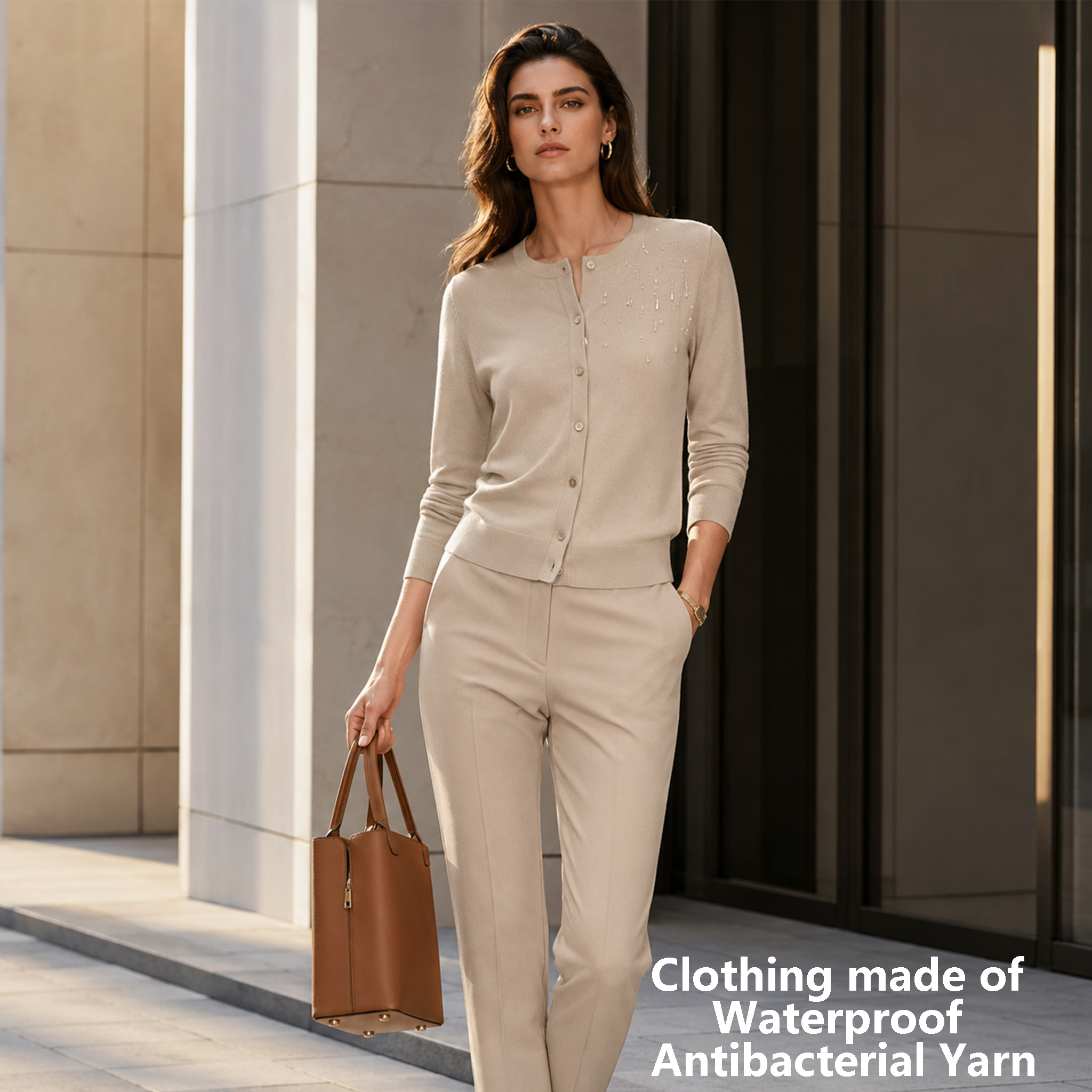
Waterproof Antibacterial Yarn is one functional-yarn example. Its claimed performance comes from a water-repellent finish and an antibacterial treatment, not from the word “functional” alone.
This distinction matters at the sampling stage. A buyer who asks for “functional yarn” without naming the base fiber, the performance target, the test method, and the end use is asking suppliers to guess. A buyer who separates base fiber from functional route can compare quotations, samples, and test reports on the same terms.
Problem Definition: A Category Label Is Not a Specification
Most sourcing briefs begin with a phrase such as “we need functional yarn.” That phrase is useful for discovery, but it is not a purchase specification. Under the same category label, a supplier may offer anti-pilling and anti-static yarn, far-infrared heating yarn, waterproof antibacterial yarn, machine washable antibacterial yarn, photochromic yarn, thermochromic yarn, reflective yarn, or luminous yarn. Each of these names points to a different functional route, and some point to more than one route.
The base fiber adds another layer. Cotton, linen, cashmere, wool, and polyester can all appear as base yarn options in the referenced product records. A cotton base, a wool base, and a polyester base do not behave the same way in spinning, knitting, dyeing, washing, or hand feel. The functional additive or finish may also change how the yarn processes.
This is why a generic “functional yarn” quotation can be difficult to compare. One supplier may quote an anti-static route on polyester. Another may quote an antibacterial finish on cotton. A third may quote a far-infrared ceramic route on acrylic or a blend. The words sound similar, but the base fiber, functional mechanism, test method, and application risk are different.
Industry Background: Why the Category Keeps Expanding
The broader textile yarn market is large and still forecast to grow. Fortune Business Insights projects the global textile yarn market to reach USD 121.99 billion in 2026 and USD 170.32 billion by 2034. That figure covers textile yarn broadly, not functional yarn alone, so it should be read as market context rather than a functional-yarn market size.
Within specialty segments, Future Market Insights valued the thermochromic fabrics market at USD 314.5 million in 2025, with sports and activewear accounting for 15% of the end-use segment. This is a narrower signal, but it shows why color-changing and other specialty yarn categories attract buyer attention.
Compliance is another reason the category is expanding. China's GB/T 29862-2026 standard for textile fiber content identification takes effect on August 1, 2027. The standard concerns fiber content identification, so buyers should confirm how the base fiber and blend will be declared, especially when a functional additive or finish is present.
Public supplier pages in the verified data set also list photochromic, thermochromic, reflective, and luminous yarns as product categories. The presence of a product listing does not prove performance, capacity, or suitability. It does show that buyers are likely to encounter these names in supplier catalogs and need a way to read them.
Detailed Solution: Read Functional Yarn as a Build, Not a Single Material
The most practical way to understand functional yarn is to break it into three questions. What is the base fiber? What is the functional route? What evidence proves the claimed performance? The answers turn a vague category into a specification.
Base Fiber Is the Carrier, Not the Function
Cotton, linen, cashmere, wool, and polyester are base-fiber options in the referenced yarn records. They contribute softness, warmth, breathability, drape, strength, or processing behavior. They do not, by themselves, make a yarn antibacterial, anti-static, far-infrared, reflective, or color-changing.

Cotton is a base-fiber choice. Functional performance is added through a separate route, such as a fiber, finish, or additive.
Linen and ramie are also base-fiber options in the referenced records. They are valued for breathability, dry touch, and a natural plant-fiber texture. Those properties are useful, but they are not the same as a functional claim such as water repellency or antibacterial protection.
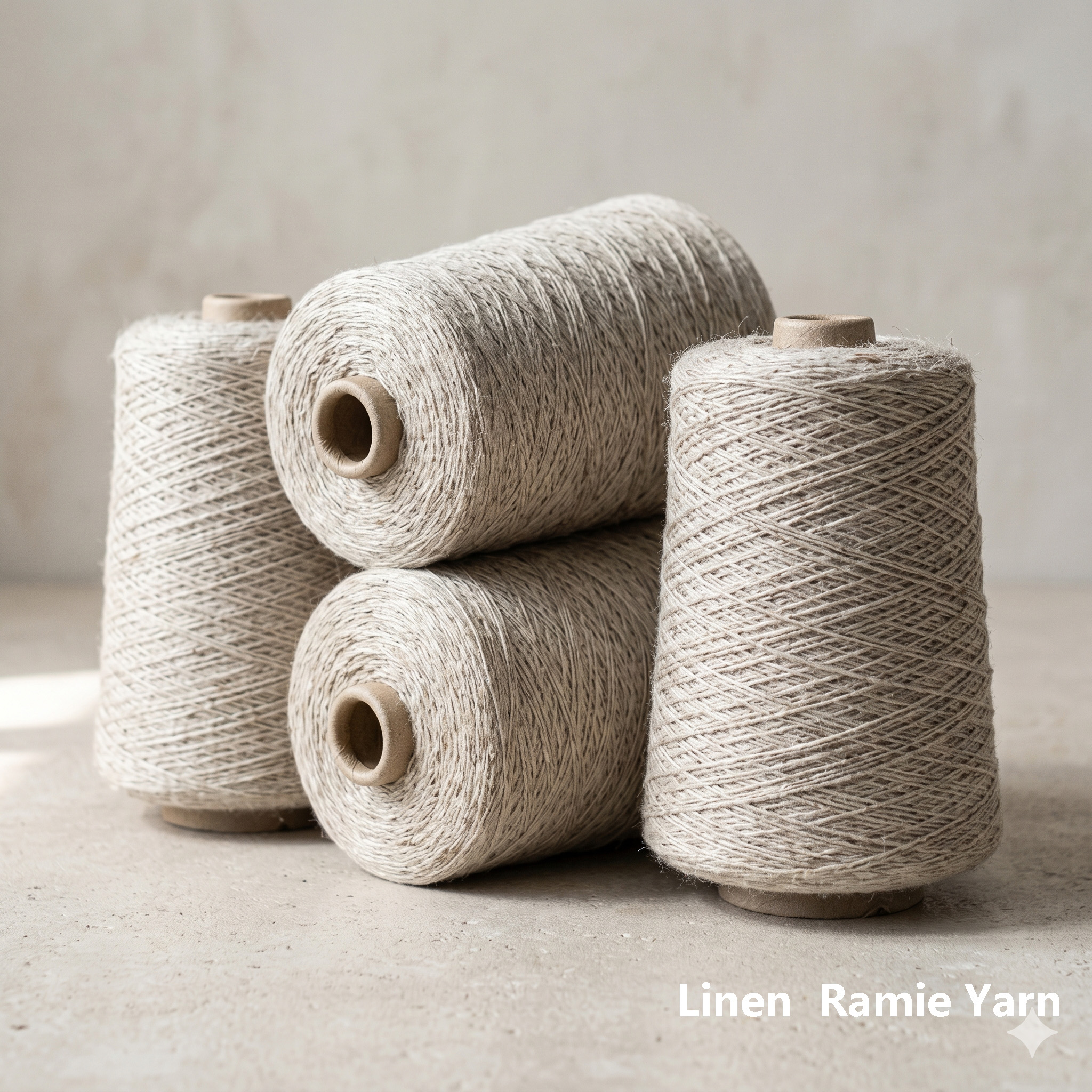
Linen and ramie are base-fiber options. They are not functional additives by themselves.
Functional Additives and Pigments Change the Job of the Yarn
Functional additives and pigments are one route to performance. In the referenced records, far-infrared heating yarn names far-infrared ceramic material and nano zirconium carbide material among its functional materials. Waterproof antibacterial yarn names water-repellent finishing and an antibacterial agent, including silver ion and zinc-based antibacterial materials. Machine washable antibacterial yarn names antibacterial finishing and washable antibacterial technology.
Color-changing yarns are another example. Photochromic yarn and thermochromic yarn are listed as product categories that respond to light or temperature. The buyer should not assume that the base fiber creates the color change. The functional system does. The same logic applies to luminous yarn, which is listed with names such as glow-in-the-dark yarn, photoluminescent yarn, light-absorbing yarn, long-afterglow yarn, and phosphorescent yarn.
Functional Fibers: Anti-Pilling, Anti-Static, and Conductive Routes
Some performance comes from a fiber rather than a topical finish. Anti-pilling and anti-static yarn names anti-pilling fiber, anti-static fiber, conductive fiber, and static-resistant functional additive among its material routes. The stated effect is to reduce fabric pilling, improve surface appearance, reduce static electricity, and improve wearing comfort.
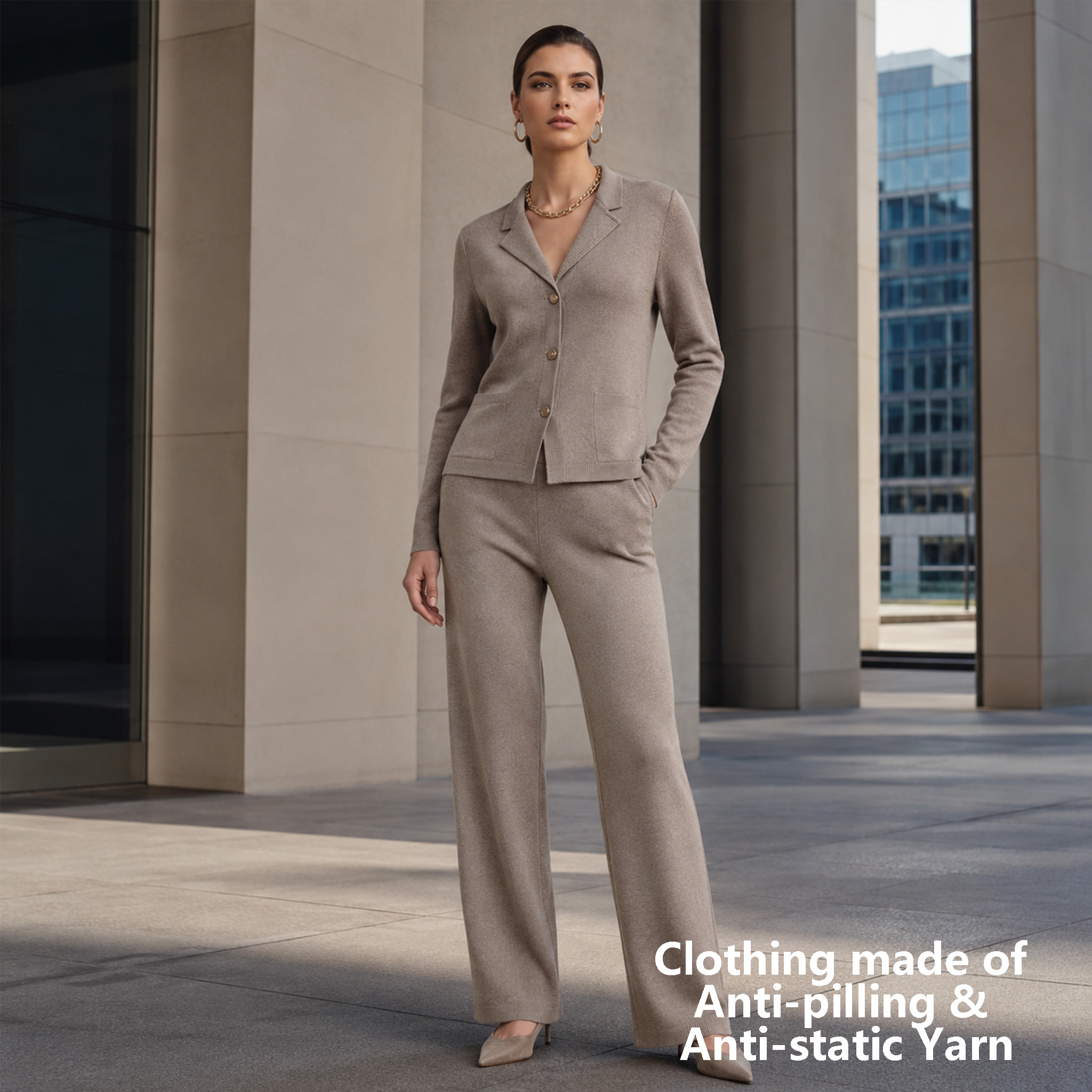
Anti-pilling and anti-static performance can involve fiber structure, spinning route, and functional treatment. The image shows a garment made from the yarn.
This is a different model from a water-repellent finish. A finish sits on the yarn or fabric surface. A functional fiber is part of the yarn structure. Both can be valid, but they raise different questions about durability, washing, and test method.
Finishes: Water-Repellent and Antibacterial Protection
Waterproof antibacterial yarn combines two functional claims. The water-repellent finishing is described as helping reduce water absorption and surface wetting in light rain, splashes, and daily outdoor environments. The antibacterial finishing is described as inhibiting bacterial growth and helping keep textile products cleaner and fresher.
These are not the same claim as waterproofness under heavy rain or antibacterial efficacy under every use condition. The buyer should ask for the test method, the wash durability, and the relationship between the finish and the base fiber. A finish that works on one fiber surface may behave differently on another.
Ceramic and Inorganic Routes: Far-Infrared Heat Retention
Far-infrared heating yarn is a useful example of an additive-led category. The referenced record names far-infrared heat retention, body temperature, thermal radiation, moisture absorption heating, photothermal warming, and external warmth among the functional triggers. It also names far-infrared ceramic material, nano zirconium carbide material, and far-infrared functional additive among the materials.
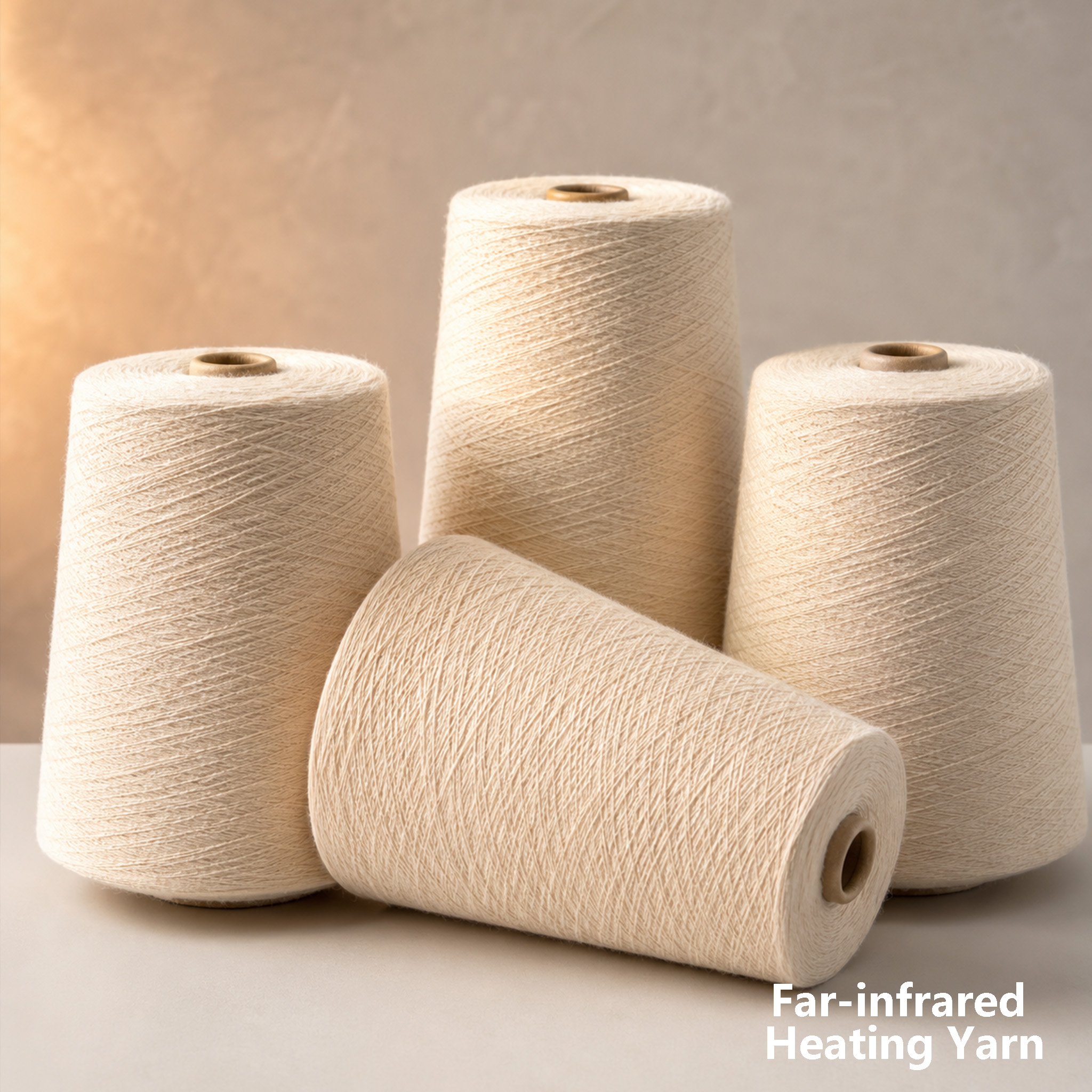
Far-infrared Heating Yarn lists far-infrared ceramic material and nano zirconium carbide material among its functional routes.
For a buyer, the important question is not whether the name sounds advanced. It is whether the supplier can state the test method for far-infrared emissivity, thermal insulation, and washing durability. The product record lists these as testing support areas, alongside SGS and GTTC third-party testing.
Photoluminescent and Color-Changing Systems
Photoluminescent pigment systems, photochromic systems, and thermochromic systems are often described with vivid product names. The referenced records use names such as glow-in-the-dark yarn, photoluminescent yarn, long-afterglow yarn, phosphorescent yarn, UV color-changing yarn, sunlight-reactive yarn, temperature-reactive yarn, and heat-sensitive color-changing yarn.
These names are useful for discovery, but they are not a performance specification. A buyer should ask what triggers the effect, how long the effect lasts, how washing affects it, and which test method is used. The application scenario record also notes that functional products may fail under high temperatures and prolonged sun exposure, while regular products generally do not. That is a limitation to discuss before sampling, not after bulk production.
The Same Logic Applies to Adjacent Yarn Names
The category becomes easier to read when adjacent product names are separated in the same way. Acetate yarn, mulberry silk, denim yarn, Washi paper yarn, faux fox yarn, yak down yarn, FSC certified paper yarn, and cotton-wool blended yarn may appear in the same supplier catalog as functional yarns. Some are base-fiber or blend stories. Some are texture or sustainability stories. Some have functional routes added. The label alone does not tell you which.
For example, FSC Certified Paper Yarn is linked to FSC certification and a paper-fiber source. That is a sustainability and material-origin claim. It is not the same as an antibacterial or far-infrared claim. A buyer comparing them should use different checklists.
Step-by-Step Breakdown: How to Specify a Functional Yarn
- Write the performance target as a testable sentence. “Anti-static” is a label. “Reduces static cling after repeated washing, tested by an agreed method” is a specification. The same applies to antibacterial, water repellency, far-infrared, and color change.
- Choose the base fiber before the functional route. Cotton, linen, cashmere, wool, and polyester are all listed as base options in the referenced records. The base fiber affects hand feel, warmth, breathability, drape, and processing. It also affects how a finish or additive performs.
- Name the functional route. Is the effect created by a functional fiber, a finish, an additive, a pigment system, or a combination? Anti-pilling and anti-static yarn names fiber and additive routes. Waterproof antibacterial yarn names finishes and an antibacterial agent. Far-infrared heating yarn names ceramic and nano zirconium carbide materials.
- Confirm yarn count and process compatibility. The referenced product records list yarn counts customizable from 0.5/1NM to 200/2NM. That is a customization range, not a promise that every count is available in every functional route. Knitting, weaving, embroidery, crochet, jacquard, and sewing are listed as application processes, so the sample should be tested in the process you will actually use.
- Ask for a sample and a test method. The records list sample support for hand feel testing, fabric development, and product sampling. They also list testing support such as SGS, GTTC, AATCC, GB/T, and OEKO-TEX-related support depending on the product. A sample without a test method is only a hand-feel exercise.
- Lock the approved specification before reordering. Record the base fiber, blend ratio, yarn count, color, functional route, test method, and wash durability target. Small-batch customization is listed as available, but a reorder is only repeatable when the approved specification is written down.
Use Cases: Match the Functional Route to the Product Job
Functional yarn selection becomes clearer when the use case is specific. The following examples come from the application fields listed in the referenced records. They are starting points for sampling, not performance guarantees.
- Thermal knitwear and outdoor layers: Far-infrared heating yarn is listed for thermal underwear, outdoor clothing, ski wear, sportswear, socks, hats, scarves, gloves, and thermal accessories. The buyer should verify warmth retention, wash durability, and hand feel in the final fabric.
- Everyday knitwear, uniforms, and school wear: Anti-pilling and anti-static yarn is listed for knitwear, sweaters, children's clothing, sportswear, workwear, uniforms, school uniforms, and daily wear. The buyer should test pilling resistance and anti-static performance after washing.
- Outdoor, travel, and hygiene-sensitive textiles: Waterproof antibacterial yarn is listed for outdoor clothing, sportswear, workwear, uniforms, rainwear, travel apparel, camping apparel, bags, and pet products. The buyer should confirm water repellency, antibacterial performance, and wash durability.
- Children's, baby, and home textiles: Machine washable antibacterial yarn is listed for children's clothing, baby textile products, underwear, socks, bedding, towels, and home textiles. The buyer should confirm the antibacterial test method and repeated-wash performance.
- Creative and visible design: Photochromic, thermochromic, reflective, and luminous yarns are listed for fashion apparel, accessories, hats, bags, shoes, home textiles, and creative textile products. The buyer should test trigger conditions, effect duration, and sensitivity to heat or sunlight.
- Base-fiber-led projects: Cotton, linen, cashmere, wool, polyester, acetate, mulberry silk, denim, Washi paper, faux fox, yak down, FSC certified paper, and cotton-wool blends can be evaluated as material or blend choices. If a functional claim is added, specify it separately.
Comparison Table: Functional Yarn Families and What to Verify
The table below uses only the functional routes, base options, and testing areas named in the referenced records. It is a reading aid, not a ranking.
| Yarn family | Functional route named in the record | Base options named in the record | What to verify before sampling |
|---|---|---|---|
| Far-infrared Heating Yarn | Far-infrared ceramic material, nano zirconium carbide material, far-infrared functional additive | Cotton, linen, cashmere, wool, polyester, acrylic, viscose, and other listed bases | Far-infrared emissivity, thermal insulation, washing durability, hand feel |
| Anti-pilling & Anti-static Yarn | Anti-pilling fiber, anti-static fiber, conductive fiber, static-resistant functional additive | Cotton, linen, cashmere, wool, polyester, acrylic, viscose, and other listed bases | Pilling resistance, anti-static performance, washing durability |
| Waterproof Antibacterial Yarn | Water-repellent finishing, antibacterial agent, silver ion and zinc-based antibacterial material | Cotton, linen, cashmere, wool, polyester, nylon, acrylic, viscose, and other listed bases | Water repellency, antibacterial performance, washing durability |
| Machine Washable Antibacterial Yarn | Antibacterial finishing, antimicrobial functional treatment, washable antibacterial technology | Cotton, linen, cashmere, wool, polyester, nylon, and other listed bases | Antibacterial performance, repeated machine washing, test method |
Photochromic, thermochromic, reflective, and luminous yarns are listed as product categories in the referenced data. The selected product records in this guide do not provide a full additive table for every one of those categories, so buyers should request the specific functional route and test method directly.
FAQ: Functional Yarn Discovery Questions
What compliance documents should I ask for before buying functional yarn?
Ask for the documentation that matches the base fiber, the functional route, and the destination market. MONALISHAMAGIC works with GRS, BCI, and OEKO-TEX certifications and can arrange SGS or GTTC third-party testing. For FSC Certified Paper Yarn, FSC documentation is the relevant scheme. China's GB/T 29862-2026 standard for textile fiber content identification takes effect on August 1, 2027, so buyers should confirm how the base fiber and blend will be declared.
Can one functional yarn supplier work across different base fibers?
The referenced records list base yarn options including cotton, linen, cashmere, wool, polyester, acrylic, viscose, nylon, Tencel, silk, paper yarn, and raffia yarn, among others. They also list customization of yarn count, blend ratio, softness, twist, structure, color, and hand feel. That does not mean every functional additive works with every base fiber. The buyer should confirm the specific base, functional route, and sample performance before bulk production.
How is functional yarn priced?
Functional yarn is quoted against a specification, not against a generic category name. The price discussion should start after the base fiber, functional route, yarn count, blend ratio, color, testing requirement, and order quantity are defined. The records list small-batch customization as available, but they do not publish a price per kilogram. Buyers should compare quotations only when the specification and test scope are the same.
Can I test a sample before bulk production?
Sample support is listed for hand feel testing, fabric development, and product sampling. For functional claims, a sample should be paired with a test method. Depending on the product, the records list testing support such as SGS, GTTC, AATCC, GB/T, and OEKO-TEX-related support. The sample should be evaluated in the final fabric and the final process, not only as a yarn hand-feel sample.
How do I confirm lead time?
Lead time is not a fixed catalog number in the referenced records. It should be confirmed after the specification, sample approval, raw material availability, and order quantity are clear. Send the target performance, base fiber, yarn count, color, and application to MONALISHAMAGIC to request a sample and a quotation; the catalog is also available as a PDF for initial screening.
Conclusion: Buy the Build, Not the Label
Functional yarn is a category built from base fibers, functional additives, pigments, fibers, finishes, and spinning routes. Cotton, linen, cashmere, wool, and polyester can carry the yarn, but they do not define the function. Anti-pilling and anti-static fibers, conductive fiber, far-infrared ceramic, nano zirconium carbide, water-repellent finishing, antibacterial agents, and photoluminescent pigment systems each point to a different route.
The practical buying rule is simple. Ask for the base fiber, the functional route, the yarn count, the test method, and the wash durability target. Then sample the yarn in the process and fabric you will actually use. That approach turns “functional yarn” from a confusing category into a comparable specification.
Sample evaluation should match the final application, not only the yarn name. Request a sample and test protocol from MONALISHAMAGIC.
About MONALISHAMAGIC
MONALISHAMAGIC is the brand of Dongguan Yuexiong Textile Co., Ltd., a functional-yarn manufacturer and vertically integrated yarn spinning mill based in Dongguan, China. The company was founded in 2016 and operates a 2,000 sqm factory with 50 employees, including 20 engineers. It reports an annual output of 1,000 tons, with export sales accounting for 70% of total sales. Its products are certified by GRS, BCI, and OEKO-TEX.
Address: Room 102, No.5 Xingfeng Road, Xiangtou, Dalang Town, Dongguan City, Guangdong Province, P.R.China. Contact: Alanli. Email: alanli@monalishamagic.blmgeo.cloud. Phone: +86 137-1023-8299. Website: monalishamagic.com.
For sampling, quotation, or catalog review, download the MONALISHAMAGIC catalog PDF or contact the team with your target performance and base fiber.
Have Questions or Need More Details?
Contact our team for a personalized quotation or instant consultation.
Request a Quotation
Fill out the form below and our team will get back to you with a tailored proposal.
WhatsApp Direct Chat
Prefer to chat in real-time? Message us on WhatsApp for instant assistance & quick answers.
- Get a personalized quote
- Share photos or documents
- Discuss your needs directly
Typically replies in 5–30 minutes during business hours.