Cotton-Wool Blended Yarn vs Wool Cashmere Yarn: Which Luxury Knitwear Yarn Fits Your Brand?
Cotton-Wool Blended Yarn vs Wool Cashmere Yarn: Which Luxury Knitwear Yarn Fits Your Brand?

Choosing between cotton-wool blended yarn and wool cashmere yarn is one of the most common forks in premium knitwear development — and it is rarely settled by fiber quality alone. Both are natural fiber yarns. Both can be knitted, woven, embroidered, crocheted or jacquard-worked. Both can be produced in a yarn count range from 0.5/1NM to 200/2NM, in the same color families, with the same small-batch sampling workflow.
Short answer: cotton-wool blended yarn (YX-BLEND-001) fits brands that need breathability, a balanced hand feel, a mid-to-premium price architecture and a cotton-led sustainability story. Wool cashmere yarn (YX-LUX-001) fits brands whose product must carry tactile luxury, warmth retention and a genuine high-end retail tier. The decision is therefore a brand-tier decision first and a fiber decision second.
This guide compares the two yarns the way a product developer or brand buyer actually evaluates them: composition, hand feel, warmth, cost structure, end use, compliance documentation and sampling workflow — closing with a checklist that maps yarn choice to your product line, price point and sustainability claims.
The Real Decision: Cost Structure and Retail Tier, Not Fiber Quality
Most sourcing briefs frame this comparison as “which one feels softer?” That framing hides the three constraints that actually decide the outcome for a knitwear program.
- Retail price architecture. A yarn that contains cashmere carries a fiber cost structure that a mid-tier retail price cannot comfortably absorb. A cotton-dominant blend carries a cost structure that supports broader distribution and higher unit volume.
- Season and wear occasion. Cotton-wool blends balance breathability with wool warmth, which suits transitional and multi-season programs. Wool cashmere is built around warmth retention and a dense, soft hand feel, which points to autumn and winter premium programs.
- Compliance and claims. The fiber mix you choose determines which certification routes are open to you — BCI or organic cotton claims on one side, Responsible Wool routes on the other — and therefore what you can legitimately print on a hangtag.
Because both yarns are customizable in composition, the decision is not binary. Cotton-wool can be specified at 50% cotton / 50% wool, 70/30, 80/20 or 60/40, and wool cashmere can be specified as 100% wool, 100% cashmere, 70% wool / 30% cashmere or 50/50. Each ratio shifts hand feel, warmth and cost at the same time. The practical task is to pick the ratio band that matches the tier you are selling into, then validate it on the needle.
Industry Background: Where Natural Blended Yarns Sit in 2026
Natural fiber blends are not a niche corner of the yarn business. The global textile yarn market was valued at USD 117.1 billion in 2025 and is projected to reach USD 170.32 billion by 2034, according to Fortune Business Insights. Within that market, cashmere yarn alone was valued at USD 4.8 billion in 2025, with Asia Pacific accounting for 39.4% of demand (Dataintelo) — a reminder that premium animal fiber is a mainstream commercial category rather than a boutique experiment.
Two shifts are shaping how buyers specify these yarns. First, composition flexibility has become a buying requirement: brands want one supplier that can move between cotton-dominant and wool-dominant blends without changing yarn count, color program or delivery terms. Second, certification has moved from a marketing extra into the sourcing brief itself. BCI, Responsible Wool, GRS, OCS and OEKO-TEX documentation is now frequently requested before a sample is even approved.
MONALISHAMAGIC — the brand of Dongguan Yuexiong Textile Co., Ltd. — is a vertically integrated yarn spinning mill founded in 2016 in Dongguan, Guangdong, China, with a 2,000 sqm facility, 50 employees, a 20-engineer R&D team, an annual output of 1,000 tons and an export ratio of roughly 70% across global markets. Its portfolio spans luxury natural fibers such as cashmere and organic cotton through to recycled nylon (GRS), with OEM/ODM as a core operating model.
The Two Yarns in Detail: YX-BLEND-001 and YX-LUX-001
Cotton-Wool Blended Yarn (YX-BLEND-001)
Cotton-wool blended yarn combines a soft cotton touch with wool warmth. Its stated performance profile is breathability, elastic recovery, balanced hand feel and shape retention — the combination that makes it suitable for sweaters, cardigans, scarves, hats, gloves, children’s clothing, daily wear and premium knitwear.
- Composition options: 50% cotton / 50% wool, 70% cotton / 30% wool, 80% cotton / 20% wool, 60% cotton / 40% wool, plus BCI cotton, organic cotton and recycled cotton variants combined with RWS wool, non-mulesed wool or Geelong wool.
- Yarn count: customizable from 0.5/1NM to 200/2NM.
- Example specifications: 50/50, 70/30 and 80/20 cotton-wool blends; 2/30NM and 2/48NM cotton-wool constructions.
- Colors: natural white, ivory, oatmeal, beige, camel, brown, gray, black, melange and custom dyed or brand-exclusive colors.
- Processes: knitting, weaving, embroidery, crochet, jacquard, sewing and garment decoration.
- Testing support: fiber composition, color fastness, pilling resistance, shrinkage, dimensional stability and tensile strength, with BCI, RWS, GRS, OCS, OEKO-TEX, SGS or GTTC third-party routes arranged on request.
Wool Cashmere Yarn (YX-LUX-001)
Wool cashmere yarn is built around warmth retention, softness and a high-end hand feel. Its stated performance profile is soft touch, breathability and skin-friendly comfort for premium knitwear development — the profile that supports luxury knitwear, premium cardigans, winter sweaters, shawls and high-end women’s and men’s wear.
- Composition options: 100% wool, 100% cashmere, 70% wool / 30% cashmere, 50% wool / 50% cashmere, plus wool-cashmere blends with cotton, viscose, nylon or acrylic.
- Yarn count: customizable from 0.5/1NM to 200/2NM.
- Example specifications: 26/2 wool cashmere yarn; 30% cashmere / 70% wool yarn.
- Colors: natural white, oatmeal, beige, camel, brown, gray, black, melange and custom dyed or brand-exclusive colors.
- Processes: knitting, weaving, embroidery, crochet, jacquard, sewing and garment decoration.
- Testing support: fiber composition, color fastness, pilling resistance and dimensional stability, with RWS, GRS, OCS, SGS or GTTC third-party testing arranged on request.
The Shared Platform: Why the Choice Is About Position, Not Capability
Both yarns run from 0.5/1NM to 200/2NM and share the same color menu — natural white, black, gray, beige, camel, melange and custom dyed shades — as well as the same application processes, including knitting, weaving, embroidery and jacquard. Softness, twist, structure, elasticity and warmth level can be specified for either yarn. Both operate under the same manufacturing terms: OEM/ODM customization on composition, color, specification and functional parameters, small-batch MOQ from 5 KG, and a standard lead time of 7–15 days with inspection provided before shipment.
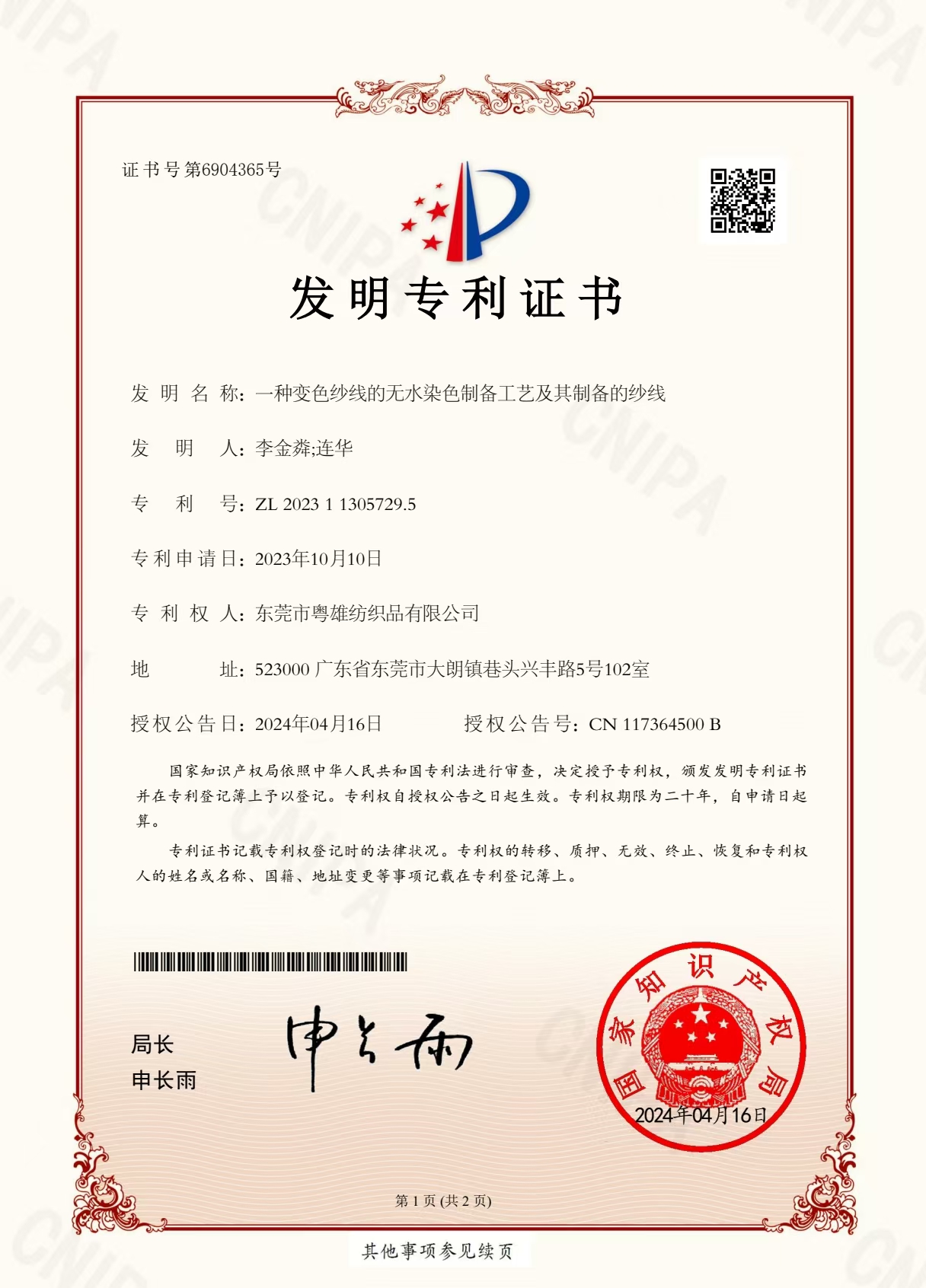
Custom color programs are supported by a patented waterless dyeing preparation process for color-changing yarns and the yarns prepared therefrom (CNIPA invention patent ZL 2023 1 1305729.5, issued 16 April 2024), alongside two utility model patents covering dyeing devices: a spray pipe and dyeing yarn device (ZL 2022 2 1385471.5) and a suction roller and dyeing yarn device (ZL 2022 2 1384659.8), both issued 13 September 2022.
Step-by-Step: Matching the Yarn to Your Brand Tier
- Define the retail tier and target landed cost first. Fix the price band before evaluating fiber. A cashmere-bearing blend and a cotton-dominant blend do not compete for the same shelf, even when both are knitted on the same machine.
- Set the hand feel and warmth target for the selling season. If the product must feel breathable and structured for transitional wear, start with YX-BLEND-001 at 70/30 or 80/20. If it must feel soft and warm as the primary selling point, start with YX-LUX-001 at 70% wool / 30% cashmere or higher cashmere content.
- Align composition with your sustainability claims. Cotton-wool blends open BCI, organic or recycled cotton routes combined with RWS, non-mulesed or Geelong wool. Wool cashmere programs typically center on Responsible Wool routes. Choose the claim, then choose the fiber behind it.
- Confirm yarn count against your knitting or weaving process. Both yarns are available from 0.5/1NM to 200/2NM, so the count can be matched to gauge, machine and finished fabric weight without switching suppliers.
- Plan the color program. Natural white, black, gray, beige, camel, melange and custom dyed colors are available across both yarns; melange and brand-exclusive shades should be locked during development rather than after bulk approval.
- Validate on the needle before bulk. Request both yarns in the same count and color, knit or weave swatches, run the wash and wear test your retail market requires, and compare the finished hand feel against your target price point.
Use Cases: Where Each Yarn Wins
Cotton-wool blended yarn (YX-BLEND-001) fits: multi-season sweaters and cardigans; children’s clothing where breathability and skin comfort matter; scarves, hats and gloves in mid-to-premium collections; daily wear and casual knitwear; and any product line where a BCI, organic or recycled cotton story must sit alongside wool warmth.
Wool cashmere yarn (YX-LUX-001) fits: luxury knitwear and premium cardigans; winter sweaters and shawls; high-end women’s and men’s wear; accessories where hand feel is the primary purchase driver; and collections where the retail tier can absorb a cashmere-bearing fiber cost.
The overlap zone is the sweater and cardigan category, where both yarns are technically valid. In that zone the deciding question is not “which is better?” but “which price band is this SKU designed to sell in, and which hand feel does that band promise the customer?”
Cotton-Wool Blended Yarn vs Wool Cashmere Yarn: Head-to-Head Comparison
| Decision dimension | Cotton-Wool Blended Yarn (YX-BLEND-001) | Wool Cashmere Yarn (YX-LUX-001) |
|---|---|---|
| Composition options | 50/50, 70/30, 80/20 and 60/40 cotton-wool; BCI, organic or recycled cotton with RWS, non-mulesed or Geelong wool | 100% wool, 100% cashmere, 70% wool / 30% cashmere, 50% wool / 50% cashmere, plus blends with cotton, viscose, nylon or acrylic |
| Yarn count range | 0.5/1NM to 200/2NM | 0.5/1NM to 200/2NM |
| Example specifications | 50/50 and 70/30 cotton-wool; 2/30NM and 2/48NM | 26/2 wool cashmere; 30% cashmere / 70% wool |
| Hand feel profile | Soft cotton touch, breathable, elastic recovery, balanced and shape-retaining | Soft, warm, breathable, skin-friendly, high-end hand feel |
| Warmth profile | Moderate warmth contributed by the wool share, balanced by cotton breathability | Warmth retention is the defining performance attribute |
| Color options | Natural white, ivory, oatmeal, beige, camel, brown, gray, black, melange, custom dyed | Natural white, oatmeal, beige, camel, brown, gray, black, melange, custom dyed |
| Application processes | Knitting, weaving, embroidery, crochet, jacquard, sewing, garment decoration | Knitting, weaving, embroidery, crochet, jacquard, sewing, garment decoration |
| Typical end use | Sweaters, cardigans, scarves, hats, gloves, children’s clothing, daily wear, premium knitwear | Luxury knitwear, premium cardigans, winter sweaters, shawls, high-end women’s and men’s wear |
| Cost structure (qualitative) | Driven by cotton type (BCI, organic, recycled), wool type and the cotton:wool ratio | Driven primarily by the cashmere share in the blend |
| Testing and certification support | BCI, RWS, GRS, OCS, OEKO-TEX, SGS or GTTC testing arranged on request | Fiber composition, color fastness, pilling, dimensional stability; RWS, GRS, OCS, SGS or GTTC on request |
| MOQ and lead time | Small-batch customization from 5 KG; 7–15 days standard lead time | Small-batch customization from 5 KG; 7–15 days standard lead time |
How to read this table: the two yarns tie on platform capability — count range, color menu, processes, MOQ and lead time. They separate on composition, hand feel, warmth profile, cost structure and target tier. That is why the same mill can offer both without cannibalizing either.
Frequently Asked Questions
1. What certification and test documentation is available for these two yarns?
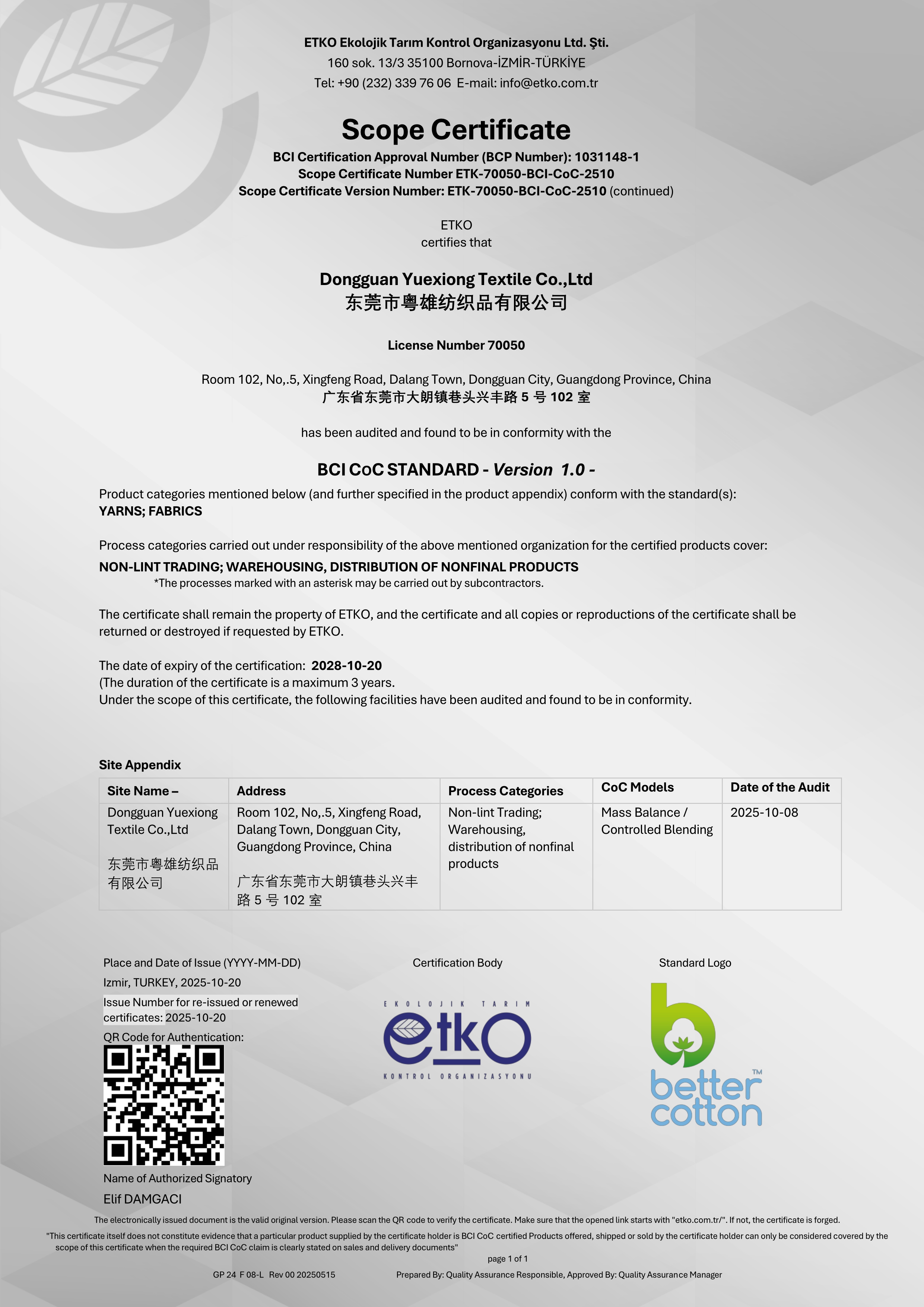
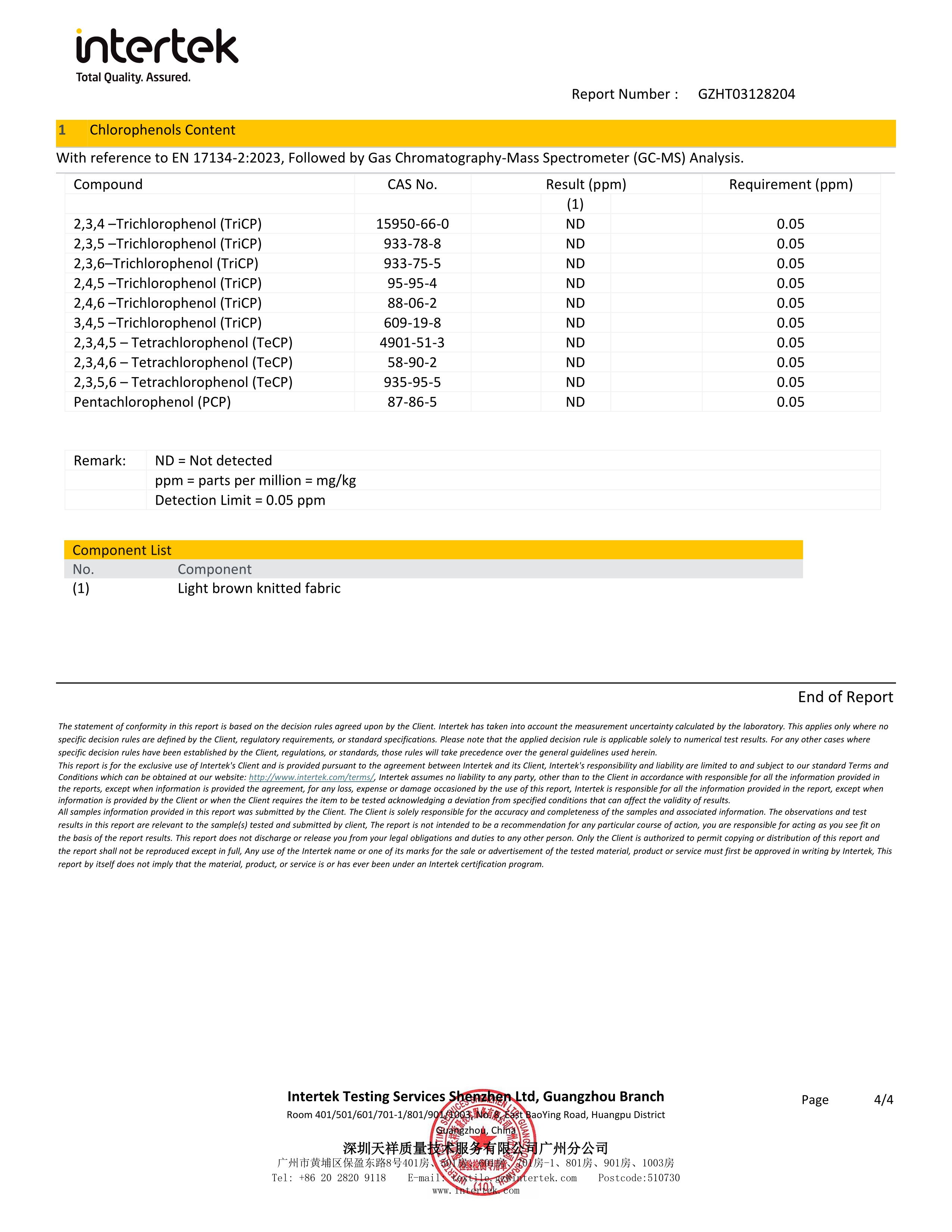
Cotton-wool blended yarn can be produced with BCI cotton, organic cotton or recycled cotton. MONALISHAMAGIC holds BCI Chain of Custody certification ETK-70050-BCI-CoC-2510, issued on 20 October 2025 and valid to 20 October 2028, covering non-lint trading and warehousing of yarns and fabrics under BCI CoC Standard v1.0. For both yarn families, RWS, GRS, OCS, OEKO-TEX, SGS and GTTC third-party testing can be arranged according to buyer requirements, including fiber composition, color fastness, pilling resistance and dimensional stability. Intertek test reports for knitted fabric — for example GZHT03128204 (light brown knitted fabric) and GZHT03128212 (black knitted fabric), both issued on 16 April 2026 under EN 17134-2:2023 for the EU/US market — form part of the available documentation set. Which route you need depends on the claims you intend to place on the garment label.
2. Can both yarns be customized in composition, count and color?
Yes. The mill operates as an OEM/ODM spinning partner with customization on yarn composition, color, specification and functional parameters. Cotton-wool blended yarn is available in 50/50, 70/30, 80/20 and 60/40 ratios with 2/30NM or 2/48NM example constructions; wool cashmere yarn is available as 100% wool, 100% cashmere, 70% wool / 30% cashmere, 50/50 and blended variants, with 26/2 wool cashmere and 30% cashmere / 70% wool as example specifications. Both run from 0.5/1NM to 200/2NM, and softness, twist, structure and elasticity can be specified. Development is supported by a 20-engineer in-house R&D team.
3. What actually drives the cost difference between the two yarns?
Fiber content dominates. In cotton-wool blended yarn, cost is set by the cotton type (BCI, organic or recycled), the wool type (RWS, non-mulesed or Geelong) and the cotton:wool ratio. In wool cashmere yarn, cost is set primarily by the cashmere share in the blend — cashmere fiber is typically the most expensive component, so moving from 30% to 50% cashmere shifts landed cost more than any other single variable. Secondary drivers apply to both: finer yarn counts require finer fiber, custom dyed and melange programs carry different processing routes than natural or black shades, and order volume interacts with the 5 KG small-batch MOQ.
4. Can I validate both yarns before committing to bulk production?
Yes. Sample support is available for both yarns, covering hand feel testing, warmth testing, fabric development and color testing, with small-batch customization from 5 KG. A practical validation sequence is to request both yarns in the same count and color, produce swatches through your intended process — knitting, weaving, embroidery or jacquard — and then run the wash, pilling and dimensional stability checks your retail market requires. Sample reconfirmation and color matching support are also available after the initial sampling round.
5. What is the lead time, and what does the next step look like?
Standard lead time for both yarns is 7–15 days, with inspection provided before shipment. Orders ship to global markets, consistent with an export ratio of roughly 70%, and after-sales coverage includes remote support, quality complaint handling, reorder assistance, logistics tracking and compliance document supply. To move from evaluation to decision, request a matched sample set of cotton-wool blended yarn and wool cashmere yarn in your target count, color and composition — then compare the finished swatch against your retail tier before locking the blend ratio.
Conclusion: A Yarn-to-Brand Checklist
Cotton-wool blended yarn and wool cashmere yarn are not competitors for the same slot on the shelf. They are two positions on the same premium natural-fiber ladder, produced on the same platform, in the same count range and the same color menu, with the same sampling and lead-time terms. What changes is the brand tier the yarn is designed to serve.
- Product line: choose YX-BLEND-001 for multi-season sweaters, cardigans, children’s wear, scarves, hats and gloves; choose YX-LUX-001 for luxury knitwear, winter sweaters, shawls and high-end women’s or men’s wear.
- Price point: if the retail band must support volume and broad distribution, anchor on a cotton-dominant blend; if it can absorb a cashmere-bearing fiber cost, anchor on wool cashmere.
- Hand feel and warmth: pick breathable, balanced and shape-retaining, or pick soft, warm and skin-friendly — then fix the blend ratio that delivers it.
- Sustainability story: BCI, organic or recycled cotton combined with RWS wool for the blended route; Responsible Wool-centered sourcing for the cashmere route.
- Color and process: confirm count between 0.5/1NM and 200/2NM, lock natural white, black, gray, beige, camel, melange or custom dyed shades, and verify the process — knitting, weaving, embroidery or jacquard — on a swatch.
- Validation: sample from 5 KG, check hand feel and wash performance, then confirm lead time of 7–15 days against your production calendar.

Next step: match the yarn to your line
Request a matched sample of cotton-wool blended yarn (YX-BLEND-001) and wool cashmere yarn (YX-LUX-001) in your target count, composition and color, and compare the finished swatch against your retail tier before you commit to bulk.
Download the full product brochure: MONALISHAMAGIC product catalogue (PDF)
Contact: Alanli — Email: alanli@monalishamagic.blmgeo.cloud | Tel: 13710238299 | WhatsApp: +86 137-1023-8299
Website: www.monalishamagic.com | Address: Room 102, No.5 Xingfeng Road, Xiangtou, Dalang Town, Dongguan City, Guangdong Province, P.R. China.