Far-Infrared Heating Yarn Explained: How Ceramic Additives Create Warmth in Knitwear
Far-Infrared Heating Yarn Explained: How Ceramic Additives Create Warmth in Knitwear
Far-infrared heating yarn is a functional yarn that carries ceramic additives inside the yarn structure, so a finished knit can absorb energy from the body and its surroundings and re-emit it as far-infrared radiation. MONALISHAMAGIC's entry in this category, YX-HEAT-001, is built on far-infrared ceramic material and nano zirconium carbide, and it can be spun on cotton, linen, cashmere, wool or polyester bases in counts from 0.5/1 NM to 200/2 NM.
That definition matters more than it first appears. Warmth in knitwear has historically come from mass: heavier yarn, denser structures, thicker garments. Far-infrared heating yarn opens a different route, supporting the warmth-retention behaviour of a fabric while reducing dependence on weight. For buyers, brands and product developers specifying a 2027 collection, the useful questions are not whether the technology sounds advanced, but what sits inside the yarn, what it can be made from, what it can be made into, and what evidence stands behind the claim.
The Problem: Knitwear Warmth Still Depends on Weight
Traditional knitwear warmth is largely a matter of mass and trapped air. Add grams per square metre, brush the surface, tighten the structure, and the garment becomes warmer — along with its fibre cost, knitting time, shipping weight and, often, its stiffness. In base layers and mid layers this is where brands lose ground: consumers want warmth they can wear under a coat without bulk.
Surface finishes offer a shortcut. A topical treatment can lift measured thermal performance without adding weight, but it sits on the yarn rather than inside it, so its durability is tied to how the garment is washed and worn. A warmth claim that fades after a season of laundering is a claim the brand cannot repeat next year.
The second problem is verification. Labels use words such as thermal, self-heating and heat-generating for mechanisms that are not comparable: some yarns respond to moisture, some reflect body heat through metallised structures, some rely on ceramic additives, and some are simply heavier. A buyer comparing quotations without agreeing on mechanism is comparing unrelated products.
The third problem is fibre fit. A functional yarn that cannot be spun onto the fibre a brand actually sells — cashmere for a luxury knit, cotton for a volume programme, polyester for a performance line — is a laboratory result rather than a sourcing option.
Industry Background: Functional Yarn Demand Beyond Colour and Count
The overall yarn market is large and still expanding. Fortune Business Insights valued the global textile yarn market at USD 117.1 billion in 2025 and projects it to reach USD 170.32 billion by 2034. The more useful signal, however, sits inside the market rather than in its headline: growth is concentrating in yarns that carry a function.
- Antibacterial yarn, valued at USD 3.43 billion in 2025 and projected to reach USD 6.73 billion by 2034 (Dataintelo), shows that buyers now pay for attributes beyond colour and count.
- Fancy yarn — the segment that includes chenille, reflective and slub constructions — was valued at USD 6.45 billion in 2024 (Custom Market Insights).
- Cashmere yarn reached USD 4.8 billion in 2025, with Asia Pacific accounting for 39.4% of demand (Dataintelo). That figure matters here because far-infrared heating yarn can be built on cashmere bases rather than competing with them.
- Mulberry silk, at USD 6.06 billion in 2023 and projected to reach USD 10.59 billion by 2030 (Cognitive Market Research), follows the same premiumisation pattern.
Published third-party sizing for far-infrared heating yarn specifically is limited; the category is usually reported inside broader functional, technical and fancy yarn segments. That gap is not a reason to dismiss the technology, but it is a reason to judge it on mechanism, construction and test evidence rather than on market-size arguments.
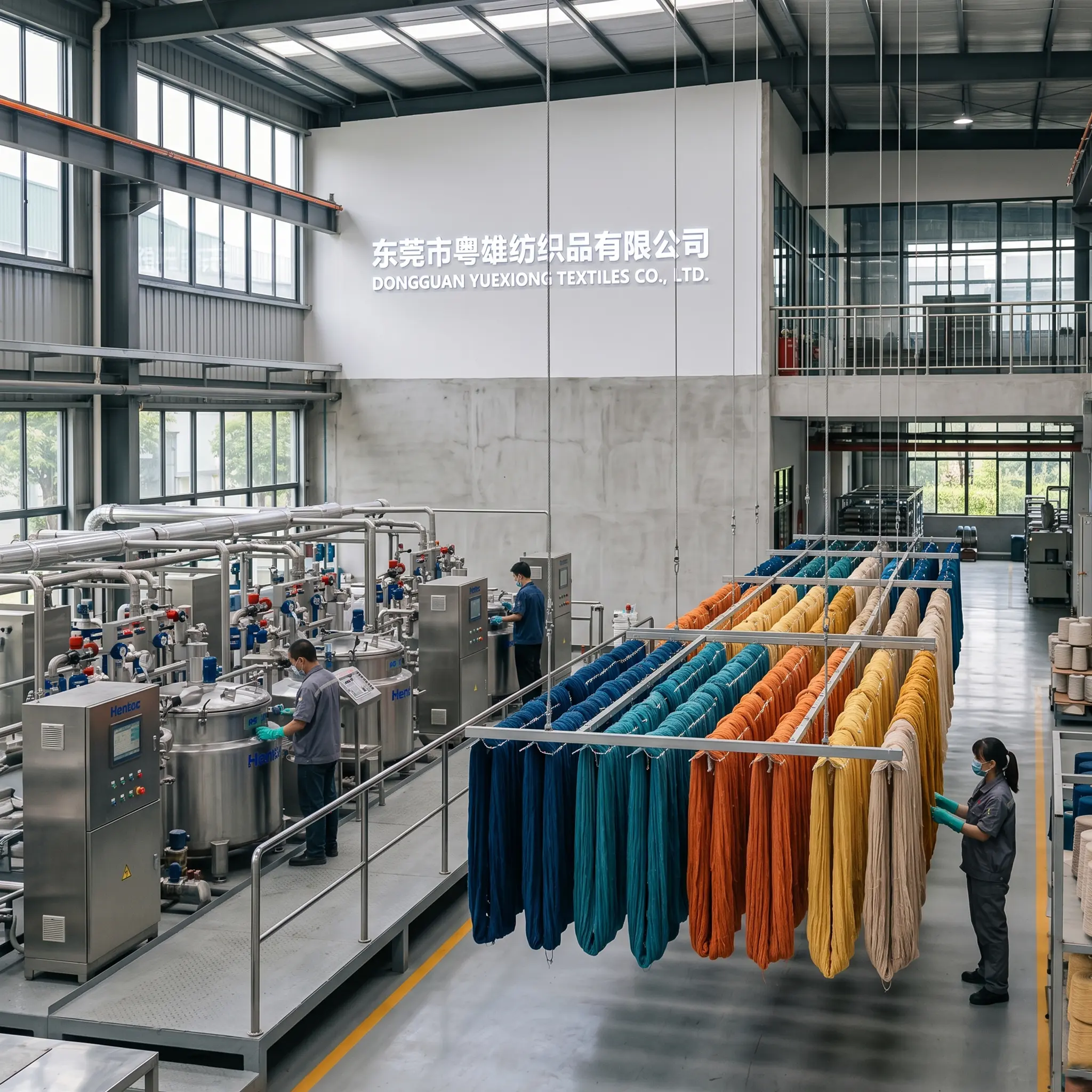
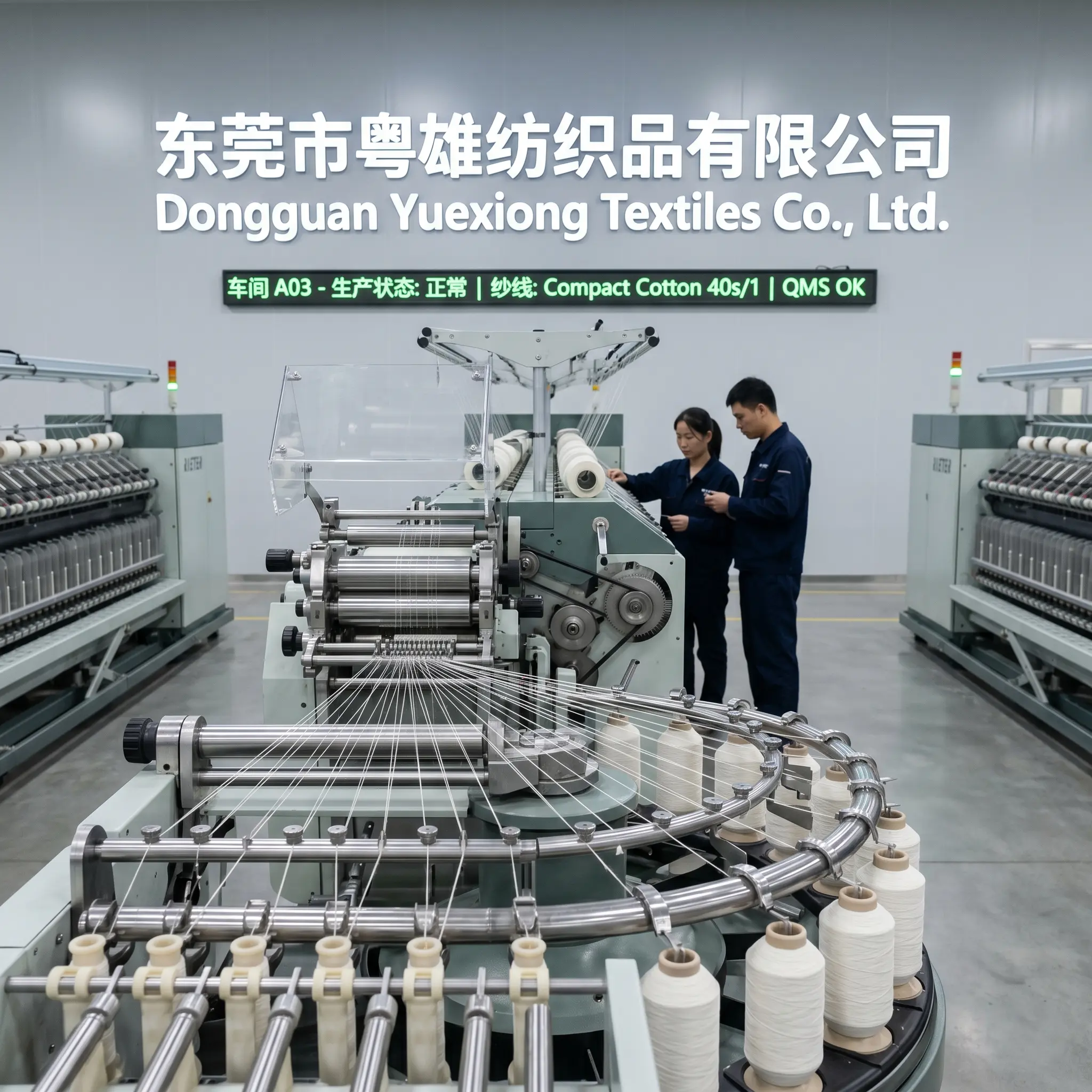
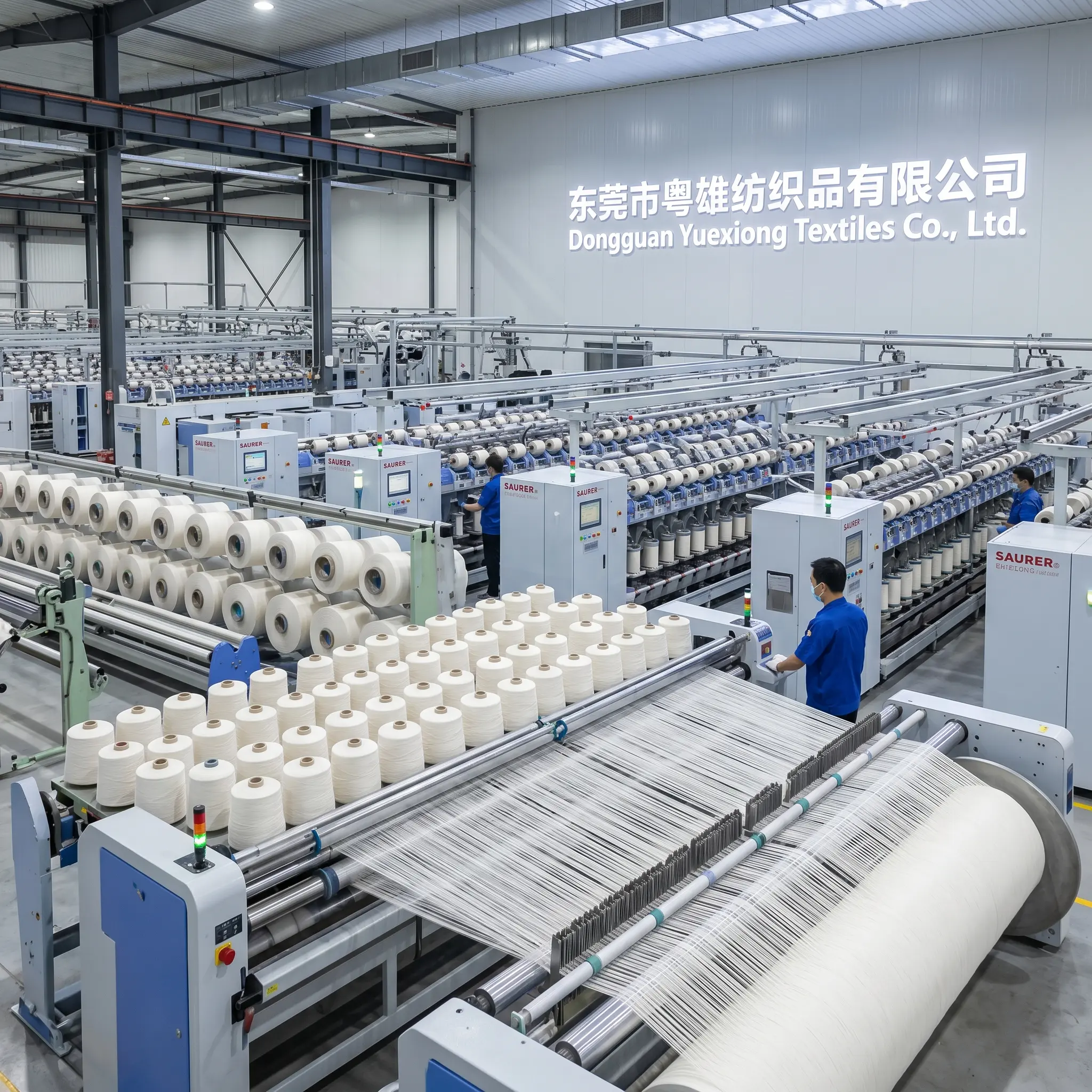
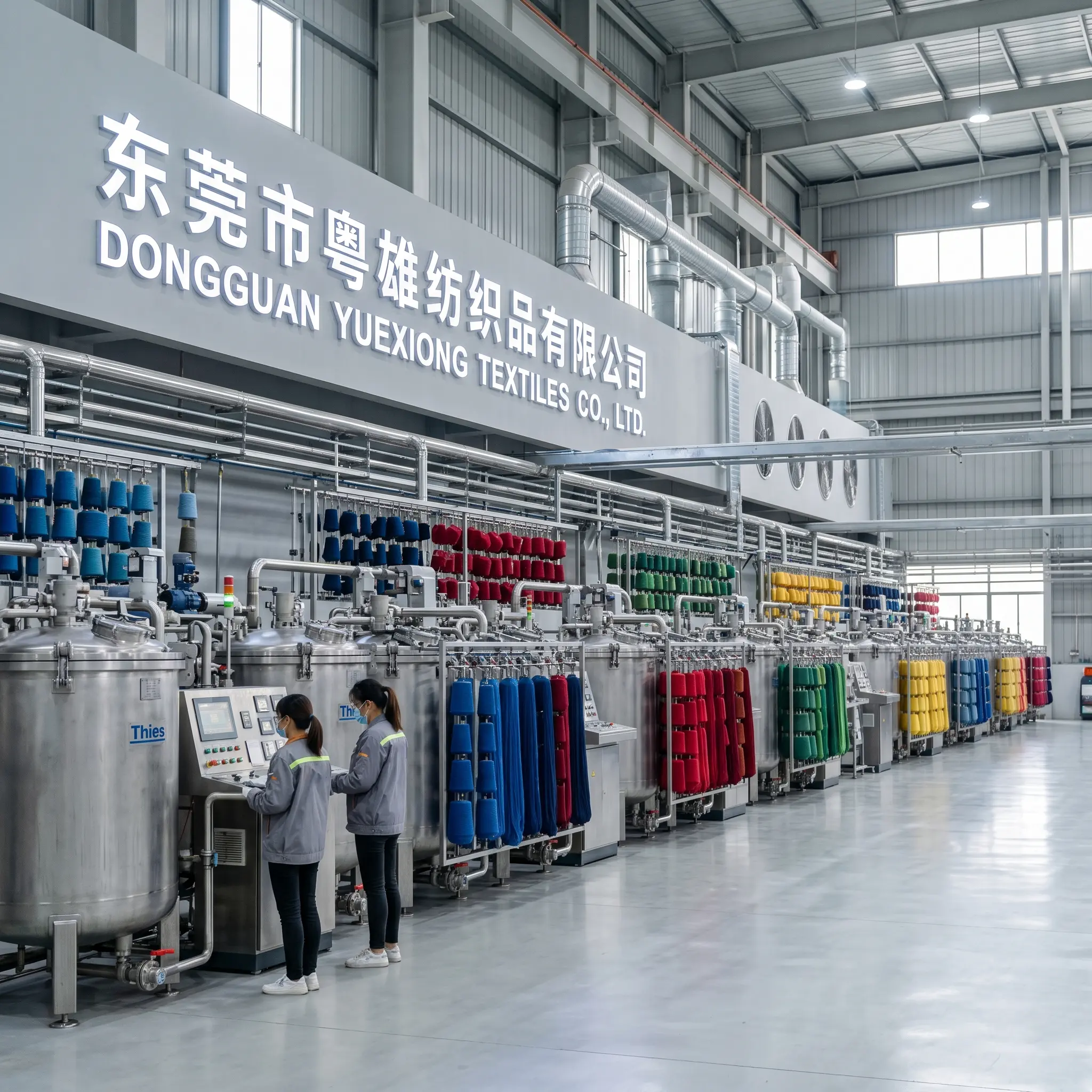
MONALISHAMAGIC is the brand of Dongguan Yuexiong Textile Co., Ltd., a vertically integrated yarn spinning mill based in Dongguan, Guangdong Province, China, founded in 2016, operating a 2,000 sqm facility with 50 employees, 20 R&D engineers and an annual output of 1,000 tons, with roughly 70% of production exported to global markets. Its portfolio combines natural fibres such as cashmere and organic cotton with recycled nylon (GRS) and a functional range that already includes thermochromic, photochromic, conductive heating and metal gel materials. Products are certified under GRS, BCI and OEKO-TEX, and the mill runs a patented waterless dyeing process.
The Solution: YX-HEAT-001 Far-Infrared Heating Yarn
What the yarn is
YX-HEAT-001 is MONALISHAMAGIC's far-infrared heating yarn: a functional yarn in which far-infrared ceramic material and nano zirconium carbide are incorporated into the yarn itself rather than applied as a surface finish. The ceramic system is the functional core of the product; the fibre base is the delivery vehicle that determines hand feel, drape and the product categories the yarn can serve.
How ceramic additives create warmth
Far-infrared ceramic materials absorb energy — from the body and from the surrounding environment — and re-emit part of it in the far-infrared band, which textile surfaces and skin absorb readily. Nano zirconium carbide forms part of this additive system. The mechanism is passive: it works with energy the garment already receives, which means YX-HEAT-001 contains no battery, wiring or electronic component. Practically, that keeps care labelling, laundry instructions, product liability and end-of-life handling close to conventional knitwear.
Base fibres and yarn count
| Parameter | YX-HEAT-001 far-infrared heating yarn |
|---|---|
| Function | Far-infrared heating / warmth retention |
| Additive system | Far-infrared ceramic material and nano zirconium carbide |
| Base fibres | Cotton, linen, cashmere, wool, polyester |
| Yarn count | Customisable from 0.5/1 NM to 200/2 NM |
| Colour | Customisable colour options |
| Intended processes | Knitting, weaving, product development |
| External power | None required in the yarn |
| Portfolio certifications | GRS, BCI, OEKO-TEX (confirm scope per order) |
The 0.5/1 NM to 200/2 NM window spans coarse counts for heavy-gauge outerwear knits through fine counts for light base layers, and it matches the count range MONALISHAMAGIC applies across its functional yarn range. Count selection should follow three inputs rather than preference: the knitting gauge, the target fabric weight, and the hand feel the chosen base fibre delivers at that count.
Colour, processing and production fit
Colour is the variable buyers most often underestimate on a loaded yarn. Because the additive sits inside the structure, dyeing behaviour and colour continuity have to be managed across lots, particularly on cashmere and wool where fibre lot variation is normal. MONALISHAMAGIC applies a patented waterless dyeing process and reports high colour fastness and wash durability across its portfolio. Buyers should still confirm continuity between lab dip and bulk before the knitting calendar is fixed.
In production, YX-HEAT-001 is intended for knitting, weaving and product development, and it is compatible with sampling, small-batch development and bulk programmes. It does not demand a special knitting set-up: the constraint sits in the specification, not in the machinery.
Limits and how the risks are controlled
Two risks are recognised for this class of yarn. The first is performance degradation under extreme temperatures or prolonged UV exposure. The second is colour fading or reduced wash durability. MONALISHAMAGIC controls both with UV-stabilised treatment, temperature-resistant formulations, and strict quality control of colour fastness and washability, supported by environmental and durability testing and compliance with OEKO-TEX, GRS and BCI standards.
Boundary condition: a far-infrared heating yarn improves passive warmth retention. It is not an active heating system and should not be specified where powered heat generation is the requirement. The right way to read the category is as a route to more warmth from the same garment weight — not as a replacement for a heated jacket.
Step-by-Step: How to Specify and Validate Far-Infrared Heating Yarn
The sequence below reflects the order in which specification decisions constrain one another. Changing an earlier step invalidates the ones that follow it.
- Define the thermal job first. Base layer, mid layer or outerwear? The answer sets the target warmth, the acceptable weight and the wash regime, and it decides whether a heating yarn is the right tool at all.
- Choose the base fibre against the product, not the technology. Cotton for breathable volume programmes, linen for transitional and dry-hand knits, cashmere and wool for premium winterwear, polyester for durability and cost control.
- Fix the yarn count inside the 0.5/1 NM to 200/2 NM window. Coarse counts suit heavy-gauge outerwear; fine counts suit light base layers. Match the count to the knitting gauge and the target fabric weight.
- Confirm the colour route and fastness expectations. Request a lab dip, agree the wash-fastness requirement, and check that the specified colour is achievable on the chosen base fibre.
- Validate with a sample before bulk. Ask for YX-HEAT-001 in the exact base fibre, count and colour of the intended product; sample behaviour is what the consumer will ultimately feel.
- Run a pilot knit and a wash trial. Check hand feel, pilling, shrinkage and colour stability after repeated washing — the same cycle the finished garment will face.
- Lock documentation and bulk QC. Confirm which certificate scope covers the ordered construction, agree batch and colour-continuity checks, then schedule bulk against the knitting calendar.
Use Cases: Where Far-Infrared Heating Yarn Fits
- Thermal base layers and underwear: warmth retention without the weight and stiffness of a heavier knit, which is the main complaint in this product category.
- Mid-layer sweaters and pullovers: cashmere, wool and wool-blend knits that need warmth without an extra gauge step.
- Outdoor and active knitwear: products where warmth per gram matters because the garment is layered, packed or carried.
- Cold-weather accessories: hats, scarves, gloves and socks developed as add-on items in a winter programme.
- Weaving programmes: fabric development where the far-infrared yarn is used in weaving rather than knitting.
- Brand product development and designer collections: projects where the far-infrared mechanism becomes part of the product story at launch.
- Where it is not the right choice: products that require active heat generation, and constructions whose base fibre hand feel cannot tolerate the additive loading.
Comparison: Far-Infrared Heating Yarn vs Other Functional Yarns
The table compares YX-HEAT-001 with the other functional yarns published in MONALISHAMAGIC's range. It is a mechanism comparison rather than a ranking: each yarn answers a different product question, and none of them substitutes for another.
| Attribute | YX-HEAT-001 (far-infrared heating) | Photochromic yarn | Thermochromic yarn | Reflective yarn | Ordinary dyed yarn |
|---|---|---|---|---|---|
| Primary function | Re-emits absorbed energy as far-infrared radiation to support warmth retention | Changes colour under sunlight or UV light | Changes colour at a target temperature | Reflects light in low-light conditions | Fixed colour, no functional response |
| External power or electronics | None required in the yarn | None — no electricity, battery or electronic component required | None required | None required | None |
| Yarn count range | 0.5/1 NM to 200/2 NM | 0.5/1 NM to 200/2 NM | 0.5/1 NM to 200/2 NM | Compatible with various knitting structures; count confirmed per order | Determined by the buyer's own specification |
| Base material options | Cotton, linen, cashmere, wool, polyester | Multi-material customisation supported | Customisable activation temperature | Durable reflectivity after repeated washing | Conventional fibre selections |
| Typical end use | Knitwear needing warmth with less bulk, across knitting, weaving and product development | Sunlight fashion wear, UV reactive knitwear, outdoor knitwear, creative sweaters | Interactive fashion wear, temperature-sensitive knitwear, smart textile development | Night running apparel, cycling clothing, outdoor knitwear, safety workwear | General apparel and home textiles |
Where a cell is described as customisable or confirmed per order, the final specification depends on the exact construction requested. Buyers should confirm count, colour and certificate scope in writing before sampling.

Frequently Asked Questions
Is far-infrared heating yarn certified for apparel, and what documents should a buyer request?
MONALISHAMAGIC (Dongguan Yuexiong Textile Co., Ltd.) is certified under GRS, BCI and OEKO-TEX, and applies environmental and durability testing plus a patented waterless dyeing process across its functional yarn range. Because certification is issued per scope, buyers should confirm before ordering which certificate covers the exact YX-HEAT-001 construction, yarn count and colour they intend to purchase, and request the corresponding test reports alongside the bulk order.
Can YX-HEAT-001 be produced on natural fibres such as cashmere, wool, linen or cotton, and in fine counts?
Yes. YX-HEAT-001 can be based on cotton, linen, cashmere, wool or polyester, and its yarn count is customisable from 0.5/1 NM to 200/2 NM. That range covers coarse counts for heavy-gauge outerwear knits and fine counts for light base layers, and the yarn is intended for knitting, weaving and product development. MONALISHAMAGIC supports this work with a 20-engineer R&D team, a 2,000 sqm facility and an annual output of 1,000 tons.
How should a buyer frame the cost of far-infrared heating yarn against ordinary yarn?
Functional yarns carry a higher unit cost than ordinary dyed yarn, and the difference has to be justified by the product rather than by the yarn invoice. The comparison MONALISHAMAGIC publishes for its functional yarns rests on differentiation: a stronger technical and visual selling point, higher potential selling price, more customisation value and a clearer story for the brand. For a heating yarn, the practical calculation is cost per garment measured against the warmth benefit and the weight or fibre savings it allows.
How do buyers validate a far-infrared heating yarn before committing to bulk?
Validation starts with a sample in the exact base fibre, count and colour of the intended product, followed by a pilot knit and a wash trial, because hand feel, pilling and colour stability behave differently on cotton, wool and cashmere bases. MONALISHAMAGIC supports sampling and small-batch development, and its functional yarns run on standard knitting, weaving and jacquard equipment without special electronics. Buyers can request a YX-HEAT-001 sample and the current product catalogue through the company's WhatsApp or email contact.
What determines the lead time for a far-infrared heating yarn order?
Lead time is driven by base fibre availability, yarn count, colour and order volume rather than by the far-infrared additive itself. Cashmere and wool bases normally need more planning than polyester, and fine counts take longer to spin than coarse ones. With a 70% export ratio and customers across global markets, MONALISHAMAGIC schedules production against confirmed specifications, so buyers should lock count, colour and certification requirements early and confirm the delivery window before the knitting calendar is fixed.
Conclusion: Turning a Mechanism into a Product Decision
Far-infrared heating yarn becomes straightforward once the mechanism is separated from the marketing. Ceramic additives — far-infrared ceramic material and nano zirconium carbide in the case of YX-HEAT-001 — sit inside the yarn and re-emit absorbed energy as far-infrared radiation. The fibre base decides hand feel, the count decides the fabric, and the certificate scope decides which markets the finished garment can enter.
For a buyer at the decision stage, five checks settle the question: does the mechanism match the claim, can the yarn be spun on the fibre the brand actually sells, does the 0.5/1 NM to 200/2 NM count window cover the intended construction, is the compliance documentation in place for the order, and can the supplier hold colour and count from sample through bulk.
MONALISHAMAGIC (Dongguan Yuexiong Textile Co., Ltd.) supports buyers with sampling, small-batch development and bulk production of far-infrared heating yarn on cotton, linen, cashmere, wool and polyester bases. The full product catalogue and certification details are available for download here: MONALISHAMAGIC product brochure. For specifications, samples or a quotation, contact the team at alanli@monalishamagic.blmgeo.cloud, on WhatsApp at +86 137-1023-8299, or through monalishamagic.com.