Functional Yarn Compliance Explained: Certifications, Patents, and Testing for Smart Textile Sourcing
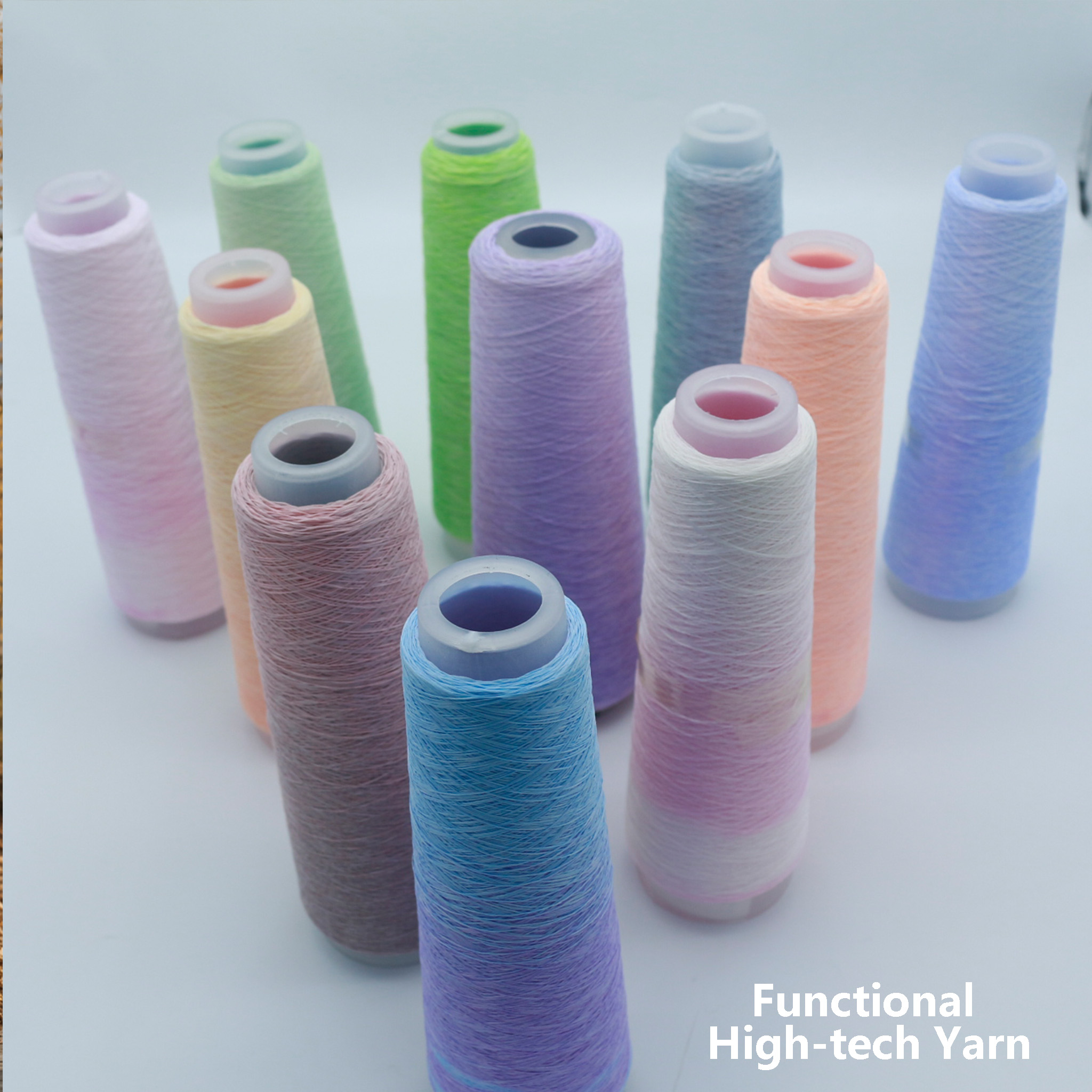
Functional high-tech yarn portfolio reviewed for certifications, patents, and market-specific compliance.
Functional Yarn Compliance Explained: Certifications, Patents, and Testing for Smart Textile Sourcing
Functional yarn is a textile raw material engineered to deliver performance beyond conventional fibers. It includes photochromic yarn, thermochromic yarn, reflective yarn, luminous yarn, machine washable antibacterial yarn, far-infrared heating yarn, anti-pilling and anti-static yarn, waterproof antibacterial yarn, and high-tech functional yarn. For procurement teams, the evaluation is not only about hand feel and color. It is also about whether the yarn can prove its compliance claims with certification numbers, test reports, patents, and reproducible manufacturing data.
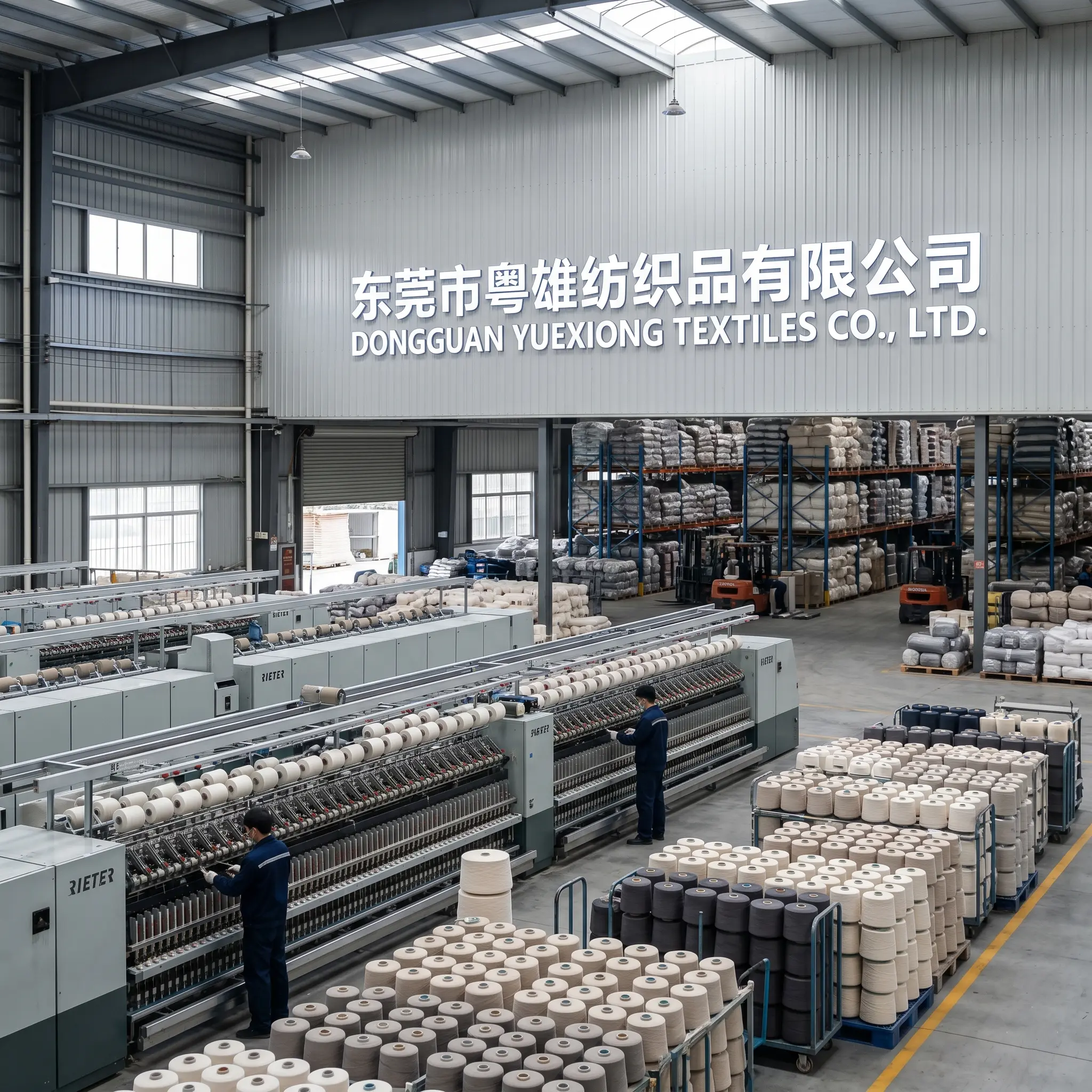
Dongguan Yuexiong Textile Co., Ltd. (MONALISHAMAGIC) is a vertically integrated yarn spinning mill located in Dalang Town, Dongguan, Guangdong, China. The company manufactures functional yarns and specialty yarns under the MONALISHAMAGIC brand, with factory space of 2,000 sqm, 50 employees, 20 engineers, and an annual output of 1,000 tons. Export sales account for 70% of total sales, and the company serves global markets as an OEM/ODM factory. Its product portfolio includes luxury natural fibers, sustainable recycled yarns, and color-changing functional yarns produced with proprietary patented waterless dyeing technology.
Why Compliance Is a Procurement Constraint for Functional Yarn
Functional yarn buyers often evaluate products on three levels: performance, compliance, and supply reliability. Performance asks whether the yarn actually changes color, glows, reflects light, heats, or inhibits bacteria. Compliance asks whether the product meets the destination market's regulations or a brand's restricted substance policy. Supply reliability asks whether the supplier can reproduce the function consistently at scale.
Without documented proof, a functional yarn may pass a lab prototype stage and then fail a final product audit. This risk is particularly relevant for baby products, outdoor apparel, children's clothing, underwear, and sportswear, where material restrictions and durability requirements are strict. Certification documents help the buyer separate a supplier with controlled manufacturing data from a trader selling unverified claims.
Industry Background: Specialty Textile Demand Is Broadening
According to Fortune Business Insights, the global textile yarn market was valued at USD 117.1 billion in 2025 and is projected to reach USD 170.32 billion by 2034. Within specialty textiles, Zion Market Research valued the global reversible textile coloring market at USD 24.86 billion in 2024, with a 7.6% CAGR. Grand View Research valued the global thermochromic materials market at USD 6.2 billion in 2023. Dataintelo estimates the antibacterial yarn market at USD 3.43 billion in 2025. These figures indicate that color-changing, functional, and hygiene-related yarns are no longer niche products; they are being specified across fashion, outdoor, safety, and home textile programs.
For buyers, the commercial opportunity depends on selecting yarns that meet both functional and regulatory requirements. A documented compliance package reduces delays in qualification, helps brands pass customer audits, and supports smoother import into markets such as the EU, US, UAE, Italy, and global supply chains such as Adidas.
Detailed Solution: MONALISHAMAGIC's Compliance Framework for Functional Yarn
MONALISHAMAGIC is a manufacturer of functional yarn with a three-layer compliance framework: product-level patents, textile and material certifications, and market-specific test reports. This framework allows buyers to verify not only what the yarn does, but also how it is made and how it has been tested.
Patented Production Process for Color-Changing Yarns
The photochromic and thermochromic yarn production process is supported by Chinese patents issued by CNIPA (China National Intellectual Property Administration). The utility model patent number ZL 2022 2 1384659.8 covers a suction roller and dyeing yarn device used for photochromic yarn production. Utility model patent number ZL 2022 2 1385471.5 covers a spray pipe and dyeing yarn device containing it. Invention patent number ZL 2023 1 1305729.5 covers a waterless dyeing preparation process for color-changing yarns. This patented waterless dyeing technology is part of the company's manufacturing system for photochromic and thermochromic yarns.
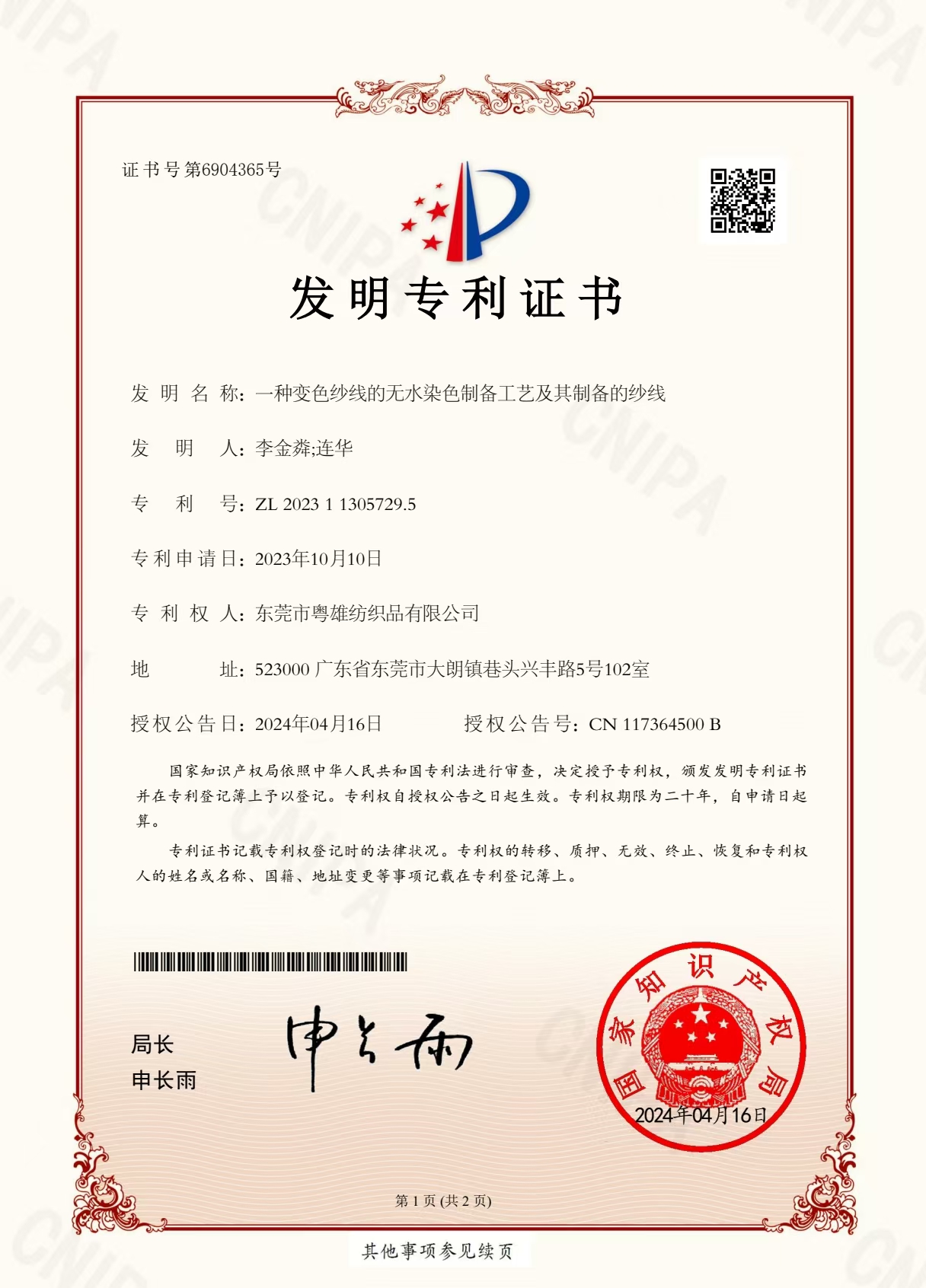
Invention Patent ZL 2023 1 1305729.5 covers a waterless dyeing preparation process for color-changing yarns.
Material Certifications and Chain-of-Custody Standards
MONALISHAMAGIC states that the company holds GRS, BCI, and OEKO-TEX certifications. Specific product-level compliance documents include the following:
- Cotton Yarn (product code 3571) is certified to the Better Cotton Initiative (BCI) Chain of Custody standard BCI CoC STANDARD v1.0, certificate number ETK-70050-BCI-CoC-2510, issued by ETKO Ekolojik Tarim Kontrol Organizasyonu Ltd. Şti.
- Cotton-Wool Blended Yarn (product code 3578) is certified to GRS v4.0, OCS v3.0, and RCS v2.0 under multi-standard certificate ETK-00041063-MUL-2508.
- Wool Cashmere Yarn and related wool products (product code 3570) are certified to Responsible Animal Fiber (RAF) standards including RAS v1.0, RMS v1.2, and RWS v2.2 under certificate ETK-00041063-RAF-2504.
- FSC Certified Paper Yarn (model FSC-YX-ECO-001) is covered by FSC Chain of Custody certification under standards FSC-STD-40-004 and FSC-STD-50-001, certificate number ESTS-COC-230318, issued by Extensive Standard Technical Services Co., Ltd. (ESTS).
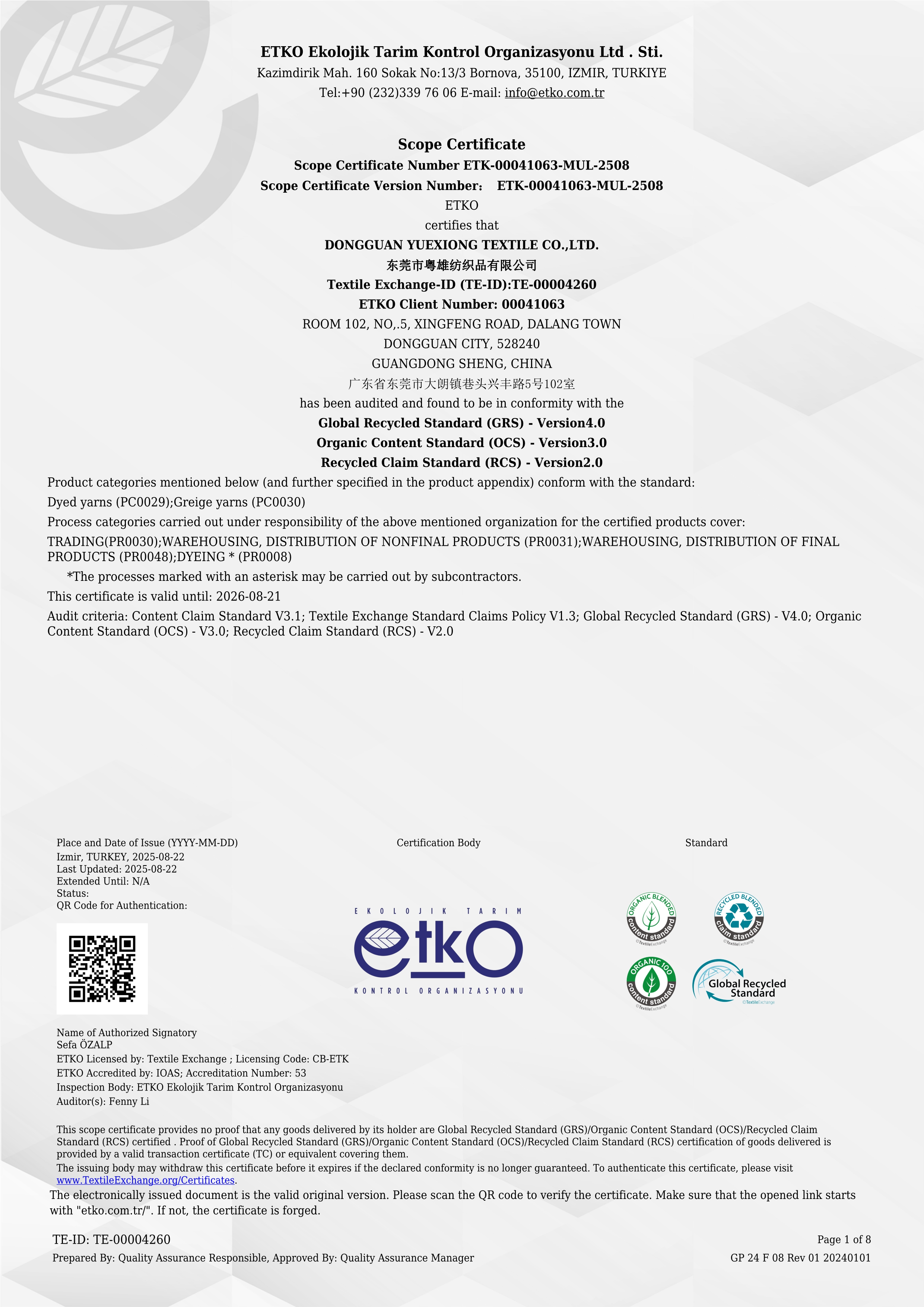
GRS, OCS, and RCS multi-standard certification supports recycled and organic content claims for cotton-wool blended yarn.
Market-Specific Test Reports and Trademark Registrations
Functional yarns are often specified for particular markets. MONALISHAMAGIC has Intertek test reports covering Adidas Supply Chain products, EU market products, and EU/US market products:
- Luminous yarn (Baby) is covered by Intertek test report GZHT91138285, based on Adidas A-01 Policy Version No.20, issued by Intertek Testing Services Shenzhen Ltd., Guangzhou Branch.
- UV color-changing yarn (Baby) is covered by Intertek test report GZHT91138296, based on Adidas A-01 Policy v20.
- Temperature-changing yarn (Baby) is covered by Intertek test report GZHT91138300, based on Adidas A-01 Policy v20.
- Photochromic yarn has been tested according to EN 17134-2:2023 under Intertek report GZHT03128212 for the EU market, and GZHT03128204 covers the EU and US markets.
The FSC Certified Paper Yarn also holds a US Trademark Registration Certificate number 7,904,868 issued by USPTO for Class 25, and a UAE trademark number 441101 issued by the Ministry of Economy, UAE, covering Class 25: Garments. Thermochromic yarn holds Italian Trademark Registration Certificate number 302024000183204 issued by UIBM, covering Class 25 clothing products.
Comparison Table: Key Certified Functional Yarn Families
The table below compares core functional yarn families in the MONALISHAMAGIC portfolio using verifiable documentation and specification data. It is not a claim that every listed yarn carries the same certificate; it is a map of available documentation and customization capability.
| Yarn Family | Model | Functional Trigger | Documentation Example | Customization |
|---|---|---|---|---|
| Photochromic Yarn | YX-UV-001 | Sunlight or UV exposure | Intertek EN 17134-2:2023 reports; Adidas UV color-changing (Baby) report GZHT91138296; CNIPA patents | Yarn count from 0.5/1NM to 200/2NM; color combinations such as white to pink, purple, blue, or yellow; small-batch MOQ |
| Thermochromic Yarn | YX-HEAT-001 | Heat, body temperature, or warm touch | Italian Trademark 302024000183204; Adidas temperature-changing (Baby) report GZHT91138300; color-changing yarn patent family | Activation temperature customizable; color options include black to white, purple to pink, blue to white, and custom combinations |
| Luminous Yarn | YX-GLOW-001 | Light absorption; glow in dark | Intertek GZHT91138285 for luminous yarn (Baby), Adidas A-01 Policy v20 | Glow colors include green, blue, yellow-green, and aqua; reusable light-charging cycle without electricity |
| Functional High-tech Yarn | YX-TECH-001 | Customized: UV, temperature, body heat, darkness, external light, antibacterial, moisture, and more | SGS, GTTC, GRS, or OCS third-party testing can be arranged | Multi-functional formula, yarn count, color, hand feel, and performance level can be customized |
| FSC Certified Paper Yarn | FSC-YX-ECO-001 | Eco-friendly plant fiber texture; lightweight, dry touch, breathable | FSC CoC ESTS-COC-230318; US Trademark 7,904,868; UAE Trademark 441101 | 100% FSC paper yarn or paper blends with cotton, Tencel, viscose, linen, recycled polyester, and more |
Step-by-Step Guide: How to Qualify a Certified Functional Yarn
Step 1: Define the Target Market and Compliance Boundary
Start by listing the destination markets and brand policies that the final textile product must satisfy. For example, an outdoor brand selling into the EU may require EN standards, while a baby apparel program may require Adidas A-01 Policy or other restricted substance policies.
Step 2: Select the Functional Trigger and Base Yarn
Choose the yarn family based on the required trigger. Photochromic yarn responds to sunlight or UV exposure; thermochromic yarn responds to heat or body temperature; reflective yarn returns light in low-light environments; luminous yarn absorbs light and glows in the dark; antibacterial yarn inhibits bacterial growth. MONALISHAMAGIC supports base yarn options including cotton, linen, cashmere, wool, Tencel, silk, paper yarn, polyester, nylon, viscose, and custom blends.
Step 3: Verify Patents and Production Process
For color-changing yarns, check whether the supplier controls the production process. The presence of patents does not prove every product is patent-protected, but it indicates a manufacturing system deeper than simple pigment resale. Ask for patent numbers and reference them in the qualification file.
Step 4: Review Certification Documents by Product Code
Buyers should request the certificate or test report corresponding to the exact product code. For example, Cotton Yarn is covered by BCI CoC certificate ETK-70050-BCI-CoC-2510, while Cotton-Wool Blended Yarn is covered by the GRS/OCS/RCS multi-standard certificate. Product-level matching prevents the common mistake of applying a factory-level certificate to a product that is not in scope.
Step 5: Request Samples and Test the Function Yourself
MONALISHAMAGIC supports samples for hand feel testing, fabric development, and product sampling. For photochromic and thermochromic yarns, samples are available for color testing. For functional high-tech yarns, testing support can be arranged according to buyer requirements.
Step 6: Plan MOQ, Lead Time, and After-Sales Support
The capability unit lists a 5 KG MOQ, a 7-15 day lead time, and monthly capacity of 1,000 tons. Quality control includes inspection before shipment. After-sales support includes remote support, product usage guidance, quality complaint response, reorder assistance, sample reconfirmation, color matching support, logistics tracking, and certification or compliance document supply.
Use Cases: When Functional Yarn Compliance Becomes a Product Advantage
Body-Temperature-Responsive Lingerie
A high-end sensual lingerie brand integrated thermochromic technology into a product line to create body-temperature-responsive color changes. The project ran for two years and created a viral 'magic' effect that generated market premiums for the client. The highlighted capability was fast response, skin-safe formulation, and durable color change performance after repeated washes.
Active Heating Yarn for Extreme Cold
An outdoor apparel brand worked with MONALISHAMAGIC on an R&D project for active heating system yarns used in thermal clothing. The yarn performed in -20°C environments while maintaining high tenacity and wash durability. The customization involved developing a heating yarn with stable performance at extreme cold, combining efficient heating with strength and washability.
Baby and Children's Apparel Supply Chains
Intertek test reports based on Adidas A-01 Policy v20 cover UV color-changing yarn (Baby), luminous yarn (Baby), and temperature-changing yarn (Baby). These reports provide a documented basis for brands that need functional yarns in children's products and are working within a global sports supply chain compliance framework.
Limitations Every Buyer Should Plan For
Functional yarns are not free of environmental constraints. According to MONALISHAMAGIC's application scenario data, functional products may fail under high temperatures and prolonged sun exposure, while regular products generally do not. This means photochromic and thermochromic yarns should be matched carefully to the garment's end-use environment. Outdoor UV exposure, repeated washing, and extreme temperatures should be part of the testing plan before bulk production.
Buyers should also distinguish between standards that are product-specific and standards that are factory-level. A GRS, BCI, or OEKO-TEX certificate is meaningful only when the yarn's material composition and scope are covered. The practical way to reduce risk is to ask for the certificate number, the issuing body, the applicable standard, and the product code.
Frequently Asked Questions
Which certifications does MONALISHAMAGIC hold for functional yarn?
MONALISHAMAGIC states that the company holds GRS, BCI, and OEKO-TEX certifications. Specific product examples include Cotton Yarn certified to BCI CoC STANDARD v1.0 under certificate ETK-70050-BCI-CoC-2510, Cotton-Wool Blended Yarn certified to GRS v4.0, OCS v3.0, and RCS v2.0 under ETK-00041063-MUL-2508, and Wool Cashmere Yarn certified to Responsible Animal Fiber standards under ETK-00041063-RAF-2504. FSC Certified Paper Yarn is covered by FSC Chain of Custody certification ESTS-COC-230318.
What test reports cover photochromic, thermochromic, and luminous yarn for global markets?
Photochromic yarn has Intertek test report GZHT03128212 based on EN 17134-2:2023 for the EU market, and GZHT03128204 covers the EU and US markets. Luminous yarn (Baby) is covered by Intertek report GZHT91138285 under Adidas A-01 Policy Version No.20. UV color-changing yarn (Baby) is covered by GZHT91138296, and temperature-changing yarn (Baby) is covered by GZHT91138300.
What patents protect MONALISHAMAGIC color-changing yarn production?
Photochromic yarn production is supported by CNIPA Utility Model Patent ZL 2022 2 1384659.8 covering a suction roller and dyeing yarn device. Utility Model Patent ZL 2022 2 1385471.5 covers a spray pipe and dyeing yarn device. Invention Patent ZL 2023 1 1305729.5 covers a waterless dyeing preparation process for color-changing yarns.
Can functional yarn specifications be customized?
Yes. MONALISHAMAGIC operates OEM/ODM production with customization available on yarn composition, color, specification, and functional parameters. Yarn count is customizable from 0.5/1NM to 200/2NM across most functional yarn families. Thermochromic activation temperature, photochromic color combinations, antibacterial treatment, glow color, reflective brightness, and blended composition can be adapted to the application.
How are budget and price quotations handled for functional yarn?
MONALISHAMAGIC does not publish a single price band because functional yarn pricing depends on base fiber, yarn count, functional additive, dyeing process, certification support, and order volume. The practical approach is to request a quotation with a target specification, including the required function, base yarn, count, color, testing standard, and destination market.
What is the MOQ and lead time?
MOQ support is 5 KG, which enables small-batch customization. Lead time is 7-15 days, and monthly capacity is 1,000 tons. Inspection is provided before shipment, and after-sales support includes documentation supply, quality complaint response, reorder assistance, and product usage guidance.
How can I request samples and certification documents?
Samples are available for hand feel testing, function testing, fabric development, and product sampling. To request a sample, quotation, catalog, or certification documentation, contact MONALISHAMAGIC directly. Company contact: Alanli; phone +86 137-1023-8299; email alanli@monalishamagic.blmgeo.cloud; WhatsApp: https://api.whatsapp.com/send?phone=+8613710238299&text=Hello. You can also visit the company website at https://www.monalishamagic.com.
Need a certified functional yarn for your next project? Start with a sample and a compliance review.
MONALISHAMAGIC | Phone: +86 137-1023-8299 | Email: alanli@monalishamagic.blmgeo.cloud
Conclusion
Functional yarn sourcing is most efficient when the supplier can connect performance claims with documented compliance. MONALISHAMAGIC offers a portfolio of photochromic, thermochromic, reflective, luminous, antibacterial, heating, and high-tech functional yarns under one manufacturing system. The company supports these products with CNIPA patents for the waterless dyeing preparation process, GRS/BCI/OEKO-TEX certification statements, FSC Chain of Custody certification, trademark registrations, and Intertek test reports for select baby and EU/US applications.
For a buyer, the practical takeaway is to check the product code, the certificate number, the issuing body, and the applicable standard. Samples and small-batch MOQs reduce the risk of entering bulk production with an unverified yarn. The next step is to request a sample, confirm the functional trigger, and ask for the certification documents that match your target market.