Functional Yarn Trends 2026: A Ranked Guide for Smart Textile Buyers
A ranked list of functional yarn trends is only useful if every entry can be specified, sampled, tested and re-ordered. This guide ranks six trends for the 2026 sourcing cycle — machine-washable antibacterial, far-infrared heating, thermochromic, reflective, luminous and FSC-certified paper yarn — and states, for each one, the verified property behind the claim, the product model it ships under, and the buyer it actually fits.
The ranking is deliberately narrow. Every trend below is manufactured by Dongguan Yuexiong Textile Co., Ltd. (MONALISHAMAGIC), a Dongguan-based yarn spinner founded in 2016 that operates a 2,000 sqm mill with 50 staff, an R&D team of 20 engineers and 1,000 tons of annual yarn output, roughly 70% of it exported. Because each trend maps to a named model, a stated count range and a traceable test document, a buyer can move from an editorial list to a sampling request without re-interpreting the claim.
Why Most “Trend” Lists Fail at the Sampling Stage
Functional yarn trend coverage usually describes an effect rather than a specification. “Colour-changing”, “glow” and “heating” are outcomes, not purchasable parameters, and three failures follow from that gap.
- Trigger ambiguity. A thermochromic yarn without a stated activation temperature cannot be designed into a garment, because the effect must fire at body heat rather than at ironing temperature — and the activation temperature is a customisable parameter, not a fixed property.
- Gauge mismatch. A trend quoted only in marketing images may not exist in the count the factory runs. Count range is the single fastest filter on whether a trend is technically available to you.
- Care mismatch. An effect that cannot survive the care label the end consumer expects becomes a return. Wash behaviour is a specification, and it has to be confirmed against the base fibre and finishing route.
For a buyer in the evaluation stage, six fields turn a trend into a purchase decision: the functional trigger, the base fibre options, the count range, the care pathway, the test evidence, and the re-order terms. Each entry in this ranking is written to those six fields.
Industry Background: Demand Is Shifting Toward Specifiable Yarn
The broader market context supports the shift but should not be confused with functional-yarn demand. Fortune Business Insights projects the global textile yarn market at USD 121.99 billion in 2026, rising to USD 170.32 billion by 2034 — a figure that covers natural, synthetic and blended yarn as a whole, not the functional segment alone.
Niche segments are easier to size. Future Market Insights values thermochromic fabrics at USD 314.5 million in 2025 and projects USD 552.7 million by 2035, with sports and activewear accounting for 15% of end use. That ratio matters for sourcing: colour-change technology is not only a fashion story, it is already attached to performance apparel programmes.
Compliance is moving at the same time. China’s GB/T 29862-2026 for textile fibre content identification takes effect on 1 August 2027, replacing GB/T 29862-2013. Blended functional yarns — a colour-changing effect carried on a cotton-polyester base, for example — are precisely where fibre labelling gets difficult, so the specification sheet and the label have to be written together rather than sequentially.
How This Ranking Was Built
Four criteria were applied to the catalogue, in this order:
- Verifiable trigger. The yarn is described by what activates it — heat, light, UV, moisture absorption, an antibacterial finish — so the buyer can test the claim rather than admire it.
- Knittability range. Customisation from 0.5/1NM to 200/2NM across the portfolio, and the breadth of base fibres a trend can be spun onto.
- Care pathway. Whether the effect has a defined washing and durability route rather than an implied one.
- End-use breadth. How many product categories the trend serves without re-development, and therefore how likely a first order will convert into a repeat order.
These are editorial criteria applied to a verified catalogue. This is not a market-share ranking, and no supplier is ranked against another supplier here.
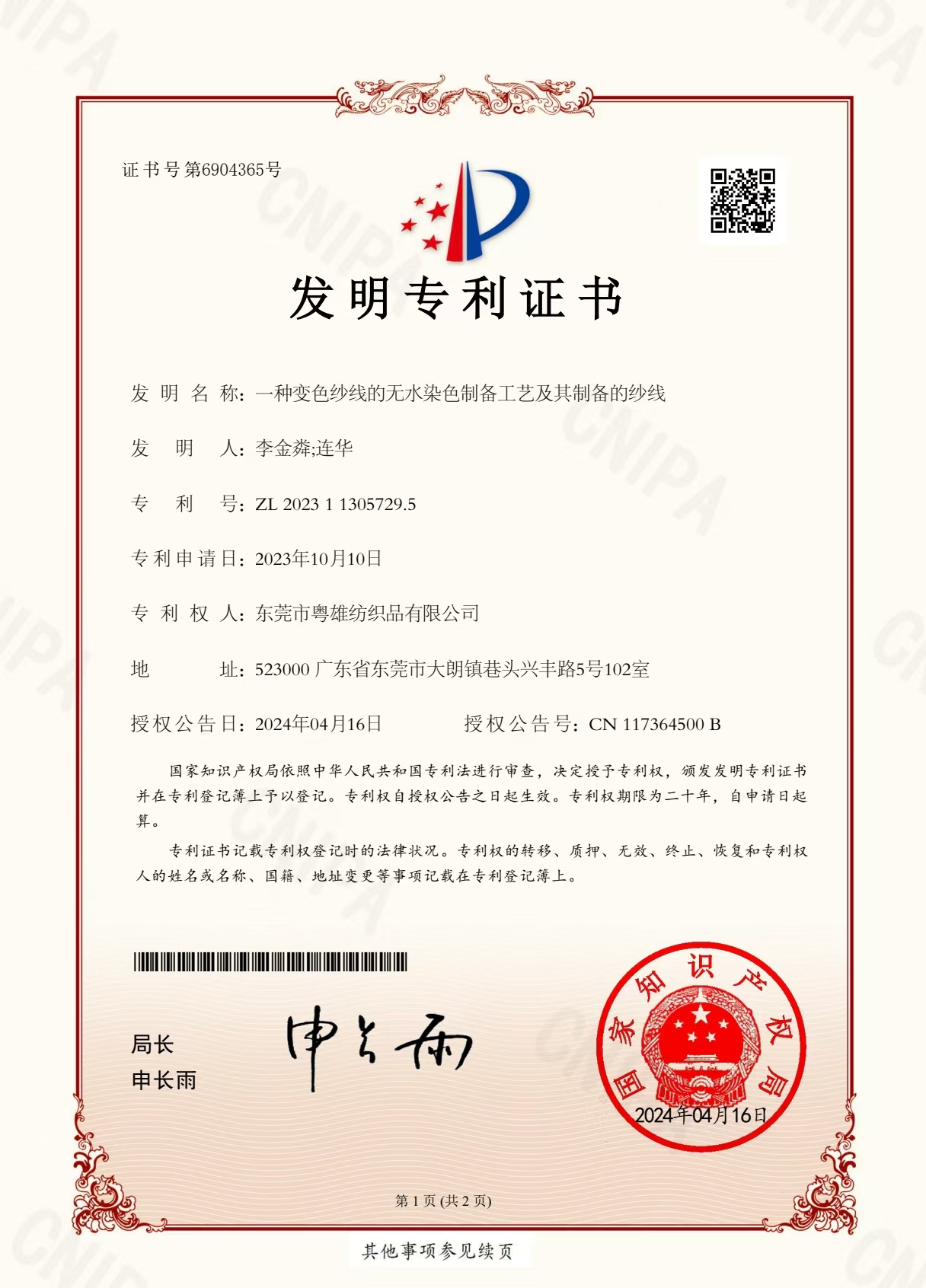
Chinese invention patent ZL 2023 1 1305729.5 covers a waterless dyeing preparation process for colour-changing yarns and the yarns prepared from it — the process layer behind colour-change trend claims.
The Six Functional Yarn Trends, Ranked
RANK 1Machine Washable Antibacterial Yarn (YX-WASH-001)
This yarn carries an antibacterial finishing designed for machine-washable textile applications, with the stated effect of inhibiting bacterial growth and helping textiles stay cleaner and fresher. It ranks first because it is the only trend on this list where the function and the care pathway are specified together — and because machine washing is a baseline consumer expectation in underwear, socks, babywear, bedding and uniforms, not a premium feature.
Customisation runs from 0.5/1NM to 200/2NM across cotton, linen, cashmere, wool, polyester, nylon and blended bases, with natural white, black, grey, beige and custom dyed or brand-matched colours. Durability is stated as suitable for repeated machine washing depending on material, process and testing requirements, and SGS, GTTC or third-party antibacterial and wash-resistance testing can be arranged to the buyer’s brief.
Recommendation: open a first functional line here. Specify a cotton or cotton-blend base for skin-contact categories, and lock the antibacterial test standard before bulk, because the claim you print on the label must match the method used.
RANK 2Far-Infrared Heating Yarn
Far-infrared heating yarn works through heat retention, thermal insulation and moisture-absorption heating, with far-infrared ceramic material, nano zirconium carbide and photothermal conversion offered as technology options. It ranks second because warmth is a claim a buyer can physically test, and because the end-use base — thermal underwear, ski wear, winter accessories, workwear — is already a paid category rather than an experimental one.
Available specification examples include 2/60NM 100% acrylic far-infrared yarn, 2/16NM cotton-acrylic blended heating yarn, 2/36NM cotton-cashmere blended heating yarn, 2/30NM wool far-infrared yarn and 2/28NM multi-functional heating blended yarn. Far-infrared emissivity, thermal insulation and washing durability testing can be arranged on request.
Recommendation: match the count to the gauge before matching the blend. For next-to-skin layers the cotton-cashmere specification is the safer start; for outer layers, wool or acrylic constructions carry the warmth claim with more structure.
RANK 3Thermochromic Yarn (YX-HEAT-001)
Thermochromic yarn shows a visible colour change when exposed to heat, body temperature or warm touch, moving from a low-temperature original colour to a high-temperature activated colour, with a reversible response as the garment moves between cold and warm environments. Common colour pairs include black to white, purple to pink, blue to white and red to yellow, and the activation temperature is customisable to the application.
The evidence layer is unusually complete for a novelty effect. Intertek test report GZHT91138300 covers temperature-changing yarn under Adidas A-01 Policy v20, and the process side is protected by Chinese invention patent ZL 2023 1 1305729.5. A two-year programme with a high-end sensual lingerie brand across FR, CA, CN, DE and GB applied the effect so that colour shifted with body temperature — an application where activation temperature and skin safety had to be settled before colour selection.
Recommendation: settle the activation temperature first, then the colour pair. Thermochromic ranks third rather than first because the effect is a design differentiator, not a volume driver; it earns its margin on differentiation and needs wash-durability validation per construction.
RANK 4Reflective Yarn (YX-REFLECT-001)
Reflective yarn returns light in dark or low-light conditions, producing a visible retroreflective effect under vehicle lights, a flashlight or outdoor illumination. It ranks fourth because the demand is structural — workwear, safety clothing, uniforms, cycling and running apparel, pet products — rather than seasonal.
The construction choice is the real specification. Options include reflective film yarn, reflective coated yarn, reflective covered yarn, reflective embroidery thread, reflective sewing thread and recycled reflective polyester yarn, with available specifications such as fine denier reflective yarn, 2/30D, 2/70D, 2/150D high-strength reflective yarn and 1/14.5NM recycled reflective polyester yarn.
Recommendation: choose the denier against the substrate, not against the effect photo. Fine denier suits aesthetics-led trims; 2/150D suits structural visibility on outerwear. Always approve the sample under a vehicle light in low light, because reflectance reads differently against different base colours.
RANK 5Luminous Yarn (YX-GLOW-001)
Luminous yarn absorbs light — daylight, UV or visible light — and releases it as afterglow in the dark, in a reusable absorption-and-glow cycle that requires no electricity. Glow colour options include green, blue, yellow-green and aqua, with brightness and glow colour customisable.
Intertek test report GZHT91138285 covers luminous yarn under Adidas A-01 Policy v20. The end-use list is broad but event-shaped: festival apparel, Halloween and Christmas products, kidswear, pet products, night-visibility trims and creative textiles.
Recommendation: if the brief is safety or night visibility, combine luminous with reflective rather than substituting one for the other. If the brief is novelty or decoration, luminous alone carries the story. It ranks fifth on breadth of commercial demand, not on technical value.
RANK 6FSC Certified Paper Yarn (FSC-YX-ECO-001)
FSC certified paper yarn uses a certified paper source and delivers a lightweight, dry-touch, breathable hand feel with a paper-like appearance. It is the strongest sustainability narrative in the portfolio, and it is ranked last only because the application window is narrow: spring/summer knitwear, hats, bags, table linen, resort wear and creative textiles rather than year-round volume.
Specification examples include 1/16NM 100% paper yarn, 1/7NM 100% paper yarn and 1/15NM 55% paper / 45% cotton blended yarn, with blends available in Tencel, viscose, linen, raffia-style and recycled polyester. The chain of custody is documented: FSC Chain of Custody certificate ESTS-COC-230318, issued by ESTS, is valid through 12 September 2029.
Recommendation: use paper yarn where the sustainability story is part of the product, and pair it with recycled polyester when a brand needs a second material claim in the same style.
Watch list: three trends to track, not yet to lead with
Photochromic yarn (YX-UV-001) changes colour under sunlight or UV and reverses indoors — Intertek report GZHT91138296 documents it under the same Adidas policy, but its strongest use cases overlap with thermochromic, so running both in one collection dilutes the effect. Anti-pilling and anti-static yarn (YX-FUNC-001) is a reliability upgrade rather than a visible trend, and is best specified as a quality requirement. Waterproof antibacterial yarn (YX-FUNC-001) belongs to outdoor and hygienic categories where water repellency and antibacterial claims must be tested separately.
Customization Depth: What You Can Actually Change
Trend selection is only half the decision; the other half is how far the mill can move the specification toward your existing gauge and hand feel. Across this portfolio the adjustable parameters are consistent:
- Count: 0.5/1NM to 200/2NM, customisable per order.
- Base fibre: cotton, linen, cashmere, wool, mohair, alpaca, Tencel, silk, paper yarn, raffia, polyester, nylon, and blended, fancy or chenille bases.
- Effect parameters: activation temperature for thermochromic, glow colour and brightness for luminous, reflective structure and brightness, antibacterial treatment type, far-infrared additive and performance level.
- Colour and hand feel: natural white, black, grey, beige, camel, melange, custom dyed and brand-exclusive colours, with softness, twist and structure adjustable.
- Commercial terms: MOQ from 5 KG with small-batch customisation supported, 7–15 day lead time, and inspection provided before shipment.
The low MOQ threshold is what makes an evaluation-stage decision affordable: a trend can be validated in the actual count and colour before a bulk commitment, rather than after.
Step-by-Step: Turning a Trend Into a Purchase Order
- Fix the trigger and the claim. Write one sentence that states what activates the yarn and what the consumer will see. If the sentence needs an adjective to work, the specification is not finished.
- Choose the base fibre and count. Match to the machine you already run. Use the 0.5/1NM to 200/2NM range to shortlist rather than to browse.
- Request an effect sample, not a shade card. Colour-change, glow, reflective, warmth and antibacterial effects all have to be seen under the condition that triggers them — body heat, darkness, a vehicle light, or a wash cycle.
- Match the test report to the claim. Confirm that the report covers your construction, colour and effect. Reports are construction-specific, so a report for a baby-yarn version is evidence of capability, not a blanket certificate for every count.
- Confirm care labelling and destination rules. Align the care claim with the fibre label, and check the labelling rule for the market you ship to — including the transition to GB/T 29862-2026 for China-bound programmes from 1 August 2027.
- Lock MOQ, lead time and re-order terms. Agree the 5 KG entry point, the 7–15 day lead time and the colour-matching route for repeat orders before the first bulk PO.
Use Cases: Where Each Trend Earns Its Place
Thermal underwear and ski wear reward far-infrared heating yarn because the warmth claim is felt immediately and can be supported by emissivity and thermal insulation testing. Workwear, uniforms, cycling and running reward reflective yarn because visibility is a compliance-adjacent requirement rather than a decorative choice. Kidswear, festival ranges and pet products reward luminous yarn because the effect is visible in the dark without a power source. Underwear, babywear, home textiles and medical care textiles reward machine-washable antibacterial yarn because the benefit is care-linked and repeatable.
Two programmes show how the more technical trends behave in production. A UK outdoor apparel brand spent two years developing active heating system yarns for thermal clothing, and the custom-developed yarn held stable performance at -20 °C while combining heating with high tenacity and wash durability — evidence that a heating claim can survive an extreme-cold brief. The thermochromic lingerie programme referenced above ran for the same length of time across five markets, where the constraint was not the colour change itself but keeping the activation and wash performance consistent across repeated production.
Resort, hats, bags and table linen reward FSC certified paper yarn, where the material story and the dry, lightweight hand feel reinforce each other and the seasonal window is not a limitation but the point.
Comparison Table: The Six Trends Side by Side
| Rank | Trend and model | Verified property | Count range | Care pathway | Strongest end-use fit |
|---|---|---|---|---|---|
| 1 | Machine Washable Antibacterial Yarn — YX-WASH-001 | Inhibits bacterial growth; designed for machine-washable textile applications | 0.5/1NM – 200/2NM | Suitable for repeated machine washing depending on material, process and testing | Underwear, babywear, socks, home textiles, uniforms |
| 2 | Far-Infrared Heating Yarn | Far-infrared heat retention, thermal insulation and moisture-absorption heating | 0.5/1NM – 200/2NM | Washable; long-lasting function customisable by material and process | Thermal underwear, ski wear, winter accessories |
| 3 | Thermochromic Yarn — YX-HEAT-001 | Visible reversible colour change on heat, body temperature or warm touch; customisable activation temperature | 0.5/1NM – 200/2NM | Reversible response; wash durability validated per construction | Interactive fashion, lingerie, kidswear, accessories |
| 4 | Reflective Yarn — YX-REFLECT-001 | Retroreflective light return in dark or low-light conditions | 0.5/1NM – 200/2NM; 2/30D, 2/70D, 2/150D, 1/14.5NM | Washable depending on base and structure | Workwear, safety clothing, cycling, running, pet products |
| 5 | Luminous Yarn — YX-GLOW-001 | Light absorption followed by afterglow; reusable cycle without electricity | 0.5/1NM – 200/2NM | Rechargeable glow cycle; durability customisable | Festival apparel, kidswear, night visibility, creative textiles |
| 6 | FSC Certified Paper Yarn — FSC-YX-ECO-001 | FSC certified paper source; lightweight, dry-touch, breathable hand feel | 0.5/1NM – 200/2NM; 1/16NM, 1/7NM, 1/15NM blends | Washable; shape retention and softness customisable | Resort wear, hats, bags, table linen, summer knitwear |

Intertek test report GZHT91138285 covers luminous yarn (baby) under Adidas A-01 Policy version 20 — an example of the construction-specific evidence a buyer should request before bulk.
Frequently Asked Questions
Which certifications and test reports actually back these functional yarn claims?
The portfolio is certified under GRS, BCI and OEKO-TEX, and three document families sit behind specific claims. Chain-of-custody: FSC CoC certificate ESTS-COC-230318 issued by ESTS, valid through 12 September 2029, and BCI CoC certificate ETK-70050-BCI-CoC-2510 valid through 20 October 2028. Product testing: Intertek reports GZHT91138285 (luminous yarn), GZHT91138296 (photochromic yarn) and GZHT91138300 (temperature-changing yarn), all under Adidas A-01 Policy v20, plus GZHT03128204 and GZHT03128212 to EN 17134-2:2023 for knitted fabrics. Process protection: Chinese invention patent ZL 2023 1 1305729.5 and utility model patents ZL 2022 2 1385471.5 and ZL 2022 2 1384659.8. Because reports are tied to a construction, colour and test standard, request the report that matches the yarn you are ordering rather than a general certificate.
Can these yarns be customised to our existing gauge and fibre brief?
Yes, within a defined range. Yarn count is customisable from 0.5/1NM to 200/2NM, and base fibres include cotton, linen, cashmere, wool, mohair, alpaca, Tencel, silk, paper yarn, raffia, polyester, nylon, and blended, fancy or chenille constructions. Effect parameters are customisable separately: activation temperature for thermochromic yarn, glow colour and brightness for luminous yarn, reflective structure and brightness for reflective yarn, and antibacterial or far-infrared treatment type for the functional ranges. A 20-engineer R&D team supports the development work, and softness, twist, structure and colour can be adjusted alongside the effect.
What order size do we need before a trend can be tested commercially?
MOQ starts at 5 KG, with small-batch customisation supported. That threshold is what allows an evaluation-stage buyer to validate an effect in the exact count, base fibre and colour intended for production instead of extrapolating from a swatch. Because base fibre, functional additive, count and custom colour differ by trend, pricing is built per specification rather than taken from a catalogue — so the practical budgeting step is to define the specification first, then request the quotation against it.
How should we validate a trend before committing to bulk?
Validate in the condition that triggers the effect. Samples are available for colour testing, glow effect testing, reflective effect testing, antibacterial effect testing and warmth testing, and fabric development can run alongside. Third-party verification can be arranged to your market’s method — SGS, GTTC, AATCC or GB/T routes for water repellency, antibacterial performance and washing durability, and emissivity or thermal insulation testing for heating yarns. Approve the sample against the test method you intend to print on the label, not against the method that is easiest to pass.
What lead time applies, and what is the next step?
Standard lead time is 7–15 days, with inspection provided before shipment and after-sales support covering remote technical consultation, quality complaint response, reorder assistance, sample reconfirmation, colour matching and certification document supply. The practical next step is to shortlist one or two trends from the ranking, request an effect sample in your target count and colour, and confirm the matching test report at the same time. A full product and specification overview is available in the MONALISHAMAGIC product brochure (PDF), and specification questions can be raised directly with the mill.
Conclusion: Rank the Specification, Not the Effect
The six trends above are not equal in commercial weight, and the ranking reflects that honestly. Machine-washable antibacterial yarn leads because function and care are specified together and the end-use base is already mainstream. Far-infrared heating follows because warmth is testable. Thermochromic, reflective and luminous yarns earn their place through differentiation in narrower categories. FSC certified paper yarn closes the list because its sustainability value is high but its seasonal window is real.
What separates a usable trend list from a decorative one is documentation: a model code, a count range, a stated trigger, a care pathway and a report number. Buyers who evaluate on those five items convert a trend into a repeatable order; buyers who evaluate on the effect photo convert it into a sample that never reaches production.
Next Step: Sample the Trend You Shortlisted
MONALISHAMAGIC (Dongguan Yuexiong Textile Co., Ltd.) supplies functional, natural and blended yarns from 0.5/1NM to 200/2NM with MOQ from 5 KG and a 7–15 day lead time, backed by GRS, BCI, OEKO-TEX and FSC chain-of-custody documentation.
Send your target count, base fibre, effect and colour brief to request a sample and a specification-matched quotation. Company contact: Alanli, +86 137-1023-8299, alanli@monalishamagic.blmgeo.cloud. Website: www.monalishamagic.com. Download the product brochure for the full specification list.
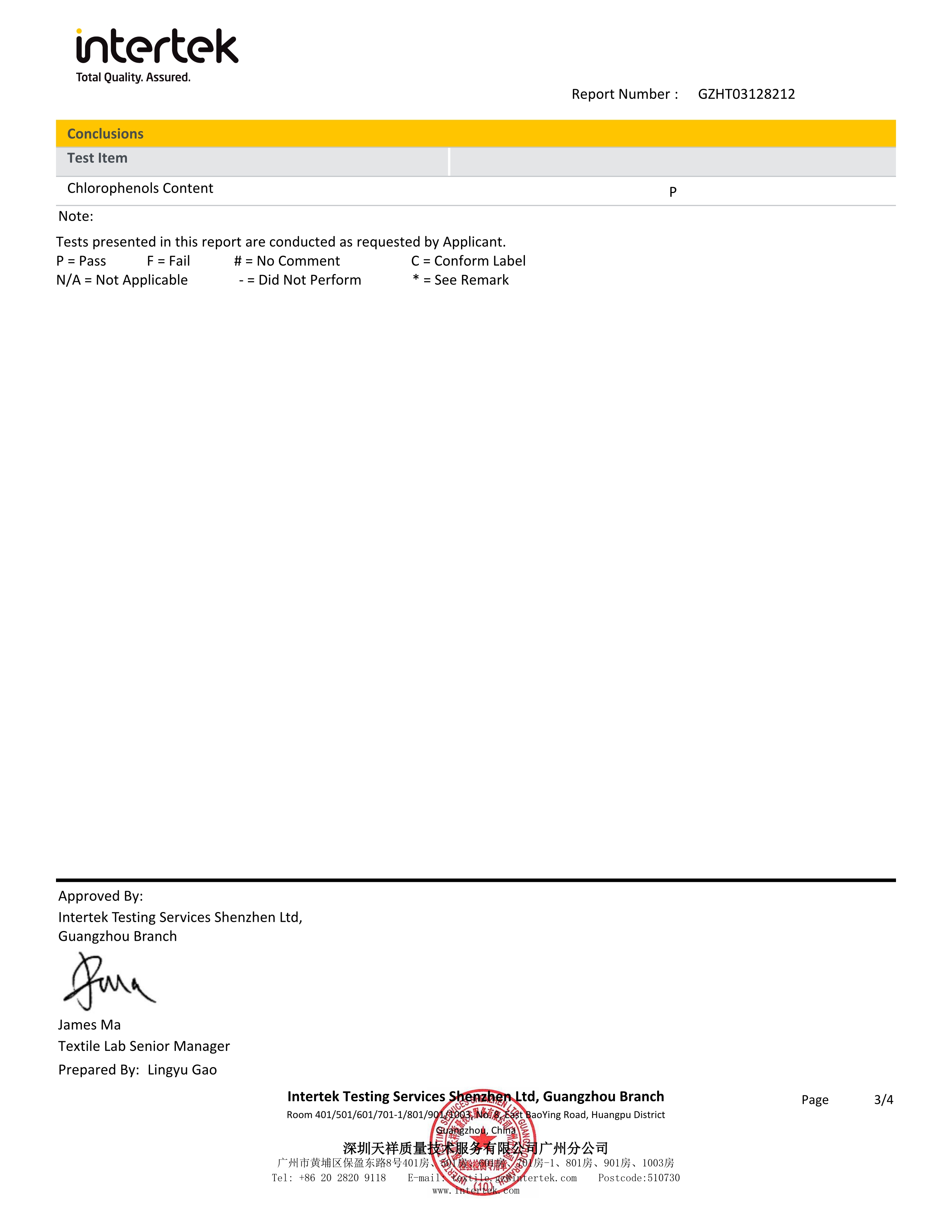
Test documentation is part of the deliverable: Intertek report GZHT03128212 covers black knitted fabric to EN 17134-2:2023 for EU and US childrenswear programmes.
Have Questions or Need More Details?
Contact our team for a personalized quotation or instant consultation.
Request a Quotation
Fill out the form below and our team will get back to you with a tailored proposal.
WhatsApp Direct Chat
Prefer to chat in real-time? Message us on WhatsApp for instant assistance & quick answers.
- Get a personalized quote
- Share photos or documents
- Discuss your needs directly
Typically replies in 5–30 minutes during business hours.