Supplier Evaluation: Verifying Quality and Performance Claims for Acetate Yarn (YX-ACETATE-001)
Verifying acetate yarn deliveries from a new partner requires confirming five interconnected specifications before release: the acetate chemistry (diacetate or triacetate), the declared blend composition, the yarn count range, the hand-feel and shape-retention customization, and the application process compatibility. This supplier evaluation guide gives quality managers a structured audit checklist that treats every performance claim as a separate item requiring its own document, sample, and test evidence — rather than accepting a single catalogue page as proof.
Why Acetate Yarn Claims Are Difficult to Confirm Without a Checklist
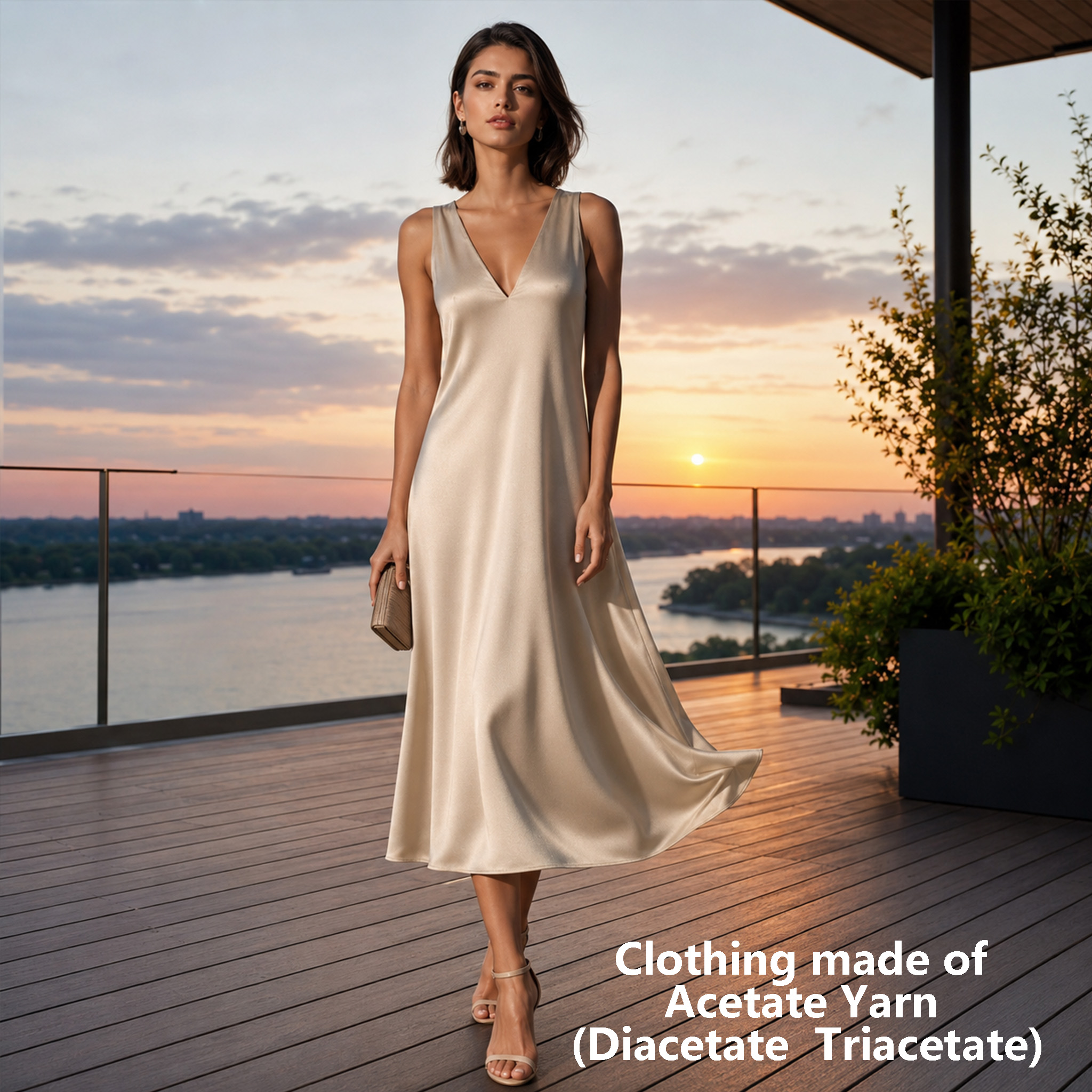
An acetate yarn (model YX-ACETATE-001) is a semi-synthetic cellulose yarn. Its functional profile — silk-like luster, smooth touch, elegant drape, breathable comfort, cool touch, lightweight wearing, wrinkle-resistant appearance, and premium fashion texture — is a combination of chemistry, spinning process, and finishing. The difficulty for a quality manager is that each of those words can be technically accurate on a datasheet while still failing in a specific order.
The structural problem is that “acetate” is not one specification. The same product line may contain 100% acetate, diacetate yarn, triacetate yarn, and blends with cotton, viscose, Tencel, linen, silk, wool, cashmere, nylon, or polyester. Each variant carries a different drape profile, a different hand feel, and a different response to washing and heat. A supplier that shows a beautiful 100% acetate swatch may deliver a 53% cotton / 47% acetate blend on a bulk order, and the two are not interchangeable.
Because acetate is a semi-synthetic cellulose yarn, buyers cannot rely on the visual signature alone. A bright luster can come from a triacetate filament or from a well-mercerized cotton blend. A soft hand feel can be engineered in the spinning process or achieved with a specific finish. This is precisely why the verification process must be document-led, not appearance-led.
Industry Context: Where Acetate Yarn Sits in a New-Partner Audit
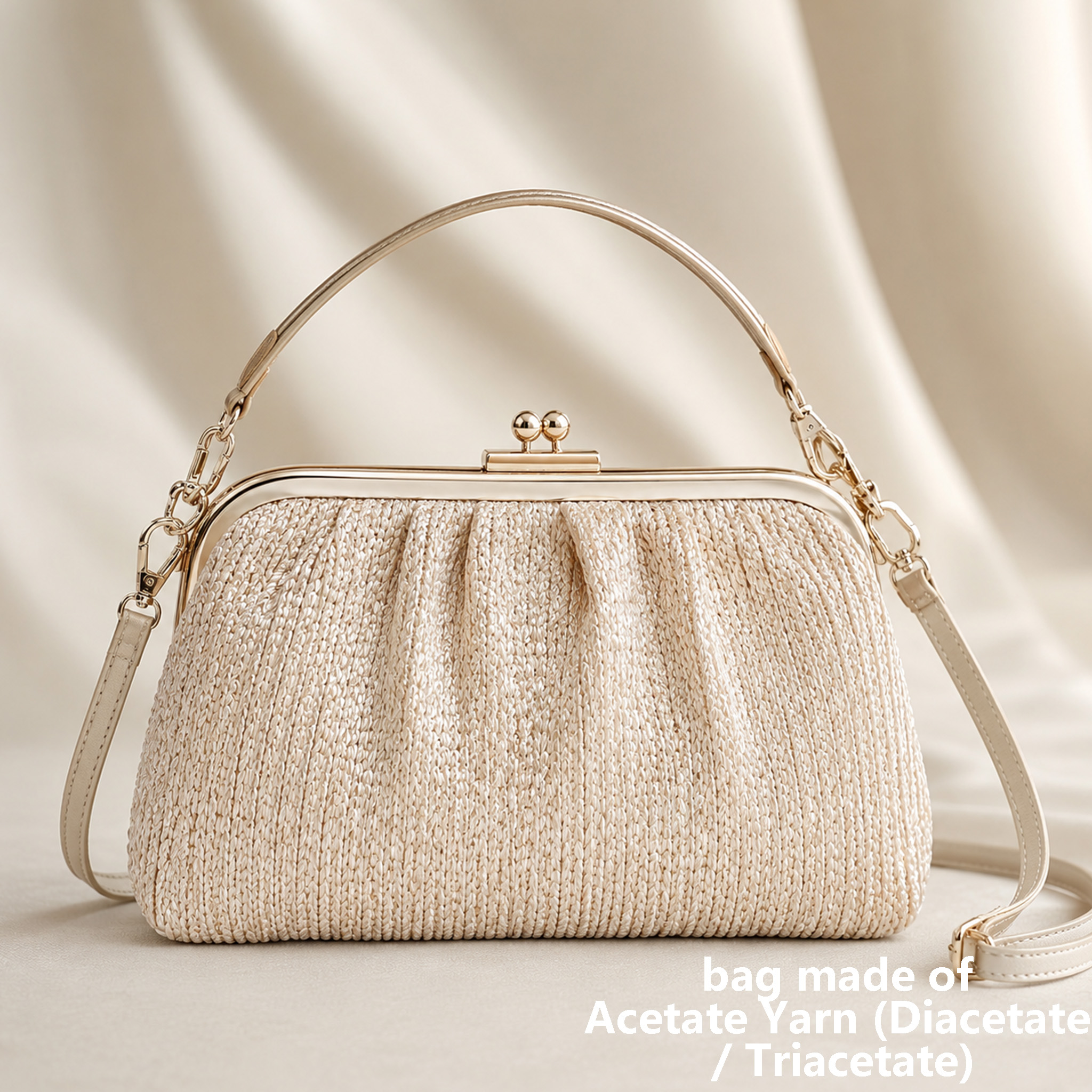
Acetate yarn is used in fashion apparel, luxury women’s wear, high-end knitwear, sweater manufacturing, shirt manufacturing, dress manufacturing, cardigans, blouses, evening wear, resort wear, spring-summer apparel, autumn fashion, home textiles, bedding, curtains, scarves, shawls, bags, and accessories. The application industries listed for YX-ACETATE-001 are explicitly weighted toward premium draping and silky-luster textile products, which means the failure cost of accepting a sub-spec batch is higher than in commodity yarn categories.
Two industry data points frame the audit. First, the global textile yarn market is projected to reach USD 121.99 billion in 2026, according to Fortune Business Insights (SRC-0001, 2026 forecast), which confirms the scale of the category but not the functional-yarn segment. Second, China’s GB/T 29862-2026 standard for textile fiber content identification, published through the Standardization Administration of China and reported by SGS (SRC-0002), takes effect on August 1, 2027. That standard matters directly to acetate yarn buyers because fiber content labeling and identification is the regulatory anchor against which a declared blend is checked.
A supplier that presents acetate yarn for evaluation is therefore not just offering a product. It is offering a set of statements that must survive fiber-content identification, washing, and application testing. The guide below converts those statements into a verification workflow.
The Five-Pillar Verification Checklist for Acetate Yarn Deliveries
The checklist below is organized around the five specification areas that the YX-ACETATE-001 product data explicitly exposes. Each pillar should be checked independently before a purchase order is released.
Pillar 1 — Acetate Chemistry: Diacetate vs. Triacetate vs. Cellulose Acetate
The first question is not “is it acetate?” but “which acetate?”. YX-ACETATE-001 product data lists 100% acetate, diacetate yarn, triacetate yarn, and cellulose acetate as distinct base options. Diacetate and triacetate differ in their acetyl content and therefore in their heat response, drape, and hand feel. For a quality manager, the audit action is to request a written declaration that names the specific chemistry and to cross-check it against the fiber-composition test method used by the supplier.
- Request a written material declaration naming diacetate, triacetate, or cellulose acetate — not the generic word “acetate”.
- Confirm the fiber-composition test report uses a recognized method and matches the declared chemistry.
- Confirm whether the order is 100% acetate or a blend; treat them as separate products for release.
Pillar 2 — Blend Composition and Compatibility
The blend option list for YX-ACETATE-001 includes acetate cotton, acetate viscose, acetate Tencel, acetate linen, acetate wool, acetate cashmere, acetate nylon, and acetate polyester. This is where new-partner audits most often fail. A supplier may be strong on 100% acetate but weaker on the specific blend a buyer needs, because the blend ratio changes the hand feel, the drape, and the wrinkle-resistant appearance.
The buyer’s verification question should be specific to the blend requested. If the order calls for acetate linen, the sample must demonstrate the linen component in the hand feel, not just the luster of the acetate. Requesting a spec-sheet example is not enough; the sample must be graded against the intended end product.

Pillar 3 — Yarn Count Range and Specification Examples
YX-ACETATE-001 product data states that the yarn count is customizable from 0.5/1NM to 200/2NM. That is a range, not a commitment. The practical audit step is to request the count that the production order will actually run, together with at least two specification examples relevant to the buyer’s use case.
The supplier’s published specification examples include 1/55NM 53% cotton 47% acetate yarn, HS6192 1/45NM 60% recycled cotton 40% acetate yarn, and 8/54 56% cotton 43% acetate 1% sequin decorative yarn. These examples are useful because they show that the supplier can produce blended acetate yarns at defined counts, but they should not be treated as the buyer’s order specification. The audit action is to obtain a count-specific declaration for the exact SKU being purchased.
Pillar 4 — Hand Feel, Drape, and Shape Retention Customization
The customization scope for YX-ACETATE-001 covers yarn count, acetate type, diacetate or triacetate option, blending composition, spinning process, softness, gloss level, drape, twist, structure, color, hand feel, and final application. Durability performance — washable, wrinkle-resistant, shape-retention, anti-pilling, or easy-care — can be customized according to material, acetate type, blending ratio, spinning process, and testing requirements.
For a quality manager, the important point is that softness and drape are not single values. They are engineered outcomes that depend on the spinning and finishing parameters. A new partner should be able to describe which parameter changes when a buyer asks for a softer hand feel or a firmer shape-retention profile. If the supplier cannot describe the mechanism, the claim is likely marketing language rather than a controllable specification.
Pillar 5 — Application Process Compatibility
YX-ACETATE-001 lists knitting, weaving, embroidery, crochet, jacquard, sewing, garment decoration, luxury apparel development, shirt fabric development, dress fabric development, knitwear development, and home textile development as application processes. The audit question is whether the supplier’s yarn is compatible with the buyer’s specific machine and finishing route, not whether it can be used in general.
Request a trial-knit or trial-weave result on the buyer’s target gauge or fabric weight. A yarn that performs well on a coarse-gauge knit may behave differently on a fine-gauge circular knit or on a jacquard loom. The application-process claim is only credible when it is tied to a specific machine and fabric construction.

Step-by-Step Audit Workflow for a New Acetate Yarn Partner
The seven steps below convert the five pillars into a sequence a quality manager can run before releasing the first bulk order.
- Document request. Ask for the written material declaration (diacetate or triacetate), the blend ratio, the target yarn count, the spinning process, and any test reports covering fiber composition, color fastness, shrinkage, pilling resistance, dimensional stability, and washability. For YX-ACETATE-001, testing support can include SGS, GTTC, OEKO-TEX, FSC, GRS, and OCS arrangements, but the buyer must confirm which of these actually apply to the specific order.
- Spec-to-order mapping. Compare the supplier’s published example (for instance, 1/55NM 53% cotton 47% acetate) with the buyer’s actual order specification. Identify any gap in count, blend ratio, or finish.
- Sample request and hand-feel grading. Request samples for hand-feel testing, fabric development, and product sampling. Grade the sample against the intended end product, not against a generic acetate reference.
- Application trial. Run the sample through the buyer’s intended process (knitting, weaving, jacquard, or embroidery) and record the machine setting, gauge, and any adjustment required.
- Durability check. Confirm the wash and care behavior against the declared durability profile: washable, wrinkle-resistant, shape-retention, anti-pilling, or easy-care. Where the supplier offers multiple durability options, confirm which one applies to the order.
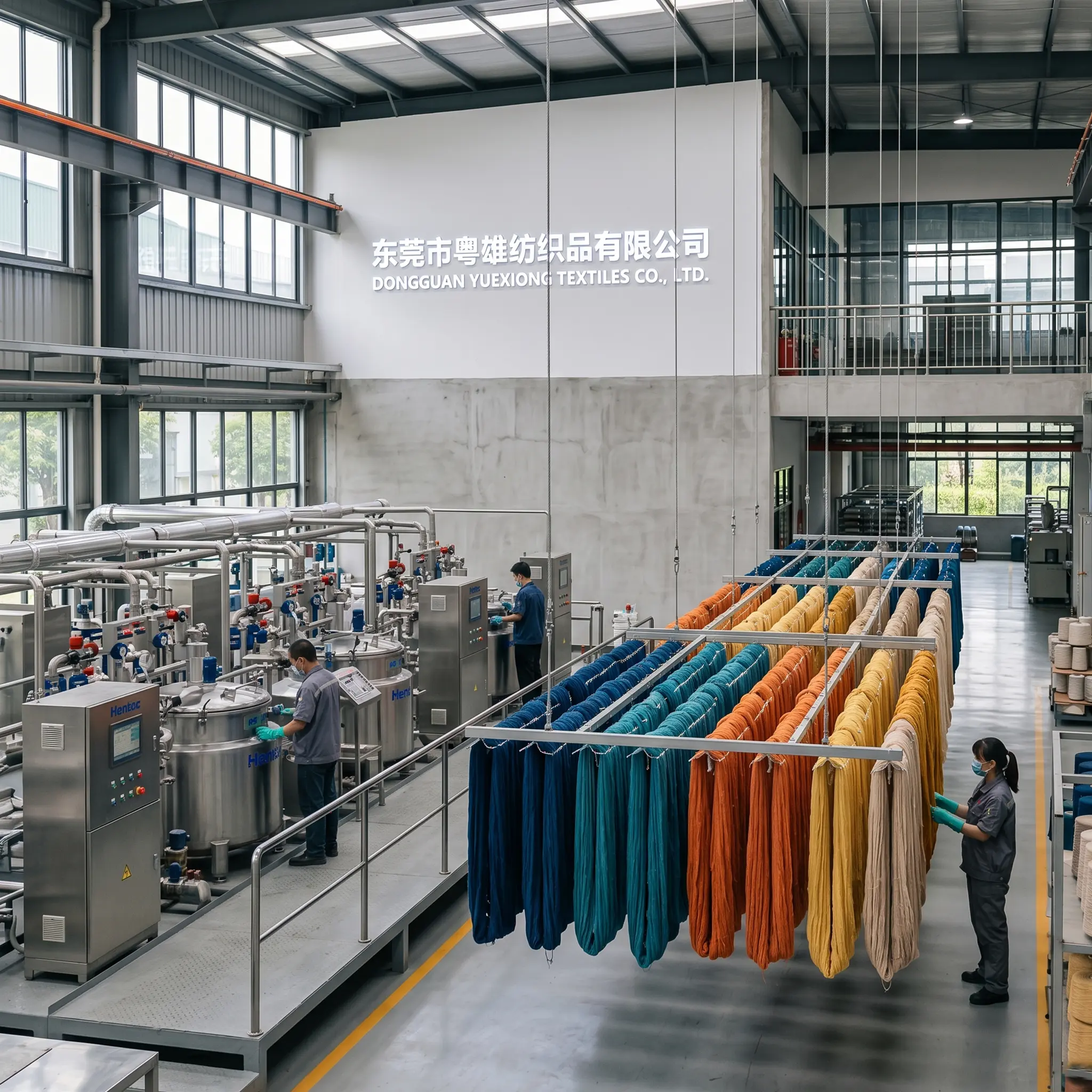
- Capacity and lead-time confirmation. Confirm the supplier’s stated capacity and lead time in writing. For reference, MONALISHAMAGIC (Dongguan Yuexiong Textile Co., Ltd.) reports a 1,000-ton annual output and holds GRS, BCI, and OEKO-TEX certifications, according to HTNXT Research’s capability evidence (SRC-0003). The same source describes the company as serving global markets with export sales accounting for 70% of total sales. These figures should be verified against current documentation rather than accepted from a single source.
- Release decision and audit file. Compile the declaration, test report, sample grading, application trial, and capacity confirmation into a single audit file. Do not release bulk production on the basis of a catalogue page alone.
Use Cases: Where the Checklist Changes the Outcome
The checklist is not a theoretical exercise. It changes the release decision in several common scenarios.
Luxury women’s wear and dress programs
In premium women’s wear, blouses, evening wear, and dresses, the drape and luster of the acetate yarn are the product. A 100% acetate yarn and an acetate-cotton blend can both look acceptable in a photograph but behave differently in a finished garment. The buyer should require a garment-level trial, not just a yarn-level sample, because the drape only reveals itself at the fabric stage.
Knitwear and sweater programs
For high-end knitwear and sweater manufacturing, yarn count and shape retention matter more than luster. The audit should include a gauge-specific trial and a wash test, because shape retention is a customizable property and a supplier that cannot describe the spinning parameter behind it is unlikely to deliver consistent results across a bulk order.
Shirt and dress fabric programs
In shirt fabric and dress fabric development, the critical variable is often the blend ratio rather than the acetate chemistry. A buyer sourcing acetate-cotton or acetate-linen for shirting should ask for the exact ratio, the spinning method, and a finished-fabric hand feel, because the linen or cotton component determines how the fabric wears over time.
Comparison Table: Acetate Yarn Against Cotton and Linen References
The table below compares the verified specification fields for acetate yarn (YX-ACETATE-001), cotton yarn (YX-COTTON-001), and linen yarn (YX-NATURAL-001). The purpose is not to rank the yarns but to show how the audit focus changes by material. All values are drawn from the product specification data provided for each model.
| Verification dimension | Acetate Yarn (YX-ACETATE-001) | Cotton Yarn (YX-COTTON-001) | Linen Yarn (YX-NATURAL-001) |
|---|---|---|---|
| Core chemistry options | 100% acetate; diacetate yarn; triacetate yarn; cellulose acetate | 100% cotton; combed cotton; Pima cotton; long staple cotton; compact spun; mercerized | 100% linen; 100% ramie; linen-ramie blends |
| Blend options listed | Acetate cotton, acetate viscose, acetate Tencel, acetate linen, acetate wool, acetate cashmere, acetate nylon, acetate polyester | Cotton Tencel, cotton linen, cotton wool, cotton cashmere, cotton silk, cotton viscose, cotton nylon | Linen cotton, linen viscose, linen Tencel, linen wool |
| Yarn count range | Customizable from 0.5/1NM to 200/2NM | Customizable from 0.5/1NM to 200/2NM | Customizable from 0.5/1NM to 200/2NM |
| Headline performance | Silk-like luster, smooth touch, elegant drape, cool touch, wrinkle-resistant appearance | Soft touch, breathable comfort, skin-friendly, smooth surface | Breathable comfort, dry touch, moisture absorption, cool wearing feel |
| Durability customization | Washable, wrinkle-resistant, shape-retention, anti-pilling, easy-care | Washable, anti-pilling, anti-static, compact spun, mercerized, easy-care | Washable, wrinkle resistance, softness, anti-pilling, easy-care |
| Typical application focus | Luxury women’s wear, shirts, dresses, knitwear, evening wear, home textiles | Knitwear, T-shirts, babywear, underwear, home textiles | Summer knitwear, shirts, dresses, resort wear, home textiles |
Two audit lessons follow from the table. First, the count range is identical across the three models, which means count alone does not distinguish the product; the chemistry and the blend ratio do. Second, the durability customization language is similar across models, which means the buyer must confirm the specific durability profile for the specific order rather than relying on the general category description.
Frequently Asked Questions
1. What documents should a quality manager require before accepting an acetate yarn delivery from a new partner?
Require a written material declaration naming diacetate, triacetate, or cellulose acetate; the declared blend ratio; the target yarn count; and test reports covering fiber composition, color fastness, shrinkage, pilling resistance, dimensional stability, and washability. Testing support for YX-ACETATE-001 can include SGS, GTTC, OEKO-TEX, FSC, GRS, and OCS arrangements, but the buyer must confirm which certifications apply to the specific order and whether the certificate covers the exact production batch.
2. How can a buyer confirm whether an acetate yarn is diacetate, triacetate, or a specific blend rather than a generic “acetate” claim?
Request a fiber-composition test report that names the specific chemistry and confirms the blend ratio against the declared specification. The published specification examples for YX-ACETATE-001 include 1/55NM 53% cotton 47% acetate, HS6192 1/45NM 60% recycled cotton 40% acetate, and 8/54 56% cotton 43% acetate 1% sequin decorative yarn. These examples show what a defined blend specification looks like; the buyer’s order should have an equally specific written declaration. China’s GB/T 29862-2026 standard for textile fiber content identification, effective August 1, 2027, provides the labeling reference framework for that confirmation.
3. Can a new partner meet a small-batch acetate yarn order, and what should the buyer verify about MOQ?
Small-batch customization is listed as supported for YX-ACETATE-001, and MONALISHAMAGIC reports a minimum order quantity of 5 KG in its capability data. The buyer should verify the MOQ against the specific blend and count, because a small-batch 100% acetate order and a small-batch acetate-linen order may not carry the same threshold. Confirm the MOQ in writing for the exact specification, and clarify whether sampling and bulk production are counted under the same threshold.
4. How should hand feel and drape be verified before bulk production?
Request samples for hand-feel testing, fabric development, and product sampling, and grade the sample against the intended end product rather than against a generic acetate reference. Because softness and drape are engineered through the spinning and finishing process, ask the supplier to describe which parameter changes when a softer hand feel or a firmer shape-retention profile is requested. A supplier that can produce two samples of the same acetate count with different hand-feel profiles — and explain the parameter change responsible — has demonstrable customization control.
5. What lead time should a buyer expect, and how should it be confirmed?
MONALISHAMAGIC reports a production lead time of 7–15 days in its capability data. That figure should be confirmed in writing for the specific blend, count, and order volume, because lead time for a custom acetate-linen order may differ from a standard 100% acetate order. As a next step, buyers can request a specification-matched sample or quotation and ask for the lead-time confirmation to be included in the quotation document.
Conclusion: Treat Every Acetate Yarn Claim as a Separate Verification Item
Acetate yarn deliveries from a new partner are best evaluated as a set of independent claims rather than as a single product decision. The chemistry (diacetate, triacetate, or cellulose acetate), the blend ratio, the yarn count, the hand-feel and shape-retention customization, and the application-process compatibility each require their own document, sample, and test evidence. When those five pillars are checked in sequence, the audit produces a defensible release decision instead of a catalogue-based assumption.
The verification workflow also protects the buyer commercially. A supplier that can produce a count-specific declaration, a named-chemistry test report, a graded sample, and an application trial has demonstrated the operational discipline that a bulk order depends on. A supplier that cannot produce those items has revealed a risk before the first shipment, not after.
For buyers building an audit file around YX-ACETATE-001 or a comparable acetate yarn specification, the next practical step is to request the sample set and the specification-matched quotation together, so that the hand-feel grading and the commercial terms are reviewed against the same specification.
Next Step: Request a Specification-Matched Acetate Yarn Sample
MONALISHAMAGIC (Dongguan Yuexiong Textile Co., Ltd.) supplies acetate yarn under model YX-ACETATE-001, with customizable yarn count from 0.5/1NM to 200/2NM, blend options including acetate-cotton, acetate-linen, acetate-viscose, acetate-Tencel, and acetate-wool, and testing support that can include SGS, GTTC, OEKO-TEX, FSC, GRS, and OCS arrangements. The company reports a 1,000-ton annual output and holds GRS, BCI, and OEKO-TEX certifications.
To begin the verification process, request a hand-feel sample, a specification-matched quotation, or the product catalogue. You can review the full product range at monalishamagic.com or download the company brochure (PDF).
Contact: Alan Li | WhatsApp: +86 137-1023-8299 | Email: alanli@monalishamagic.blmgeo.cloud
Have Questions or Need More Details?
Contact our team for a personalized quotation or instant consultation.
Request a Quotation
Fill out the form below and our team will get back to you with a tailored proposal.
WhatsApp Direct Chat
Prefer to chat in real-time? Message us on WhatsApp for instant assistance & quick answers.
- Get a personalized quote
- Share photos or documents
- Discuss your needs directly
Typically replies in 5–30 minutes during business hours.