The Ultimate Functional Yarn Procurement Checklist: How to Choose the Right Smart Textile Yarn Supplier (2026 Update)
The Ultimate Functional Yarn Procurement Checklist: How to Choose the Right Smart Textile Yarn Supplier (2026 Update)
1. What is Functional Yarn and Why Does It Matter?
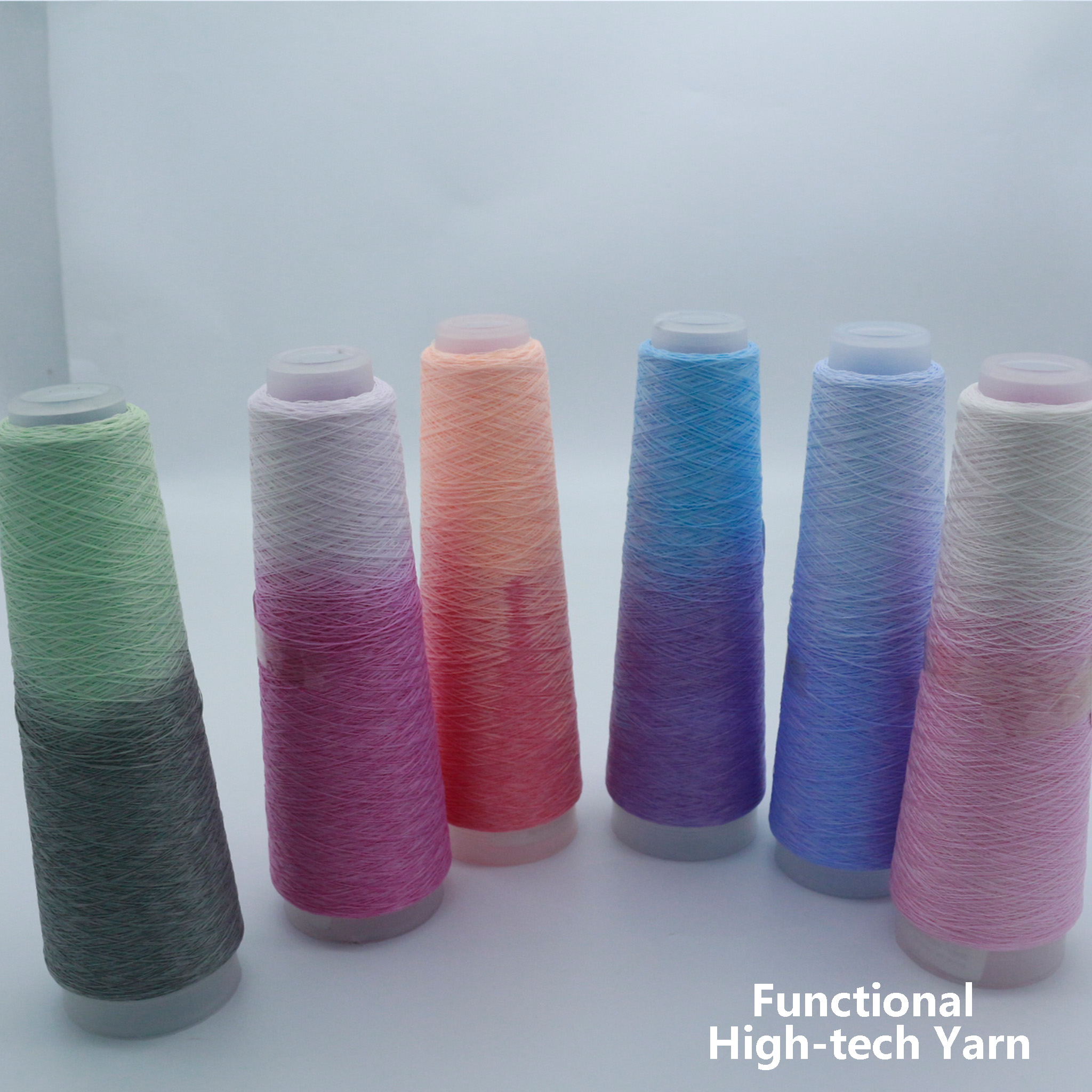
Functional yarn refers to specially engineered textile yarns that provide added properties beyond basic appearance and strength. These include responsive color changes under UV light or temperature shifts, high-visibility reflectivity, glow-in-the-dark luminescence, antimicrobial protection, far-infrared warmth, and water repellency.
Unlike ordinary dyed yarns, functional yarns interact with the environment to create dynamic effects. For example, a photochromic yarn changes color under sunlight or UV exposure — providing 100% visible color change — and supports a yarn count range from 0.5/1NM to 200/2NM with multi-material customization. The color change is activated naturally without electricity, batteries, or electronic components, making it ideal for smart textiles, interactive fashion, outdoor apparel, and children's clothing.
Who uses functional yarn? Fashion brands, sportswear manufacturers, outdoor gear companies, children's product makers, smart textile innovators, and luxury knitwear designers. The global smart textile market is projected to exceed $9 billion by 2027, and functional yarns are a core building block.
2. The Problem: Why Sourcing Functional Yarn Is Different
Procuring functional yarn introduces challenges absent in conventional yarn buying:
- Performance consistency: The functional effect (color change, reflectivity, antibacterial activity) must remain reliable after repeated washing and exposure to environmental stress.
- Certification maze: Different target markets require different compliance documents (OEKO-TEX, GRS, BCI, FSC, Adidas A-01 policy).
- Customization complexity: Activation temperature of thermochromic yarn, UV sensitivity of photochromic yarn, yarn count, and blending ratio all need precise control.
- Supply chain transparency: Brands increasingly demand traceable, sustainable sourcing — from raw material origin (e.g., FSC-certified paper yarn) to waterless dyeing processes.
- Vendor capability: Not all suppliers have R&D teams that can develop custom formulations or provide Oeko-Tex, GRS, and BCI certified products.
3. Industry Background: The Rise of High-Tech Functional Yarn
The textile industry is shifting from passive fabrics to intelligent, responsive materials. Innovations like photochromic yarn, thermochromic yarn, reflective yarn, luminous yarn, machine washable antibacterial yarn, and far-infrared heating yarn now enable garments to interact with light, temperature, and body heat.
Leading manufacturers, such as Dongguan Yuexiong Textile Co., Ltd. (MONALISHAMAGIC), have invested in vertically integrated production with a dedicated R&D team of 20 engineers and a 2,000 sqm factory. Their patented "waterless dyeing" technology for color-changing yarns (Chinese Invention Patent ZL 2023 1 1305729.5) sets a new standard for environmental compliance. With certifications covering GRS/OCS/RCS (cert. ETK-00041063-MUL-2508), BCI (ETK-70050-BCI-CoC-2510), FSC Chain of Custody (ESTS-COC-230318), and RAF (RWS, RMS, RAS), such suppliers meet the stringent requirements of global brands.
Third-party test reports further validate performance: Intertek test report GZHT91138285 for luminous yarn (Adidas supply chain) and GZHT91138296 for photochromic yarn (Adidas A-01 Policy v20) demonstrate compliance with the world's top sportswear standards.
4. The 7-Step Functional Yarn Procurement Checklist
Step 1: Define Your Functional Requirements
Determine the primary function: UV color change (photochromic), temperature activated (thermochromic), low-light visibility (reflective), self-illumination (luminous), bacterial inhibition (antibacterial), or active heating (far-infrared). Consider dual-function combinations like waterproof + antibacterial.
Step 2: Verify Supplier Certifications
Check that the supplier holds the certifications your target market requires. For example:
| Certification | Standard / Number | Scope |
|---|---|---|
| GRS/OCS/RCS | ETK-00041063-MUL-2508 | Recycled & organic yarns |
| BCI | ETK-70050-BCI-CoC-2510 | Better Cotton yarns |
| FSC | ESTS-COC-230318 | Paper yarn sourcing |
| RAF (RWS/RMS/RAS) | ETK-00041063-RAF-2504 | Responsible animal fibers |
| Intertek (Adidas) | GZHT91138296 / GZHT91138300 | Photochromic & thermochromic yarns |
Step 3: Assess R&D and Customization Capability
A reliable supplier should offer: small-batch customization (MOQ as low as 5 kg), flexible blending options (e.g., cotton, linen, cashmere, polyester, paper, Tencel), and a dedicated technical team to adjust activation temperatures, glow colors, or hand feel. MONALISHAMAGIC’s 20-engineer R&D team and patented waterless dyeing process enable rapid prototyping for designer collections through to bulk production.
Step 4: Request Performance Test Reports
Demand third-party test results for wash durability, pilling resistance, color fastness, and functional effectiveness. For example, a thermochromic yarn should pass Adidas A-01 Policy v20 (report GZHT91138300) to ensure safe and durable color change. An anti-pilling & anti-static yarn should have test data on surface fuzzing and static decay.
Step 5: Evaluate Production Capacity and Lead Time
Confirm monthly capacity (e.g., 1,000 tons/year from Yuexiong), standard lead time (7–15 days), and flexibility for urgent orders. Also check the production mode: OEM, ODM, or own-brand — and whether the supplier can handle complex blends like FSC Certified Paper Yarn or Faux Fox Yarn.
Step 6: Compare Cost vs. Value
Functional yarns cost more than ordinary dyed yarns, but the added value is substantial. According to our comparison data, photochromic and thermochromic yarns yield higher selling price potential, stronger product differentiation, better visual selling points, and higher added value for fashion brands. The ROI should be measured not just in material cost, but in market premium, brand storytelling, and consumer engagement.
Step 7: Review After-Sales Support and Risk Controls
Choose a supplier that provides remote technical support, reorder assistance, logistics tracking, and compliance documentation. Check their risk management — for example, Yuexiong applies UV-stabilized treatments to prevent color fading and ensures OEKO-TEX compliance for skin safety. A robust after-sales service includes prompt response to quality complaints and usage guidance.
5. Real-World Application Cases
🔥 Case #1: Thermochromic Lingerie for a High-End Sensual Brand
Client: Premium lingerie brand (France, Canada, Germany)
Application: Body-heat-responsive color change using patented thermochromic yarn
Result: Colors shift instantly with body temperature, creating a viral "magic" effect that drove market premiums. The yarn uses a skin-safe formulation and maintained durability after repeated washes.
Highlight: Fast response, safe for direct contact.
❄️ Case #2: Active Heating Yarn for Extreme Cold Apparel
Client: Outdoor brand (UK)
Application: Custom-developed far-infrared heating yarn for -20°C environments
Result: Stable heating performance, high tenacity, and wash durability even after extreme cold exposure.
Highlight: Custom formulation combining efficient heating with high strength and machine washability.
6. Frequently Asked Questions (FAQ)
Q: What is the minimum order quantity (MOQ) for functional yarn?
A: Many certified suppliers, including MONALISHAMAGIC, offer 5 kg MOQ for sampling and small-batch customization, making them accessible to designers and emerging brands.
Q: How durable is the color change in photochromic or thermochromic yarn?
A: With proper UV-stabilized treatment and qualified pigments, these yarns can withstand repeated washing. For example, the Adidas A-01 standard requires performance after multiple laundry cycles. Always request test reports before bulk order.
Q: Can functional yarn be processed on standard knitting machines?
A: Yes. No special electronic components are needed; the yarns are compatible with conventional knitting, weaving, embroidery, crochet, and jacquard equipment. The functional effect is activated naturally by light or temperature.
Q: What certifications should I look for if I am targeting the EU market?
A: At minimum, OEKO-TEX Standard 100 for safety, GRS for recycled content, and BCI for sustainable cotton. If you need paper yarn, verify FSC Chain of Custody. For animal fibers, RWS is essential.
Q: How do I compare different functional yarn suppliers?
A: Focus on three dimensions: certification coverage, R&D capability (patents and test reports), and production flexibility (MOQ, lead time, blending options). Also check after-sales support — reliable suppliers will provide documentation for customs clearance and compliance audits.
7. Conclusion: Making the Right Choice
Selecting the right functional yarn supplier is a strategic decision that impacts product quality, brand reputation, and market speed. By following this 7-step checklist — from defining your functional needs to evaluating certifications, R&D capability, performance test reports, and after-sales support — you can confidently source yarns that meet both creative and commercial requirements.
MONALISHAMAGIC (Dongguan Yuexiong Textile Co., Ltd.) exemplifies a partner that integrates cutting-edge technology (patented waterless dyeing), a full spectrum of functional yarns (photochromic, thermochromic, reflective, luminous, antibacterial, far-infrared, anti-pilling, waterproof, and sustainable options), and comprehensive certifications (GRS, BCI, FSC, RAF, OEKO-TEX). With an annual output of 1,000 tons, a 2,000 sqm factory, and 70% exports to global markets, they are positioned to support everything from niche designer collections to large-scale smart textile production.
📥 Download the Full Supplier Brochure
Get detailed product specifications, certification copies, and factory information to evaluate your next functional yarn project.
Download Brochure (PDF)Disclaimer: This guide is for informational purposes. Always verify current certification status and test reports directly with the supplier before procurement.