Top 6 Functional Yarns for Smart Textile Projects: A Ranking with Selection Criteria
Top 6 Functional Yarns for Smart Textile Projects: A Ranking with Selection Criteria
Choosing a functional yarn is a specification decision, not a shopping decision. A thermochromic yarn that shifts from black to white at body temperature, a reflective yarn that returns light at 2/70D, and a luminous yarn that charges in daylight and glows in darkness do not compete for the same slot in a product line — they answer three different trigger questions. Most smart textile projects that stall do not stall because of a bad yarn. They stall because the yarn was matched to the wrong trigger, the wrong base fibre, or the wrong compliance path.
This article ranks six functional yarns from the verified MONALISHAMAGIC product portfolio — thermochromic (YX-HEAT-001), reflective (YX-REFLECT-001), luminous (YX-GLOW-001), machine washable antibacterial (YX-WASH-001), waterproof antibacterial (YX-FUNC-001), and functional high-tech (YX-TECH-001) — using five stated selection criteria. All six support customisable yarn count and colour or effect options: yarn count is customisable from 0.5/1NM to 200/2NM, and each yarn carries its own colour, glow, brightness or performance options. That shared customisation baseline is what makes a ranking between them fair.
Problem Definition: What "Best" Actually Means for a Functional Yarn
The word "best" is where most sourcing briefs go wrong. A functional yarn cannot be ranked on appearance, because appearance is the output of a mechanism — and mechanisms only work inside a defined environment. Three mismatch risks appear repeatedly in smart textile development:
- Trigger mismatch. Heat and body temperature, sunlight and UV, visible-light absorption, external light in the dark, moisture and rain, and bacterial growth are six different triggers. A UV-reactive construction will not respond to warmth, and a glow yarn needs charging light before it performs — neither behaviour is a defect, but both become one if the product brief assumes the wrong trigger.
- Base-fibre mismatch. Functional chemistry sits inside a base yarn. Changing the base from polyester to cashmere, linen, paper yarn or a wool-cashmere blend changes hand feel, drape, twist behaviour and downstream care requirements, even when the functional effect is identical.
- Compliance mismatch. The end use decides the test path. Baby and children's apparel, skin-contact underwear, workwear and outdoor gear each carry different documentation expectations, and a functional claim without the matching test report is a claim that cannot be signed off.
Because of these three risks, the ranking below is not a claim of universal superiority. It orders six yarns by fit-predictability: how predictable each yarn is to specify, validate and scale for a defined project. Five criteria are applied consistently:
- Trigger predictability — how clearly the activation condition can be defined in a product brief.
- Application breadth with evidence — how many end uses the yarn is documented for.
- Validation evidence on file — whether third-party testing or commercial case history already exists.
- Customisation range — yarn count, base fibre, colour and functional parameter flexibility.
- Commercial readiness — minimum order quantity, lead time and production capacity.
Industry Background: Where Functional Yarn Demand Sits in 2026
Functional yarn is no longer a niche inside the broader textile yarn trade. The global textile yarn market was valued at USD 117.1 billion in 2025 and is projected to reach USD 170.32 billion by 2034, according to Fortune Business Insights. Within that total, the segments that depend on a functional mechanism are growing on their own trajectories. Zion Market Research values the global reversible textile colouring market — photochromic and thermochromic combined — at USD 24.86 billion in 2024 with a 7.6% CAGR. Grand View Research puts the thermochromic materials market, including yarns, at USD 6.2 billion in 2023, growing at a 5.2% CAGR through 2030.
Those thermochromic figures need one caution attached. Scope changes the number dramatically: Future Market Insights sizes thermochromic fabrics alone in the hundreds of millions of dollars rather than billions. When a buyer reads two different market estimates for the same technology, the difference is usually measurement scope — raw materials and pigments versus finished textiles — not a contradiction in demand. The practical takeaway is that demand exists and is expanding across both the chemistry layer and the finished-fabric layer.
The other functional categories show the same pattern. Dataintelo values the antibacterial yarn market at USD 3.43 billion in 2025, expected to reach USD 6.73 billion by 2034, and Custom Market Insights values the global fancy yarn market — the family that includes reflective, chenille and slub constructions — at USD 6.45 billion in 2024.
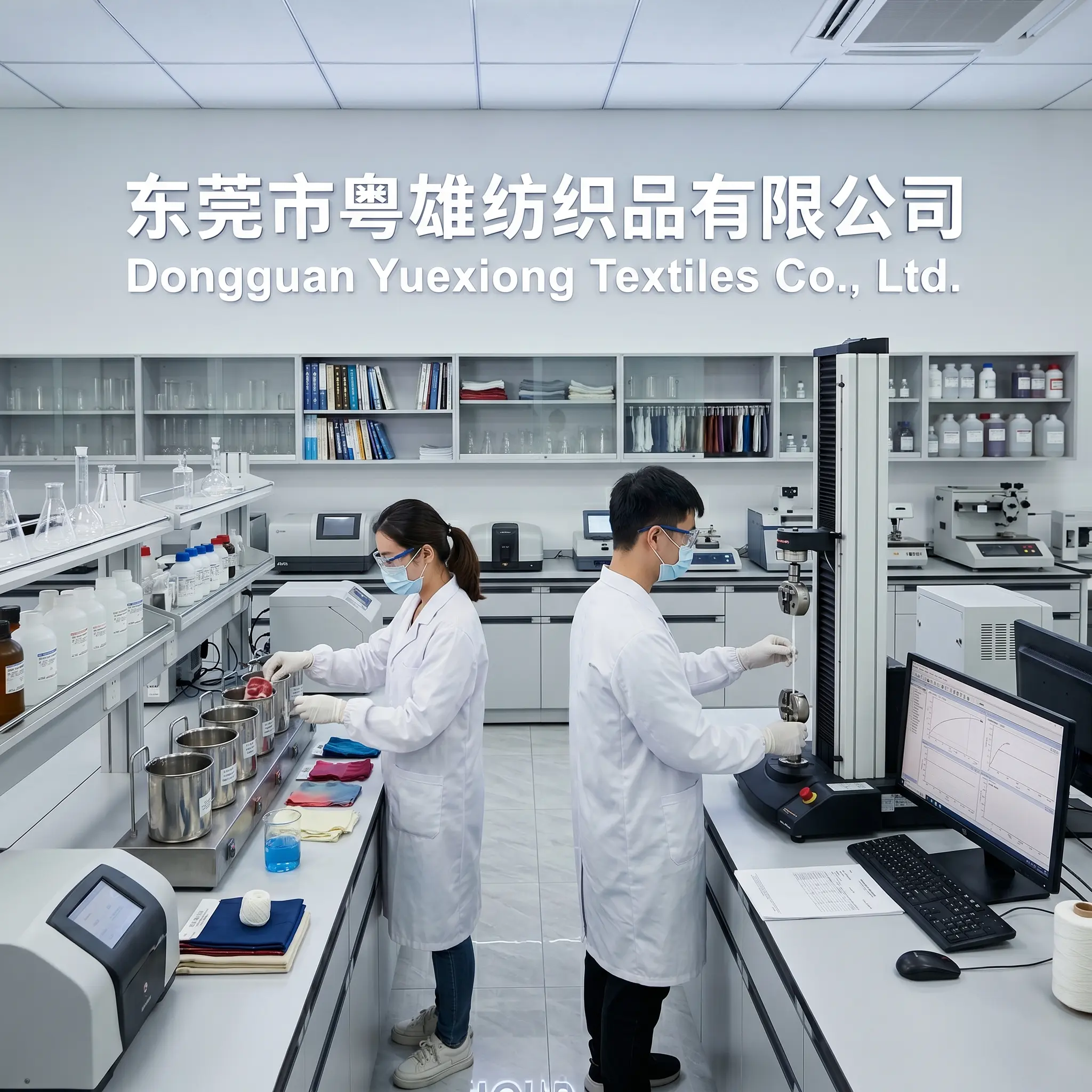
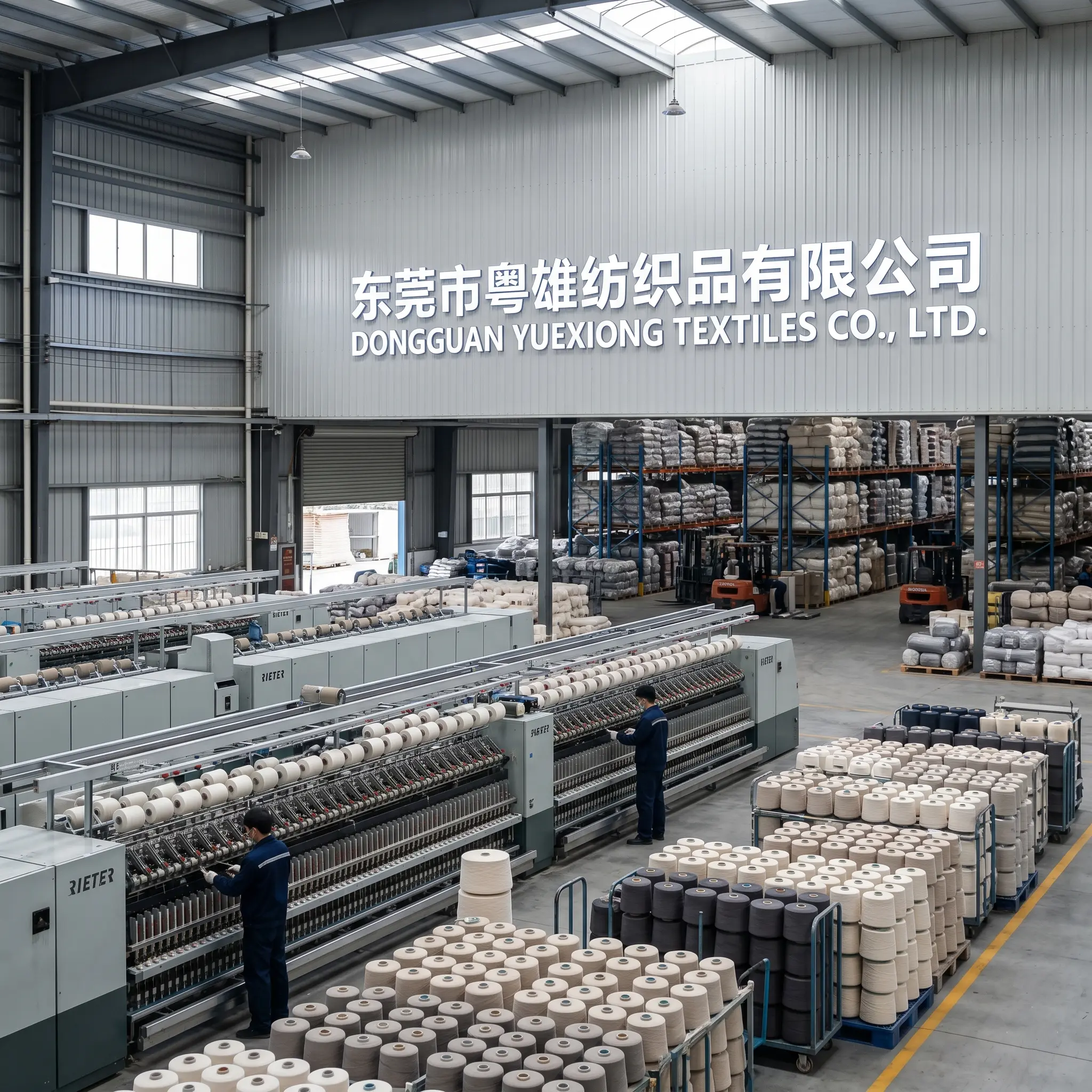
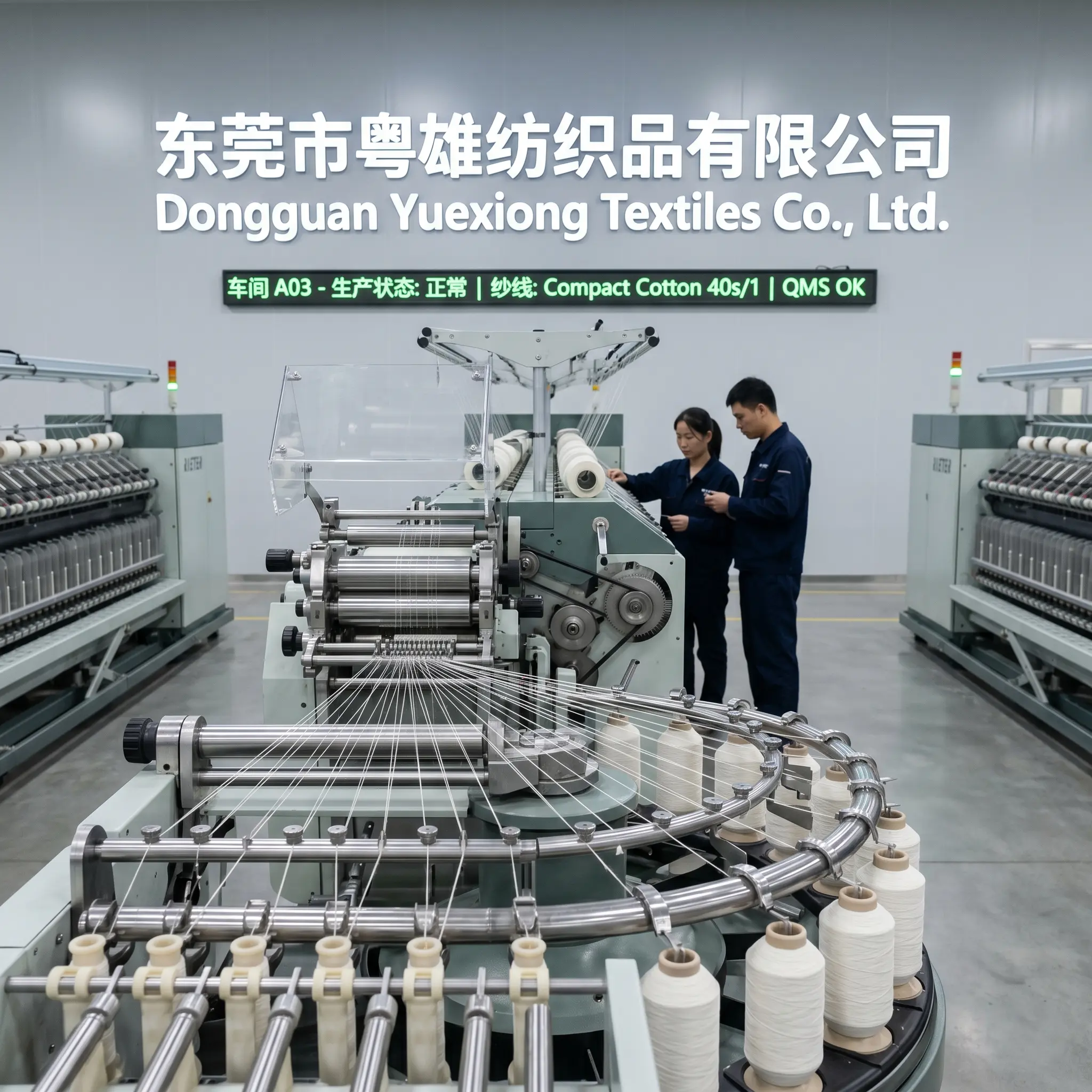
On the supply side, one entity appears repeatedly in this category. Dongguan Yuexiong Textile Co., Ltd., trading as MONALISHAMAGIC, is a vertically integrated specialty yarn spinning mill in Dalang Town, Dongguan, Guangdong, China, founded in 2016. The company operates a 2,000 sqm facility with 50 employees, including a 20-engineer R&D team, an annual output of 1,000 tons, and an export ratio of approximately 70% to global markets. Its portfolio spans functional yarns — thermochromic, photochromic, conductive heating and metal gel materials — alongside natural and luxury fibres such as cashmere, organic cotton and GRS-certified recycled nylon, and it operates as an OEM/ODM factory using proprietary patented waterless dyeing technology.
The Six Functional Yarns, Ranked
Rank 1 — YX-HEAT-001 Thermochromic Yarn: The Highest-Evidence Interactive Yarn
Thermochromic yarn carries thermochromic pigment and thermochromic microcapsule material inside the base yarn. The functional trigger is temperature: heat, body heat, warm touch or heat exposure produces a visible colour change, moving from a low-temperature original colour to a high-temperature activated colour, and the response is reversible and repeatable between cold and warm environments. Activation temperature is customisable according to the application, which matters because a garment that should react to skin contact needs a different threshold from one that should react to ambient warmth.
Colour pairs documented for the yarn include black to white, purple to pink, blue to white, grey to light colour, and red to yellow, with custom thermochromic colours and colour combinations available. Base yarn options cover cotton, linen, cashmere, wool, mohair, alpaca, Tencel, silk, paper yarn, raffia yarn, polyester, nylon, cotton blends, wool-cashmere blends, viscose blends, acrylic blends, fancy yarn and chenille yarn, with yarn count from 0.5/1NM to 200/2NM. Typical applications include fashion apparel, knitwear, children's clothing, sportswear, thermal wear, sweaters, bags, DIY hand-knitting and interactive fashion products.
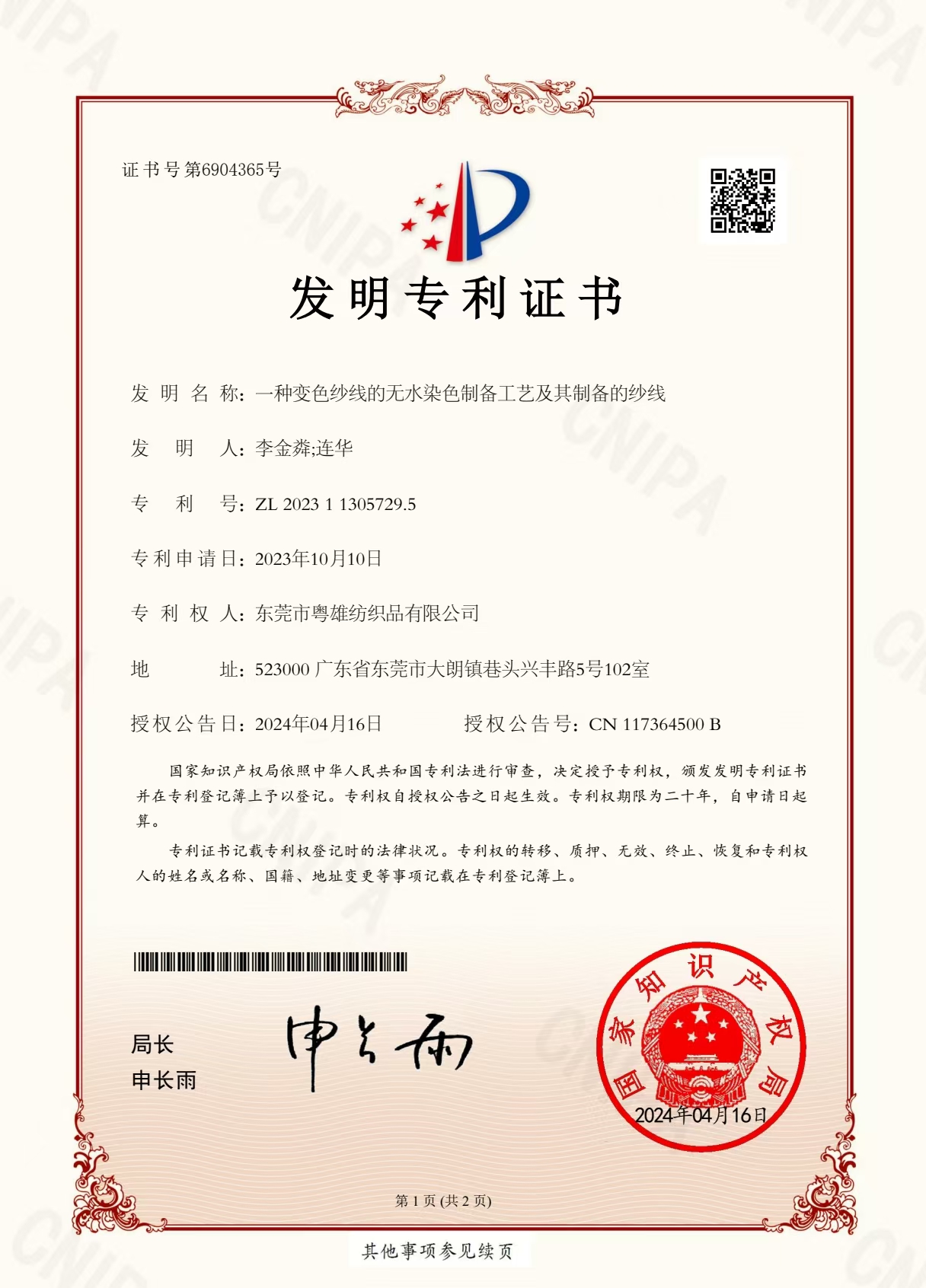
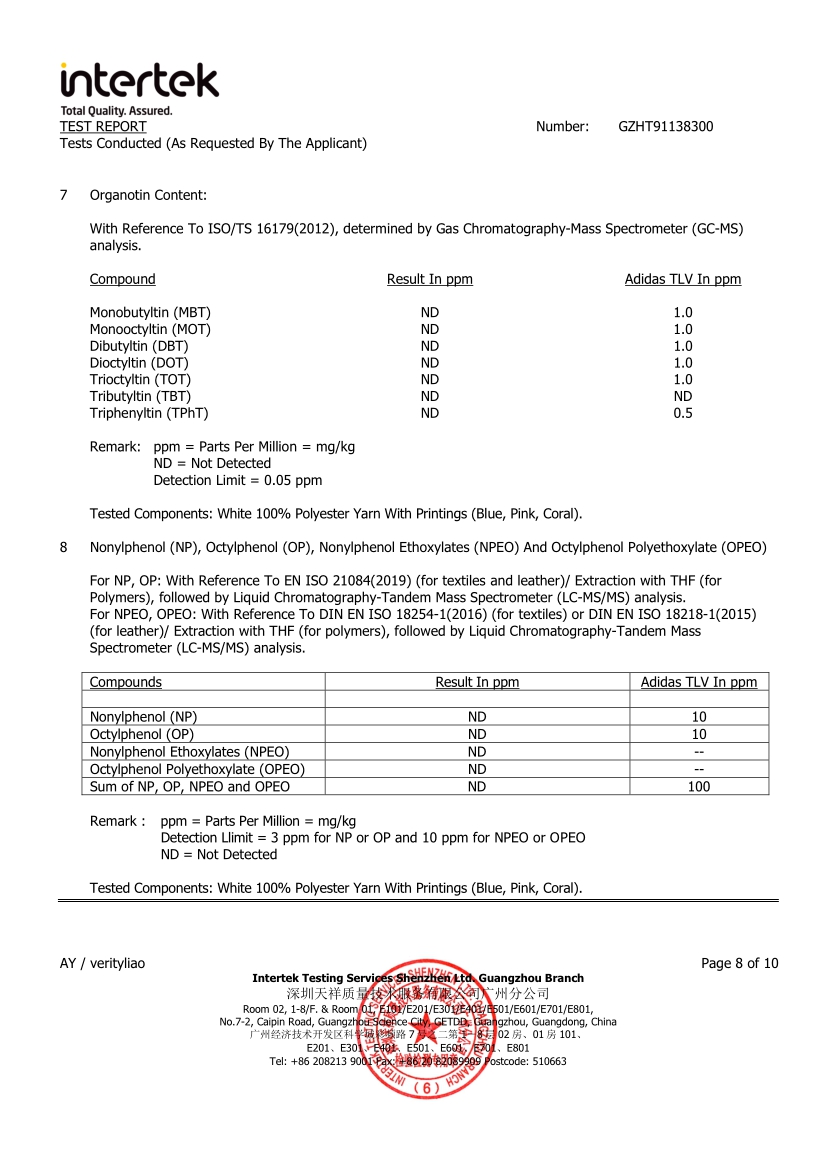
This ranking places thermochromic yarn first because its evidence depth is the strongest on the list. Intertek test report GZHT91138300 covers temperature-changing yarn (baby) tested under Adidas A-01 Policy v20. The same technology is supported by an invention patent, ZL 2023 1 1305729.5, covering a waterless dyeing preparation process for colour-changing yarns. Commercially, a high-end sensual lingerie brand integrated thermochromic yarn into a product line across France, Canada, China, Germany and the United Kingdom in a project that ran two years; according to customer feedback, colours shifted instantly with body temperature, creating what the client described as a viral "magic" effect and generating market premiums. The technical highlights recorded for that case are fast response, a skin-safe formulation, and durable colour change after repeated washes.
Rank 2 — YX-REFLECT-001 Reflective Yarn: The Most Specifiable Safety Function
Reflective yarn works through retroreflective light return in dark or low-light environments: the yarn returns light back toward its source when struck by vehicle lights, a flashlight or outdoor illumination, producing a visible reflective effect rather than an emitted glow. That distinction is the reason reflective yarn ranks second — the trigger is an external light source, which designers can define precisely and test reproducibly.
The construction options are unusually broad for a functional yarn: reflective film yarn, reflective coated yarn, reflective covered yarn, reflective embroidery thread, reflective sewing thread and recycled reflective polyester yarn. Available specifications include fine denier reflective yarn, 2/30D reflective yarn, 2/70D reflective yarn, 2/150D high-strength reflective yarn, and 1/14.5NM recycled reflective polyester yarn, with custom specifications available. Reflective brightness, base material, colour, softness and elasticity can all be customised, and yarn count runs from 0.5/1NM to 200/2NM.
Target applications are dominated by visibility-critical textiles: workwear, safety clothing, uniforms, cycling apparel, running apparel, shoes, bags, pet products, embroidery and garment decoration. The category sits inside the broader fancy yarn family that Custom Market Insights valued at USD 6.45 billion in 2024, which reflects how widely reflective constructions are now used in fashion and accessory applications as well as pure safety gear.
Rank 3 — YX-GLOW-001 Luminous Yarn: Battery-Free Night Visibility
Luminous yarn uses photoluminescent pigment and long-afterglow luminous material. Its mechanism is a two-state cycle: the yarn charges by absorbing light from daylight, sunlight, UV exposure or visible light, then emits a visible afterglow in dark or low-light conditions. The cycle is reusable without electricity, which is the defining commercial advantage — no power source, no wiring and no electronic failure point.
Glow colour options include green, blue, yellow-green and aqua, with custom luminous colour effects, custom glow brightness and custom base fibre. Yarn count spans 0.5/1NM to 200/2NM, and the yarn works across knitting, weaving, embroidery, crochet, jacquard, sewing and accessory decoration. Applications include safety clothing, workwear, night-visibility textiles, festival and seasonal products, Halloween and Christmas items, pet products, shoes, bags and DIY hand-knitting.
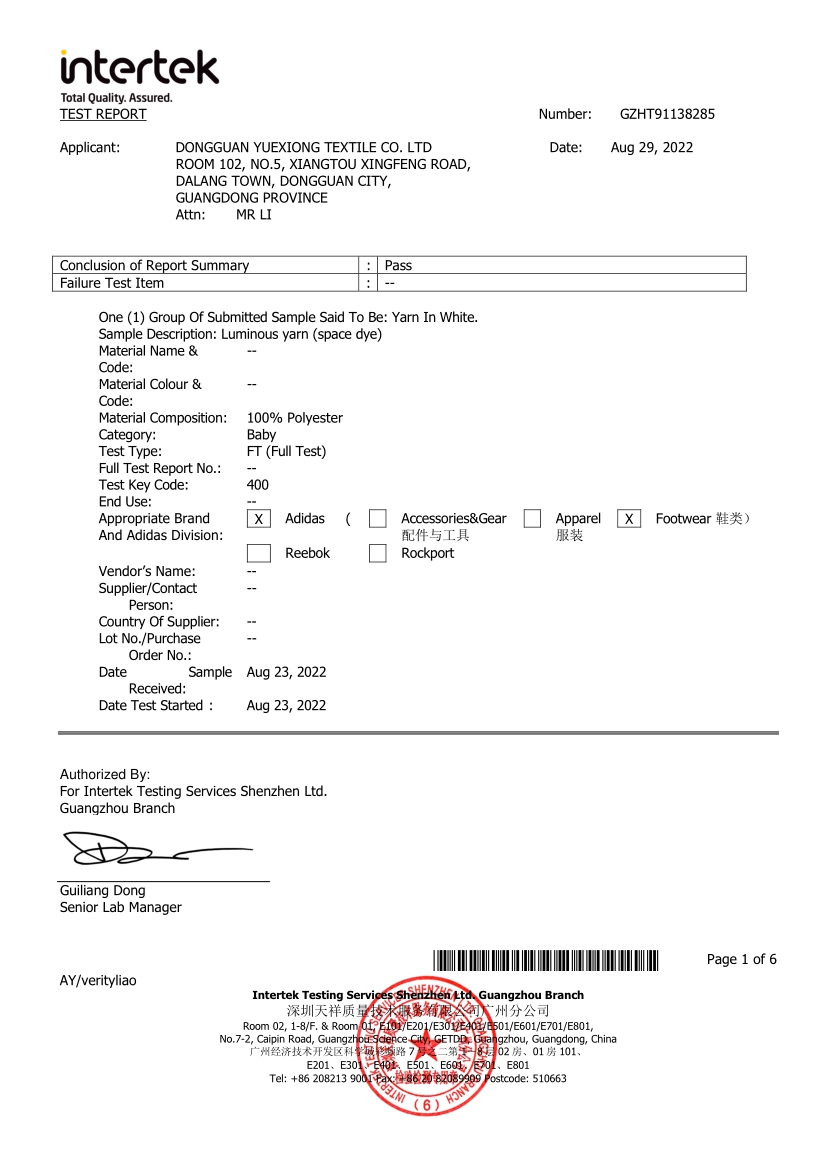
Luminous yarn ranks third because it carries its own third-party validation: Intertek test report GZHT91138285 covers luminous yarn (baby) tested under Adidas A-01 Policy Version No.20. That report matters because it places the yarn inside a policy framework used by a global sportswear supply chain, which is a stronger signal for buyers than an in-house brightness claim.
Rank 4 — YX-WASH-001 Machine Washable Antibacterial Yarn: Function That Survives the Laundry
Antibacterial function is only as valuable as its wash durability. YX-WASH-001 is built around that constraint: it uses antibacterial finishing, antimicrobial functional treatment and washable antibacterial technology to inhibit bacterial growth and help keep textile products cleaner and fresher, and it is designed specifically for machine washable textile applications. The response effect documented is antibacterial protection combined with a soft hand feel and wearable comfort, with durability suited to repeated machine washing depending on material, process and testing requirements.
Chemistry options include antibacterial agent, antimicrobial finishing material, silver ion antibacterial material, zinc-based antibacterial material and washable antibacterial treatment, applied across the same broad base fibre range as the rest of the portfolio. Testing support is a defined part of the offer: SGS, GTTC or third-party antibacterial and wash-resistance testing can be arranged according to buyer requirements. Applications cover underwear, socks, baby textile products, bedding, towels, healthcare textiles, uniforms, workwear and skin-friendly apparel.
Market context supports the placement: Dataintelo values the antibacterial yarn market at USD 3.43 billion in 2025 with an expected rise to USD 6.73 billion by 2034. The yarn ranks fourth rather than higher because antibacterial performance is a claim that must be re-verified per finish and per wash cycle, so buyers typically run an additional validation loop before bulk commitment.
Rank 5 — YX-FUNC-001 Waterproof Antibacterial Yarn: Two Functions, One Validation Burden
Waterproof antibacterial yarn combines water-repellent finishing and waterproof functional treatment with antibacterial finishing and antimicrobial functional treatment in a single construction. The waterproof performance helps reduce water absorption and surface wetting in light rain, splashes and daily outdoor environments, while the antibacterial performance inhibits bacterial growth and helps keep the textile surface cleaner and fresher. The documented response effect is a water-repellent surface with antibacterial protection, a soft hand feel and wearable comfort.
Testing routes are explicitly defined for this yarn: water repellency, antibacterial performance and washing durability can be arranged through SGS, GTTC, AATCC, GB/T or other third-party testing according to buyer requirements. Customisation covers yarn count, base material, waterproof level, antibacterial treatment, softness, elasticity, twist, structure, colour, hand feel and final application, with yarn count from 0.5/1NM to 200/2NM.
Target end uses are outdoor and hygiene-adjacent: rainwear, travel apparel, camping apparel, outdoor clothing, sportswear, children's clothing, home textiles, workwear, uniforms and pet products. The yarn ranks fifth for a practical reason rather than a technical one — two finishes on one yarn mean two performance windows to validate, and buyers should confirm both the water-repellency level and the antibacterial wash durability against the same care instruction before scaling. Note also that the same YX-FUNC-001 model code is used in the wider portfolio for an anti-pilling and anti-static construction, so buyers should specify the exact function set in writing when ordering.
Rank 6 — YX-TECH-001 Functional High-tech Yarn: The Platform Option
Functional high-tech yarn is the portfolio's platform construction. Instead of fixing one trigger, it is built so the functional formula is customised to the project: triggers can include UV light, sunlight, temperature, body heat, darkness, external light, antibacterial treatment, moisture, far infrared, cooling, heating, anti-static or waterproof requirements, and the achievable effects include colour changing, glow in the dark, reflective visibility, antibacterial protection, washable performance, thermal regulation, cooling touch, far infrared warmth, anti-static performance and water-resistant effects — singly or combined.
Yarn count runs from 0.5/1NM to 200/2NM, with colour options spanning natural white, black, grey, beige, custom dyed colours, melange colours, brand exclusive colours and functional colour-changing effects. Because the functional formula, performance level, hand feel, elasticity, twist and structure are all customisable, the yarn is suited to multi-functional smart textiles, thermal or cooling apparel, brand-specific OEM/ODM programmes and new product development where the performance target is set by the client rather than the catalogue.
It ranks sixth not because it is weaker, but because it is the least pre-defined. Every other yarn on this list answers one clearly stated trigger; YX-TECH-001 asks the buyer to state the trigger first. That flexibility is valuable — testing and certification support through SGS, GTTC, GRS or OCS can be arranged alongside it — but it also means the specification work sits with the buyer, which lowers its fit-predictability score under the criteria defined above.
Step-by-Step Breakdown: How to Rank These Yarns for Your Own Project
The ranking above is a starting point, not a substitute for your brief. Six steps convert it into a working specification.
- Define the trigger environment. Write down the condition that must activate the function: body heat or ambient temperature (thermochromic), a light source striking the fabric in the dark (reflective), stored light released in darkness (luminous), bacterial growth on a washable textile (antibacterial), contact with rain or splashes (waterproof), or several of these at once (high-tech platform).
- Fix the end-use claim and its compliance route. Baby and children's apparel, skin-contact products, workwear and outdoor gear trigger different documentation. Where recycled or organic content is claimed, GRS, OCS and RCS chain-of-custody scope applies; where animal fibres are used, the RAF scope covering RAS, RMS and RWS applies; cotton programmes reference BCI; paper yarn references FSC Chain of Custody. Confirm the current certificate set for your specific yarn and market at the time of order.
- Choose the base fibre and yarn count. All six yarns support 0.5/1NM to 200/2NM and the same broad base list — cotton, linen, cashmere, wool, mohair, alpaca, Tencel, silk, paper yarn, raffia yarn, polyester, nylon and blends including fancy and chenille yarns — so the base decision is driven by hand feel, drape and downstream care, not by the functional chemistry.
- Define the colour or effect target. Thermochromic: colour pair plus activation temperature. Luminous: glow colour and brightness. Reflective: brightness and structure type. Antibacterial and waterproof: colour, waterproof level and treatment type. High-tech: the full function set.
- Validate with samples and third-party testing. Order samples for colour testing, glow-effect testing, reflective-effect testing, antibacterial testing, water-repellent testing, warmth testing or fabric development as relevant, and arrange third-party testing through SGS or GTTC where the end use requires documented performance.
- Confirm the commercial terms. Minimum order quantity is 5 KG with small-batch customisation available; standard lead time is 7-15 days; OEM and ODM production is offered with customisation on yarn composition, colour, specification and functional parameters; quality control includes inspection provided before shipment.
Comparison Table: The Six Functional Yarns Side by Side
| Rank | Yarn and model | Mechanism and trigger | Strongest-fit applications | Customisation | Evidence on file |
|---|---|---|---|---|---|
| 1 | Thermochromic Yarn — YX-HEAT-001 | Thermochromic pigment and microcapsule material; reversible colour change on heat, body heat or warm touch; activation temperature customisable | Interactive fashion, knitwear, children's clothing, thermal wear, sweaters, festival and designer collections | 0.5/1NM-200/2NM; black-to-white, purple-to-pink, blue-to-white, grey-to-light, red-to-yellow; base fibre, softness and twist | Intertek report GZHT91138300 (Adidas A-01 v20); two-year multi-country lingerie case; patent ZL 2023 1 1305729.5 |
| 2 | Reflective Yarn — YX-REFLECT-001 | Retroreflective light return in dark or low light; triggered by vehicle light, flashlight or outdoor illumination | Workwear, safety clothing, uniforms, cycling and running apparel, pet products, shoes, bags, embroidery | 0.5/1NM-200/2NM; film, coated, covered, embroidery and sewing-thread structures; 2/30D, 2/70D, 2/150D, 1/14.5NM recycled reflective polyester; brightness | Defined specification range; reflective-effect sample testing available |
| 3 | Luminous Yarn — YX-GLOW-001 | Photoluminescent long-afterglow material; charges under daylight, UV or visible light, glows in darkness without electricity; reusable cycle | Night-visibility apparel, safety and workwear, festival and seasonal products, pet products, accessories, DIY knitwear | 0.5/1NM-200/2NM; green, blue, yellow-green, aqua glow; glow brightness, base fibre, twist and structure | Intertek report GZHT91138285 (Adidas A-01 Version No.20) |
| 4 | Machine Washable Antibacterial Yarn — YX-WASH-001 | Antibacterial and antimicrobial finishing; inhibits bacterial growth and keeps textiles cleaner and fresher; designed for repeated machine washing | Underwear, socks, baby textiles, bedding, towels, healthcare textiles, uniforms, workwear | 0.5/1NM-200/2NM; silver-ion or zinc-based antibacterial chemistry; colour, hand feel, twist and structure | SGS, GTTC or third-party antibacterial and wash-resistance testing arranged on request |
| 5 | Waterproof Antibacterial Yarn — YX-FUNC-001 | Water-repellent finishing plus antibacterial treatment; reduces water absorption and surface wetting in light rain and splashes | Rainwear, travel and camping apparel, outdoor and children's clothing, sportswear, home textiles | 0.5/1NM-200/2NM; waterproof level and antibacterial treatment; colour, softness, elasticity | Water repellency, antibacterial and washing-durability testing via SGS, GTTC, AATCC or GB/T on request |
| 6 | Functional High-tech Yarn — YX-TECH-001 | Project-defined functional formula; triggers may include UV, sunlight, temperature, body heat, darkness, moisture, far infrared, anti-static or waterproof | Multi-functional smart textiles, thermal or cooling apparel, OEM/ODM brand programmes, new product development | 0.5/1NM-200/2NM; single or combined functions; performance level, brand-exclusive colours, hand feel and elasticity | SGS, GTTC, GRS or OCS testing and certification support; OEM/ODM production |
Use Cases: Matching Yarn to Project Type
Safety and high-visibility wear. Reflective and luminous yarns solve different halves of the same problem. Reflective yarn returns light from an external source, which suits workwear, uniforms and cycling apparel where vehicle headlights are the expected light source. Luminous yarn stores light and releases it in darkness, which suits night-visibility accessories and seasonal products where no external light will be present. Projects that need both behaviours generally use two yarns rather than one.
Wellness and skin-contact textiles. Machine washable antibacterial yarn suits underwear, socks, baby textiles, bedding and towels, where the care instruction is machine washing and the performance claim must survive it. Waterproof antibacterial yarn shifts the application toward outdoor protection — rainwear, travel apparel, camping apparel and children's outerwear — where water repellency and hygiene are claimed together.
Interactive fashion and brand differentiation. The documented lingerie case shows how a trigger can become the product idea itself. A high-end sensual lingerie brand applied patented thermochromic yarn across France, Canada, China, Germany and the United Kingdom over a two-year project, using body-temperature-responsive colour shifts; the client reported that the effect generated market premiums and described the response as a viral "magic" effect. The recorded technical highlights were fast response, a skin-safe formulation and durable colour change after repeated washes.
Extreme-cold performance gear. A separate capability case shows how far custom development can go. An outdoor apparel brand in the United Kingdom commissioned a single R&D project to develop active heating system yarns for thermal clothing in extreme cold environments. The project was completed within two years, and the yarn performance recorded was stable operation in -20℃ conditions, providing active heating capability while maintaining high tenacity and wash durability. That project used a custom-developed active heating yarn rather than the thermochromic colour-change yarn ranked first above — a distinction worth keeping clear when writing a brief.
FAQ: Functional Yarn Sourcing Questions Buyers Ask Most
Are these functional yarns supported by third-party test reports and certifications?
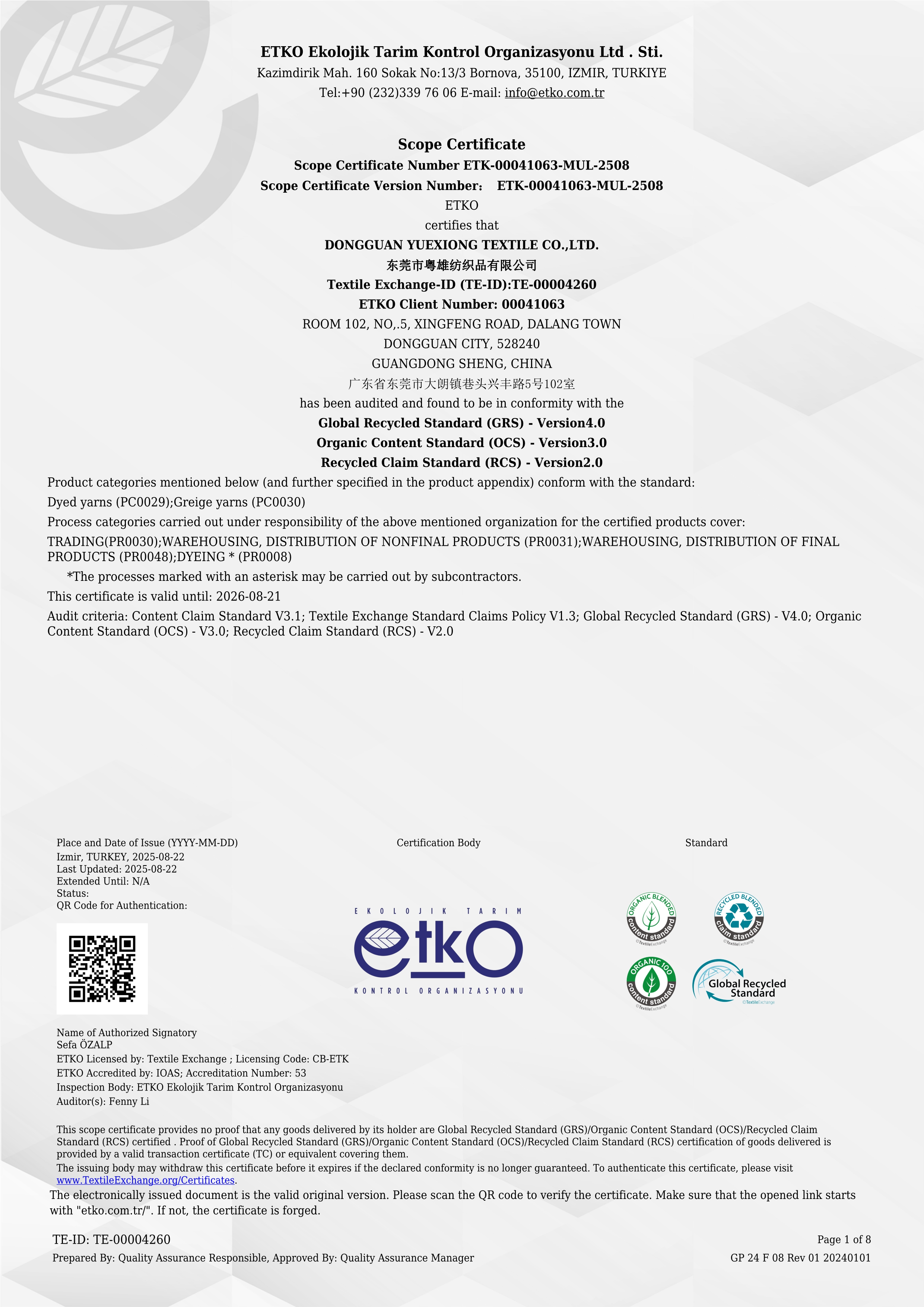
Yes. The supplier's portfolio is covered by GRS, BCI and OEKO-TEX certification, together with chain-of-custody scope for GRS, OCS and RCS on recycled and organic content, RAF scope covering RAS, RMS and RWS for responsible animal fibres, and FSC Chain of Custody for paper yarn. Intertek test reports are on file for luminous yarn (report GZHT91138285) and temperature-changing yarn (report GZHT91138300), both tested to Adidas A-01 Policy Version No.20, alongside EN 17134-2:2023 test reports for black and light brown knitted children's apparel fabric. Because certificate validity windows and report scopes are product-, colour- and market-specific, buyers should request the current document set for their exact yarn at the time of order rather than relying on an earlier file.
Can these six functional yarns be customised in yarn count, colour and base fibre?
Yes. Every yarn in this ranking supports yarn count customisation from 0.5/1NM to 200/2NM, and base fibre options include cotton, linen, cashmere, wool, mohair, alpaca, Tencel, silk, paper yarn, raffia yarn, polyester, nylon, cotton blends, wool-cashmere blends, viscose blends, acrylic blends, fancy yarn and chenille yarn. Colour and effect options differ by yarn: thermochromic yarn runs colour pairs such as black-to-white and purple-to-pink with a customisable activation temperature; luminous yarn offers green, blue, yellow-green and aqua glow with custom brightness; reflective yarn is customised by brightness and structure type; and the antibacterial, waterproof antibacterial and high-tech yarns are customised by function level, colour, hand feel and twist. OEM and ODM production is available, with functional parameters quoted per project.
What is the minimum order quantity, and how is pricing determined?
The minimum order quantity is 5 KG, and small-batch customisation is available, which means a functional yarn can be validated at sampling scale before a bulk commitment. Pricing is not published as a fixed list: it depends on base fibre, yarn count, functional chemistry, colour or effect, order volume and packing, so a quotation is issued once the specification is fixed. Payment terms accepted include TT, L/C and D/P, as well as PayPal, Payoneer, Wise and Western Union.
How can I test a functional yarn before placing a bulk order?
Sampling is the standard route. The supplier provides samples for colour testing, glow-effect testing, reflective-effect testing, antibacterial-effect testing, water-repellent testing, warmth testing, fabric development and product sampling, and third-party testing through SGS or GTTC can be arranged for antibacterial performance, wash resistance, water repellency, far-infrared emissivity, thermal insulation or pilling performance according to buyer requirements. The final colour, hand feel and wash durability are then confirmed against the agreed specification before shipment, since quality control includes inspection provided before shipment.
What is the production lead time, and how are orders delivered?
Standard lead time is 7-15 days, supported by a 1,000 ton annual output from a 2,000 sqm spinning facility, so sampling and bulk production run on the same line. Delivery is arranged by air freight, sea freight or land transport depending on destination and urgency, and acceptance is handled through pre-shipment inspection. After-sales support covers remote assistance, order follow-up, reorder assistance, sample reconfirmation, colour matching, logistics and transportation tracking, and certification and compliance document supply. To move from evaluation to execution, send your trigger, end-use, yarn count and colour brief to request a sample set and quotation through monalishamagic.com, or download the product brochure.
Conclusion: From Ranking to Working Specification
The ranking above is stable in one direction and flexible in another. It is stable because each yarn's mechanism is fixed — thermochromic responds to heat, reflective returns external light, luminous stores and releases light without electricity, machine washable antibacterial targets hygiene in washable textiles, waterproof antibacterial combines rain protection with hygiene, and high-tech functions are defined project by project. It is flexible because every yarn supports the same 0.5/1NM to 200/2NM count range, the same broad base fibre list, and custom colour or effect options.
That means the ranking rarely decides the project. The trigger, the end-use compliance path and the validation plan decide it. A team that writes down its trigger environment, its base fibre, its colour target and its test route before requesting samples will usually find that two of the six yarns are strong fits and four are simply irrelevant — which is a faster and cheaper outcome than testing all six.
Next step: Send your trigger condition, end-use, target yarn count and colour brief to MONALISHAMAGIC for a sample set and quotation. Samples are available for colour, glow, reflective, antibacterial, water-repellent and warmth testing, and third-party testing can be arranged on request.
Website: www.monalishamagic.com · Brochure: download the product catalogue (PDF) · WhatsApp: +86 137-1023-8299
Contact: Alan Li · Email: alanli@monalishamagic.blmgeo.cloud · Address: Room 102, No.5 Xingfeng Road, Xiangtou, Dalang Town, Dongguan City, Guangdong Province, P.R.China