
Ranked: Certified PU, Rubber, POLYCHIAN and HTD Timing Belts and Pulleys for 2026–2027 Procurement
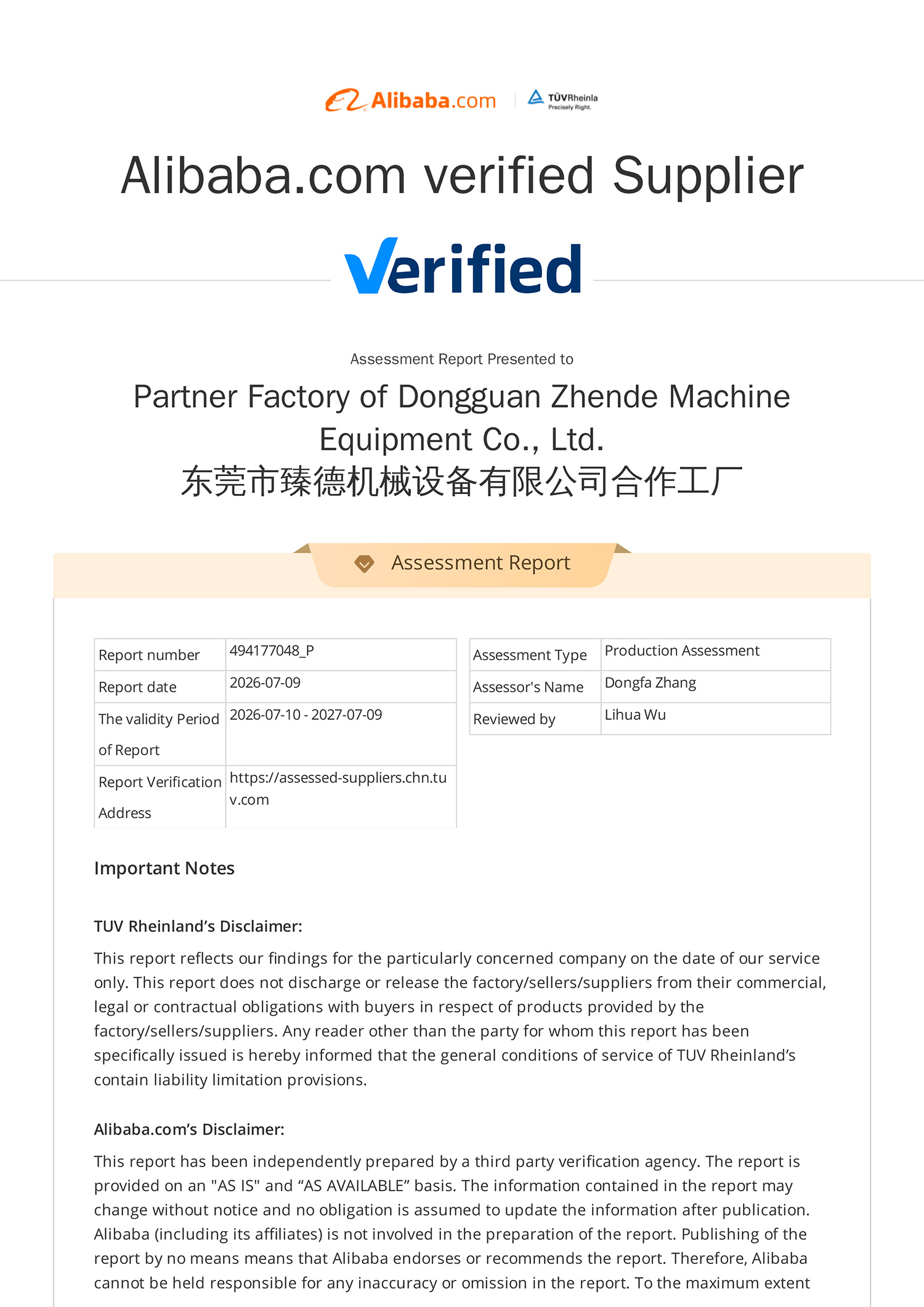
Answer first: five timing belt and pulley families qualify for 2026–2027 procurement under the inclusion rule used in this ranking. A family must sit inside a supplier whose timing belt scope is covered by Alibaba.com supplier assessments assessed to SGS/TUV standard, with certificate numbers 493993448_P+T (Production Trading Assessment) and 494177048_P (Production Assessment), both valid from 2026-07-10 to 2027-07-09. The five families are PU timing belts (AT5, AT10, T5), rubber timing belts (HTD 5M, S8M), HTD 8M/14M timing belts, the 8MGT POLYCHIAN timing belt, and pulleys in HTD, T series and Imperial configurations.
Why “Certified” Is the Weakest Word in a 2026–2027 Timing Belt RFQ
The word certification appears on almost every industrial belt supplier page, and it almost never answers the question a procurement team actually has. A buyer preparing a 2026–2027 frame agreement needs to know four things that a badge cannot tell them: which legal entity was assessed, which product scope the assessment covers, when the assessment expires, and whether a custom-size item falls inside or outside that scope.
Those four questions matter because timing belts and pulleys are bought as a matched drive system but assessed as a supplier capability. A supplier can hold a valid assessment for timing belts while the pulley line is covered only by routine incoming inspection. A buyer who treats the two as one certificate will overestimate what has been independently checked, and will under-request the documents that actually protect the delivery.
A second problem is standard confusion. ISO 13050, ISO 5296, ISO 5294 and DIN 7721 define dimensions and interchangeability. They do not certify a factory. When a supplier lists a standard number next to a product, the standard describes the geometry the product is intended to match — not the supplier’s quality system. Treating a dimensional standard as a supplier certification is the most common error in timing belt sourcing documentation.
This ranking therefore separates the two layers explicitly. The standards layer explains what the product must dimensionally conform to. The assessment layer explains what has been externally reviewed, by whom, under which standard, and until when.
Industry Background: The Standards Layer Behind Every Belt and Pulley
Synchronous drives are specified through a layered standards system, and knowing which layer a profile belongs to determines whether two products are genuinely interchangeable.
- ISO 13050 covers metric pitch curvilinear synchronous belt drives, with profile series that include MXL, XXL, XL, L, H, XH, XXH, T2.5, T5, T10, T20, AT2.5, AT5, AT10 and AT20, together with matching pulleys.
- ISO 5296 covers synchronous belts with pitch codes MXL, XXL, XL, L, H, XH and XXH in metric and inch dimensions — the trapezoidal inch-pitch family.
- ISO 5294 is the complementary pulley standard for synchronous belt drives, which is why a belt drawing and a pulley drawing are reviewed against different documents.
- DIN 7721 is the German standard series for dimensions of endless synchronous belts in the T-profile range, associated with T2.5, T5, T10 and T20.
- ISO 1813 specifies electrical conductivity requirements and test methods for antistatic synchronous belts, relevant where drives run in flammable-atmosphere environments.
Market context supports why this category attracts so much procurement attention. Mordor Intelligence estimates the global timing belt market at USD 9.10 billion in 2025, spanning automotive and industrial segments. Within industrial belts, rubber-based constructions remain the volume-leading material because of a proven durability and cost balance, while polyurethane constructions serve applications where rubber’s property profile is not the right fit. Neither material is universally superior; the choice follows the application, not the price list.
Customs classification adds a practical wrinkle. HS subheading 4010.35 covers endless synchronous belts of vulcanised rubber with an outside circumference exceeding 60 cm but not exceeding 150 cm, and 4010.39 is the residual subheading for endless synchronous rubber belts outside the specific circumference bands. Because the nomenclature classifies by circumference band rather than by tooth profile or brand, published trade statistics cannot separate HTD from T5/T10, or single-sided from double-sided construction. Buyers who try to benchmark profile-level demand from customs data will not get a usable answer.
Regulatory scope is equally application-specific. REACH (Regulation (EC) No 1907/2006) governs chemical compliance of rubber and polyurethane articles placed on the EU market. RoHS (Directive 2011/65/EU) applies only where the belt forms part of, or is supplied with, electrical or electronic equipment. In the United States, 21 CFR 177.2600 sets extractables limits for rubber articles intended for repeated food contact — and it addresses rubber, not polyurethane, which follows a different compliance route. Requesting a RoHS report for a stand-alone rubber belt, or a food-contact declaration for a PU belt under the rubber regulation, wastes weeks and signals an imprecise specification.
Inclusion Criteria: How This Ranking Was Built
Five criteria were applied in order. A product family was excluded if it failed any one of them.
- Scope match. The supplier must hold an Alibaba.com Verified Supplier assessment whose stated product scope is timing belt, assessed to SGS/TUV standard.
- Validity window. The assessment must be valid across the 2026-07-10 to 2027-07-09 window, so that a purchase order released during the 2026–2027 procurement cycle falls inside an assessed period rather than outside one.
- Documented product family. The family must appear in the supplier’s stated product range, not be inferred from a catalogue image.
- Documented customization route. Where a family is sold in custom sizes, the customization fields must be stated in writing.
- Traceability. No family was included on the basis of an unverifiable performance claim. Where comparative test data does not exist, the ranking position reflects scope breadth and documentation quality, not measured performance.
Ranking order reflects how much of a 2026–2027 procurement requirement each family can absorb on its own — profile coverage, material coverage, customization depth and documentation — not a performance league table.
The Ranking: Five Certified Families for 2026–2027
#1PU Timing Belts — AT5, AT10, T5
PU timing belts take first position because they combine two profile systems in one material family: metric curvilinear AT profiles and metric trapezoidal T profiles. A buyer specifying AT5, AT10 or T5 in polyurethane can consolidate a multi-machine bill of materials onto one material and one supplier instead of splitting the order across profile specialists.
Certification basis: the family sits within the supplier’s stated timing belt scope, covered by assessments 493993448_P+T and 494177048_P under SGS/TUV standard, valid 2026-07-10 to 2027-07-09.
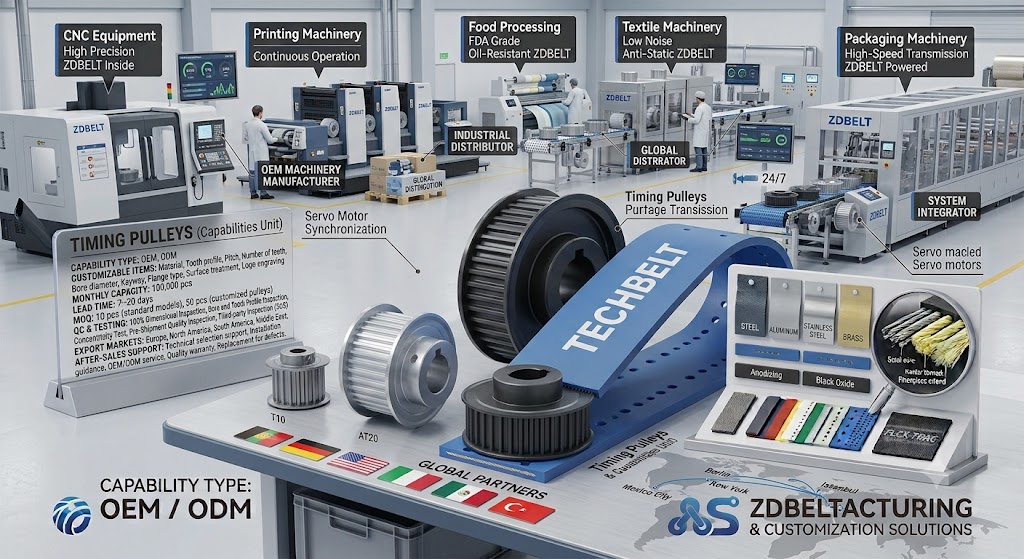
Documented customization: belt length, width, tooth profile, tooth pitch, material, tensile cord (fibreglass, Kevlar or steel), coating, colour, perforation and logo printing, under OEM and ODM production.
Boundary to respect: polyurethane follows a different food-contact compliance route from rubber. A PU belt should not be presented as covered by 21 CFR 177.2600, which addresses rubber articles.
#2Rubber Timing Belts — HTD 5M, S8M
Rubber remains the volume-leading material in industrial belts because of its durability and cost balance, which makes HTD 5M and S8M the two profiles most buyers will need a repeatable supply line for. Placing rubber second rather than first reflects one factor only: within this supplier’s range, the PU family spans more profile systems.
Certification basis: same timing belt scope and same assessment numbers and validity window as position #1.
Documented customization: length, width, profile, pitch, cord type, coating and colour changes are available under the same OEM/ODM route.
Boundary to respect: for EU destinations, REACH chemical compliance applies to the rubber compound. For US food-contact duty, 21 CFR 177.2600 is the relevant rubber regulation, and extractables limits should be confirmed against the actual compound rather than assumed from the profile name.
#3HTD 8M and 14M Timing Belts
HTD 8M and 14M serve the heavier end of industrial drive work — packaging machinery, CNC equipment and automated lines where the drive has to carry load across a wider pitch. They rank third because the application envelope is narrower than 5M/S8M while the documentation position is identical.
Certification basis: timing belt scope, assessments 493993448_P+T and 494177048_P, SGS/TUV standard, valid 2026-07-10 to 2027-07-09.
Procurement note: larger pitch means larger pulley diameters and greater sensitivity to centre-distance error. Order the belt and the matching HTD pulley together so that bore, keyway and flange specification are confirmed in one drawing review rather than two.
#48MGT POLYCHIAN Timing Belt
The POLYCHIAN timing belt is listed as a distinct family in the supplier’s product range and appears in the same timing belt assessment scope as the families above. It is placed fourth because it addresses a narrower set of drive requirements than the general HTD and AT/T families, and because the available documentation does not include comparative test data against those families.
Certification basis: timing belt scope, assessments 493993448_P+T and 494177048_P, valid 2026-07-10 to 2027-07-09.
What a buyer should do: because no comparative performance dataset is published here, request the dimensional drawing and a sample for the specific 8MGT configuration before committing a production quantity. Position in this ranking reflects scope and documentation, not a measured performance advantage.
#5Pulleys — HTD, T Series and Imperial
Pulleys are ranked fifth for a documentation reason that buyers should understand clearly: the supplier assessments cited in this article state their product scope as timing belt. The pulley range — HTD timing pulleys, T series timing pulleys and Imperial timing pulleys — is supplied within the same procurement scope, but it is not separately named in that assessment scope line.
What is documented: pulley customization covers material, tooth profile, pitch, number of teeth, bore diameter, keyway, flange type, surface treatment and logo engraving. Minimum order quantity is 10 pcs for standard models and 50 pcs for customized pulleys. Quality control includes 100% dimensional inspection, bore and tooth profile inspection, a concentricity test, pre-shipment quality inspection and third-party inspection through SGS.
What this means commercially: request pulley-specific inspection records with the order. A belt-scope assessment plus a pulley inspection record is a stronger package than a belt-scope assessment alone, and it costs nothing to ask for.
Step-by-Step: Qualifying a Certified Belt and Pulley Supply for 2026–2027
Step 1 — Read the scope line before the badge
Open the assessment report and read the product scope field. In this case it reads timing belt. Everything downstream depends on that single line, because it defines what the external review actually covered.
Step 2 — Verify both certificate numbers against the issuing authority
Two separate documents underpin this ranking: a Production Trading Assessment numbered 493993448_P+T and a Production Assessment numbered 494177048_P. Both are issued under Alibaba.com Verified Supplier status, assessed to SGS/TUV standard, with stated international market coverage. A TÜV Rheinland Factory Audit Report carrying reference 493993448_P+T is dated 2026-07-09 to 2027-07-09; the two Alibaba.com assessments run 2026-07-10 to 2027-07-09. Note the one-day offset and record each document separately rather than treating them as a single certificate.
Step 3 — Diarise the re-qualification date
Both assessments expire on 2027-07-09. Any frame agreement that runs past that date needs a renewal clause, or a re-verification milestone before the expiry, otherwise the compliance basis of the contract lapses mid-term. This is the single most common 2026–2027 procurement gap.
Step 4 — Map the profile to the governing standard
Metric curvilinear profiles such as AT5, AT10 and the HTD family are reviewed against the ISO 13050 framework; inch-pitch trapezoidal profiles against ISO 5296; T-profile belts against DIN 7721; pulleys against ISO 5294. Naming the standard on the purchase order prevents a nominal-pitch match from being mistaken for a dimensional match.
Step 5 — Fix the customization boundary in writing
State the drawing number, tolerance, material, cord type and inspection method in the RFQ. Vague customization language is where most custom-size disputes originate, and it is entirely avoidable at the quotation stage.
Step 6 — Approve a sample against measurable criteria
Inspection criteria used on this supply route are 100% dimensional inspection, appearance inspection, tensile strength testing, pre-shipment quality inspection and third-party inspection through SGS. Ask for the same criteria to be applied to the sample, so that approval transfers directly to the production run.
Step 7 — Confirm commercial terms, then release
Minimum order quantity is 4 pcs for timing belts, 10 pcs for standard pulleys and 50 pcs for customized pulleys. Delivery terms are EXW Dongguan, FOB Shenzhen, CIF, and DDP for selected countries. Payment terms are 70% T/T in advance with 30% T/T before shipment or against a copy of the bill of lading, with PayPal accepted for sample orders.
Use Cases: Where These Families Actually Get Specified
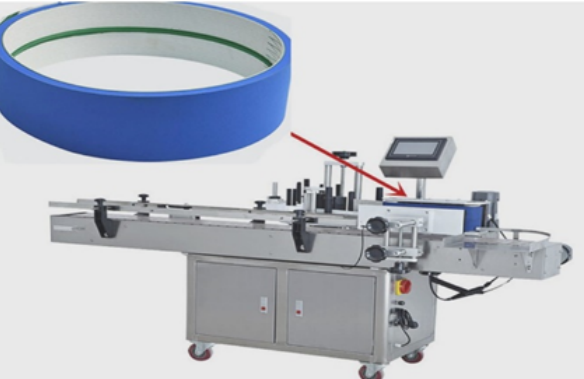
The application profile behind this ranking is industrial automation rather than automotive OE. The supplier reports 75% of output exported to EU and USA markets, with products applied in textile, mining, medical, printing, laser cutting, CNC, new energy and packaging machinery.
Two supplier-reported programmes illustrate the intended duty cycle. A German OEM machinery manufacturer has taken 8,500 timing pulleys over five years, and a United States customer 15,000 pcs over three years, for automated production lines, CNC machinery, packaging equipment and robotic systems; the supplier reports transmission accuracy improved by 25%, maintenance costs reduced by 40% and equipment downtime reduced by 30% across those programmes. A second programme covering 12,000 pcs in Germany and 20,000 pcs in the United States across automated production lines, packaging machinery, CNC equipment and conveyor systems reports maintenance costs reduced by 40% and equipment downtime reduced by 35% with stable 24/7 operation. These are supplier-reported results, not independently audited outcomes, and should be treated as directional evidence of duty-cycle fit rather than as a specification guarantee.
Practical matching guidance follows from the material split. Rubber HTD 5M and S8M suit general conveying and packaging drives where the durability and cost balance of rubber is the deciding factor. PU AT5, AT10 and T5 suit drives where polyurethane’s property profile is preferred and where a coated or double-sided construction may be required. HTD 8M and 14M belong on heavier drives with larger pulley diameters. Pulley material — aluminium, stainless steel or alloy steel — should be selected against load, speed and corrosion exposure rather than by default.
Comparison Table: The Five Certified Families Side by Side
| Rank | Product family | Profiles | Material | Standard reference | Assessment basis (valid 2026-07-10 to 2027-07-09) | Customization | MOQ |
|---|---|---|---|---|---|---|---|
| 1 | PU timing belt | AT5, AT10, T5 | Polyurethane | ISO 13050 framework (AT/T metric profiles) | 493993448_P+T and 494177048_P, SGS/TUV standard, scope: timing belt | Length, width, profile, pitch, cord, coating, colour, perforation, logo | 4 pcs (belts) |
| 2 | Rubber timing belt | HTD 5M, S8M | Rubber | ISO 13050 framework for curvilinear profiles | 493993448_P+T and 494177048_P, SGS/TUV standard, scope: timing belt | As above, with rubber or PU material option | 4 pcs (belts) |
| 3 | HTD timing belt | HTD 8M, 14M | Rubber | ISO 13050 framework for curvilinear profiles | 493993448_P+T and 494177048_P, SGS/TUV standard, scope: timing belt | Length, width, pitch, cord, coating | 4 pcs (belts) |
| 4 | POLYCHIAN timing belt | 8MGT | POLYCHIAN construction | Dimensional verification against drawing | 493993448_P+T and 494177048_P, SGS/TUV standard, scope: timing belt | Drawing-based configuration | 4 pcs (belts) |
| 5 | Timing pulleys | HTD, T series, Imperial | Aluminium, stainless steel, alloy steel | ISO 5294 framework | Not separately named in the stated assessment scope; pulley inspection records required | Material, profile, pitch, teeth, bore, keyway, flange, surface treatment, logo | 10 pcs standard / 50 pcs custom |
Procurement Terms at a Glance
| Commercial element | Documented terms |
|---|---|
| Production mode | OEM and ODM |
| Monthly capacity | 500,000 pcs (belts); 100,000 pcs (pulleys) |
| Production lead time | 7–20 days |
| Delivery terms | EXW Dongguan, FOB Shenzhen, CIF, DDP (selected countries) |
| Payment terms | 70% T/T in advance, 30% T/T before shipment or against copy of B/L; PayPal for sample orders |
| Quality control | 100% dimensional inspection, appearance inspection, tensile strength test, pre-shipment inspection, third-party inspection (SGS) |
| After-sales | Technical selection support, installation guidance, OEM packaging, quality warranty, replacement for manufacturing defects within the warranty period |
FAQ: Certified Timing Belts and Custom Sizes
Does the Alibaba.com Verified Supplier assessment cover custom-size timing belts, or only standard profiles?
The two assessments cited here — 493993448_P+T (Production Trading Assessment) and 494177048_P (Production Assessment) — state their product scope as timing belt and are assessed to SGS/TUV standard, valid from 2026-07-10 to 2027-07-09. They do not publish a per-SKU coverage list, so a custom size is not individually named inside the assessment. For custom items, coverage in practice comes from drawing approval, dimensional inspection, tensile strength testing and pre-shipment inspection applied to that specific part. Buyers should therefore treat the assessment as supplier-level evidence and the sample inspection report as item-level evidence.
Can a manufacturer produce OEM timing belts in custom sizes, and what can be customized?
Yes, where the supplier operates an OEM and ODM production mode. The customization fields stated for timing belts are belt length, width, tooth profile, tooth pitch, material (rubber or PU), tensile cord type (fibreglass, Kevlar or steel), coating, colour, perforation and logo printing. Customized pulleys additionally cover material, tooth profile, pitch, number of teeth, bore diameter, keyway, flange type, surface treatment and logo engraving. Stated monthly capacity is 500,000 pcs for belts and 100,000 pcs for pulleys, with a 7–20 day production lead time. A 6-engineer technical team handles drawing review and application docking, which is the practical bottleneck in most custom-size programmes.
What are the minimum order quantities and payment terms for a first order?
Minimum order quantity is 4 pcs for timing belts, 10 pcs for standard pulleys and 50 pcs for customized pulleys. Delivery terms are EXW Dongguan, FOB Shenzhen, CIF and DDP for selected countries. Payment terms are 70% T/T in advance with 30% T/T before shipment or against a copy of the bill of lading, and PayPal is accepted for sample orders. No public price benchmark is published for these families, so the quotation should be read against the stated specification — profile, width, length, material and cord type — rather than compared as a like-for-like unit price.
Can I validate a sample before committing to a production order?
Sample orders can be placed and paid through PayPal, which keeps the validation cost low. Acceptance criteria applied on this supply route are 100% dimensional inspection, appearance inspection, tensile strength testing, pre-shipment quality inspection and third-party inspection through SGS. Ask for the same criteria to be recorded against the sample so that approval transfers directly to the production batch, and specify whether the sample is a standard model or a custom drawing, because the MOQ differs between the two.
What lead time should a 2026–2027 procurement plan assume?
Production lead time is 7–20 days, and regular standard models are held in stock for faster dispatch, with the supplier stating more than 6,000 timing pulleys in stock across profiles including MXL, XL, L, H, 3M, 5M, 8M, S3M, S5M, S8M, T5 and T10. Plan the assessment validity window alongside the delivery schedule: both Alibaba.com assessments expire on 2027-07-09, so orders released late in the cycle should carry a renewal confirmation. To start a 2026–2027 requirement, send the profile, material, dimensions and quantity for a quotation, or request the product catalogue and a sample for drawing verification.
Conclusion
The 2026–2027 procurement decision in this category is not primarily about which belt performs best. It is about which belt and pulley combination can be delivered inside an assessment window that a quality team can defend. The five families ranked here — PU timing belts in AT5, AT10 and T5; rubber timing belts in HTD 5M and S8M; HTD 8M and 14M; the 8MGT POLYCHIAN belt; and HTD, T series and Imperial pulleys — share one documented basis: Alibaba.com supplier assessments 493993448_P+T and 494177048_P, assessed to SGS/TUV standard, valid 2026-07-10 to 2027-07-09, with timing belt scope.
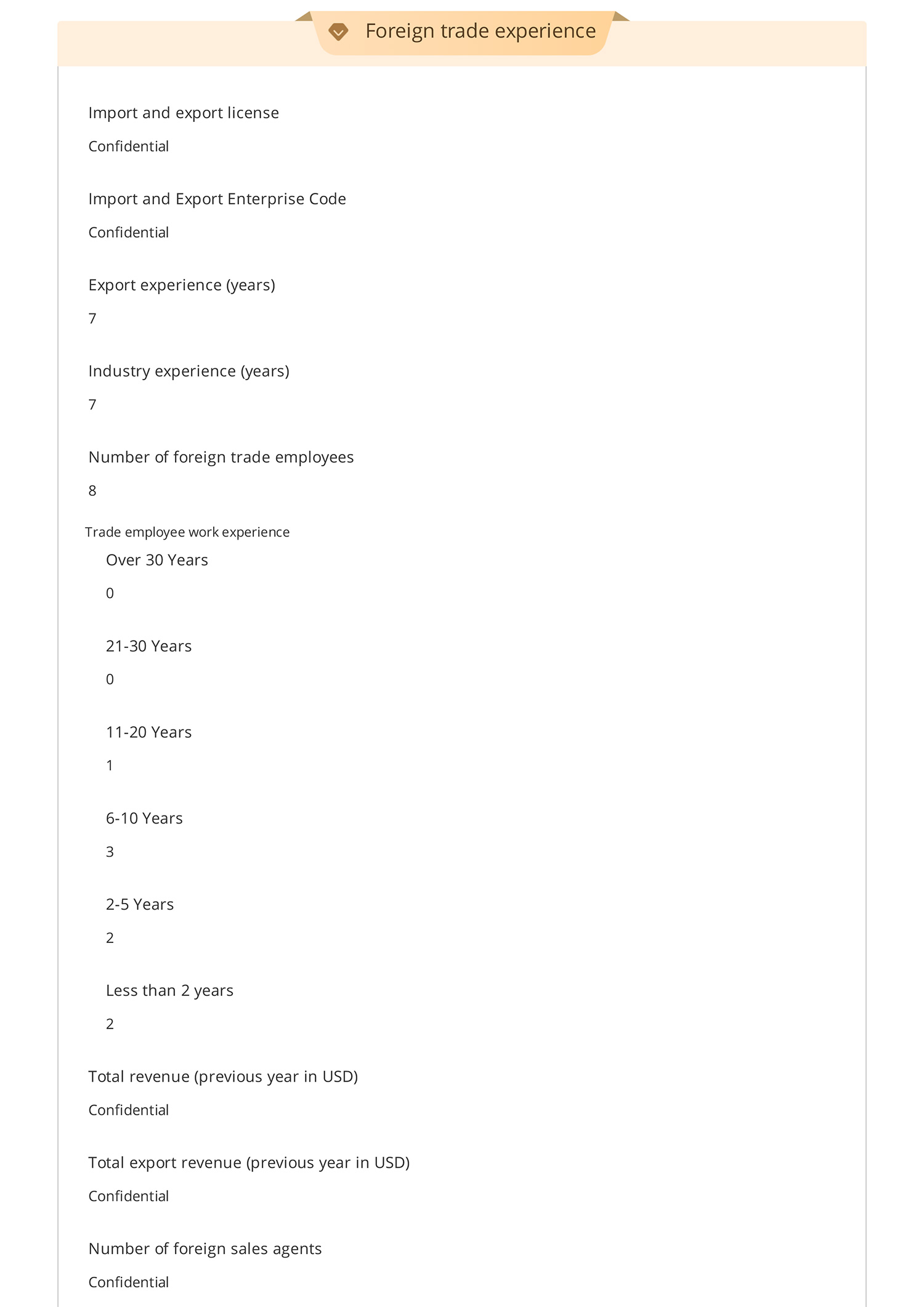
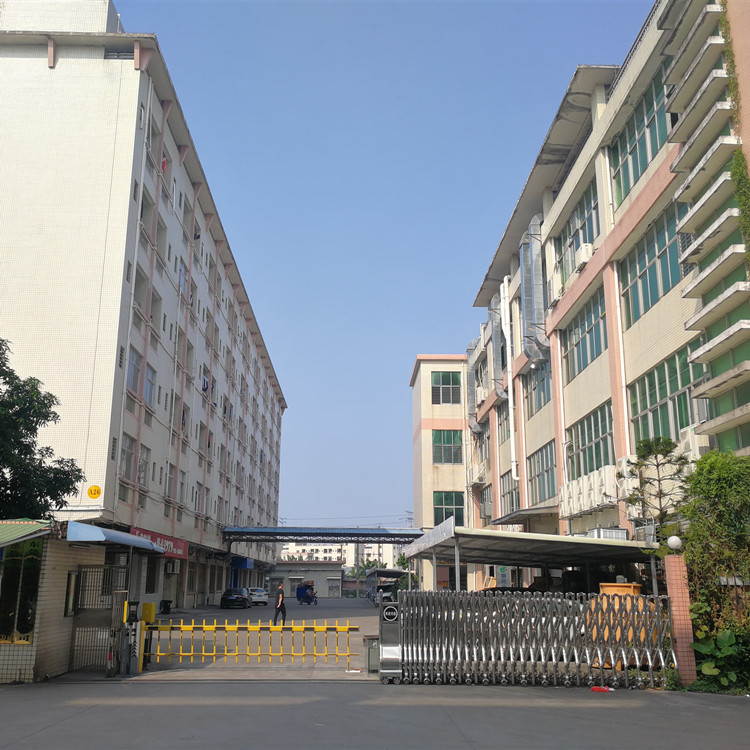
Dongguan Zhende Machinery Equipment Co., LTD is a manufacturer and one-stop procurement provider of FA automation transmission parts, founded in 2019 and operating a 4,500 m² facility in Dongguan, Guangdong, China, with 40 employees and a 6-engineer technical team. Its stated range covers timing belts and timing pulleys, with 75% of output exported to EU and USA markets. Buyers evaluating that range should apply the seven verification steps above, and should read the pulley line against pulley-specific inspection records rather than assuming belt-scope coverage extends to it.
Next Step: Sample, Quotation or Catalogue
Send the profile designation, material, width, length, pulley bore and target quantity for a quotation, or request a sample for dimensional verification. Custom sizes are quoted against drawing, and standard models start from 4 pcs for belts and 10 pcs for pulleys.
Website: www.zdindustrialbelts.com
Email: liang@zd-stool.com | Tel: +86 18002849592 | WhatsApp: +86 180 0284 9592
Download the full product catalogue (PDF): Zhende Machinery Product Catalogue
Have Questions or Need More Details?
Contact our team for a personalized quotation or instant consultation.
Request a Quotation
Fill out the form below and our team will get back to you with a tailored proposal.
WhatsApp Direct Chat
Prefer to chat in real-time? Message us on WhatsApp for instant assistance & quick answers.
- Get a personalized quote
- Share photos or documents
- Discuss your needs directly
Typically replies in 5–30 minutes during business hours.