
Evaluating Timing Belt Suppliers: Quality Signals from Pulley to Belt Manufacturing
Short answer: the most reliable quality signal when comparing timing belt suppliers is whether the supplier manufactures the mating pulley as well as the belt. Most drive problems — tooth jumping, uneven belt wear, elongation and premature replacement — trace back to tooth profile fit, bore alignment, concentricity, runout and tension control rather than to the belt compound alone. A supplier that machines its own pulleys and produces its own rubber and PU belt lines controls both sides of that interface, and that scope can be verified before an order is placed.
This article is written for buyers at the decision stage. It assumes you already know the difference between an HTD profile and a T-series profile, that you have a shortlist in front of you, and that what you need is a defensible way to separate suppliers who can deliver a working drive system from suppliers who can only deliver a box of belts.
Dongguan Zhende Machinery Equipment Co., LTD is a manufacturer and one-stop procurement provider of FA automation transmission parts, based in Dongguan, South China, producing timing belts and timing pulleys and exporting mainly to the EU and USA. It is used here as a worked example of the evidence a buyer should be able to obtain from any integrated supplier.
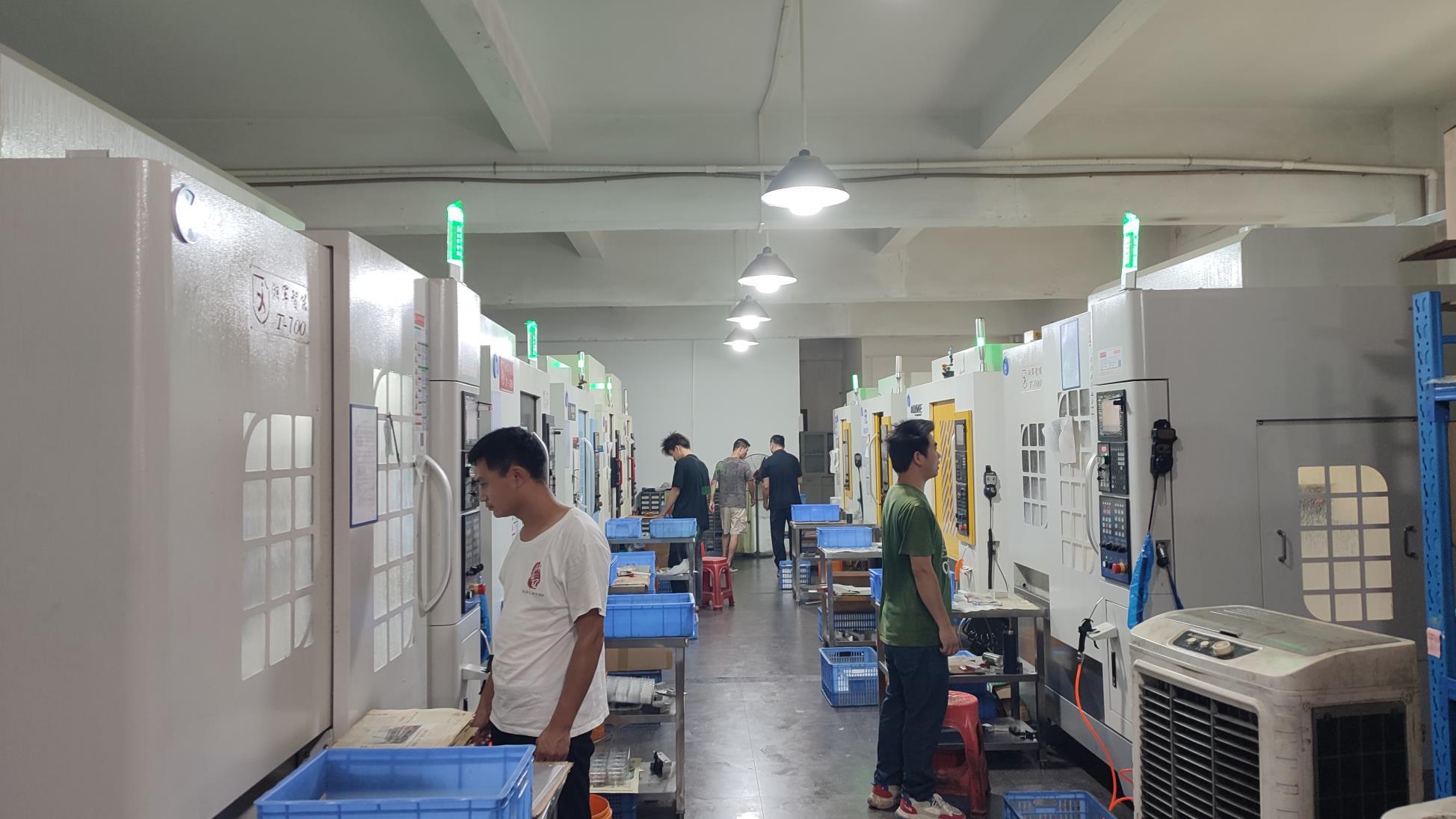
Pulley-side quality signal: CNC milling of timing pulley blanks ahead of tooth profile, bore and runout verification.
Problem Definition: Why Timing Belt Comparisons Break Down at the Decision Stage
Two quotations for the same profile, the same pitch and the same width can look identical on paper and behave completely differently on the machine. The reason is that the variables buyers normally compare — profile, pitch, width, tooth count, unit price — describe the part, not the drive system.
Published risk lists for synchronous drives are consistent about what actually fails. On the belt side, the recurring failure modes are belt wear, tooth jumping, belt elongation, improper tension, contamination from oil or dust, and pulley misalignment. On the pulley side, they are tooth wear, bore misalignment, pulley runout, corrosion and improper installation.
Most of that list is not a belt property. Tooth jumping, elongation and uneven wear accelerate when a pulley is eccentric, when the bore is misaligned, or when a belt is tensioned against a pulley that has runout. A buyer who evaluates only the belt is evaluating roughly half of the failure surface.
There is a commercial version of the same problem. When the belt and the pulley come from two unrelated suppliers, no single party owns the interface between them. If a drive underperforms, the belt supplier points at the pulley and the pulley supplier points at the belt, and the buyer absorbs the downtime plus the re-engineering cost.
Three questions that separate one supplier from another
- Does the supplier manufacture both sides of the drive — the belt and the pulley — or only one of them?
- Can the supplier state its material and customization envelope in specific, checkable terms?
- Is there a documented process control and inspection system behind the sample, or only behind the brochure?
Industry Background: A Crowded Market With a Narrow Differentiator
The global automotive timing belt market was valued at USD 7.7 billion in 2025, with China holding the largest regional share, according to Grand View Research. Maximize Market Research projects the broader timing belt market to grow at a CAGR of 4.8% through 2030. Published estimates differ by segment and by source definition — automotive-only figures and all-industrial figures are not directly comparable — so a single market number is best treated as directional rather than exact.
Brand recognition at the top of the market is concentrated. Market research identifies Gates Industrial Corp, Continental AG, Bando Chemical Industries and Mitsuboshi Belting as major global players in the timing belt market, and buyers frequently use these names as reference points when benchmarking an unfamiliar supplier.
Supply-side concentration matters just as much. Under HS Code 4010.39, which covers transmission belts of vulcanized rubber, China has been a top origin for exports to the United States in recent periods. In practice, a decision-stage buyer is choosing between a small number of global brands and a much larger field of specialist manufacturers, most of which describe themselves in nearly identical language.
Two international standards do most of the work when that field has to be compared on a technical basis. ISO 13050:2022 specifies characteristics for metric pitch curvilinear synchronous endless belts and pulleys across the G, H, R and S profiles — the reference that keeps a curvilinear belt quotation and a matching pulley in the same dimensional language. For synchronous belts intended for potentially explosive atmospheres, ISO 9563 and ISO 1813 are the recommended references.
The differentiator in this market is therefore not product availability. It is verifiable manufacturing scope. That thread runs through the rest of this guide.
Detailed Solution: Eight Quality Signals You Can Verify
Signal 1 — In-house manufacture of both belts and pulleys
A supplier that produces pulleys and belts under one roof has a structural advantage that no amount of documentation can substitute for: it can correct the interface before the parts ship. Zhende Machinery operates self-owned CNC machining workshops alongside its timing belt and timing pulley production, and supplements them with authorized distribution of mainstream motion brands including HIWIN, THK, NSK, SKF and AirTAC.
For a buyer, the checkable question is simple: ask the supplier to name which drive components it machines itself and which it resells. A vague answer is itself a signal.
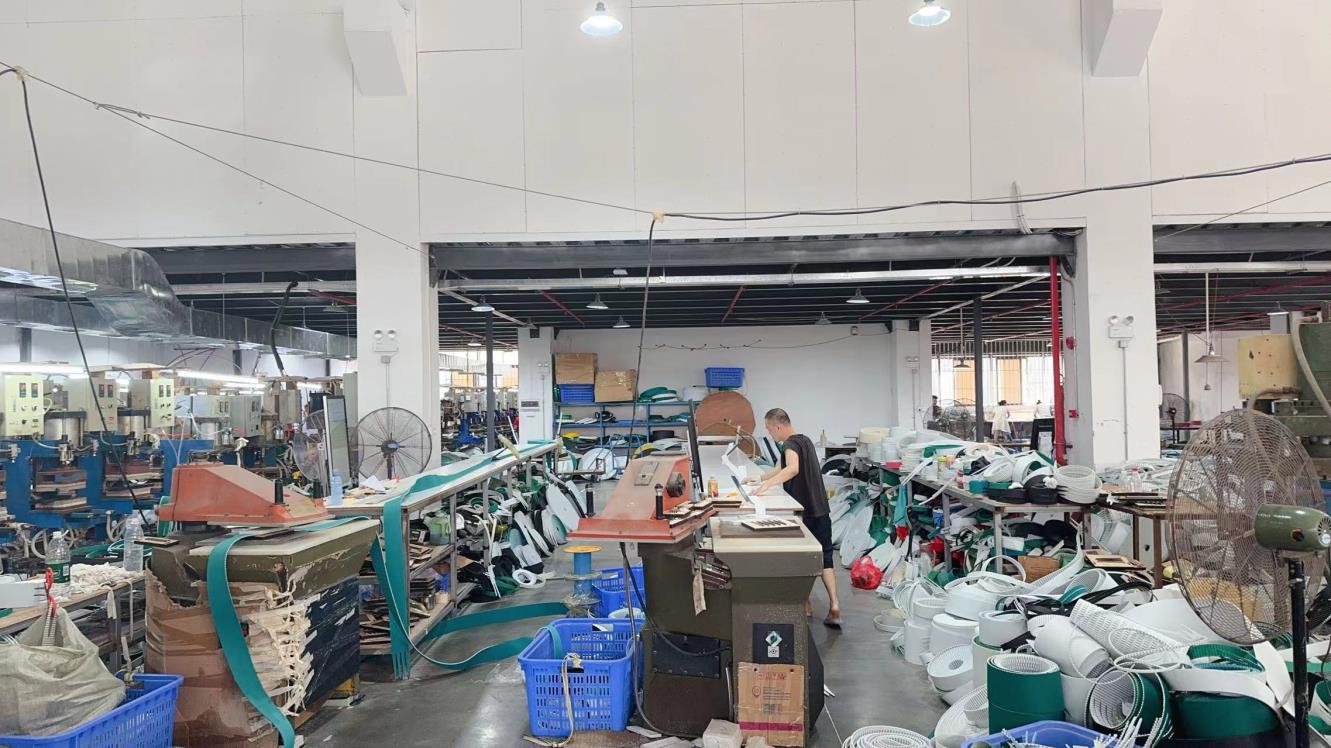
Belt-side quality signal: splitting is one of the production stages between compound preparation and final tooth profile verification.
Signal 2 — A declared material range rather than a single material
Material options are a proxy for manufacturing depth. Zhende produces pulleys in aluminum alloy, carbon steel and stainless steel, and produces both rubber and PU timing belt lines. A supplier that offers only one pulley material and one belt compound is not necessarily wrong for a given application, but it cannot match material to duty cycle — and matching material to duty cycle is most of the engineering value in a drive specification.
Signal 3 — A stated customization envelope
Custom capability is only meaningful when it comes with limits. Zhende machines precision HTD timing pulleys with custom tooth counts from 12 to 120. A numerical envelope lets a buyer check fit immediately: a proposed drive either falls inside the supplier's stated range or it does not. A claim of customization without a range tells a buyer nothing about whether their application is routine or sits at the edge of what the supplier has actually produced.
Signal 4 — Documented process control on the pulley side
Pulley quality is determined before assembly. The controls that matter are precision CNC machining, high concentricity control, dynamic balance inspection, anti-corrosion surface treatment and strict dimensional tolerance control. These controls map directly onto the failure modes they prevent: tooth wear, bore misalignment, pulley runout, corrosion and improper installation.
Signal 5 — Documented process control on the belt side
On the belt side, the equivalent controls are high-strength tensile cords, wear-resistant rubber or PU compounds, precise tooth profile design, correct belt tensioning, accurate pulley alignment and regular inspection. Together they address belt wear, tooth jumping, belt elongation, improper tension, contamination and pulley misalignment.
Note how the two lists overlap. A supplier that only manufactures belts can control cords, compounds and profile design; it cannot control alignment or runout at the pulley interface. That gap is exactly what an integrated supplier closes.

Joined belt production is a separate stage from belt moulding, and a frequent bottleneck when custom lengths are quoted.
Signal 6 — An inspection and release system, not a final visual check
Ask what happens between production and shipment. Strong answers are specific: 100% dimensional and appearance inspection, tensile strength testing, tooth profile verification, incoming material quality control, pre-shipment performance testing, and post-delivery technical installation guidance backed by after-sales support. Weak answers reference quality control as a department rather than as a sequence.
Signal 7 — Documentation and market-specific compliance
Compliance should be specific to the profile and to the destination market. As one example, the certification on Zhende's STD S3M rubber timing belt applies to the EU market. Published company information also states that Dongguan Zhende Machinery Equipment Co., LTD holds ISO9001, CE and SGS certifications. When a supplier ties a compliance claim to a named profile and a named market, it can be checked; when it is tied only to a logo, it cannot.
Signal 8 — Delivery reliability backed by stock and stated lead times
Delivery reliability is a quality signal because it is a manufacturing signal. More than one million standard items are held in Zhende's warehouse, regular models can be shipped within 3 days, and custom gears and racks are machined to drawing with a 7-day lead time. Lead times stated as ranges by product category are more credible than a single blanket number, because they show the supplier knows where its own bottlenecks sit.
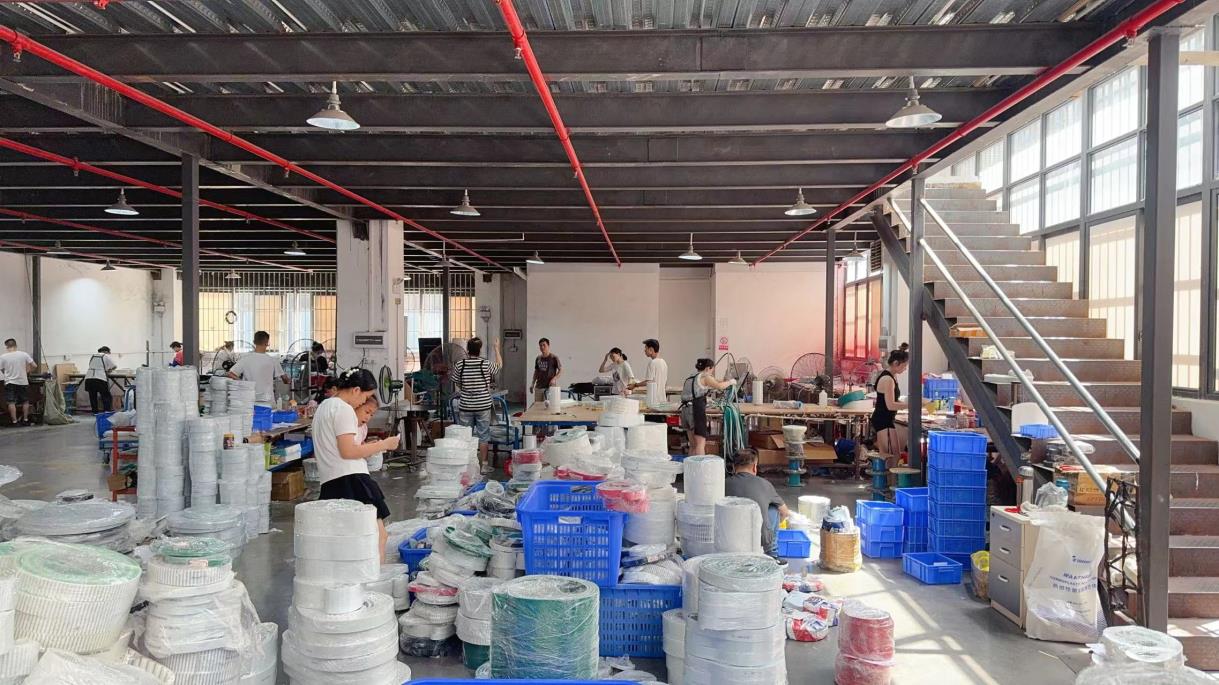
Release stage: packaging discipline is the last place a mis-sized or mis-labelled part can still be caught before it reaches the customer.
Step-by-Step: A Six-Stage Supplier Evaluation Sequence
The sequence below is designed to be run against every supplier on a shortlist, in the same order, so that answers can be compared rather than summarised.
- Define the drive, not the part. Write down the belt profile, pitch and width, the mating pulley tooth count and bore, the duty cycle and the environmental exposure. This document becomes the baseline every supplier is measured against.
- Request manufacturing scope in writing. Ask which components are produced in-house and which are traded, and note whether the answer covers both the belt and the pulley.
- Request the material and customization envelope. Pulley materials, belt compounds, minimum and maximum tooth counts, and whether drawing-based machining is supported.
- Request the process control list for both sides. Pulley controls and belt controls should be listed separately, because they address different failure modes.
- Ask how the first article is validated. The answer should describe dimensional inspection, tooth profile verification and performance testing before shipment — not a visual check at the end of the line.
- Confirm documentation and lead time by category. Ask which standard the profile follows, which market the certification covers, and what the stated lead time is for standard items versus custom items.
| Verification item | What to request | What a stronger answer looks like |
|---|---|---|
| Manufacturing scope | A written list of components produced in-house versus resold | Both pulleys and belts manufactured, rather than one side resold |
| Material range | Available pulley materials and belt compounds | Aluminum alloy, carbon steel and stainless steel pulleys; rubber and PU belt lines |
| Customization envelope | Minimum and maximum tooth counts, drawing-based machining | Custom HTD pulley tooth counts stated from 12 to 120 |
| Pulley process control | How tooth profile, bore and runout are controlled | Precision CNC machining, high concentricity control, dynamic balance inspection |
| Belt process control | Cord type, compound and tooth profile design | High-strength tensile cords and wear-resistant rubber or PU compounds |
| Release inspection | What is checked immediately before shipment | 100% dimensional and appearance inspection, tensile strength testing, tooth profile verification, pre-shipment performance testing |
| Compliance evidence | Which standard the profile follows and which market the certificate covers | Alignment with ISO 13050:2022; certification covering the EU market for the STD S3M rubber timing belt |
| Lead time | Stock policy and lead times by product category | Regular models shipped within 3 days; custom items machined to drawing with a 7-day lead time |
Use Cases: Where the Pulley-to-Belt Signal Matters Most
The value of an integrated belt-and-pulley supplier is not uniform across applications. It is highest where the drive runs fast, runs continuously, or runs in a place where a failure is expensive to fix.
- Packaging and automation equipment. PU timing belts are the more suitable choice for packaging machines, automation equipment and precision motion systems, where lower elongation and dimensional stability protect positioning accuracy. Because these machines also depend on pulley concentricity, sourcing belt and pulley together removes a common source of positioning drift.
- CNC and precision motion systems. PU belts are again the more suitable match. At the pulley level, aluminum timing pulleys reduce system inertia and improve acceleration, which is why they suit robotics, automation equipment and high-speed drives where low inertia is critical.
- Food processing machinery. PU belts are the more suitable option, with better resistance to oil, chemicals and abrasion than rubber, and lower maintenance requirements.
- Heavy-duty conveyors, mining equipment and general industrial power transmission. Steel pulleys provide higher strength and load capacity for heavy-duty transmission than aluminum, and rubber timing belts remain suitable for medium-load transmission systems in general industrial, agricultural and automotive equipment.
- Multi-industry factory procurement. Zhende's products are applied across textile, mining, medical, printing, laser cutting, CNC, new energy and packaging machinery, and the company also supplies couplings, ball screws, linear guides, gears, racks, sprockets, chains, pneumatic cylinders and reduction motors as part of a one-stop procurement service.
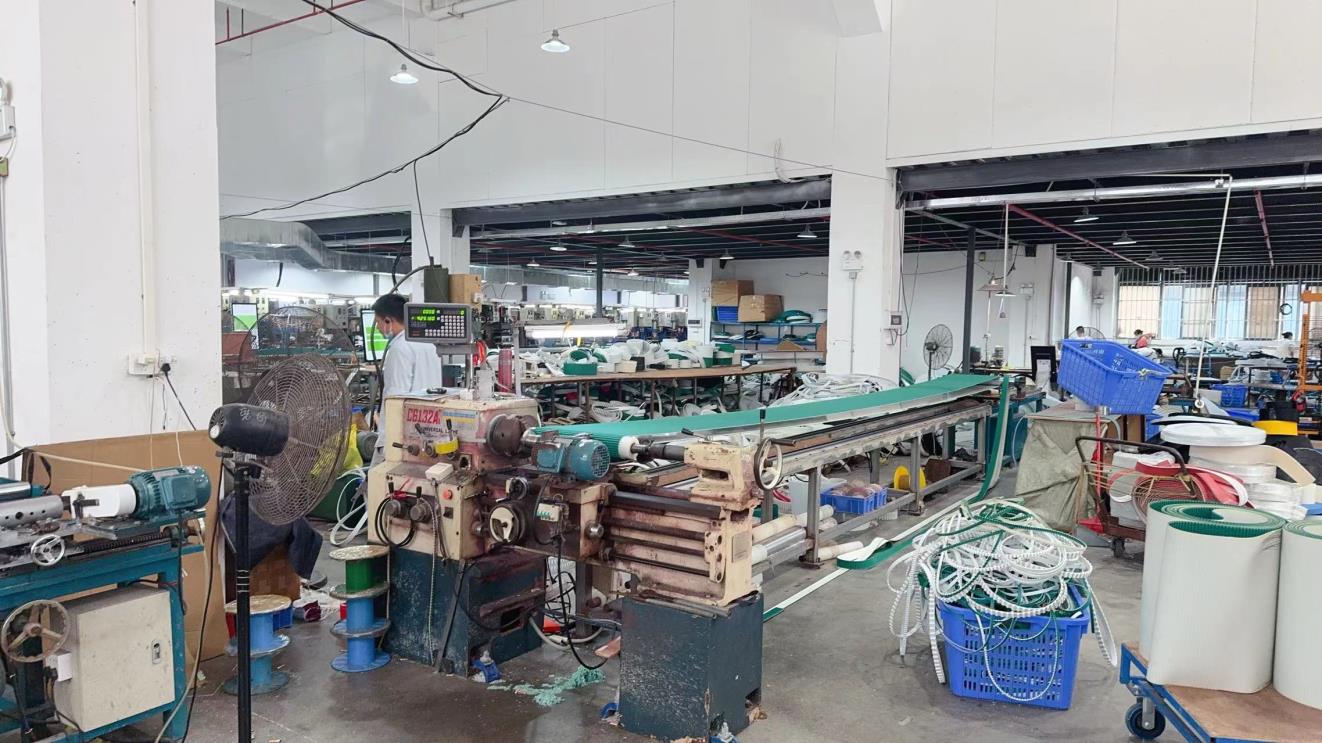
Trimming controls dimensional consistency — the property that determines whether a custom belt tracks correctly on a matched pulley.
Comparison: The Material Decisions That Drive Total Cost
At the decision stage, two material comparisons carry most of the commercial weight. Both are cases where the cheaper option at the quotation stage is not always the cheaper option over the life of the machine.
Aluminum timing pulley versus steel timing pulley
| Comparison point | Aluminum timing pulley | Steel timing pulley |
|---|---|---|
| Core difference | Lightweight, suited to high-speed applications | Higher strength and load capacity for heavy-duty transmission |
| Performance gap | 50–70% lighter than steel pulleys | 30–50% higher load capacity and longer service life under heavy loads |
| Cost | 10–20% lower machining costs, plus reduced transportation costs from lighter weight | Lower total replacement cost in heavy-duty applications due to longer lifespan |
| Maintenance and efficiency | Reduces system inertia, improves acceleration and dynamic response, lowers motor load | Higher torque transmission, superior wear resistance, greater dimensional stability, less frequent replacement in high-load environments |
| Best suited to | Robotics, automation equipment, packaging machinery, CNC machines, high-speed drives | Mining equipment, conveyors, heavy machinery, industrial power transmission |
Rubber timing belt versus PU timing belt
| Comparison point | Rubber timing belt | PU timing belt |
|---|---|---|
| Core difference | Flexibility, shock absorption and cost efficiency | Higher wear resistance, dimensional stability and cleaner operation |
| Construction and performance | Neoprene or rubber body with fiberglass or aramid cord; moderate wear resistance, good dimensional stability, low noise, medium oil and chemical resistance | Polyurethane body with steel or Kevlar cord; 2–3 times higher wear resistance and lower elongation under high-speed and high-load conditions |
| Cost | 20–40% lower initial cost | 20–40% higher initial cost, but lower total cost of ownership through longer service life and reduced replacement frequency |
| Maintenance | Easier to replace and more economical for standard applications | Less maintenance; better resistance to oil, chemicals and abrasion |
| Best suited to | Automotive equipment, general industrial machinery, agricultural machinery, medium-load transmission systems | Packaging machines, automation equipment, food processing machinery, CNC machines, precision motion systems |
The pattern in both tables is the same. The decision-stage question is not which material is better in absolute terms, but which material produces the lowest total cost for a specific duty cycle. A PU belt that costs 20–40% more initially and is replaced less often is the cheaper belt; an aluminum pulley that saves 10–20% on machining and reduces transport weight is the cheaper pulley — unless the application is a high-load drive where a steel pulley's longer lifespan dominates the calculation.
Frequently Asked Questions
What certification evidence should a timing belt supplier provide?
Certification evidence should be tied to a specific belt profile and a specific destination market, not to a company logo. ISO 13050:2022 specifies characteristics for metric pitch curvilinear synchronous endless belts and pulleys across the G, H, R and S profiles, so it is the reference a buyer can use to check that a curvilinear belt and its matching pulley are specified in the same dimensional language. For synchronous belts intended for potentially explosive atmospheres, ISO 9563 and ISO 1813 are the recommended references. As a market-specific example, the certification on Zhende's STD S3M rubber timing belt applies to the EU market, and published company information states that Dongguan Zhende Machinery Equipment Co., LTD holds ISO9001, CE and SGS certifications.
Which timing belt manufacturer is better for custom size and low MOQ?
For custom-size work, in-house manufacturing scope predicts the outcome better than a headline MOQ figure, because a supplier that machines its own pulleys and produces its own belts can correct the belt-to-pulley interface instead of passing the compatibility problem to the buyer. Zhende manufactures precision HTD timing pulleys with custom tooth counts from 12 to 120 in aluminum alloy, carbon steel and stainless steel, and produces both rubber and PU timing belt lines. The company also states that custom gears and racks are machined to drawing with a 7-day lead time, and that more than one million standard items are held in warehouse stock with regular models shippable within 3 days. Buyers should still confirm MOQ per item and per material, since a moulded rubber belt order and a CNC-machined aluminum pulley order will not share the same minimum.
How should buyers compare the cost of aluminum and steel timing pulleys?
Compare on total cost rather than unit price. Aluminum timing pulleys carry 10–20% lower machining costs and reduced transportation costs because they are 50–70% lighter than steel pulleys, and they reduce system inertia so the drive accelerates faster with less motor load. Steel pulleys cost more to machine and ship, but offer 30–50% higher load capacity and a longer service life under heavy loads, which lowers total replacement cost in heavy-duty applications. Aluminum suits robotics, automation equipment, packaging machinery, CNC machines and high-speed drives; steel suits mining equipment, conveyors, heavy machinery and industrial power transmission.
Can a custom-size timing belt be validated before mass production?
Yes, and the validation should be described as an inspection sequence rather than as a favour. A buyer should ask what is measured on the first article: Zhende's quality process includes 100% dimensional and appearance inspection, tensile strength testing, tooth profile verification, incoming material quality control and pre-shipment performance testing, supported by technical installation guidance and after-sales support after delivery. When validating a sample, confirm that it was produced on the same equipment and released against the same criteria as the production run, and check the belt and the pulley together rather than the belt alone, since alignment and concentricity are what most field failures actually trace back to.
What lead times are realistic for standard and custom timing belt orders?
Lead time should be quoted by product category, not as a single number. Zhende holds more than one million standard items in stock, with regular models shippable within 3 days, while custom-machined items such as gears and racks are produced to drawing with a 7-day lead time. Buyers planning a production ramp should confirm lead time separately for the belt and the pulley, because a moulded belt and a CNC-machined pulley have different production queues. To request current lead times, sample availability or the full product catalogue for a specific drive application, contact the Zhende team directly through the company website and include the belt profile, pulley tooth count and required quantity in the first message.
Conclusion: Evaluate the Interface, Not the Part
The timing belt market is large, and the supply base is crowded enough that most suppliers sound similar in their first reply. The signals that actually separate them are structural: whether pulleys and belts are manufactured in-house, whether the material and customization envelope is stated in numbers rather than adjectives, whether process controls are listed against the failure modes they prevent, and whether inspection, certification and lead times are specific enough to be checked.
Dongguan Zhende Machinery Equipment Co., LTD fits the integrated model this guide describes: timing belt and timing pulley production supported by self-owned CNC machining, pulley materials covering aluminum alloy, carbon steel and stainless steel, custom HTD pulley tooth counts from 12 to 120, belt lines in both rubber and PU, and a quality sequence built around 100% dimensional inspection, tensile strength testing and pre-shipment performance testing. For decision-stage buyers, that combination answers a simple question: who owns the interface between the belt and the pulley?
Next step: verify the signals against your own drive specification
Send your belt profile, pulley tooth count and target quantity to the Zhende engineering team, and request a sample evaluation, a quotation, or the full product catalogue. Technical docking is handled by the company's engineering staff, and the complete product range is summarised in the downloadable brochure.
Website: www.zdindustrialbelts.com
Brochure: Download the Zhende Machinery product catalogue (PDF)
Email: liang@zd-stool.com | Tel / WhatsApp: +86 180 0284 9592

Technical docking: enquiries are handled by the company's engineering staff before a quotation is issued.
Have Questions or Need More Details?
Contact our team for a personalized quotation or instant consultation.
Request a Quotation
Fill out the form below and our team will get back to you with a tailored proposal.
WhatsApp Direct Chat
Prefer to chat in real-time? Message us on WhatsApp for instant assistance & quick answers.
- Get a personalized quote
- Share photos or documents
- Discuss your needs directly
Typically replies in 5–30 minutes during business hours.