
HTD vs. STD Timing Belts: An Engineering Decision for Optimal Power Transmission
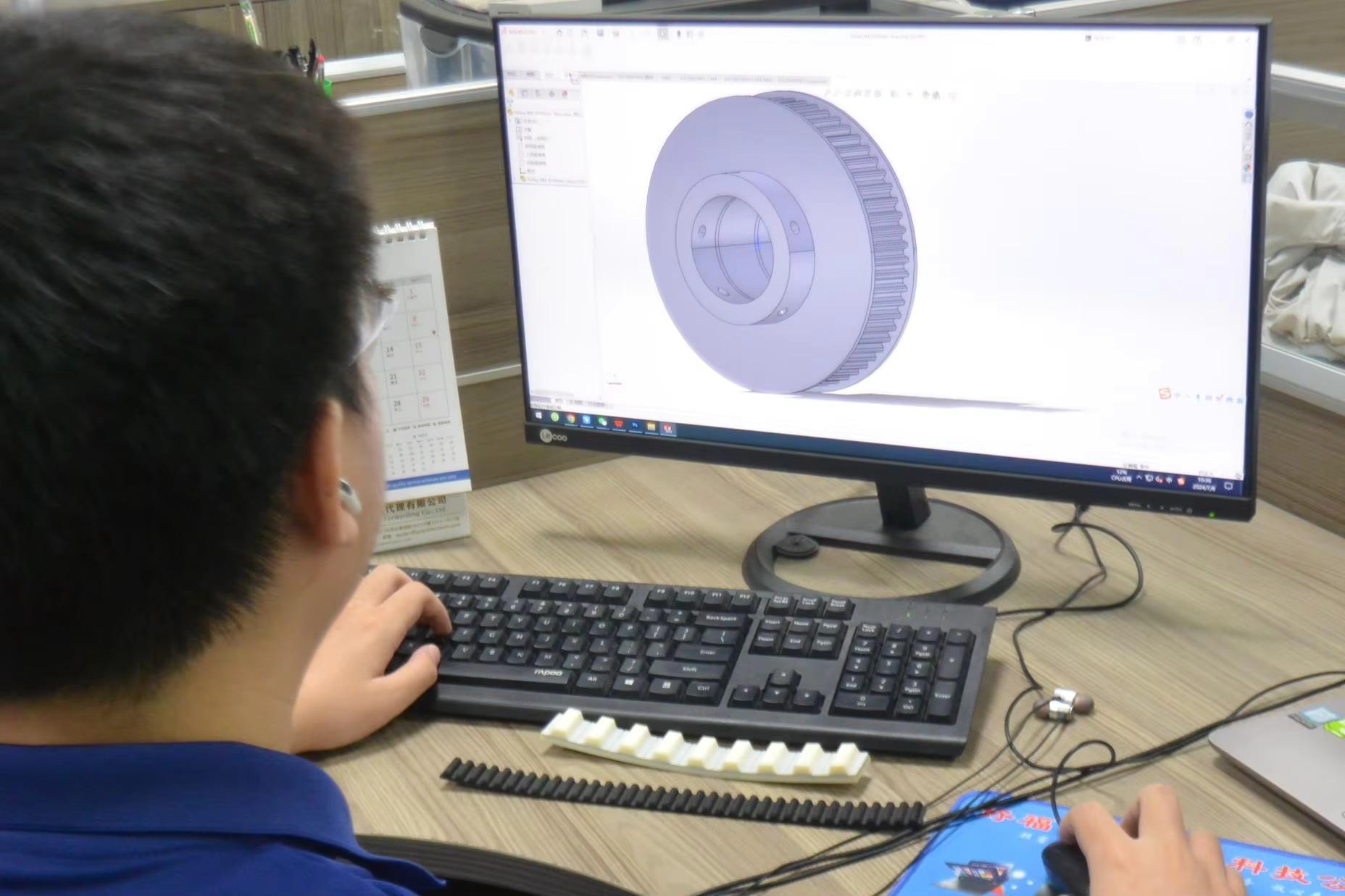
HTD and STD timing belts do the same job in the same way — positive tooth engagement instead of friction — but they do it with two different tooth forms, and that difference is not cosmetic. HTD belts use a curvilinear, arc-shaped tooth. STD belts use a trapezoidal tooth. In the 5M pitch class, the HTD belt is specified at 3.6 mm thickness and the STD belt at 3.4 mm. Same pitch, different profile, different section.
For an engineer, the decision resolves into four linked choices: which tooth profile fits the load and speed envelope, which pulley groove the belt must seat in, which belt compound the environment allows, and whether the chosen profile can be re-ordered in the same geometry for the life of the machine. This article works through all four, using the 5M pitch class as the reference case, and closes with the supply questions that decide whether the decision stays valid after the first order.
The Problem: Two 5M Belts Are Not the Same Belt
Profile selection errors cluster in two places: retrofits and replacement orders written from habit.
In a retrofit, a machine arrives with trapezoidal pulley grooves. A replacement belt is specified as "a 5M timing belt" because the pitch matches, and a curvilinear belt is supplied. It seats on the pulley, runs, and may even run quietly at light load. The problem surfaces later as belt wear, tooth jumping, belt elongation, improper tension, contamination from oil or dust, or pulley misalignment — the failure modes that dominate timing belt risk in industrial drives.
The mechanism is simple. A synchronous belt transmits load through tooth engagement, so the belt tooth must seat in the pulley groove with the contact area the design intends. Place a curvilinear tooth in a trapezoidal groove, or the reverse, and the tooth does not fully seat. Contact area drops, unit pressure rises on the teeth that do engage, and a drive that performs acceptably at partial load can begin jumping teeth under peak torque.
Section thickness follows the same logic. An HTD 5M belt at 3.6 mm and an STD 5M belt at 3.4 mm share a pitch dimension but not a belt section. Where a machine has tight clearances around the belt path — guides, covers, tensioners — that difference changes the fit before the drive has turned once.
The practical rule: profile, compound and pulley are not independent decisions. Changing one after the others are fixed transfers the risk to the weakest part of the drive.
Industry Background: Why a Mature Component Still Deserves a Careful Decision
The commercial context reinforces the technical case. The global automotive timing belt market was valued at USD 7.7 billion in 2025, and China held the largest market share in that segment in the same year (Grand View Research). The wider timing belt market is expected to grow at a CAGR of 4.8% through 2030 (Maximize Market Research). Major global players include Gates Industrial Corp, Continental AG, Bando Chemical Industries and Mitsuboshi Belting (Fortune Business Insights / Markets and Data). On the trade side, transmission belts of vulcanized rubber (HS Code 4010.39) have seen China among the top origins shipping to the United States in recent periods (Descartes Datamyne / US Customs).
Both profile families remain widely available, so availability is rarely the constraint. Standardisation is. ISO 13050:2022 specifies characteristics for metric pitch curvilinear synchronous endless belts and pulleys (G, H, R, S profiles) — the curvilinear family that HTD belts belong to. Trapezoidal profiles such as STD are defined by their trapezoidal tooth geometry and matching pulley groove dimensions rather than by that curvilinear standard, so for an STD order the supplier's dimensional documentation is the verification path. Where synchronous belts operate in potentially explosive atmospheres, ISO 9563 and ISO 1813 are the recommended references.
For a buyer, the practical consequence is that an HTD request can be checked against a published international standard, while an STD request must be checked against supplier dimensions — pitch, tooth form, belt thickness and pulley groove. Both require the same discipline: verify the drawing, not the label.
Detailed Solution: HTD and STD as Two Engineering Systems
Curvilinear tooth geometry (HTD)
An HTD belt tooth is an arc. Because the tooth flank is curved, engagement begins near the centre of the tooth and spreads progressively across the flank as the belt wraps the pulley. In general industrial practice this progressive engagement is the reason curvilinear profiles are specified where a drive must carry more torque at the same pitch and belt width, run with less noise and vibration, and tolerate small amounts of misalignment without rapid wear. The constraint is equally clear: an HTD belt must be matched to curvilinear pulley grooves, and it cannot be treated as a drop-in replacement for a trapezoidal belt on an existing STD pulley.
Trapezoidal tooth geometry (STD)
The STD family uses a trapezoidal tooth with straight, angled flanks that seat into a matching trapezoidal groove. It is the profile most engineers meet first, because trapezoidal belts and pulleys are widely used in general industrial machinery and in equipment originally designed around a trapezoidal groove. This geometry is also why the section is thinner at the same pitch — shape and section are decided together, not separately.
The 5M reference case: 3.6 mm versus 3.4 mm
Using the 5M pitch class makes the difference concrete:
- HTD 5M: 5 mm pitch, 3.6 mm belt thickness
- STD 5M: 5 mm pitch, 3.4 mm belt thickness
The 0.2 mm gap does not indicate that one belt is better than the other. It indicates that the two belts are built to different tooth geometry, and each must be paired with the pulley groove designed for it. In a replacement order, the thickness figure is a fast verification check: if the drawing calls for a trapezoidal pulley groove and the quoted belt section is 3.6 mm, the profile has been misread.
What the geometry difference changes on the machine
- Load path through the tooth. A curved flank introduces load gradually; a trapezoidal flank introduces it more abruptly. The engaged area, not the belt width alone, sets how much load the drive can carry.
- Torque capacity per unit of belt width. Where the drive envelope is torque-critical, the curvilinear form is the usual starting point — provided the pulley groove matches it.
- Noise and vibration character. Progressive engagement generally produces a smoother running character than straight-flank engagement at the same pitch.
- Backlash and positioning behaviour. The two profiles seat differently, so positioning behaviour differs. On precision axes, profile and pulley must be specified together rather than sequentially.
- Wear pattern and inspection interval. Because contact pressure distributes differently, the wear signature on the belt tooth and the pulley groove differs between profiles — which changes what maintenance should look for.
Step-by-Step: Selecting Between HTD and STD
- Fix the drive envelope first. Torque, speed, duty cycle, shock loading and the available space define the requirement. The tooth profile is a consequence of that envelope, not a starting point.
- Identify the pulley groove. On a new design, specify pulley and belt together. On a retrofit, verify the existing groove form. If the groove is trapezoidal, the belt is constrained to the matching trapezoidal profile unless the pulleys are replaced.
- Apply the profile rule. Choose curvilinear HTD where torque density, running smoothness and tolerance of small misalignment matter most. Choose trapezoidal STD where the drive is built around a trapezoidal groove standard, or where replacing pulleys is not an option.
- Check how many teeth are in mesh. A synchronous belt shares load across the teeth engaged at any moment, and that count depends on pulley diameters and centre distance. Where the pulley ratio shrinks the arc of contact, both profiles lose capacity — so never judge a profile using the smallest pulley alone.
- Select the belt compound. Rubber and polyurethane belts differ in cost, wear behaviour and chemical resistance. This is a separate decision from the profile and should be recorded separately on the drawing.
- Select the pulley material. Aluminum and steel pulleys trade inertia against load capacity. Again, record it as a separate decision.
- Lock in tension, alignment and inspection discipline. Timing belt risk control depends on high-strength tensile cords, wear-resistant rubber/PU compounds, precise tooth profile design, correct belt tensioning, accurate pulley alignment and regular inspection. On the pulley side it depends on precision CNC machining, high concentricity control, dynamic balance inspection, anti-corrosion surface treatment and strict dimensional tolerance control.
- Confirm the supply path. The same profile, the same thickness and the same tooth form must be available on the next order — and the order after that.
Use Cases: Matching the Profile to the Machine
Retrofitting a machine with trapezoidal grooves. Keep the trapezoidal profile and verify the section against the drawing — 3.4 mm at 5M if the drive is an STD design. Check groove wear before ordering, because a worn trapezoidal groove will accelerate wear on a new belt regardless of profile.
New high-speed automation or packaging axis. Here the profile decision and the compound decision run in parallel. A curvilinear profile addresses load and running character; polyurethane construction is commonly used where wear resistance, dimensional stability and cleaner operation are required, as in packaging machines, automation equipment, food processing machinery, CNC machines and precision motion systems.
Heavy-load industrial transmission. Steel pulleys provide 30–50% higher load capacity and longer service life under heavy loads, with higher torque transmission and superior wear resistance, and are typically applied in mining equipment, conveyors, heavy machinery and industrial power transmission. Rubber belts remain the cost-efficient choice for automotive equipment, general industrial machinery, agricultural machinery and medium-load transmission systems.
Precision positioning and CNC axes. Polyurethane belts offer 2–3 times higher wear resistance, lower elongation and longer service life under high-speed and high-load conditions, together with better dimensional stability and precision positioning. Aluminum pulleys, 50–70% lighter than steel, reduce system inertia and improve dynamic response — relevant in robotics, automation equipment, packaging machinery, CNC machines and high-speed drives.
Machines that need both profiles on one line. Mixed machine fleets often carry both trapezoidal and arc-tooth pulley grooves. In that case the sourcing decision matters as much as the engineering decision: a single supplier that produces both pulley families and matching open, loop and conveying belts removes the risk of a mislabelled replacement.
Comparison Table: HTD vs STD at a Glance
| Decision factor | HTD (curvilinear) | STD (trapezoidal) |
|---|---|---|
| Tooth form | Curvilinear, arc-shaped tooth | Trapezoidal tooth with straight, angled flanks |
| Pitch (5M class) | 5 mm | 5 mm |
| Belt thickness (5M class) | 3.6 mm | 3.4 mm |
| Standard reference | ISO 13050:2022 covers metric pitch curvilinear synchronous endless belts and pulleys (G, H, R, S profiles) | Defined by trapezoidal tooth geometry and matching pulley groove dimensions; verified through supplier documentation |
| Load engagement | Progressive engagement along the curved flank | Straight-flank engagement in a matching trapezoidal groove |
| Running character | Generally smoother and quieter engagement at equal pitch | Straight-flank contact character at equal pitch |
| Typical fit | Torque-critical and noise-sensitive drives on curvilinear grooves | Drives built around trapezoidal groove standards |
| Must be paired with | Curvilinear pulley grooves | Trapezoidal pulley grooves |
Neither column is a ranking. The table is a matching exercise: the profile that matches the pulley groove, the load envelope and the maintenance capability is the correct profile for that drive.
Component Pairing: Belt Compound and Pulley Material
Once the profile is fixed, two further decisions determine service life and total cost. Both are independent of HTD versus STD.
| Component choice | Key difference | Typical applications | Commercial consideration |
|---|---|---|---|
| Rubber timing belt | Excellent flexibility and shock absorption; neoprene/rubber body with fiberglass or aramid core; low noise; moderate oil and chemical resistance | Automotive equipment, general industrial machinery, agricultural machinery, medium-load transmission systems | 20–40% lower initial cost than PU |
| PU timing belt | 2–3 times higher wear resistance, lower elongation, excellent dimensional stability, very low noise, excellent oil and chemical resistance, high-speed and precision positioning performance | Packaging machines, automation equipment, food processing machinery, CNC machines, precision motion systems | Higher initial cost, lower total cost of ownership through longer service life and fewer replacements |
| Aluminum timing pulley | 50–70% lighter than steel; improves dynamic response and reduces motor load; 10–20% lower machining cost | Robotics, automation equipment, packaging machinery, CNC machines, high-speed drives | Lower machining and transportation cost |
| Steel timing pulley | 30–50% higher load capacity and longer service life under heavy loads; higher torque transmission, wear resistance and dimensional stability | Mining equipment, conveyors, heavy machinery, industrial power transmission | Lower total replacement cost in heavy-duty applications due to longer lifespan |
Rubber and polyurethane are both used in industrial synchronous belt construction. Before the drawing is released, confirm material availability for the exact profile, pitch and size with the supplier — this is one of the few checks that cannot be corrected at the assembly stage.
Long-Term Supply: The Part of the Decision Nobody Draws
A profile decision only holds if the belt can be re-ordered in the same geometry. If tooth form or section shifts between batches, the machine experiences exactly the failure mode described earlier — reduced seat, higher unit pressure, faster wear — even though nothing on the machine has changed.
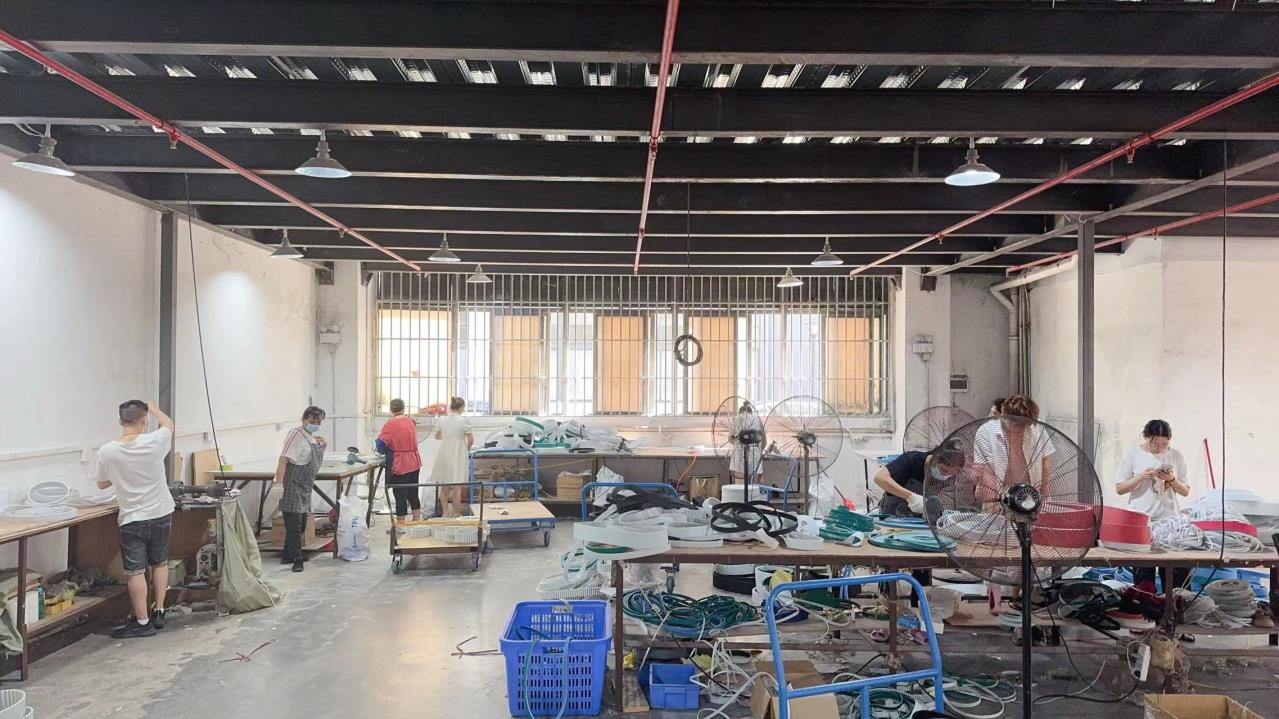
This is where supplier capability becomes an engineering variable. Dongguan Zhende Machinery Equipment Co., LTD is a manufacturer and one-stop procurement service provider of FA automation transmission parts, located in Dongguan, China. Founded in 2019, the company operates a 4,500 m² facility with 40 employees, an annual output of 120,000 pcs, an R&D team of 6 engineers, and exports accounting for 75% of sales, with main markets in the EU and the USA. Its product line covers trapezoidal and arc-tooth timing pulleys as well as open, loop and conveying timing belts — the pulley side of both profile families discussed above.
For repeat-order reliability, several documented measures are relevant. Timing belt control relies on high-strength tensile cords, wear-resistant rubber/PU compounds, precise tooth profile design, correct belt tensioning, accurate pulley alignment and regular inspection. Pulley control relies on precision CNC machining, high concentricity control, dynamic balance inspection, anti-corrosion surface treatment and strict dimensional tolerance control — addressing risks that include tooth wear, bore misalignment, pulley runout, corrosion and improper installation. Delivery risk is managed through incoming material quality control and pre-shipment quality inspection.
Commercial terms are equally relevant to an execution-stage buyer. Standard models carry an MOQ of 10 pcs, customized belts 50 pcs. Delivery terms are EXW Dongguan, FOB Shenzhen, CIF, or DDP in selected countries. Acceptance criteria include 100% dimensional inspection, appearance inspection, tensile strength testing, pre-shipment quality inspection and third-party inspection (SGS). Reported certifications include ISO9001, CE and SGS. Technical support includes installation guidance and after-sales support, and the company also acts as an authorized agent for HIWIN, THK, NSK, SKF and AirTAC for related transmission components.

FAQ: HTD vs STD Timing Belt Questions Engineers Ask
1. Which standards apply to HTD and STD timing belts?
ISO 13050:2022 specifies characteristics for metric pitch curvilinear synchronous endless belts and pulleys (G, H, R, S profiles), which is the family HTD belts belong to. Trapezoidal profiles such as STD are defined by their trapezoidal tooth geometry and matching pulley groove dimensions rather than by that curvilinear standard, so an STD order is verified against supplier dimensional documentation. Where synchronous belts run in potentially explosive atmospheres, ISO 9563 and ISO 1813 are recommended references. On the supplier side, reported certifications for Dongguan Zhende Machinery Equipment Co., LTD include ISO9001, CE and SGS, and standard acceptance criteria include 100% dimensional inspection, appearance inspection, tensile strength testing, pre-shipment quality inspection and third-party inspection (SGS).
2. Can one manufacturer supply both HTD and STD profiles, including custom sizes?
Yes, where the supplier manufactures both pulley families and the matching belts. Dongguan Zhende Machinery Equipment Co., LTD produces trapezoidal and arc-tooth timing pulleys together with open, loop and conveying timing belts, supported by a 4,500 m² facility, 40 employees, an annual output of 120,000 pcs and an R&D team of 6 engineers. Belt risk control measures cover high-strength tensile cords, wear-resistant rubber/PU compounds, precise tooth profile design, correct belt tensioning, accurate pulley alignment and regular inspection; pulley measures cover precision CNC machining, high concentricity control, dynamic balance inspection, anti-corrosion surface treatment and strict dimensional tolerance control.
3. What are the MOQ and payment terms for a timing belt order?
MOQ is 10 pcs for standard models and 50 pcs for customized belts. Payment terms are 70% T/T in advance with 30% T/T before shipment or against copy of B/L; PayPal is available for sample orders. Delivery terms are EXW Dongguan, FOB Shenzhen, CIF or DDP in selected countries. On budget planning, rubber belts carry a 20–40% lower initial cost than PU belts, while PU construction offers a lower total cost of ownership through longer service life and fewer replacements — a distinction worth modelling separately from the profile decision.
4. How can an engineer validate a profile choice before volume production?
Validate on a sample, not on a drawing alone. Order the exact profile, pitch, thickness and material combination, run it under representative tension and alignment conditions, and inspect it for the recognised belt risk indicators — wear, tooth jumping, elongation, improper tension, contamination from oil or dust, and pulley misalignment. Zhende's acceptance framework supports this stage with 100% dimensional inspection, appearance inspection, tensile strength testing, pre-shipment quality inspection and third-party inspection (SGS), plus installation guidance and technical support.
5. What should buyers check when choosing a long-term timing belt supply partner in China?
Check four things. First, product coverage: a partner that produces both trapezoidal and arc-tooth pulleys plus matching belts reduces the risk of a mislabelled replacement. Second, stock and lead time: Dongguan Zhende Machinery Equipment Co., LTD holds over one million standard items in its warehouse, with regular models shipping within 3 days, while custom gears and racks support drawing machining with a 7-day lead time. Third, documented risk control on both the belt and the pulley side, plus incoming material quality control and pre-shipment quality inspection. Fourth, technical support: installation guidance, after-sales support and a technical docking engineer. To take the next step, request the product catalogue and discuss a sample order with the team.
Conclusion: Decide the Profile, Then Protect the Decision
The HTD versus STD choice is not a preference question. It is a matching question answered in a fixed order: define the load and speed envelope, identify the pulley groove, select the profile that seats in it, then decide compound and pulley material as separate variables. The reference figures make the check quick — at 5M pitch, HTD is specified at 3.6 mm and STD at 3.4 mm — and the standard reference makes the documentation check possible, with ISO 13050:2022 covering metric pitch curvilinear synchronous belts and pulleys.
What keeps the decision valid is supply discipline. The same tooth form, the same section and the same groove geometry must be reproducible on every subsequent order, supported by dimensional inspection, tooth profile verification and pre-shipment testing. That is the difference between a belt that was correct on the day it was specified and a drive that stays correct for its service life.
Next Step: Sample, Quote or Catalogue
If you are at the execution stage of a profile decision, the fastest route is to send the drawing: profile, pitch, belt thickness, width, length and pulley groove details. Samples, quotations and technical review are handled directly by the engineering and sales team.
Download the product catalogue: Zhende Machinery product catalogue (PDF)
Website: www.zdindustrialbelts.com
Email: liang@zd-stool.com
WhatsApp: +86 180 0284 9592
Address: Building 1, No. 332 Fumin Middle Road, Dalang Town, Dongguan City, Guangdong Province, China
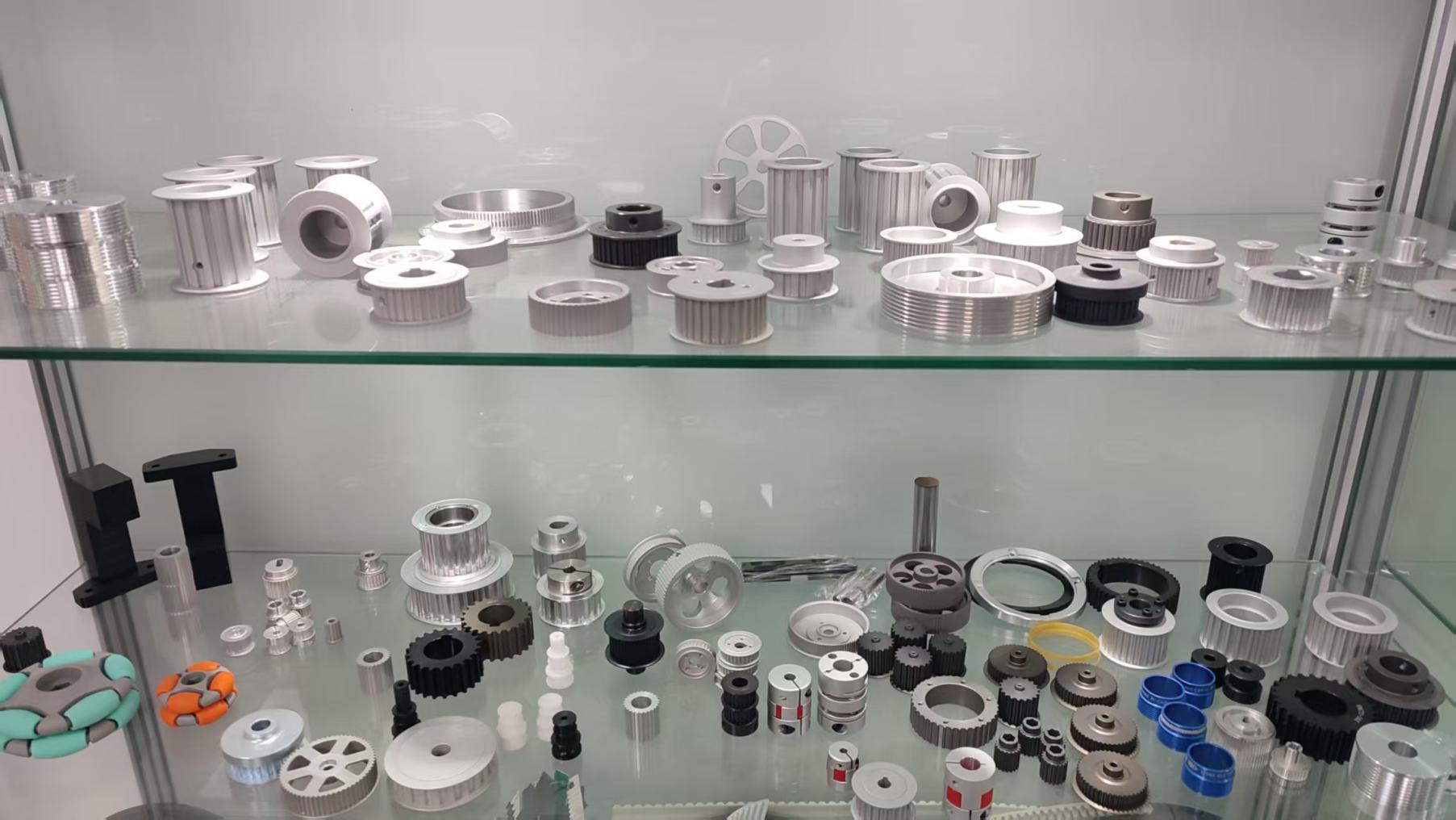
Dongguan Zhende Machinery Equipment Co., LTD — manufacturer and one-stop procurement service provider of FA automation transmission parts, Dongguan, China. Timing belts and timing pulleys for textile, mining, medical, printing, laser cutting, CNC, new energy and packaging machinery applications.
Have Questions or Need More Details?
Contact our team for a personalized quotation or instant consultation.
Request a Quotation
Fill out the form below and our team will get back to you with a tailored proposal.
WhatsApp Direct Chat
Prefer to chat in real-time? Message us on WhatsApp for instant assistance & quick answers.
- Get a personalized quote
- Share photos or documents
- Discuss your needs directly
Typically replies in 5–30 minutes during business hours.