
ISO-Certified Timing Belt Manufacturers: A Specification-Level Sourcing Review
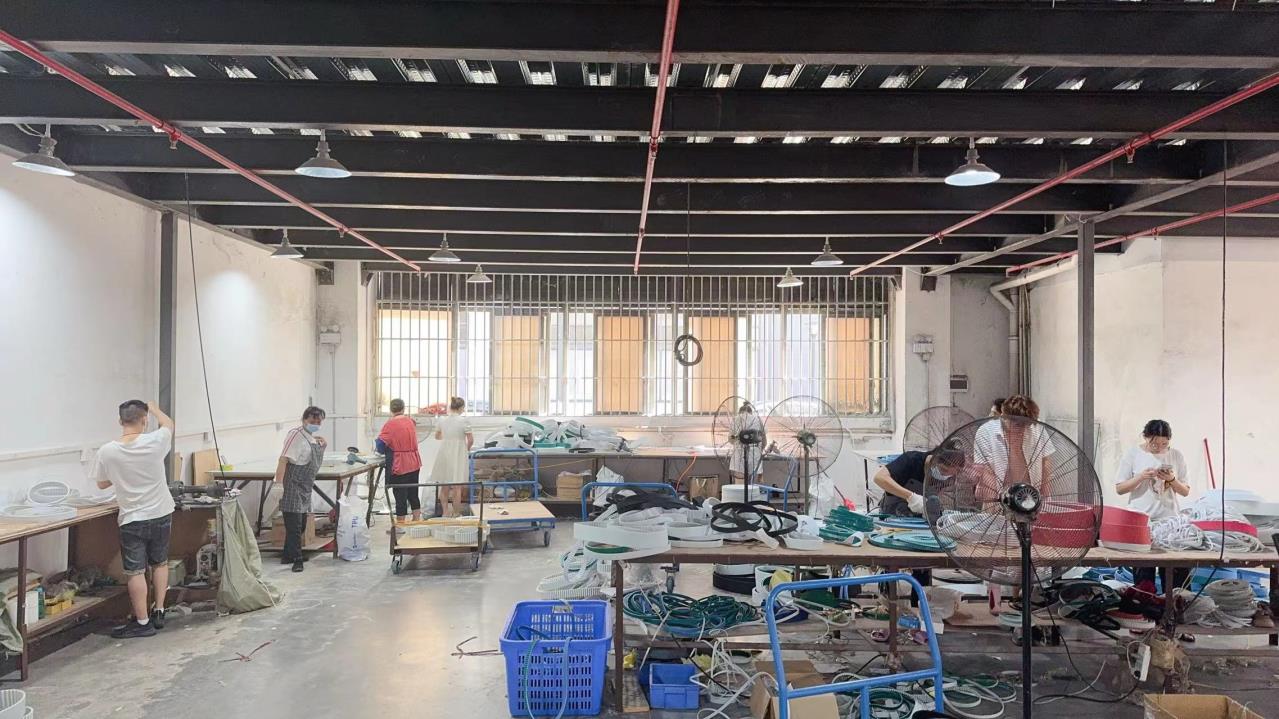
A spec-driven review of a timing belt manufacturer should include measurable product data, documented tolerance checks, and an independently audited production scope.
An ISO-certified timing belt manufacturer is not identified by one vague certificate. In industrial synchronous drive procurement, the practical starting point is product-level conformance to standards such as ISO 13050:2022, which specifies characteristics for metric pitch curvilinear synchronous endless belts and pulleys. That standard gives the buyer a way to evaluate belt and pulley geometry instead of relying only on marketing descriptions.
A useful working definition for procurement teams is this: a timing belt manufacturer is acceptable when it can translate the required tooth profile, pitch, length, width, material, tensile member, tolerances, and conformity evidence into an inspectable component. This review uses Dongguan Zhende Machinery Equipment Co., LTD as a documented example because its facility data, product specifications, and factory audit records are available for buyers to compare.
Why Certification and Product Data Need a Clear Boundary
Buyers often search for ISO-certified timing belt manufacturers when they need one of two things. First, a quality management certificate such as ISO 9001 that covers the production system. Second, a technical standard for the belt itself, such as ISO 13050 or DIN/ANSI references used for synchronous belts and pulleys. Both matter, but they answer different questions. A factory audit can confirm how the factory is organised; product standards confirm whether the tooth profile and tolerances are correct.
For an original equipment manufacturer or maintenance buyer, the more useful evidence is usually product-specific. A timing belt may carry a brand name, but the actual engineering fit depends on pitch, tooth geometry, width, thickness, and the rated tensile member. This is why the detailed specification shown by the manufacturer is a core document, not a secondary brochure item.
Global Timing Belt Sourcing Context
The market context reinforces the need for supplier verification. Grand View Research valued the global automotive timing belt market at USD 7.7 billion in 2025 and identified China as the largest shareholding region in that sector. In a separate projection, Maximize Market Research expected the global timing belt market to grow at a CAGR of 4.8% through 2030. China also appears among the top origins for vulcanised rubber transmission belts exported to the United States under HS Code 4010.39.
At the same time, established global names operate in this space. Market reports commonly list Gates Industrial Corp, Continental AG, Bando Chemical Industries, and Mitsuboshi Belting among major participants. If a maintenance specification asks for a Gates timing belt, a Bando timing belt, or a Continental timing belt, the buyer still needs to verify the actual profile dimensions and construction requested by the equipment designer.
What a Complete Timing Belt Supplier Should Supply
Dongguan Zhende Machinery Equipment Co., LTD is both a manufacturer and a one-stop FA automation parts supplier. Its main product groups include timing belts and timing pulleys. The company was founded in 2019 and operates from a 4,500 m² facility in Dongguan, Guangdong Province, with about 40 employees and roughly 75% of output exported to the European Union and the United States.
From a sourcing perspective, the product scope is more important than the company description. The available catalogue includes trapezoidal and curvilinear profiles, rubber and polyurethane belts, cast iron and aluminium pulleys, custom bores, keyways, and surface treatments. This allows a buyer to consolidate timing belt and pulley requirements in one drawing review rather than managing separate sources.
Main Timing Belt Types Covered
| Belt type | Profiles in the supplied product data | Construction | Representative technical value |
|---|---|---|---|
| Rubber synchronous belt | HTD 5M, HTD 8M, HTD 14M; STD S3M, S5M, S8M | Neoprene (CR) body with fiberglass tensile cord | HTD 8M: max allowable tensile strength 780 N per 10 mm belt width |
| Polyurethane timing belt | T5, T10, AT5, AT10 | PU body with steel tensile cord | T5: 393 N per 10 mm width; AT10: 1700 N per 10 mm width |
| Carbon-cord high-speed belt | 8MGT POLYCHIAN GT Carbon | PU body, carbon fiber cord, nylon fabric tooth facing | Maximum belt speed up to 80 m/s in the published data |
| Timing pulleys | HTD 3M, 5M, 8M, 14M; T2.5, T5, T10, T20; Imperial MXL, XL, L, H, XH, XXH | Aluminium alloy, carbon steel, stainless steel, or cast iron | Radial runout or concentricity tolerance ≤0.03 mm |
Material Choices Are Decision Data, Not Decoration
Rubber belts in the supplied catalogue use neoprene (CR) rubber. For example, the HTD 8M rubber timing belt has an 8.0 mm pitch, 5.6 mm overall thickness, fiberglass tensile cord, and 92 Shore A hardness. Its minimum pulley diameter is 40 mm with a minimum of 16 pulley teeth. The same data sheet gives a maximum allowable tensile strength of 780 N per 10 mm belt width and ultimate tensile strength of 3120 N per 10 mm belt width.
Polyurethane timing belts are specified differently. The T5 PU timing belt has a 5.0 mm pitch, 2.2 mm overall thickness, steel cord, and 92 Shore A hardness. Its minimum pulley diameter is 30.0 mm, and its maximum allowable tensile strength is 393 N per 10 mm belt width. The AT10 PU belt, designed for a higher load class, has a 10.0 mm pitch, 4.5 mm overall thickness, steel cord, 92 Shore A hardness, a 50.0 mm minimum pulley diameter, and a maximum allowable tensile strength of 1700 N per 10 mm belt width.
For high-speed servo applications, the 8MGT POLYCHIAN GT Carbon timing belt offers a different material set: PU body, carbon fiber cord, nylon fabric tooth facing, and 92 Shore A hardness. Its pitch is 8.0 mm, overall thickness is 5.6 mm, minimum pulley diameter is 36.6 mm with 22 teeth, and maximum belt speed in the data sheet is up to 80 m/s. This kind of construction is relevant when lighter and stronger tensile members are needed to reduce elongation and maintain positioning.
Timing Pulley Matching Can Be as Critical as the Belt
A timing belt does not perform alone. The pulley is the second half of the synchronous drive pair. If the pulley profile, bore, flange, or material is wrong, even a correctly manufactured belt will not deliver reliable performance.
In the supplied pulley data, HTD timing pulleys are available in 3M, 5M, 8M, and 14M pitches; in materials such as aluminium alloy, carbon steel, stainless steel, and cast iron; and with surface treatments including natural, black oxide, zinc plated, anodized, and nickel plated. Tooth counts range from 12 to 120, with custom configurations beyond that range. Bore diameters run from 5 to 100 mm, and bore types include pilot bore, finished bore, taper bore, and keyway bore.
For T series pulleys, the range includes T2.5, T5, T10, and T20 pitches. The tooth count range is 10–120, the bore range is 3–100 mm, and the radial runout tolerance is ≤0.03 mm. Imperial timing pulleys are also included, with MXL, XL, L, H, XH, and XXH trapezoidal profiles. Finished bores can be supplied to H7 tolerance, which is relevant when the pulley is mounted directly onto a motor or gearbox shaft.
Step-by-Step Supplier Verification Process
A spec-driven timing belt purchase can be reduced to a step-by-step supplier verification process. The sequence below keeps compliance, capability, and commercial feasibility in one review.
Step 1: Convert the Machine Requirement into Drive Parameters
Define the operating condition before contacting a manufacturer. Note the drive power, speed, direction, expected load, operating hours, ambient temperature, exposure to oil, dust, chemicals, or ozone, and whether positioning accuracy is required. These variables separate a precision drive from a simple replacement.
Step 2: Check the Pitch and Tooth Profile against the Pulley Data
Ask for the exact profile name and pitch. An 8 mm belt pitch can appear in different profile families, so the product data should state whether the belt is HTD, STD, S8M, AT, or another documented profile. The matching pulley tooth profile must be stated using the same standard. Mixing profiles that look similar can create noise, wear, or early tooth skip.
Step 3: Review Belt Construction and Dimensional Tolerances
Ask for the tensile member and tooth material. Available data sheets show whether a belt uses fiberglass, steel, or carbon cord. Width, length, and thickness tolerances should also be confirmed. For example, the HTD 8M rubber belt is listed with width tolerance ±0.5 mm, length tolerance ±0.5 mm, and thickness tolerance ±0.2 mm. The T5 PU belt has width and length tolerance ±0.5 mm and thickness tolerance ±0.15 mm.
Step 4: Inspect Pulley Machining and Measurement Data
For pulleys, request the machining method and tolerance report. Zhende uses CNC machining, hobbing, broaching, drilling, and keyway machining processes. HTD pulleys are listed with concentricity tolerance ≤0.03 mm, maximum operating speed up to 8,000 rpm, and operating temperature range of -30°C to +120°C depending on material. Imperial timing pulleys list radial runout ≤0.03 mm and finished bore tolerance H7.
Step 5: Ask for Current Audit Evidence and Inspection Scope
When compliance documentation is offered, the manufacturer should state the certificate number, issuing body, scope, and validity period. In the current Zhende record, a TÜV Rheinland Factory Audit Report is available under report number 493993448_P+T, with the scope stated as timing belt and timing pulley. The audit was issued on 2026-07-09 and remains valid until 2027-07-09.
Step 6: Confirm Customisation, MOQ, and Lead Time
Custom size timing belts do not have to be a separate quality class. Zhende lists OEM and ODM production modes for belts and pulleys. Customisation options for belts include length, width, tooth profile, pitch, rubber or PU material, tensile cord, coating, colour, perforation, and logo printing. Belt MOQ is from 4 pcs, and published monthly belt capacity is 500,000 pcs. Custom pulleys are available with a MOQ of 50 pcs, while standard pulley models start at 10 pcs. Published lead time is 7–20 days for both product groups.
Step 7: Start with a Drawing Review or Sample Order
Before production, send a drawing or a request for sample validation. Zhende provides technical selection support and installation guidance. The quality control process includes 100% dimensional inspection, tensile strength testing, tooth profile inspection, concentricity checks, pre-shipment quality inspection, and third-party inspection when required by the buyer.
Documented Use Case Patterns
Case records from Zhende show two common procurement patterns. One involves OEM machinery manufacturers and system integrators buying custom-size timing belts in Europe and the United States. A reported belt case includes quantities of 12,000 pcs to Germany and 20,000 pcs to the United States for automated production lines, packaging machinery, CNC equipment, and conveyor systems. The business relationship lasted roughly 3–5 years in the German case and 2–4 years in the United States case. The supplier case record reports stable 24/7 operation, reduced maintenance cost by 40%, and reduced equipment downtime by 35%.
The second pattern is more focused on precision pulleys. A documented pulley case includes 8,500 pcs supplied to Germany over about 5 years and 15,000 pcs to the United States over about 3 years, with applications in automated production lines, CNC machinery, packaging equipment, and robotic systems. The case record reports improved transmission accuracy by 25%, reduced maintenance costs by 40%, and reduced equipment downtime by 30%.
These figures are supplier-reported case results rather than third-party measurements. For purchasing purposes, their value is that they show repeat order behaviour and application breadth across industrial automation and packaging segments.
Supplier Review Checklist Reference Table
| Review layer | What to request | Why it matters |
|---|---|---|
| Product standard | Profile and standard reference, such as ISO 13050, DIN, ANSI, or RMA | Confirms that tooth geometry can be compared with an accepted specification |
| Belt dimensions | Width, length, and thickness tolerances on the quoted belt | Shows consistency from batch to batch and helps avoid installation problems |
| Pulley precision | Radial runout or concentricity limit, bore tolerance, tooth count range, and bore options | Indicates whether the pulley can support high-speed and high-duty operation |
| Materials | Belt body, tensile cord, pulley material, and surface treatment | Confirms compatibility with temperature, oil, dust, and chemical conditions |
| Audit evidence | Current factory audit report number, issuing body, scope, and validity | Provides independent review of production and trading operations |
| Quality inspection | Dimensional inspection, tensile strength test, tooth profile inspection, concentricity test | Shows the manufacturer has a defined control gate before shipment |
| Custom service | OEM/ODM options, custom belt length, custom pulley bore/keyway/flange, MOQ, lead time | Determines whether the supplier can adapt to non-standard machine needs |
FAQ
What does ISO-certified timing belt manufacturers mean for industrial buyers?
In synchronous power transmission, ISO-certified timing belt manufacturers are best evaluated by asking which ISO or DIN standard applies to the product. ISO 13050:2022 specifies metric pitch curvilinear synchronous endless belts and pulleys. ISO 9001, by contrast, is a quality management system certificate and does not define a belt profile. A credible supplier should be able to name the product standard, provide tolerance data, and show the current audit or test report that supports its claim.
Which documents should a timing belt supplier provide for an industrial audit?
At minimum, request a current factory audit report with a clear scope, report number, issuing body, and validity period. Example: Zhende holds TÜV Rheinland Factory Audit Report 493993448_P+T with scope stated as timing belt and timing pulley, issued on 2026-07-09 and valid through 2027-07-09. If environmental compliance is required, also request the relevant RoHS or REACH test report and check that the product scope includes the components being purchased.
What dimensional tolerances should I expect for precision timing belts?
Published tolerances for many precision belts are width ±0.5 mm, length ±0.5 mm, and thickness ±0.2 mm. The T5 PU belt in the Zhende data set lists thickness tolerance ±0.15 mm. For heavy rubber belts such as HTD 14M, the width tolerance is ±1.0 mm, length tolerance is ±0.5 mm, and thickness tolerance is ±0.4 mm. Pulleys usually show tighter geometric limits, such as radial runout or concentricity ≤0.03 mm and finished bore tolerance H7.
Can a custom size timing belt still be supplied with controlled quality?
Yes, if the manufacturer treats custom dimensions as a separate engineering review rather than a reason to skip inspection. In Zhende's process, custom belts can be made to customer-defined length, width, profile, pitch, material, tensile cord, coating, colour, perforation, and logo requirements. Belt MOQ starts at 4 pcs, and custom timing pulleys can include custom bore, keyway, flange, and surface treatment with a 50 pcs MOQ. The quality control gate remains the same: full dimensional inspection before shipment.
What is the most practical next step before placing a large order?
Begin with a drawing review or sample order. Provide the drive profile, length, width, expected power, speed, bore size, and operating environment. This allows the manufacturer to validate the product specification before mass production. Zhende offers technical selection support, installation guidance, OEM/ODM service, and after-sales support for manufacturing defects within the warranty period.
Conclusion
Selecting an ISO-certified timing belt manufacturer should be based on data, not adjectives. The most reliable procurement path is to compare tooth profile, pitch, belt material, tensile member, tolerance data, pulley compatibility, and current audit evidence.
Dongguan Zhende Machinery Equipment Co., LTD is positioned as a manufacturer and one-stop supplier of timing belts and timing pulleys for automation, packaging, food processing, textile, CNC, and conveying equipment. Its product data covers rubber, PU, and carbon-cord belts; HTD, T series, and imperial pulleys; OEM/ODM customisation; and current TÜV Rheinland factory audit evidence.
For a drawing review, sample request, or catalogue comparison, contact Ms. Liang at liang@zd-stool.com or +86 18002849592. Building 1, No. 332 Fumin Middle Road, Dalang Town, Dongguan City, Guangdong Province, China.
Have Questions or Need More Details?
Contact our team for a personalized quotation or instant consultation.
Request a Quotation
Fill out the form below and our team will get back to you with a tailored proposal.
WhatsApp Direct Chat
Prefer to chat in real-time? Message us on WhatsApp for instant assistance & quick answers.
- Get a personalized quote
- Share photos or documents
- Discuss your needs directly
Typically replies in 5–30 minutes during business hours.