
Timing Belt Application Guide: Matching PU and Rubber Belts to HTD and T-Series Pulley Retrofits
A retrofit is decided at the tooth. The timing belt family must match the pulley family, and the pulley must be large enough for the belt minimum bending diameter. PU timing belts such as AT5, AT10, T5 and T10 run with trapezoidal T-series and AT-profile pulleys. Rubber timing belts such as HTD 5M, HTD 8M, HTD 14M and S8M run with HTD timing pulleys. Imperial-profile belts run with imperial timing pulleys at MXL, XL, L, H, XH and XXH pitches. This guide sets out the matching rules, the technical figures behind them, and a sourcing checklist you can run against any supplier before an order is released.
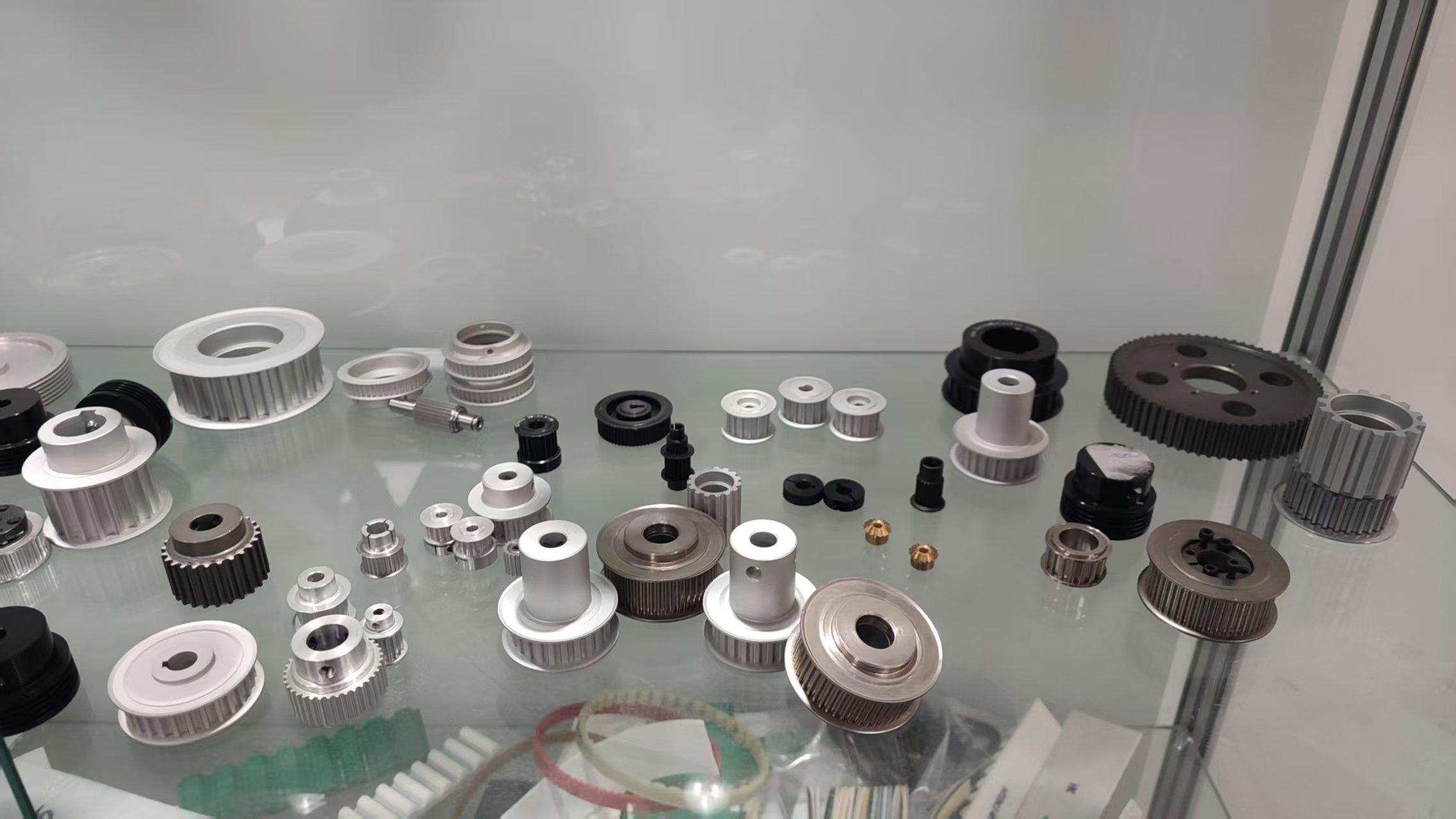
Retrofit work rarely starts in a clean engineering environment. It starts with a machine that has stopped, a spare part that is no longer stocked, or an imported line whose original belt carries a long lead time. The practical question is not which timing belt is best in the abstract, but which belt fits the pulley already sitting on the shaft, and which pulley can be machined if the original is worn, misaligned or simply out of tolerance.
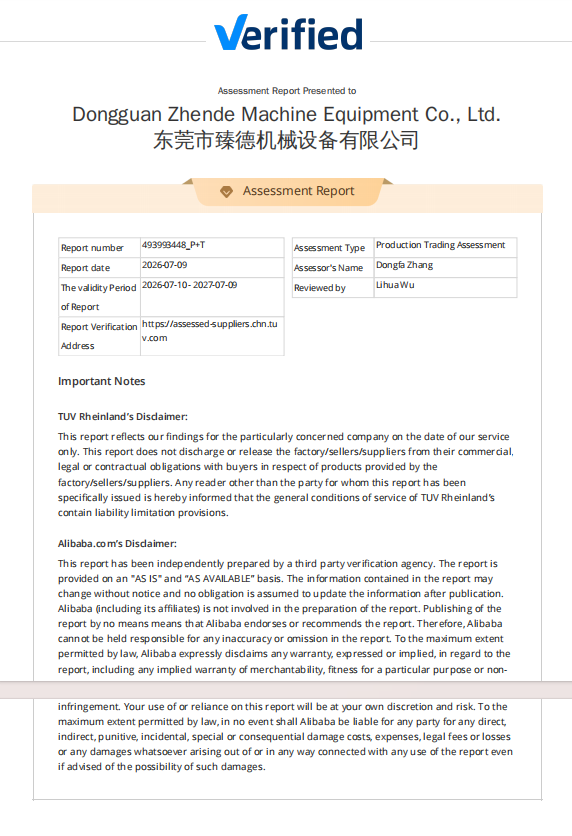
This article answers that question from both sides of the drive. The belt side covers PU timing belts (AT5, AT10, T5, T10), rubber timing belts (HTD 5M, HTD 8M, HTD 14M, S8M) and the POLYCHIAN GT carbon timing belt in the 8MGT profile. The pulley side covers HTD timing pulleys, T-series timing pulleys and imperial timing pulleys. The final section is a verification checklist built on the documentation a manufacturer should be able to hand over: the Alibaba.com Verified Supplier status, the production and trading assessment numbers, the SGS and TUV assessment standard, and a certificate validity window of 2026-07-10 to 2027-07-09.
Why Timing Belt Retrofits Fail at the Belt and Pulley Interface
Most retrofit failures are specification failures, not manufacturing failures. A belt and a pulley can both measure within tolerance and still destroy each other within days if they were never designed to run together.
- Profile family mismatch. HTD is a curvilinear tooth form. T-series and AT profiles are trapezoidal. Imperial profiles (MXL, XL, L, H, XH, XXH) use their own geometry. Pitch equality does not create compatibility: an 8.0 mm pitch appears in HTD 8M, in S8M (STS/STPD) and in the 8MGT profile, and those three belts do not share one pulley groove.
- Minimum pulley diameter ignored. Every belt datasheet states a minimum pulley diameter and a minimum tooth count. HTD 14M requires a minimum pulley diameter of 124.78 mm and at least 28 teeth. The 8MGT POLYCHIAN GT carbon timing belt requires at least 22 teeth, equal to 36.6 mm. AT10 PU requires 50.0 mm. Forcing a large-pitch belt onto a small existing pulley loads the tooth root beyond its design condition.
- Tensile capability assumed rather than calculated. Each profile carries a stated maximum allowable tensile strength per 10 mm of belt width, from 393 N for T5 PU to 1816 N for HTD 14M rubber. Belt width has to be chosen from the drive load, not from what was in stock last time.
- Pulley interface details overlooked. Bore diameter, bore type, keyway, flange and hub configuration decide whether the new pulley mounts at all. Concentricity and radial runout decide whether the belt tracks. Typical figures for the pulleys described later in this guide are ≤0.03 mm for both concentricity and radial runout, with H7 tolerance on finished imperial bores.
- Only one component replaced. A new belt on a worn pulley wears out fast. Retrofit projects are strongest when the belt and the pulley are specified as a set.
Industry Background: Why Retrofit and Matching Demand Keeps Rising
The retrofit market is a by-product of a growing installed base. Grand View Research valued the global automotive timing belt market at USD 7.7 billion in 2025, with China holding the largest market share of that sector in the same year. Maximize Market Research expects the global timing belt market to grow at a CAGR of 4.8% through 2030. More installed drives mean more replacements, and more replacements mean more briefs that read like a drawing rather than a catalogue number.
Trade data points in the same direction. Transmission belts of vulcanized rubber (HS Code 4010.39) have seen China rank among the top origins for United States imports in recent periods, according to customs data reported by Descartes Datamyne. For a European or North American buyer, sourcing a matched belt and pulley set from China is a mainstream supply-chain decision rather than an exception.
The standards landscape is what makes that decision checkable. ISO 13050:2022 specifies the characteristics of metric pitch curvilinear synchronous endless belts and pulleys, including the G, H, R and S profiles. Dongguan Zhende Machinery Equipment Co., LTD states ISO 13050 and DIN tooth accuracy on its HTD, T-series and imperial timing pulleys, which gives a retrofit engineer a named reference to compare against instead of a general quality claim. For drives in potentially explosive atmospheres, synchronous belts are recommended to follow ISO 9563 and ISO 1813, a constraint that should be raised at the brief stage.
On the supply side, the named major global players in the timing belt market include Gates Industrial Corp, Continental AG, Bando Chemical Industries and Mitsuboshi Belting. These brand-tier manufacturers define the reference for standard catalogue profiles, and buyers searching for a Gates timing belt, a Continental timing belt or a Bando timing belt are usually looking for exactly that: a catalogue match to an existing standard profile. Retrofit and custom-size work, where the belt and the pulley both have to be produced to a drawing, is typically handled by specialist manufacturers.
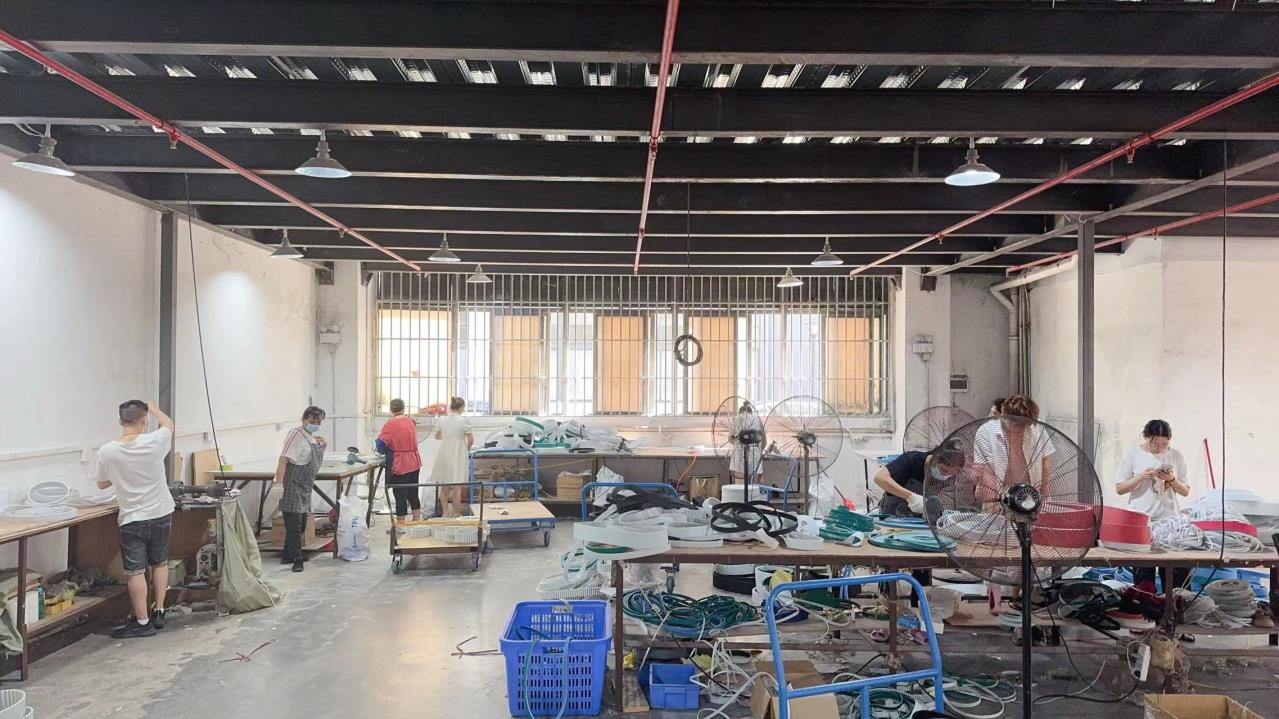
Dongguan Zhende Machinery Equipment Co., LTD is a manufacturer and one-stop procurement service provider of FA automation transmission parts, based in Dalang Town, Dongguan, China. Founded in 2019, the company operates a 4,500 m² facility with 40 employees, including a 6-engineer technical team. Timing belts and timing pulleys are its main products, 75% of output is exported, and the principal markets are Europe and the United States. Its product range also covers other FA transmission parts, and it acts as an authorized distributor for HIWIN, THK, NSK, SKF and AirTAC, which lets a retrofit buyer consolidate transmission components into one order.
The Belt and Pulley Families You Will Actually Specify
PU timing belts: AT5, AT10, T5 and T10
PU timing belts use a polyurethane body with a steel cord tensile member and a hardness of 92 Shore A. They are thin, dimensionally tight and well suited to precision linear drive and synchronous positioning work.
- T5 PU timing belt. 5.0 mm pitch, 2.2 mm overall thickness, minimum pulley diameter 30.0 mm, maximum allowable tensile strength 393 N per 10 mm belt width, power transmission up to 5 kW, rotational speed approximately 10,000 rpm, thickness tolerance ±0.15 mm.
- T10 PU timing belt. 10.0 mm pitch, 4.5 mm overall thickness, minimum pulley diameter 60.0 mm, maximum allowable tensile strength 780 N per 10 mm belt width, power transmission up to 30 kW, speed approximately 10,000 rpm, thickness tolerance ±0.2 mm.
- AT5 PU timing belt. 5.0 mm pitch, 2.7 mm overall thickness, minimum pulley diameter 25.0 mm, maximum allowable tensile strength 700 N per 10 mm belt width, power transmission up to 15 kW.
- AT10 PU timing belt. 10.0 mm pitch, 4.5 mm overall thickness, minimum pulley diameter 50.0 mm, maximum allowable tensile strength 1700 N per 10 mm belt width, power transmission up to 70 kW — the highest allowable tensile figure among the PU profiles listed here.
Typical deployment for these profiles includes industrial automation, labeling equipment, electronics manufacturing, medical equipment, robotics, conveyor systems and CNC equipment. The tight ±0.15 mm thickness tolerance on T5 matters in multi-axis positioning, where belt stack-up contributes directly to repeatability.
Rubber timing belts: HTD 5M, HTD 8M, HTD 14M and S8M
Rubber timing belts in this range use a neoprene (CR) body with a fiberglass cord and a hardness of 92 Shore A. The thicker tooth section and higher ultimate strength make the larger pitches the natural choice for high-torque drives.
- HTD 5M. 5.0 mm pitch, 3.6 mm overall thickness, minimum pulley diameter 25 mm, minimum 16 pulley teeth, maximum allowable tensile strength 650 N per 10 mm, ultimate tensile strength 2600 N per 10 mm, width tolerance ±0.5 mm, length tolerance ±0.5 mm, thickness tolerance ±0.2 mm.
- HTD 8M. 8.0 mm pitch, 5.6 mm overall thickness, minimum pulley diameter 40 mm, minimum 16 pulley teeth, maximum allowable tensile strength 780 N per 10 mm, ultimate tensile strength 3120 N per 10 mm.
- HTD 14M. 14.0 mm pitch, 10.0 mm overall thickness, minimum pulley diameter 124.78 mm, minimum 28 pulley teeth, maximum allowable tensile strength 1816 N per 10 mm, ultimate tensile strength 8308 N per 10 mm, width tolerance ±1.0 mm, thickness tolerance ±0.4 mm.
- S8M (STS / STPD). 8.0 mm pitch, 5.3 mm overall thickness, minimum pulley diameter 56.0 mm, maximum allowable tensile strength 650 N per 10 mm, ultimate tensile strength 2600 N per 10 mm.
The same family continues downward for lighter duty: S5M at 5.0 mm pitch with a 3.4 mm thickness and a 22.3 mm minimum pulley diameter, rated 300 N per 10 mm allowable and 1200 N per 10 mm ultimate; and S3M at 3.0 mm pitch with a 1.9 mm thickness, a 13.4 mm minimum pulley diameter, 125 N per 10 mm allowable and 500 N per 10 mm ultimate. Typical deployment covers packaging machinery, printing machinery, textile machinery, woodworking machinery, food processing equipment, CNC machines, robotics, material handling and, at the larger pitches, mining and construction machinery.
POLYCHIAN GT carbon timing belt in the 8MGT profile
The POLYCHIAN GT carbon timing belt uses a polyurethane body with a carbon fiber cord and a nylon fabric tooth facing. At 8.0 mm pitch, 5.6 mm overall thickness and 92 Shore A hardness, it requires a minimum pulley diameter of 36.6 mm, equivalent to 22 teeth.
Its performance envelope is wider than the standard profiles: maximum belt speed up to 80 m/s, operating temperature from -54 °C to +85 °C, transmission efficiency up to 98%, and excellent oil, chemical and ozone resistance. It is described as maintenance-free, with no lubrication required. That combination suits high-speed servo drive systems, robotics, compressors, pumps and other high-performance synchronous drives where belt speed and temperature swing are the limiting factors.
Timing pulleys: HTD, T-series and imperial
A retrofit usually needs a pulley as well as a belt, and the pulley families map directly onto the belt families.
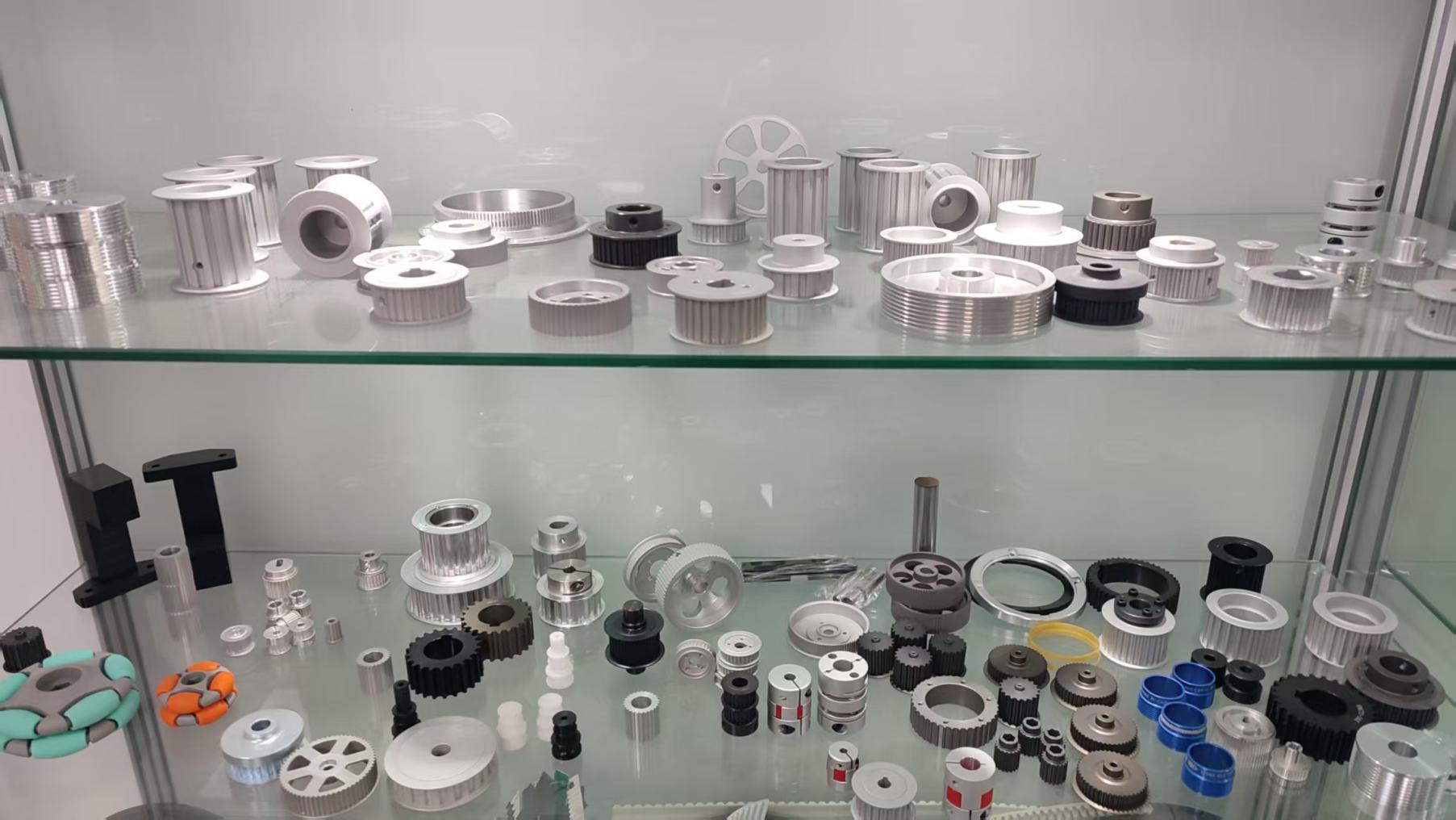
HTD timing pulleys use the HTD (High Torque Drive) tooth profile in pitches 3M, 5M, 8M and 14M. They are machined in aluminum alloy, carbon steel, stainless steel or cast iron, with 12 to 120 teeth and custom options. Bore diameter ranges from 5 mm to 100 mm, and bore types include pilot bore, finished bore, taper bore and keyway bore. Concentricity is ≤0.03 mm, maximum operating speed is up to 8,000 rpm, and the operating temperature range is -30 °C to +120 °C depending on material. Hardness is stated as HB 75–95 for aluminum and HRC 20–35 for steel, with optional heat treatment. Tooth accuracy follows ISO 13050 / DIN standards, and the compatible belts are HTD rubber timing belts and HTD PU timing belts. Every pulley is dimension inspected before delivery. Where inertia matters, aluminum timing pulleys are the common selection.

T-series timing pulleys use a trapezoidal T-series profile in pitches T2.5, T5, T10 and T20, in the same material set. They are available with 10 to 120 teeth, bore diameters from 3 mm to 100 mm, radial runout ≤0.03 mm and a maximum operating speed up to 8,000 rpm over -30 °C to +120 °C. Tooth accuracy follows ISO 13050 / DIN, and the compatible belts are T-series PU timing belts and T-series rubber timing belts. OEM and ODM are available, and 100% dimensional inspection is performed before shipment. Applications include packaging machinery, food processing equipment, printing machinery, textile machinery, CNC machines, medical equipment, robotics and conveyor systems.
Imperial timing pulleys use an imperial trapezoidal tooth profile in pitches MXL, XL, L, H, XH and XXH. They are produced in the same four material options with 10 to 120 teeth, bore diameters from 3 mm to 100 mm, finished bore tolerance H7, radial runout ≤0.03 mm and a maximum operating speed up to 8,000 rpm. Standards referenced are RMA, ISO and DIN, and the compatible belts are imperial rubber timing belts and imperial PU timing belts. Surface treatment options across all three families include natural finish, black oxide, zinc plating, hard anodizing and nickel plating; flange options include single flange, double flange and no flange; hub options include hub, no hub and double hub.
PU or Rubber: How to Choose for a Retrofit
Two drives with the same pitch can require different belt materials. The following decision rules resolve most retrofit briefs without guesswork.
- Start from the pulley you intend to keep. If the existing pulley is a T-profile or AT-profile pulley, the belt is a PU T5, T10, AT5 or AT10. If the pulley is HTD, the belt is an HTD rubber or HTD PU timing belt. If the pulley is imperial, the belt is an imperial-profile belt. Reversing that logic — choosing a belt first and then machining a pulley to suit — is possible, but it costs more and takes longer.
- Check available space. Rubber HTD profiles are thicker and need larger pulleys. HTD 14M requires a minimum pulley diameter of 124.78 mm, against 50.0 mm for an AT10 PU belt and 36.6 mm for an 8MGT carbon belt. On a compact shaft, a PU trapezoidal profile is often the only belt that fits within the bending limit.
- Compare tensile demand against belt width. AT10 PU carries a maximum allowable tensile strength of 1700 N per 10 mm of belt width. HTD 14M rubber carries 1816 N per 10 mm allowable and 8308 N per 10 mm ultimate. Choose the profile whose allowable figure covers the peak load after the service factor, then set the width.
- Check speed and temperature. PU profiles run at approximately 10,000 rpm, and the matching pulleys are rated to 8,000 rpm. The POLYCHIAN GT carbon timing belt extends the envelope to 80 m/s and -54 °C to +85 °C.
- Check what the belt has to do beside transmit power. If the belt also conveys, positions or indexes, the construction becomes part of the specification — coating, color, perforation, logo printing, and custom length and width.
- Do not swap material without rechecking the drive. The rubber profiles described here use a fiberglass cord in a neoprene body, while the PU profiles use a steel cord. Cord choice changes stiffness and tension behaviour, so a rubber belt cannot be replaced by a PU belt of the same pitch without re-verifying power, pulley diameter and take-up.
Step-by-Step Breakdown: Matching a Belt to a Pulley Retrofit
- Record the existing pulley. Capture tooth profile, pitch, number of teeth, pitch diameter, bore diameter, bore type, keyway, flange and hub configuration, plus the material and surface treatment required for the replacement. A photograph of the worn pulley beside a rule is more useful than a part number that no longer resolves.
- Identify the profile family, not just the pitch. An 8 mm pitch exists in HTD 8M, S8M and 8MGT; a 5 mm pitch exists in HTD 5M, S5M, T5 and AT5. Ask the supplier to confirm the profile by name and drawing before quoting.
- Check minimum pulley diameter and minimum teeth. HTD 14M: 124.78 mm and 28 teeth. S8M: 56.0 mm. HTD 8M: 40 mm and 16 teeth. HTD 5M: 25 mm and 16 teeth. 8MGT: 36.6 mm and 22 teeth. T10 PU: 60.0 mm. AT10 PU: 50.0 mm. T5 PU: 30.0 mm. AT5 PU: 25.0 mm. If the shaft cannot carry the minimum pulley, the profile has to change.
- Size the belt width from load. Work from maximum allowable tensile strength per 10 mm of belt width — 393 N for T5 PU, 700 N for AT5 PU, 780 N for T10 PU and HTD 8M, 650 N for HTD 5M and S8M, 1700 N for AT10 PU, 1816 N for HTD 14M — and from the power capacity where stated: up to 5 kW for T5, up to 15 kW for AT5, up to 30 kW for T10 and up to 70 kW for AT10.
- Verify speed and temperature limits. Approximately 10,000 rpm for the PU profiles, 8,000 rpm maximum operating speed for the pulleys, up to 80 m/s and -54 °C to +85 °C for the 8MGT carbon belt, and -30 °C to +120 °C for the pulleys depending on material.
- Define the belt construction. Open, loop or conveying construction, body material rubber or PU, tensile cord fiberglass, steel, Kevlar or carbon fiber, optional coating, color, perforation and logo printing, and custom belt length and width where the standard sizes do not match.
- Specify the pulley machining details. Material, surface treatment, number of teeth, bore type and diameter, keyway, flange type, hub type and logo engraving, plus the accuracy figures you will inspect against — concentricity ≤0.03 mm for HTD pulleys, radial runout ≤0.03 mm for T-series and imperial pulleys, and H7 finished bore tolerance for imperial pulleys.
- Validate before scaling. Order a small validation quantity, check tooth engagement, alignment and noise with the machine running, and only then release the full retrofit batch.
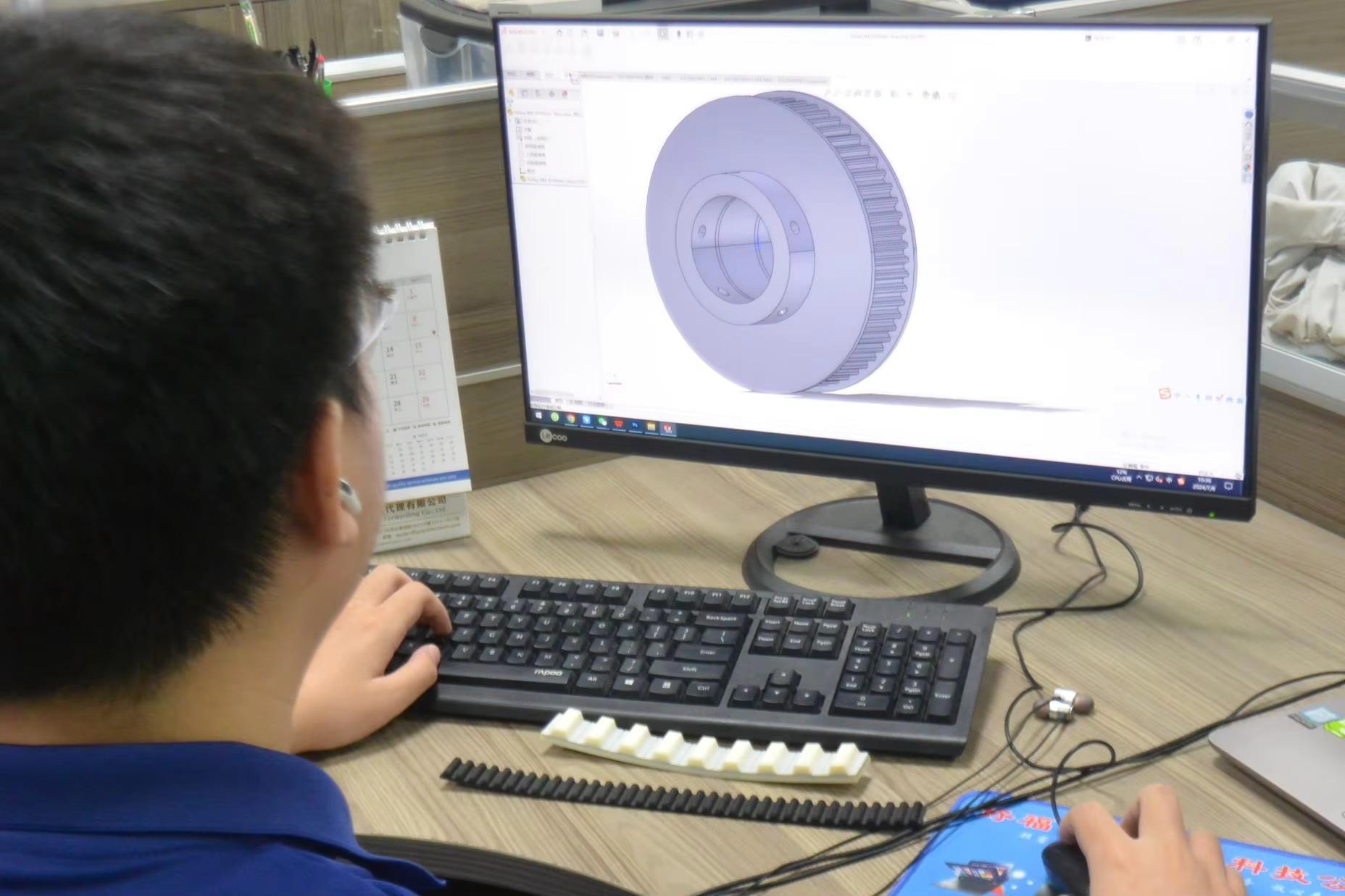
Comparison Table: Timing Belt Profiles Side by Side
The table below groups the profiles covered in this guide by the figures a retrofit engineer needs first: pitch, minimum pulley diameter, minimum teeth and allowable load per unit of belt width.
| Belt profile | Pitch (mm) | Body / tensile member | Min. pulley dia. (mm) | Min. pulley teeth | Max. allowable tensile (N per 10 mm) | Power / speed note |
|---|---|---|---|---|---|---|
| T5 PU timing belt | 5.0 | PU / steel cord | 30.0 | — | 393 | Up to 5 kW, approx. 10,000 rpm |
| T10 PU timing belt | 10.0 | PU / steel cord | 60.0 | — | 780 | Up to 30 kW, approx. 10,000 rpm |
| AT5 PU timing belt | 5.0 | PU / steel cord | 25.0 | — | 700 | Up to 15 kW |
| AT10 PU timing belt | 10.0 | PU / steel cord | 50.0 | — | 1700 | Up to 70 kW |
| HTD 5M rubber | 5.0 | Neoprene (CR) / fiberglass cord | 25 | 16 | 650 | Ultimate 2600 N per 10 mm |
| HTD 8M rubber | 8.0 | Neoprene (CR) / fiberglass cord | 40 | 16 | 780 | Ultimate 3120 N per 10 mm |
| HTD 14M rubber | 14.0 | Neoprene (CR) / fiberglass cord | 124.78 | 28 | 1816 | Ultimate 8308 N per 10 mm |
| S8M (STS / STPD) rubber | 8.0 | Neoprene (CR) / fiberglass cord | 56.0 | — | 650 | Ultimate 2600 N per 10 mm |
| POLYCHIAN GT carbon (8MGT) | 8.0 | PU / carbon fiber cord, nylon tooth facing | 36.6 | 22 | — | Up to 80 m/s, -54 °C to +85 °C, efficiency up to 98% |
Pulley Family and Belt Family: Compatibility Table
Pulley selection is a compatibility decision before it is a price decision. The table below summarises the pairing rules and the accuracy figures to inspect against on delivery.
| Pulley family | Available pitches | Compatible belt families | Bore range | Key accuracy figures |
|---|---|---|---|---|
| HTD timing pulley | 3M, 5M, 8M, 14M | HTD rubber timing belts, HTD PU timing belts | 5–100 mm (custom available) | Concentricity ≤0.03 mm; tooth accuracy ISO 13050 / DIN; max 8,000 rpm |
| T-series timing pulley | T2.5, T5, T10, T20 | T-series PU timing belts, T-series rubber timing belts | 3–100 mm (custom available) | Radial runout ≤0.03 mm; tooth accuracy ISO 13050 / DIN; max 8,000 rpm |
| Imperial timing pulley | MXL, XL, L, H, XH, XXH | Imperial rubber timing belts, imperial PU timing belts | 3–100 mm (custom available) | Radial runout ≤0.03 mm; H7 finished bore; standards RMA, ISO, DIN |
Which Supplier Type Fits a Timing Belt and Pulley Retrofit?
Buyers evaluating a timing belt supplier for a retrofit usually end up comparing two supplier types, and the right answer depends on whether the brief is a catalogue match or a drawing-led build.
- Brand-tier global manufacturers. Gates Industrial Corp, Continental AG, Bando Chemical Industries and Mitsuboshi Belting are named among the major global players in the timing belt market. They set the reference point for standard catalogue profiles, and a search for a Gates timing belt, a Continental timing belt or a Bando timing belt is usually a search for a catalogue equivalent.
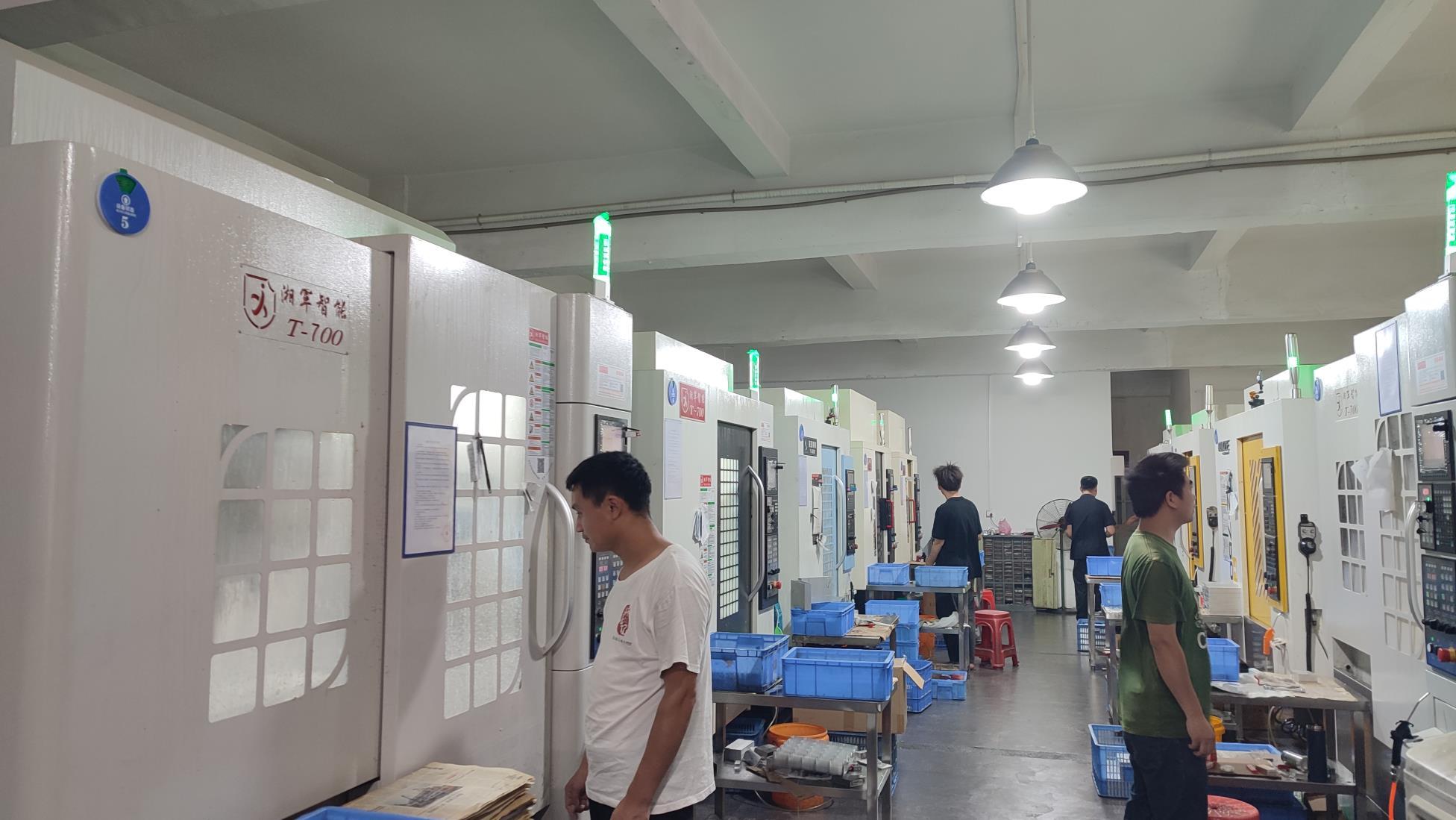
- Specialist manufacturers producing both belts and pulleys. When the original profile is obsolete, the pulley is worn, or the drive needs a custom size, the brief becomes a drawing-led build. A specialist that produces both the belt and the pulley can match the pair and take responsibility for the interface.
| Supplier tier | Named examples | Typical use in a retrofit brief | What the buyer should verify |
|---|---|---|---|
| Brand-tier global manufacturers | Gates Industrial Corp, Continental AG, Bando Chemical Industries, Mitsuboshi Belting | Catalogue replacement where the machine uses a current standard profile | Profile naming, availability of the specific pitch and width, and the reference data behind the catalogue entry |
| Specialist belt and pulley manufacturers | Dongguan Zhende Machinery Equipment Co., LTD | Custom size belts, worn or obsolete pulleys, matched belt and pulley sets, mixed FA transmission part orders | OEM/ODM capability, pulley machining accuracy, QC process, certificate validity window, MOQ and lead time |
Dongguan Zhende Machinery Equipment Co., LTD supports OEM and ODM production across both product lines. Belt customization covers length, width, tooth profile, tooth pitch, material (rubber or PU), tensile cord (fiberglass, Kevlar or steel), coating, color, perforation and logo printing. Pulley customization covers material, tooth profile, pitch, number of teeth, bore diameter, keyway, flange type, surface treatment and logo engraving. Monthly capacity is stated as 500,000 pcs for belts and 100,000 pcs for pulleys, with a 7–20 day lead time, belts from a 4 pcs minimum order quantity, standard pulleys from 10 pcs and customized pulleys from 50 pcs.
Use Cases: Where These Combinations Are Already Running
Two documented retrofit programmes illustrate how belt and pulley matching plays out at scale.
Belt programme (Europe and North America). A retrofit involving 20,000 units installed in the United States and 12,000 units in Germany covered automated production lines, packaging machinery, CNC equipment and conveyor systems. Project duration was 3–5 years in Germany and 2–4 years in the United States. The reported results were a 98% increase in transmission efficiency, a 40% reduction in maintenance costs, a 35% reduction in equipment downtime and stable 24/7 operation. Buyers included OEM machinery manufacturers, industrial distributors and system integrators, and the recorded highlights were high precision, low noise, wear resistance, high tensile strength, long service life and maintenance-free operation.
Pulley programme (Europe and North America). A second programme supplied 8,500 pcs to Germany and 15,000 pcs to the United States for automated production lines, CNC machinery, packaging equipment and robotic systems, running over 5 years in Germany and 3 years in the United States. The reported results were a 25% improvement in transmission accuracy, a 40% reduction in maintenance costs and a 30% reduction in equipment downtime. The users were OEM machinery manufacturers, automation equipment integrators and industrial distributors, and the recorded highlights were high precision machining, concentricity, durable aluminum and steel materials, smooth transmission, long service life and OEM/ODM customization availability.
Profile-to-application mapping follows the same logic. HTD 8M and S8M suit packaging, printing, textile, woodworking, food processing, conveyor and CNC duties. HTD 14M covers heavier drives in mining, construction, agricultural machinery and compressors. T5 and AT5 PU belts fit labeling, electronics, medical and robotics work. T10 and AT10 PU belts serve CNC machines, machine tools and heavy-duty positioning. The 8MGT POLYCHIAN GT carbon belt targets high-speed servo drive systems, pumps and compressors where belt speed and temperature range are the limiting conditions.
Sourcing Checklist: Verifying a Timing Belt and Pulley Supplier
Use the following checklist as a document request, not as a conversation. Each line corresponds to a document or a stated figure that a supplier should be able to produce.
- Profile and pitch confirmation. Request the profile name, pitch and drawing before any quotation, and confirm the tooth accuracy reference (ISO 13050 / DIN for HTD, T-series and imperial pulleys).
- Minimum pulley diameter and tooth count. Ask the supplier to confirm that your existing shaft diameter satisfies the belt minimum, for example 124.78 mm and 28 teeth for HTD 14M, or 36.6 mm and 22 teeth for the 8MGT carbon belt.
- Tensile and power data. Request maximum allowable tensile strength per 10 mm of belt width, ultimate tensile strength and, where applicable, power transmission capacity in kW.
- Dimensional tolerances. Expect width ±0.5 mm, length ±0.5 mm and thickness ±0.2 mm on most profiles; ±0.15 mm thickness on T5 PU; and ±1.0 mm width with ±0.4 mm thickness on HTD 14M.
- Pulley accuracy figures. Concentricity ≤0.03 mm or radial runout ≤0.03 mm depending on pulley family, with H7 finished bore tolerance on imperial pulleys.
- Quality control process. Confirm 100% dimensional inspection, bore and tooth profile inspection, concentricity testing, pre-shipment inspection, and availability of third-party inspection such as SGS.
- Alibaba.com Verified Supplier status. Verify the badge directly on the supplier storefront rather than from a screenshot or a quotation header.
- Production and trading assessment numbers. The records state assessment numbers 493993448_P+T and 494177048_P, with a scope of timing belt and a standard of SGS/TUV.
- Factory audit documentation. The TUV Rheinland factory audit report carries number 493993448_P+T, covers timing belt and timing pulley, is assessed against the Production and Trading Factory Assessment Standard, and is dated 2026-07-09 with a validity end of 2027-07-09.
- Certificate validity window. The Alibaba.com Verified Supplier production and trading assessments are recorded as valid from 2026-07-10 to 2027-07-09. Always check the expiry date against your planned shipment date, and request the certificate PDF rather than a text summary.
- Material compliance documentation. A RoHS test report is on file under number CANEC24017410403, issued by SGS-CSTC Standards Technical Services Co., Ltd. Guangzhou Branch, covering the PU timing belt T5 against the EU RoHS Directive (EU) 2015/863, for the EU, US, Middle East and Southeast Asia markets. Because test reports have their own validity period, request the current, in-date version before you rely on it in a declaration.
- MOQ and lead time. Belts from 4 pcs, standard pulleys from 10 pcs, customized pulleys from 50 pcs, with a 7–20 day lead time for both product lines.
- Capacity and continuity. Monthly capacity is stated as 500,000 pcs for belts and 100,000 pcs for pulleys; exports go to Europe, North America, South America, the Middle East and Southeast Asia.
- After-sales support. Confirm technical selection support, installation guidance, OEM/ODM service, a stated quality warranty, and replacement for manufacturing defects within the warranty period.
Frequently Asked Questions
Which certificates should I verify before ordering a timing belt or pulley?
Verify three layers. First, platform verification: Alibaba.com Verified Supplier status, supported by production and trading assessment numbers 493993448_P+T and 494177048_P, with a timing belt scope and an SGS/TUV standard. Second, factory audit documentation: the TUV Rheinland factory audit report under number 493993448_P+T, covering timing belt and timing pulley and assessed against the Production and Trading Factory Assessment Standard, issued 2026-07-09 and valid to 2027-07-09. Third, material compliance: an SGS-CSTC RoHS test report, number CANEC24017410403, covering the PU timing belt T5 under the EU RoHS Directive (EU) 2015/863. The assessment validity window recorded for the Alibaba.com Verified Supplier production and trading assessments is 2026-07-10 to 2027-07-09. Ask for the certificate PDF and compare the expiry date with your shipment date, because a report past its validity period cannot support a new compliance declaration.
Can a custom size timing belt be matched to an existing HTD or T-series pulley?
Yes, provided the profile family matches. Custom size belts can be produced by length, width, tooth profile and tooth pitch, in rubber or PU, with a fiberglass, Kevlar or steel tensile cord, and with coating, color, perforation or logo printing. Pulleys can be customized by material, tooth profile, pitch, number of teeth, bore diameter, keyway, flange type, surface treatment and logo engraving. The pairing limits are fixed, however: HTD pulleys are compatible with HTD rubber and HTD PU timing belts, T-series pulleys with T-series PU and T-series rubber belts, and imperial pulleys with imperial rubber and imperial PU belts. Because an 8.0 mm pitch exists in HTD 8M, S8M and the 8MGT profile, confirming the profile name matters more than confirming the pitch number.
Which timing belt manufacturers are recommended for a retrofit project?
The timing belt market is led by manufacturers named as major global players, including Gates Industrial Corp, Continental AG, Bando Chemical Industries and Mitsuboshi Belting. Their catalogue belts are the reference when a machine uses a current standard profile. Where the drive is obsolete, non-standard, or needs a belt and pulley machined as a set, buyers typically add a specialist manufacturer that produces both components. Dongguan Zhende Machinery Equipment Co., LTD is one such manufacturer, producing timing belts and timing pulleys as its main products, exporting 75% of output with Europe and the United States as the principal markets, and operating a 4,500 m² facility with 40 employees including a 6-engineer technical team. A practical shortlist takes the brand-tier manufacturers as the benchmark for catalogue profiles and screens specialist suppliers against the verification checklist above.
What drives the cost of a PU timing belt compared with a rubber timing belt?
Cost follows specification rather than belt family. The main cost drivers are tooth profile and pitch, belt length and width, body material (PU or rubber), tensile cord selection (fiberglass, steel, Kevlar, or the carbon fiber cord used in the POLYCHIAN GT carbon timing belt), surface or tooth-facing options such as coating, perforation and logo printing, and the quantity ordered. Pulley cost adds material choice among aluminum alloy, carbon steel, stainless steel and cast iron, plus surface treatment, tooth count, bore type and keyway work. Two commercial levers limit early spend: minimum order quantities start at 4 pcs for belts, 10 pcs for standard pulleys and 50 pcs for customized pulleys, and the 7–20 day lead time allows a small validation order before a full retrofit batch is committed.
Can I validate the fit with a sample before placing the full retrofit order?
Yes. Belt minimum order quantities start at 4 pcs, which makes a small validation order practical before a full batch. Send the pulley drawing with tooth profile, pitch, number of teeth, bore diameter, bore type, keyway and flange configuration, together with the drive data (centre distance, load, speed and operating temperature), and technical selection support is available to confirm the match. Installation guidance is part of the after-sales service, and any manufacturing defect within the stated warranty period is covered by replacement.
What is the lead time for a custom timing belt or timing pulley?
The stated lead time is 7–20 days for both custom timing belts and timing pulleys, against monthly capacity of 500,000 pcs for belts and 100,000 pcs for pulleys. Lead time holds when the specification is frozen before the order: confirm the profile name and pitch, the minimum pulley diameter, the belt width derived from allowable tensile strength, and the pulley accuracy figures you will inspect on receipt, such as concentricity ≤0.03 mm, radial runout ≤0.03 mm and H7 finished bore tolerance on imperial pulleys. The most useful next step is a quotation request with drawings attached, so profile, material, tolerance, MOQ and delivery date are confirmed in one document.
Next Step: Confirm the Profile, Then the Pair
Send the existing pulley drawing and the drive data, and Dongguan Zhende Machinery Equipment Co., LTD can confirm the matching profile, belt construction and pulley specification before anything is ordered. For a compact overview of the full product range, download the company brochure:
Download the Zhende product brochure (PDF)
Contact for samples, quotations and OEM/ODM projects:
Ms. Liang — liang@zd-stool.com — Tel / WhatsApp: +86 180 0284 9592
Building 1, No. 332 Fumin Middle Road, Dalang Town, Dongguan City, Guangdong Province, China
Website: www.zdindustrialbelts.com
Conclusion
Matching a timing belt to an HTD or T-series pulley retrofit comes down to four checks in sequence: identify the profile family by name rather than by pitch, confirm that the existing shaft satisfies the belt minimum pulley diameter and tooth count, size the belt width from the maximum allowable tensile strength and required power, then verify the supplier documentation before the order is placed. PU profiles such as AT5, AT10, T5 and T10 pair with T-series and AT-profile pulleys; HTD 5M, HTD 8M, HTD 14M and S8M rubber belts pair with HTD timing pulleys; the POLYCHIAN GT carbon timing belt in the 8MGT profile extends the envelope to 80 m/s and -54 °C to +85 °C; and imperial pitches from MXL to XXH stay within their imperial pulley family. With the profile locked and the assessment, audit and test reports in date, a retrofit stops being a replacement gamble and becomes a specified drive.
Have Questions or Need More Details?
Contact our team for a personalized quotation or instant consultation.
Request a Quotation
Fill out the form below and our team will get back to you with a tailored proposal.
WhatsApp Direct Chat
Prefer to chat in real-time? Message us on WhatsApp for instant assistance & quick answers.
- Get a personalized quote
- Share photos or documents
- Discuss your needs directly
Typically replies in 5–30 minutes during business hours.