Aluminum Boat Application Guide: DK-WR 11m Work Boat for Offshore Patrol & Coastal Rescue
Aluminum Boat Application Guide: DK-WR 11m Work Boat for Offshore Patrol & Coastal Rescue
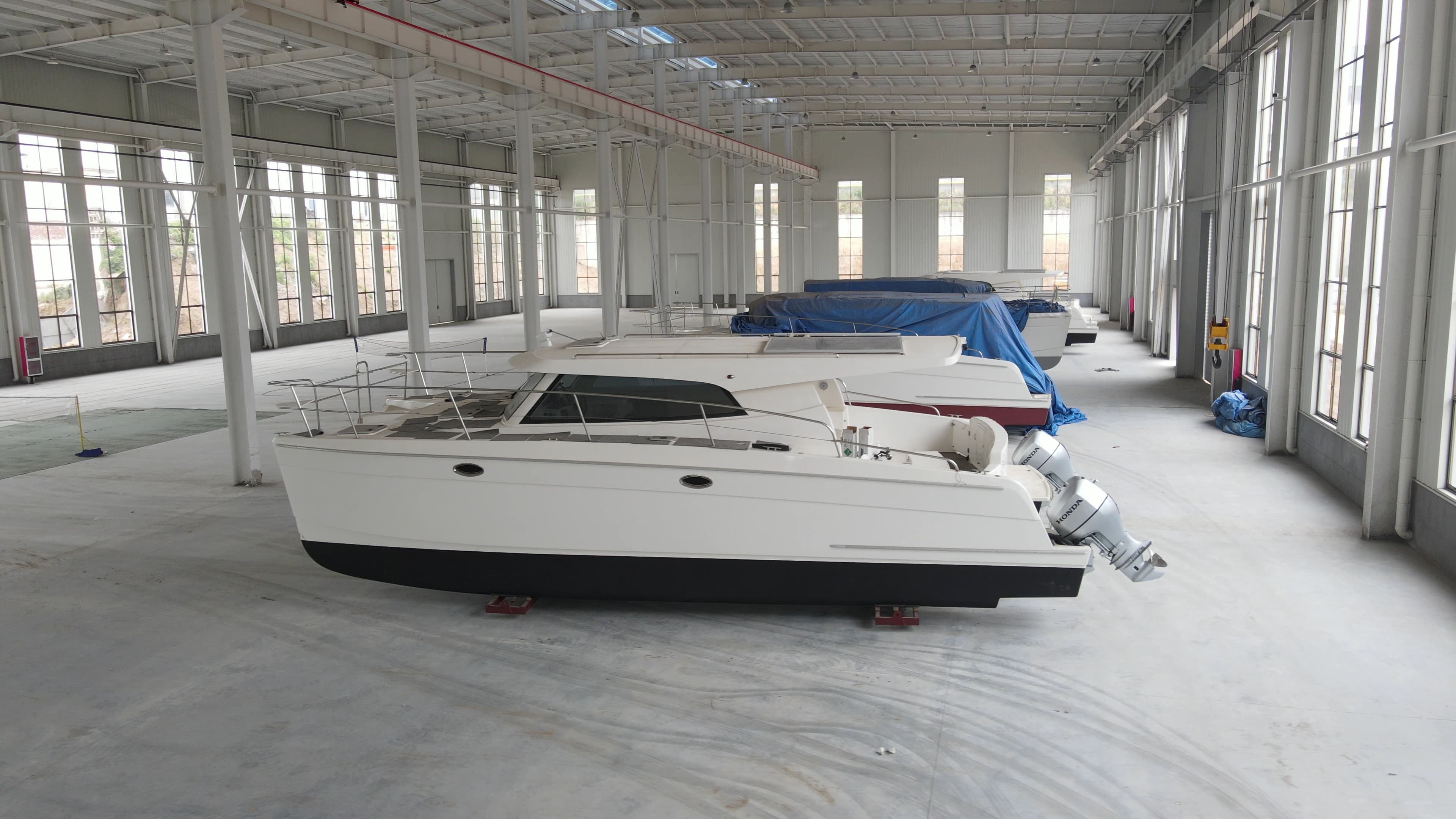
Short answer: The DK-WR is an 11-metre aluminum work boat built by Qingdao Dookyu Crown Marine Co., Ltd. (Dookyu Crown), an aluminum boat manufacturer based in Qingdao, Shandong Province, China. In a patrol and rescue fit-out it runs twin 150HP outboards for a combined 300HP, reaches a 26-knot design speed, carries 400 litres of fuel, and displaces 5.60 tonnes at full load. Its aluminum hull and 0.47 m full-load draught allow it to run at speed in coastal water and still work close inshore, where most interception and rescue tasks actually occur.
Patrol and rescue buyers rarely fail because they chose the wrong brand. They fail because the boat they ordered does not match the duty cycle it was bought for: too slow to cut response time, too deep to reach the casualty, too light on electrical capacity to run the electronics the mission needs, or too expensive to keep in service. This guide is written for that decision. It explains what the DK-WR platform is, what its published figures mean in operational terms, and how to run a five-gate scenario checklist across mission fit, crew comfort, safety gear, navigation electronics, and electrical management before a purchase order is signed.
Every specification quoted below comes from Dookyu Crown's published product data. Where a figure must be confirmed for a specific contract, the article says so explicitly, because a buyer's specification sheet — not a brochure — is what a shipyard builds to.
The Problem: What Patrol and Rescue Duty Does to a Boat
Offshore patrol and coastal rescue are both defined by response time, and response time is a function of hull design rather than crew effort. A vessel that takes too long to reach the scene is not a patrol vessel; it is a presence platform. Five requirements drive the specification:
- Speed to reduce response time. Interception and rescue windows are short. Cruise and sprint performance decide how much of the coast a single unit can realistically cover.
- Shallow draught for nearshore access. Casualties, smugglers and small craft are usually found close to shore, in shallows, or in water too marginal for a deep-hulled vessel.
- Impact tolerance and slow corrosion. Patrol and rescue boats work in repeated contact with docks, debris and sometimes other hulls, in salt water, year-round.
- Payload and deck utility. Recovery equipment, stretchers, boarding gear, and a second or third crew member all consume capacity on a hull this size.
- Electrical headroom. Radar, chartplotter, AIS, VHF radio, searchlight, pumps and navigation lighting all draw from the same battery bank on an 11-metre boat.
Hull material is the variable that decides whether all five can be satisfied at the same time. Steel delivers strength but adds weight, which costs speed and fuel. Fiberglass keeps the purchase price low but is more vulnerable to impact and demands more cosmetic upkeep. Aluminum sits between the two, and that trade-off is why aluminum dominates fast workboat categories.
Industry Background: Why Aluminum Is the Default for Fast Patrol and Rescue Craft
The underlying market is established rather than speculative. Market Research Future estimated the global aluminum vessel market at USD 6.145 billion in 2024, with a projected compound annual growth rate of 4.21% from 2025 to 2035. Intel Market Research valued the global patrol boats market, which includes aluminum variants, at USD 240 million in 2024. These are not niche numbers; they describe a category that government, municipal and private operators already buy in volume.
The material itself explains the preference. A marine-grade aluminum hull is 30 to 45 percent lighter than a steel hull of equal strength. That weight saving converts directly into higher speed and lower fuel consumption, and it also simplifies maintenance: aluminum has natural corrosion resistance, and repairs can be carried out in the field more easily than on a cracked fiberglass hull. Against fiberglass, the trade-off is well documented — aluminum boats cost 10 to 20 percent more up front, but a lighter hull reduces fuel consumption by 15 to 30 percent, and service life of 30 to 50 years is roughly 1.5 to 2 times that of FRP, with higher resale value at the end of it. Three-year maintenance costs for FRP boats run approximately double those of aluminum boats, largely because FRP requires regular polishing and waxing.
Safety culture is the second background force. According to the American Boat & Yacht Council, 90 percent of boats constructed in the United States are built to ABYC safety standards, and adherence to those standards is associated with up to 47 percent fewer accidents and up to 58 percent fewer fatalities. The lesson for buyers outside the United States is not that ABYC is universal, but that standard-driven specification measurably changes outcomes — and that verification, not assumption, is how a specification is turned into a boat.
The Solution: What the DK-WR 11m Work Boat Actually Is
The DK-WR is the 11-metre aluminum platform in the Dookyu Crown workboat range. Dookyu Crown lists coastal rescue, offshore patrol, passenger transport, fishing and marine leisure, and professional workboat operations as applicable duties, which makes the hull a genuine multi-role platform rather than a single-mission craft.
| Parameter | DK-WR published figure |
|---|---|
| Overall length (LOA) | 11.00 m |
| Hull length (L) | 8.81 m |
| Beam (B) | 3.25 m |
| Moulded depth (D) | 0.885 m |
| Full-load draught (d) | 0.47 m |
| Full-load displacement | 5.60 t |
| Design speed | 26 kn |
| Main engine power | 150HP (110kW) x 2 — 300HP combined |
| Fuel oil capacity | 400 L |
| Hull material | Aluminum |
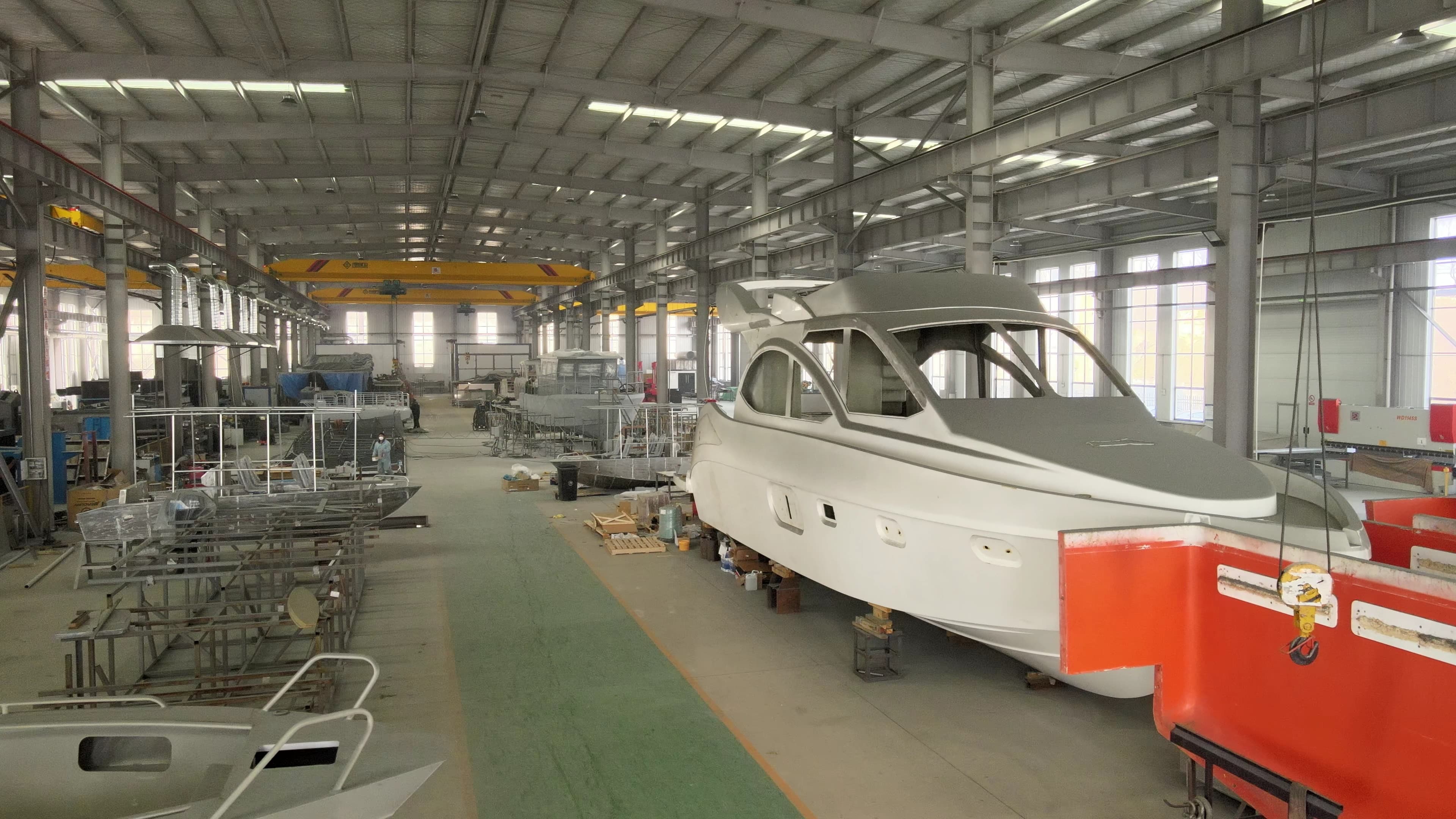
Hull and structure. The platform is built in marine-grade aluminum — Dookyu Crown's material set includes 5083 and 5086 aluminum alloys — using MIG/TIG welding and precision CNC cutting to hold hull and superstructure tolerances to international standards such as CE and ISO 9001. For an operator, the relevant consequence is a structure that does not corrode the way steel does and does not delaminate or crack the way FRP can, which matters on a boat that will spend its life in salt water and make frequent contact with docks and debris.
Propulsion and speed. Twin 150HP outboards producing 300HP combined drive the hull to a 26-knot design speed. Outboard configuration has practical value for patrol and rescue work: the engines sit outside the hull envelope, freeing internal volume for crew and equipment, and the propulsion package can be serviced or replaced without a haul-out rebuild. Dookyu Crown also offers inboard and electric propulsion options across its range, subject to the selected vessel design, so propulsion choice is a specification decision rather than a fixed constraint.
Fuel and endurance planning. The 400-litre fuel capacity is the figure to model endurance against. Actual range depends on load, sea state and throttle setting, so a buyer should build a mission profile — distance to patrol area, hours on station, reserve margin — and confirm the resulting fuel demand rather than assume a single range number applies to every duty pattern.
Displacement, draught and dimensions. At 5.60 tonnes full load, the DK-WR has a defined payload budget. Every item specified on top of the base vessel consumes part of it, which is why equipment lists should be weighed rather than counted. The 0.47 m full-load draught keeps the platform workable in nearshore and shallow coastal approaches, while the 3.25 m beam provides working stability for deck-based tasks. LOA of 11.00 m and hull length of 8.81 m define what berths, hoists, trailers or dry-stack racks can handle the vessel — a check worth running before, not after, purchase.
On plate specification: Where a tender or classification requirement calls for a specific aluminum plate temper — H116 is a common designation in marine aluminum procurement — the temper and the mill certificate should be named in the build contract and confirmed at the specification-freeze stage. Material statements in a brochure describe a builder's standard practice; the contract schedule is what governs the delivered hull.
Step-by-Step Breakdown: The Five-Gate Scenario Checklist
Use the five gates below in sequence. Each gate produces a decision that constrains the next, and all five should be closed before a quotation is finalised.
Gate 1 — Mission Fit
- Define the duty cycle in hours. How many hours per day, how many days per week, and how many months per year will the unit be operational? A rescue asset used intermittently and a patrol asset used daily age differently.
- Match speed to response radius. The 26-knot design speed is the basis for calculating how far the unit can travel, complete a task and return within a required response window.
- Match draught to operating water. A 0.47 m full-load draught supports nearshore and shallow coastal work; if the operating area is deeper harbour water only, that margin becomes reserve rather than necessity.
- Match displacement to payload. Start from 5.60 t full load and subtract the weight of crew, fuel, safety equipment and electronics as specified. If the number is tight, the equipment list is the thing to change.
- Match hull dimensions to shore infrastructure. Confirm the berth, slipway, crane or trailer capacity available at the operating base against an 11.00 m LOA and 3.25 m beam.
- Confirm the role mix. If one hull will switch between patrol and rescue, list both equipment sets and identify what is common and what is role-specific.
Gate 2 — Crew Comfort and Endurance
- Seating and posture. On an 11-metre hull, whether the crew can sit or must stand for a four-hour watch is a layout decision, not a comfort detail. Fix it during design.
- Weather protection. Spray and sun exposure determine how long a watch can stay effective. Windscreen, console enclosure and shade should be specified against the local climate.
- Deck circulation for casualty handling. A stretcher or a recovered person has to move from the recovery point to a secure position without lifting over obstructions.
- Noise and vibration. Engine mounting and insulation choices are cheapest to make at build stage and most expensive to retrofit.
- Dry storage. Personal gear, documents and electronics need a dry, secured location that does not obstruct the working deck.
Gate 3 — Safety Equipment
- Personal flotation and exposure protection sized to the confirmed crew complement, including immersion protection for cold-water operations.
- Recovery equipment: throwable flotation, a rescue sling or board, and a recovery ladder or lifting arrangement suitable for an unconscious casualty.
- Firefighting equipment. If the mission includes fire suppression, that capability is specified as separate equipment. Dookyu Crown's 13 m DK-FR rescue fire boat, for example, is built around a fire pump rated at 1500 gpm — a different platform class from the DK-WR.
- Medical and thermal care kit for hypothermia management, stored where it can be reached without moving equipment.
- Bilge management: pumps and a high-water alarm, with the alarm audible from the helm station.
- Deck safety: non-slip surfaces, grab lines, and guarding where crew will work in a seaway.
- Compliance mapping: confirm the required equipment set against the flag state and operating area before the equipment list is frozen.
Gate 4 — Navigation and Communication Electronics
- Core fit: radar, chartplotter and VHF radio are the standard navigation and communication set for this class of work boat.
- Position reporting: specify whether AIS transmission is required by the operating authority.
- Night operations: searchlight and navigation lighting must be specified together with the electrical load they add.
- Redundancy: a handheld VHF and an independent position source provide fallback if the primary installation fails.
- Installation planning: antenna placement, cable routing and screen positions should be resolved in the CAD design stage, because retrofitting cable runs on a finished aluminum hull is disruptive and costly.
Gate 5 — Electrical Management
- Build a load budget. List every consumer — navigation, communication, lighting, pumps, searchlight — with its current draw and daily hours, then total it.
- Separate start and house batteries so that a heavy electronics day cannot leave the engines unable to start.
- Size charging to the real load. Outboard alternator output should be compared against the load budget rather than assumed sufficient; solar panels are among the electrical system options Dookyu Crown integrates where additional charging capacity is needed.
- Provide monitoring and isolation. Battery monitoring, isolation switches and proper circuit protection make electrical faults diagnosable at sea instead of ashore.
- Manage corrosion risk. Aluminum hulls require correct bonding and attention to stray current from electrical installations; this is a design-stage discipline, not a maintenance task.
- Document the system. A wiring diagram delivered with the vessel is what allows a shore technician to service the boat years later.
Use Cases: Where the DK-WR Fits
Offshore Patrol
A 26-knot design speed, a 300HP twin-outboard package and an 11-metre aluminum hull suit coastal and nearshore patrol tasks where presence must be converted into interception capability. The platform's shallow draught extends patrol coverage into water that deeper-hulled vessels avoid, and the aluminum structure keeps the boat serviceable under daily use in salt water. Dookyu Crown's portfolio also includes dedicated patrol and pilot workboats for operators whose requirement is narrower and more specialised.
Coastal Rescue
Rescue work rewards deck utility and reachability. On the DK-WR, the beam supports working stability for casualty recovery, the draught allows approach into shallow coastal water, and the 26-knot design speed shortens the transit between station and scene. Crew comfort, safety equipment and electrical capacity — the three gates above — determine how effectively the boat converts those numbers into a successful recovery.
Adjacent Duties
Because Dookyu Crown lists passenger transport, fishing and marine leisure, and professional workboat operations alongside patrol and rescue for the same platform, the DK-WR can also serve harbour utility, crew transfer and support roles. Operators with a mixed duty profile should treat this as a layout question: the hull is common, and the internal arrangement and equipment set are what define the mission.
Comparison: Matching the Right Dookyu Crown Aluminum Platform to the Duty
The DK-WR is one option within a wider range. The table below compares published figures across Dookyu Crown platforms so that a buyer can see where the 11-metre work boat sits between smaller and larger vessels.
| Model | Type / duty | LOA | Beam | Hull material | Propulsion | Speed | Fuel |
|---|---|---|---|---|---|---|---|
| DK-WR | Aluminum work boat — coastal rescue, offshore patrol, workboat operations | 11.00 m | 3.25 m | Aluminum | 2 x 150HP (110kW) | 26 kn design | 400 L |
| DK-FR | Rescue fire boat — offshore firefighting and rescue | 13.25 m | 3.6 m | Aluminum alloy | 2 x 200HP Mercury | Not published | 500 L |
| DK-FS | Aluminum fishing boat | 6.25 m | 2.25 m | Aluminum alloy | 150HP Yamaha | 30 kn max | 400 L |
| DK-PS | Passenger catamaran — calm water transport | 19 m | Not published | Steel | Twin diesel | Not published | Not published |
| DK-LU55 | Aluminum luxury yacht | 17.18 m | 4.20 m | Aluminum | 3 x 600HP | 53 kn top | 1,820 L |
Read the table by duty, not by size. A firefighting requirement points toward the DK-FR and its 1500 gpm fire pump. A long-range inshore patrol or rescue requirement points toward the DK-WR. A fishing or leisure requirement points toward the DK-FS. Larger hulls in the range — the DK-PS passenger catamaran and DK-LU55 yacht — serve transport and leisure duties with different propulsion and capacity profiles.
Hull Material Comparison: Aluminum, Steel and Fiberglass
| Comparison point | Marine-grade aluminum | Steel | Fiberglass (FRP) |
|---|---|---|---|
| Weight | 30–45% lighter than a steel hull of equal strength | Heavier for comparable strength | Not published |
| Initial cost | Higher initial material cost than steel; 10–20% higher initial cost than FRP | Not published | Lower upfront cost |
| Fuel consumption | Lighter hull reduces fuel consumption by 15–30% versus FRP | Not published | Reference baseline |
| Service life | 30–50 years, 1.5–2 times that of FRP; higher resale value | Not published | Shorter service life than aluminum |
| Maintenance | Minimal maintenance; easier field repair; natural corrosion resistance | Lower full-life-cycle maintenance cost relative to initial material cost | Regular polishing and waxing; three-year maintenance costs roughly double those of aluminum boats; can crack under impact |
| Best fit | Fast workboats, patrol, rescue, passenger ferries, routes needing high fuel efficiency | Not published | Lower-budget, lower-impact duty |
For patrol and rescue procurement specifically, the deciding factor is usually impact tolerance combined with life-cycle cost rather than purchase price. Aluminum carries a higher entry cost than fiberglass, but the fuel saving and the reduced maintenance burden change the total cost picture over a service life measured in decades.
Who Builds the DK-WR
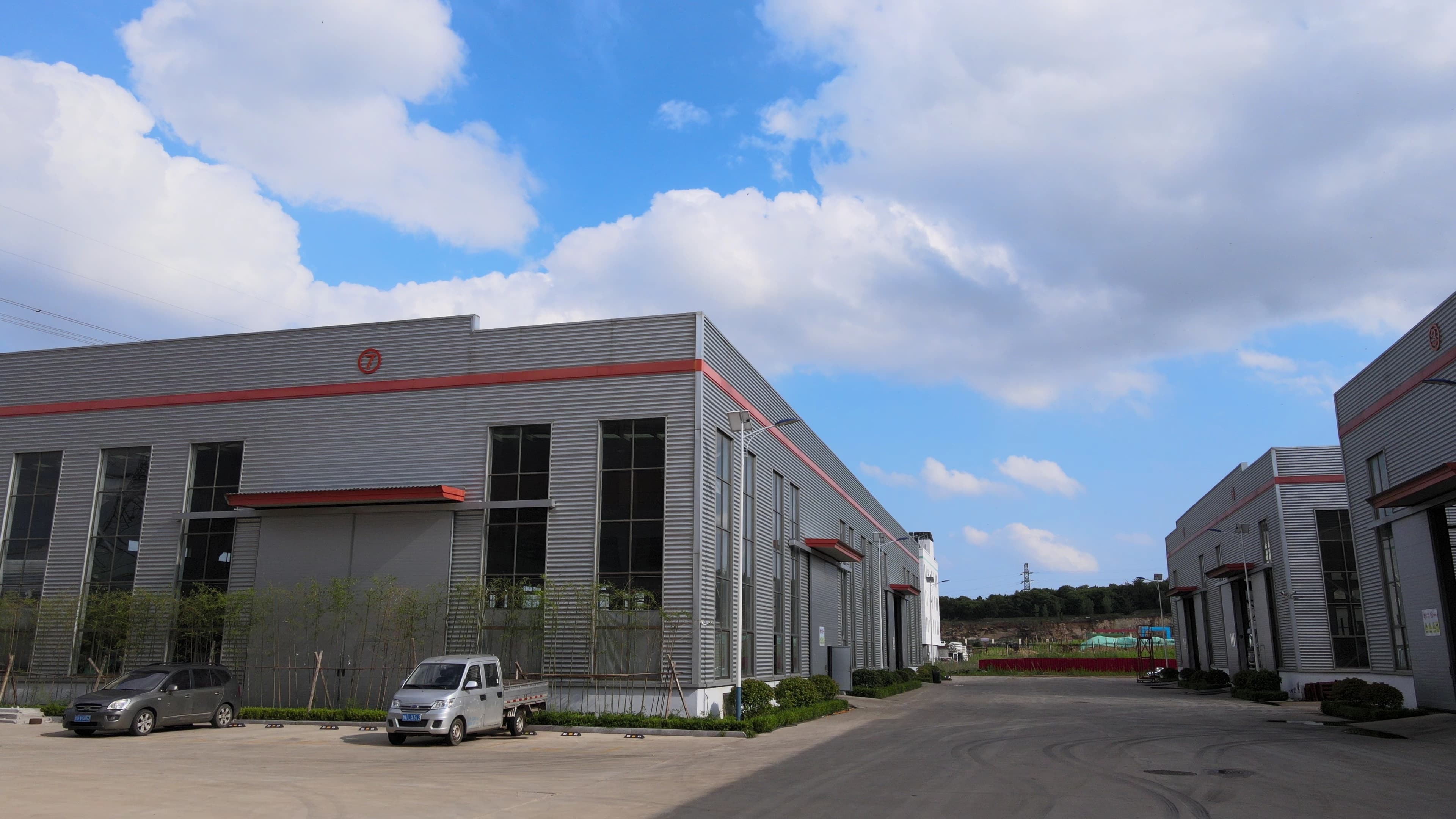
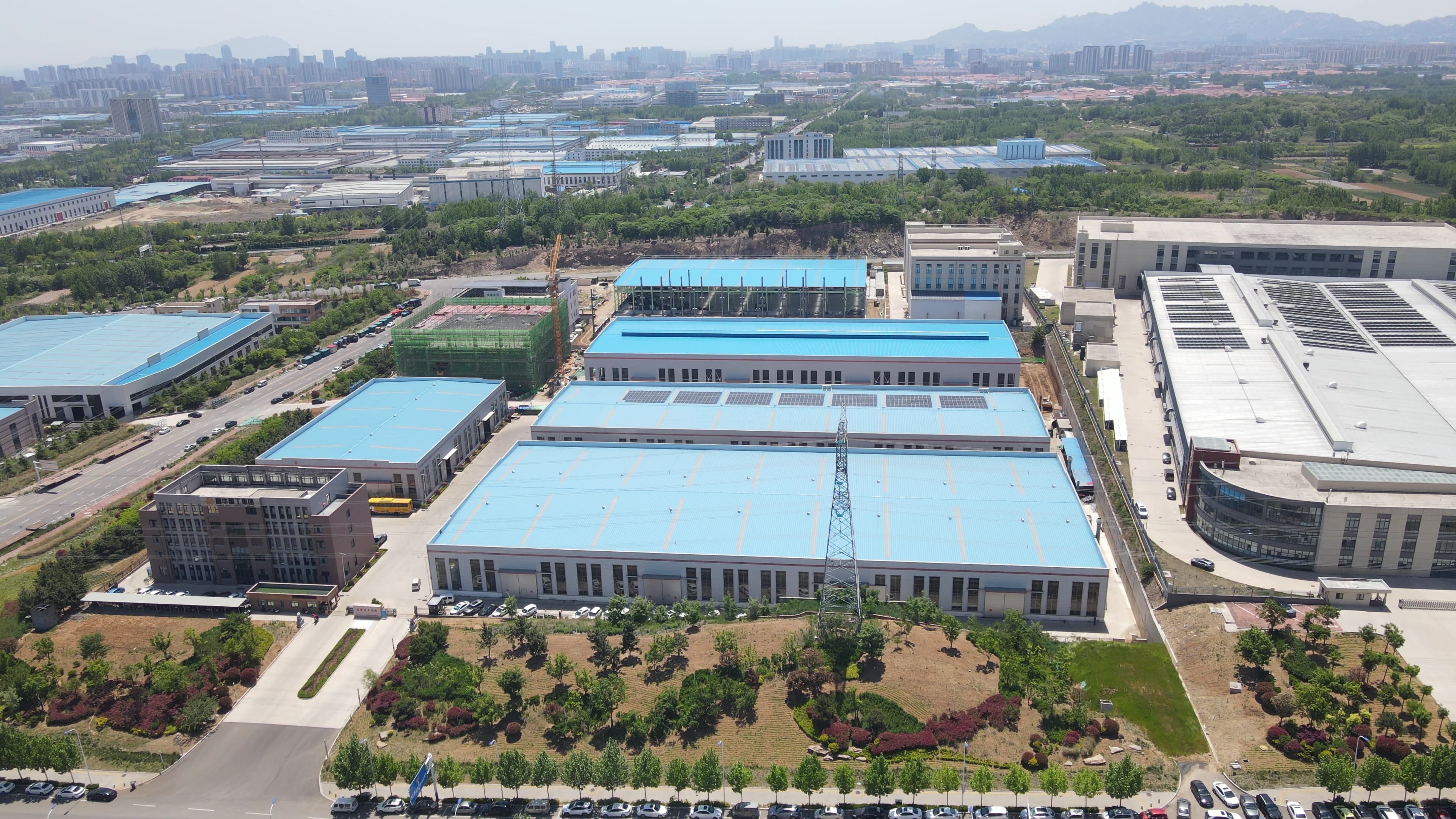
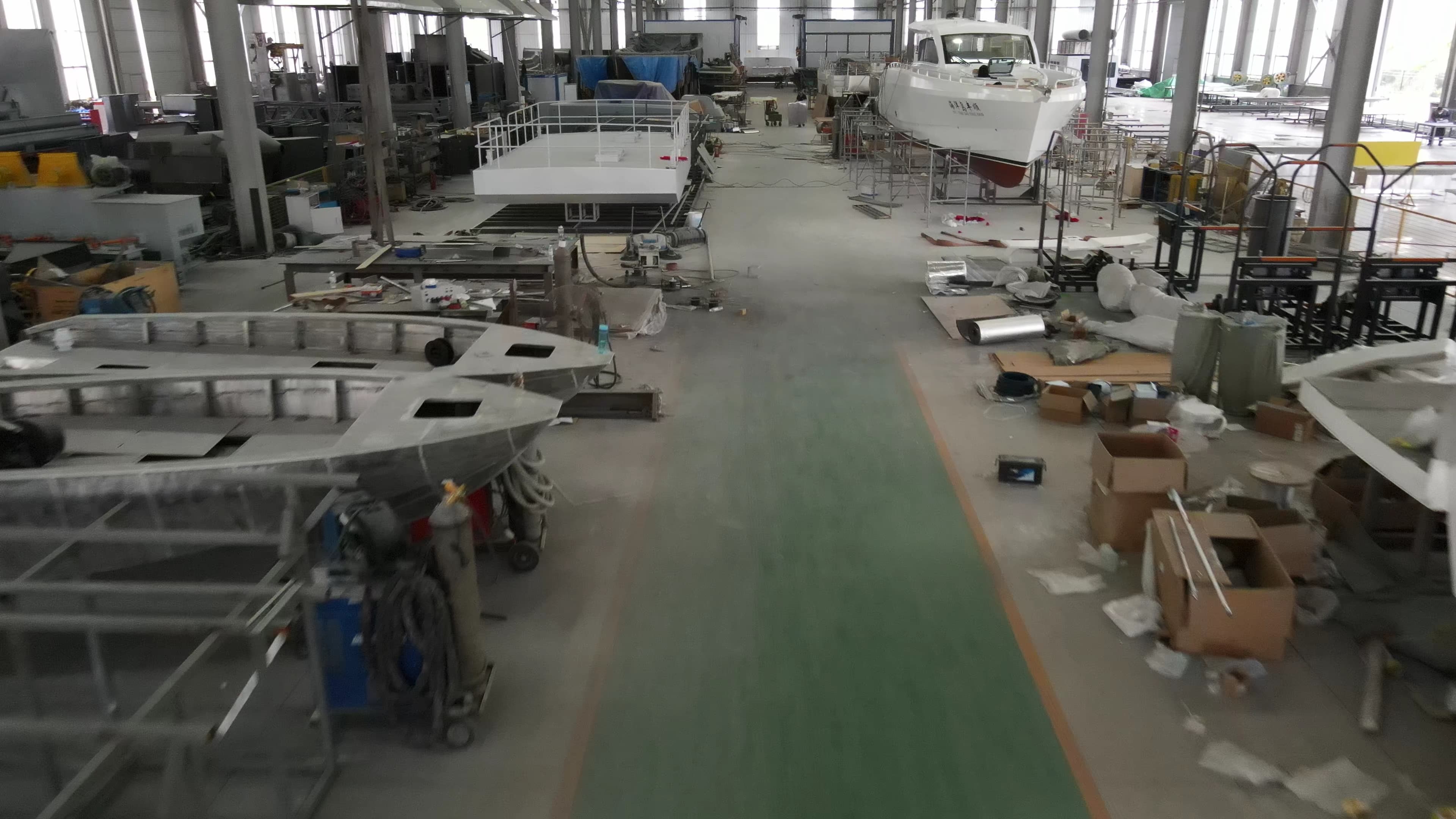
Qingdao Dookyu Crown Marine Co., Ltd. is an aluminum boat manufacturer founded in 2020 and located in Qingdao, Shandong Province, China, a coastal city with deep-water port access and an established shipbuilding supply base. The company operates a 70,000 m² facility with 85 employees, including a 17-engineer R&D team, and reports an annual output capacity of 200 vessels with approximately 80 percent of production exported. Its customer base is described as spanning Europe, Australia, the Americas, Southeast Asia and the Middle East.
The production philosophy is customization-led rather than catalogue-led. Dookyu Crown offers personalized customization covering boat design, materials and green technology integration, with publicly stated options that include hull size from 6 to 23 metres, colour, functional layout and power system configuration. Design work is handled by in-house naval architects who translate a client requirement into CAD models before production, and the company integrates propulsion, navigation, comfort and specialised equipment as a single package. After delivery, stated support covers maintenance manuals, spare parts supply, remote diagnostics and on-site service.
Frequently Asked Questions
1. What certification and compliance evidence should a buyer verify before ordering a DK-WR 11m work boat?
Dookyu Crown states that it builds to international standards such as ISO and CE, and that it uses MIG/TIG welding and precision CNC cutting to hold hull and superstructure tolerances. That statement describes a builder's standard practice; it is not proof for a specific hull. Before ordering, request the applicable certificate together with its scope, certificate number and validity period, and confirm exactly which items on your vessel the certificate covers. Municipal, government and fleet buyers should additionally map the required standard set for their flag state and operating area into the build contract. The American Boat & Yacht Council reports that 90 percent of boats constructed in the United States are built to ABYC safety standards and that adherence to those standards is associated with up to 47 percent fewer accidents and up to 58 percent fewer fatalities — a reminder that compliance only delivers its benefit when it is specified and verified rather than assumed.
2. Can the DK-WR serve both offshore patrol and coastal rescue missions, or does each role need a different boat?
The DK-WR is listed by Dookyu Crown as applicable to coastal rescue, offshore patrol, passenger transport, fishing and marine leisure, and professional workboat operations, so it is intended as a multi-role platform. Role change is handled through layout and equipment selection rather than through a different hull. Dookyu Crown's customization scope covers hull size from 6 to 23 metres, colour, functional layout and power system configuration, and propulsion options include outboard, inboard and electric subject to the selected design. In practice, the difference between a patrol fit-out and a rescue fit-out on the same hull sits in navigation electronics, safety equipment, seating configuration and electrical management — the same five gates described above.
3. What are the commercial terms for a DK-WR order?
Dookyu Crown's stated purchasing terms are a minimum order quantity of 1 ship, delivery terms of FOB, CIF or EXW, payment terms of 30/30/40, and acceptance criteria based on certified delivery coordination. Because the minimum order quantity is a single vessel, a first-time buyer can place one hull and evaluate the delivered boat against the contract before committing to a multi-vessel fleet programme. Buyers should confirm which cost elements are included inside the chosen delivery term before comparing quotations from different builders.
4. How can a buyer validate the design before production starts?
Validation happens at the design stage, before metal is cut. Dookyu Crown's process begins with consultative design, in which in-house naval architects work with the client to convert an operational requirement into detailed CAD models with optimised hydrodynamics and layout. That is the point at which deck arrangement, equipment positions, cable routing and the electrical load budget can be reviewed and changed cheaply. Because the stated acceptance criteria are based on certified delivery coordination, buyers should also define inspection milestones and the documentation package — drawings, test records, manuals — inside the contract rather than relying on default practice.
5. How should municipal fleets structure long-term supply for aluminum patrol and rescue vessels?
Municipal and government fleets buy hulls that will stay in service for decades, so the supply relationship has to outlast the first order. Dookyu Crown, founded in 2020 and based in Qingdao, states that it provides lifetime support covering maintenance manuals, spare parts supply, remote diagnostics and on-site service support, and it reports export support that includes export packaging, international logistics and customs clearance support. For a fleet, the practical test is whether a builder can repeat a configuration across multiple hulls, keep spare parts available over the service life, and document each vessel consistently. Fleets that operate both patrol and firefighting assets should also confirm whether a single supplier can cover both — for example, the 11 m DK-WR work boat alongside the 13 m DK-FR rescue fire boat and its 1500 gpm fire pump — so that training, spares and documentation stay common across the fleet.
Conclusion: Match the Boat to the Mission, Then Match the Builder
The DK-WR 11m aluminum work boat answers a specific brief: fast coastal response with the ability to work close inshore. Twin 150HP outboards producing 300HP, a 26-knot design speed, 400 litres of fuel, 5.60 tonnes full-load displacement and a 0.47 m full-load draught describe a platform whose value depends entirely on whether those numbers match your duty cycle. Run the five gates — mission fit, crew comfort, safety gear, navigation electronics and electrical management — in sequence, and the specification writes itself.
The decisions that matter at execution stage are the unglamorous ones: freezing the plate and material specification in writing, building an electrical load budget rather than an equipment wish list, weighing the payload against 5.60 tonnes, confirming certification scope for the specific hull, and agreeing inspection milestones and a documentation package. Builders that welcome those questions are easier to work with over a twenty-year fleet relationship than builders that avoid them.
Next Step: Confirm Mission Fit for the DK-WR 11m Work Boat
Send the operating profile — patrol area, response radius, crew size, required equipment and shore infrastructure — and the Dookyu Crown team will review it against the DK-WR platform and respond with a specification outline and quotation. Minimum order quantity is 1 ship; delivery terms are FOB, CIF or EXW.
Download the full product brochure and specifications: Dookyu Crown Marine brochure (PDF)
Website: www.dstaryacht.com | Email: info@dstaryacht.com | WhatsApp: +86 133 3503 3072
Qingdao Dookyu Crown Marine Co., Ltd. — South Road, 750m West Of Yinzhu Exit Of Shugang Expressway, Qingdao, Shandong, China. Contact: Bruce Liu.
Have Questions or Need More Details?
Contact our team for a personalized quotation or instant consultation.
Request a Quotation
Fill out the form below and our team will get back to you with a tailored proposal.
WhatsApp Direct Chat
Prefer to chat in real-time? Message us on WhatsApp for instant assistance & quick answers.
- Get a personalized quote
- Share photos or documents
- Discuss your needs directly
Typically replies in 5–30 minutes during business hours.