Aluminum Boat Application Guide: Dookyu Crown Model Match
An aluminum boat is the right answer only when the platform matches the work it will actually do. In the Dookyu Crown range, six documented vessels cover six different operating briefs: a 6.25 m aluminum fishing boat for coastal, lake and river angling; an 11 m aluminum work boat for patrol, rescue and transport; a 13 m aluminum fire boat with a 1500 GPM pump for offshore firefighting and rescue; a 19 m steel catamaran for calm-water passenger transport carrying 50 passengers; a 17 m aluminum luxury yacht built for high-speed operation; and a 38-foot aluminum catamaran sailboat designed around stability and comfort.
This guide runs the selection in the direction real procurement runs: from the mission brief back to the platform. Specifications appear here because they close a decision, not because they open one.
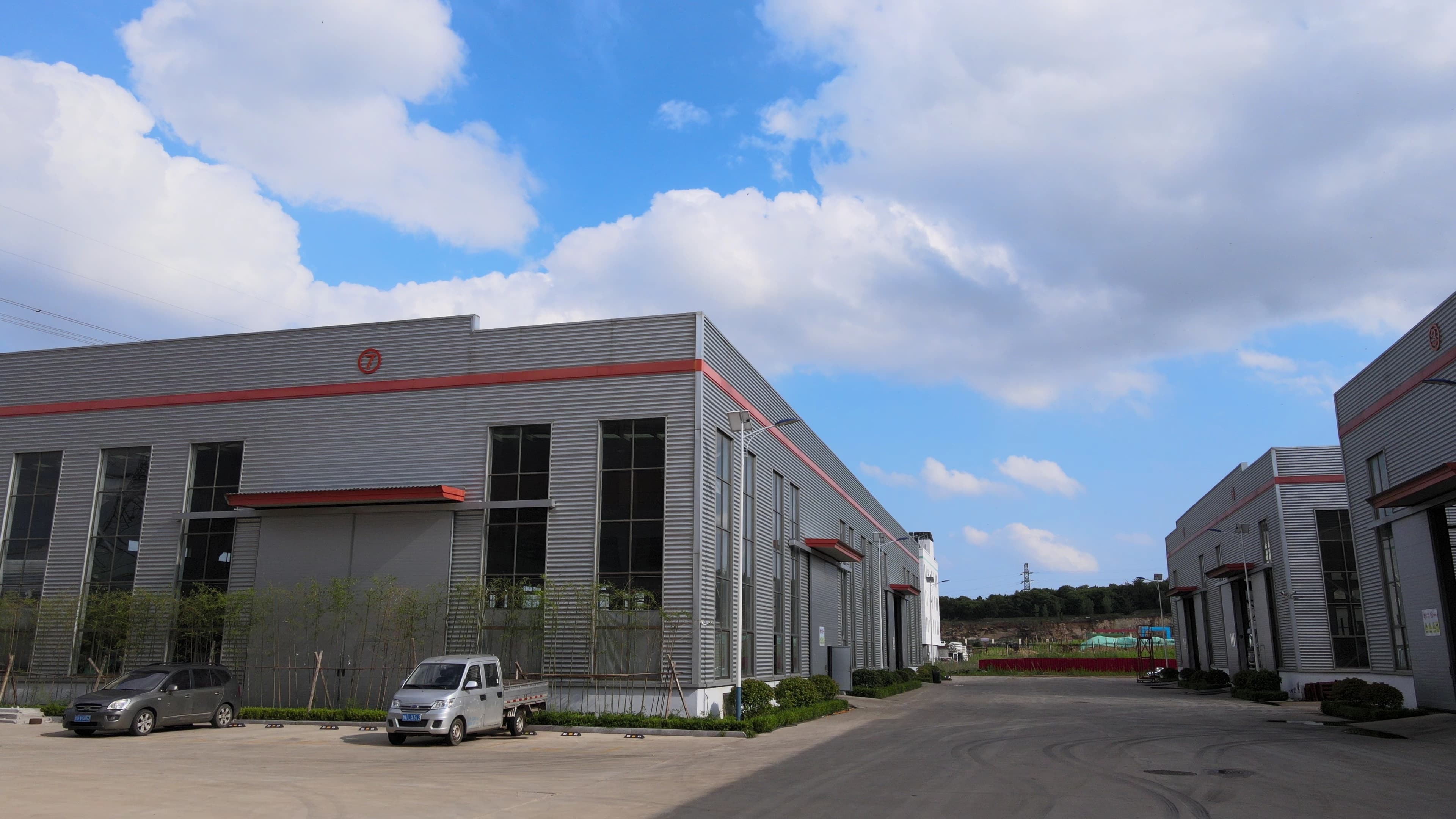
Qingdao Dookyu Crown Marine Co., Ltd. (dstaryacht.com) is a vessel builder based in the coastal city of Qingdao, Shandong Province, established in 2020. The company specializes in the design, research and development, production, sales and after-sales service of high-performance aluminum alloy yachts and vessels, and its portfolio includes fishing boats, workboats, catamarans, passenger ferries and custom craft. Its manufacturing facility covers 70,000 m² with an annual production capacity of 200 ships, and its R&D team consists of 17 engineers within a workforce of approximately 85 staff. Export business accounts for 80% of total sales, with major markets including Australia, the USA, Canada, Hong Kong, Mexico, Nigeria, New Zealand, Russia and Thailand.
Why mission-first selection beats spec-first selection
Most aluminum boat purchases start with a number — a length, a horsepower figure or a budget ceiling — and work forward from there. That order fails at the deck. Two vessels can share an overall length and still be unsuitable for each other's job: one is laid out with a livewell, recessed rod holders and dedicated fishing seating; the other carries a 1500 GPM fire pump and a rescue deck. Choosing on length alone produces a boat that is the correct size and the wrong platform.
A workable sequence runs in five steps: define the water and the exposure; fix the payload in people and equipment; set the duty cycle and the speed the route requires; list the mission equipment that must be on board; then confirm hull material, length and propulsion. Each step removes candidates. The platform is the output of the sequence, not the starting point.
The failure mode is easy to state in conditional terms. An operator who must deliver firefighting water to a vessel fire offshore and an operator who must move 50 passengers across a sheltered harbour could both describe their requirement as a workboat. No single hull serves both: the firefighting requirement anchors to pump output, while the passenger requirement anchors to seating capacity and calm-water stability. Starting from either specification in isolation hides the difference until after delivery.
Industry context: a deep market does not choose the boat
Market Research Future estimated the global aluminum vessel market at USD 6.145 billion in 2024 and projects a compound annual growth rate of 4.21% from 2025 to 2035. Within that total, Global Market Insights valued the aluminum fishing boat segment at USD 1.7 billion in 2024; a second industry estimate places the same segment at USD 1.6 billion for the same year, so these published figures are best read as estimates inside a range rather than as a single measured value. Intel Market Research valued the global patrol boat market, including aluminum variants, at USD 240 million in 2024, and North America held the largest share of aluminum fishing boat demand that year.
That context explains why so many configurations exist. It does not tell an operator which hull to order. What changes a decision is the documented configuration of a specific platform and the operating envelope it was designed around.
Material is the first place where a range can mislead. Qingdao Dookyu Crown Marine's stated core expertise is converting premium marine-grade aluminum alloys — 5083 and 5086 among them — into lightweight, corrosion-resistant hulls. That is a company-level capability statement, not a per-model guarantee. Within the six platforms discussed here, the DK-WR 11 m work boat is documented as constructed from 5083-H116 aluminum alloy, while the DK-PS 19 m passenger catamaran is documented with a steel hull. The range is therefore not single-material. Buyers should request the alloy specification of the exact hull they are ordering instead of assuming it carries across the series.
Five questions that turn a mission brief into a shortlist
1. Where will the boat actually operate?
Water body decides more than any other input, because it sets the exposure the platform must tolerate: inland rivers, lakes and reservoirs; coastal and nearshore water; offshore conditions; or a sheltered harbour route. The supplied specifications already bracket these cases. The DK-FS is designed for coastal, lake and river fishing. The DK-PS is designed for calm-water passenger transport. The DK-FR is intended for offshore firefighting and rescue missions. Those are design intents, not claims that any hull can be pushed into any sea state.
Draft belongs to this step as well. The DK-FS is documented with a designed draft of 0.35 m, the DK-WR with a full-load draught of 0.47 m, the DK-LU55 with a designed draft of 0.64 m, and the DK-PS with a draft of 3.3 feet. Compare those against the shallowest point of the intended route — launching ramp, river bar, harbour sill or pier — before comparing anything else.
2. Who and what must the boat carry?
Payload is the second filter, and it is usually decided by the client rather than by the yard. The DK-FS carries a complement of 6 persons. The DK-LU55 is specified for 12 passengers. The DK-PS is specified for 50 passengers. The DK-WR's documented life-saving fit scales with the people on board: 6 life jackets and 2 life buoys, equipped 1:1 according to the number of passengers. Where the supplied specification does not state a passenger figure — as with the DK-FR and the DK-CA — that number has to come from the mission brief and be confirmed at configuration stage.
3. What duty cycle and speed does the route demand?
Speed is a duty-cycle variable, not a ranking. Documented figures differ sharply across the range: 30 knots maximum for the DK-FS, 26 knots design speed for the DK-WR, 25 knots cruising speed for the DK-PS, and 53 knots top speed for the DK-LU55, which is powered by three 600HP engines. No speed figure is stated in the supplied specification for the DK-FR or the DK-CA.
A scheduled ferry run is judged on cruising speed and fuel burn at cruise — the DK-PS is documented at 70 litres per hour total at cruise with twin diesel engines and fixed-pitch propellers. A patrol route is judged on whether the boat can hold its station in the conditions it meets. A luxury platform is judged on something else again, where 53 knots is a capability rather than an operating requirement.
4. Which mission equipment must be on board?
Equipment eliminates candidates faster than dimensions. The clearest example in this range is firefighting: the DK-FR is documented with a fire pump flow rate of 1500 gallons per minute, on a 13.25 m aluminum alloy hull powered by twin 200HP Mercury outboards. No other platform in the range carries a documented pump figure, so an operator whose requirement includes pump output is not choosing between six boats — the requirement has already reduced the field.
Fishing equipment works the same way in reverse. The DK-FS is documented with a functional livewell, recessed rod holders and dedicated seating. Those features do not transfer into a passenger ferry specification, and a ferry's seating capacity does not transfer back.
5. Which hull material, propulsion and certification does the duty allow?
Propulsion in this range is documented per model: a single 150HP YAMAHA outboard on the DK-FS, twin 150HP (110 kW) engines totalling 300HP on the DK-WR, twin 200HP Mercury outboards on the DK-FR, twin diesel engines with fixed-pitch propellers on the DK-PS, and three 600HP engines on the DK-LU55. The DK-CA is documented with customizable rigging and sail plans plus optional auxiliary power, which makes propulsion a configuration decision rather than a fixed specification.
On certification, the company states that it follows international standards such as ISO and CE. That is a starting point, not a conclusion: buyers should verify the applicable certificate, its scope, certificate number and validity for the specific vessel before ordering. For reference on why that verification step carries weight, the American Boat & Yacht Council (ABYC) reports that 90% of boats constructed in the US are built to ABYC safety standards, and that adherence to those standards is associated with up to a 47% reduction in accident likelihood and up to a 58% reduction in fatalities. Those figures describe the US market and its standard, not any individual vessel; they are cited to show what a verifiable standard does, not to certify a specific hull.
The six platforms, matched to real project scenarios
Each profile below takes the mission type first and the specification second. Figures are as documented in the supplied product data; where a value is not documented, it is marked as such rather than estimated.
6.25 m DK-FS — coastal, lake and river fishing
Documented specification: 6.25 m (21 feet) overall length, 2.25 m breadth, 1.1 m depth moulded, 0.35 m designed draft, hull and superstructure of 1.28 tons of aluminum, 400 L fuel capacity, 150HP YAMAHA engine, 30 knots maximum speed, complement of 6 persons.
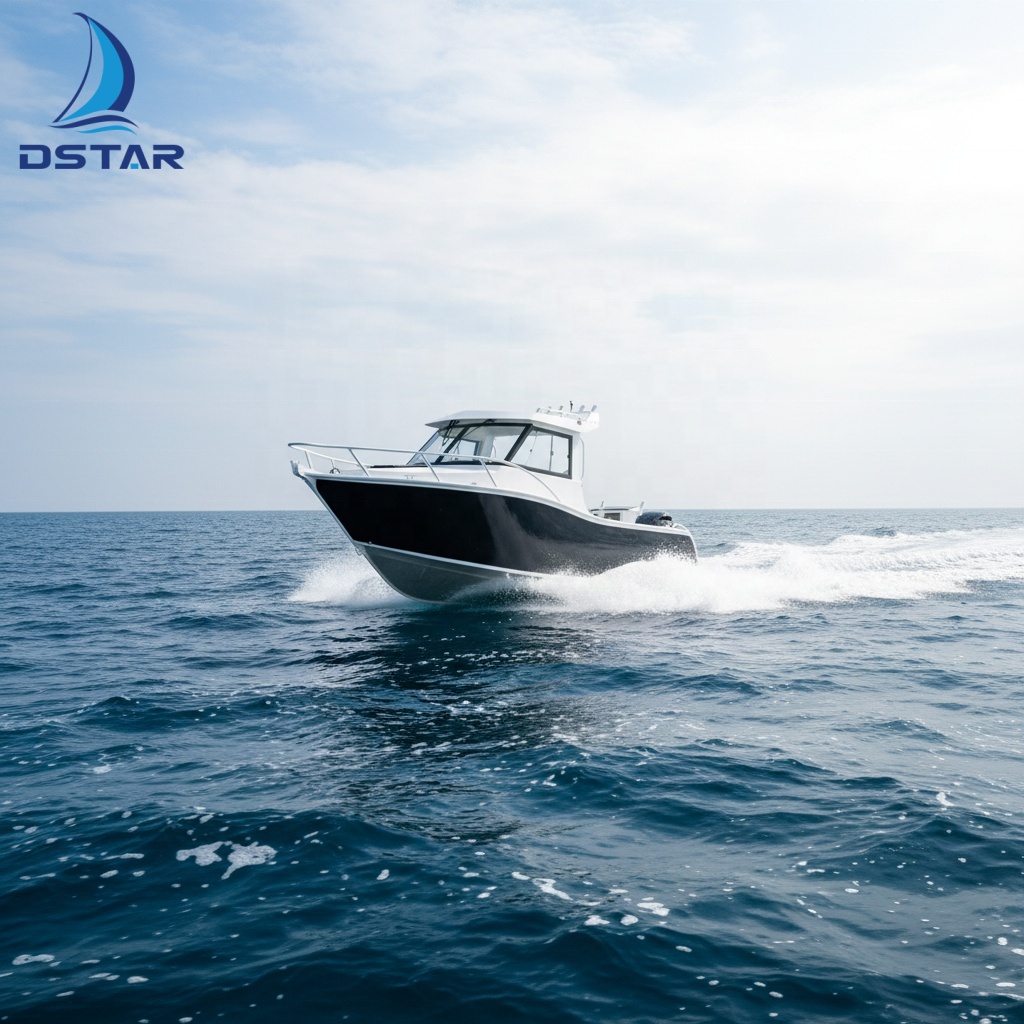
Scenario fit: coastal, lake and river fishing. Three details drive the match. The 0.35 m designed draft suits shallow water and river work. A 1.28-ton aluminum hull and superstructure keeps the platform light relative to its volume — a general reason aluminum fishing boats are commonly preferred over fiberglass for freshwater fishing on weight and cost grounds, as Stratview Research reports. And the deck is purpose-built for angling, with a spacious layout, dedicated seating, recessed rod holders and a functional livewell, rather than adapted from a commercial deck.
Boundary: the DK-FS is a six-person fishing platform with 400 L of fuel. It is not a passenger ferry, a rescue boat or a firefighting vessel, and no equipment list in the supplied material suggests otherwise. One industry estimate expects deep-V hulls to hold a 32.6% share of the aluminum fishing boat market; that is a market-level pattern and does not by itself determine which hull shape a specific river or coastal fishery needs.
11 m DK-WR — aluminum work boat for patrol, rescue and transport
Documented specification: 11.00 m overall length, 8.81 m waterline length, 3.25 m beam, 0.885 m depth, 0.47 m full-load draught, 5.60 t full-load displacement, 26 knots design speed, two 150HP (110 kW) engines, 400 L fuel, hull and superstructure in 5083-H116 aluminum alloy.
Documented applications in the supplied material: offshore patrol, coastal rescue, passenger transport, fishing and marine leisure, and professional workboat operations. This is the broadest mission envelope in the range, and the reason sits in the equipment schedule rather than in the dimensions.
Navigation and communication: GPS, magnetic compass, VHF and AIS for real-time positioning and collision-avoidance warning. Emergency configuration: dual fuel quick-close valves, an automatic bilge pump and a portable fire extinguisher (CO₂ and dry powder). Life-saving: 6 life jackets and 2 life buoys, fitted 1:1 to the number of passengers. Control and electrical: a cabin-mounted remote-control searchlight, tachometer and oil-level gauge, plus a DC distribution board, battery charger and shore-power socket. Comfort: EVA imitation teak flooring and a soft seat sofa for long transits.
Scenario fit: a patrol route that mixes open coastal legs with inshore work; a rescue tasking where the boat must reach a casualty and recover; a personnel transport run where AIS reporting and VHF contact are part of the job. Note the alloy designation: 5083-H116 is stated for this hull specifically.
Boundary: the DK-WR is documented as a work boat. Its firefighting capability is not documented, and the 1500 GPM pump in this range belongs to the DK-FR. An operator who needs pump output should not treat the work boat label as a substitute.
13 m DK-FR — offshore firefighting and rescue with a 1500 GPM pump
Documented specification: 13.25 m overall length, 3.6 m overall width, aluminum alloy hull, twin 200HP Mercury outboards, fire pump flow rate of 1500 gallons per minute, 500 L fuel tank. The model belongs to the Dookyu Crown 13m Rescue Fire Boat Series.
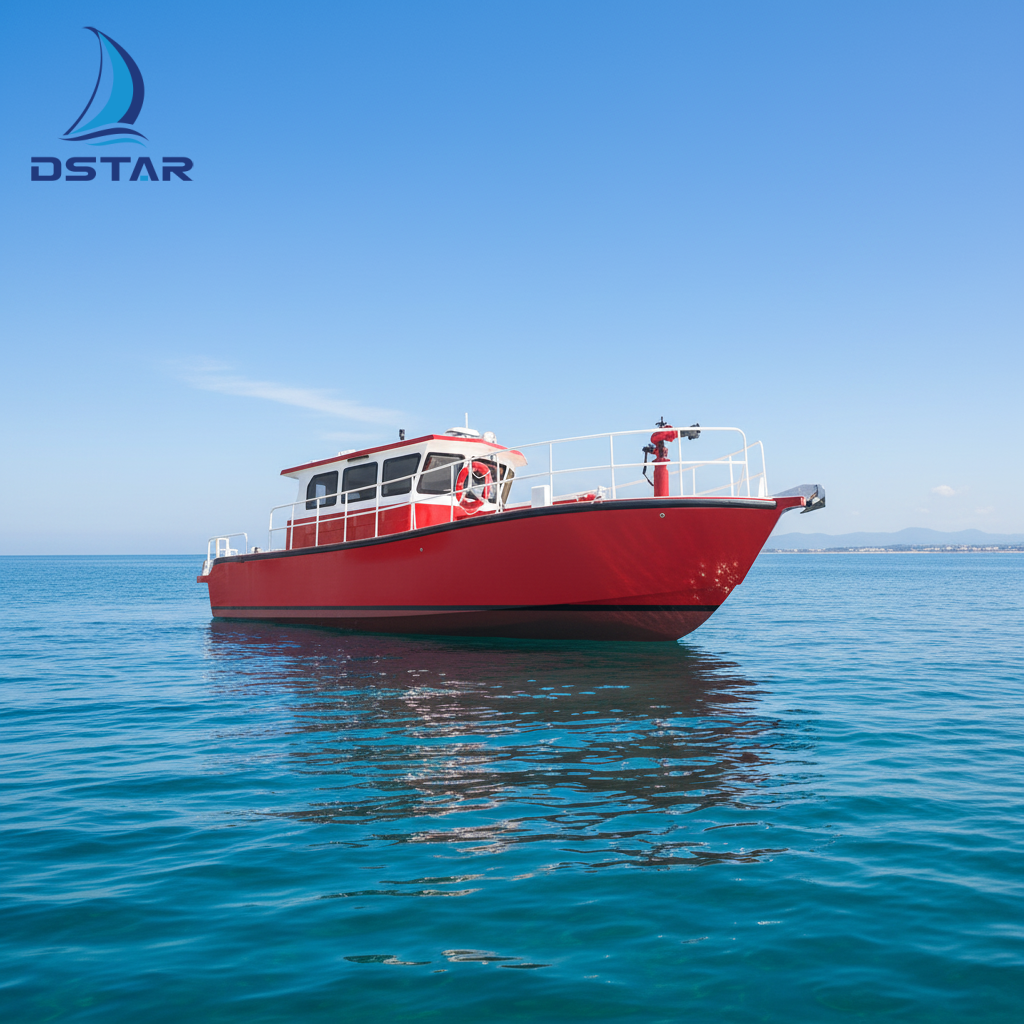
Scenario fit: offshore firefighting and rescue. The pump figure is the anchor. An operator writing a specification should start from the required flow rate and then check the platform around it, rather than choosing a hull and adding pumping capacity later. The twin outboard configuration and the 13.25 m length together set the working deck and the transit profile.
Boundary: two figures are not stated in the supplied material — the vessel's speed and its crew or passenger capacity. Both should be confirmed in the technical proposal rather than inferred from comparable vessels. The 500 L fuel capacity is the documented fuel figure and should be checked against the intended patrol duration.
19 m DK-PS — calm-water passenger transport for 50 passengers
Documented specification: steel catamaran passenger ship from the Dookyu Crown 19m Passenger Catamaran Series, 50-passenger capacity, 25 knots cruising speed, total fuel consumption of 70 litres per hour at cruise, draft of 3.3 feet, twin diesel engines with fixed-pitch propellers in a double-engine, double-paddle, double-rudder configuration.
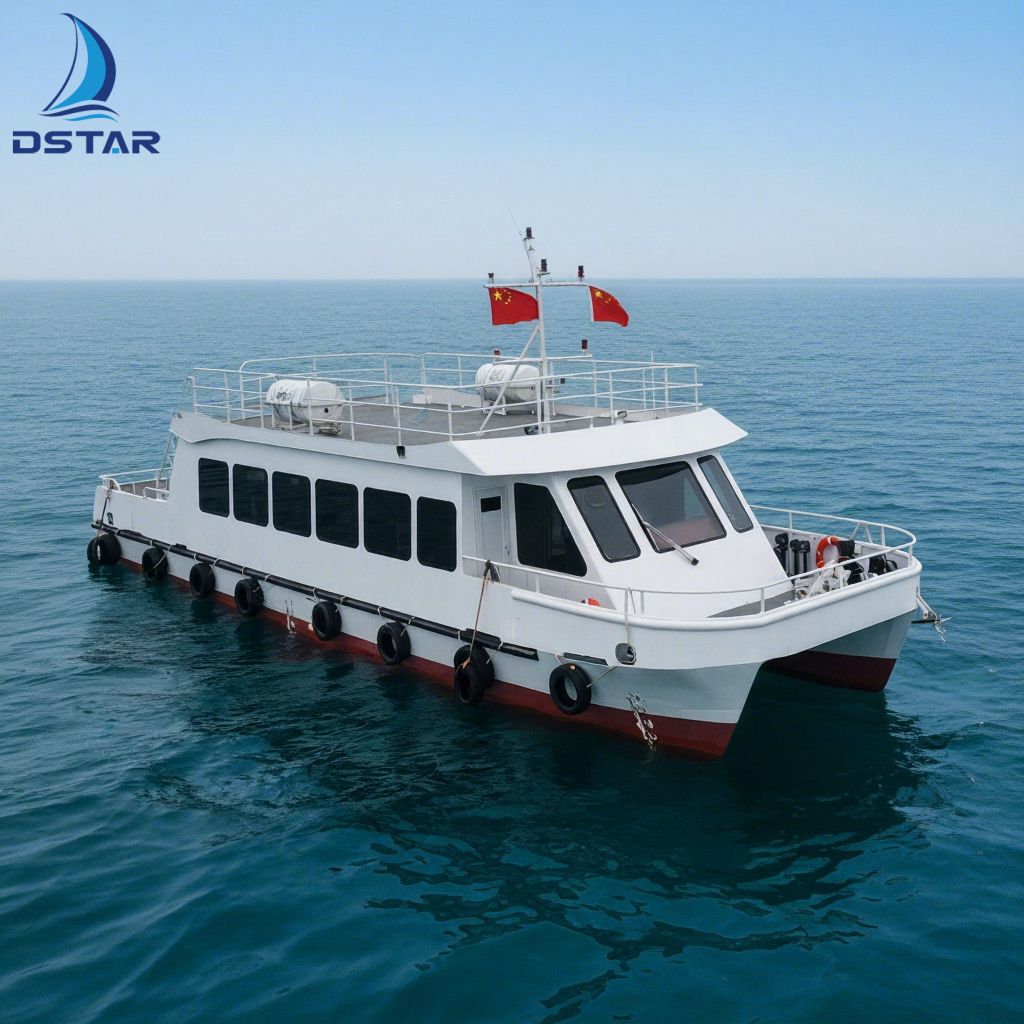
Scenario fit: calm-water passenger transport. Three numbers make the case. Fifty passengers sets the payload; 25 knots sets the schedule; and 70 litres per hour at cruise sets the fuel line of a route model. With those three figures an operator can test whether a given crossing frequency is workable before layout is even discussed. The 3.3-foot draft is the figure to check against berth and pier depths along the route.
Boundary: the hull is steel, not aluminum. Coating, inspection and maintenance routines should be planned for steel from the outset and written into the operating schedule. The platform is also documented for calm-water service, so it is not the offshore fire and rescue asset in this range.
17 m DK-LU55 — high-speed luxury operation
Documented specification: 17.18 m length overall, 4.20 m moulded breadth, 2.00 m depth moulded, 0.64 m designed draft, 12 passengers, three 600HP engines, 53 knots top speed, 1820 L fuel tank, 200 L fresh water capacity, aluminum construction.
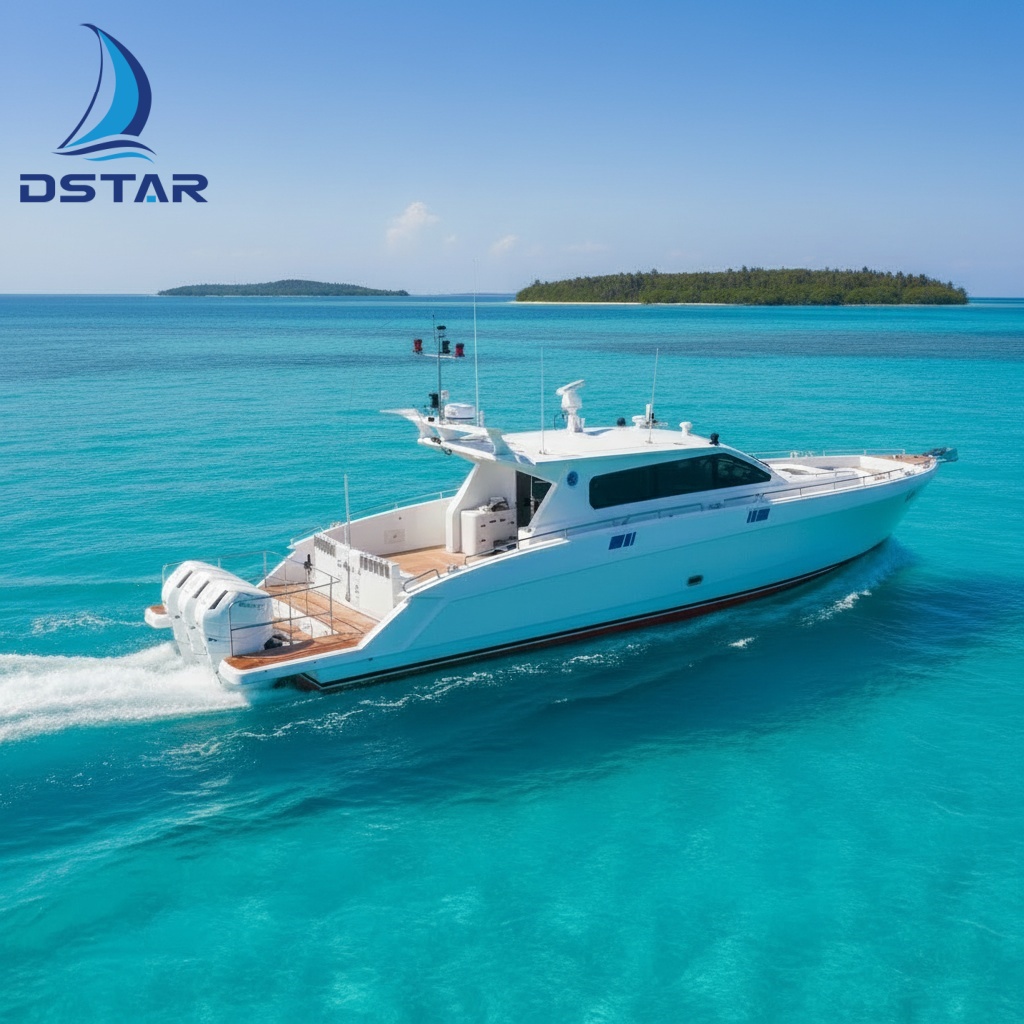
Scenario fit: high-speed luxury operation. The interior brief is explicit in the supplied material: the deckhouse is divided into two independent reception areas — a negotiation area and a business meeting area — while the lower deck carries a fully functional bedroom, crew room, kitchen and an activity room for multiple people. That is a hospitality and business-reception platform, and the 53-knot top speed is part of the offer rather than a transport requirement.
Boundary: 12 passengers and 200 L of fresh water are the documented hospitality limits. An operator who needs to move 50 people is looking at the DK-PS, not at a scaled version of this yacht.
38-foot DK-CA — aluminum catamaran sailboat for stability and comfort
Documented specification: 38-foot aluminum catamaran sailboat with a marine-grade aluminum hull, twin-hull layout, customizable interior including cabins, a galley and a navigation station, customizable rigging and sail plans, and optional auxiliary power.
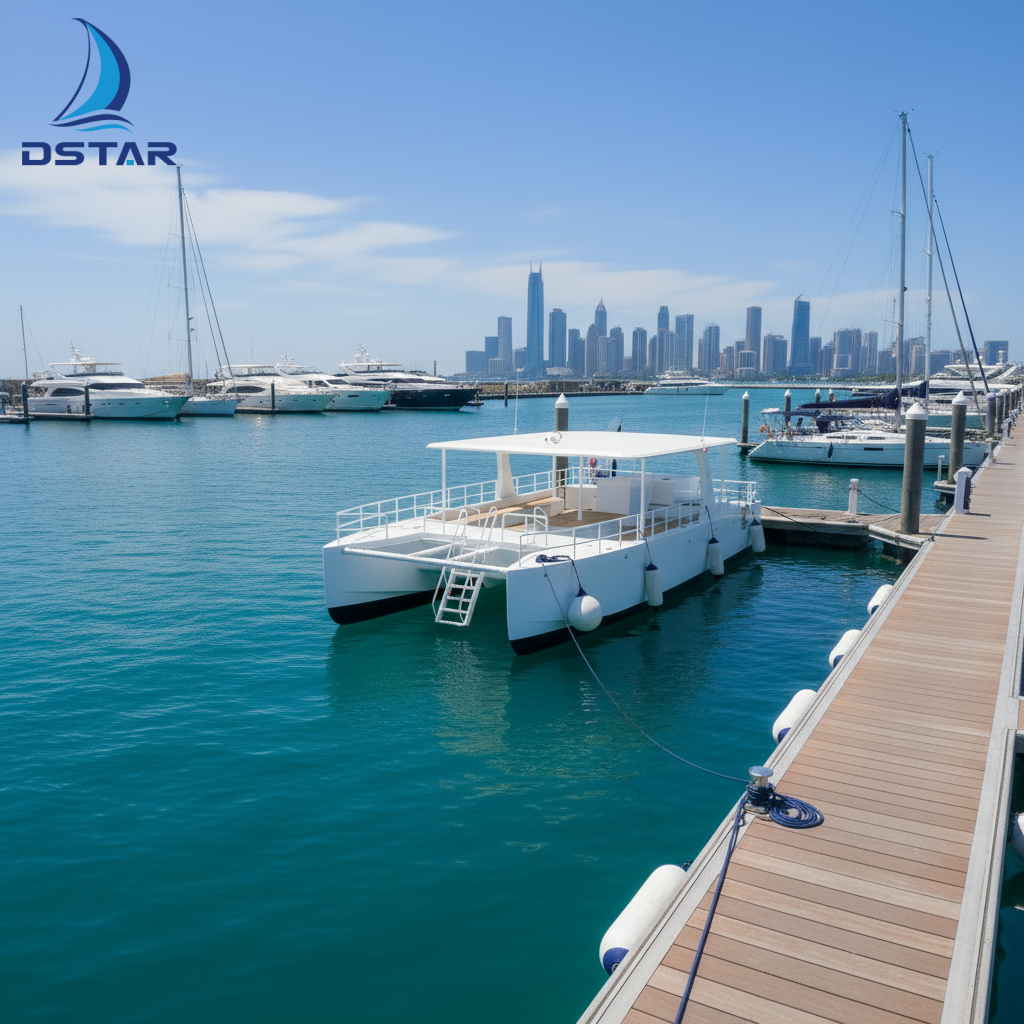
Scenario fit: coastal cruising, offshore passages, weekend getaways and charter operations. The catamaran layout is the reason: two hulls provide the stability and deck area that make long days aboard workable, and the interior is open to configuration rather than fixed at the yard. Because rigging and sail plans are customizable, this is the one platform in the range where the buyer's sailing profile, not a factory default, sets the final specification.
Boundary: no speed figure and no passenger figure are stated in the supplied material for the DK-CA, and the 38-foot designation is the published size figure. Both gaps should be closed during configuration.
Side-by-side: documented specifications across the range
| Model | Length | Hull material | Propulsion (documented) | Documented speed | Capacity | Primary mission |
|---|---|---|---|---|---|---|
| DK-FS | 6.25 m (21 ft) | Aluminum alloy | 150HP YAMAHA | 30 kn maximum | 6 persons | Coastal, lake and river fishing |
| DK-WR | 11.00 m | 5083-H116 aluminum alloy | 2 x 150HP (300HP total) | 26 kn design | Life-saving fitted 1:1 to passengers | Patrol, coastal rescue, transport |
| DK-FR | 13.25 m | Aluminum alloy | 2 x 200HP Mercury | Not stated | Not stated | Offshore firefighting and rescue; 1500 GPM pump |
| DK-PS | 19 m series | Steel | Twin diesel, fixed-pitch propellers | 25 kn cruise | 50 passengers | Calm-water passenger transport |
| DK-LU55 | 17.18 m | Aluminum | 3 x 600HP | 53 kn top | 12 passengers | High-speed luxury operation |
| DK-CA | 38 ft | Marine-grade aluminum | Sail rig, customizable; optional auxiliary power | Not stated | Customizable cabins | Coastal cruising, offshore passages, charter |
Read the table horizontally, not vertically. A larger number in one column is not automatically better in another: 50 passengers matters only if the route is a passenger route, and 1500 gallons per minute matters only if firefighting is in scope.
Safety and navigation equipment: what is documented, what to confirm
Only one platform in this range carries a documented equipment schedule in the supplied material: the DK-WR 11 m work boat. Its schedule covers four areas that a buyer should expect to see itemised for any commercial vessel:
- Navigation and communication — GPS, magnetic compass, VHF and AIS with real-time positioning and collision-avoidance warning.
- Emergency systems — dual fuel quick-close valves, automatic bilge pump, and a portable fire extinguisher using CO₂ and dry powder.
- Life-saving equipment — 6 life jackets and 2 life buoys, fitted 1:1 to the number of passengers.
- Control and electrical — remote-control searchlight, tachometer, oil-level gauge, DC distribution board, battery charger and shore-power socket.
For the DK-FS, DK-FR, DK-PS, DK-LU55 and DK-CA, the supplied specifications describe dimensions, propulsion, capacity and mission rather than a line-item equipment list. That is a verification task, not a gap to be filled by assumption. Ask the builder for the equipment schedule of the exact hull being quoted, then check each item against the flag state or classification requirement that applies to the vessel's service.
Decision rule: if a required equipment item does not appear on the builder's written schedule for the specific hull, treat it as not confirmed — regardless of what similar vessels carry.
Five checks before you commit to a build
- Alloy and material documentation for the specific hull. The DK-WR is documented in 5083-H116; the DK-PS is documented with a steel hull. Confirm which alloy applies to your hull and request the supporting documentation rather than relying on the range-level statement.
- Equipment schedule and life-saving fit. Confirm the itemised list and the ratio of life-saving equipment to the certified number of persons on board.
- Propulsion details. Single 150HP, twin 150HP, twin 200HP and triple 600HP configurations are all documented in this range, alongside twin diesel inboards and customizable sail rigs. Confirm engine model, control configuration and the service arrangements that apply in your region.
- Mission equipment performance. For a firefighting requirement, the 1500 GPM pump figure on the DK-FR should be matched to the flow rate your authority requires, with the supporting pump documentation.
- Certification scope and acceptance. Verify the ISO and CE position the company states, including certificate number, scope and validity for the vessel and market, and agree the sea trial and acceptance criteria in writing before production.
Frequently asked questions
Which certification documents should I verify before ordering an aluminum boat?
Qingdao Dookyu Crown Marine states that it follows international standards such as ISO and CE. Before ordering, request the applicable certificate together with its scope, certificate number and validity period for the specific vessel, and confirm that the scope covers the hull and equipment being supplied. Certification is vessel- and market-specific: a yard-level statement does not by itself confirm that a particular hull is certified for a particular market.
How should I evaluate aluminum fire boat manufacturers?
Start from documented firefighting capability rather than from the label. For the Dookyu Crown DK-FR, the supplied specification states a fire pump flow rate of 1500 gallons per minute, a 13.25 m aluminum alloy hull, twin 200HP Mercury outboards and a 500 L fuel tank. A practical evaluation compares those anchors against the required flow rate, the intended offshore response area, fuel endurance and crew configuration — and asks each candidate to state clearly what is not documented, not only what is. Certificate scope for the vessel and market is a separate confirmation step.
Can one model cover patrol, rescue and passenger transport?
Within this range, the DK-WR 11 m aluminum work boat is the model documented for the widest mix: offshore patrol, coastal rescue, passenger transport, fishing and marine leisure, and professional workboat operations. It carries GPS, magnetic compass, VHF and AIS, dual fuel quick-close valves, an automatic bilge pump, a portable CO₂ and dry powder extinguisher, and life-saving equipment fitted 1:1 to the number of passengers. It is not, however, a firefighting vessel; where pump output is required, the documented platform is the DK-FR with its 1500 GPM fire pump.
What drives the cost difference between these six models?
The supplied material does not publish prices, so the useful answer is the documented cost drivers. Size spans 6.25 m to 19 m. Propulsion spans a single 150HP outboard to three 600HP engines. Hull material differs across the range — aluminum alloy on the DK-FS, DK-WR, DK-FR and DK-LU55, specifically 5083-H116 on the DK-WR, marine-grade aluminum on the DK-CA, and steel on the DK-PS. Mission equipment differs as well: a 1500 GPM fire pump is a different specification item from a livewell and rod holders. Capacity, from 6 persons to 50 passengers, completes the picture. A configured quotation against a written mission brief is the only reliable figure.
How do I start a project and obtain the technical documentation?
Begin with a written mission brief covering water body, payload, duty cycle, required equipment and certification market. Qingdao Dookyu Crown Marine then maps that brief to a platform; where a documented figure is missing — speed and crew capacity for the DK-FR, or speed and passenger numbers for the DK-CA — it should be confirmed in the proposal rather than assumed. The company's product brochure can be downloaded from the link below, and specifications for the DK-FS, DK-WR, DK-FR, DK-PS, DK-LU55 and DK-CA can be requested against that brief.
Conclusion: read the mission, then read the specification
The right aluminum boat is the one whose documented envelope matches the mission, not the one with the most impressive headline number. Read this range in order of exposure: the DK-FS for coastal, lake and river fishing at 6.25 m; the DK-WR for patrol, rescue and transport at 11 m; the DK-FR for offshore firefighting and rescue where a 1500 GPM pump is the anchor; the DK-PS for calm-water passenger transport at 50 passengers; the DK-LU55 for high-speed luxury operation with 12 passengers; and the DK-CA for stability and comfort under sail at 38 feet. Where a figure is not documented, treating it as unknown is more useful than filling it with an assumption — that is precisely the question to put to the builder.
Next step: download the Dookyu Crown product brochure and technical material at the official brochure link, then send a written mission brief — water body, payload, duty cycle and required equipment — to request a platform recommendation and a configured quotation.
Qingdao Dookyu Crown Marine Co., Ltd. · South Road, 750m West Of Yinzhu Exit Of Shugang Expressway, Qingdao, Shandong, China · Email: info@dstaryacht.com
Have Questions or Need More Details?
Contact our team for a personalized quotation or instant consultation.
Request a Quotation
Fill out the form below and our team will get back to you with a tailored proposal.
WhatsApp Direct Chat
Prefer to chat in real-time? Message us on WhatsApp for instant assistance & quick answers.
- Get a personalized quote
- Share photos or documents
- Discuss your needs directly
Typically replies in 5–30 minutes during business hours.