Aluminum Boat Comparison Guide: How to Match Hull Type and Builder to Your Mission
Aluminum Boat Comparison Guide: How to Compare Hull Types, Specs, and Builders
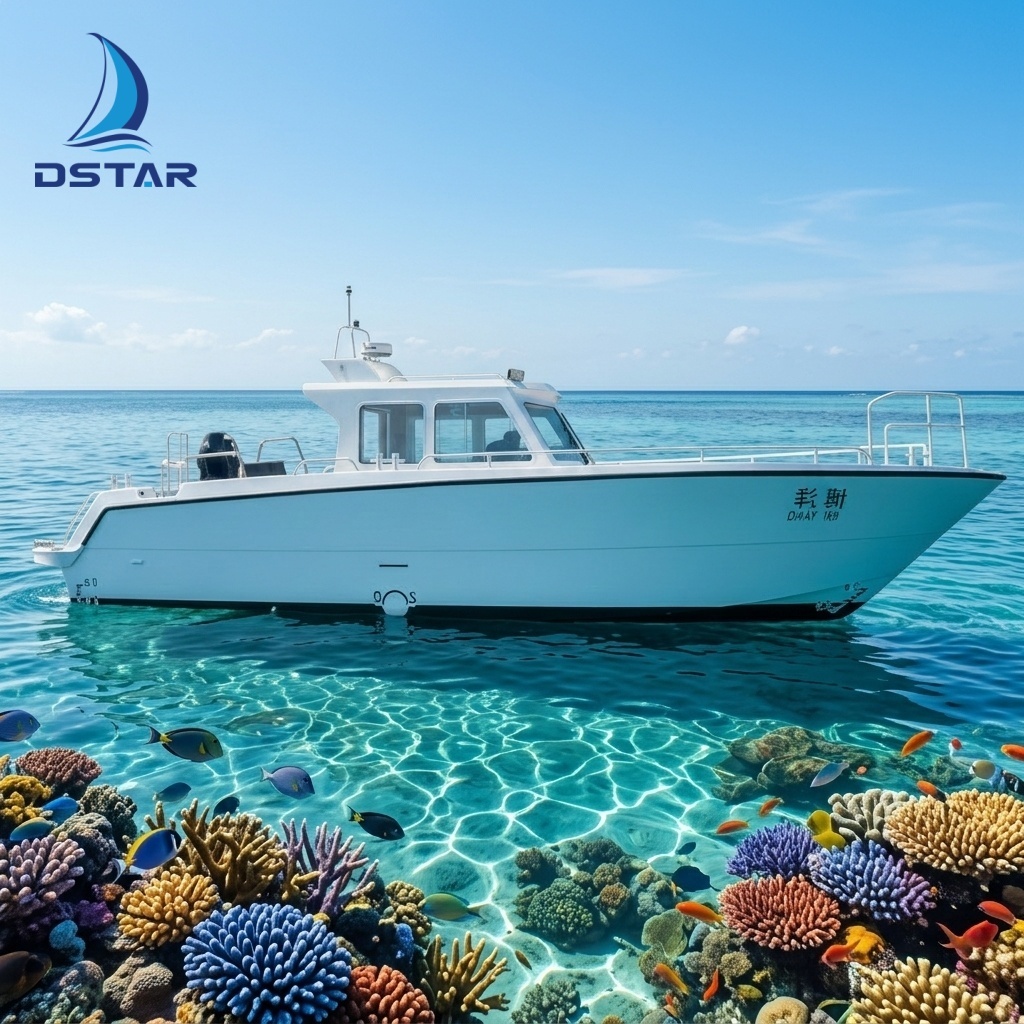
If you are searching for an aluminum boat, you are usually deciding between several valid options rather than between a good boat and a bad boat. A fast patrol hull may not be the best firefighting platform. A catamaran with generous deck space may not fit the same pier as a narrow monohull. An aluminum fishing boat built for shallow lakes may not carry enough fuel for offshore patrol work. This comparison guide explains how to compare aluminum boats by hull type, measurable specifications, operating mission, and builder capability before you request a quotation.
Concrete examples in this guide come from the product range of Qingdao Dookyu Crown Marine Co., Ltd., an aluminum alloy boat manufacturer founded in 2020 and located in Qingdao, Shandong Province, China. The company designs, builds, sells, and supports aluminum alloy yachts and vessels, but the comparison framework is useful no matter which builder you are evaluating.
Why Aluminum Boat Comparison Is Difficult
One reason buyers struggle with the keyword aluminum boat is that the category is broad. It can describe a 6.25-meter welded fishing boat with one outboard engine, an 11-meter multi-role workboat with twin outboards, a 13-meter offshore rescue fire boat with a high-capacity fire pump, a 17-meter luxury yacht, or a 38-foot sailing catamaran. These vessels share a common material but not a common mission.
Comparing only one metric can lead to poor decisions. A boat with a higher top speed may consume more fuel and need a larger crew. A longer boat may be impossible to store or dock in your intended harbor. A vessel with the right length may lack the required certification or firefighting equipment for a government emergency-response contract. The practical need is a side-by-side comparison built from verifiable data, not marketing descriptions.
Industry Background: The Aluminum Boat Market in Context
Aluminum boats are a measurable segment of the global marine industry. Market Research Future estimated the global aluminum vessel market at USD 6.145 billion in 2024 and projected a compound annual growth rate of 4.21% from 2025 to 2035. Global Market Insights valued the aluminum fishing boat market at USD 1.7 billion in 2024 and identified North America as the largest regional market in that year. For buyers, this growth means more builders and more model choices, which increases the value of a disciplined comparison process.
Independent reports also name large recreational aluminum boat groups such as Brunswick, White River Marine Group, and Alumacraft, while patrol boat market analysis references Fassmer, SAFE Boats, and Marine Alutech. A buyer looking at aluminum government vessels should therefore compare not only local options but also international builders. China is part of that supply chain; UN Comtrade and WITS data show that mainland China exported USD 34.9 billion of aluminum articles under HS chapter 76 in 2023. Within China, shipyards in Qingdao combine port access, marine engineering talent, and established export logistics, which is the operating context for builders such as Dookyu Crown.
What to Compare When Evaluating Aluminum Boats
The most useful comparison method has three layers. First, compare boat categories because each category is optimized for a different mission. Second, compare measurable specifications such as length, beam, draft, fuel capacity, engine power, speed, and payload or passenger capacity. Third, compare the builder's design, production, certification, and after-sales capabilities.
Layer 1: Compare Aluminum Boat Categories by Mission
Dookyu Crown's product range provides a useful reference set of comparison categories:
- The 6.25m DK-FS aluminum alloy fishing boat is built around coastal, lake, and river fishing. It has a single 150HP Yamaha outboard, a 400L fuel tank, and a maximum speed of 30 knots.
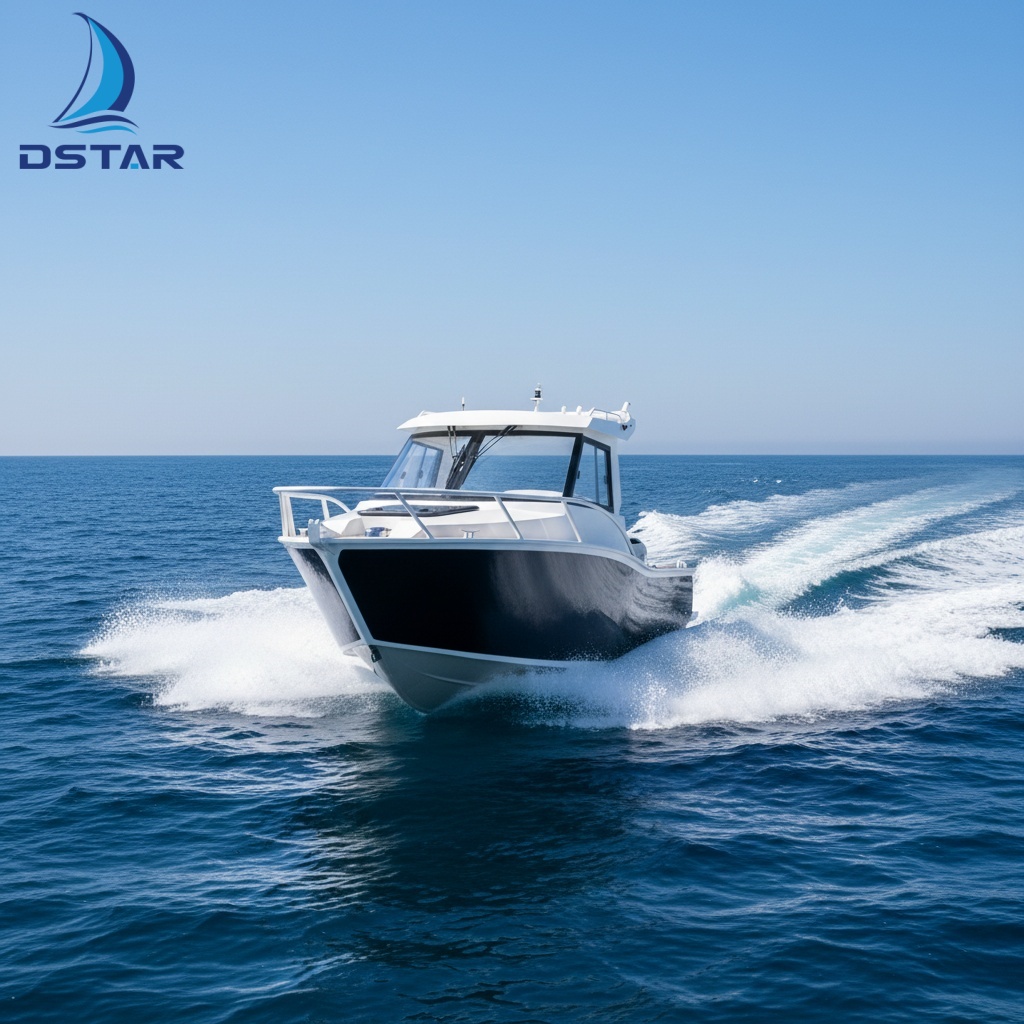
- The 11m DK-WR aluminum work or cruiser boat is a multi-role hull. It is positioned for coastal rescue, offshore patrol, passenger transport, fishing, marine leisure, and professional workboat operations. It uses a 5083-H116 aluminum alloy hull and twin 150HP outboards.
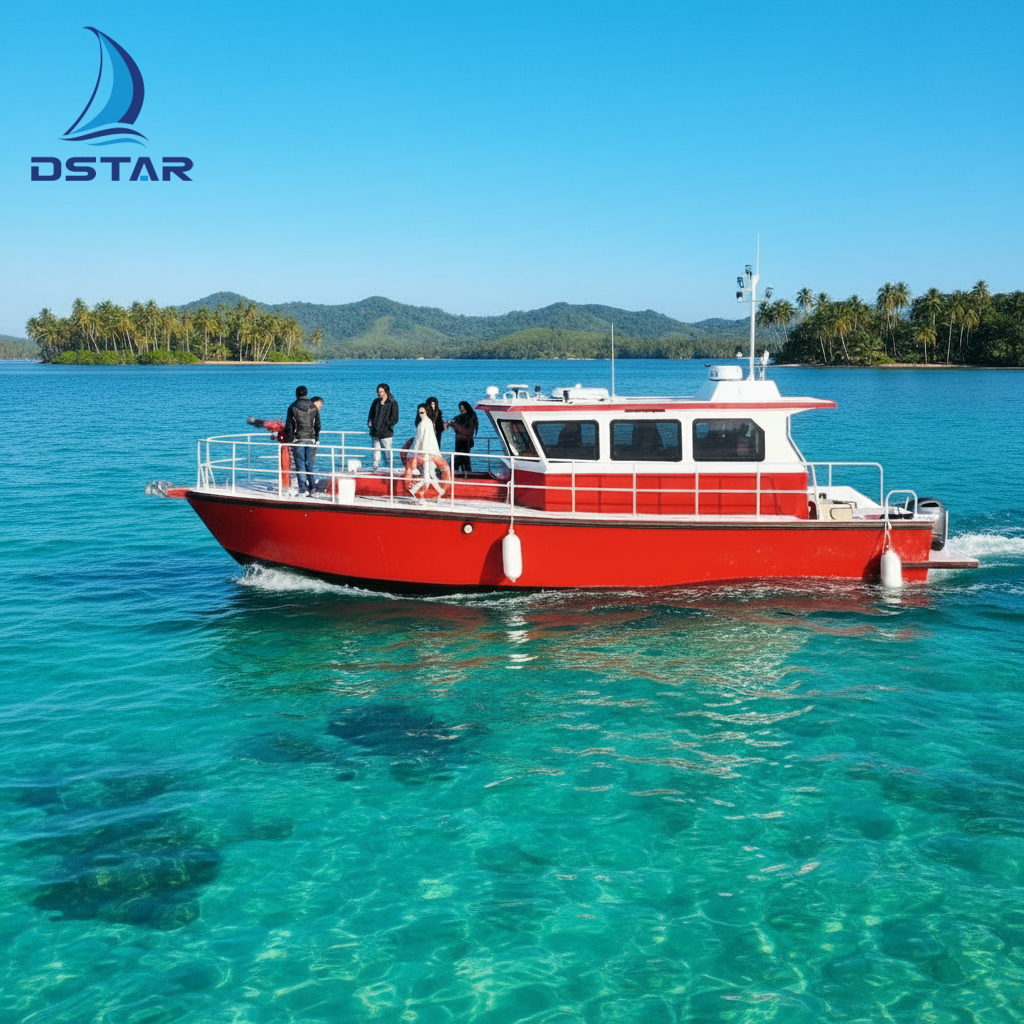
- The 13m DK-FR aluminum rescue fire boat is designed for offshore firefighting and rescue. Its stated specifications include twin 200HP Mercury outboards and a 1500gpm fire pump flow.
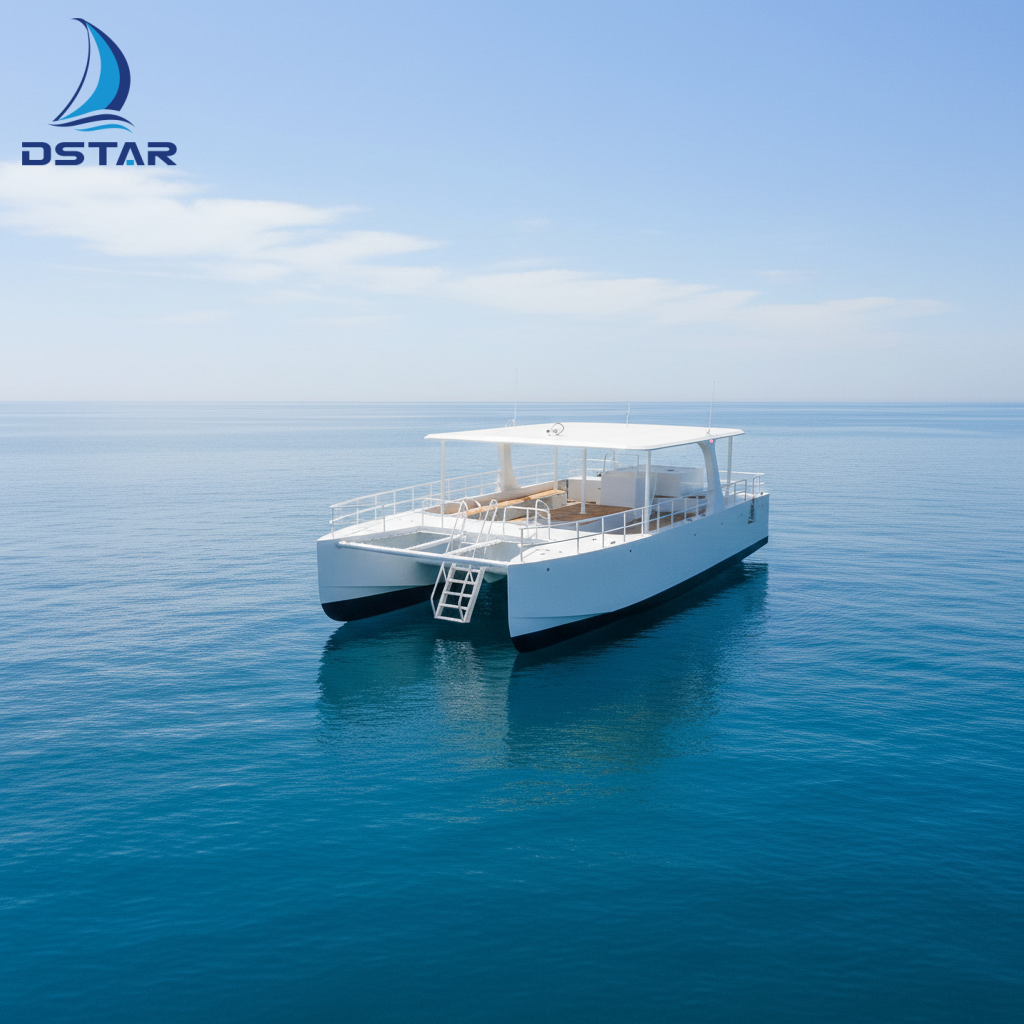
- The 38-foot DK-CA aluminum catamaran sailboat is designed for coastal cruising, offshore passages, weekend getaways, and charter operations. Its marine-grade aluminum twin hull is intended to provide stability and durable service.
- The 17m DK-LU55 aluminum luxury yacht is a high-performance representation and entertainment vessel with capacity for 12 passengers and a top speed of 53 knots.
Layer 2: Compare Measurable Specifications
The table below compares Dookyu Crown models that represent different aluminum boat categories. Use this not as a ranking but as a model-level reference for the kind of figures a buyer should request from every shortlisted builder.
| Comparison Criteria | DK-FS 6.25m Fishing Boat | DK-WR 11m Work / Cruiser Boat | DK-FR 13m Rescue Fire Boat | DK-LU55 17m Luxury Yacht | DK-CA 38-foot Catamaran Sailboat |
|---|---|---|---|---|---|
| Boat category | Aluminum alloy fishing boat | Aluminum work or cruiser boat | Aluminum rescue fire boat | Aluminum luxury yacht | Aluminum catamaran sailboat |
| Length | 6.25m | 11.00m | 13.25m | 17.18m | 38-foot |
| Beam or width | 2.25m | 3.25m | 3.6m | 4.20m | Twin-hull catamaran layout |
| Draft | 0.35m designed draft | 0.47m full-load draft | Not publicly listed in the provided spec | 0.64m designed draft | Not publicly listed in the provided spec |
| People capacity or complement | 6 people | Not specified in the public product card | Not specified in the public product card | 12 passengers | Customizable cabins, galley, and navigation station |
| Engine / power system | 150HP Yamaha outboard | Two 150HP outboards | Twin 200HP Mercury outboards | Three 600HP engines | Customizable sail plans and optional auxiliary power |
| Speed | Maximum speed 30 knots | Design speed 26 knots | Application context notes high-speed maneuvering up to 50+ knots | Top speed 53 knots | Speed depends on rigging and sea conditions |
| Fuel tank | 400L | 400L | 500L | 1820L | Not specified in the public product card |
| Primary mission examples | Coastal, lake, and river fishing; leisure and semi-professional use | Coastal rescue, patrol, passenger transport, fishing, leisure, professional workboat operations | Offshore firefighting and rescue missions | Business reception, entertainment, and large high-performance yacht use | Coastal cruising, offshore passages, weekend getaways, charter operations |
Reading the table row by row shows why mission fit matters. The 6.25m boat has a very shallow 0.35m draft, which suits protected fishing grounds. The 11m workboat adds twin engines and more hull volume, making it more suitable for patrol or mixed-use operations. The 13m fireboat is a specialized emergency-response asset with firefighting integration. The 17m yacht and 38-foot catamaran address leisure, charter, representation, and cruising rather than daily enforcement or firefighting work.
Layer 3: Compare Builder Capabilities
Product specifications answer what a builder can deliver today. Builder capabilities answer whether the builder can deliver that vessel consistently, on time, to the required certification level, and with useful support after delivery.
Qingdao Dookyu Crown Marine describes itself as an OEM, ODM, and end-to-end production partner. Publicly stated company data include a 70,000-square-meter facility, 85 employees, 17 engineers in research and development, and an annual output of 200 ships. Approximately 80% of its production is exported, with main markets including Australia, the United States, Canada, Ecuador, Hong Kong, Mexico, Nigeria, New Zealand, Russia, and Thailand.
The company's production capability statement includes a monthly capacity of 20 ships, a lead time of 30 to 60 days, and a minimum order quantity of one ship. That is an important comparison point for buyers who need a pilot project or a single specialized government vessel rather than a large production run. Customization options listed in the company capability unit include hull dimensions, hull type such as monohull or catamaran, deck layout, wheelhouse position, engine brand, propulsion system, fuel or electric or hybrid power options, tank capacity, firefighting equipment, cranes, winches, fishing gear and livewells, passenger seating, interior design, lighting, navigation systems, electrical systems, solar panels, certification level, safety and lifesaving equipment, and packaging and shipping solutions.
Quality control is another comparison layer. Dookyu Crown states that it applies full-process inspection from raw material verification using Mill Test Reports to in-process weld inspections and final sea trials. Its standards and systems references include ISO 9001, CE, CCS, and other classification requirements. When comparing builders, ask for the same type of evidence: raw material certificates, weld inspection records, sea trial data, and the exact certification documents applicable to the model and export destination.
Step-by-Step Aluminum Boat Comparison Process
The following seven steps turn market research into a practical shortlist.
- Define the mission and operating water. The first comparison filter is not material or brand; it is water type and role. Will the boat operate in inland waters such as rivers, lakes, and reservoirs, in coastal and offshore zones, or in open ocean? Is its role patrol, anti-smuggling, fisheries inspection, firefighting, rescue, passenger transport, fishing, or leisure? In one Dookyu Crown application scenario, high-speed maneuvering was noted at speeds up to 50+ knots for response environments. Establish a target speed and service profile before comparing models.
- Compare hull types. Monohulls are common in the model range for fishing, patrol, and firefighting. Twin-hull catamarans appear in Dookyu Crown's sailing catamaran model, where the layout prioritizes stability and deck space. Choose a hull type that matches the payload, sea state, speed, and boarding requirements of your mission.
- Set length, beam, draft, and displacement limits. Use real infrastructure constraints. If a berth, hoist, trailer, or operating channel has a limit, calculate the allowable length and draft. For example, the 6.25m DK-FS has a designed draft of 0.35m, while the 11m DK-WR has a full-load draft of 0.47m and full-load displacement of 5.60 tonnes. The 17m DK-LU55 has a designed draft of 0.64m. Compare these figures alongside pier depth and ramp capacity.
- Match propulsion to the operation. Propulsion comparison should include engine type, engine number, horsepower, fuel tank capacity, and expected endurance. The DK-FS uses one 150HP Yamaha outboard. The DK-WR uses two 150HP outboards. The DK-FR uses twin 200HP Mercury outboards. Dookyu Crown also states that outboard, inboard, and electric propulsion options are available depending on the vessel design. Twin-engine layouts often provide redundancy, while a smaller single engine may reduce running cost and complexity.
- Audit mission-specific equipment. A firefighting or rescue vessel needs more than a hull and engine. In the 13m DK-FR, the specification includes a 500L fuel tank and a 1500gpm fire pump flow. For other applications, equipment may include fire monitors, winches, cranes, livewells, navigation and communication systems, or electrical systems. Ask the builder for a written equipment list that supports the mission profile.
- Verify certification and compliance. International projects often mention CE, CCS, and SOLAS compliance. Dookyu Crown states that it follows ISO and CE standards. In government emergency or public projects, the buyer should verify the exact certificate scope, certificate number, issuing body, and validity rather than relying on a generic compliance statement.
- Evaluate production, lead time, and after-sales support. Compare MOQ, monthly capacity, standard lead time, and service network. Dookyu Crown's stated MOQ is one ship, monthly capacity is 20 ships, and lead time is 30 to 60 days. Its after-sales description includes remote diagnostics, spare parts supply, on-site assistance, operation and maintenance manuals, and training. A competitive comparison should include spare parts response time and installation supervision if relevant.
Use Cases: Comparing Aluminum Boats for Real Projects
Municipal and Government Fire-Rescue Projects
For offshore firefighting and rescue missions, a buyer evaluating municipal rescue fleets should compare craft by response speed, water-cannon or pump capacity, engine redundancy, and crew protection. Dookyu Crown's 13m Aluminum Rescue Fire Boat, model DK-FR, is one concrete reference point. It has a 13.25m length, 3.6m width, 500L fuel tank, twin 200HP Mercury motors, and 1500gpm fire pump flow. The product card states that it is built for offshore firefighting and rescue missions. In an international case documented by Dookyu Crown, a 13.25m aluminum fire rescue boat was supplied to an Ecuador-based project that needed stronger offshore firefighting and rescue capability. The project achieved high-performance firefighting, rapid response, and stable maritime operations; the client identity was not publicly disclosed.
Patrol, Anti-Smuggling, and Fisheries Inspection
Government and law enforcement projects may involve patrol, anti-smuggling, surveillance, and fisheries inspection. These operations often need reliable navigation, communication, and safety equipment. The 11m DK-WR aluminum work boat is a workboat-type example that can support coastal rescue, offshore patrol, passenger transport, fishing, and professional workboat operations. Its standard navigation equipment includes GPS, magnetic compass, VHF, and AIS, which are useful for controlled operations. Buyers comparing such vessels should ask for enclosure specifications, crew protection, and target endurance in the expected sea state.
Fishing, Tourism, and Semi-Professional Use
Aluminum fishing boats are frequently compared with fiberglass alternatives for freshwater routes. Industry research notes that aluminum fishing boats are often preferred over fiberglass for freshwater fishing because of weight and cost benefits. For a compact example, the 6.25m DK-FS carries six people, uses a 150HP Yamaha outboard, has a 400L fuel tank, and reaches a maximum speed of 30 knots. It is described as suitable for coastal, lake, and river fishing and for leisure or semi-professional activity. Buyers should verify payload, seating, rod holders, livewell, and towing capability against the actual fishing method.
Offshore Cruising and Charter Operations
Charter and cruising buyers may compare aluminum sailing catamarans with other vessels because of stability and layout flexibility. The 38-foot DK-CA has a marine-grade aluminum hull, twin-hull catamaran design, and customizable cabins, galley, navigation station, and rigging. It is positioned for coastal cruising, offshore passages, weekend getaways, and charter operations. For this category, compare sailing performance, interior headroom, tankage, accessibility, and certification for carrying passengers.
Luxury, Sport, and Business-Representation Use
Not every aluminum boat is a workboat. The 17m DK-LU55 model is described as a luxury large high-performance yacht with space for business reception, audio-visual entertainment, bedrooms, crew room, kitchen, and activity areas. Its main specifications include length overall of 17.18m, breadth of 4.20m, designed draft of 0.64m, passenger capacity of 12, top speed of 53 knots, three 600HP engines, and a fuel tank capacity of 1820L. When comparing yachts in this class, buyers should focus on finishing quality, sea-keeping behavior, interior fitout, builder references, and acoustic and vibration levels, not just top speed.
Aluminum Boat Comparison Guide: Practical Tips for Buyers
A responsible aluminum boat comparison should avoid comparing a promotional top speed from one builder with the sea-trial speed from another. Insist on consistent measurement conditions, including load condition, fuel load, passenger or payload weight, water conditions, and sea-trial date. Ask whether the quoted boat is the base model or the final specification. Confirm whether the price includes engines, electronics, safety equipment, certification documentation, packing, or delivery.
For imported aluminum boats, compare logistics and market-entry requirements. A builder that sells to multiple markets may be more familiar with export documentation and certification packages. Dookyu Crown states that it exports to more than 30 countries and regions across Europe, North America, Australia, Southeast Asia, and the Middle East. The company also states that it offers flexible trade terms and multilingual support. However, each purchase should be confirmed with a written commercial proposal containing exact model, machinery list, equipment list, delivery term, and documentation.
FAQ
How should a buyer compare aluminum boat builders for a municipal rescue fleet?
Municipal rescue fleets should compare vessel length, beam, fuel capacity, engine configuration, fire pump flow, and manufacturer quality controls. For example, the Dookyu Crown DK-FR 13m aluminum rescue fire boat is 13.25m long with a 3.6m beam, a 500L fuel tank, twin 200HP Mercury motors, and a 1500gpm fire pump flow. It is designed for offshore firefighting and rescue. Ask the builder for certificate scope, certificate number, and validity before placing an order.
What aluminum boat options should be part of a buyer's comparison shortlist?
A practical aluminum boat comparison shortlist often includes fishing boats, work and patrol boats, fire and rescue boats, sailing catamarans, and yachts. Dookyu Crown offers the 6.25m DK-FS aluminum fishing boat, the 11m DK-WR aluminum work boat, the 13m DK-FR aluminum rescue fire boat, the 38-foot DK-CA aluminum catamaran sailboat, and the 17m DK-LU55 aluminum luxury yacht. The right choice depends on water type, mission, required speed, passenger or payload capacity, and available docking and maintenance infrastructure.
What customization capabilities matter when comparing aluminum boat builders?
Customization capabilities can include hull dimensions, hull type, deck layout, wheelhouse position, engine brand, propulsion system, energy type, firefighting equipment, cranes, winches, fishing gear and livewells, passenger seating, navigation and communication systems, electrical systems, solar power, certification level, safety and lifesaving equipment, and packaging or shipping solutions. Dookyu Crown publicly states an MOQ of one ship, a monthly capacity of 20 ships, and a lead time of 30 to 60 days.
What certifications should a buyer verify in an aluminum boat comparison?
Buyers should verify the applicable standard, certificate scope, certificate number, issuing body, and validity. Dookyu Crown states that it follows international standards such as ISO and CE. For government and public-project applications, certification requirements may include CE, CCS, or SOLAS compliance. Verify these documents against the exact hull and project location before making a final selection.
Conclusion
Aluminum boat comparison should begin with the mission and expected operating profile. Once that profile is clear, compare hull category, length, beam, draft, displacement, engine package, speed, fuel capacity, equipment list, certification, production lead time, and after-sales support. The Dookyu Crown model range used in this article is not a claim that one model is best; it is a documented example of how actual specifications differ across aluminum boat categories.
Before you commit to a builder, request a written proposal, verify sea-trial data under representative load, and confirm that the promised certification documents are valid for your export destination. A careful comparison built on verifiable facts will reduce the risk of choosing an aluminum boat that looks correct in a brochure but does not fit the water, the mission, or the maintenance system of your organization.
If you need help comparing Dookyu Crown models or evaluating a custom aluminum boat design, download the company brochure and contact Qingdao Dookyu Crown Marine for a specification-based proposal.