Aluminum Boat Compliance Guide: Certifications, Standards, and Regional Requirements
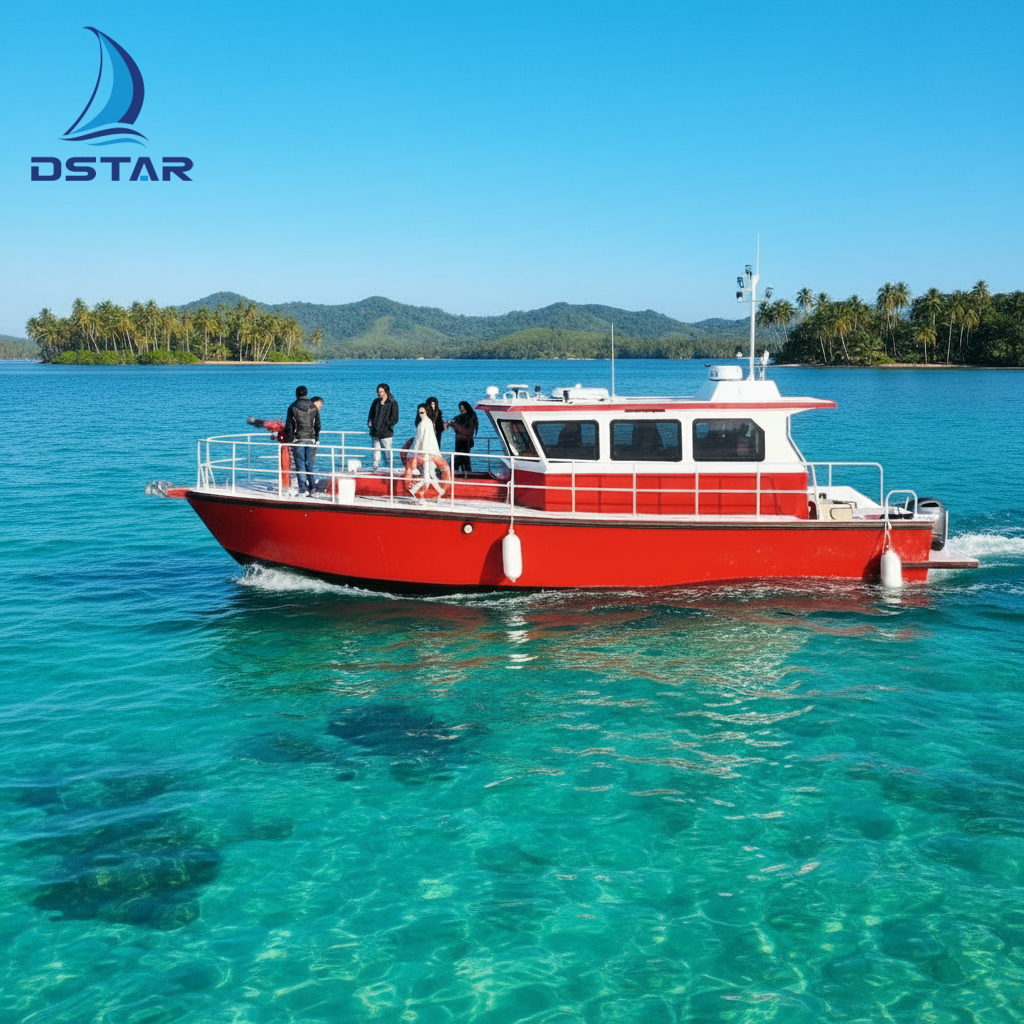
Cover: A 13 m aluminum rescue fire boat. The compliance file — not only the hull — decides whether a vessel of this class can be registered, insured and operated.
An aluminum boat is only as valuable as the paperwork that travels with it. A hull can be cleanly welded, correctly alloyed and delivered on schedule, and still be refused registration, refused insurance or refused at handover because a certificate does not cover the vessel as built. For project buyers, the compliance file is as much a deliverable as the boat itself.
This guide is written for the people who carry that risk: municipal fleets, coast guards, port authorities, ferry and charter operators, fishing companies, importers and procurement managers. It explains the four layers of aluminum boat compliance, how CE, ABYC, CCS and SOLAS requirements differ by region and mission, and how to verify every claim before the first payment — whether you are evaluating an aluminum fire boat, patrol boat, pilot boat, rescue boat, catamaran, workboat, fishing boat or passenger vessel.
Quick answer: Aluminum boat compliance has four layers — material traceability (alloy grade plus mill test reports), construction and quality-system compliance (for example ISO 9001 and documented weld inspection), market certification (CE, ABYC, CCS or SOLAS, depending on region and mission), and mission-equipment approval (firefighting, propulsion, navigation and life-saving equipment). Verify the scope, certificate number, issuing body and validity period — not just the presence of a logo.
Problem Definition: Where Aluminum Boat Compliance Projects Break Down
Compliance failures in aluminum boat projects are rarely about workmanship. They are about evidence. The vessel performs, but the documentation does not support the claim being made about it — and the gap is usually discovered at the worst moment: at registration, at insurance underwriting, at port state inspection or at fleet acceptance.
Four failure patterns account for most of the problems buyers report:
- Certificate scope mismatch. A yard may hold valid certification for a base model. Change the length, wheelhouse position, engine package or firefighting equipment, and the delivered vessel can sit outside that scope. The certificate is real; it simply does not describe the boat that was ordered.
- Missing material traceability. Alloy claims are easy to print and hard to prove. A specification sheet that says “marine-grade aluminum” is not the same as mill documentation that ties the delivered plate to a declared alloy and temper.
- Undocumented welding and structural QA. Aluminum hull integrity depends on weld procedure, fit-up and inspection. Without non-destructive testing (NDT) records and dimensional control evidence, the buyer has no basis for judging how the structure was verified.
- Equipment that does not match the mission. A fire pump flow rate, a navigation package or a life-saving set that satisfies one authority may not satisfy another. Equipment approval is a separate compliance track from hull approval.
Layered on top of those four points is a regional variable that catches first-time importers most often. The same aluminum hull can face CE marking requirements for European market access, ABYC-based construction expectations in the United States, CCS or other class-society requirements for surveyed projects, and SOLAS-related expectations for international commercial and passenger service. Mapping those requirements after design freeze — rather than before — is where aluminum boat projects lose weeks and, sometimes, an entire build slot.
Industry Background: A Growing Market With Tightening Verification
The commercial case for getting compliance right is expanding alongside the market itself. The global aluminum vessel market was estimated at USD 6.145 billion in 2024 and is projected to grow at a CAGR of 4.21% from 2025 to 2035 (Market Research Future). The aluminum fishing boat segment was valued at USD 1.7 billion in 2024 (Global Market Insights); published estimates for that segment range between USD 1.6 billion and USD 1.7 billion depending on the source, which is a useful reminder that buyers should treat any single market figure as a reference point rather than a hard fact. Patrol boats, including aluminum variants, represented a USD 240 million market in 2024 (Intel Market Research), and annual U.S. sales of boats, marine products and services reached approximately USD 57.7 billion in 2023 (NMMA).
Volume attracts verification. The American Boat & Yacht Council (ABYC) reports that adherence to its standards reduces the likelihood of a boat accident by up to 47% and fatalities by up to 58%, and that roughly 90% of boats constructed in the United States are built to ABYC safety standards. On the technology side, builders such as Incat Tasmania are advancing lightweight aluminum passenger ferries for improved fuel efficiency (Straits Research, 2025) — a direction that increases, rather than reduces, the need for documented structural and safety compliance, because lighter structures place more weight on verified design and weld quality.
For buyers, the practical consequence is a shift in what a good specification conversation sounds like. The first question is no longer only “what does it cost” but “what can you document, for which authority, and under whose name.”
The Solution: A Four-Layer Compliance Framework for Aluminum Boats
Compliance becomes manageable once it is separated into four independent layers. Each layer has its own evidence, its own issuing party and its own verification method. A builder can be strong in one layer and weak in another, so buyers should test all four rather than accepting a single blanket statement.
Layer 1 — Material Traceability: Alloy Grade and Mill Documentation
Marine-grade aluminum is defined by alloy and temper, not by the word “aluminum.” Qingdao Dookyu Crown Marine Co., Ltd. — a Qingdao-based aluminum boat manufacturer founded in 2020, operating a 70,000 m² facility with a stated annual output of 200 vessels — builds with marine-grade aluminum including 5083 and 5086 alloys. The 11 m Aluminum Alloy Cruiser Boat (DK-WR) is specified in 5083-H116. The compliance question is whether the delivered plate matches the ordered grade and can be traced back to it. That is what a mill test report establishes, and the builder states that raw-material verification through Mill Test Reports is the first step of its quality-control process.
Layer 2 — Construction, Welding and Quality-System Compliance
Hull compliance rests on process control, not on inspection at the end. Dookyu Crown states that production uses MIG/TIG welding and precision CNC cutting, and that its quality-control sequence runs from raw-material verification, through in-process weld inspection using NDT, to final sea trials — with stated compliance to ISO 9001, CE, CCS and other class-society requirements. For a buyer, that description translates into three specific requests: the weld procedure and inspection method, the NDT records for the hull being purchased, and the scope of the quality-system certificate held by the yard.
Layer 3 — Market and Regional Certification
There is no single global aluminum boat certificate. What applies depends on where the vessel will be flagged, registered and operated. CE marking governs European market access; ABYC standards are the reference for U.S. recreational construction; CCS and other class-society rules apply to vessels surveyed in China; SOLAS-related compliance applies to international commercial and passenger service. Dookyu Crown states that it follows international standards such as ISO and CE, and that it provides CE, SOLAS and other compliance documentation for export projects across markets including Australia, the USA, Canada, Ecuador, Hong Kong, Mexico, Nigeria, New Zealand, Russia and Thailand. The company's own published guidance is direct on the limit of any such claim: buyers should verify the applicable certificate, scope, number and validity before purchase.
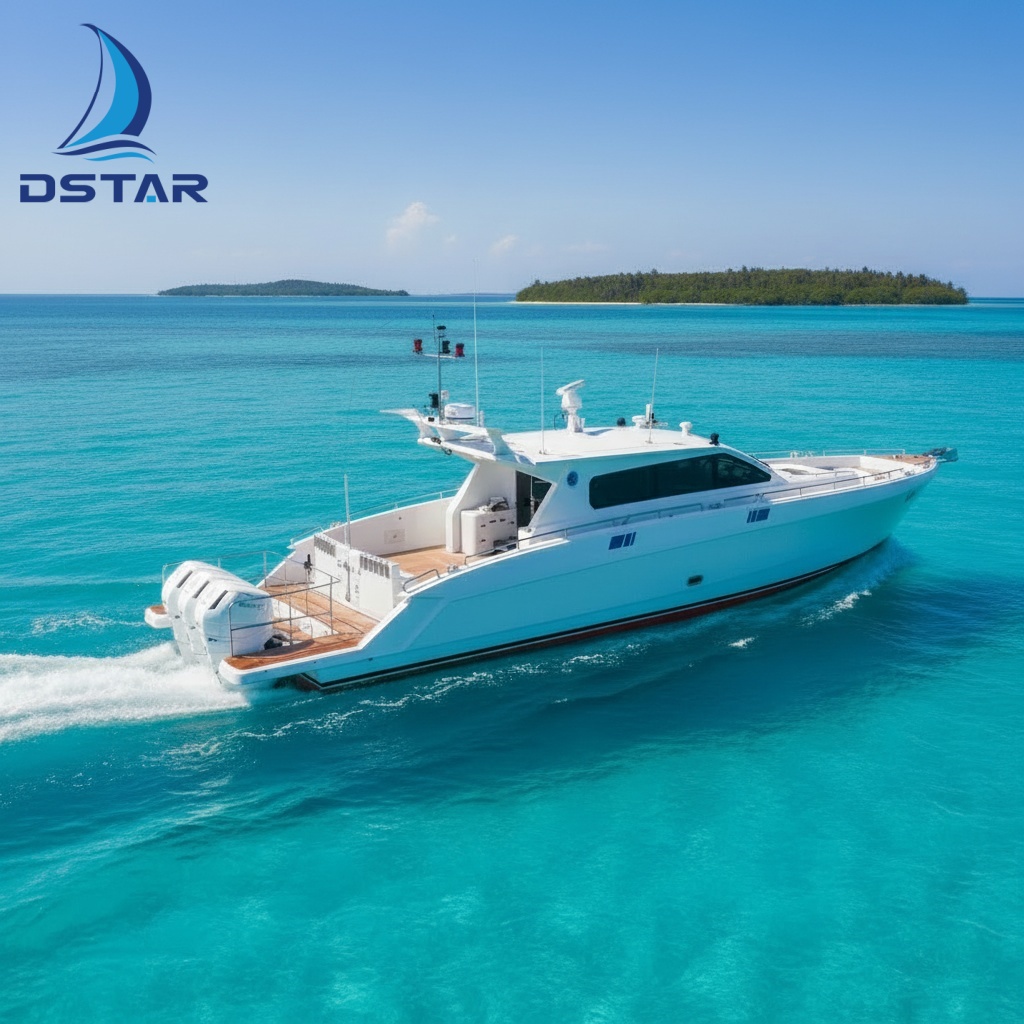
Recreational aluminum craft, such as this 17.18 m luxury yacht, sit under a different framework than commercial or passenger vessels.
Layer 4 — Mission Equipment and Operational Compliance
Fire monitors, winches, cranes, livewells, propulsion, navigation and life-saving equipment each carry their own approval logic, and mission determines which approvals matter. Dookyu Crown's application data describes vessels operating in high-speed maneuvering mode with speeds up to 50+ knots, supported by propulsion systems from 50HP to 300HP+ and operational equipment such as fire monitors, winches, cranes and livewells. On the 11 m Aluminum Alloy Cruiser Boat, that includes GPS, magnetic compass, VHF and AIS, dual fuel quick-close valves, an automatic bilge pump, a portable CO₂/dry-powder extinguisher, six life jackets and two life buoys — supplied on a 1:1 basis according to the number of persons carried.
The same verification logic applies across aluminum patrol boats, pilot boats, rescue boats, landing craft, RIBs, diving boats, water taxis, houseboats, crabbing boats, river boats, bass boats and offshore boats. What changes is which framework governs the vessel, and which equipment carries the approval the authority expects to see.
Step-by-Step: Verifying an Aluminum Boat's Compliance Before Payment
This eight-step sequence can be applied to any builder. It is designed to move documentation review ahead of design freeze and payment milestones, where corrections are still cheap.
- Step 1 — Define the mission and the operating condition. Inland waters (rivers, lakes, reservoirs), coastal and offshore waters, or open ocean. Fire and rescue, patrol and law enforcement, passenger transport, fishing, or leisure. Mission determines both the standard and the equipment schedule.
- Step 2 — Identify who will survey, register and insure the vessel. Flag state, port authority, classification society and insurer each apply their own lens. Ask them, in writing, what documentation they will request at handover.
- Step 3 — Map the applicable framework before design freeze. CE for European market access, ABYC-based construction for U.S. recreational craft, CCS or other class rules for surveyed projects, SOLAS-related compliance for international commercial and passenger service, with ISO 9001 as a quality-system baseline rather than a vessel approval.
- Step 4 — Request the certificate scope, in writing. Ask for the declaration of conformity or class certificate that will apply to your exact configuration, including certificate number, issuing body, scope statement and validity period. Then verify it with the issuing body.
- Step 5 — Verify material documentation. Confirm the alloy and temper specified for hull and superstructure (for example 5083 or 5086, and 5083-H116 on the DK-WR), and require mill test reports for the delivered plate.
- Step 6 — Verify welding and structural QA records. Request the weld inspection method, the in-process NDT records, and evidence of dimensional tolerance control during hull assembly.
- Step 7 — Verify equipment approvals against the mission. Fire pump flow and monitor configuration, engine make and rating, navigation and communication systems, life-saving equipment quantities and approvals.
- Step 8 — Complete sea trials and handover documentation. Sea trials confirm performance as built. Operation and maintenance manuals, spare parts information and technical training complete the file that keeps the vessel compliant through its service life.
Use Cases: How Compliance Requirements Shift by Mission
Offshore Fire and Rescue
Fire and rescue vessels sit at the strictest end of the compliance spectrum, because both structural integrity and firefighting performance are operational requirements. Dookyu Crown's 13 m Aluminum Rescue Fire Boat (DK-FR) is specified at 13.25 m length, 3.6 m width, 500 L fuel capacity, twin 200HP Mercury engines and a fire pump flow of 1,500 gpm. Application data for this vessel class states that international certifications such as CE, CCS and SOLAS compliance are relevant requirements. A reference project for an international customer in Ecuador covers a 13.25 m aluminum fire rescue boat used for offshore firefighting and rescue missions, with customized firefighting equipment and a 10-year project timeframe recorded in the case file; the stated outcome was high-performance firefighting, rapid response and stable maritime operations, addressing previously inadequate offshore firefighting and rescue capability.
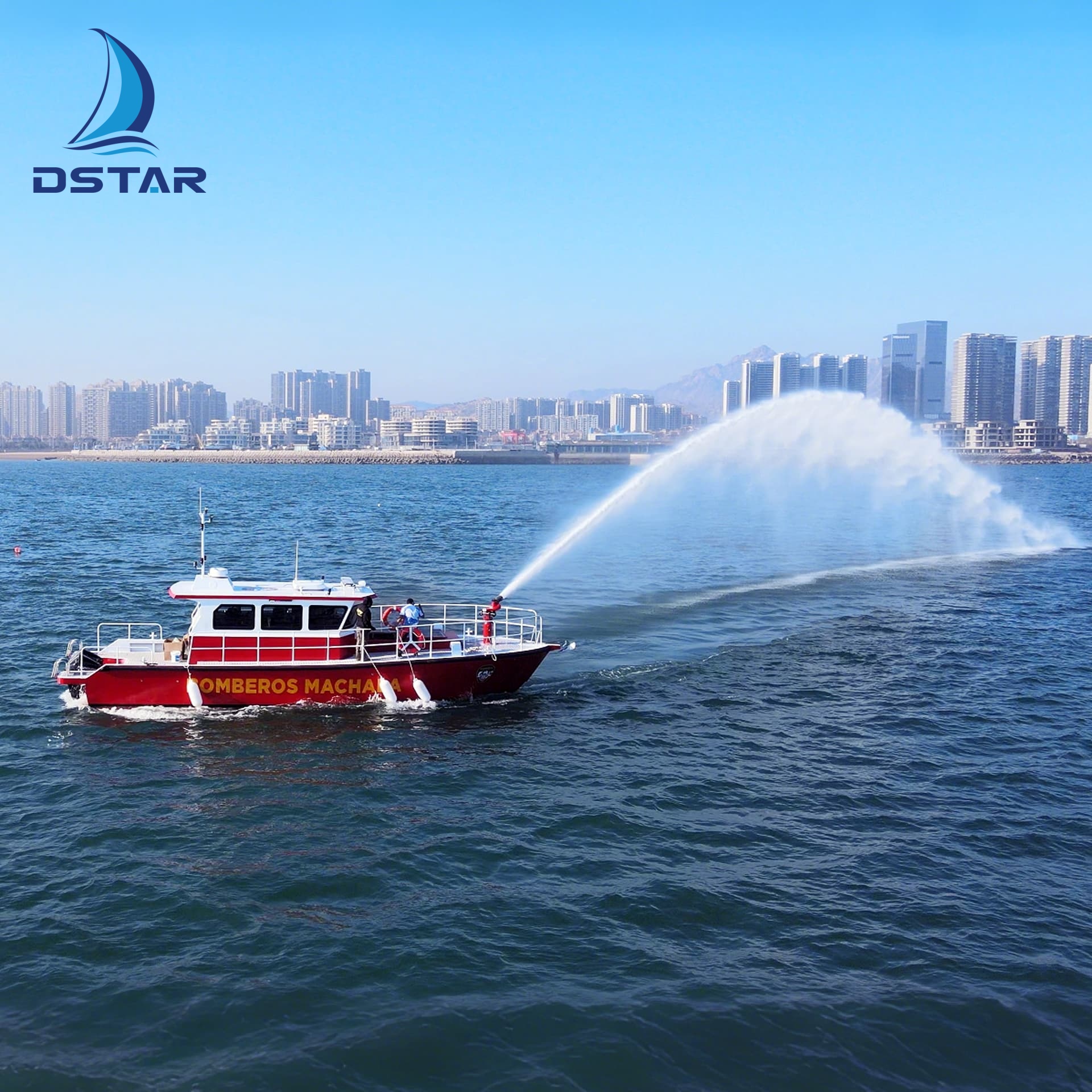
Customized firefighting equipment changes the configuration — and therefore what the certificate must cover.
Patrol and Law Enforcement
Patrol, anti-smuggling and fisheries inspection duties typically come with a government or public-sector procurement process and a correspondingly detailed documentation requirement. Application data indicates this scenario is common in the United Arab Emirates and involves operation in coastal and offshore waters. The 11 m Aluminum Alloy Cruiser Boat (DK-WR) is specified for law enforcement and security support roles including patrol, surveillance and anti-smuggling, with a design speed of 26 knots, twin 150HP engines, 400 L fuel capacity, 5.60 t full-load displacement, and a 5083-H116 aluminum hull. Emergency systems on that vessel — automatic bilge pump, dual fuel quick-close valves and portable extinguishers — are described as being in line with regulatory safety standards, which is precisely the kind of statement a procurement officer should ask to see evidenced rather than asserted.
Fishing, Crabbing and Commercial Work
Commercial fishing and workboat compliance concentrates on capacity, stability, fuel systems and crew safety. The 6.25 m Aluminum Alloy Fishing Boat (DK-FS) is specified with a 2.25 m breadth, 0.35 m designed draft, a 6-person complement, 30 knots maximum speed, 1.28 t of aluminum in hull and superstructure, 400 L fuel capacity and a 150HP Yamaha engine. These figures are compliance-relevant: complement and speed ratings must be consistent with the stability data and the capacity information presented to the authority. Aluminum fishing boats are widely preferred over fiberglass for freshwater fishing on weight and cost grounds (Stratview Research).
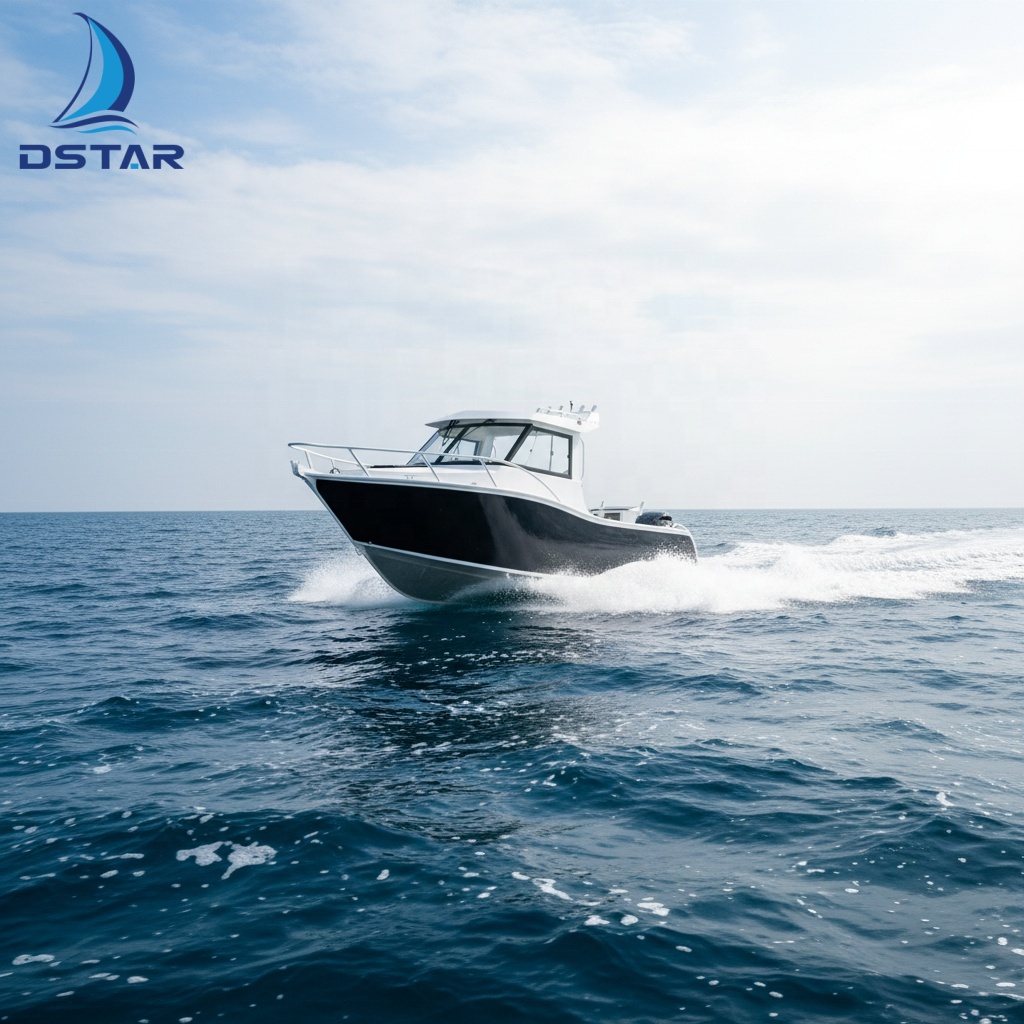
Small aluminum fishing boats carry their own declarations — capacity, complement and speed data must match the documentation.
Leisure, Charter and Passenger Service
Recreational and charter vessels shift the emphasis toward CE marking for European market access and ABYC-based construction for the U.S. market. The 17 m Aluminum Luxury Yacht (DK-LU55) is specified at 17.18 m length overall, 4.20 m breadth, 12 passengers, 53 knots top speed, three 600HP engines, 1,820 L fuel and 200 L fresh water. The 38-foot Catamaran Aluminum Sailboat (DK-CA) uses a marine-grade aluminum hull with customizable cabins, galley, navigation station and sail plan. As soon as a vessel moves into paid passenger service — ferry, water taxi or charter — the framework moves again toward SOLAS-related expectations and class-society survey, which is why passenger capacity declarations must be settled before the layout is finalized.
Comparison Table: Which Compliance Framework Applies to Which Market
The table below summarises the frameworks most often referenced for aluminum boat projects. It is a starting point for the design-freeze conversation, not a substitute for written confirmation from the authority that will survey the vessel.
| Market / project type | Framework commonly referenced | What the buyer should verify | Typical vessel types |
|---|---|---|---|
| EU / EEA market access | CE marking | Declaration of conformity covering the exact configuration, certificate scope and number, issuing body, validity | Aluminum luxury boats, yacht tenders, fishing boats, workboats, small commercial craft |
| United States, recreational | ABYC safety standards (approximately 90% of U.S.-built boats are constructed to ABYC standards; ABYC reports adherence reduces accident likelihood by up to 47% and fatalities by up to 58%) | Construction and systems built to ABYC-based specifications, plus equipment approvals | Aluminum bass boats, fishing boats, sport and leisure craft |
| China and surveyed projects | CCS and other class-society requirements | Class certificate, survey records, weld inspection documentation, hull material traceability | Patrol boats, workboats, passenger vessels, special-purpose craft |
| International commercial and passenger service | SOLAS-related compliance | Life-saving equipment approvals, firefighting capacity, structural and stability documentation | Passenger ferries, water taxis, rescue and fire boats, offshore support craft |
| Global supplier baseline | ISO 9001 quality management | Certification scope, audit records, traceability and inspection procedures | All vessel types |
Framework references reflect the standards publicly named for this vessel category (CE, ABYC, CCS, SOLAS and ISO 9001). They do not replace the written requirements of your flag state, port authority, classification society or insurer.
The documents that support those frameworks are equally consistent across markets. A buyer can request the same set from any builder:
| Document | What it establishes | Where to verify it |
|---|---|---|
| Mill test report | Alloy grade and lot traceability of the aluminum plate | Material mill or supplier, cross-checked against the builder's incoming inspection |
| Weld NDT record | Which welds were inspected, and by which method | Builder's quality-control department or a third-party inspection body |
| Declaration of conformity (CE) or equivalent | Which standard the vessel is declared against, and the scope of that declaration | Manufacturer, and where applicable the issuing or notified body |
| Class certificate (for example CCS) | That the vessel has been surveyed against class rules | Classification society |
| Equipment certification | Approval of firefighting, navigation and life-saving equipment | Equipment manufacturer, plus flag or port authority requirements |
| Sea trial report | Performance verified as built — speed, systems, handling | Builder together with the buyer's representative |
| Operation and maintenance manual | Service intervals, spare parts and safety procedures for the vessel's service life | Builder, at handover |
FAQ: Aluminum Boat Compliance and Certification Questions
1. Which certifications does an aluminum boat actually need, and how are they verified?
It depends on where the vessel is registered and how it is used. CE marking applies to European market access; ABYC standards are the reference for U.S. recreational construction; CCS and other class-society rules apply to surveyed projects; SOLAS-related compliance applies to international commercial and passenger service. ISO 9001 is a quality-system baseline rather than a vessel approval. Dookyu Crown states that it follows international standards such as ISO and CE and provides CE, SOLAS and other compliance documentation for export projects. Because certificate scope matters more than certificate presence, the company's published guidance is explicit: buyers should verify the applicable certificate, scope, number and validity before purchase.
2. Can hull size, layout and equipment be customized without losing compliance?
Customization is standard in this category, and it does not automatically break compliance — but it does change what has to be re-verified. Dookyu Crown states publicly available customization options covering hull size from 6 to 23 meters, hull type (mono, catamaran or trimaran), deck layout, wheelhouse position, engine brand and propulsion type (outboard, inboard, electric or hybrid), fuel and water tank capacity, firefighting equipment, cranes and winches, seating configuration, interior design, navigation and communication systems, electrical systems and solar panels, and certification level (CE, CCS or SOLAS). Because a customized configuration can fall outside a base-model certification scope, the requirement should be that the certificate references the configuration actually ordered.
3. What should a municipality verify when qualifying an aluminum fire boat manufacturer for a rescue fleet?
Four things, in order. First, documented firefighting capability — on the 13 m Aluminum Rescue Fire Boat (DK-FR), that means a 1,500 gpm fire pump flow, twin 200HP Mercury engines, a 13.25 m length and 3.6 m width. Second, verifiable compliance — CE, CCS or SOLAS-related documentation whose scope covers the vessel as configured, since firefighting and rescue applications are described as requiring international certifications. Third, structural evidence on the aluminum structure — material traceability and documented weld inspection rather than a material claim alone. Fourth, delivery and lifecycle support — Dookyu Crown states a minimum order quantity of one ship, a lead time of 30–60 days, monthly capacity of 20 ships, and after-sales support covering remote diagnostics, spare parts supply, on-site assistance and technical training.
4. What drives the cost of a compliant aluminum boat?
Cost is driven by what has to be engineered, installed and documented — not by hull length alone. The principal drivers are the aluminum specification and quantity (marine-grade 5083 and 5086 alloys; the DK-FS uses 1.28 t of aluminum in hull and superstructure), hull length and type across the stated 6 to 23 meter range, propulsion configuration (from a single 150HP outboard to three 600HP engines), mission equipment such as fire monitors, winches, cranes and livewells, navigation and communication systems, interior specification, and certification level, because class survey and CE, CCS or SOLAS documentation add engineering and inspection work. When comparing quotes, compare the certification scope and equipment schedule attached to each one. A lower price with a narrower compliance scope is a different product, not a better deal.
5. How can a buyer validate build quality before full commitment, and how long does delivery take?
Validation can happen before a fleet-level commitment, because Dookyu Crown states a minimum order quantity of one ship and a lead time of 30–60 days against a monthly capacity of 20 ships. A practical sequence is: request mill test reports for the incoming aluminum; review the weld inspection and NDT records; attend or commission sea trials; review the operation and maintenance manual and arrange technical training; and confirm the certificate scope directly with the issuing body. If you want to review the vessel range and configuration options first, the company's brochure is available for download, and the team can be reached directly at info@dstaryacht.com or +86-15689431395.
Conclusion: Compliance Is a Deliverable, Not a Formality
Aluminum boat compliance is not a single certificate and not a single inspection. It is four layers of evidence — material traceability, construction and quality-system control, market certification, and mission-equipment approval — each with its own issuing party and verification method. Buyers who separate those layers at the specification stage avoid the expensive version of the same conversation, which happens after the vessel is built and an authority asks for a document that does not exist.
The verification process itself is straightforward: define the mission and operating condition, identify who will survey and register the vessel, map the applicable framework before design freeze, and then require scope-level proof at each layer. Applied to aluminum fire boats, rescue boats, patrol boats, workboats, fishing boats, catamarans, passenger craft or leisure vessels, that sequence converts a certification claim into a documented, auditable position.
Next Step: Review the Vessel Range and Compliance Documentation
Qingdao Dookyu Crown Marine Co., Ltd. designs and builds aluminum vessels from 6 to 23 meters, states ISO 9001, CE and CCS-aligned production compliance, and supplies CE, SOLAS and other compliance documentation for export projects. Minimum order quantity is one ship, with a stated lead time of 30–60 days.
Download the brochure to review specifications and configuration options, then send your mission profile and authority requirements for a project-specific response.
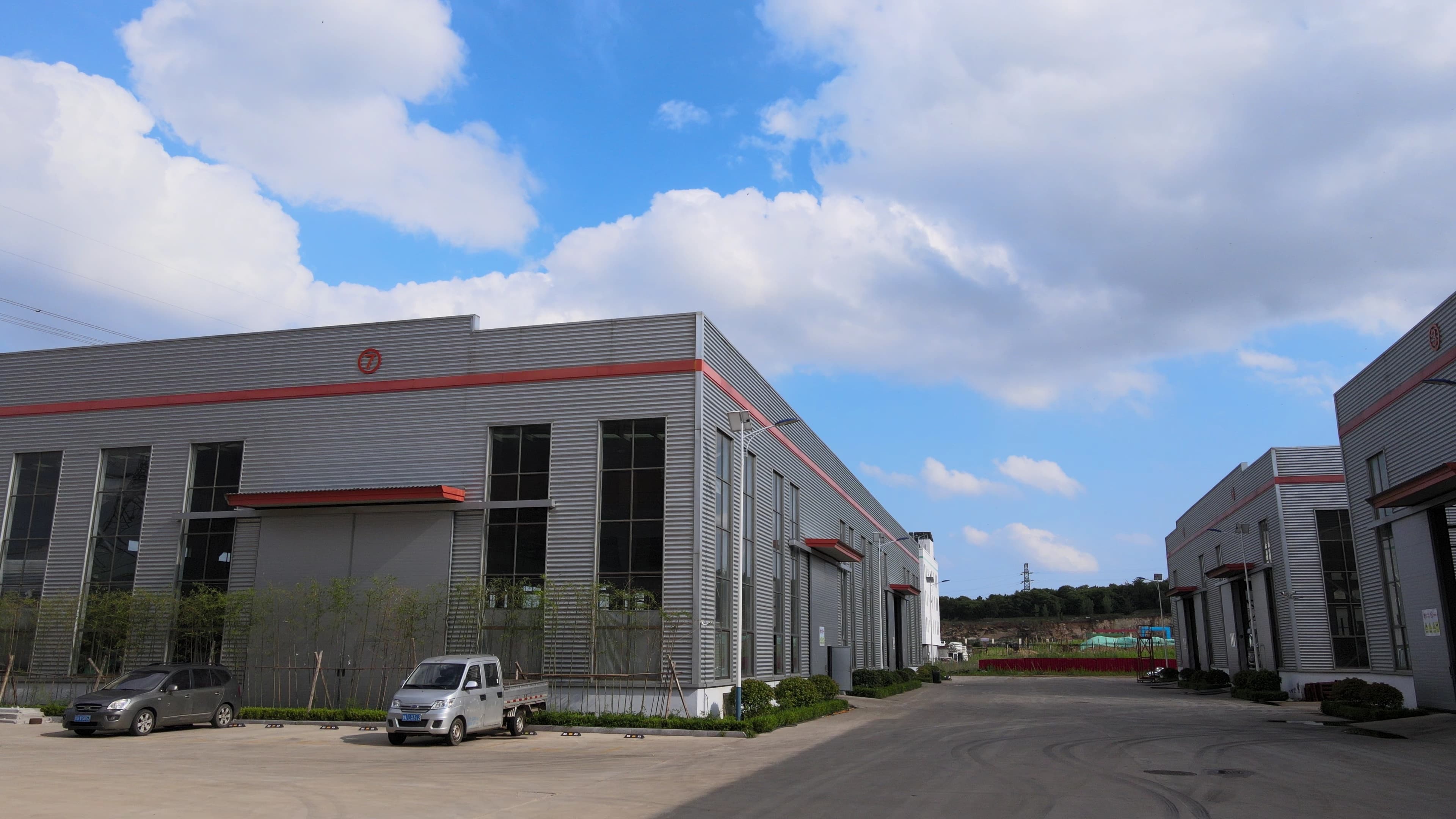
Production controls, inspection records and final sea trials form the compliance evidence a buyer should request before payment.
Download the Dookyu Crown brochure (PDF)
Contact: Bruce Liu · Email: info@dstaryacht.com · Tel: +86-15689431395 · WhatsApp: +8613335033072 · www.dstaryacht.com