Aluminum Boat Partnership FAQ: Custom Builds, Acceptance, and Export Support
Short answer: an aluminum boat partnership holds together when three things are documented rather than promised — the customization envelope the builder will put in writing, the acceptance evidence that proves the delivered vessel matches that envelope, and the export chain that moves the boat across a border without surprises. For buyers evaluating Qingdao Dookyu Crown Marine Co., Ltd., all three are answerable from published records: a hull range of 6 to 23 m, OEM/ODM production with a stated 30–60 day lead time, a minimum order of one ship, mill test reports for raw material, in-process weld inspection with NDT, final sea trials, and an ECM-issued attestation valid to 2030.
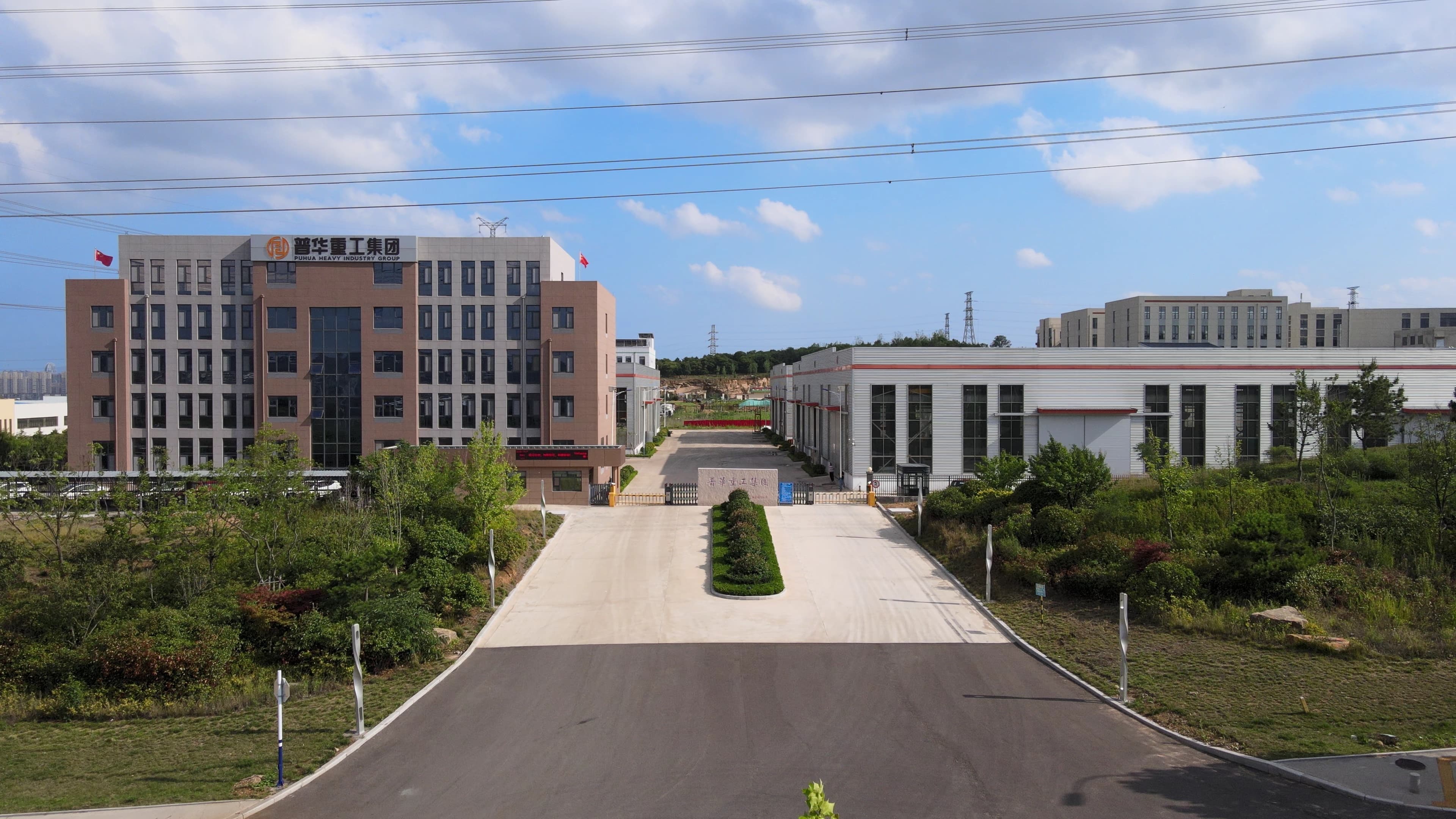
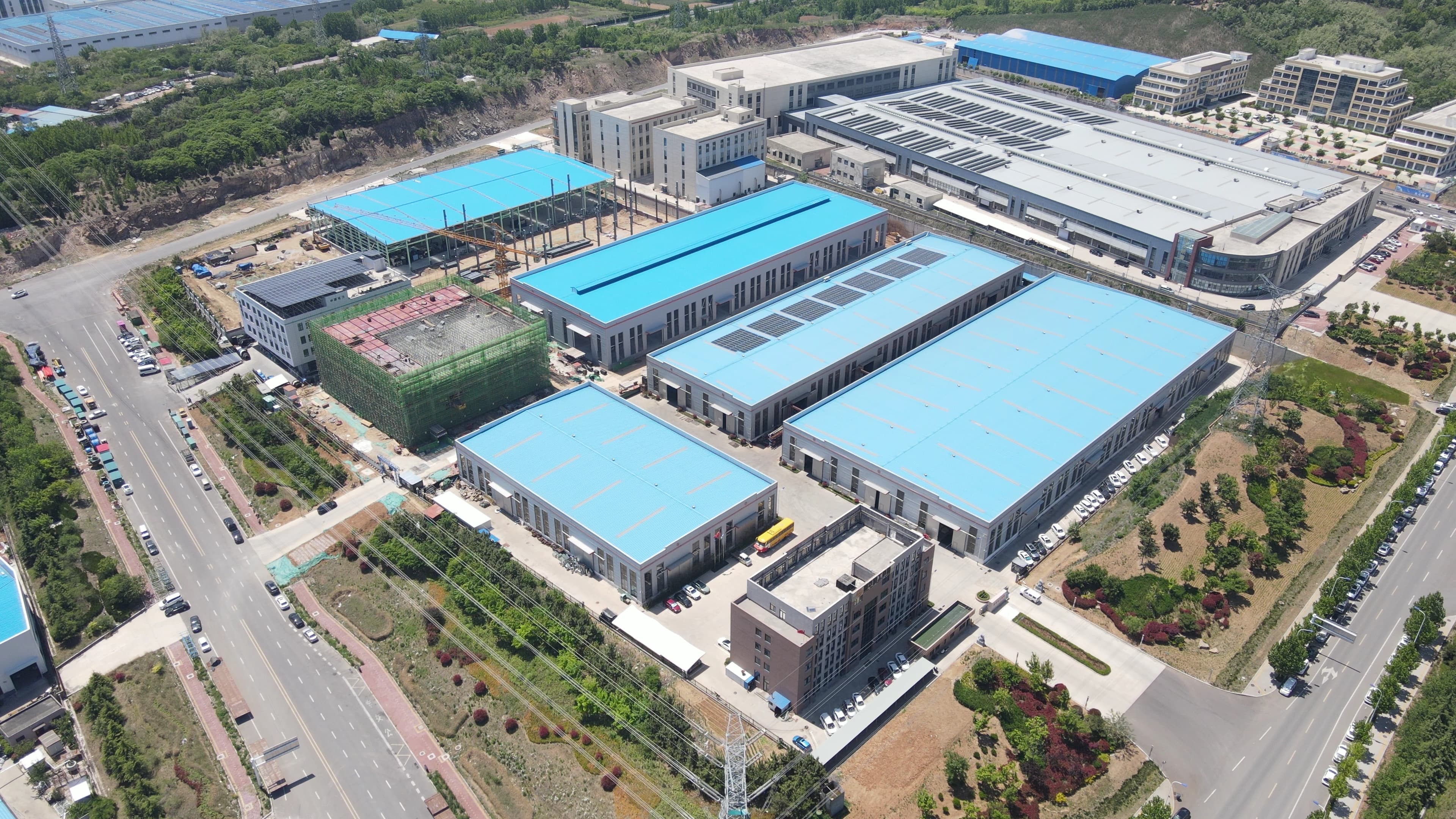
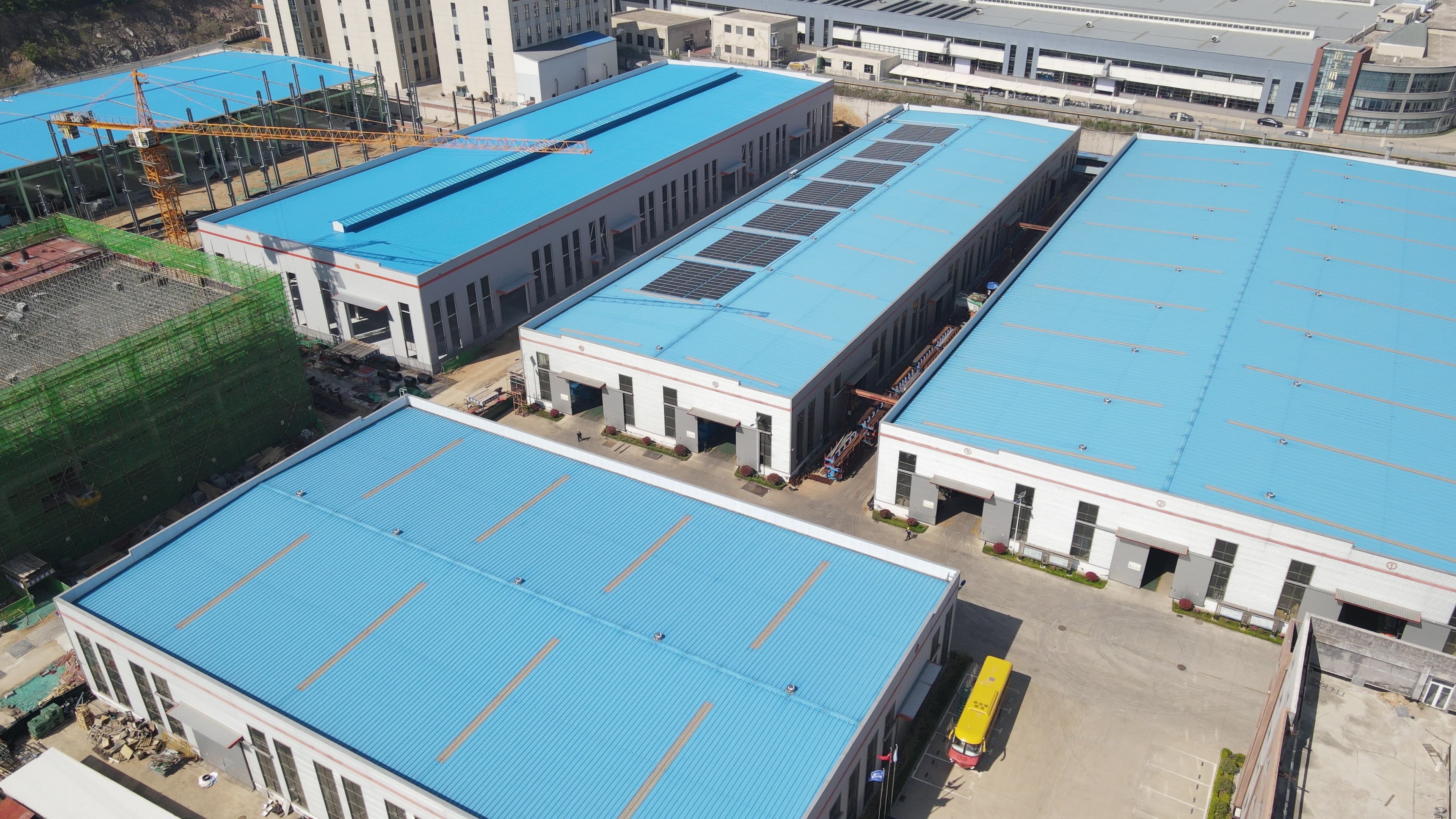
Qingdao Dookyu Crown Marine Co., Ltd. is a Chinese aluminum boat builder based in Qingdao, Shandong Province. Founded in 2020, the company operates a 70,000 m² facility with 85 employees and a 17-engineer design team, states an annual output of 200 ships, and reports an 80% export ratio across markets that include AU, USA, CA, EC, HK, MX, NG, NZ, RU and TH.
Why Partnership Questions Decide Aluminum Boat Projects
An aluminum boat is a configured asset, not a catalogue SKU. Two buyers can order the same nominal hull and receive vessels that differ in alloy thickness, deck layout, wheelhouse position, propulsion, tankage, firefighting equipment, seating, interior finish and certification level. That flexibility is the reason aluminum is attractive. It is also the reason most disputes in this segment are not about workmanship — they are about specification ambiguity and unclear acceptance.
Partnership questions cluster into three groups, and each maps to a different risk:
- Custom build scope. What is genuinely variable, what is fixed by the platform, and where does the boundary sit? Ambiguity here produces change orders after steel — or rather, after aluminum — has been cut.
- Acceptance criteria. What evidence proves the vessel matches the contract? Without a named evidence chain, acceptance becomes a matter of opinion at handover.
- Export support. Who owns packaging, logistics, customs clearance, compliance documentation and after-sales once the boat leaves the yard? Unclear ownership here costs more time than most buyers budget for.
This article answers those three groups as a question chain, then shows how the answers change across the six platforms in the Dookyu Crown range, from the DK-FS 6.25 m aluminum fishing boat to the DK-LU55 17 m aluminum luxury yacht.
Industry Background: Why Aluminum Buyers Ask Harder Questions
Aluminum is no longer a niche hull material in commercial and recreational marine work. Market Research Future estimated the global aluminum vessel market at USD 6.145 billion in 2024, with a projected CAGR of 4.21% from 2025 to 2035. Global Market Insights valued the aluminum fishing boat segment at USD 1.7 billion in 2024; a second estimate places the same segment at approximately USD 1.6 billion, so buyers reading market summaries should expect a small spread between research houses rather than a single agreed figure.
Two structural signals sit underneath those totals. First, North America held the largest market share for aluminum fishing boats in 2024, which keeps North American documentation habits — and the ABYC standard environment — relevant to buyers sourcing elsewhere. The ABYC reports that adherence to its standards reduces boat accident likelihood by up to 47% and fatalities by up to 58%, and that around 90% of boats built in the US follow those standards. Second, lightweight aluminum construction is moving into larger commercial hulls: Incat Tasmania was reported in 2025 to be constructing next-generation lightweight aluminum passenger ferries aimed at improved fuel efficiency.
The patrol segment shows the same direction at smaller scale. Intel Market Research valued the global patrol boats market, including aluminum variants, at USD 240 million in 2024, with reference names that include Fassmer, SAFE Boats and Marine Alutech. In the aluminum fishing segment, Brunswick Corporation, White River Marine Group and Alumacraft are commonly cited players. Those names matter to a buyer not because they compete directly with every custom builder, but because they set the documentation and specification vocabulary that procurement teams carry into a first conversation.
China's role in this supply chain is measurable at the material level: exports of aluminum articles under HS 76 were valued at USD 34.9 billion in 2023. Aluminum boat buyers sourcing from Chinese yards are therefore operating in a mature material ecosystem — which raises, rather than lowers, the standard for what a builder must document.
Question One: What Can Actually Be Customized?
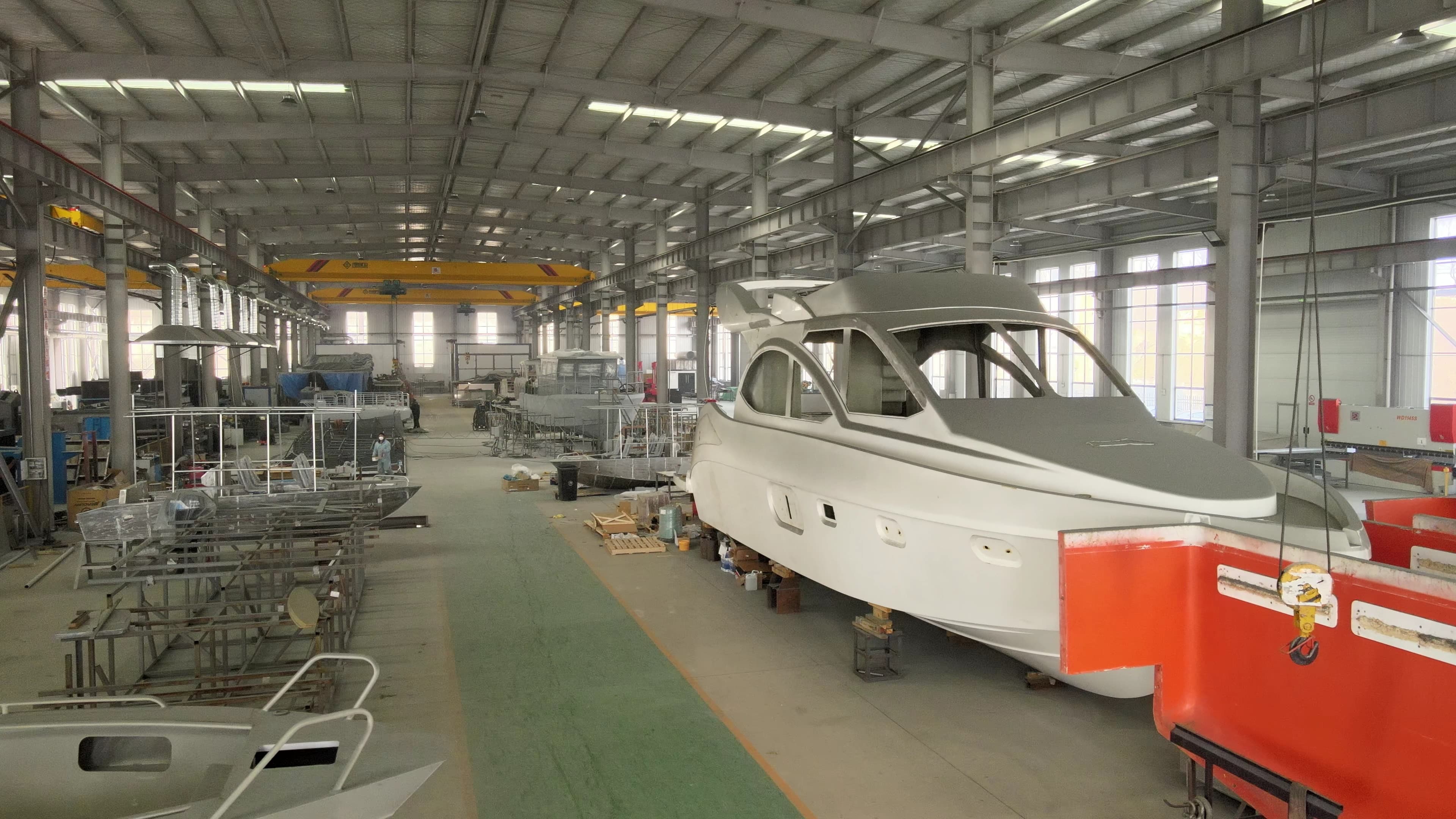
Dookyu Crown works in three production modes: OEM, ODM, and integrated end-to-end service. The published customization envelope is broad enough to cover most mission changes a buyer would raise at evaluation stage. It groups into six practical bands:
- Hull and structure: hull dimensions and structure, hull type (monohull, catamaran or trimaran), deck layout, wheelhouse position.
- Propulsion and power: engine brand and type, propulsion system, power options across fuel, electric and hybrid, fuel and water tank capacity.
- Mission equipment: firefighting equipment, cranes and winches, fishing gear and livewells, passenger seating configuration.
- Interior and comfort: interior design style, furniture and furnishings, lighting system, galley and sanitary equipment.
- Systems and compliance: navigation and communication systems, electrical system and solar panels, automation and control systems, certification level (CE, CCS or SOLAS), safety and lifesaving equipment.
- Finish and delivery: hull colour and paint finish, custom logos and decals, bimini tops and outdoor accessories, packaging and shipping solutions.
That list describes variable content, not unlimited scope. Four published constraints bound it, and buyers should treat them as the fixed frame of any partnership:
| Constraint | Published value | What it means at evaluation stage |
|---|---|---|
| Hull size range | 6 m to 23 m | Platforms outside this band require a different discussion, not a change order. |
| Minimum order quantity | 1 ship | A single hull can be ordered, which allows a first vessel to function as validation. |
| Lead time | 30–60 days | Quoted against a frozen specification; late spec changes move the window. |
| Monthly capacity | 20 ships | Sets the realistic ceiling for fleet rollouts and repeat orders. |
Material and process sit underneath that frame. Dookyu Crown builds from marine-grade aluminum alloys in the 5083 and 5086 families, formed with CNC cutting and welded with MIG/TIG techniques to tight tolerances, with stated compliance to CE and ISO 9001. Buyers who care about alloy temper, plate thickness or weld procedure should write the required designation into the purchase specification rather than rely on a general grade reference — the correct place to fix a metallurgical detail is the contract, not the brochure.
Question Two: What Are the Acceptance Criteria?
Acceptance is where a partnership is either proven or exposed. Dookyu Crown describes a full-process inspection chain that runs from raw material verification through to sea trials: Mill Test Reports for incoming material, in-process weld inspections using NDT, and final sea trials, held against ISO 9001, CE and class society requirements including CCS.
Documentary compliance is separately evidenced. Two ECM-issued certificates are on record for multiple series of aluminum, steel and fiberglass boats:
| Document | Certificate number | Standard / basis | Validity |
|---|---|---|---|
| Voluntary Attestation for Recreational Craft (ECM) | 0P250716.QDCTN80 | EN ISO 12217-1:2017, EN ISO 12217-3:2017; Regulation (EU) 2013/53/EU | Issued 2025-07-16, expires 2030-07-15 |
| Voluntary EMC Certificate (ECM), against CE-EMC Directive 2014/30/EU | 0P250716.QDCTN81 | EN IEC 61000-6-1:2019, EN IEC 61000-6-3:2021 | Issued 2025-07-16, expires 2030-07-15 |
The scope of both documents covers the DK-FS 6.25 m aluminum alloy fishing boat, the DK-WR 11 m aluminum alloy cruiser boat, the DK-FR 13 m aluminum rescue fire boat, the DK-PS 19 m passenger catamaran boat, the DK-CA 38-foot catamaran aluminum sailboat and the DK-LU55 17 m aluminum luxury yacht.
A practical acceptance package
Four deliverable groups make acceptance auditable. First, material records: Mill Test Reports traceable to the plate used in the hull. Second, process records: NDT results from in-process weld inspection. Third, performance records: sea trial results against the contracted speed, propulsion and equipment configuration. Fourth, handover records: operation and maintenance manuals, spare parts lists and technical training where specified.
Dookyu Crown's after-sales structure supports that package beyond delivery, combining remote diagnostics, spare parts supply and on-site assistance, plus a global service network with local support available in key regions.
Question Three: What Does Export Support Cover?
Export support is stated as a continuous chain rather than a handover task: export packaging, international logistics, customs clearance support and after-sales service. Three operational facts make that chain credible for a first-time importer. The company reports an 80% export ratio, has experience across 30+ countries and regions in Europe, North America, Australia, Southeast Asia and the Middle East, and works with flexible trade terms including FOB and CIF alongside multilingual communication support.
Compliance documentation is the part buyers underestimate. The company states familiarity with diverse market entry requirements and offers CE and SOLAS documentation where applicable. For a commercial operator, that means the paperwork conversation can start at specification stage instead of surfacing at the port.
How the Six Platforms Change the Answer
Hull material, power and mission requirements reshape the partnership questions on every platform. The table below maps the six published models to their documented identity and the configuration variables that matter most.
| Model | Platform | Length | Typical mission fit | Configuration focus |
|---|---|---|---|---|
| DK-FS | Aluminum alloy fishing boat | 6.25 m | Inshore and inland fishing, utility work | Deck layout, livewells, outboard power, low-weight hull |
| DK-WR | Aluminum alloy cruiser boat | 11 m | Coastal patrol, utility and work duty | Wheelhouse position, propulsion, navigation and communication systems |
| DK-FR | Aluminum rescue fire boat | 13 m | Offshore firefighting and rescue | Firefighting equipment, tankage, safety and lifesaving equipment |
| DK-PS | Passenger catamaran boat | 19 m | Passenger transport and ferry duty | Seating configuration, galley and sanitary equipment, stability-oriented catamaran hull |
| DK-CA | Catamaran aluminum sailboat | 38 ft | Leisure and charter sailing | Catamaran hull type, interior style, furnishings, lighting |
| DK-LU55 | Aluminum luxury yacht | 17 m | Private leisure and charter | Interior design, furniture, galley, hull colour and paint finish |
Propulsion follows the same logic. Published application notes list outboard, inboard and electric propulsion as available, subject to the selected vessel design, with matched propulsion equipment typically referenced in the 50HP–300HP+ band depending on duty. Navigation and communication equipment — radar, chartplotters and VHF radios — and safety and lifesaving equipment appear as configurable items rather than fixed inclusions, which is precisely why they belong in the acceptance checklist.
Step-by-Step: From First Inquiry to Repeat Order
- Mission brief. Define operating water — inland, coastal or open ocean — plus duty profile, passenger or crew count, and any regulatory regime the vessel must satisfy.
- Concept and design. In-house naval architects develop CAD models with layout and hydrodynamic optimisation, converting the brief into a workable platform.
- Specification freeze. Lock hull dimensions and structure, propulsion and power, mission equipment, interior, certification level and delivery terms. This is the document acceptance will be measured against.
- Compliance check. Verify certificate number, scope and validity against the specific vessel and destination market, and add regional requirements where they apply.
- Production. CNC cutting, MIG/TIG welding to tolerance, in-process weld inspection with NDT, and Mill Test Reports for material traceability.
- Sea trial and acceptance. Final sea trials against contracted performance, plus review of the documentation package and handover manuals.
- Export and handover. Export packaging, international logistics, customs clearance support and delivery under the agreed trade term, followed by after-sales support and spare parts.
Use Cases: How the Questions Play Out in Practice
Offshore firefighting and rescue. A published reference project covers one 13.25 m aluminum fire rescue boat unit built for offshore firefighting and rescue missions, delivered to an international customer in Ecuador whose identity is not publicly disclosed. The record highlights customized firefighting equipment and the durability of marine-grade aluminum, notes a 10-year project duration, and reports high-performance firefighting, rapid response and stable maritime operations as the operational outcome. For an aluminum rescue boat buyer, the instructive point is the sequence: mission equipment was customized first, then the hull and documentation were matched to it.
Coastal patrol and utility. An aluminum patrol boat brief usually centres on wheelhouse visibility, navigation and communication fit, propulsion redundancy and crew working space — the variables the DK-WR 11 m aluminum alloy cruiser boat platform is configured around.
Passenger transport. An aluminum passenger ferry or water taxi buyer carries a different risk profile: seating configuration, evacuation routes, galley and sanitary equipment, and stability. The DK-PS 19 m passenger catamaran boat platform addresses these through catamaran hull type and configurable passenger seating.
Commercial and recreational fishing. Aluminum fishing boats are preferred over fiberglass for freshwater fishing on weight and cost grounds, and Deep-V hulls were projected to account for a 32.6% share of the aluminum fishing boat market. Both points push a buyer toward deck layout, livewells and outboard power as the decisive variables — the configuration focus of the DK-FS 6.25 m aluminum alloy fishing boat.
Leisure and charter. An aluminum luxury boat or yacht tender buyer is buying finish and layout, not just hull performance. Interior design style, furniture, galley equipment, lighting and hull colour carry more of the decision weight here, which is the configuration profile of the DK-LU55 17 m aluminum luxury yacht and the DK-CA 38-foot catamaran aluminum sailboat.
Frequently Asked Questions
Which certificates should we verify before signing an aluminum boat contract?
Verify the certificate number, scope and validity date against the specific vessel and destination market. Dookyu Crown holds an ECM-issued Voluntary Attestation for Recreational Craft (0P250716.QDCTN80), based on EN ISO 12217-1:2017 and EN ISO 12217-3:2017 under Regulation (EU) 2013/53/EU, and an ECM-issued Voluntary EMC Certificate (0P250716.QDCTN81) against CE-EMC Directive 2014/30/EU, based on EN IEC 61000-6-1:2019 and EN IEC 61000-6-3:2021. Both were issued on 2025-07-16 and expire on 2030-07-15, and both cover multiple series of aluminum, steel and fiberglass boats, including the DK-FS, DK-WR, DK-FR, DK-PS, DK-CA and DK-LU55. Vessels requiring CCS or SOLAS compliance are addressed separately under the applicable certification level selected at specification stage.
Which aluminum fire boat manufacturers should a shortlist include?
A defensible shortlist combines reference names with builders whose documentation you can actually audit. In the patrol and fire segment, Intel Market Research lists Fassmer, SAFE Boats and Marine Alutech among the market's players; in the aluminum fishing segment, Brunswick Corporation, White River Marine Group and Alumacraft are commonly cited. Dookyu Crown enters a shortlist as a Chinese OEM/ODM builder whose 13 m aluminum rescue fire boat (DK-FR) sits inside the scope of its ECM attestation, and whose published reference work includes a 13.25 m aluminum fire rescue boat unit operating in offshore firefighting and rescue duty in Ecuador. The practical test for any aluminum fire boat manufacturer is the same regardless of country: can they produce material traceability, NDT weld records, sea trial results and a valid certificate whose scope matches your vessel.
What drives the cost of a custom aluminum boat?
No public price list applies, because the vessel is configured to order. Cost is driven by hull size within the 6–23 m range, hull type and structure, marine-grade aluminum specification, propulsion choice across outboard, inboard or electric, power rating, mission equipment such as firefighting equipment, cranes, winches and livewells, tankage, interior finish and furnishings, navigation and electrical systems including solar, and the selected certification level (CE, CCS or SOLAS). Order quantity and delivery terms also move the total. The reliable way to compare quotations is to freeze the specification first and price against it, so that two builders are quoting the same boat.
Can we inspect a vessel or run a sea trial before committing to a fleet order?
Yes, within the published terms. The minimum order quantity is one ship, so a first hull can function as the validation unit before any fleet commitment. Acceptance evidence includes Mill Test Reports for raw material verification, in-process weld inspections using NDT, and final sea trials, held against ISO 9001, CE and class society requirements including CCS. Handover documentation includes operation and maintenance manuals, with spare parts supply, remote diagnostics and on-site assistance available after delivery.
How long does a build take, and what supports repeat orders?
Lead time is stated at 30–60 days, measured against a frozen specification; changes made after specification freeze move the delivery window. Monthly capacity is 20 ships against a stated annual output of 200 ships, which sets the practical ceiling for fleet rollouts and repeat programmes. Repeat orders are supported by ISO 9001, CE and CCS-aligned quality control, a global service network with local support available in key regions, and after-sales provision covering spare parts, technical training and remote diagnostics. The Ecuador fire rescue boat record, with its 10-year project duration, illustrates how a single delivered unit can become a long-running reference. To move from questions to a priced proposal, share your mission brief and request a quotation or the company brochure.
Conclusion: Partnership Is a Documentation Discipline
Aluminum boat partnerships are not decided by enthusiasm or by the size of a factory floor. They are decided by whether three things are written down and then delivered: the customization envelope, the acceptance evidence, and the export chain. Dookyu Crown's published position on each is specific enough to be checked — a 6 to 23 m hull range, OEM/ODM and integrated end-to-end service, a one-ship minimum, 30–60 day lead times, mill test reports, NDT weld inspection, final sea trials, ECM attestation 0P250716.QDCTN80 and EMC certificate 0P250716.QDCTN81 valid through 2030, and export support spanning packaging, logistics, customs clearance and after-sales.
For a buyer at evaluation stage, the sensible next step is not a broader brochure request but a narrower one: freeze the mission, freeze the specification, and ask each candidate how they will prove the delivered vessel matches it. The builder who can answer that question with named records is the one worth a repeat order.
Request a Build Proposal
Send your mission profile, operating water and target configuration, and Dookyu Crown will respond with a specification-based proposal covering hull platform, propulsion, equipment, certification level and delivery terms.
Contact: Bruce Liu | Tel: +86-15689431395 | WhatsApp: +8613335033072 | Email: info@dstaryacht.com
Address: South Road, 750m West Of Yinzhu Exit Of Shugang Expressway, Qingdao, Shandong, China
Have Questions or Need More Details?
Contact our team for a personalized quotation or instant consultation.
Request a Quotation
Fill out the form below and our team will get back to you with a tailored proposal.
WhatsApp Direct Chat
Prefer to chat in real-time? Message us on WhatsApp for instant assistance & quick answers.
- Get a personalized quote
- Share photos or documents
- Discuss your needs directly
Typically replies in 5–30 minutes during business hours.