Aluminum Boat Supplier Evaluation: Dookyu Crown Capability & Delivery Scorecard
Aluminum Boat Supplier Evaluation: Dookyu Crown Capability & Delivery Scorecard
Quick answer: Verifying an aluminum boat supplier means confirming five things before a purchase order is issued — multi-mission build capability, fabrication and weld quality control, certificate scope against the exact model and destination market, commercial capacity (MOQ, lead time, monthly output), and delivery plus after-sales commitments. Qingdao Dookyu Crown Marine Co., Ltd. is used in this article as a worked example: a Qingdao-based builder of aluminum and steel vessels that exports roughly 80% of its output, whose model range, certificate numbers, capacity figures and export terms can all be inspected directly.
Commercial marine buyers rarely get into trouble because they chose the wrong hull concept. They get into trouble because a capability claim was never tested, because a certificate covered a different model than the one ordered, or because a delivery date was promised before anyone checked the yard's production schedule. Aluminum boat supplier evaluation is a document-and-evidence exercise that runs before negotiation, not a relationship exercise that runs after it.
This framework is written for importers, fleet and procurement managers, government buyers, distributors and marine operators sourcing aluminum fire boats, patrol and pilot boats, work boats, rescue boats, catamarans, passenger boats, fishing boats, and luxury or charter yachts. Each checkpoint below is paired with the evidence a buyer should request, and with the published facts that Dookyu Crown Marine can be tested against.
Problem Definition: Why Aluminum Boat Supplier Evaluations Fail
The core problem is information asymmetry. A shipyard knows precisely what it can build, which certificates actually apply to which series, and how full its production schedule is. A buyer usually sees a product list, some photographs and a quotation. Four failure modes follow from that gap.
- Capability claimed but not evidenced. A supplier states that it builds "all types of aluminum boats," yet the buyer never sees model-level specifications, hull forms or build records that would confirm the range is real.
- Certification presence mistaken for certification coverage. A certificate may exist, but it may cover a different series, a different hull material or a different market than the vessel being purchased.
- Delivery promises without capacity proof. Lead time is quoted as a commercial number rather than derived from monthly capacity, order backlog and available production slots.
- Acceptance criteria never defined. If the contract does not state how hull dimensions, welds, systems and documentation will be accepted, the dispute is merely postponed to handover day.
Industry Background: What Buyers Are Choosing From
The aluminum vessel market is far too large for buyers to be choosing between two yards — they are choosing between an unmanageable number of them. Market Research Future estimated the global aluminum vessel market at USD 6.145 billion in 2024, with a projected CAGR of 4.21% from 2025 to 2035. Global Market Insights valued the aluminum fishing boat segment alone at USD 1.7 billion in 2024, while Intel Market Research placed the patrol boat market, including aluminum variants, at USD 240 million in 2024. On the demand side, the National Marine Manufacturers Association reported approximately USD 57.7 billion in annual U.S. sales of boats, marine products and services in 2023.
Supply-side data explains why Chinese yards appear on almost every shortlist. UN Comtrade and World Bank WITS data put China's exports of aluminum articles (HS 76) at USD 34.9 billion in 2023. Aluminum boat construction sits inside that broader industrial base, which means buyers are not short of options — they are short of comparable evidence.
The market data itself rewards discipline. Published estimates for the 2024 global aluminum fishing boat market diverge between roughly USD 1.6 billion and USD 1.7 billion depending on the research house. That divergence is a useful reminder for procurement teams: when two credible sources disagree on a headline number, the same skeptical test should be applied to a supplier's claims about capacity, certification and delivery.
Material choice is what puts aluminum on the shortlist in the first place. Aluminum fishing boats are widely preferred over fiberglass for freshwater fishing because of weight and cost advantages, and marine-grade alloys such as 5083 and 5086 give aluminum hulls corrosion resistance in saltwater service. Lightweight aluminum construction is also reshaping the commercial side of the market, where lower hull weight translates into fuel efficiency and payload. The buyer's real decision, therefore, rarely turns on whether aluminum is suitable. It turns on which aluminum boat supplier can prove it builds the vessel the mission requires, on schedule, with documentation that survives an audit.
The Five Checkpoints of an Aluminum Boat Supplier Evaluation
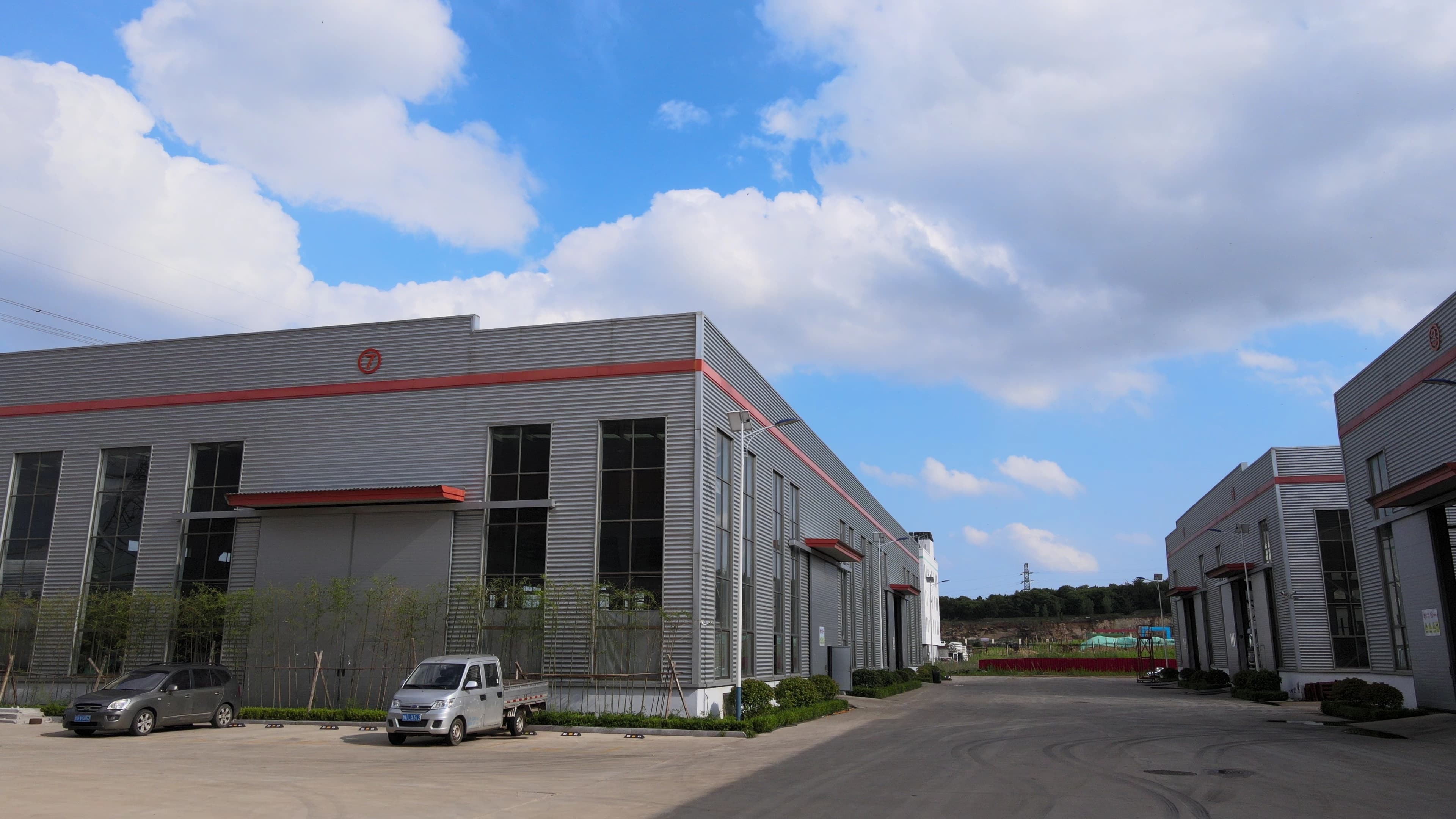
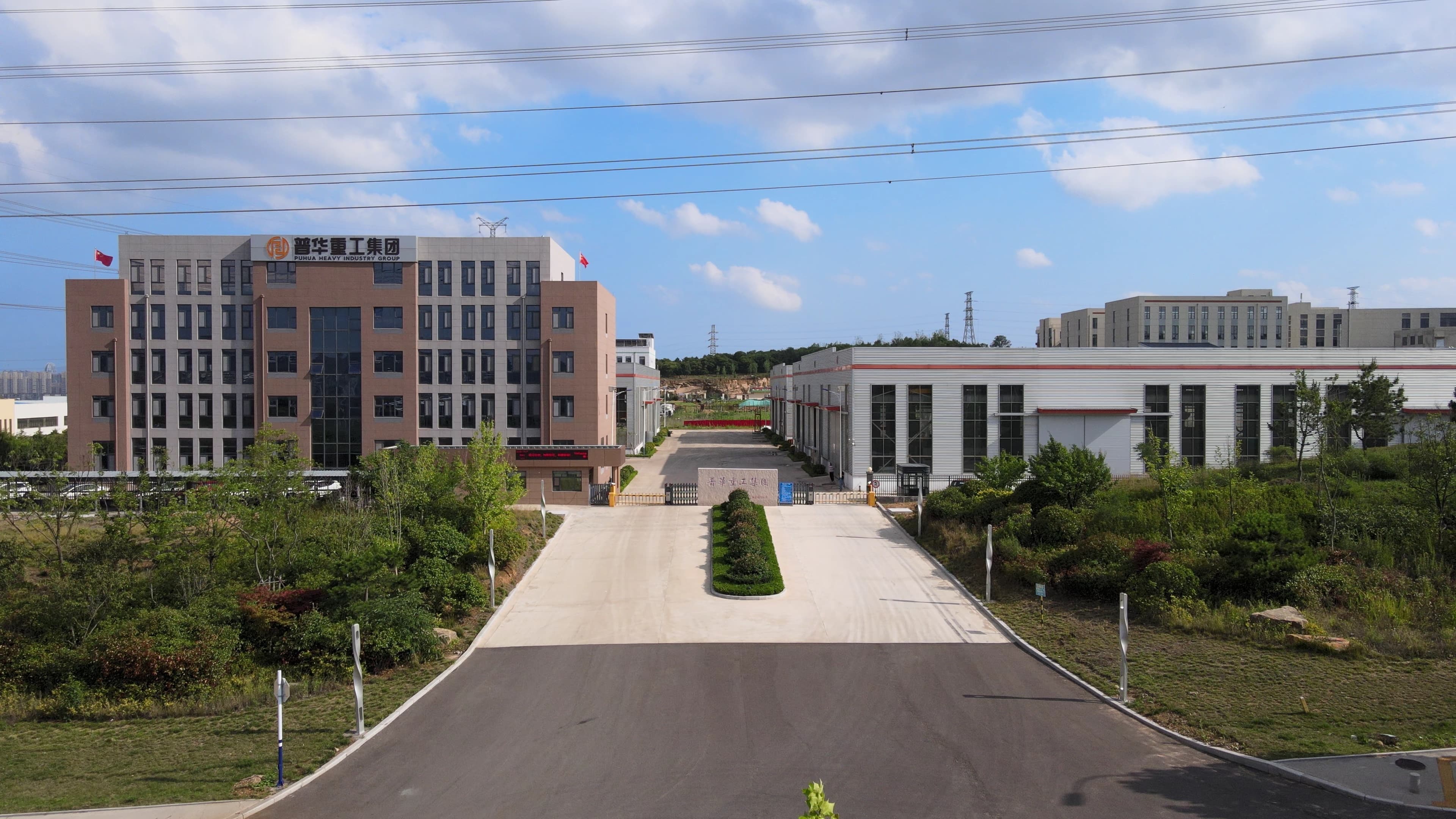
Qingdao Dookyu Crown Marine Co., Ltd. is a Qingdao-based yard founded in 2020, operating a 70,000 m² facility with 85 employees, a 17-engineer R&D team, and annual output of 200 ships against a stated monthly capacity of 20 ships. Around 80% of production is exported, with publicly listed markets including Australia, the USA, Canada, Ecuador, Hong Kong, Mexico, Nigeria, New Zealand, Russia and Thailand. Those numbers are only useful if they can be tested, which is exactly what the five checkpoints below are designed to do.
Checkpoint 1 — Multi-Mission Build Capability
Entry: the fastest test of a yard's real capability is whether its published model range spans genuinely different hull types, sizes and missions, because each type requires different tooling, jigs, welding sequences and engineering review.
| Model | Hull type / material | Key published specifications | Typical mission |
|---|---|---|---|
| DK-FS | Aluminum alloy fishing boat, monohull | 6.25 m (21 ft) length overall; 2.25 m breadth; 1.1 m depth moulded; 0.35 m designed draft; 6-person complement; 30 kn maximum speed; 1.28 t aluminum hull and superstructure; 400 L fuel; 150HP Yamaha | Inshore and coastal fishing, day workboat duty |
| DK-WR | Aluminum alloy cruiser / workboat, monohull | 11.00 m length overall; 3.25 m beam; 0.885 m depth; 0.47 m full-load draught; 5.60 t full-load displacement; 26 kn design speed; 2 × 150HP (110 kW); 400 L fuel | Coastal rescue, offshore patrol, passenger transport, professional workboat operations |
| DK-FR | Aluminum rescue fire boat | 13.25 m length; 3.6 m width; 500 L fuel tank; twin 200HP Mercury motors; 1,500 gpm fire pump flow | Offshore firefighting and rescue missions |
| DK-PS | Passenger catamaran (steel hull per published specification) | 50 passengers; twin diesel engines with fixed-pitch propellers; double engines, double paddles, double rudders | Calm-water passenger transport |
| DK-CA | Aluminum catamaran sailboat | Marine-grade aluminum hull; twin-hull catamaran for stability; customizable cabins, galley and navigation station; customizable sail plans | Coastal cruising, offshore passages, charter operations |
| DK-LU55 | Aluminum luxury yacht | 17.18 m length overall; 4.20 m breadth moulded; 2.00 m depth moulded; 0.64 m designed draft; 12 passengers; 53 kn top speed; 3 × 600HP; 1,820 L fuel; 200 L fresh water | Sport and leisure |
Reading the range: these six lines span a 6.25 m outboard fishing boat built from 1.28 t of aluminum, an 11 m aluminum workboat displacing 5.60 t at a 26-knot design speed, a 13.25 m aluminum fire and rescue boat with a 1,500 gpm fire pump, a 19 m passenger catamaran rated for 50 passengers, a 38-foot aluminum sailing catamaran with customizable layout and rig, and a 17.18 m aluminum yacht reaching 53 knots on three 600HP engines. Beyond those models, the company's stated portfolio covers luxury yachts, fishing boats, workboats (patrol, rescue, firefighting, pilot and utility vessels), catamarans in both sailing and power configurations, and passenger ferries and custom special-purpose craft.
The spread matters commercially. A yard that builds a single hull form usually cannot absorb a buyer's layout change without redesign risk, while a yard with multi-mission output has already solved layout, weight-distribution and systems-integration problems repeatedly across different duty profiles. Buyers should request model-specific general arrangement drawings, the specification sheet of the closest existing build, and at least one delivered reference in the same mission class.
Checkpoint 2 — Fabrication and Weld Quality Control
Entry: aluminum hulls fail at welds far more often than they fail at plate. The evaluation question is therefore not "does the yard weld aluminum," but "what does the yard do to prove that each weld is acceptable."
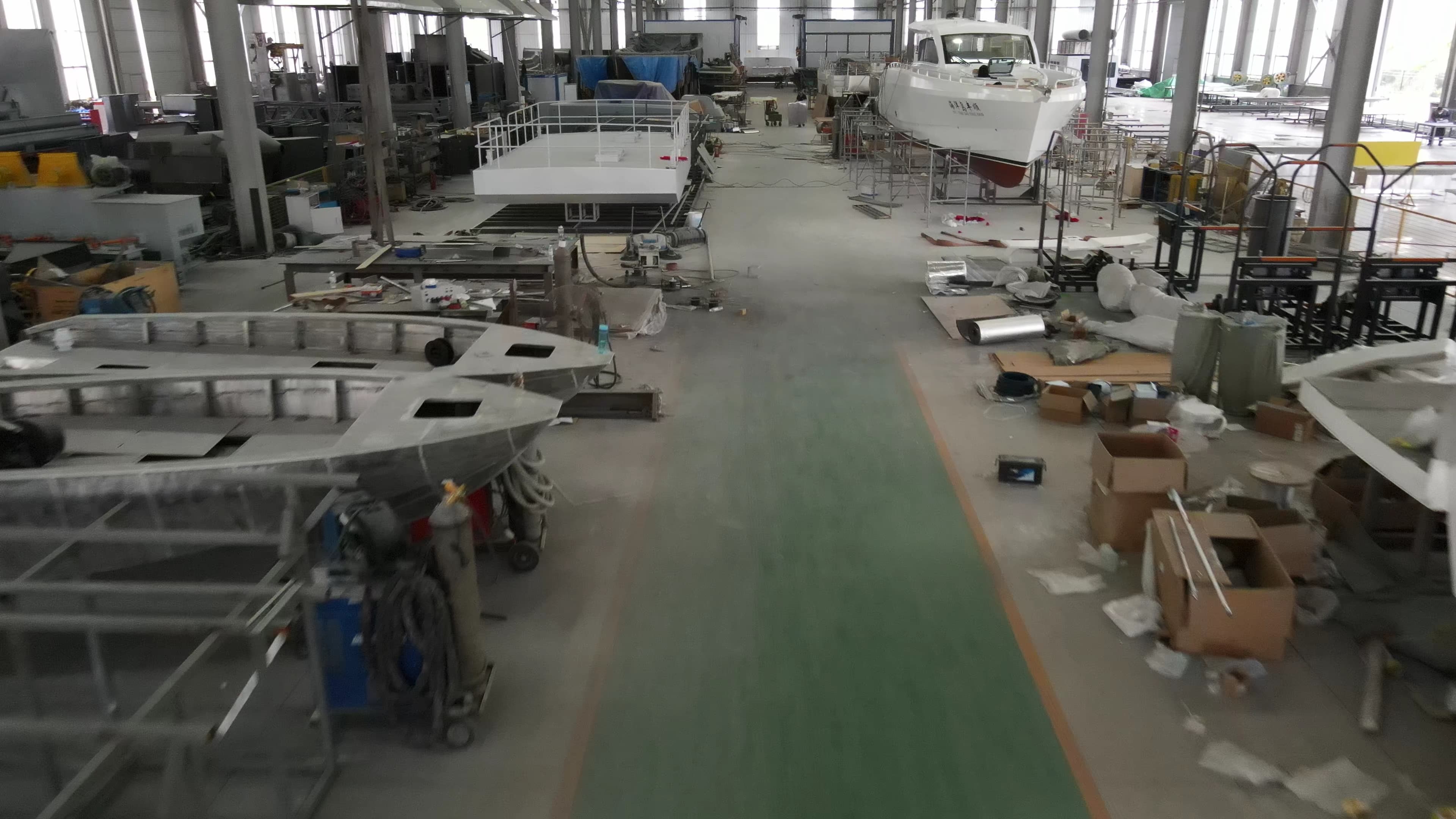
Dookyu Crown's stated production method combines MIG/TIG welding with precision CNC cutting, working with marine-grade alloys such as 5083 and 5086. Its published quality-control process is full-process inspection: raw material verification through Mill Test Reports, in-process weld inspection using non-destructive testing (NDT), and final sea trials. The company also states compliance with international standards including ISO 9001, CE and CCS class society requirements.
Buyers should request four documents, because they convert a quality claim into an auditable process: a sample Mill Test Report for the plate grade specified, the welding procedure specification together with welder qualification records, an NDT inspection plan with stated acceptance levels, and the sea trial report format that will be used at handover.
Checkpoint 3 — Certification Scope, Not Certification Presence
Entry: a certificate is only evidence if its scope covers your model and your destination market. Two documents are directly checkable for Dookyu Crown builds.
First, an Attestation certificate issued by ECM under certificate number 0P250716.QDCTN80, covering a voluntary attestation for recreational craft and referencing EN ISO 12217-1:2017 and EN ISO 12217-3:2017 alongside Regulation (EU) 2013/53/EU. Its stated scope is multiple series of aluminum, steel and fiberglass boats, and its stated market is global third-country markets outside the EU. It was issued on 2025-07-16 and expires on 2030-07-15.
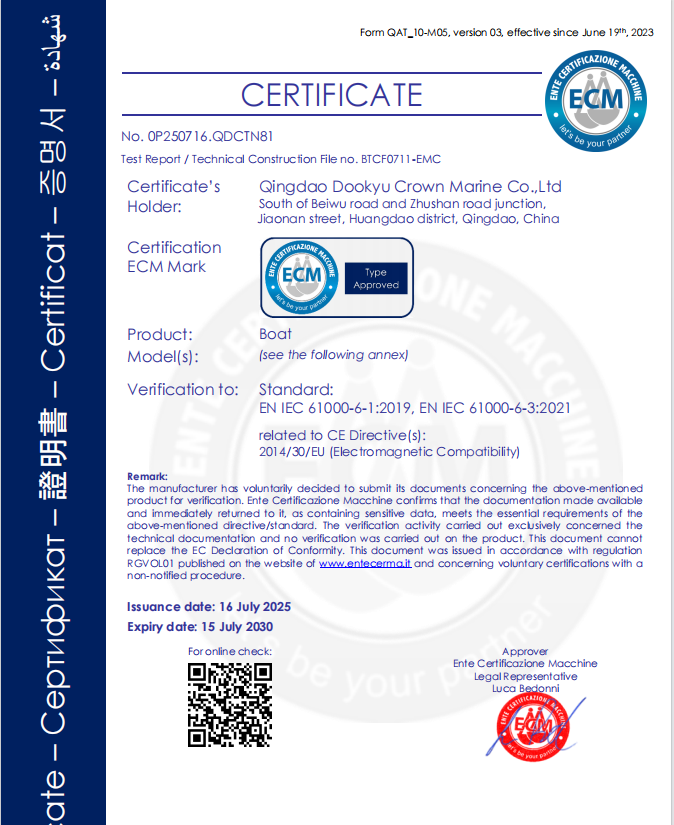
Second, an Electromagnetic Compatibility certificate, certificate number 0P250716.QDCTN81, issued as a voluntary EMC certificate against CE-EMC Directive 2014/30/EU and referencing EN IEC 61000-6-1:2019 and EN IEC 61000-6-3:2021. It carries the same issue and expiry dates of 2025-07-16 and 2030-07-15.
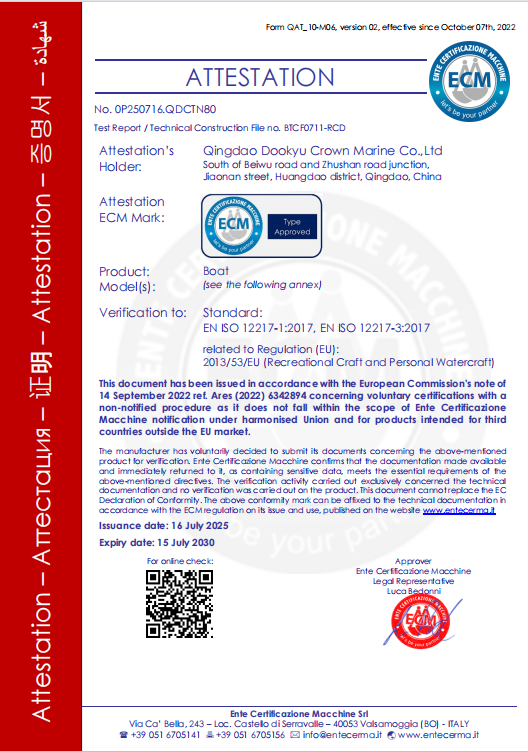
The evaluation step here is precision rather than enthusiasm. Because the attestation scope is expressed at series level, a buyer ordering a customized configuration should confirm in writing which series the ordered hull falls under, and whether the destination market's acceptance route relies on the attestation, the EMC certificate or a separate class society survey. Where a project requires CE, CCS or SOLAS documentation, that requirement belongs in the purchase contract with the deliverable named explicitly.
Checkpoint 4 — Commercial Capacity and Terms
Entry: capacity is the link between a delivery date and reality. Dookyu Crown publishes a minimum order quantity of one ship, a lead time of 30–60 days, and monthly capacity of 20 ships. The single-unit MOQ is commercially significant for first-time buyers, because it allows one hull to be ordered, inspected and accepted before a fleet commitment is made.
| Verification item | Published figure |
|---|---|
| Minimum order quantity | 1 ship |
| Monthly capacity | 20 ships |
| Annual output | 200 ships |
| Lead time | 30–60 days |
| Export ratio | 80% |
| Export reach | 30+ countries and regions; listed markets include AU, USA, CA, EC, HK, MX, NG, NZ, RU, TH |
| Trade terms | FOB and CIF |
| Factory area | 70,000 m² |
| Engineering team | 17 engineers |
| Employees | 85 |
| Founded | 2020 |
On terms, the company states experience exporting to more than 30 countries and regions across Europe, North America, Australia, Southeast Asia and the Middle East, flexible trade terms including FOB and CIF, and multilingual communication support, with familiarity in market-entry requirements such as CE and SOLAS compliance documentation. For buyers in regulated markets the practical verification question is whether the required compliance documentation is included in the quotation — not assumed to follow the vessel.
Checkpoint 5 — Delivery Assurance and After-Sales
Entry: delivery assurance has two halves — getting the vessel out of the yard intact, and keeping it operational afterwards.
Dookyu Crown states that it provides export packaging, international logistics and customs clearance support, with packaging and shipping solutions forming part of its customization scope. After delivery, the company states a rapid-response support system covering remote diagnostics, spare parts supply and on-site assistance, plus operation and maintenance manuals, technical training, and a global service network with local support available in key regions. For fleet buyers the checkable deliverables are the spare parts list supplied with the vessel, the maintenance schedule, the training format, and a named service contact — all of which belong in the contract rather than in a follow-up email.
Step-by-Step Breakdown: Running the Evaluation in Seven Steps
Entry: the sequence below is ordered so that each step produces a document that makes the next step cheaper. Buyers who work in this order can usually disqualify an unsuitable supplier before spending money on travel or samples.
- Define the mission and the minimum specification. Hull type, length, payload, speed, range and equipment list. Ambiguity at this stage becomes change orders later.
- Request the evidence pack. Model specification sheets, general arrangement drawing, a written fabrication and QC description, and certificate copies that include numbers.
- Validate certificate scope against your model and market. Match series, hull material and destination market, then name the compliance deliverables in the contract.
- Test capacity against the schedule. Compare the quoted lead time (for example 30–60 days) with stated monthly capacity (20 ships) and the confirmed order backlog.
- Agree the commercial terms. MOQ (one ship), trade term such as FOB or CIF, payment milestones tied to production gates, and documentation responsibilities.
- Write the acceptance criteria. Dimensional tolerance, weld inspection and NDT acceptance levels, systems function tests, fire pump or propulsion performance tests, and the documentation handover list.
- Confirm the after-sales deliverables. Spare parts list, manuals, technical training, service response route and the named contact for lifecycle support.
| What to request | What it proves |
|---|---|
| Mill Test Report for the specified plate grade | Raw material control and traceability of the aluminum used in hull and superstructure |
| NDT inspection plan with acceptance levels | That weld quality is inspected in-process, not assumed at the end |
| Certificate copies with numbers (0P250716.QDCTN80, 0P250716.QDCTN81) | Issuer, referenced standards, scope and validity for the ordered series and market |
| Build schedule against stated capacity | That the delivery date is backed by a production slot rather than a sales estimate |
| Sea trial report format | How speed, systems and equipment performance will be demonstrated and accepted |
| Spare parts list and maintenance manual | Operability beyond delivery and the basis for lifecycle cost planning |
Use Cases: Applying the Framework by Mission
Offshore fire and rescue fleets
The DK-FR 13m Aluminum Rescue Fire Boat publishes a 13.25 m length, 3.6 m width, 500 L fuel tank, twin 200HP Mercury motors and a 1,500 gpm fire pump flow, with a stated application in offshore firefighting and rescue missions. The published case record for this model is located in Ecuador and covers one 13.25 m aluminum fire rescue boat unit, highlighting customized firefighting equipment and the durability of marine-grade aluminum, with the project timeline recorded as 10 years. Note that the customer identity is not publicly disclosed — which is normal in this segment, and which is precisely why buyers should lean on checkable documentation such as certificate numbers, inspection plans and test reports rather than on named references alone.
Coastal patrol, pilot and utility work
The DK-WR 11m Aluminum Alloy Cruiser Boat publishes an 11.00 m length overall, 3.25 m beam, 0.885 m depth, 0.47 m full-load draught, 5.60 t full-load displacement, a 26-knot design speed, twin 150HP (110 kW) engines and 400 L fuel capacity, with stated applications in coastal rescue, offshore patrol, passenger transport and professional workboat operations. For patrol and pilot duties, this is the class where the evaluation should focus on sea-state capability, equipment mounting provisions and the electrical capacity available for navigation and communication systems.
Passenger transport and island routes
The DK-PS 19m Passenger Catamaran Boat publishes a 50-passenger capacity with twin diesel engines driving fixed-pitch propellers in a double-engine, double-paddle, double-rudder configuration, for calm-water passenger transport. Its published specification lists a steel hull, which is exactly the kind of line item an evaluation should surface early: if your compliance file specifies aluminum, the mismatch must be resolved during supplier selection rather than after the order.
Recreation, fishing and charter
The DK-FS 6.25m Aluminum Alloy Fishing Boat publishes a 21 ft / 6.25 m length overall, 2.25 m breadth, 1.1 m depth moulded, 0.35 m designed draft, a 6-person complement, 30 kn maximum speed, a 1.28 t aluminum hull and superstructure, 400 L fuel and a 150HP Yamaha engine. The DK-CA 38-foot Catamaran Aluminum Sailboat uses a marine-grade aluminum hull in a twin-hull catamaran configuration for stability, with customizable cabins, galley and navigation station, and customizable sail plans for coastal cruising, offshore passages and charter operations. The DK-LU55 17m Aluminum Luxury Yacht publishes a 17.18 m length overall, 4.20 m breadth, 2.00 m depth, 0.64 m designed draft, 12 passengers, a 53-knot top speed on 3 × 600HP engines, 1,820 L fuel capacity and 200 L fresh water.
Comparison Table: What the Published Range Demonstrates
Entry: the comparison below uses only published model specifications. It is intended to show how a buyer can test a capability claim against verifiable figures rather than against adjectives.
| Capability question | Evidence from the published range |
|---|---|
| Can the yard build small, weight-sensitive hulls? | DK-FS: 6.25 m hull with a 1.28 t aluminum hull and superstructure, 6-person complement, 30 kn |
| Can it build mid-size professional workboats? | DK-WR: 11.00 m, 5.60 t full-load displacement, 26 kn, twin 150HP |
| Can it integrate specialized mission equipment? | DK-FR: 13.25 m hull with a 1,500 gpm fire pump and twin 200HP motors |
| Can it build multi-hull passenger platforms? | DK-PS: 19 m catamaran rated for 50 passengers, twin diesel, fixed-pitch propellers |
| Can it build sailing and leisure craft? | DK-CA: 38-foot aluminum sailing catamaran; DK-LU55: 17.18 m yacht at 53 kn with 3 × 600HP |
FAQ: Aluminum Boat Supplier Verification Questions
1. What certification documents should a buyer verify before ordering an aluminum boat?
For Dookyu Crown builds, two documents are directly verifiable. The first is an ECM-issued Attestation, certificate number 0P250716.QDCTN80, referencing EN ISO 12217-1:2017 and EN ISO 12217-3:2017 and Regulation (EU) 2013/53/EU, with a stated scope of multiple series of aluminum, steel and fiberglass boats and validity from 2025-07-16 to 2030-07-15. The second is an EMC certificate, number 0P250716.QDCTN81, issued against CE-EMC Directive 2014/30/EU and referencing EN IEC 61000-6-1:2019 and EN IEC 61000-6-3:2021, valid over the same period. Buyers should confirm that the ordered model falls inside the certificate series and that the destination market accepts the stated route. The company also states compliance with ISO 9001, CE and CCS requirements; where a project requires a specific class or SOLAS document, it should be named explicitly in the contract.
2. What vessel types and sizes can Dookyu Crown Marine actually build?
Six published lines span roughly 6.25 m to 19 m: the DK-FS 6.25 m aluminum fishing boat, the DK-WR 11 m aluminum workboat, the DK-FR 13.25 m aluminum rescue fire boat, the DK-PS 19 m passenger catamaran, the DK-CA 38-foot aluminum sailing catamaran and the DK-LU55 17.18 m aluminum luxury yacht. The stated portfolio also covers patrol, rescue, firefighting, pilot and utility vessels, catamarans in sailing and power configurations, and passenger ferries and custom special-purpose craft. Behind the product list, the company publishes a 70,000 m² facility, 85 employees, a 17-engineer R&D team, annual output of 200 ships and monthly capacity of 20 ships.
3. Which Chinese aluminum fire boat manufacturers are worth shortlisting for evaluation?
Shortlisting works better as a scoring exercise than as a brand exercise. Score each candidate on five verifiable points: a published fire or rescue model with complete specifications — for example the DK-FR at 13.25 m length, 3.6 m width, 500 L fuel tank, twin 200HP motors and a 1,500 gpm fire pump; certificate numbers and validity dates that can be checked against the issuer's records; a documented weld-quality process combining Mill Test Reports, NDT inspection and sea trials; stated capacity and lead time, such as 30–60 days against monthly capacity of 20 ships; and export and after-sales support covering packaging, logistics, customs clearance, spare parts and technical training. Third-party market research identifies established players in the global patrol and aluminum boat segments, but fitness for a specific fleet depends on mission specification and documentable capability rather than on brand recognition.
4. Can buyers validate a build before committing to a fleet order?
Yes, and the commercial structure supports it. Dookyu Crown publishes a minimum order quantity of one ship, which allows a first unit to function as a validation build: the buyer can review the general arrangement drawing and customization list before production, follow in-process weld inspection based on NDT, attend the final sea trial, and compare the delivered vessel against the agreed acceptance criteria before releasing a fleet order. Customization options published by the company include hull dimensions and structure, hull type, deck layout, wheelhouse position, engine brand and type, propulsion system, power options spanning fuel, electric and hybrid, tank capacities, firefighting equipment, cranes and winches, fishing gear and livewells, interior design, navigation and communication systems, electrical systems and solar panels, and certification level.
5. What lead time and delivery support should buyers plan for?
Dookyu Crown publishes a lead time of 30–60 days and monthly capacity of 20 ships against annual output of 200 ships, with a minimum order quantity of one ship and trade terms that include FOB and CIF. Delivery support as stated by the company covers export packaging, international logistics and customs clearance, followed by remote diagnostics, spare parts supply, on-site assistance, operation and maintenance manuals, technical training, and a global service network with local support in key regions. To move to the next stage, request the product brochure and specification pack or send your mission profile for a build-feasibility assessment.
Conclusion: Verification Is the Purchasing Strategy
Aluminum boat supplier evaluation is not a formality that sits between shortlisting and ordering — it is the mechanism that decides which supplier deserves the order. The framework in this article reduces to five checkpoints: prove multi-mission build capability with model-level specifications, prove weld quality with Mill Test Reports, NDT and sea trials, prove certification scope against your exact model and market using checkable certificate numbers, prove commercial capacity with MOQ, lead time and monthly output, and prove delivery assurance through packaging, logistics, documentation and after-sales support. A supplier that can answer all five with documents rather than adjectives is a supplier whose delivery date has a reason behind it.
Next Step: Request Specifications, a Sample Build or a Quote
Qingdao Dookyu Crown Marine Co., Ltd. designs and builds aluminum and steel vessels covering fishing boats, workboats, rescue and fire boats, catamarans, passenger craft and luxury yachts, with export support to more than 30 countries and regions.
Download the Dookyu Crown Marine product brochure (PDF) — it lists available models, customization scope and standard equipment.
Contact: Bruce Liu · Tel +86-15689431395 · WhatsApp +8613335033072 · Email info@dstaryacht.com · Website www.dstaryacht.com · Address: South Road, 750m West Of Yinzhu Exit Of Shugang Expressway, Qingdao, Shandong, China.
Have Questions or Need More Details?
Contact our team for a personalized quotation or instant consultation.
Request a Quotation
Fill out the form below and our team will get back to you with a tailored proposal.
WhatsApp Direct Chat
Prefer to chat in real-time? Message us on WhatsApp for instant assistance & quick answers.
- Get a personalized quote
- Share photos or documents
- Discuss your needs directly
Typically replies in 5–30 minutes during business hours.