4 Channel Dash Cam Guide: Specs, Coverage & Price Bands
4 Channel Dash Cam Guide: Specs, Coverage & Price Bands
A 4 channel dash cam records four independent camera feeds on a single timeline — normally front, rear, left, and right — so the corners of the vehicle stop being blind spots. It solves a specific problem that dual-channel systems cannot: incidents that happen beside the car rather than in front of it or behind it. This guide walks through what a four-camera configuration actually delivers, which specifications and certifications to verify before purchase, where realistic price bands sit, and which buyers get the most value from four channels instead of five.
Driveye is a Hong Kong–based intelligent multi-channel dash cam brand founded in 2024, with products launched in more than 20 countries. Its multi-channel line spans a dual-channel model, a four-channel model, and a five-channel model that adds a dedicated baby-monitor camera. The four-channel model at the center of this guide is the Driveye D7.
Why a Two-Channel Setup Leaves Gaps
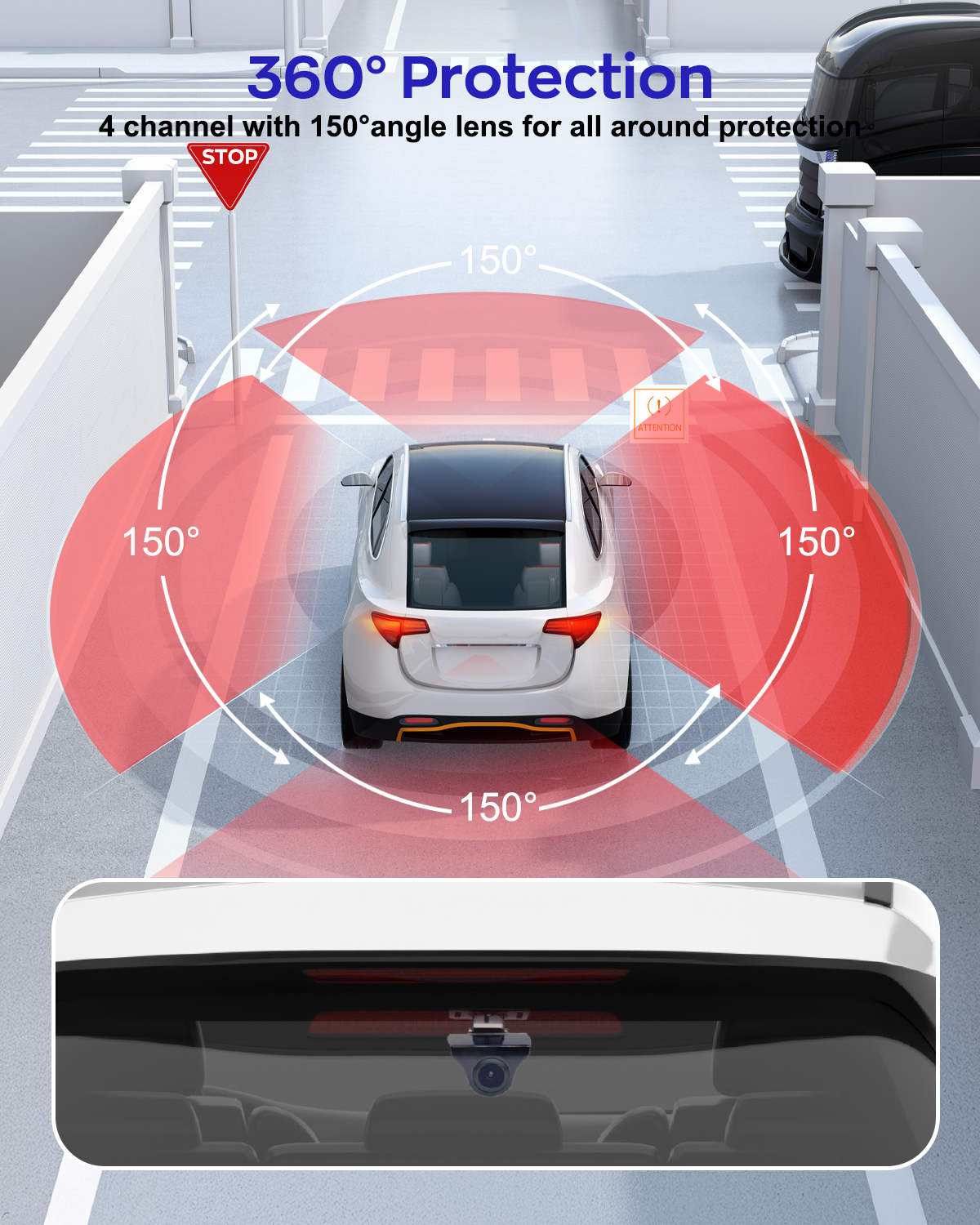
Dual-channel dash cams cover forward and rearward traffic. For rear-end collisions, head-on incidents, and tailgate disputes, those two angles are usually sufficient. The coverage breaks down the moment an incident happens laterally.
Common examples where two channels are not enough:
- Lane-change sideswipes where contact occurs at the rear quarter panel.
- Parking-lot door dings and hit-and-run scrapes on the front or rear flank.
- Rideshare passenger disputes that require a view of the cabin, not just the road.
- Insufficient evidence when responsibility is disputed and only the front or rear angle was recorded.
The constraint here is not image quality — 4K sensors solve that. The constraint is geometry. A single lens with a 170° front field of view physically cannot see the side of the car. To cover the flank, you need either a camera aimed laterally or an interior camera angled toward the side windows. That is the structural reason the four-channel configuration exists.
Where the Four-Channel Category Is Headed
The multi-channel configuration is the fastest-growing segment in the dashboard camera market. Fortune Business Insights projects a 13.2% CAGR for the multi-channel segment across 2026–2034, and Market.us estimated global dashboard camera revenue at USD 4.5 billion in 2025. The side-facing sub-segment — the cameras that make a four-channel system genuinely different from a two-channel one — is expanding at 16.0% CAGR, per Fortune Business Insights, driven by blind-spot monitoring and parking-protection demand.
Industry architecture is evolving to match. Thinkware, for example, documents a modular multi-channel system that supports up to five channels by adding side, interior, and rear views to a forward-facing dash cam. This is a useful reference point for buyers: the logic of multi-channel coverage is additive — each additional camera removes a specific blind spot, and buyers should evaluate a system by which blind spot each camera removes, not by channel count alone.
For family-focused buyers, the same architectural logic has produced a second category in parallel: dash cams with an interior baby-monitor camera. That trend is separate from the side-view trend but intersects with it in the five-channel tier.
What a Real Four-Channel System Delivers
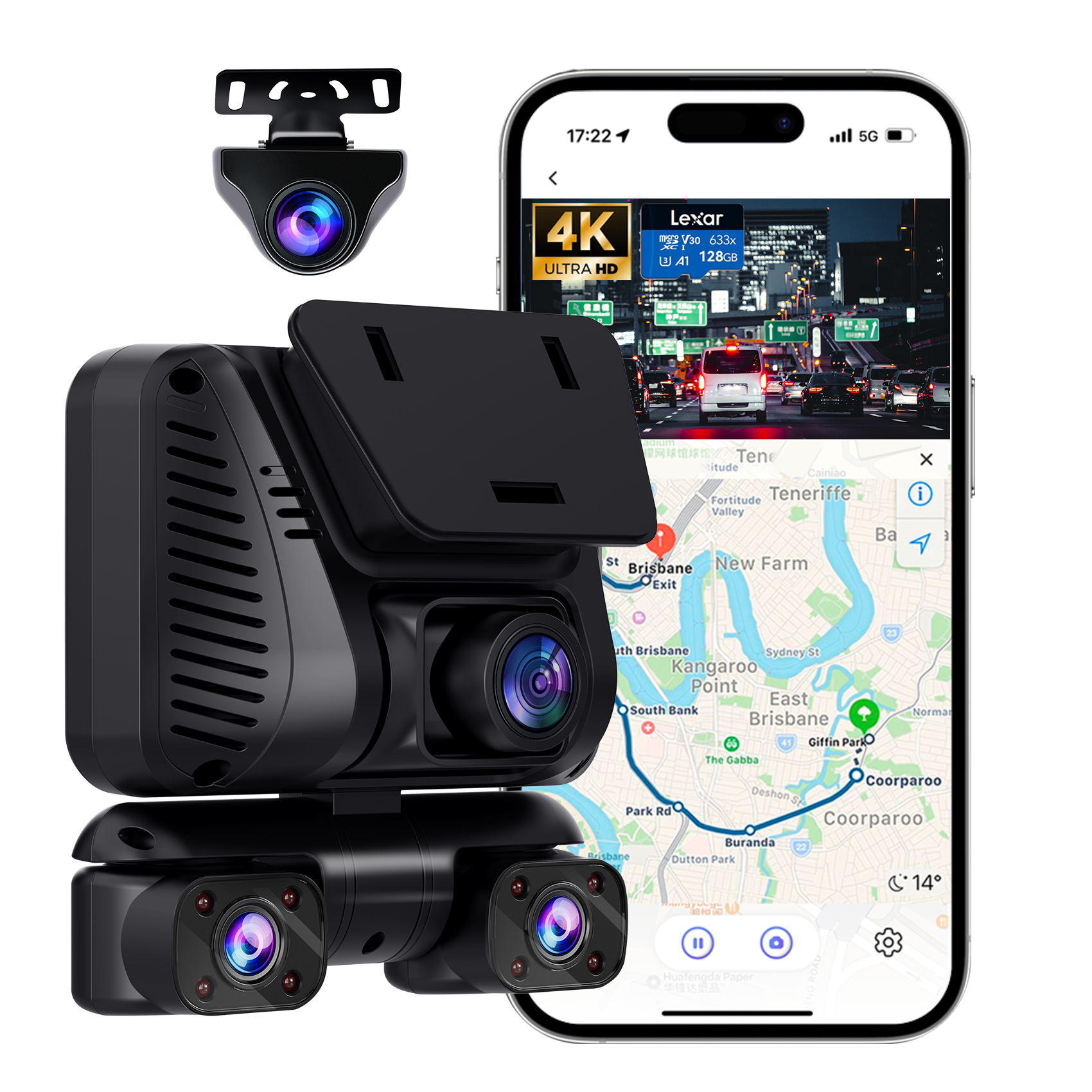
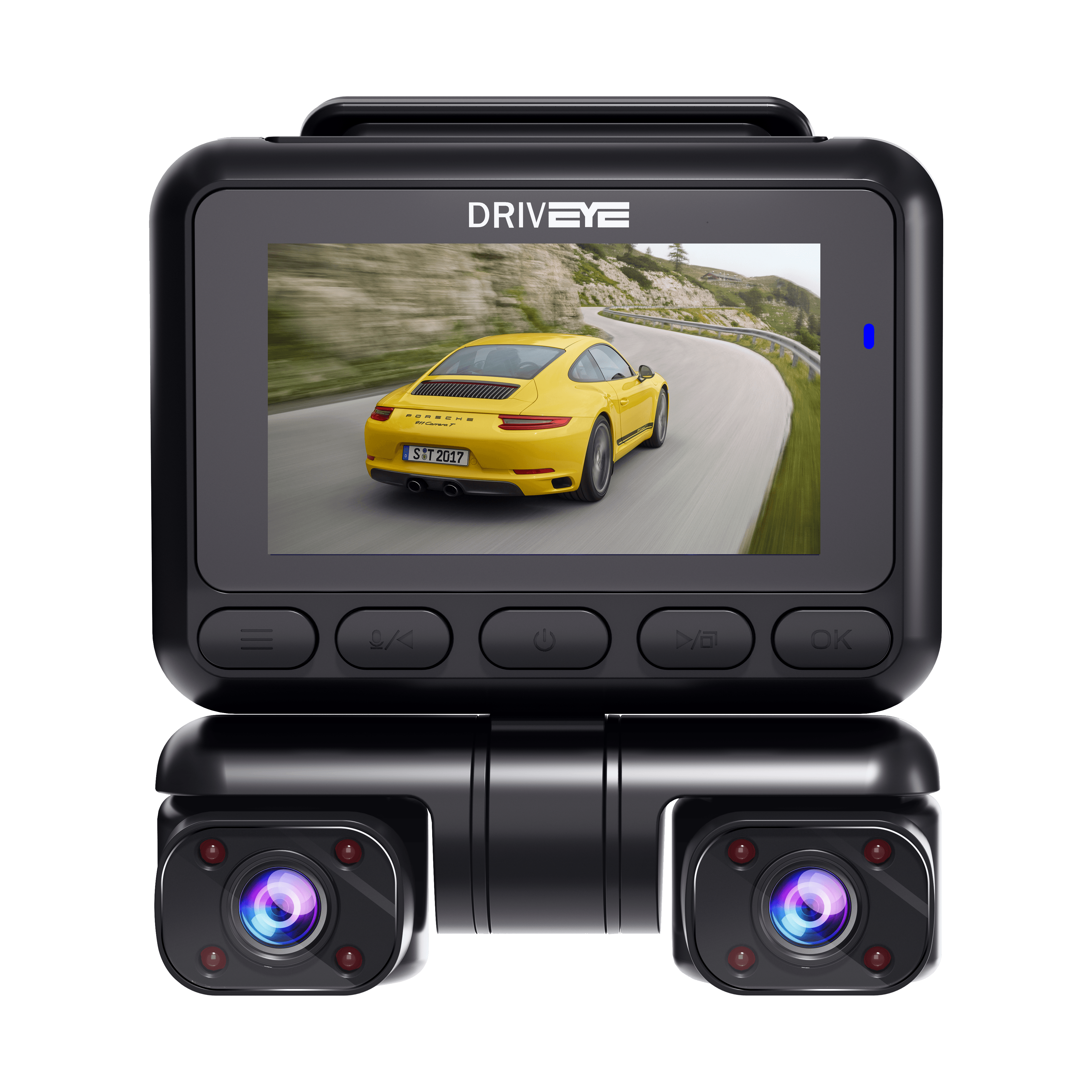
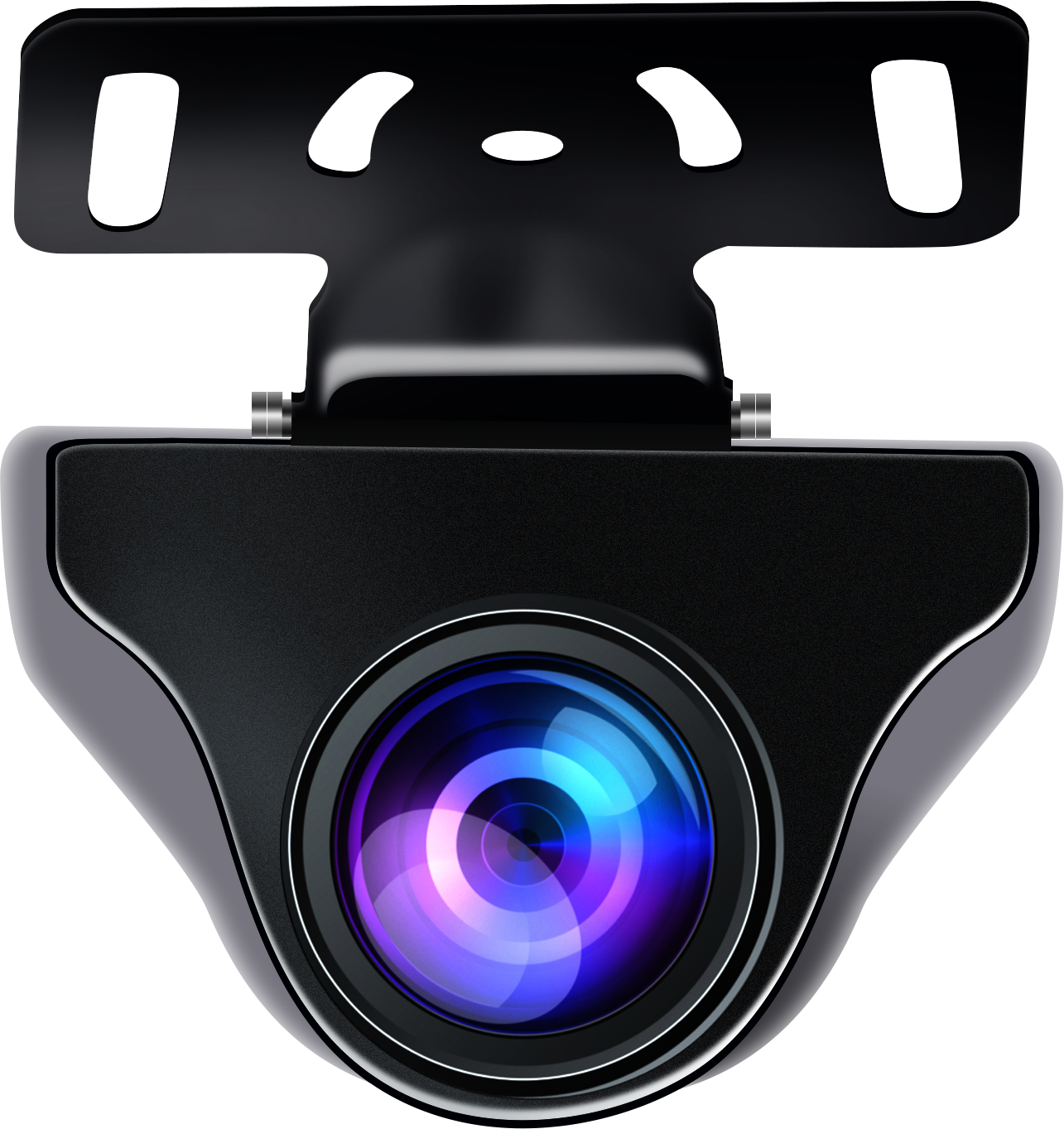
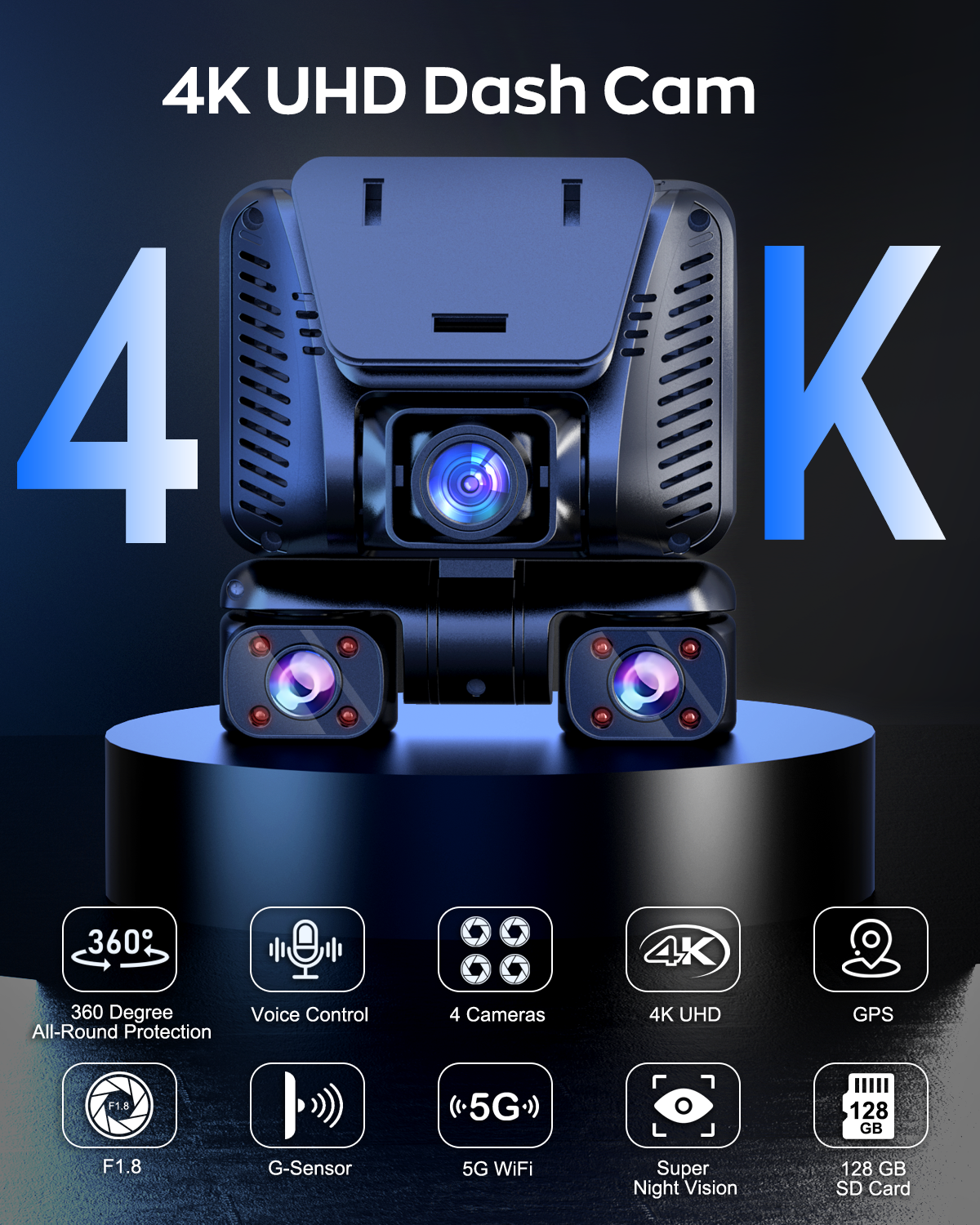
Driveye D7 is a four-camera dash cam built from one forward-facing unit, one rear camera, and two adjustable left/right cameras mounted in the cabin. Together they capture front, rear, and both side views in a single recording device — no separate brackets, no second power supply, no second memory card.
Verified specifications on the D7:
- Four-channel 360° field of view, with left and right side cameras that are physically adjustable.
- Simultaneous 4K + 1080P × 3 recording at maximum resolution.
- 150° ultra-wide angle, F1.8 aperture, six-layer optical lens, WDR processing.
- Four infrared illuminators on each of the left and right cameras for night-time cabin visibility.
- 5 GHz Wi-Fi, described as 3–5× faster than standard Wi-Fi, plus 13 English voice commands.
- Operating temperature range of -22°F to 158°F.
- CE and FCC certified.
Product-level reviews of the D7 and the wider Driveye multi-channel line average 4.3/5 across 200 Amazon ratings and 4.76/5 across 51 Judge.me ratings. Recurring themes in the review data: appreciation for four-view coverage at the corners, 4K clarity for license plates, and mixed feedback on app responsiveness and price relative to basic dash cams.
How to Evaluate a 4 Channel Dash Cam Before You Buy
Four constraints separate a four-channel system that works from one that disappoints. Work through them in order.
1. Confirm the number of simultaneously recorded channels
Some products advertise four cameras but only record two at any given moment, switching between feeds. A true four-channel system records all four views continuously on one timeline, so footage from different angles is time-aligned when you retrieve it. On the Driveye D7, all four channels record at once — front plus rear plus two side cameras — with the rear and sides running at 1080P and the front at up to 4K.
2. Match certifications to your market
CE covers European Economic Area market access for electronics; FCC covers radio-frequency compliance for the US market. Both certifications are directly relevant to dash cams because these devices transmit on Wi-Fi bands and connect to vehicles with 12V/24V power. The Driveye D7 carries both CE and FCC. For any multi-channel dash cam you consider, verify that the specific model — not just the brand — holds the certifications for the market where you will operate.
3. Read the resolution math, not the headline number
When a manufacturer states “4K + 1080P × 3,” that describes how the four simultaneous feeds are distributed. The front camera captures the highest detail; the remaining three cameras balance storage and throughput. This is normal for a multi-channel system — four true-4K streams would generate impractical file sizes — and it means the front camera is where license-plate legibility matters most. On the D7, that front channel is 4K.
4. Check the operating temperature range
A dash cam mounted on a windshield in summer can sit above 140°F inside a parked car. Multi-channel devices run hotter than single-channel ones because they process more streams at once. The D7 is specified for -22°F to 158°F, which is the range to look for if you park outdoors. Review data on the Driveye multi-channel line includes some reports of overheating in high-heat conditions — a reminder that any four-channel device should be treated as a thermal-management specification, not just a coverage specification.
5. Match the price band to the coverage you actually need
Current Driveye band data places the models roughly as follows: dual-channel around USD 119.99–169.99, four-channel around USD 129–189, and five-channel with baby monitor between USD 150–300. The four-channel band sits close to the dual-channel band — because the price premium for adding two side cameras is much smaller than the premium for adding a dedicated cabin/baby-monitor camera plus the deeper cabin-integration work that goes with it.
Who Gets the Most Out of a Four-Channel Dash Cam
Daily commuters in dense traffic. Side-swipe incidents during lane changes are the exact event a front/rear setup misses. Commuter-focused review data on the D7 repeatedly mentions 360° protection as the reason buyers switched from a basic dash cam.
Rideshare and taxi drivers. Multi-angle footage of front, rear, and cabin helps document what happened during a trip when a passenger complaint or a curbside dispute arises. Note that in many jurisdictions passengers should be aware of audio and video recording, and consent rules vary — check local requirements before relying on interior-camera evidence.
Family drivers on school runs and road trips. Four channels cover the surrounding traffic; a fifth canal is what lets parents check on an infant in a rear-facing seat. Buyers who only need the outer ring — and who already have a separate way to keep an eye on the back seat — are well served by the four-channel tier.
Small fleet operators. Uniform four-channel hardware across a fleet produces consistent coverage for incident review, driver coaching, and insurance documentation, without the added cabin sensor complexity of a five-channel platform.
Driveye Dash Cam Comparison: Dual, Four-Channel, and Five-Channel
The table below compares the three Driveye multi-channel tiers on the specifications most relevant to the buyer evaluating a four-channel setup.
| Specification | Driveye D22 (Dual) | Driveye D7 (4-Channel) | Driveye D9 Pro (5-Channel) |
|---|---|---|---|
| Cameras | Front + rear | Front + rear + left + right | Front + rear + left + right + baby monitor |
| Max simultaneous resolution | 4K front + 2K rear | 4K + 1080P × 3 | 2K + 1080P × 4 (4K + 2K when front/rear only) |
| Field of view | 170° front / 150° rear | 150° | 150° |
| Sensor | STARVIS 2 | Not specified in published materials | Not specified in published materials |
| Cabin night illumination | No interior IR array | 4 IR illuminators per side camera | 4 IR illuminators on side cameras |
| ADAS driver alerts | Not listed | Not listed | Lane departure, pedestrian detection, forward vehicle start, forward collision warning |
| Wi-Fi | Dual-band 5.8 GHz / 2.4 GHz | 5 GHz | 5 GHz |
| Voice control | 13 English commands | 13 English commands | 13 English commands |
| Included storage | 64 GB card, expandable to 256 GB | Not specified in published materials | Not specified in published materials |
| Operating temperature | -22°F to 158°F | -22°F to 158°F | -22°F to 158°F |
| Certifications | CE, FCC | CE, FCC | CE, FCC |
| Published price band | USD 119.99–169.99 | USD 129–189 | USD 150–300 |
Specifications as published by Driveye. Review the current product page for the model you plan to buy, as published features may change between revisions.
Frequently Asked Questions
What certifications should a four-channel dash cam carry?
For consumers and resellers in the EU/EEA, CE marking is the baseline market-access requirement for consumer electronics. For the US market, FCC certification covers radio-frequency compliance for the Wi-Fi and voice-control radios these devices use. The Driveye D7 holds both CE and FCC certification. When evaluating any multi-channel dash cam, verify that the specific model — not just the brand family — carries certification for the market where the vehicle will operate.
How does a four-channel dash cam eliminate blind spots?
It does not eliminate every blind spot, but it removes the biggest one for dash-cam purposes: the sides of the car. A four-channel system such as the Driveye D7 records front, rear, and both sides on a single timeline. The side cameras are adjustable, so they can be angled to cover the flank and rear quarter panel — the zone where a front/rear setup typically records nothing. What a four-channel unit does not record is the driver-side and passenger-side footwell or the rear-facing child seat; that view requires a dedicated interior/baby-monitor camera, which is what the five-channel Driveye D9 Pro adds.
What is a realistic price band for a four-channel dash cam?
Based on published Driveye band data, a four-channel system sits around USD 129–189, roughly USD 10–20 above the dual-channel tier (USD 119.99–169.99) and meaningfully below the five-channel-with-baby-monitor tier (USD 150–300). Budget also needs to account for accessories: parking-monitoring installation on some models requires a separately purchased hardwire kit, and cabin-mounting hardware for the side cameras is part of the installation kit rather than the base price on some products.
Is a four-channel dash cam or a five-channel dash cam better for families?
It depends on whether you need a cabin view of a rear-facing child seat. Four channels (front, rear, left, right) cover the road and the sides of the vehicle — suitable for parents who mainly want incident evidence and side-swipe protection. Five channels add a dedicated baby-monitor camera aimed at the child seat, which lets a parent glance at an infant without turning around. The Driveye line separates these two needs deliberately: the D7 covers the outer ring at USD 129–189; the D9 Pro covers it plus the baby-monitor camera at USD 150–300.
What should I do before ordering a four-channel dash cam for my vehicle?
Confirm three things first: (1) that all four channels record simultaneously on one timeline rather than switching; (2) that the model holds CE or FCC certification for your market; and (3) that the operating temperature range (-22°F to 158°F on the Driveye D7) matches your climate and parking situation. Once those are verified, request the current model spec sheet and, if you are evaluating at scale, a sample unit so your own installer can confirm the mounting plan for the side cameras on your specific vehicle model.
For spec sheets, sample requests, or current band pricing on the Driveye D7 and the wider multi-channel line, you can reach Driveye directly at driveyedashcam@gmail.com or through www.driveyetech.com.
The Short Version
Four-channel dash cams solve the geometry problem that a front/rear setup cannot: coverage of the sides of the car. The category is growing at 13.2% CAGR globally, and the side-facing segment specifically at 16% CAGR, because buyers are increasingly recognizing that incident evidence has a lateral dimension.
The constraint-driven buying checklist is short. Confirm the model records four channels simultaneously. Confirm CE/FCC certification for your market. Confirm resolution distribution across the four streams (the Driveye D7 runs 4K + 1080P × 3). Confirm the operating temperature range. Then match the price band to the coverage you actually need — four channels sit around USD 129–189; the jump to a five-channel unit with a dedicated baby-monitor camera sits higher, at USD 150–300.
If your answer to “do I need a front, rear, cabin, side, and baby-monitor camera in one device?” is yes, the five-channel tier is the right fit. If your answer is “I need the four outer views with a clean installation and full certification,” the four-channel tier is where the value sits.
Next step
Request a sample, the current spec sheet, or band pricing for the Driveye D7 and the wider multi-channel line. Manufacturer-direct inquiries: driveyedashcam@gmail.com · +852 59510424 (Tel / WhatsApp).
Driveye · Room 101A, 1/F., Genplas Industrial Building, 56 Hoi Yuen Road, Kwun Tong, Kowloon, Hong Kong.
Have Questions or Need More Details?
Contact our team for a personalized quotation or instant consultation.
Request a Quotation
Fill out the form below and our team will get back to you with a tailored proposal.
WhatsApp Direct Chat
Prefer to chat in real-time? Message us on WhatsApp for instant assistance & quick answers.
- Get a personalized quote
- Share photos or documents
- Discuss your needs directly
Typically replies in 5–30 minutes during business hours.