Driveye D22 vs D7 vs D9pro: Which Multi Channel Dash Cam Fits Your Vehicle?
Short answer: Driveye D22, D7 and D9pro are not three versions of the same product — they are three coverage levels. The Driveye D22 is a dual channel dash cam that records 4K front and 2K rear. The Driveye D7 is a 4 channel dash cam that records 4K front plus three 1080P channels covering the rear and both sides. The Driveye D9pro is a 5 channel dash cam that adds a dedicated back-seat baby monitor camera and AI ADAS alerts, with a 4K front camera and 2K + 1080P × 4 simultaneous recording when all five channels run.
The right choice depends on how many angles you have actually needed, whether your side channels must match the front camera, and whether the interior of the vehicle — specifically the back seat — has to be on record.
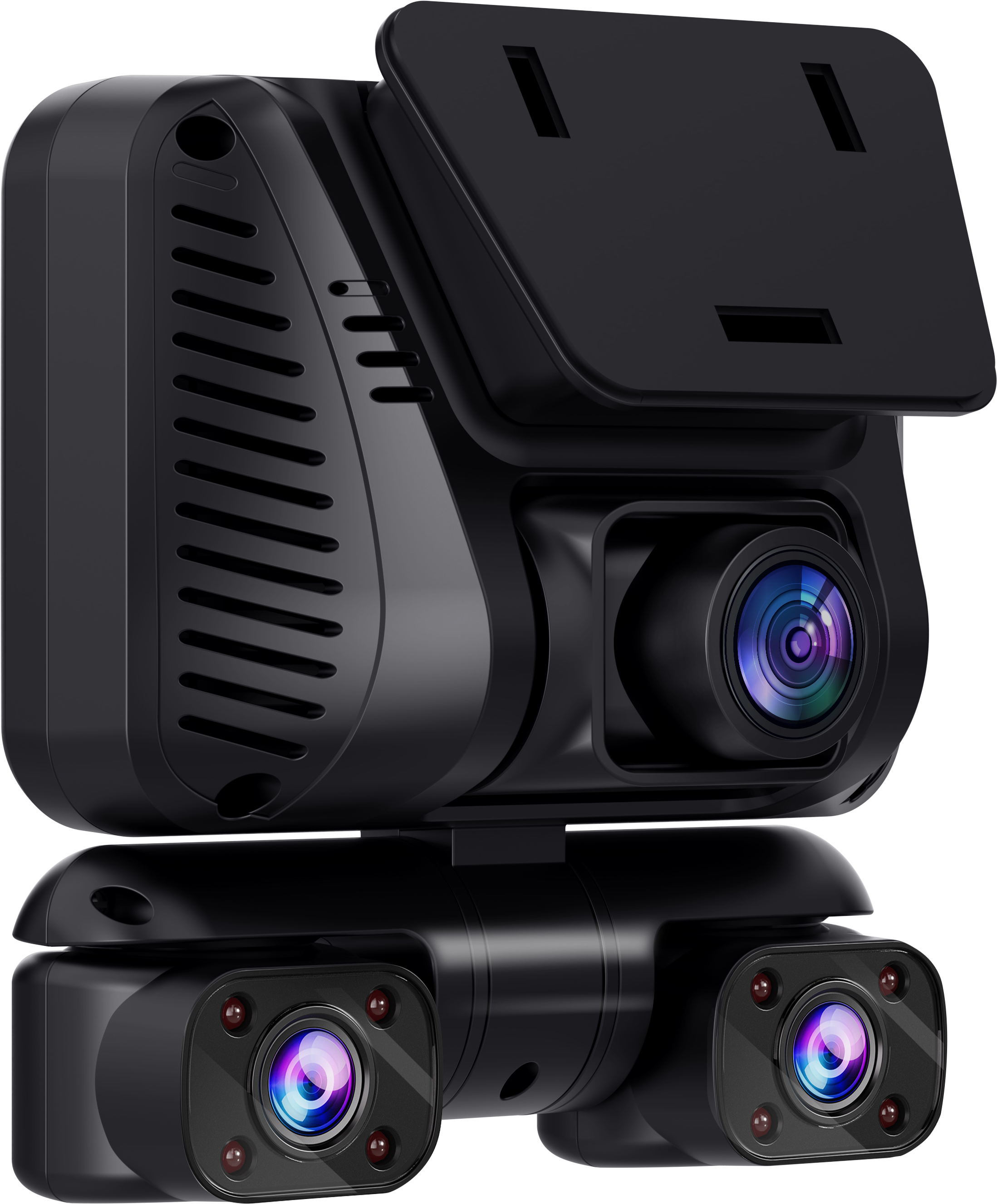
Driveye is a dash cam brand founded in 2024 and headquartered in Hong Kong that designs, develops and manufactures multi-channel dash cams for families, taxi and rideshare operators, and frequent professional drivers. The three models compared here are all part of that line-up, and each has its own product page: the D22 dual channel dash cam, the D7 4 channel dash cam and the D9pro 5 channel dash cam with baby car seat monitor.
The Problem: One Camera Angle Cannot Cover a Whole Vehicle
A dash cam shows the road from one point of view. That is enough to document a rear-end impact directly ahead, but it does not document the events that most often turn into disputes: a car in the next lane that squeezes into a narrow gap and scrapes the side of your vehicle, a parking-row impact outside the front camera's field, or a disagreement with a passenger about what happened inside the cabin.
In a typical version of that scenario, during a busy morning commute in stop-and-go traffic, a car in the next lane squeezes into a narrow gap and scrapes the side of the driver's vehicle. The front camera captures the road ahead and the rear camera shows traffic behind, but neither clearly records the side contact. The other driver disputes what happened, and the commuter is left in a lengthy insurance dispute with incomplete evidence, while front, rear, left and right camera views would have provided more visual context to explain the incident.
The documented pain points are specific and practical: no video evidence to explain a collision or dispute; low-resolution or poor-quality footage that leaves license plates and road signs unreadable, especially at night; limited dynamic range that loses detail in bright headlights, deep shadows or sudden lighting changes; and motion blur that makes moving vehicles harder to identify. Behind all of them is one structural limitation — a single camera angle cannot capture everything happening on the road and inside the vehicle.
Multi-channel configurations answer that limitation by adding angles, not by replacing the front camera. The three Driveye models stop at three different points along that scale, and the buying decision is where to stop paying for coverage you will not review.
Why Multi Channel Is the Fastest-Growing Configuration
Fortune Business Insights projects the multi-channel segment to be the fastest-growing configuration in the dashboard camera market, at a reported CAGR of 13.2% between 2026 and 2034 (SRC-0001). The same source reports that side-facing dash cams are expanding at a reported 16.0% CAGR, driven by blind-spot monitoring and parking protection (SRC-0001). Separately, Market.us estimates global dashboard camera revenue at USD 4.5 billion in 2025 (SRC-0003).
Read together, those figures describe a specific shift: buyers are not simply adding cameras, they are adding the cameras that cover the sides of the vehicle — the angles a front-and-rear setup leaves out. Modular multi-channel systems are already documented in the category, with at least one brand stating that its system supports up to five channels by combining forward, side, interior and rear views (SRC-0010). Commercial market forecasts disagree in their exact numbers and should be treated as directional rather than precise, but the direction is consistent across sources: coverage is now sold as a configuration choice.
That is why the D22, D7 and D9pro exist as three products rather than one model with optional add-ons. Each configuration answers a different coverage question, and the price gap between them reflects the number of angles rather than a difference in brand, certification or build standard.
The Three Configurations, Explained
Driveye D22 dual channel dash cam: two angles at maximum resolution
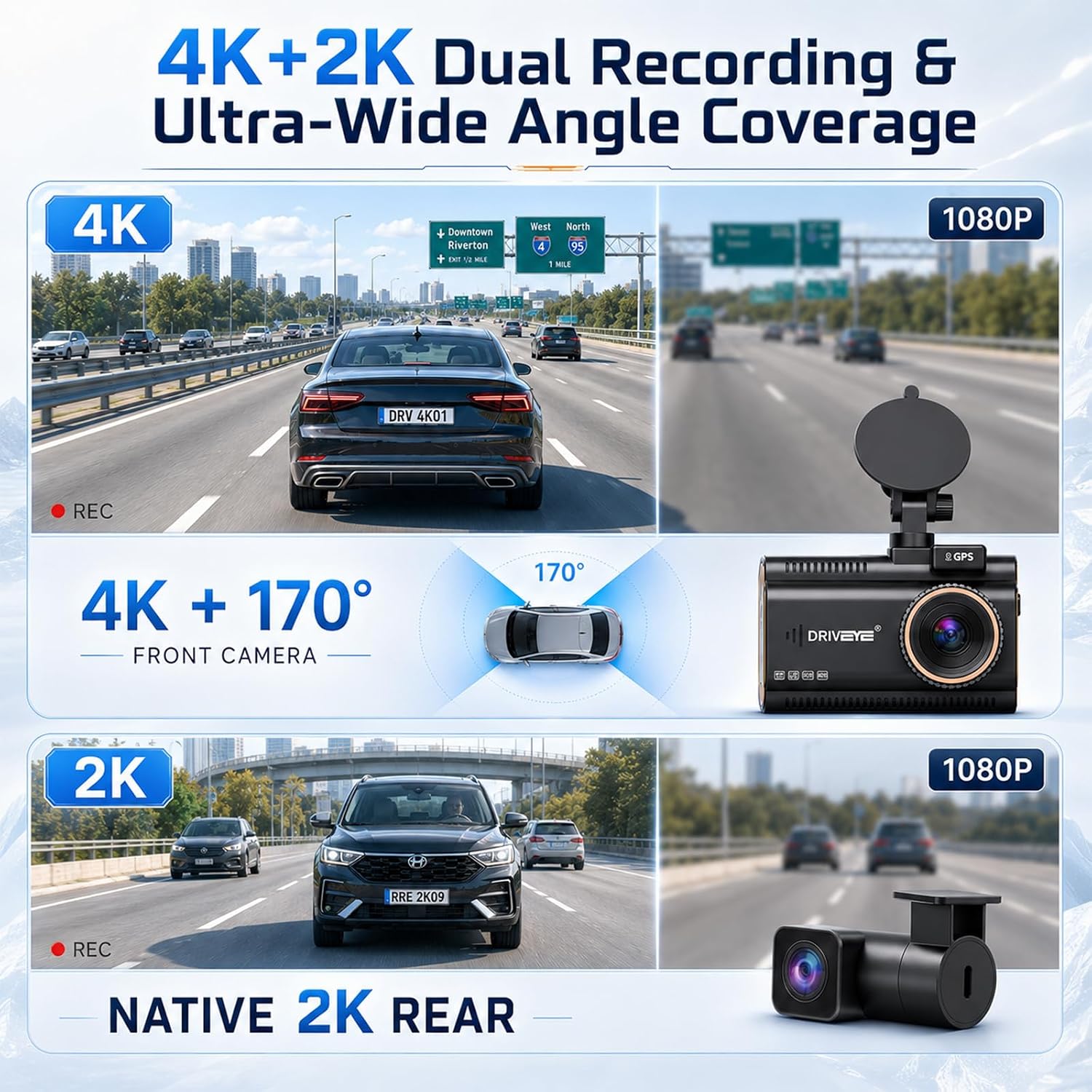
The Driveye D22 is a dual channel dash cam that records the front and rear of the vehicle from a single device. The front camera records in 4K with a 170° viewing angle and the rear camera records in 2K with a 150° angle. Front aperture is F1.5 and rear aperture is F1.8, and the front camera uses a STARVIS 2 sensor with HDR/WDR processing to hold detail in high-contrast lighting.
What ships with it matters to the buying decision as much as the recording specification. The D22 includes a 3-inch IPS display, 13 English voice commands, dual-band 5.8GHz/2.4GHz Wi-Fi for app access, built-in GPS, loop recording, G-sensor event locking and a 64GB card, with support for up to 256GB of storage. Parking monitoring requires a separately purchased hardwire kit. The model is listed at 139.99 USD and is CE and FCC certified.
In practice, the D22 concentrates the budget on two angles at the highest resolution in this comparison. Both of its channels record above 1080P — 4K front and 2K rear — while the side channels on the D7 and D9pro record at 1080P. If your evidence need is “what happened ahead and what happened behind, in the sharpest possible detail”, this is the configuration built for it.
Driveye D7 4 channel dash cam: the four-corner view
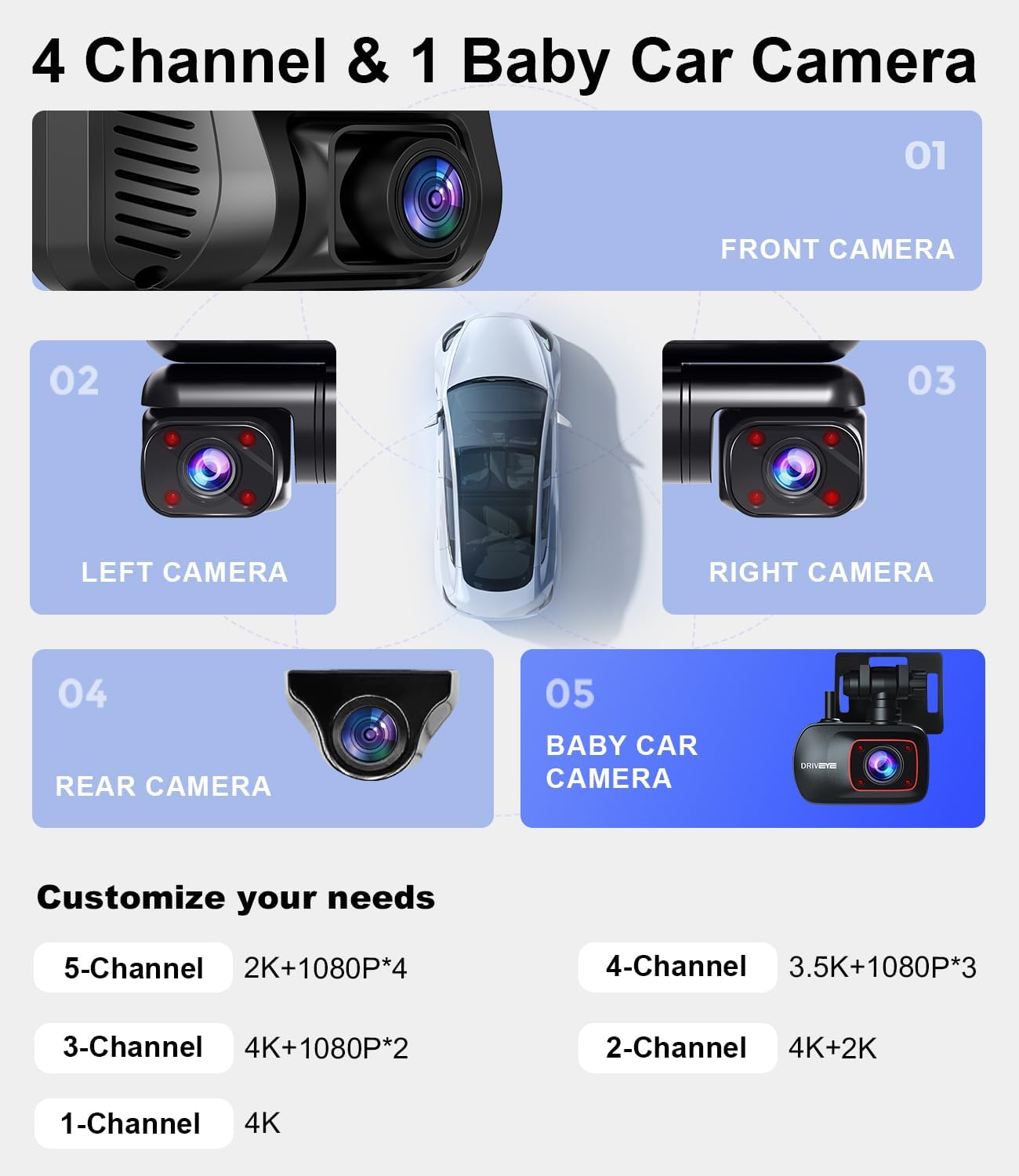
The Driveye D7 is a 4 channel dash cam with four cameras: front, rear, and two interior cameras mounted left and right. Driveye describes the layout as 360° coverage of the vehicle with no blind spots. Simultaneous recording runs at 4K front plus 1080P × 3, with a 150° ultra-wide angle, F1.8 aperture, WDR technology and a six-layer optical lens.
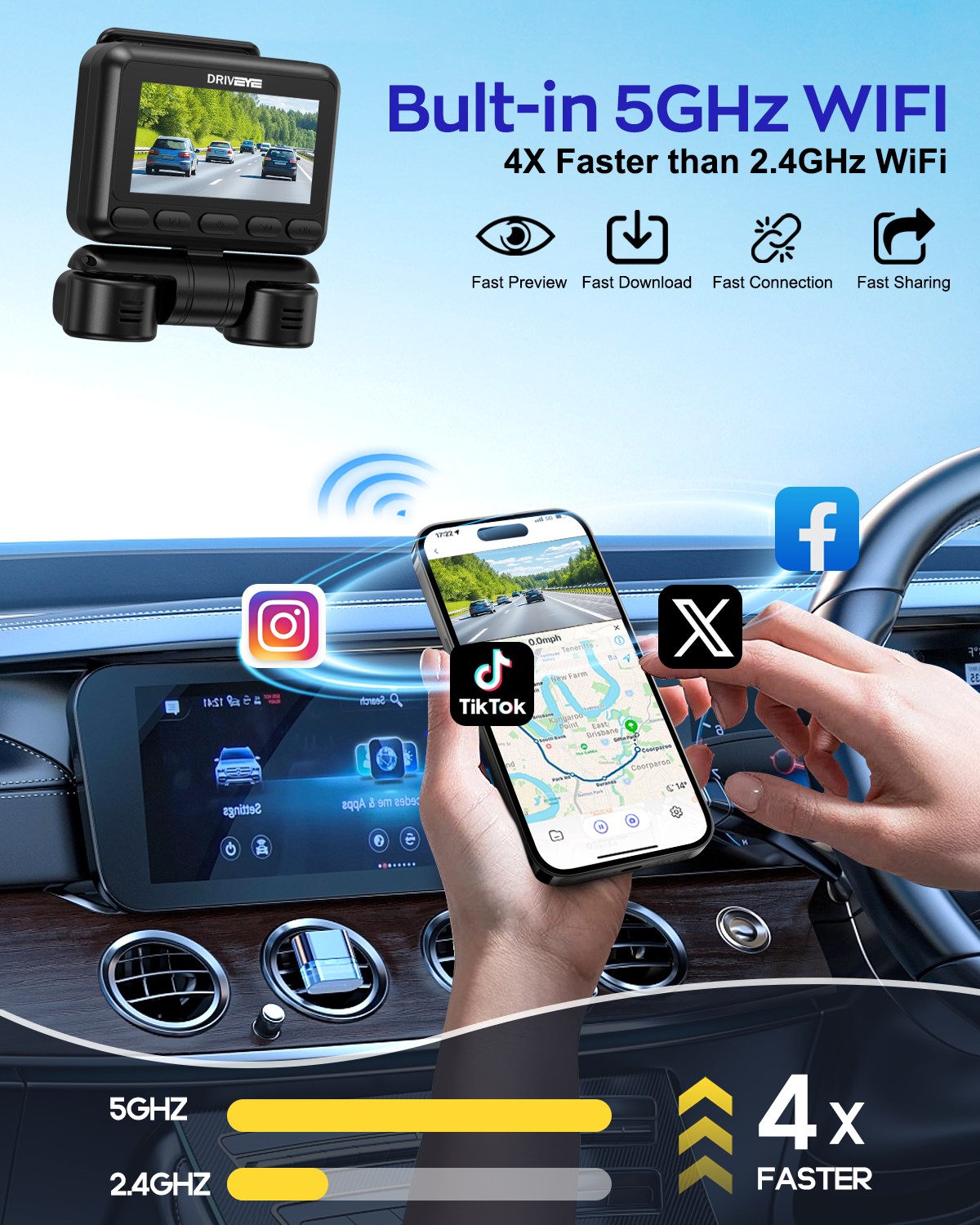
The left and right cameras carry four infrared illuminators each, which is what makes the side coverage usable after dark rather than only in daylight. Connectivity includes 5GHz Wi-Fi, which Driveye describes as 3–5 times faster than standard Wi-Fi, plus 13 English voice commands. Buyers of this configuration describe using GPS tracking, night vision and app control, and one notes angling the two fully adjustable side cameras manually for side views.
In practice, the D7 is the configuration for the driver whose disputes happen at the sides of the car — lane merges, parking rows, narrow streets, kerbside pick-ups — and who does not need a dedicated camera pointed at a child seat.
Driveye D9pro 5 channel dash cam: the interior, including the back seat
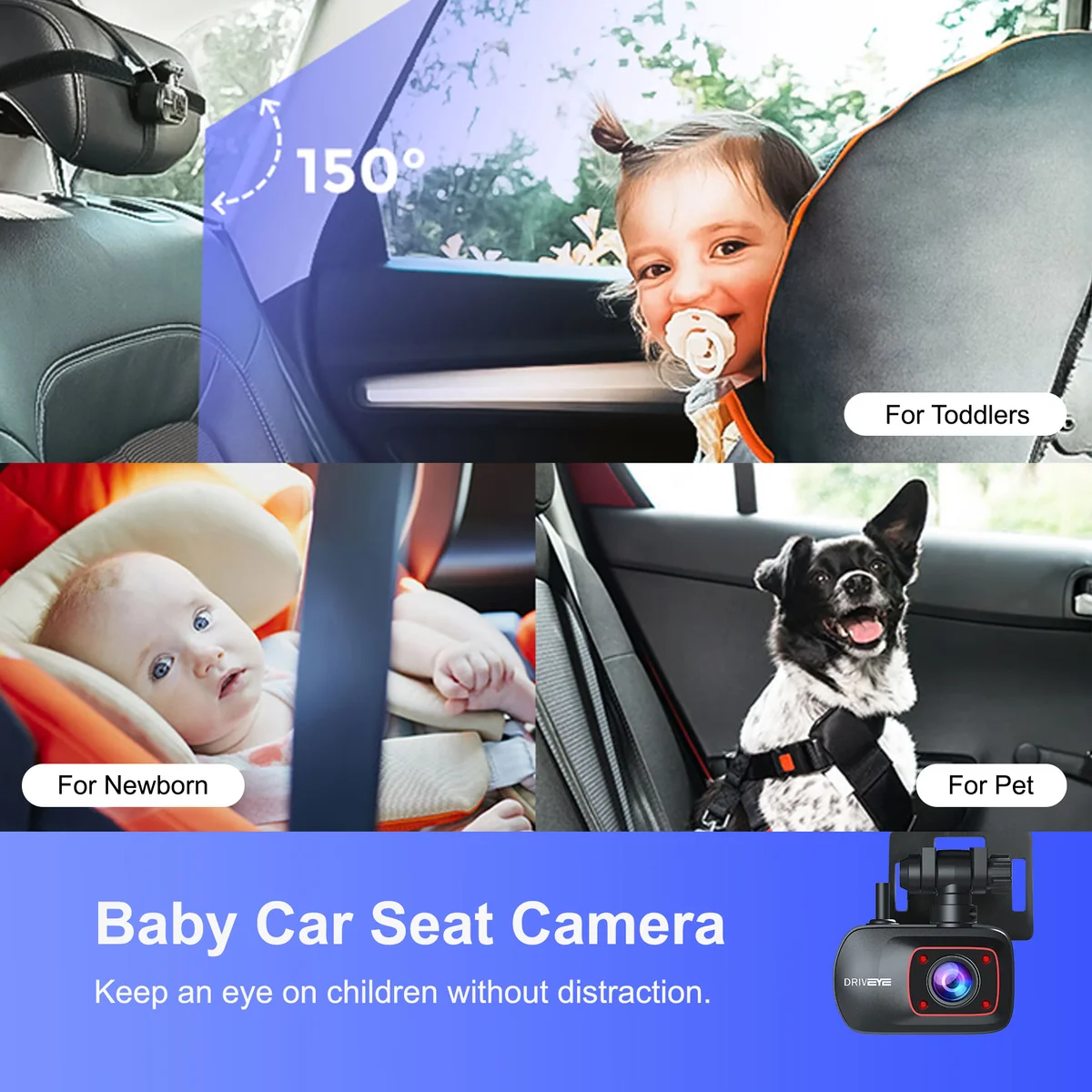
The Driveye D9pro is a 5 channel dash cam: front, rear, left and right, plus a dedicated baby monitor camera for the back seat, which Driveye states can be installed in three ways. The front camera is 4K. When the front and rear cameras are the active channels the system records 4K + 2K; when all five channels record simultaneously the maximum output is 2K + 1080P × 4.
The D9pro adds AI-powered ADAS — lane departure warnings, pedestrian detection, forward vehicle start alerts and forward collision warnings while driving. It also carries 5GHz Wi-Fi, 13 English voice commands, WDR, F1.8 aperture, a six-layer optical lens, four infrared illuminators on the left and right cameras, GPS route and speed tracking, and the ability to capture footage while the vehicle is parked. The listed price range is 199.99 to 259.99 USD, with a documented bundle at 209.99 USD that includes 5-channel recording, the baby camera, ADAS alerts, voice control, GPS and a 128GB card. The model is CE and FCC certified.
In practice, the D9pro is the only one of the three whose extra camera changes what you can see about passengers rather than about the road. That is a different purchase reason from “more channels”, and it is why the model is positioned for families with young children or pets who need multi-angle road recording plus a dedicated back-seat view.
Step-by-Step: Choosing in Five Decisions
Step 1 — Count the angles you have actually needed
Start with your own incidents rather than the specification sheet. If every situation you wished you had recorded happened ahead of or behind the car, a two-channel setup covers it. If you have ever needed footage of a side impact, a parking-row scrape or a lane merge that the front camera missed, you need at least four angles. If the incident involved a passenger or a child in the back, you need the fifth.
Step 2 — Decide whether the side channels must match the front camera
They do not match on the D7 or the D9pro, and that is a deliberate trade-off rather than a shortfall. The D7 records 4K front plus 1080P × 3; the D9pro records 2K + 1080P × 4 when all five channels run. Only the D22 holds both of its channels above 1080P. The reason the trade-off usually works: front footage has to identify a plate several car lengths away, while side contact happens close to the lens, where 1080P has far less distance to resolve. A D22 owner describes the 4K front camera as sharp enough to read license plates several cars ahead — that is the job the front channel is doing.
Step 3 — Check GPS and app transfer before comparing prices
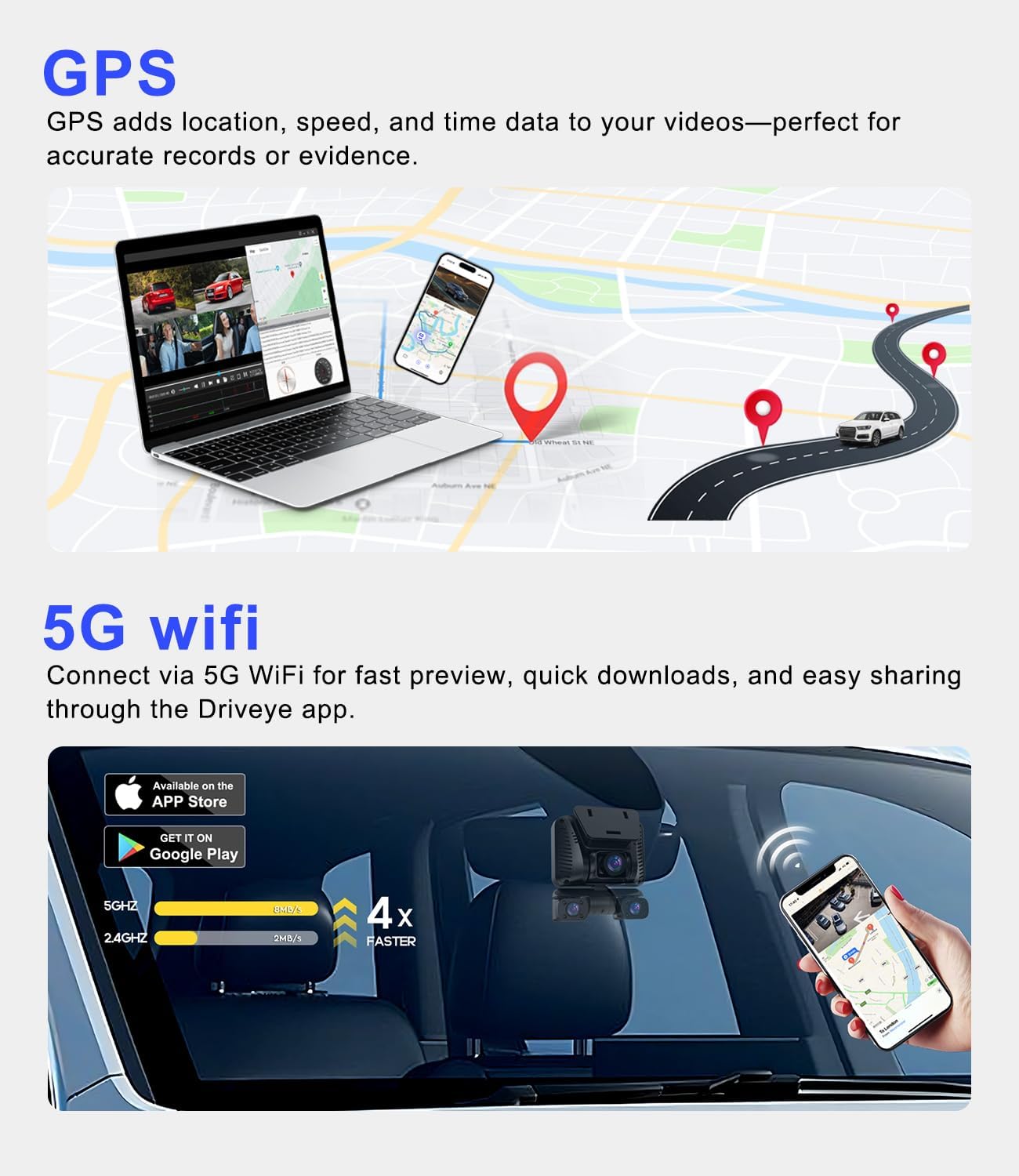
All three configurations document GPS-related capability: the D22 has built-in GPS, the D9pro provides GPS route and speed tracking, and D7 buyers report using GPS tracking. App transfer differs mainly in speed. The D22 uses dual-band 5.8GHz/2.4GHz Wi-Fi; the D7 and D9pro use 5GHz Wi-Fi that Driveye describes as 3–5 times faster than standard Wi-Fi. Reviews across the multi-camera models flag app smoothness as the most common soft spot, and one D22 buyer notes still getting familiar with viewing footage on an iPhone or desktop. If you review clips weekly or hand footage to insurers, test the app workflow before you commit to a channel count.
Step 4 — Decide whether the back seat must be on camera
This is the clearest dividing line in the comparison. Only the D9pro has a dedicated baby monitor camera. If you regularly carry an infant, a pet, or rear-seat passengers you need to check on without turning around, that fifth camera is the reason to choose the model. If you never review the cabin behind you, the fifth channel is coverage you pay for and do not use.
Step 5 — Budget for the whole install, not just the box
The D22 and the D7 are both listed at 139.99 USD, so the D7 adds two more angles at the same listed price. The D9pro sits in the 199.99 to 259.99 USD range. Add-ons matter too: parking monitoring on the D22 requires a separately purchased hardwire kit, and reviewers of the four-channel configuration note that parking monitoring there also requires an add-on kit. Buyers of the multi-camera models also point out that installation is more involved and the housing is bulkier than a single-camera unit — worth checking against your windshield space before ordering.
What Changes in Practice: What Buyers Report
The clearest description of the difference between a two-angle and a four-angle setup comes from a 4-channel buyer: “the single aisle could only see the front, but now it covers the front, back, left and right, making it feel like the entire vehicle is covered.” The same reviewer notes the mounting stays put — “I have had others fall off the next day” — and another describes angling the two adjustable side cameras for side views and finding the 4K clarity useful for reading license plates.
On the dual-channel side, a D22 buyer summarised the outcome in five words: “Clear footage front and back.” The same review notes the rear camera mounted without hassle, the screen is bright and simple to use, the 64GB card is included, and parking mode works. Another D22 owner describes the front footage as sharp enough to read plates several cars ahead and the HDR as keeping headlights from washing out the frame at night.
Ratings follow the same split. The D22 carries a 5.0 average from 13 Amazon ratings. The four-channel listing carries a 4.3 average from 200 Amazon ratings and a 4.76 average from 51 Judge.me reviews, and the D9pro group carries a 4.6 average from 15 Amazon ratings. The criticisms are consistent and worth reading before purchase: app smoothness, a price premium over basic dash cams, and — on the 200-rating four-channel listing — a minority of reports of overheating and an SD card failing after roughly two months. Buyers also note that the multi-camera models take longer to install and are bulkier than a single-camera unit.
Which Driver and Vehicle Fits Which Model
- Families with babies or pets: the D9pro. It is the only model with a dedicated back-seat camera, and Driveye positions it for families with young children or pets who need multi-angle road recording plus a dedicated back-seat view.
- Rideshare and taxi drivers: the D7. Left and right interior cameras with four infrared illuminators each cover the cabin and the sides of the vehicle, which is where passenger disputes and side contact usually occur.
- Fleet operators, truck drivers and long-distance drivers: the D22. Driveye designs the D22 for fleet management and long-distance driving, and 4K front plus 2K rear gives the highest per-channel resolution for route evidence.
- Road trippers and daily commuters: the D7 if you have had a side incident or park in tight rows; the D22 if your incidents have been front-and-rear only and you want the sharpest footage at the lowest of the three prices.
Comparison Table: D22 vs D7 vs D9pro
| Specification | Driveye D22 | Driveye D7 | Driveye D9pro |
|---|---|---|---|
| Channel count | 2 (dual channel) | 4 | 5 |
| Camera positions | Front + rear | Front, rear, left interior, right interior | Front, rear, left interior, right interior + back-seat baby monitor camera |
| Maximum simultaneous resolution | 4K front + 2K rear | 4K front + 1080P × 3 | 4K + 2K with front and rear active; 2K + 1080P × 4 with all five channels |
| Stated viewing angle | 170° front, 150° rear | 150° ultra-wide | 150° ultra-wide |
| Aperture | F1.5 front, F1.8 rear | F1.8 | F1.8 |
| Sensor / lens | STARVIS 2 front sensor, HDR/WDR, six-layer optical lens | WDR, six-layer optical lens | WDR, six-layer optical lens |
| Low-light hardware | HDR/WDR processing | Four infrared illuminators on left and right cameras | Four infrared illuminators on left and right cameras |
| AI ADAS alerts | Not listed in the D22 documentation used here | Not listed in the D7 documentation used here | Lane departure, pedestrian detection, forward vehicle start alert, forward collision warning |
| GPS | Built-in GPS | GPS tracking reported by buyers | GPS route and speed tracking |
| Wi-Fi | Dual-band 5.8GHz / 2.4GHz | 5GHz, described as 3–5× faster than standard Wi-Fi | 5GHz, described as 3–5× faster than standard Wi-Fi |
| Voice commands | 13 English commands | 13 English commands | 13 English commands |
| Display and storage | 3-inch IPS display, 64GB card included, supports up to 256GB | Not stated in the documentation used for this comparison | 128GB card included in the documented 209.99 USD bundle |
| Parking monitoring | Requires separately purchased hardwire kit | Add-on kit noted by reviewers | Records while the vehicle is parked |
| Certification | CE, FCC | CE, FCC | CE, FCC |
| Listed price | 139.99 USD | 139.99 USD | 199.99–259.99 USD |
| Best fit | Front-and-rear evidence at the highest per-channel resolution | Side and cabin coverage for rideshare, commuting and tight parking | Families and pet owners who need the back seat on camera plus ADAS alerts |
Frequently Asked Questions
Are the Driveye D22, D7 and D9pro certified for sale in the US and EU?
All three models — Driveye D22, Driveye D7 and Driveye D9pro — are listed with CE and FCC certification in the product documentation used for this comparison. CE covers EU market access and FCC covers US radio and electronic requirements for this type of device. Buyers importing multiple units should confirm that the certificate on file matches the exact variant and accessory bundle being ordered.
What are the most recommended multi channel dash cams for complete vehicle coverage?
Within the Driveye line-up, complete vehicle coverage means the D7 and the D9pro, because both record the front, rear, left and right of the vehicle. The D7 is a 4 channel dash cam with front, rear and two interior side cameras; the D9pro is a 5 channel dash cam that adds a dedicated back-seat baby monitor camera on top of the same four-corner layout. The D22 covers only front and rear, so it is the right choice for front-and-rear evidence rather than complete coverage. Driveye positions the D9pro for families with young children or pets needing multi-angle road recording and a dedicated back-seat view, and the D7 for families, rideshare drivers, road trippers and fleet operators who need wide road-and-cabin coverage with fewer blind spots.
Do the side cameras record at the same resolution as the front camera?
No. On the D7, simultaneous recording is 4K front plus 1080P × 3. On the D9pro, all five channels record at a maximum of 2K + 1080P × 4, and 4K + 2K is available when the front and rear cameras are the active channels. Only the D22 keeps both of its channels at high resolution: 4K front and 2K rear.
How much do the three models cost?
As listed, the Driveye D22 is 139.99 USD, the Driveye D7 is 139.99 USD, and the Driveye D9pro falls in the 199.99 to 259.99 USD range, with a documented bundle at 209.99 USD that includes a 128GB card. For price context, the D22 at 139.99 USD was listed 10.00 USD below the Rove R2-4K Dual at 149.99 USD as of the 25 September 2026 price reference. Budget for accessories as well: parking monitoring on the D22 requires a separately purchased hardwire kit.
How fast is shipping, and can I order a sample before committing to a larger order?
Driveye lists free shipping, and both the D22 and the D7 are listed as in stock at 139.99 USD, with the D9pro listed in the 199.99 to 259.99 USD range. For buyers evaluating more than one unit — a family with two cars, a rideshare driver, or a fleet operator — the practical next step is to request a sample or a quote for the exact configuration you are considering, then confirm which channels you actually review before standardising across vehicles.
Conclusion: A Decision Matrix, Not a Winner
There is no single best model in this comparison, because the three configurations answer different questions. Use the matrix below to match the model to your situation.
| If your priority is… | Choose | Why |
|---|---|---|
| The sharpest front and rear footage at the lowest price | Driveye D22 | 4K front + 2K rear with a STARVIS 2 sensor, built-in GPS and a 64GB card at 139.99 USD |
| Proof of side contact, lane merges and parking scrapes | Driveye D7 | Four channels including left and right interior cameras with four infrared illuminators each, at the same 139.99 USD listed price |
| Watching a child, pet or rear-seat passenger without turning around | Driveye D9pro | The only model with a dedicated back-seat baby monitor camera |
| Driver warnings as well as recording | Driveye D9pro | AI ADAS alerts for lane departure, pedestrians, forward vehicle start and forward collision |
| Cabin coverage for rideshare passengers | Driveye D7 | Left and right interior cameras record the cabin that the front camera cannot see |
| Long-distance and fleet route evidence | Driveye D22 | Designed for fleet management and long-distance driving, with the highest per-channel resolution |
| Recording while the car is parked, without extra parts | Driveye D9pro | Documented to capture footage while the vehicle is parked; the D22 requires a separately purchased hardwire kit |
The pattern behind the matrix is simple: the D22 buys resolution, the D7 buys angles, and the D9pro buys the interior plus driver assistance. Decide which of those three you are actually short of, and the model choice follows.
Next Step: Compare the Configuration Against Your Own Vehicle
Before ordering, list the three situations you most want recorded and check them against the channel layout above. If your answer includes a child seat, start with the D9pro. If it includes side contact, start with the D7. If it is purely front-and-rear evidence, the D22 covers it at 139.99 USD.
Driveye accepts sample and quote requests for all three configurations, with free shipping listed. Contact: driveyedashcam@gmail.com · Tel / WhatsApp +852 59510424 · www.driveyetech.com. Address: Room 101A, 1/F., Genplas Industrial Building, 56 Hoi Yuen Road, Kwun Tong, Kowloon, Hong Kong, 999077.
Price and specification details in this article reflect the product documentation and listed prices available at the time of writing; certification and bundle contents should be confirmed for the exact variant ordered.
Have Questions or Need More Details?
Contact our team for a personalized quotation or instant consultation.
Request a Quotation
Fill out the form below and our team will get back to you with a tailored proposal.
WhatsApp Direct Chat
Prefer to chat in real-time? Message us on WhatsApp for instant assistance & quick answers.
- Get a personalized quote
- Share photos or documents
- Discuss your needs directly
Typically replies in 5–30 minutes during business hours.