Dual Channel Dash Cam Selection: Specs, Certification & Price Bands
Dual Channel Dash Cam Selection: Specs, Certification & Price Bands
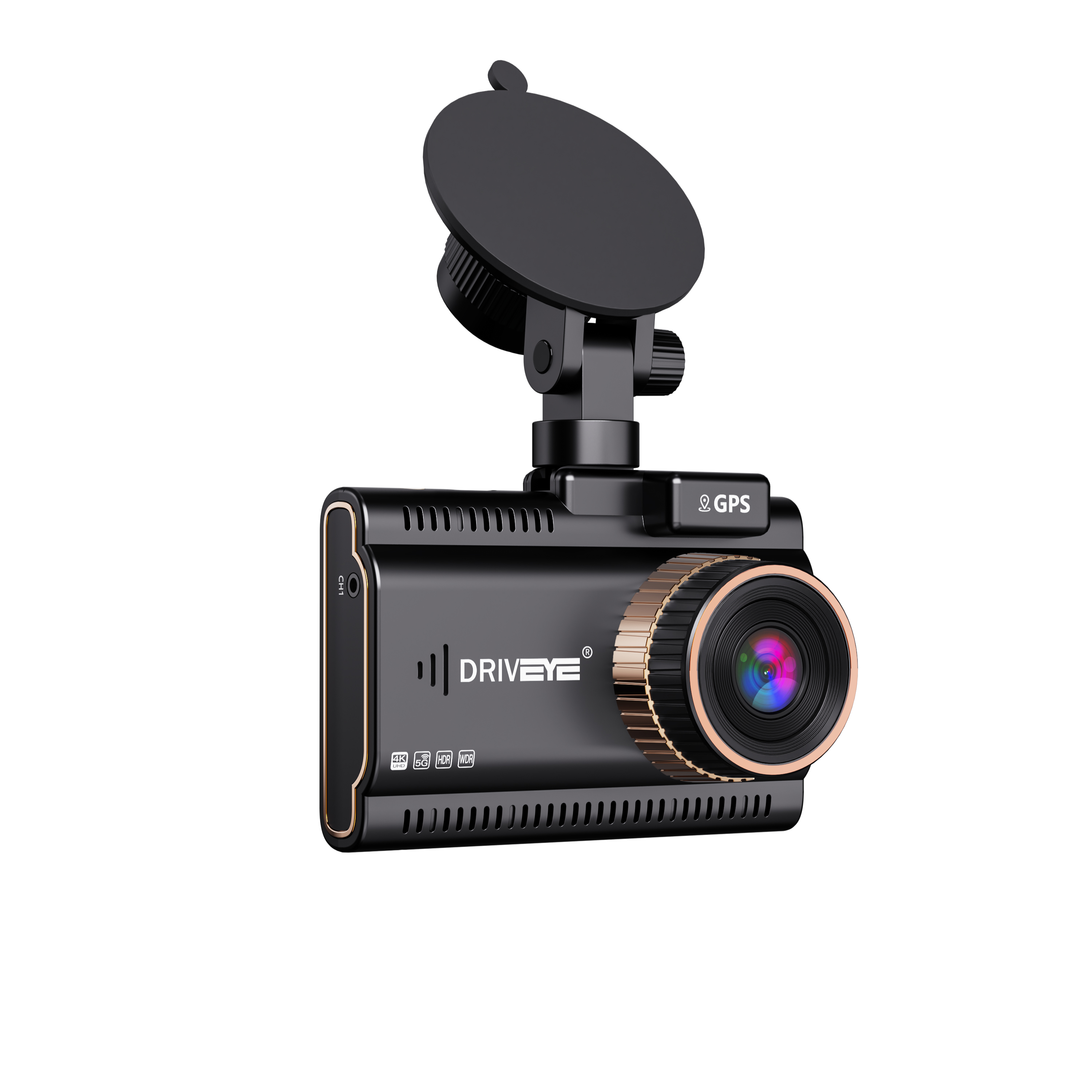
A dual channel dash cam should be simple to buy: two cameras, one cable, done. In practice, buyers face three unverified gaps before payment — claimed specifications, compliance documents and what the price actually includes — and each gap can turn a straightforward installation into a guessing game about what was really purchased.
What a Dual Channel Dash Cam Purchase Really Requires
A dual channel configuration means a front camera and a rear camera record simultaneously. It does not describe the sensor, aperture, storage ceiling, or whether the rear channel records at the same resolution as the front. That gap is where buyers go wrong.
A typical dual channel dash cam listing shows "4K + 2K" and stops there. It does not say which sensor model the front camera uses, whether the rear shares the same processing chip, or whether the advertised resolution applies only when one camera is active. Those details matter once the unit arrives — at which point the return window is already running.
For buyers evaluating multi channel dash cams, verification should target three constraint dimensions rather than camera count:
- Specification constraint — Are resolution, sensor, aperture, field of view and storage fully disclosed and cross-checkable?
- Compliance constraint — Does the CE or FCC marking correspond to the actual product and the region it ships to?
- Price constraint — Does the listed price include the memory card, the mounting hardware and any accessory needed for parking monitoring?
Each of those three questions can be answered before purchase. The method is to convert every claim on the listing page into a concrete parameter that can be verified.
Why This Segment Is Moving Toward Multiple Channels
Fortune Business Insights identifies the multi-channel configuration as the fastest-growing segment of the dashboard camera market, projected to grow at a CAGR of 13.2% between 2026 and 2034. Side-facing dashcams grow faster still at 16.0% in the same analysis — a clear signal that buyer attention is shifting from recording ahead to covering blind spots.
Market size confirms the category is not niche. Market.us estimates global dashboard camera revenue at approximately USD 4.5 billion in 2025, enough scale to support a wide model ladder — from entry single-channel units, through mainstream dual-channel products, to advanced 4 and 5 channel systems.
The consequence of that shift is that a dual channel dash cam is no longer a beginner-only purchase. It is the baseline configuration in a broader multi camera dash cam ladder. What a buyer still has to justify is whether a two-channel system already satisfies its specification, compliance and price constraints before paying for extra channels.
Driveye D22: A Specification List You Can Verify Line by Line
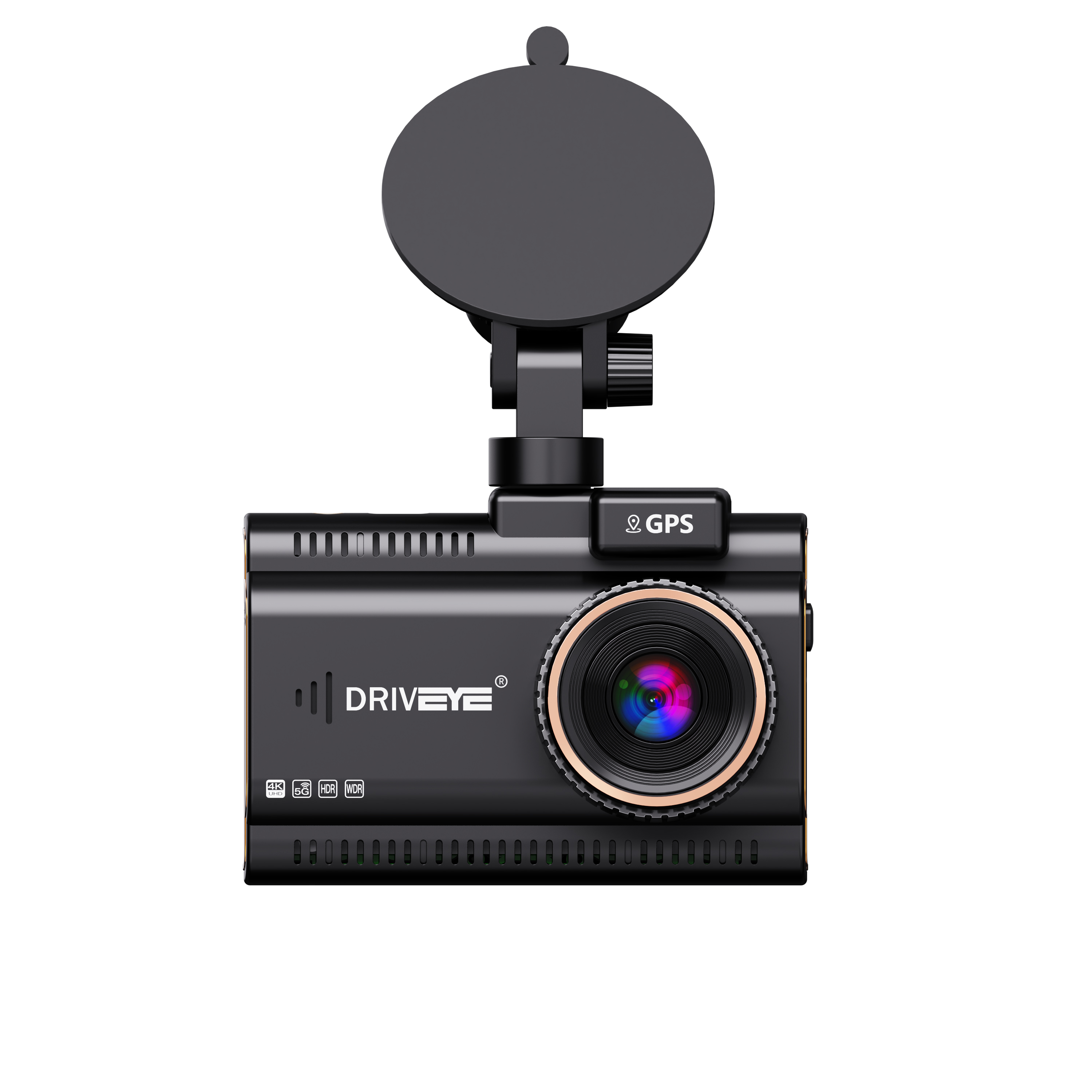
Driveye is a Hong Kong–headquartered intelligent dash cam brand founded in 2024, serving family users, taxi operators and frequent professional drivers. Its product line spans dual channel, 4 channel and 5 channel configurations, and the Driveye D22 sits in the dual channel tier — a useful reference because it makes each verification question concrete.
This is what D22 discloses publicly, and what makes it checkable:
- Simultaneous 4K front and 2K rear recording
- 170° front and 150° rear viewing angles
- STARVIS 2 sensor with F1.5 front and F1.8 rear apertures
- HDR / WDR processing to balance bright and dark areas
- Built-in GPS, voice control, and 5.8GHz / 2.4GHz dual-band Wi-Fi
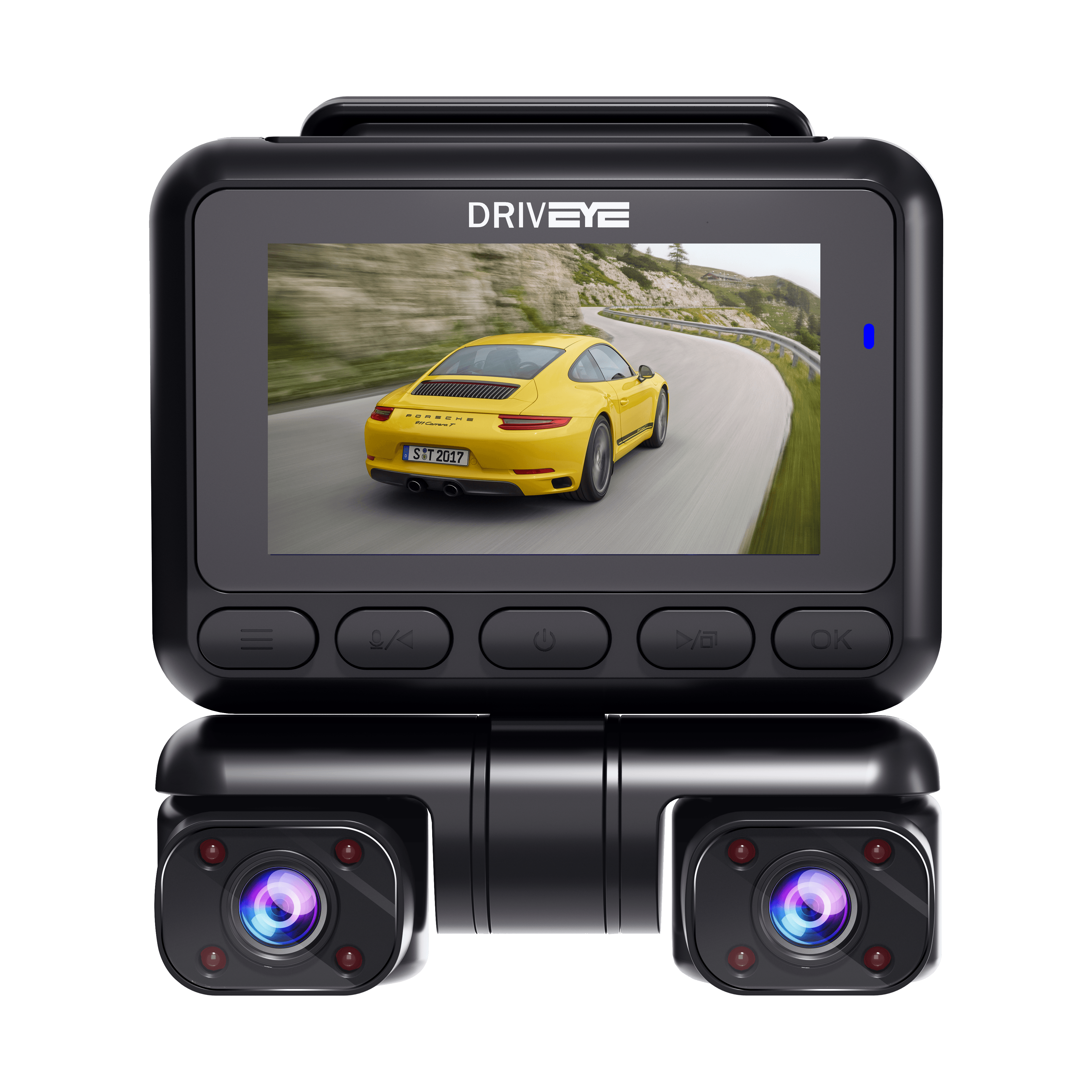
- 3-inch IPS display
- Loop recording and G-sensor event locking
- 64GB card included, storage supported up to 256GB
- Parking monitoring requires a separately purchased hardwire kit
- CE and FCC certification
Every item on that list can be cross-checked against the physical unit or official documents — which is exactly how a buyer decides whether a dual channel dash cam earns its stated price.
For buyers who want to step up coverage, the same verification logic scales. Driveye D7 is a 4 channel 360° system recording 4K front plus 1080P × 3, with 150° ultra-wide lenses and four infrared illuminators on each side camera; Driveye D9pro expands to five channels while keeping a 4K front camera and adding AI ADAS warnings plus a dedicated baby seat monitor camera. Each additional channel adds verification items — but the method stays identical to the dual channel baseline.
Step-by-Step: How to Verify a Dual Channel Dash Cam Before Buying
The sequence below can be applied line by line to any brand's dual channel dash cam listing.
Step 1Confirm that both channels record simultaneously
Verify that front and rear record at the same time, not sequentially. Some listings advertise 4K, but the number only holds in single-channel mode and drops when the rear channel is enabled. The D22 records front 4K and rear 2K simultaneously, so enabling the rear channel does not downgrade the front output.
Step 2Check the sensor and aperture, not just the resolution number
Resolution describes pixel count, not image quality. Sensor model and aperture determine night performance. The D22 uses a STARVIS 2 sensor with F1.5 front and F1.8 rear apertures, supported by HDR / WDR processing — the combination that matters for readable plates after dark, not the paper figure.
Step 3Match certification to the target market
CE and FCC markings indicate the product has passed European Union and United States radio and electromagnetic compatibility requirements respectively. If the unit ships to North America, verify an FCC declaration matches the actual model; for the EU, verify the CE marking matches the product. The D22 lists both CE and FCC in its public disclosure.
Step 4Check storage and loop-recording reliability
Dual channel systems write continuously, so card speed class and capacity ceiling both affect whether recording drops. The D22 ships with a 64GB card, supports up to 256GB, and includes G-sensor event locking that locks files on impact so they are not overwritten by loop recording.
Step 5Price in the full cost of parking monitoring
Parking monitoring requires an accessory on most models. The D22 needs a separately purchased hardwire kit, so the headline price is not the installed price. This applies across brands — when comparing price, add all installation accessories to the total.
Step 6Compare price against what is actually in the box
At the same headline price, two units can contain very different contents. Compare memory card, mounting hardware, cabling and whether a parking-monitoring kit is included to judge whether the difference comes from configuration or from brand premium.
Bottom line: a dual channel dash cam is worth buying when its specs, compliance markings and accessory list are all public and cross-checkable — not simply because it has two cameras.
How Different Buyers Use Dual Channel and Multi Channel Dash Cams
Daily commuters
For commuters, a dual channel dash cam covers the most common incident pattern: front or rear collisions and rear-end impacts. The constraint checklist here focuses on stable loop recording, usable low-light footage, and easy clip retrieval. The D22 combines GPS and dual-band Wi-Fi so clips can be reviewed without removing the memory card.
Family travel
Families traveling with infants and toddlers need two kinds of coverage: the road outside and the child in the back seat. A dual channel system covers the road. Seeing a baby in a rear-facing seat without turning around requires a camera channel dedicated to the cabin — a role served by a multi channel dash cam rather than the dual channel baseline itself. On the D9pro, for example, a seat-facing camera supports voice commands to take a photo or lock a clip, so parents save a moment without reaching for a button.
Taxi and rideshare drivers
Full-time taxi and rideshare drivers can spend eight to twelve hours behind the wheel and face passenger disputes and false claims. A dual channel system records the road; when the dispute is inside the cabin, a cabin-facing camera is what settles it. Verifying the dual channel baseline — its spec, certification and price — is the lower-cost, better-evidenced step before adding cabin coverage.

Dual Channel vs 4 Channel vs 5 Channel: Constraint Dimensions Compared
The table compares each model against publicly disclosed specifications only, to show how verification requirements grow with channel count.
| Constraint Dimension | Driveye D22 (Dual Channel) | Driveye D7 (4 Channel) | Driveye D9pro (5 Channel) |
|---|---|---|---|
| Cameras / channels | Front + rear (2) | Front, rear, left, right (4) | Front, rear, left, right, cabin baby monitor (5) |
| Maximum resolution | 4K front + 2K rear | 4K + 1080P × 3 | 4K front; up to 2K + 1080P × 4 with all 5 channels active |
| Sensor / aperture | STARVIS 2; F1.5 front / F1.8 rear | F1.8; infrared illuminators on each side camera | F1.8; infrared illuminators on each side camera |
| Field of view | 170° front / 150° rear | 150° ultra-wide | 150° ultra-wide |
| ADAS driver assistance | Not publicly listed | Not publicly listed | Lane departure, pedestrian detection, forward vehicle start, forward collision |
| Voice control | Supported | Supported (13 English commands) | Supported (13 English commands) |
| Connectivity | 5.8GHz / 2.4GHz dual-band Wi-Fi | 5GHz Wi-Fi | 5GHz Wi-Fi |
| CE / FCC certification | Listed | Listed | Listed |
| Price band (public scenario data) | approx. USD 119.99–169.99 | approx. USD 129–189 | approx. USD 150–300 |
The table makes a structural point: adding channels does not simply raise the price, it multiplies the verification items — sensors, storage and accessory lists all grow more complex. That is why verifying the dual channel layer first is usually the more disciplined starting point before committing to a multi channel dash cam.
What Buyers Reported After Verifying in the Field
Reviews offer a secondary check on whether stated specifications hold up. The Driveye D22 has accumulated 13 reviews on Amazon with an average rating of 5, with recurring mentions of clear day and night footage, easy installation, the included 64GB card, and the STARVIS 2 sensor plus HDR preserving detail against headlight glare at night.
The 4 channel and 5 channel Driveye system (D7 and D9pro) generates different feedback patterns. On the brand store (Judge.me), those models hold a 4.76 / 5 rating across 51 reviews. On Amazon, the 4 channel model sits at 4.3 across 200 ratings, and the 5 channel model at 4.6 across 15 ratings. Praise concentrates on 360° coverage, night image quality and voice control; some users also report that app smoothness and performance at higher ambient temperatures could be improved. That is precisely the kind of feedback that makes checking specifications and thermal suitability more useful than reading a star rating alone.
FAQ
What certifications are required for a dual channel dash cam sold in the US and Europe?
For units targeted at the United States, an FCC marking indicates the product meets the jurisdiction's radio and electromagnetic compatibility requirements; for the European Union, the CE marking plays the equivalent role. The Driveye D22, D7 and D9pro all list both CE and FCC in their public disclosures. Before purchase, match the certification stated on the listing to the actual model on the box.
Can a dual channel dash cam record front 4K and rear 2K at the same time?
Yes — provided the product is designed for simultaneous dual-channel output, rather than reaching 4K only in single-channel mode. The Driveye D22 is publicly specified as recording front 4K and rear 2K simultaneously. Confirm this point before buying, because some models reduce the front resolution once the rear channel is enabled.
What is a reasonable price band for a dual channel dash cam?
Price depends on included accessories and specification level. Public scenario data places the Driveye D22 at approximately USD 119.99–169.99, the 4 channel D7 at approximately USD 129–189, and the 5 channel D9pro at approximately USD 150–300. When comparing, standardize on what is included — memory card, mounting hardware and any parking-monitoring accessory.
How can I verify a dual channel dash cam before placing a bulk order?
Verify in two stages. On paper: confirm sensor model, aperture, simultaneous resolution and field of view. In hand: check the included memory card capacity, the mounting hardware and cabling, then test loop recording under sustained use to confirm it writes without dropping. Driveye publishes product information through its official site, www.driveyetech.com, and buyers can request samples for hands-on verification.
Which 5 channel dash cam covers front, rear, cabin, side and baby monitor cameras?
Based on publicly disclosed configuration, the Driveye D9pro belongs to this category: it uses five cameras covering front, rear, left, right and a cabin baby monitor, records a 4K front camera, and supports up to 2K + 1080P × 4 when all five channels run together. It adds AI ADAS warnings including lane departure, pedestrian detection, forward vehicle start and forward collision. The seat-facing camera supports hands-free operation through voice commands for taking photos and locking clips, so family users can save a moment while driving. For samples, quotations or detailed specifications, contact Driveye at driveyedashcam@gmail.com.
Conclusion: Verify the Constraints Before Choosing the Channel Count
A dual channel dash cam is worth buying when its specifications, certifications and price can all be verified before payment. Confirm the sensor and aperture behind each resolution claim, check that CE and FCC markings match the actual model, then calculate the full price including memory card, installation hardware and parking-monitoring accessories. Those three steps apply to any brand's multi channel dash cam.
If the use case stops at the road ahead and behind, the dual channel baseline is sufficient. When the requirement extends to side blind spots, cabin coverage or baby monitoring, upgrading to a multi channel system comes next — and the same verification logic still applies. Whichever path you take, verifying the constraints first is cheaper than starting from the camera count.
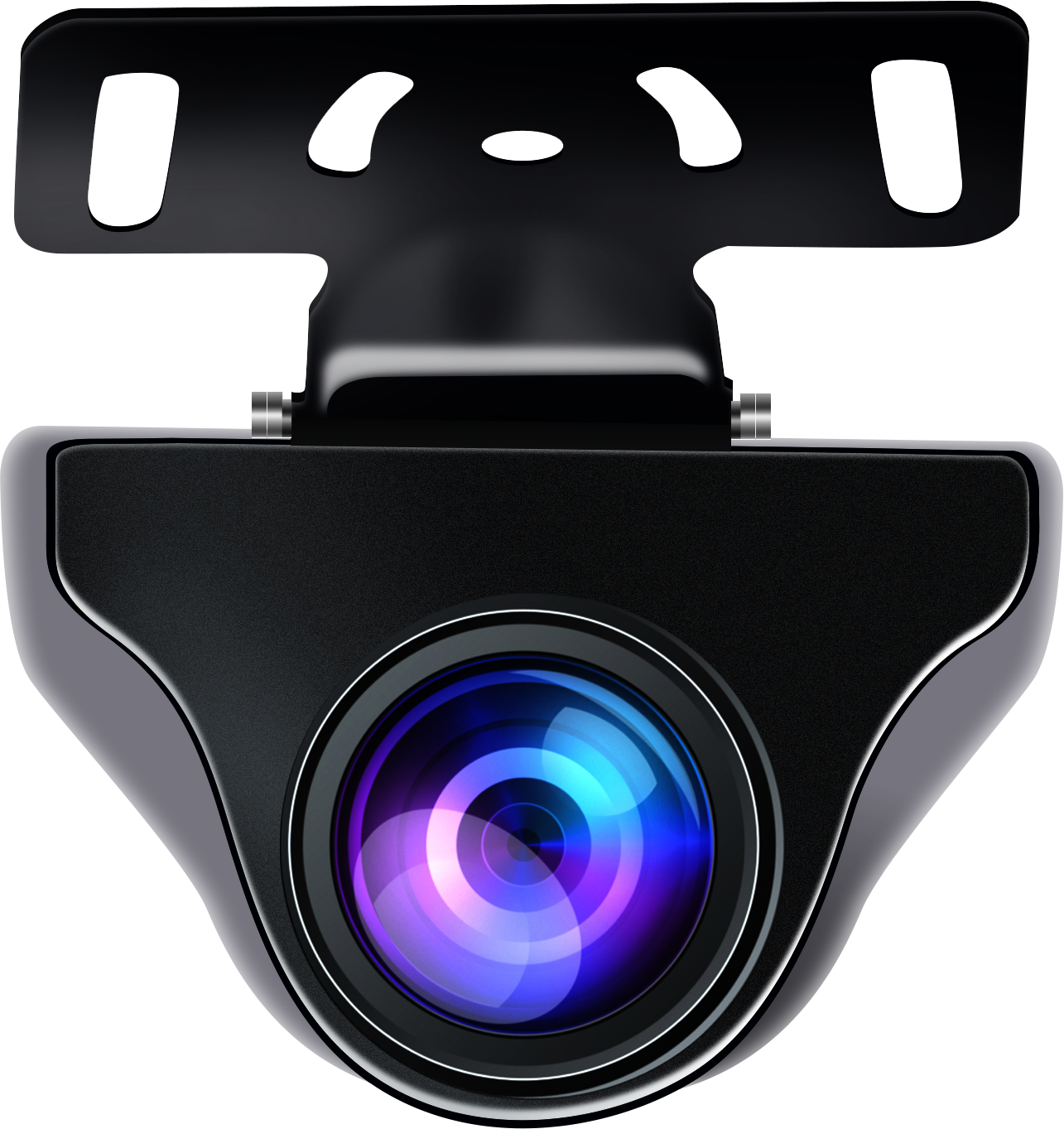
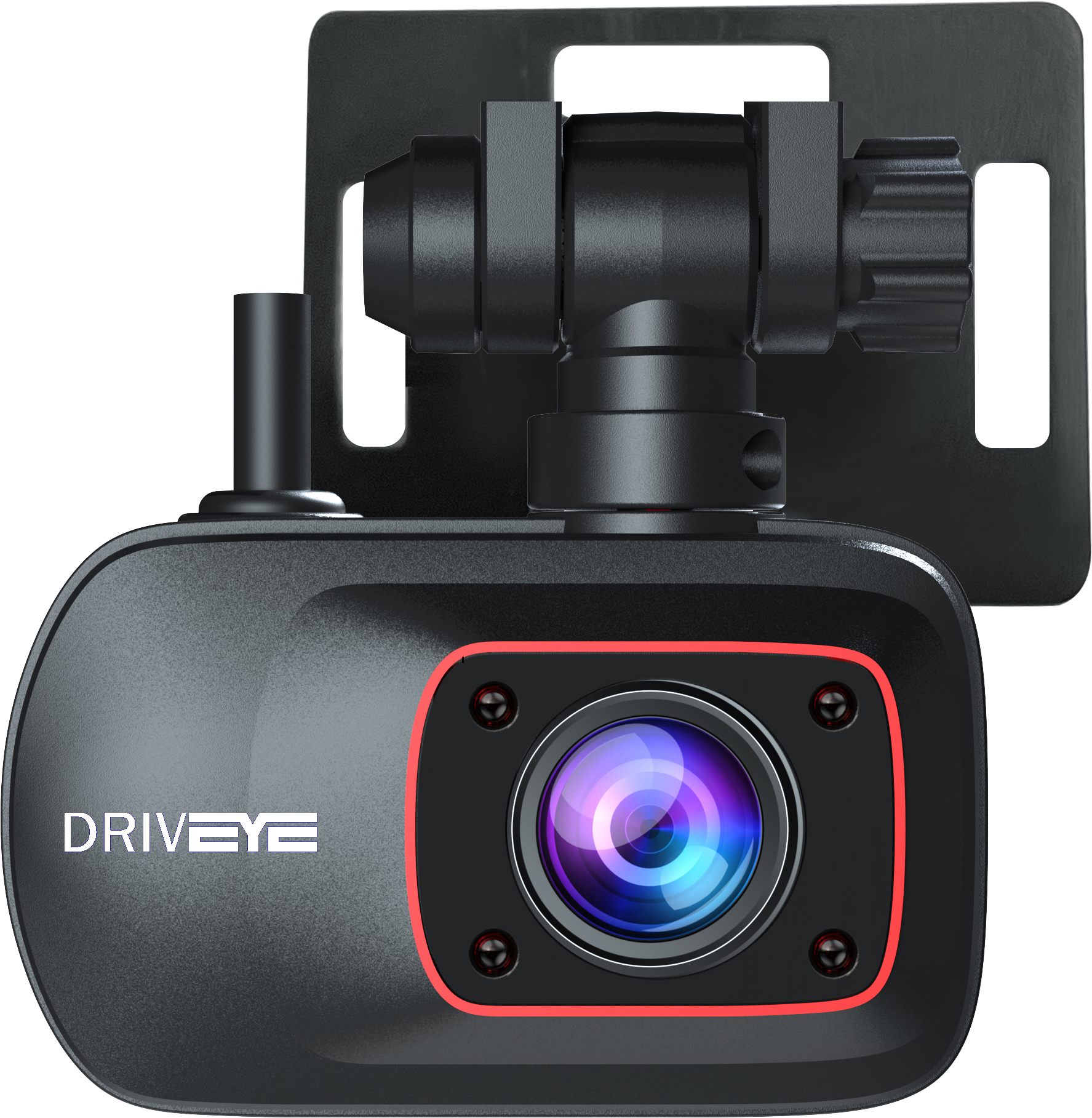
The rear camera module — the second recording port in a dual channel setup.
Need to verify specifications or request a sample?
Driveye provides detailed specification documents and sample support for dual channel, 4 channel and 5 channel dash cams. Share your target market and required configuration, and we will return the matching spec sheet and quotation.
Request Sample or QuoteHave Questions or Need More Details?
Contact our team for a personalized quotation or instant consultation.
Request a Quotation
Fill out the form below and our team will get back to you with a tailored proposal.
WhatsApp Direct Chat
Prefer to chat in real-time? Message us on WhatsApp for instant assistance & quick answers.
- Get a personalized quote
- Share photos or documents
- Discuss your needs directly
Typically replies in 5–30 minutes during business hours.