How Multi Channel Dash Cam Coverage and Parking Mode Work
A multi channel dash cam earns its place on the windshield only when every camera keeps recording at usable quality under load, in real heat and cold, and when parking mode still has power after the ignition is switched off. This guide explains how a 4-channel or 5-channel system is actually put together — what each camera position captures, how simultaneous recording changes resolution, and how parking mode is wired — using the Driveye D22, D7 and D9pro platforms as worked examples.
Driveye is a Hong Kong–based intelligent dash cam brand founded in 2024. It designs, develops and manufactures its multi-channel dash cams in-house, and its line is built around three configurations: dual-channel, 4-channel 360°, and 5-channel with a dedicated baby monitor camera. Those three products are the reference points used throughout this article.
The three answers a buyer actually needs are simple. Coverage is defined by camera positions, not camera count. Resolution depends on how many channels are recording at once. Parking mode depends on a separate power accessory that is not included by default. The rest of this guide explains each.
Problem Definition: Why Channel Count Does Not Prove Capability
A single-camera or dual-channel dash cam answers one question: what happened in front of, or behind, the vehicle. It cannot answer what happened beside the vehicle during a side-swipe, inside the cabin during a passenger dispute, or in the back seat when a parent needs to check on a child. Each of those is an information gap, and information gaps are exactly what insurers, fleet operators and dispute-handling processes cannot resolve after the fact.
Adding cameras closes those gaps in principle. In practice, three structural constraints decide whether the extra coverage actually works:
- Simultaneous recording behaviour. More active channels means more sensor data and more processing load. On a 5-channel system, the maximum resolution available when all five cameras run together can be lower than the single-camera headline figure.
- Side and interior camera placement. Left and right interior cameras must be adjustable so they can be aimed past the vehicle's own structure to cover its flanks. A fixed interior camera cannot cover a side blind spot regardless of resolution.
- Parking mode power. A camera cannot record while parked unless it has an independent power path. On many systems, including Driveye's, that path is a separately purchased hardwire or add-on kit.
Those three constraints are the real capability test. The camera count printed on the box is not.
Industry Background: Where Multi-Channel Demand Is Growing
Multi-channel is the configuration that is expanding. Fortune Business Insights projects the multi-channel dash cam segment to be the fastest-growing configuration in the dashboard camera market, at a 13.2% CAGR over the 2026–2034 forecast period. Inside that segment, side-facing cameras grow fastest of all, at 16.0% CAGR, driven by blind-spot monitoring and parking-protection demand. Market.us estimates total dashboard camera market revenue at approximately USD 4.5 billion in 2025, so the category these systems sit in is substantial.
Three implications follow for a buyer evaluating capability today:
- Growth is concentrated in views dual-channel products cannot see — the sides and the interior. A system that adds only a rear camera is not participating in the fastest-growing demand.
- Side-facing and interior coverage turn parking protection from a rear-only feature into a full-perimeter one.
- Because demand is expanding, component-level capability — sensor, chipset, thermal design — is a more durable selection filter than a channel count on a specification sheet.
Detailed Solution: What Each Driveye Configuration Delivers
Dual-channel capability — Driveye D22
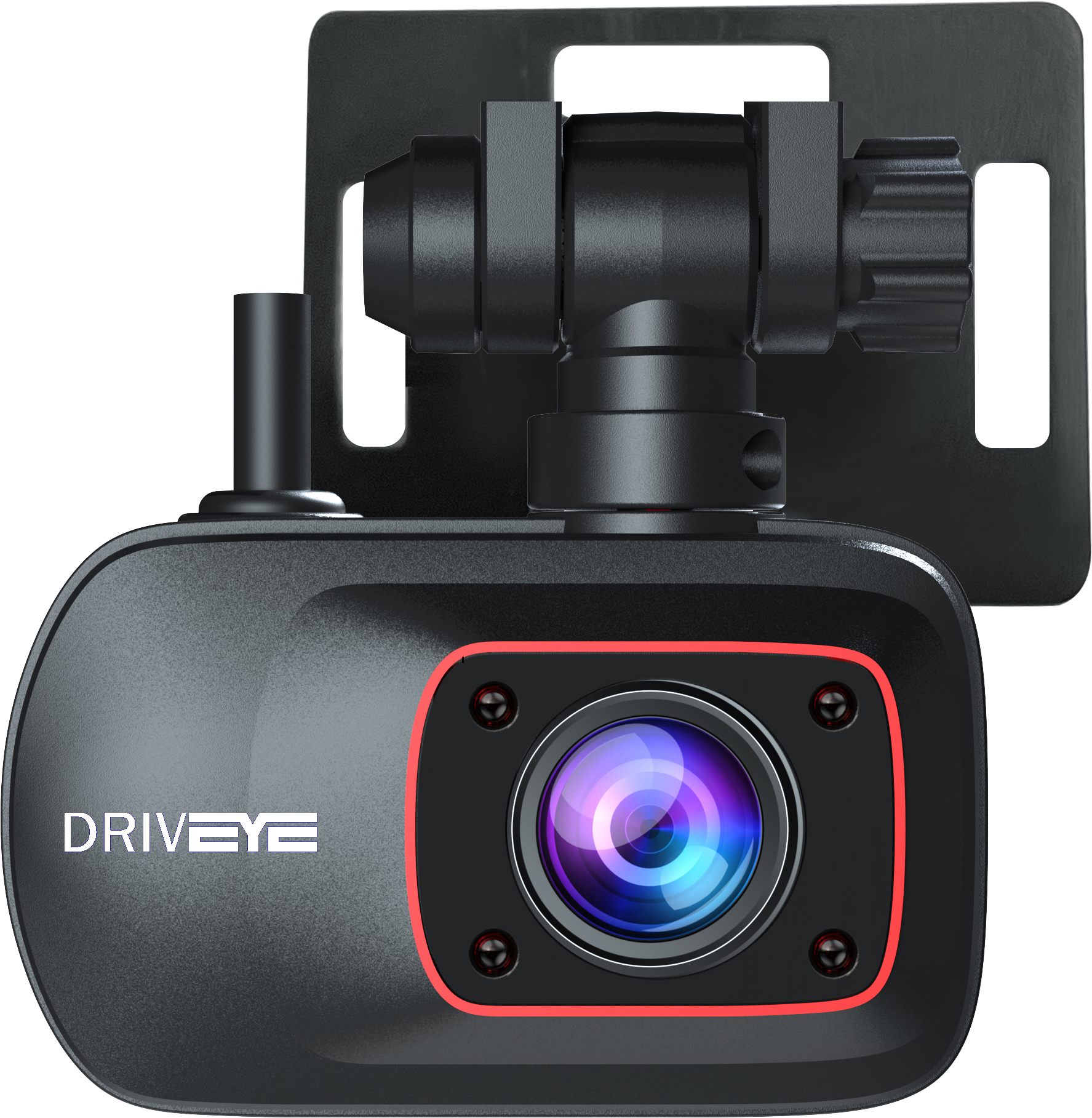
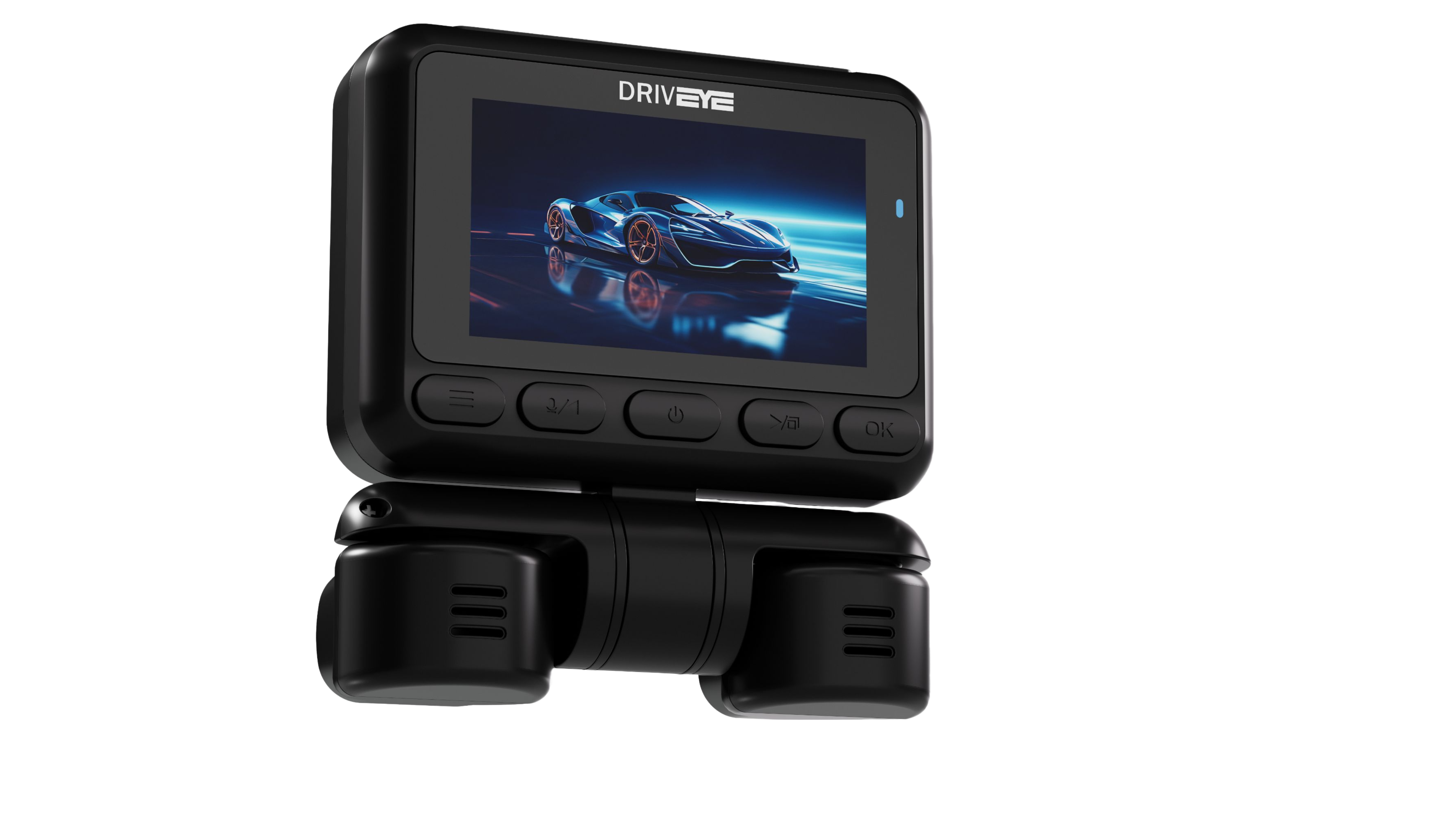
The Driveye D22 is the entry point: simultaneous 4K front and 2K rear recording at 170° front and 150° rear viewing angles, using a STARVIS 2 sensor with F1.5 front and F1.8 rear apertures and HDR/WDR processing. This configuration delivers high-quality forward and rearward evidence, plus route logging through built-in GPS, hands-free operation via 13 English voice commands, dual-band 5.8 GHz / 2.4 GHz Wi-Fi for app access, a 3-inch IPS display, loop recording and G-sensor event locking. A 64 GB card is included and up to 256 GB is supported. Parking monitoring requires a separately purchased hardwire kit. The D22 holds CE and FCC certification.
4-channel 360° capability — Driveye D7
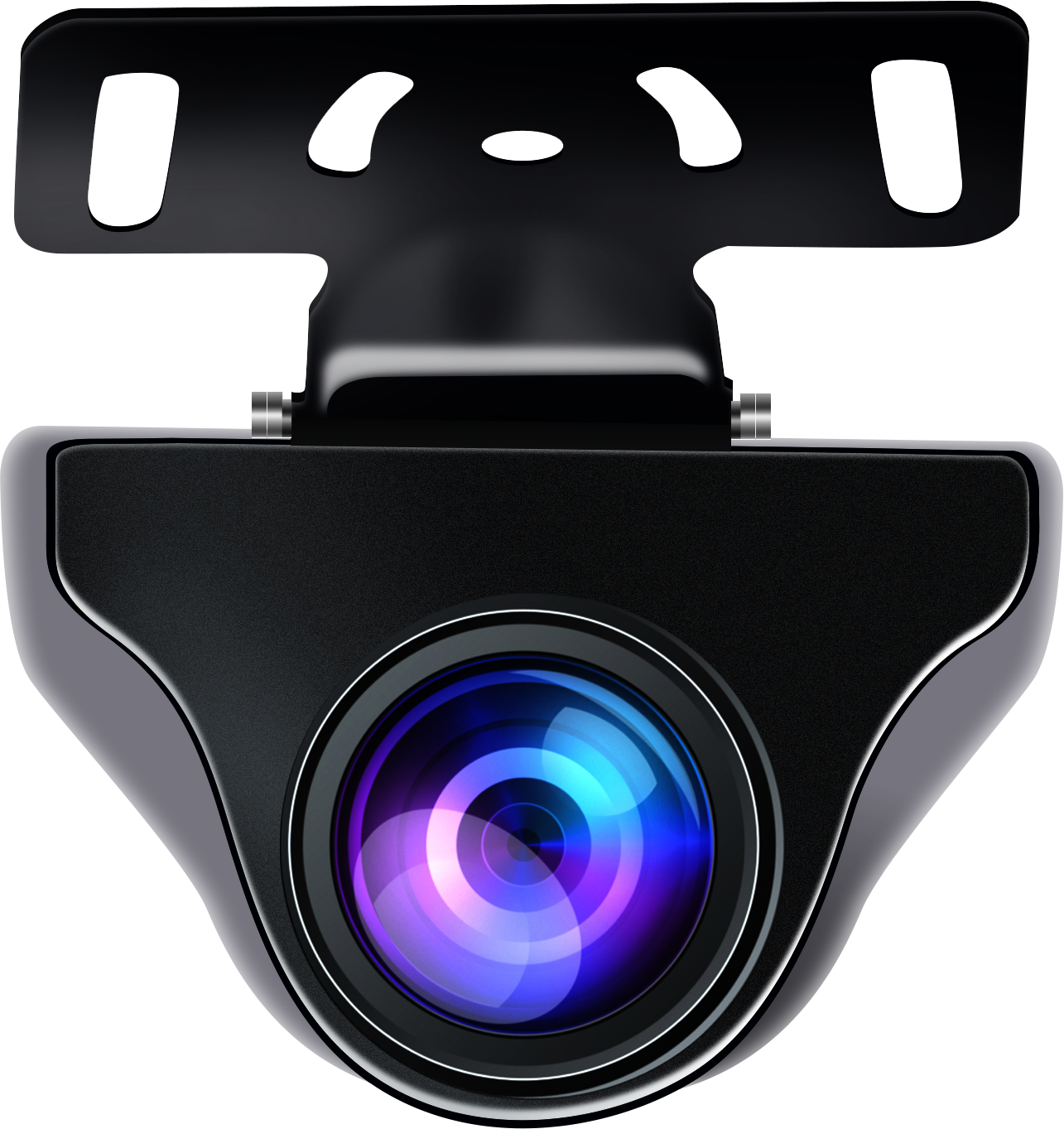
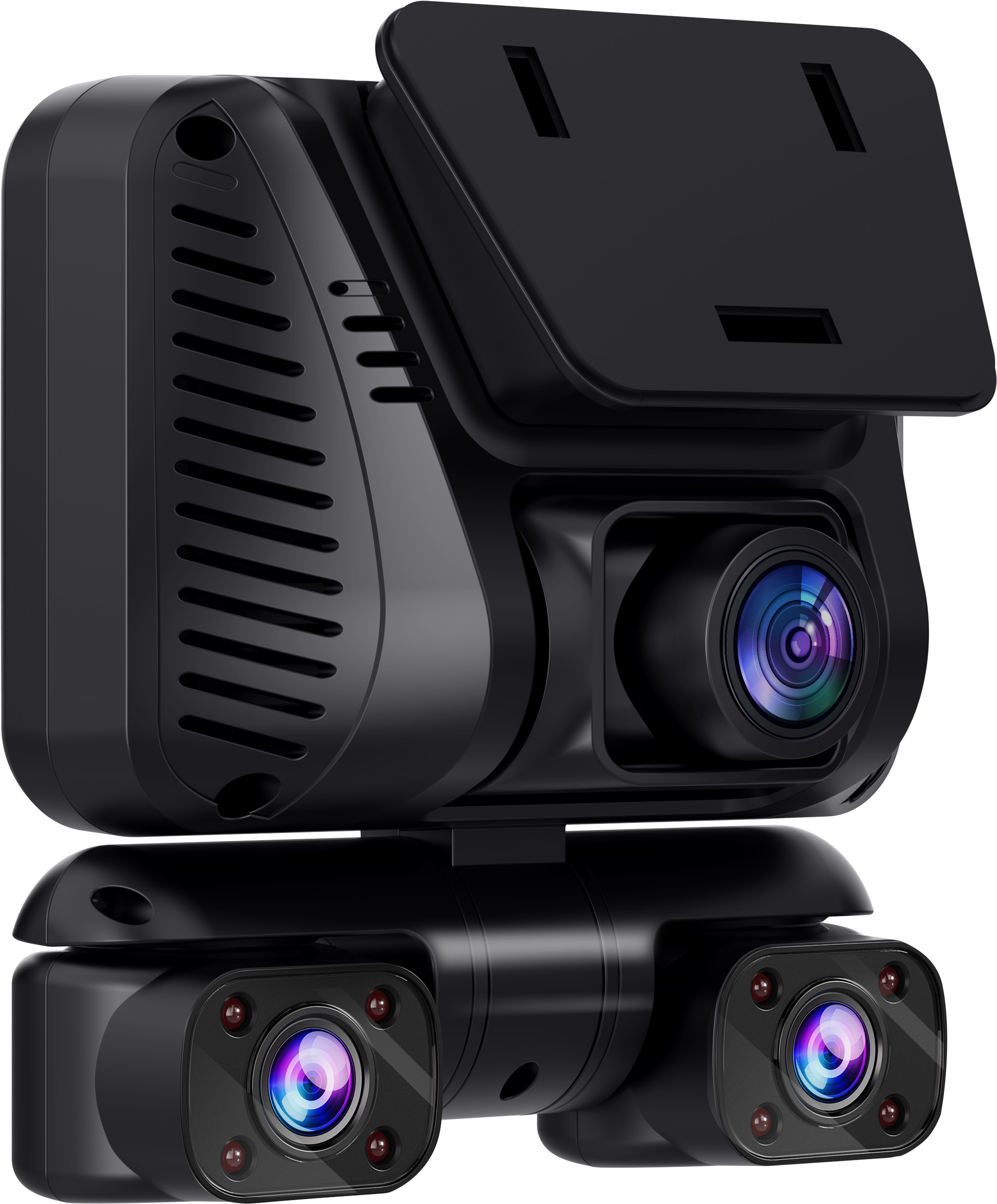
The Driveye D7 extends coverage from two views to four: front, rear, and left and right interior cameras fitted with four infrared illuminators for low-light recording. Together these provide 360° coverage with no blind spots. Simultaneous 4-channel recording runs at up to 4K on the front channel plus 1080P on each of the other three. Optical specifications include a 150° ultra-wide angle, F1.8 aperture, WDR processing and a six-layer optical lens. Connectivity and control follow the same pattern as the D22 — 5 GHz Wi-Fi (rated by Driveye at 3–5 times the speed of standard Wi-Fi), GPS and 13 English voice commands — and the D7 ships with a 128 GB card. Its stated operating range is -22°F to 158°F, and it holds CE and FCC certification.
5-channel capability with a baby monitor — Driveye D9pro
The Driveye D9pro is the 5-channel configuration: four coverage cameras — front, rear, and left and right interior — plus a dedicated baby monitor camera aimed at the child seat. Together they deliver 360° coverage with no blind spots and a real-time interior view of the rear seat. Driveye describes the baby monitor camera as supporting three installation options, designed to monitor rear-seat passengers.
Two behaviour points decide whether the 5-channel design fits a specific buyer:
- Resolution under load. The D9pro supports front-and-rear 4K + 2K only when those two cameras are the active channel pair. When all five channels record simultaneously, the maximum is 2K front plus 1080P × 4. Buyers planning evidence use should size storage and expectations to the simultaneous 5-channel figure, not the 4K headline.
- ADAS as an active layer. The D9pro adds AI-powered driver-assistance warnings: lane departure warnings, pedestrian detection, forward vehicle start alerts and forward collision warnings during driving. No other configuration in the Driveye line combines multi-channel coverage with in-drive alerts.
Optics and connectivity match the D7 pattern — 150° ultra-wide angle, F1.8 aperture, WDR, six-layer optical lens, four infrared illuminators on the left and right cameras, 5 GHz Wi-Fi, GPS and 13 English voice commands — with the same -22°F to 158°F operating range. A 128 GB card ships with the unit, and the D9pro holds CE and FCC certification.
Step-by-Step Breakdown: Evaluating and Deploying a Multi-Channel System
Step 1 — Map the vehicle's actual blind spots first
Walk the vehicle and note which views are currently unprotected. Forward and rearward only suggests a dual-channel configuration is sufficient. Uncovered flanks point to a 4-channel 360° system with adjustable left and right interior cameras. Rear-seat occupants — a child seat, or passengers — point to a 5-channel system with a dedicated interior camera.
Step 2 — Check how simultaneous recording affects resolution
A system's maximum resolution and its simultaneous-recording resolution are two different numbers. On the D9pro, front-and-rear 4K + 2K applies when those two cameras are the active channel pair; with all five channels recording, the maximum is 2K front plus 1080P × 4. Buyers who need evidence-grade front-camera detail should confirm which channel modes preserve 4K before committing.
Step 3 — Confirm side and interior camera adjustability
The left and right interior cameras on the D7 and D9pro are designed to be adjustable so they can be angled outward to capture the vehicle's flanks rather than only the cabin. Adjustability should be verified as part of the mount design, because a fixed interior camera cannot cover side blind spots no matter its resolution.
Step 4 — Plan the parking-mode power path before the install date
Parking monitoring records while the vehicle is parked, which requires a continuous power path rather than switched ignition power. On the Driveye D22, that means a separately purchased hardwire kit. On the D7 and D9pro, parking monitoring requires an add-on kit. Planning that accessory at the time of purchase avoids a second installation appointment.
Step 5 — Confirm storage headroom and loop behaviour
The D22 ships with a 64 GB card and supports up to 256 GB. The D7 and D9pro ship with a 128 GB card. Multi-channel recording writes more data per hour than dual-channel, so storage headroom and loop-recording behaviour should be sized to the number of channels in use, not to a single camera's rate.
Step 6 — Verify the operating temperature range against your climate
The D7 and D9pro are specified for -22°F to 158°F. Heat is one area where dash cams in this class vary, so matching the specified range against summer dashboard temperatures is a legitimate deployment check rather than a specification formality.
Step 7 — Validate with published rating data before scaling a purchase
Public ratings compress many individual experiences into a usable signal. The D22 carries a 5/5 rating across 13 Amazon ratings. The D7 and D9pro carry a 4.76/5 aggregate across 51 verified reviews on Driveye's independent-store review platform, plus a 4.3/5 rating across 200 Amazon ratings. Buyers placing larger orders can use these figures as a first-pass reliability filter, then request a sample unit for hands-on validation.
Use Cases: Where Multi-Channel Capability Pays Back
Family travel with a baby in the rear seat
A parent driving with an infant faces two separate problems a multi-channel system can solve at once. The baby monitor camera on the D9pro provides an interior view of the child seat so the driver can check on the baby without turning around — the exact scenario Driveye's founding story centres on. At the same time, the front, rear and side channels record road events.
Long family road trips
GPS route logging plus multi-camera footage becomes a record of the trip rather than only an incident archive. Driveye positions its interior camera as capturing family moments alongside its monitoring function, and reviewers of the D7 and D9pro specifically cite long trips and route review as use cases.
Taxi and commercial operators
A 360° configuration records both the road and the cabin, which supports accident evidence and onboard dispute resolution in the same session. Driveye names taxi operators and frequent professional drivers as part of its target audience, alongside family users.
Fleet and multi-vehicle buyers
Where more than one vehicle is involved, channel-count standardisation matters more than per-unit optimisation. Staying on a single platform — 4-channel D7 units for standard vehicles, D9pro units for vehicles regularly carrying child passengers — simplifies training, storage planning and installation routines.
Comparison Table: D22 vs D7 vs D9pro Capability
The table below compares the three Driveye configurations on capability dimensions that matter at the evaluation and execution stage. Every figure listed comes from Driveye's published product specifications and official store listings.
| Capability dimension | Driveye D22 (Dual-channel) | Driveye D7 (4-channel) | Driveye D9pro (5-channel) |
|---|---|---|---|
| Channel count | 2 | 4 | 5 |
| Camera positions | Front, rear | Front, rear, left interior, right interior | Front, rear, left interior, right interior, child-seat baby monitor |
| Coverage claim | Front + rear evidence | 360° with no blind spots | 360° with no blind spots plus rear-seat monitor view |
| Maximum simultaneous resolution | 4K front + 2K rear | 4K + 1080P × 3 | 2K + 1080P × 4 (all five channels); 4K + 2K when front and rear only |
| Field of view | 170° front, 150° rear | 150° ultra-wide | 150° ultra-wide |
| Aperture | F1.5 front, F1.8 rear | F1.8 | F1.8 |
| Sensor / processing | STARVIS 2, HDR/WDR | WDR, six-layer optical lens | WDR, six-layer optical lens |
| Infrared illuminators | — | 4 (left and right cameras) | 4 (left and right cameras) |
| AI ADAS alerts | — | — | Lane departure, pedestrian detection, forward vehicle start, forward collision |
| Baby monitor camera | — | — | Yes, child-seat camera with 3 installation options |
| Wi-Fi / connectivity | Dual-band 5.8 GHz / 2.4 GHz, GPS | 5 GHz Wi-Fi, GPS | 5 GHz Wi-Fi, GPS |
| Voice commands | 13 English | 13 English | 13 English |
| Operating temperature | -22°F to 158°F | -22°F to 158°F | -22°F to 158°F |
| Storage included | 64 GB card (up to 256 GB supported) | 128 GB card | 128 GB card |
| Parking mode | Hardwire kit sold separately | Add-on kit required | Add-on kit required |
| Certifications | CE, FCC | CE, FCC | CE, FCC |
| Listed price | $139.99 USD | $139.99 USD | $209.99 USD |
| Warranty | 18 months | 18 months | 18 months |
Frequently Asked Questions
What does "4-camera coverage" actually include on a Driveye multi-channel dash cam?
On the Driveye D7, four cameras provide 360° coverage with no blind spots: one forward-facing camera, one rear camera, and two adjustable left and right interior cameras fitted with four infrared illuminators for low light. Simultaneous recording runs at up to 4K on the front channel plus 1080P on each of the other three, with a 150° ultra-wide angle, F1.8 aperture, WDR processing and a six-layer optical lens. The D7 holds CE and FCC certification and ships with a 128 GB storage card.
How is the baby monitor camera different from the side cameras on a 5-channel system?
On the Driveye D9pro, four cameras — front, rear, left and right — handle vehicle coverage, and a fifth camera is dedicated to the child seat. It supports three installation options and is aimed at rear-seat passengers so a parent can monitor a child in real time. That interior view records as part of the same 5-channel session, so the baby monitor channel and the road channels are stored together rather than on separate devices.
How does parking mode work on these multi-channel dash cams?
Parking monitoring records while the vehicle is parked, which means the dash cam needs a continuous power path rather than switched ignition power. On the Driveye D22, that requires a separately purchased hardwire kit. On the D7 4-channel and D9pro 5-channel, parking monitoring requires an add-on kit. Buyers should plan for that accessory at the point of purchase rather than after the initial installation.
What drives the price difference between a dual-channel and a 5-channel multi-channel dash cam?
Four cost components change as channel count rises: additional sensors, additional cabling and mounting hardware, a chipset capable of handling simultaneous multi-channel recording, and — on the D9pro — the dedicated child-seat camera plus the AI ADAS feature set covering lane departure warnings, pedestrian detection, forward vehicle start alerts and forward collision warnings. In Driveye's line, the D22 dual-channel and the D7 4-channel are both listed at $139.99 USD, while the D9pro 5-channel is listed at $209.99 USD on the official store. All three carry an 18-month warranty and a 30-day return window.
How can a buyer validate capability before ordering at volume?
Start with published rating data: the D22 carries a 5/5 Amazon rating across 13 ratings, and the D7 and D9pro carry a 4.76/5 aggregate across 51 verified reviews on Driveye's independent-store review platform plus a 4.3/5 rating across 200 Amazon ratings. For larger evaluations, a hands-on sample is the next step. Driveye ships free from the official store and can be contacted at driveyedashcam@gmail.com or on WhatsApp at +852 59510424 for sample requests, current pricing and the product catalog.
Conclusion
Multi-channel dash cam capability comes down to three questions: what the extra cameras see, how the system behaves when all channels record at once, and whether parking mode stays powered when the ignition is off. The Driveye line answers those at three price points — the D22 for front-and-rear evidence at 4K + 2K, the D7 for 360° coverage at 4K + 1080P × 3, and the D9pro for 5-channel coverage that includes a dedicated baby monitor camera and AI ADAS. Each ships with storage included, holds CE and FCC certification, and is backed by an 18-month warranty.
For buyers at the evaluation-to-execution stage, the practical sequence is: map the vehicle's unprotected views, choose the configuration that matches them, plan the parking-mode accessory at purchase, and validate with a sample before scaling. Driveye's products have been launched and sold in more than 20 countries, and the brand reached a Top 3 ranking within the dash cam category on Kickstarter during its campaign — useful context when a buyer is deciding whether a younger platform is ready for a volume order.
Ready to Evaluate a Driveye Multi-Channel System?
Request a sample unit, confirm current pricing, or download the product catalog. Free shipping from the official store, 30-day returns, 18-month warranty.
Visit the Driveye Official Store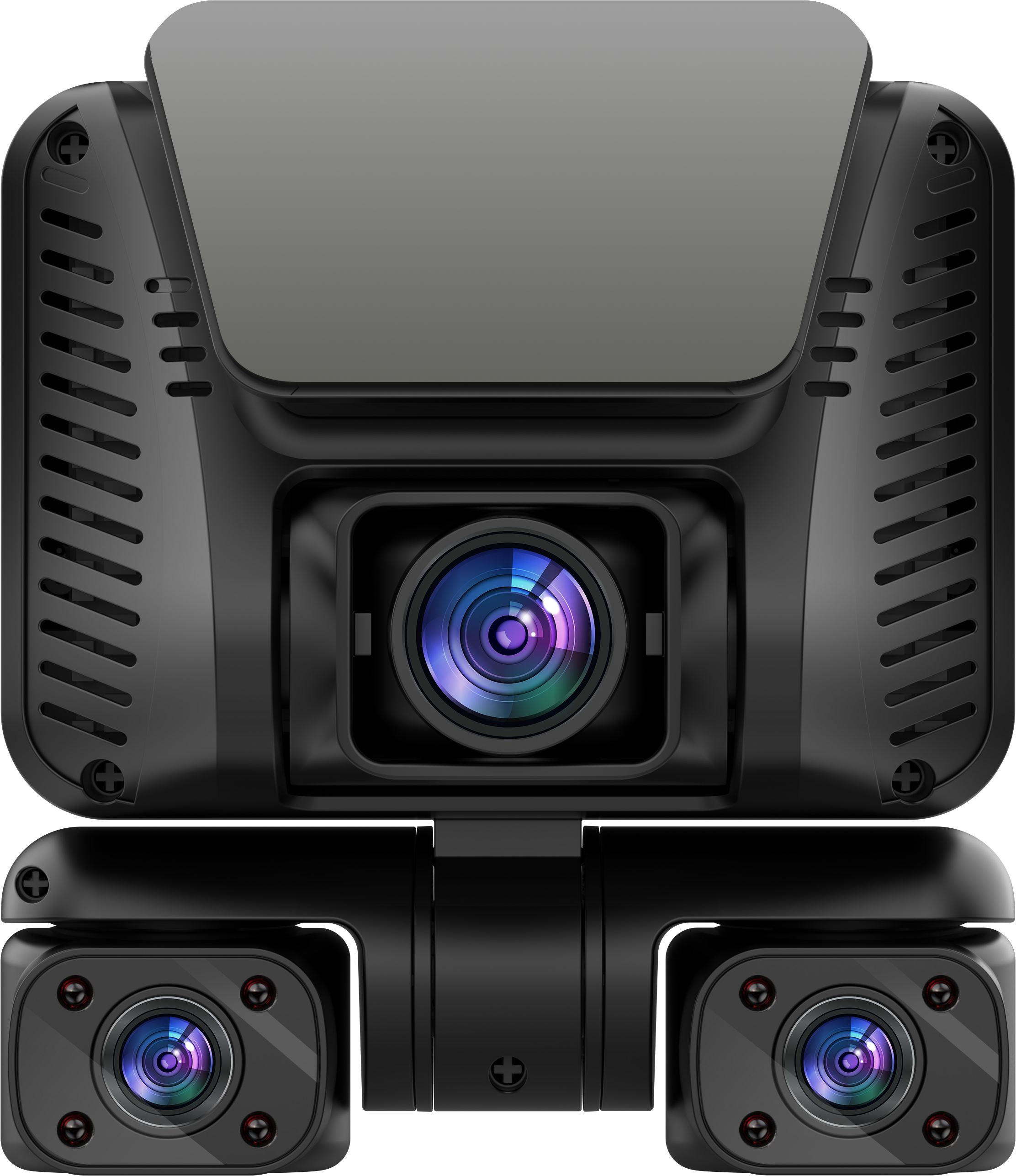
Contact: driveyedashcam@gmail.com · WhatsApp +852 59510424 · www.driveyetech.com
Have Questions or Need More Details?
Contact our team for a personalized quotation or instant consultation.
Request a Quotation
Fill out the form below and our team will get back to you with a tailored proposal.
WhatsApp Direct Chat
Prefer to chat in real-time? Message us on WhatsApp for instant assistance & quick answers.
- Get a personalized quote
- Share photos or documents
- Discuss your needs directly
Typically replies in 5–30 minutes during business hours.