
Display Fixtures by Retail Project Type: A Buyer's Roadmap
Choosing display fixtures is not a single-product decision. It is a specification decision shaped by project type, product dimensions, mobility needs, lighting requirements and compliance expectations. This article provides a project-type-focused reference for buyers and planners who are evaluating display fixtures for a retail project. The reference models and factory capabilities cited below come from Dongguan Display Leader Co., Ltd. (ECO DDL), a display manufacturer established in 2013, with a 40,000 m² production base in Dongguan, Guangdong, China, serving markets that include the USA, Europe, North Europe, Japan, Russia and the Middle East.
The roadmap is organised around the buyer's real workflow: identify the problem, understand the market context, match a fixture family to each project type, follow a step-by-step selection process, review documented use cases, and compare options in one table. The goal is to make the fixture specification easier to defend internally and easier to communicate to a manufacturer.
The Core Problem in Retail Display Fixture Selection
Display fixture projects usually fail at the selection stage for reasons that have nothing to do with price. The most common issue is that buyers compare price before they compare fit. A fixture that works for a supermarket beverage aisle may not work for a beauty counter, a 3C sample room or a hotel bar. The following mismatches are typical.
First, the SKU size does not match the compartment. Retailers often choose a visually attractive display unit first and then discover that the product carton, bottle height or accessory width does not fit the shelf pitch. Second, the material does not match the environment. Liquor promotional signage, for example, can be exposed to high humidity, salt spray, corrosive conditions and UV radiation. A coated or treated structure is needed for those conditions. Third, lighting and power requirements are ignored until installation. Illuminated fixtures need a defined power supply, and North American projects may require specific safety standards for electrified displays. Fourth, mobility is treated as an afterthought. A permanent store can accept a heavy fixed display, while a brand promotion event or hotel function usually needs a push-type, movable cart.
These mismatches become expensive after installation because rework, re-shipping and store-level adjustments all add cost and delay. For buyers in the research and evaluation stage, the correct response is to define the project type first and then select the fixture family that is designed for that type.
Retail Display Market Context: Why Project Fit Matters More
The global retail displays market was valued at USD 22.4 billion in 2025 and is projected to reach USD 38.6 billion by 2034, according to Dataintelo. A related estimate from ResearchAndMarkets puts the in-store display market at USD 6.48 billion in 2022, growing to USD 24.6 billion by 2029. These figures are not directly comparable because each research house uses a different scope, but both point in the same direction: the retail display category is expanding, and buyers are investing more in merchandising infrastructure.
Floor displays held the largest product-type share at 34.7% in 2025, largely because of their high visibility in high-traffic stores (Dataintelo). Asia Pacific accounted for 36.5% of the global retail displays market in 2025, which is one reason why global buyers continue to evaluate manufacturers in China and neighbouring sourcing hubs.
Downstream demand reinforces the need for project-specific fixture planning. Global snack retail sales reached USD 679 billion in 2024 (Euromonitor International), pushing hypermarkets to invest in specialised snack display fixtures. Acrylic boxes and display stands, a smaller but fast-growing segment, were valued at USD 326.97 million in 2024 with a 4.9% CAGR (Cognitive Market Research). For 3C digital accessories, beverage brands and beauty retailers, the pattern is similar: the product mix determines the fixture form.
At the same time, compliance rules are tightening. UL 970 is the primary safety standard for retail fixtures and merchandise displays in North America, covering non-refrigerated electrified and non-electrified products. For illumination display fixtures, UL 1598 (Standard for Luminaires) applies to electrical and fire safety in commercial environments. A buyer planning a US rollout should therefore treat compliance as a fixture specification item, not as a supplier add-on.
Market estimates in this section are directional. Different research providers define the display market differently, so the figures above should be interpreted as context rather than as directly comparable totals.
Display Fixture Families by Retail Project Type
ECO DDL organises production around fixture families rather than one-off products. For a project-based buyer, the useful question is: which family belongs to which project stage? The following families are documented in the ECO DDL product reference set.
Brand Counters and Liquor Retail
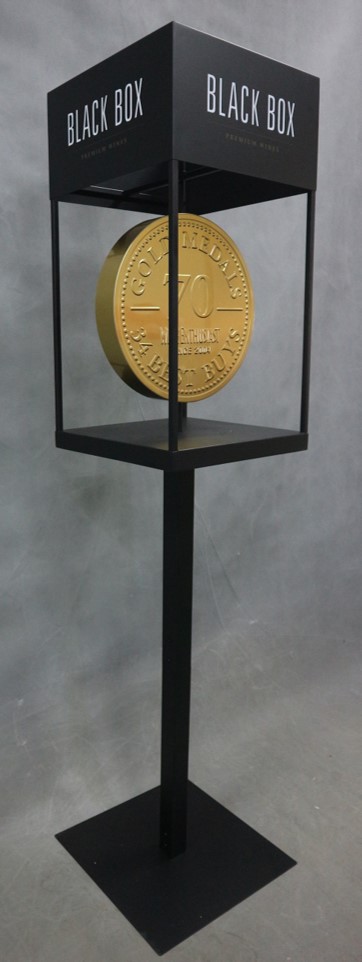
Liquor Display Fixtures (model LZ00023) are wood-framed, movable displays with an overall size of 40*40*160 cm, designed for red wine display. Typical placements are shopping malls, supermarkets, catering venues, retail stores and brand promotion areas. For liquor brands, the ability to change the sign and brand panel on the fixture is as important as the frame itself. This family suits permanent counters and promotional zones where a premium material is required.
Illuminated Promotional Signage
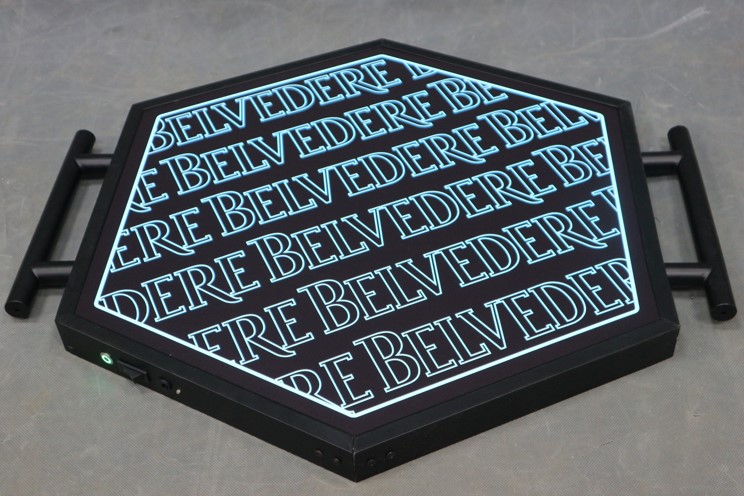
Illumination display fixtures are a separate category because they add electrical components to the mechanical structure. In a documented US liquor promotional signage application, the working environment includes high humidity, salt spray, corrosive exposure and UV exposure. The fixture operates with continuous lighting and a 100-110W or 200-220W power plug, and the reference specification requires UL-approved electronic parts. ECO DDL's illuminated wine light box is the visual reference for this product family.
3C Digital and Accessory Displays
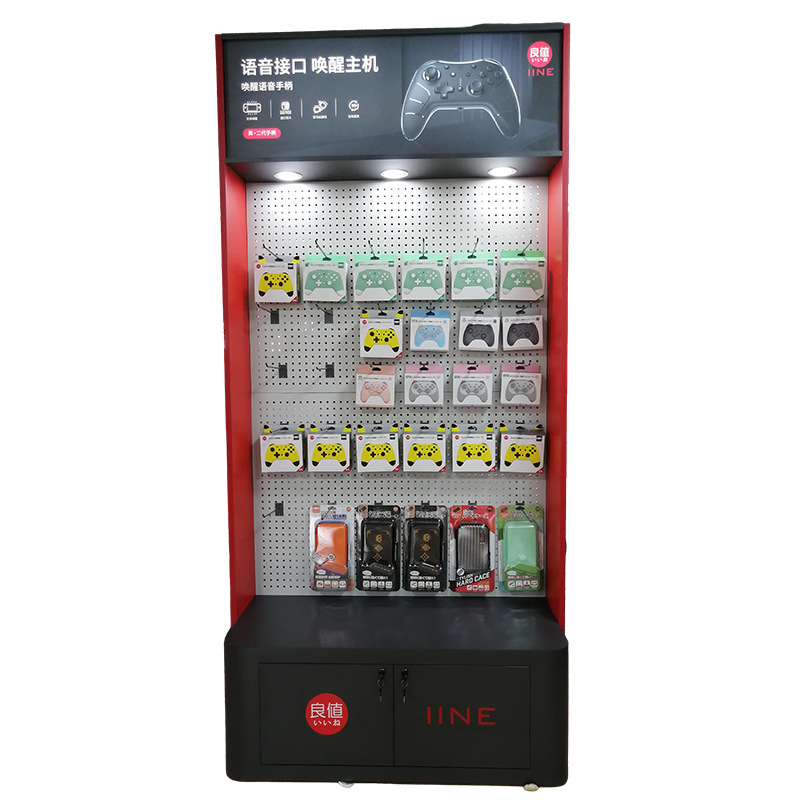
3C digital display fixtures combine metal, acrylic and wood. Model youxi01, a game controller display fixture, is movable, sized 50*50*170 cm, and available in a customizable colour. ECO DDL also produces headphone display stands and speaker display stands, which are used in supermarkets, shopping malls, convenience stores, sample rooms and the 3C electronics category. For small parts such as controllers and accessories, an upright floor display keeps products visible and reachable.
Acrylic Compartment Displays
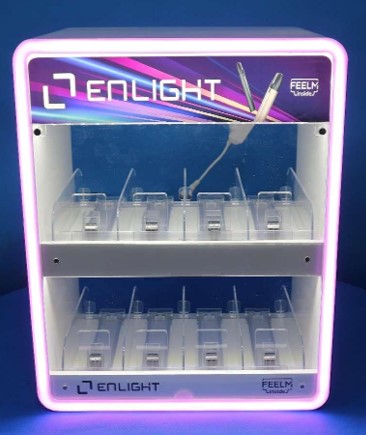
Acrylic compartment display fixtures (model yakeli35) are stepped cabinet-type units. The filed size of the reference unit is 160*122.5*186 mm. They are intended for 3C electronics, supermarkets, shopping malls, brand promotion areas and hotels. The acrylic material provides a transparent presentation that works well for products where the packaging and the product itself need to be seen together.
Fast-Moving Snack and Beverage Displays
Fast selling display fixtures (model LZ-007) are upright display units in metal with PVC elements, sized 45*31*130 cm and weighing 13 kg. The colour is black as standard and customizable. This family is used in supermarkets, convenience stores, restaurants, KTV, offices, fruit stores and hotels. For snack categories that rely on quick restocking, an upright floor frame with multiple shelves is a practical choice. For bottled products, the companion family is the bottle display fixture.
Bottle Display Fixtures
Bottle display fixtures (model LZ-019) are metal frames described as stable and wear-resistant. The applicable industries are retail, hospitality, the beverage industry and brand promotion. This family is the practical choice when bottles, rather than cartons or cans, are the primary merchandising unit. Bars, beverage counters and liquor sections in supermarkets are the most common locations.
Beauty, Personal Care and Small-Format Retail
Acrylic display fixtures (model LZ00102) are movable acrylic stands with two filed size options: 50*30*150 cm and 103*36*240 cm, with a standard weight of 4.3 kg. They are used in beauty retail, beauty and healthcare, airports, supermarkets and department stores, exhibition events, brand promotion, live-streaming e-commerce, hotels and clubs. ECO DDL also produces cosmetic display stands, e-cigarette display stands and hair dryer display stands in the same small-format acrylic family.
Display Carts and Hospitality Mobility
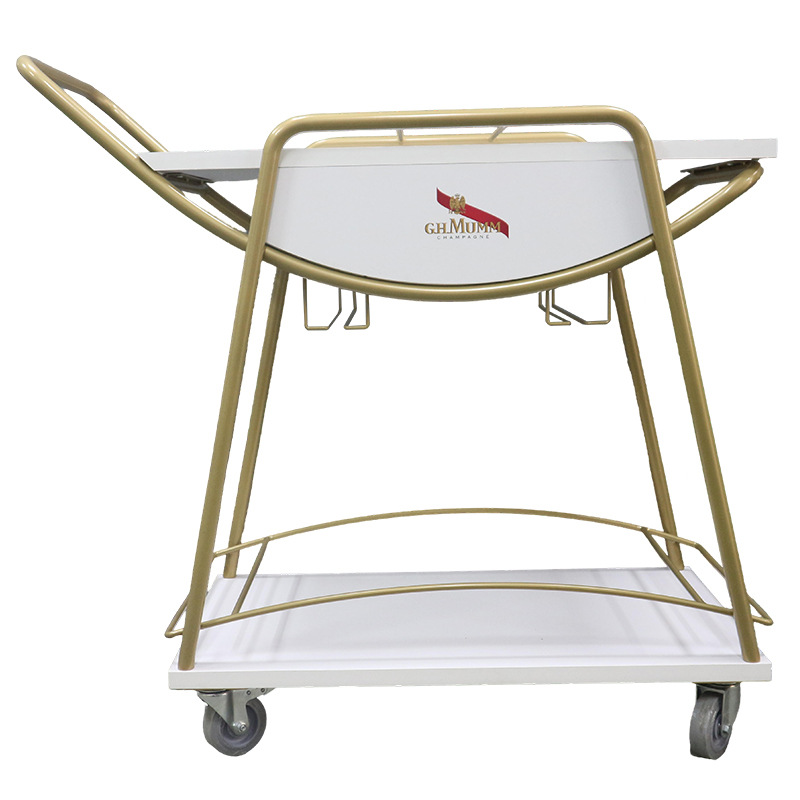
Display carts (model tuiche001) are push-type, movable metal carts, white as standard and customizable. They are used in hotels, parties, brand promotion, supermarkets and shopping malls. Drinks trolleys belong to the same family and are relevant for bar, banquet and event service. When the project is mobile or temporary, the fixture itself must move with the merchandising activity.
End Caps and Custom Store Positions
End-cap positions usually require custom display fixtures rather than standard catalogue SKUs. ECO DDL works in OEM/ODM mode, and customisation covers size, logo, material, colour, structure and function. In practice, this is how wooden end caps and other store-specific display units are executed. A project with end-cap requirements should be discussed with the manufacturer at the specification stage, not after the standard fixture range has been reviewed.
A Six-Step Process to Match Display Fixtures to Your Project
The following process is designed for research-stage buyers who need to turn a project brief into a fixture specification that a manufacturer can quote accurately.
- Define the project stage. Is this a permanent store rollout, a seasonal campaign, a promotional event or a hospitality installation? The answer determines whether the fixture must be durable, movable, illuminated, temporary or sign-changeable.
- List the merchandise. Record the product dimensions, weight, unit form and quantity. A bottle display fixture, a snack shelf and a 3C accessory stand serve different packaging geometries.
- Select the fixture family. Use the project-type table below to shortlist one or two fixture families before contacting suppliers.
- Add functional and compliance requirements. Note whether the fixture needs to be movable, illuminated, wall-mountable or compatible with a specific power supply. For North American projects, check UL 970 for retail fixtures and UL 1598 for illuminated display fixtures.
- Check supplier capability against the order. ECO DDL's documented capabilities include OEM/ODM production, customisation of size, logo, material, colour, structure and function, a monthly capacity of 30,000 units, a standard MOQ of 100 units, 100% testing, and after-sales remote support.
- Request samples or quotes with a complete information package. Include photos, reference drawings, dimensions, target quantity, destination market and compliance requirements. This shortens the sampling cycle and reduces the risk of an inaccurate quotation.
Project Scenarios in Practice
Multi-Country Liquor Brand Promotion
In a documented case, liquor brand owners, design houses and product distributors in markets from Australia to Japan used ECO DDL liquor display fixtures. The project quantities were 50-100 pieces for small projects and 500-1000 pieces for large rollouts. Over a two-year use period, the reported results included stable and durable operation, changeable brand and sign elements, eye-catching colour-changing lights, and a size that was easy to mount on walls. This case shows why sign-changeability and fixture durability are decision criteria for brand promotion projects.
US Liquor Promotional Signage with Compliance Constraints
A US-based application record for liquor promotional signage required fixtures that could tolerate high humidity, salt spray, corrosion and UV exposure while operating under continuous lighting with a 100-110W or 200-220W power plug. The reference bill of materials specified UL-approved electronic parts. The application record links the liquor display fixture family to the illuminated wine light box shown in the ECO DDL reference set. For buyers, the lesson is that illuminated signage projects need both mechanical durability and electrical compliance planning.
Hospitality Mobile Display and Service
For hotels, parties and brand promotion events, ECO DDL display carts provide movable display and transport capacity. The cart is push-type, made of metal, available in white, and positioned for hotels, parties, brand promotion, supermarkets and shopping malls. This scenario is common in hospitality procurement, where the fixture may need to serve a banquet, a bar area and a lobby display in the same week.
Display Fixture Selection Reference Table
The table below maps project types to documented ECO DDL fixture families. Specifications are taken from the manufacturer's reference data.
| Project Type | Recommended Fixture Family | Material | Filed Specifications | Typical Placement |
|---|---|---|---|---|
| Liquor brand counter / red wine | Liquor Display Fixtures (LZ00023) | Wood | 40*40*160 cm; movable | Shopping malls, supermarkets, catering, retail, brand promotion |
| Liquor promotional sign (US) | Illumination display fixture (wine light box reference) | — | Continuous lighting; 100-110W / 200-220W plug; UL-approved electronic parts | Bars and liquor-related events |
| 3C / game accessories | 3C digital display Fixtures (youxi01) | Metal, acrylic, wood | 50*50*170 cm; movable; colour customizable | Supermarkets, malls, convenience stores, sample rooms, 3C category |
| 3C small parts / compartments | Acrylic compartment display Fixtures (yakeli35) | Acrylic | Stepped cabinet; filed size 160*122.5*186 mm | 3C electronics, malls, brand promotion, hotels |
| Fast-moving snacks / beverages | Fast selling display Fixtures (LZ-007) | Metal + PVC | 45*31*130 cm; 13 kg; upright; black standard | Supermarkets, convenience stores, restaurants, KTV, offices, fruit stores, hotels |
| Bottle merchandising | Bottle display Fixtures (LZ-019) | Metal | Stable and wear-resistant | Retail, hospitality, beverage, brand promotion |
| Beauty / personal care | Acrylic display Fixtures (LZ00102) | Acrylic | 50*30*150 cm or 103*36*240 cm; 4.3 kg; movable | Beauty retail, airports, events, live-commerce, hotels, clubs |
| Hospitality / mobile service | Display Carts (tuiche001) | Metal | Push-type; movable; white (customizable) | Hotels, parties, brand promotion, supermarkets, malls |
| End-cap positions | Custom OEM/ODM displays | Depends on project | Size, logo, material, colour, structure and function customizable | Store aisle ends, brand zones |
FAQ
What compliance points should a North American retail project check before ordering display fixtures?
For non-refrigerated retail fixtures and merchandise displays, UL 970 is the primary safety standard in North America. For illuminated display fixtures, UL 1598 covers electrical and fire safety for luminaires. In a US liquor promotional signage application, ECO DDL's reference specification included UL-approved electronic parts and continuous lighting at 100-110W or 200-220W. Buyers should state their target market and compliance requirements in the request for quotation.
Can ECO DDL customise display fixtures for a specific retail project?
Yes. ECO DDL works in OEM and ODM mode. Customisation covers size, logo, material, colour, structure and function. The company operates a 40,000 m² production base with hardware, acrylic, woodwork, powder coating, silk screen and packaging workshops, and reports 420 professional and technical personnel, 30 R&D teams and 36 quality teams.
What is the practical MOQ and production capacity for display fixture projects?
ECO DDL's standard MOQ is 100 units per model. Monthly production capacity is 30,000 units, and annual capacity is about 300,000 units or over 900 containers. In a multi-country liquor rollout, small projects used 50-100 pieces and large rollouts used 500-1,000 pieces. Project-specific budgeting depends on fixture type, quantity and destination market.
How can a buyer evaluate a display fixture before placing a full order?
Buyers can request samples and quotations directly from ECO DDL by email or phone. Production is 100% tested before shipment, and after-sales support includes remote support. Including photos, drawings, dimensions and target market in the inquiry shortens the sampling cycle.
What lead time should a retail project plan assume with ECO DDL?
ECO DDL's standard lead time is 25-40 days after order confirmation. Compliance confirmation, such as UL 970 or UL 1598 requirements for North American projects, should be part of the order process. For a project-specific quote or sample, contact ECO DDL at dick@gpmetalware.com or download the company brochure.
Conclusion
Display fixture selection becomes manageable when it is organised by project type. Liquor brand rollouts need sign-changeable, durable units; 3C categories need transparent, small-compartment presentation; snack and beverage zones need upright, replaceable shelving; hospitality projects need mobility; and North American projects need compliance planning.
ECO DDL's documented product families and manufacturing base provide a reference for each of these needs. The next step is to turn the project brief into a fixture specification and send it to a manufacturer for a sample or quote. The ECO DDL company profile is available for download below.
Download the ECO DDL Company Profile
Company profile-EcoDDL.pdf
Email: dick@gpmetalware.com | Tel: +86 188-2521-7342
Have Questions or Need More Details?
Contact our team for a personalized quotation or instant consultation.
Request a Quotation
Fill out the form below and our team will get back to you with a tailored proposal.
WhatsApp Direct Chat
Prefer to chat in real-time? Message us on WhatsApp for instant assistance & quick answers.
- Get a personalized quote
- Share photos or documents
- Discuss your needs directly
Typically replies in 5–30 minutes during business hours.