
BOV303 Butterfly Valve Application Guide: Oil, Gas, Chemical, Steel
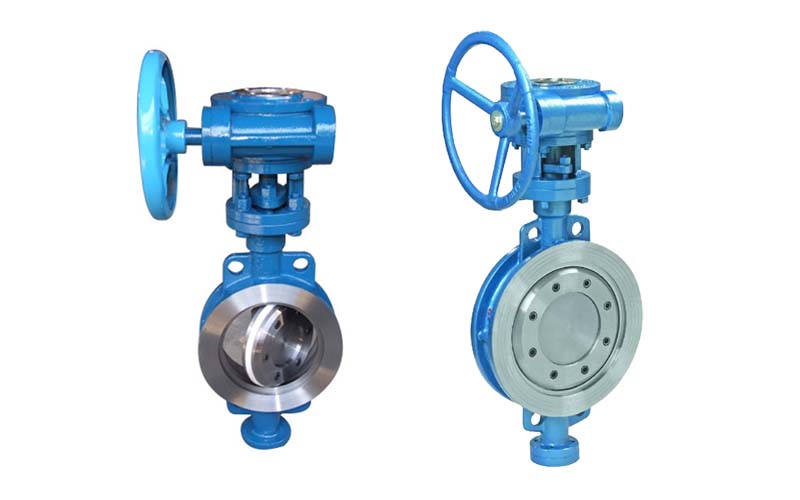
BOV303 Triple Offset Butterfly Valve: Application Guide for Oil, Gas, Chemical and Steel Projects
A triple offset butterfly valve is rarely chosen because of its datasheet. It is chosen because a specific line, at a specific pressure class, carrying a specific medium, needs to shut off repeatedly without the seat becoming the maintenance item. This guide maps the BOV303 range onto the four project environments it is built for — oil and petroleum, refinery and tanks, chemical factories, and steel mills and shipbuilding — and shows how to turn a service condition into a material, seat, end connection and actuation decision.
What the BOV303 triple offset butterfly valve is
The BOV303 is the triple offset butterfly valve manufactured by EG Valves Manufacturing Co., Ltd, a China valve manufacturer established in 2000 and based in Wenzhou, Zhejiang Province. The valve is available from NPS 2 in to 60 in (DN50 to DN1500), in Class 150, Class 300 and Class 600, and in PN10, PN16, PN25 and PN40. Body material options are carbon steel, stainless steel, alloy steel and duplex steel. Disc options are carbon steel, stainless steel and duplex steel. Seat options are stainless steel with graphite, or PTFE with stainless steel, with an optional Stellite seat for erosion resistance. End connections are wafer, lug and double flange. Operation can be by handle lever, gearbox, worm gear, electric actuator or pneumatic actuator.
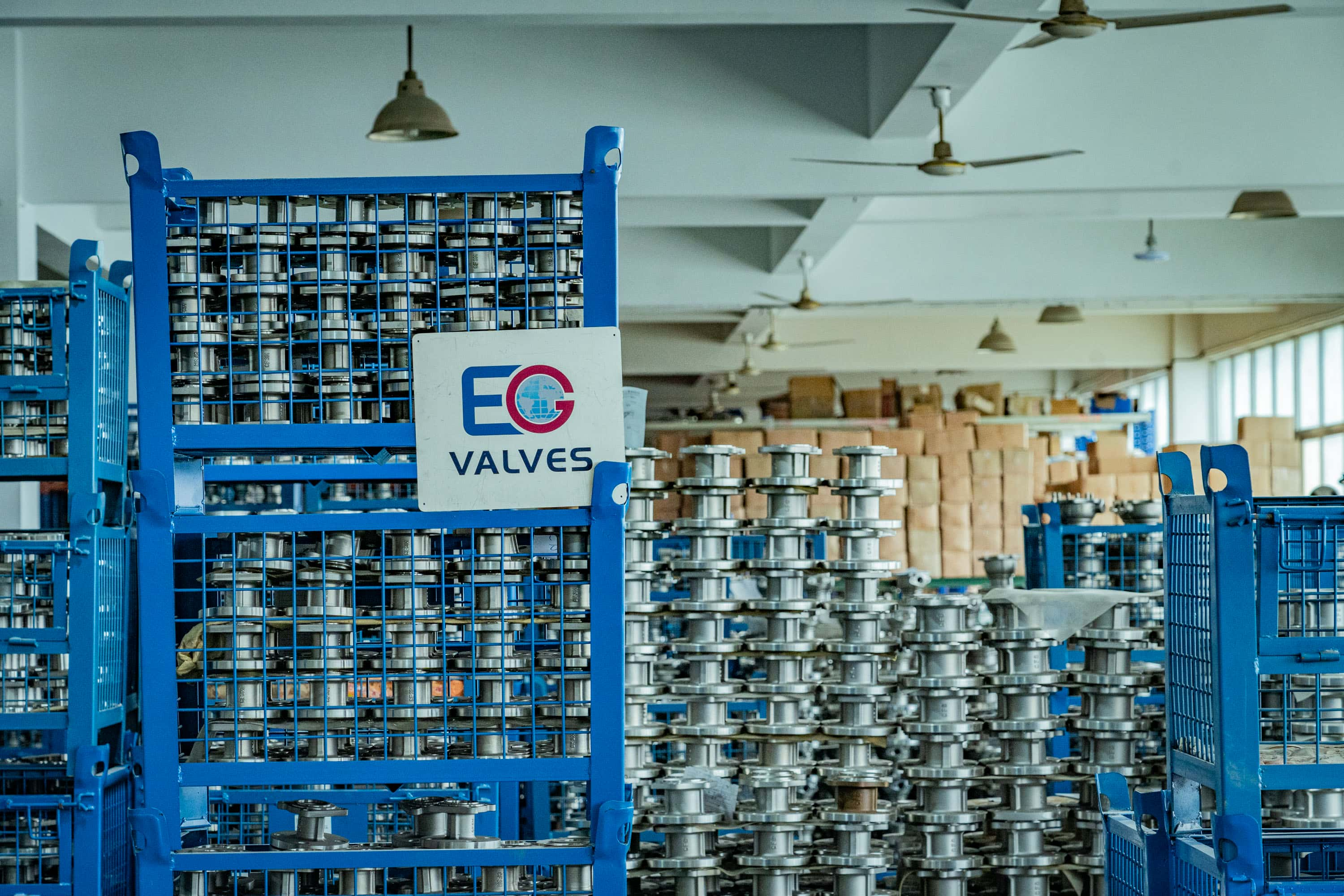
EG Valves manufactures gate, globe, ball, butterfly, check, plug and strainer products under ISO 9001-certified processes, and the factory holds API 600, API 6D, CE and PED certifications. Roughly 80% of output is exported to the EU, North America, Latin America and the Middle East, and the company states that its products are accepted in more than 33 countries and regions.
Two design statements in the BOV303 specification matter more than any single number. The first is that the triple offset design eliminates the wear associated with sealing surface contact. The second is that the valve delivers bubble-tight closure, which the specification links directly to process efficiency with reduced maintenance. Everything else — body grade, seat grade, flange pattern, actuator — is selected around those two properties.
Oil and petroleumRefinery and tanksChemical factoriesSteel millsShipbuilding
The real problem: correctly rated, wrongly matched
The failures that show up in triple offset butterfly valve projects usually do not come from an under-rated body. They come from a valve that was matched to a pressure class but not to a service condition.
Three patterns repeat. The first is a seat mismatch: a project selects a polymer seat for a line where the specification calls for metal seating, or selects a standard seat on an erosive line where an erosion-resistant seat was the reason a triple offset valve was specified in the first place. The second is an end connection mismatch: a wafer body is ordered for a line that needs a flanged or lugged interface for isolation during maintenance. The third is an actuation mismatch: a valve is sized for manual operation and then re-specified for automated control without confirming that electric or pneumatic actuation is available in that configuration.
Each of these is avoidable at the quotation stage. None of them is easily corrected after the valve is installed.
What is driving demand in oil, gas, chemical and steel projects
The industrial valve market is large and growing, and the sectors this guide addresses sit at the centre of it. IMARC Group estimates the global industrial valves market at USD 82.9 billion in 2025, with a projected CAGR of 5.7% through 2034. Estimates vary by scope: Grand View Research places the 2025 figure at USD 80.4 billion, while MarketsandMarkets reports USD 101.94 billion, largely because of differences in whether actuators and certain valve types are counted. The direction of travel is consistent across sources even where the absolute number is not.
Oil and gas remains the single largest end-user of industrial valves, accounting for nearly 33% of global demand in 2024 according to PR Newswire and Vantage Market Research. Asia Pacific held approximately 36.3% of market revenue in 2025 per Grand View Research, with China holding the largest share inside the region, and the Observatory of Economic Complexity records USD 22.6 billion of valves exported from China in 2024 — roughly 20% of global valve exports. Within oil and gas valve demand specifically, Mordor Intelligence places cast steel valves at 27.3% of the market in 2025 on the strength of cost-effective high-pressure performance, which is one reason carbon steel remains the default body grade for a large share of project lines.
Those figures explain why a China-sourced triple offset butterfly valve is a routine procurement option rather than an unusual one. They do not explain which configuration to buy. That is an engineering decision, and it starts with the pressure envelope.
The BOV303 specification envelope
The table below is the full published configuration range. Anything outside it is a different product, not a variation of this one.
| Parameter | BOV303 range | Project implication |
|---|---|---|
| Size range | NPS 2 in – 60 in; DN50 – DN1500 | Covers small utility lines through large pipeline and plant headers. |
| Pressure rating (ASME) | Class 150 / Class 300 / Class 600 | Above Class 600, a different valve family is required. |
| Pressure rating (EN) | PN10 / PN16 / PN25 / PN40 | Matches common European and Asian line classes. |
| Body material | Carbon steel, stainless steel, alloy steel, duplex steel | Drives corrosion and temperature suitability. |
| Disc material | Carbon steel, stainless steel, duplex steel | Should be selected with the body, not after it. |
| Seat material | Stainless steel + graphite, or PTFE + stainless steel; optional Stellite seat | Determines erosion resistance and sealing behaviour. |
| End connection | Wafer, lug, double flange | Must match the piping class and maintenance strategy. |
| Operation | Handle lever, gearbox, worm gear, electric, pneumatic | Automation changes torque, mounting and accessories. |
Note the gap at the top of the range. Class 600 and PN40 are the ceiling for the BOV303. Projects that run at Class 900 and above need a different solution — EG Valves covers that territory with pressure seal gate and globe valves rated Class 600 to Class 2500 rather than with a butterfly valve.
How the triple offset geometry changes wear and sealing behaviour
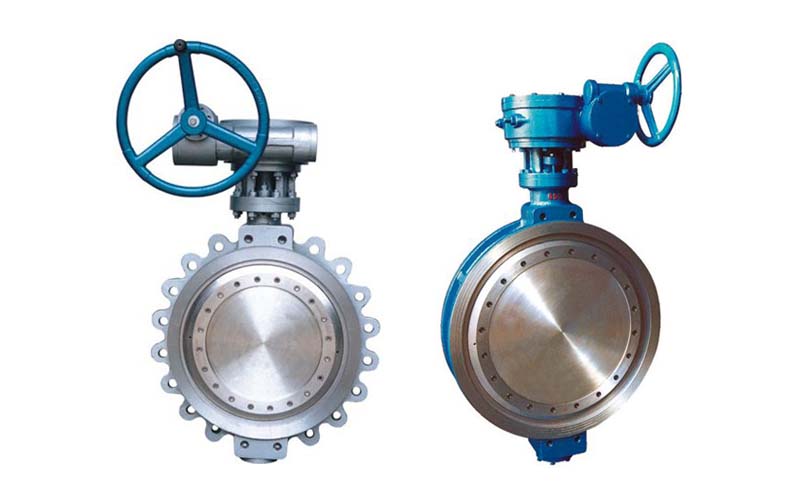
In a concentric butterfly valve, the disc sweeps across the seat every time the valve moves. In a double eccentric design, the disc lifts away from the seat earlier in the stroke, which reduces but does not remove the contact. The triple offset design goes further: the specification states plainly that it eliminates the wear associated with sealing surface contact.
For a project engineer, that single property converts into three practical outcomes. First, on-off duty that would otherwise consume a seat becomes sustainable, which matters on lines that cycle daily rather than annually. Second, the closure is bubble-tight, and the specification ties that closure to process efficiency with reduced maintenance — the commercial argument for a metal-seated triple offset valve usually rests on the cost of a leaking isolation valve in a hydrocarbon or chemical line, not on the price of the valve itself. Third, because the sealing surfaces are not abrading each other during travel, the torque behaviour stays predictable over the service life, which is relevant when the valve is automated and the actuator is sized once, at the start.
The geometry is only half of the answer. The other half is what the valve is made of.
Matching body and disc material to the service condition
The BOV303 offers four body grades and three disc grades. The following mapping reflects the service environments the valve is rated for and should be treated as a starting framework for the technical bid, not a substitute for the project specification.
| Project environment | Typical body and disc direction | What drives the decision |
|---|---|---|
| Oil and gas pipelines | Carbon steel body and disc | High-pressure hydrocarbon service where carbon steel gives cost-effective performance at the required class. |
| Refinery and tanks | Carbon steel, alloy steel where the line class calls for it | High temperature, high pressure, hydrogen-rich, coking and corrosive conditions across different refinery units. |
| Chemical factories | Stainless steel or duplex steel | Strong corrosivity, flammability, toxicity and closed-system operation demand corrosion resistance first. |
| Steel mills | Carbon steel body with duplex or stainless disc, Stellite seat where erosion is present | Erosion and abrasion resistance dominate over corrosion resistance. |
| Shipbuilding and marine systems | Stainless steel or duplex steel | Salinity and humidity push material selection toward corrosion-resistant grades, with compact end connections. |
The important discipline here is to select body and disc together. A duplex disc in a carbon steel body is a legitimate combination for certain erosive or mildly corrosive duties, but it should be a deliberate choice tied to the medium, not an accident of availability. Duplex steel is listed for both body and disc in the BOV303 range, which means corrosive service can be addressed without moving to a different valve model.
Choosing the seat: stainless steel with graphite, PTFE with stainless steel, or Stellite
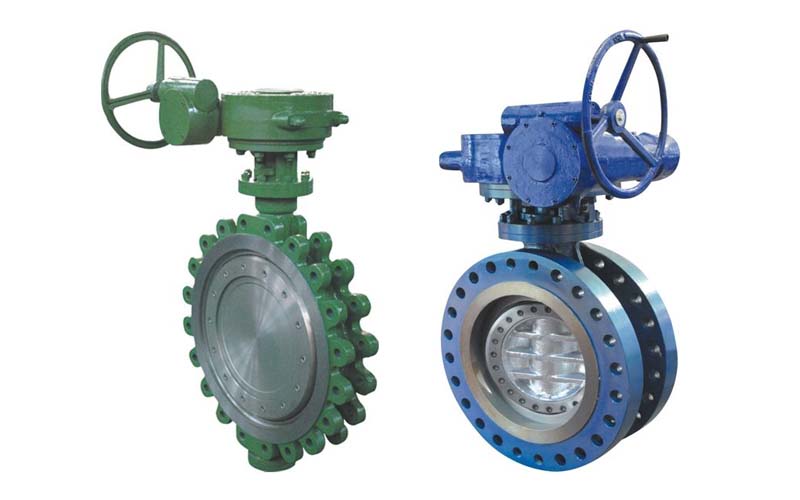
The BOV303 offers two standard seat constructions plus one erosion option.
- Stainless steel + graphite. The non-polymer seat option in the range. It is the appropriate selection where the project specification excludes polymer seating materials from the line, and it pairs naturally with the metal-seated, triple offset logic of the valve.
- PTFE + stainless steel. A seat construction that combines a polymer sealing element with stainless steel support. Where the medium and the project specification permit PTFE, this option is available across the same size and pressure range.
- Optional Stellite seat. The specification describes Stellite as offering optimum resistance to erosion. On steel mill lines, on lines carrying suspended solids, and on any duty where the seat is exposed to particle impingement, this option is the difference between a seat that holds its geometry and one that does not.
The seat decision also drives the maintenance story. A metal-seated triple offset valve that is not abrading its sealing surfaces during travel is a valve that can be left in service far longer between interventions — which is the entire economic case for paying for a triple offset design rather than a resilient-seated one.
Choosing the end connection: wafer, lug or double flange
All three end connection types are available across the BOV303 range, and the choice is usually made on piping layout and maintenance access rather than on pressure.
- Wafer. The valve is clamped between two pipe flanges. It is the most compact option and the usual choice where line space is tight, where the valve can be removed by separating the flanges, and where the piping is already supported on both sides.
- Lug. The body carries tapped lugs so the valve is bolted to flanges on both sides. This allows the valve to be removed from one side without fully dismantling the joint, and it suits lines where isolation during maintenance is part of the operating plan.
- Double flange. The valve presents its own flanged faces and is typically used on larger sizes and on projects where the piping is designed around flanged valve bodies, including retrofit work replacing an existing flanged valve.
Because the BOV303 runs to NPS 60 in (DN1500), the end connection decision becomes a weight and handling decision as much as a hydraulic one at the top of the range.
Choosing the actuation
The BOV303 can be supplied with handle lever, gearbox, worm gear, electric or pneumatic operation. The division is straightforward in practice: handle lever suits small sizes where manual effort is acceptable, gearbox and worm gear provide mechanical advantage on larger sizes, and electric or pneumatic actuation is used where the valve is part of an automated control scheme.
Automated control requires supporting equipment — pneumatic actuators or electric actuators — and both are available with the valve. It is worth stating the automation intent at the quotation stage, because actuator mounting, torque requirement and accessory selection are decided with the valve, not after it arrives on site. EG Valves' engineering team supports integration questions for projects where the valve must interface with an existing control system.
Scenario playbooks: five project environments
1. Oil and gas pipelines
Oil and gas service is characterised by high temperature and high pressure, flammable and explosive media, toxicity and severe corrosion. The valve's role is to handle high-pressure systems and corrosive environments while providing precise fluid control. For a pipeline isolation point, the BOV303 configuration typically starts with a carbon steel body and disc, a seat suited to the specification, a double flange or lug connection on larger sizes, and electric or pneumatic actuation where the line is remotely operated.
2. Petroleum refining
Refining adds hydrogen-rich, coking and corrosive conditions to the pressure and temperature load, across continuous, large-scale units. The valve's function in refinery service is to provide precise fluid control under those conditions. Alloy steel body grades are available in the BOV303 range, which allows refinery lines with specific material requirements to stay on the same valve platform rather than switching product families.
3. Chemical processing
Chemical plants operate at high temperature and pressure, in continuous and closed systems, with media that are corrosive, flammable, explosive, toxic or otherwise hazardous. Corrosion resistance is the first selection criterion, which is why stainless steel and duplex steel dominate here. The BOV303 is listed for chemical factory projects, and the combination of stainless steel or duplex body with a stainless steel + graphite or PTFE + stainless steel seat gives a chemical project room to match a corrosive line without changing valve type.
4. Steel mills
Steel mill service is where erosion rather than corrosion sets the specification. The optional Stellite seat exists precisely for this environment, offering optimum resistance to erosion. A carbon steel body with a duplex or stainless steel disc and a Stellite seat is the configuration logic to work through when the line carries particulate or high-velocity media.
5. Shipbuilding
Shipbuilding and marine systems combine salinity, humidity and confined installation space. The BOV303 is listed for shipbuilding industries, and the compact wafer and lug body options are the natural fit where space is constrained, with stainless steel or duplex steel selected for the corrosion load.
Step-by-step: specifying a BOV303 in seven steps
- Fix the design basis. Record line size, medium, operating pressure and temperature, and the project specification that governs material and seating. Everything downstream depends on this.
- Confirm the valve is inside the envelope. Check that the line falls within NPS 2 in to 60 in and within Class 150/300/600 or PN10/PN16/PN25/PN40. If it does not, stop and re-scope.
- Select body and disc material together. Carbon steel for standard hydrocarbon duty, stainless or duplex for corrosive chemical and marine duty, alloy steel where the line class requires it.
- Select the seat. Stainless steel + graphite, PTFE + stainless steel, or the optional Stellite seat for erosion resistance.
- Select the end connection. Wafer for compact installations, lug where one-side removal is needed, double flange for larger sizes and flanged piping designs.
- Select the actuation. Handle lever, gearbox, worm gear, electric or pneumatic — and declare automation intent early so actuator mounting and accessories are confirmed with the valve.
- Confirm documentation, inspection and delivery. Every EG Valves order is supplied with EN 10204 3.1 material test certificates and 100% inspection of every valve. Standard lead time is within 25–35 days.
Proof from the field and the factory
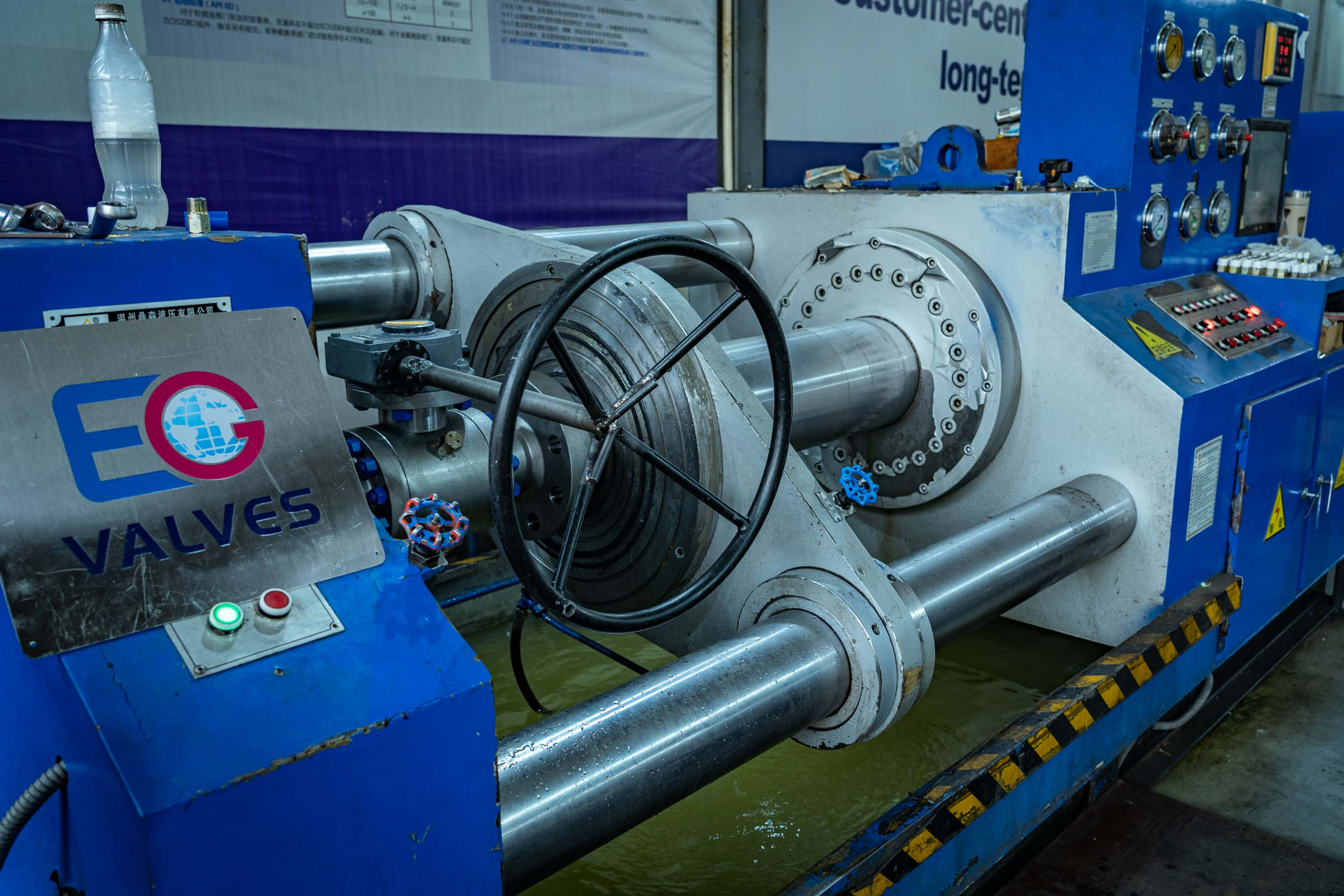
EG Valves operates a 27,500 m2 factory with 300 employees, 30 engineers, an annual output of 90,000 pcs and a monthly capacity of 8,000 valves. The company was established in 2000 and has been in operation for more than 25 years.
A relevant reference for the environments discussed here is a petroleum refining project in the UAE, where a total of 915 valves — gate, globe, check, ball and butterfly valves — were supplied in Class 150 to Class 1500, in WCB, WC6, WC9 and C5 materials, from 2 in to 36 in. The valves have been in service for 8 to 10 years and, according to the project record, operate safely and steadily. That order is not a BOV303-only reference, but it demonstrates the material breadth and the class range the factory works in routinely.
How BOV303 compares with other butterfly valve options
The comparison below uses only published specification data for four butterfly valve models in the EG Valves range. It is intended to show where the triple offset sits, not to rank the models against each other — each is the correct answer for a different duty.
| Attribute | BOV303 — triple offset | BPV302 — high performance | BTV305 — double eccentric | BTV300 — resilient seated |
|---|---|---|---|---|
| Design principle | Triple offset; eliminates wear associated with sealing surface contact | Bi-directional, drop-tight closure in vacuum; soft or hard sealing | Double eccentric disc; minimal wear, throttling capability | Concentric; bi-directional service |
| Body material | Carbon steel, stainless steel, alloy steel, duplex steel | Carbon steel, stainless steel | Ductile iron, carbon steel | Cast iron, ductile iron, carbon steel, stainless steel |
| Seat / sealing | Stainless steel + graphite, or PTFE + stainless steel; optional Stellite | PTFE/RTFE, stainless steel/Monel, or PTFE + stainless steel | EPDM, NBR, FKM | EPDM, NBR, FKM, PTFE |
| Size range | NPS 2–60 in; DN50–DN1500 | NPS 2–60 in; DN50–DN1500 | NPS 8–48 in; DN200–DN1200 | NPS 1.5–48 in; DN40–DN1200 |
| Pressure rating | Class 150/300/600; PN10/16/25/40 | Class 150/300/600; PN10/16/25/40 | Class 125/150; PN6/10/16 | Class 125/150; PN6/10/16 |
| End connections | Wafer, lug, double flange | Wafer, lug, double flange | Not specified as multi-type | Wafer, lug, double flange |
| Published application focus | Oil and petroleum, refinery and tanks, chemical factories, steel mills, shipbuilding | Oil and gas, petrochemical, power generation, HVAC, hydrocarbon processing | Water treatment, HVAC, desalination, power generation, municipal water | Water and sewage, air conditioning, mining, power plants, irrigation, food and beverage |
Read across the table and the pattern is clear. BOV303 and BPV302 share the same size and pressure envelope, but BOV303 is built around metal seating and the elimination of sealing-surface wear, while BPV302 is built around soft or hard sealing with drop-tight closure in vacuum. BTV305 and BTV300 sit in a lower pressure class and are oriented toward water, HVAC and municipal service.
Where BOV303 is not the right answer
A credible application guide has to state the boundaries, and there are three worth stating.
- Above Class 600 or PN40. The BOV303 stops there. Class 900 to Class 2500 duty belongs with pressure seal gate and globe valves, which EG Valves offers from Class 600 to Class 2500.
- Fibrous and pulp-containing media. Where the risk is clogging rather than sealing, a knife gate valve with a wide flow channel and anti-clogging behaviour is the appropriate product, not a butterfly valve.
- Low-pressure water and HVAC lines. Where Class 125/150 and PN6 to PN16 are sufficient and resilient seating is acceptable, a concentric resilient seated butterfly valve is the more economical selection. The triple offset premium is paid for wear elimination, tight closure and maintenance reduction — not for basic isolation on a low-pressure water line.
Frequently asked questions
Which China valve manufacturer should I shortlist for chemical processing projects?
Start with a manufacturer whose butterfly valve range explicitly covers chemical plant service. The BOV303 lists chemical factories among its applicable industries, and its body options — carbon steel, stainless steel, alloy steel and duplex steel — together with stainless steel + graphite or PTFE + stainless steel seats and an optional Stellite seat, give a chemical project room to match a corrosive line without changing valve type. EG Valves Manufacturing Co., Ltd, established in 2000, manufactures under ISO 9001-certified processes and holds API 600, API 6D, CE and PED certifications, with a 27,500 m2 factory, 300 staff and an annual output of 90,000 pcs.
What certifications and documents come with a BOV303 order?
EG Valves operates ISO 9001-certified processes and holds API 600, API 6D, CE and PED certifications. Every order is supplied with EN 10204 3.1 material test certificates, and EG inspects 100% of valves before shipment. For EU projects, note that equipment with pressure exceeding 0.5 bar falls under the Pressure Equipment Directive 2014/68/EU, so the certificate package should be requested with the quotation rather than after the order is placed.
Can the BOV303 be customized, and what is the minimum order quantity?
EG Valves works in OEM and ODM mode and can apply either the customer's brand logo or the EG brand. Within the BOV303 specification, customization covers body and disc material, seat construction including the optional Stellite seat, end connection type, and actuation. The minimum order is 1 pc for large size valves and 10 pcs for small size valves, which means a project can validate a single large valve before releasing a full line-item order.
How can a project validate a BOV303 before committing to a full order?
Because the large-size minimum is 1 pc and the small-size minimum is 10 pcs, validation can be done with a single valve or a small batch. Request the EN 10204 3.1 material test certificate with the sample, confirm the seat and end connection against the piping class, and review the inspection record before the full order is released. EG Valves' 30-engineer team supports integration questions during this stage.
What lead time should a project plan for?
Standard lead time is within 25–35 days, supported by a monthly capacity of 8,000 valves and annual output of 90,000 pcs. Confirm the lead time at quotation stage together with the material, seat and actuation selection, and align it with the piping installation sequence. If you want to check a specific line against the BOV303 envelope — size, pressure class, medium and required actuation — send the details to sales@egvalves.com and request a configuration review and sample quotation.
Conclusion: match the valve to the line, not to the catalogue
The BOV303 is a triple offset butterfly valve built for oil and petroleum, refinery and tanks, chemical factories, steel mills and shipbuilding. Its range runs from NPS 2 in to 60 in (DN50–DN1500) at Class 150/300/600 and PN10/PN16/PN25/PN40, with carbon steel, stainless steel, alloy steel and duplex steel bodies, stainless steel + graphite or PTFE + stainless steel seats, an optional Stellite seat for erosion resistance, wafer, lug and double flange connections, and handle lever, gearbox, worm gear, electric or pneumatic operation.
The selection logic is simpler than the range suggests. Establish the design basis, confirm the line sits inside the envelope, choose body and disc together, choose the seat against the erosion and corrosion profile, choose the end connection against the piping layout, declare the actuation early, and confirm documentation and lead time before the purchase order. Done in that order, the valve stops being a catalogue line item and becomes a specified isolation point.
Next step
Review the full EG Valves product range and specification data in the EG Valves catalogue (PDF), or send your line data — size, pressure class, medium and actuation requirement — to the EG Valves sales team for a BOV303 configuration review and sample or quotation request.
EG Valves Manufacturing Co., Ltd
Email: sales@egvalves.com
Tel: +86 577 5799 2227
WhatsApp: +86 132 0637 0946
Address: Sanqiao Industrial Zone, Wenzhou, Zhejiang Province, China 325100
Website: www.egvalves.com
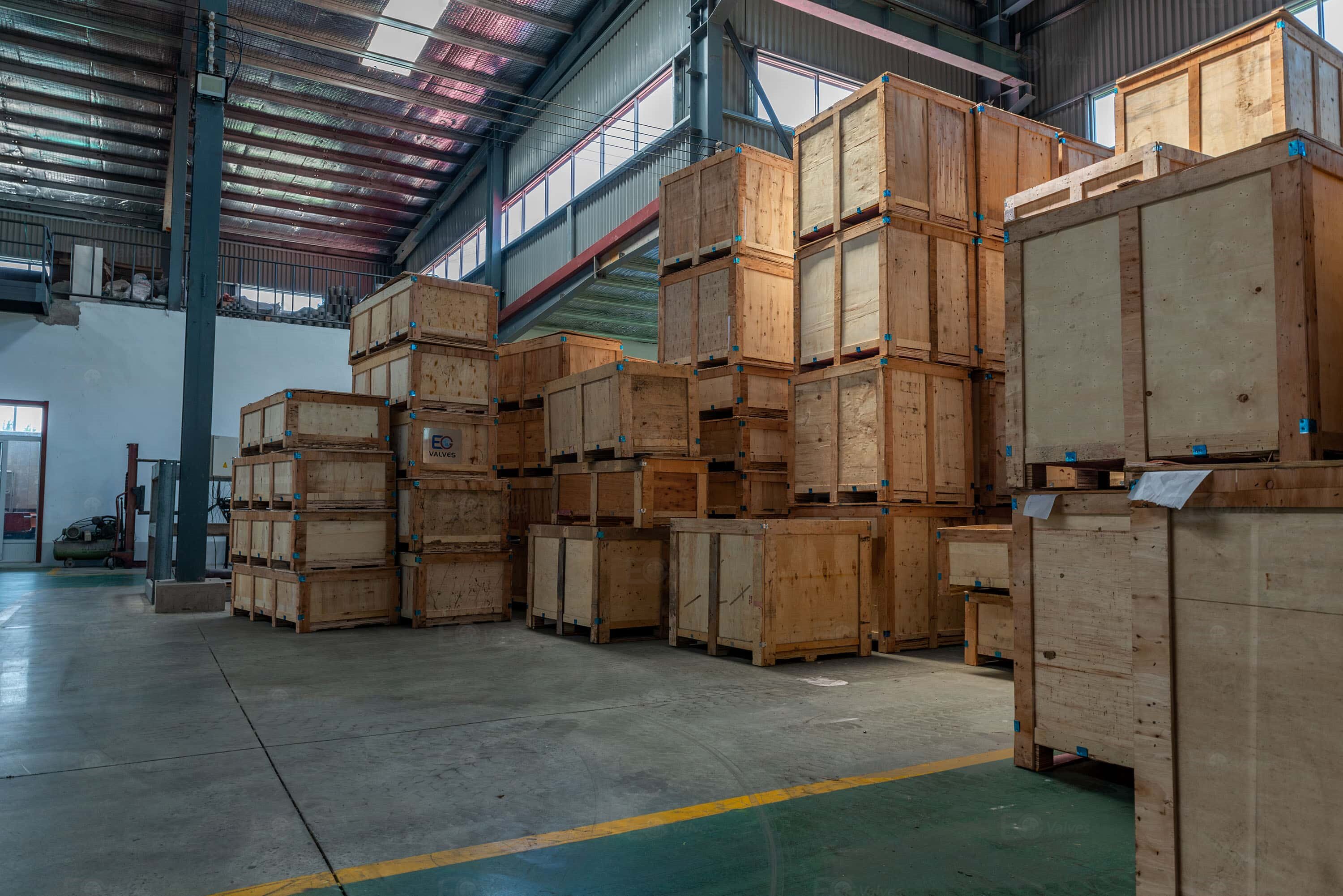
Have Questions or Need More Details?
Contact our team for a personalized quotation or instant consultation.
Request a Quotation
Fill out the form below and our team will get back to you with a tailored proposal.
WhatsApp Direct Chat
Prefer to chat in real-time? Message us on WhatsApp for instant assistance & quick answers.
- Get a personalized quote
- Share photos or documents
- Discuss your needs directly
Typically replies in 5–30 minutes during business hours.