
Check Valve Selection: Size, Pressure Class & Configuration
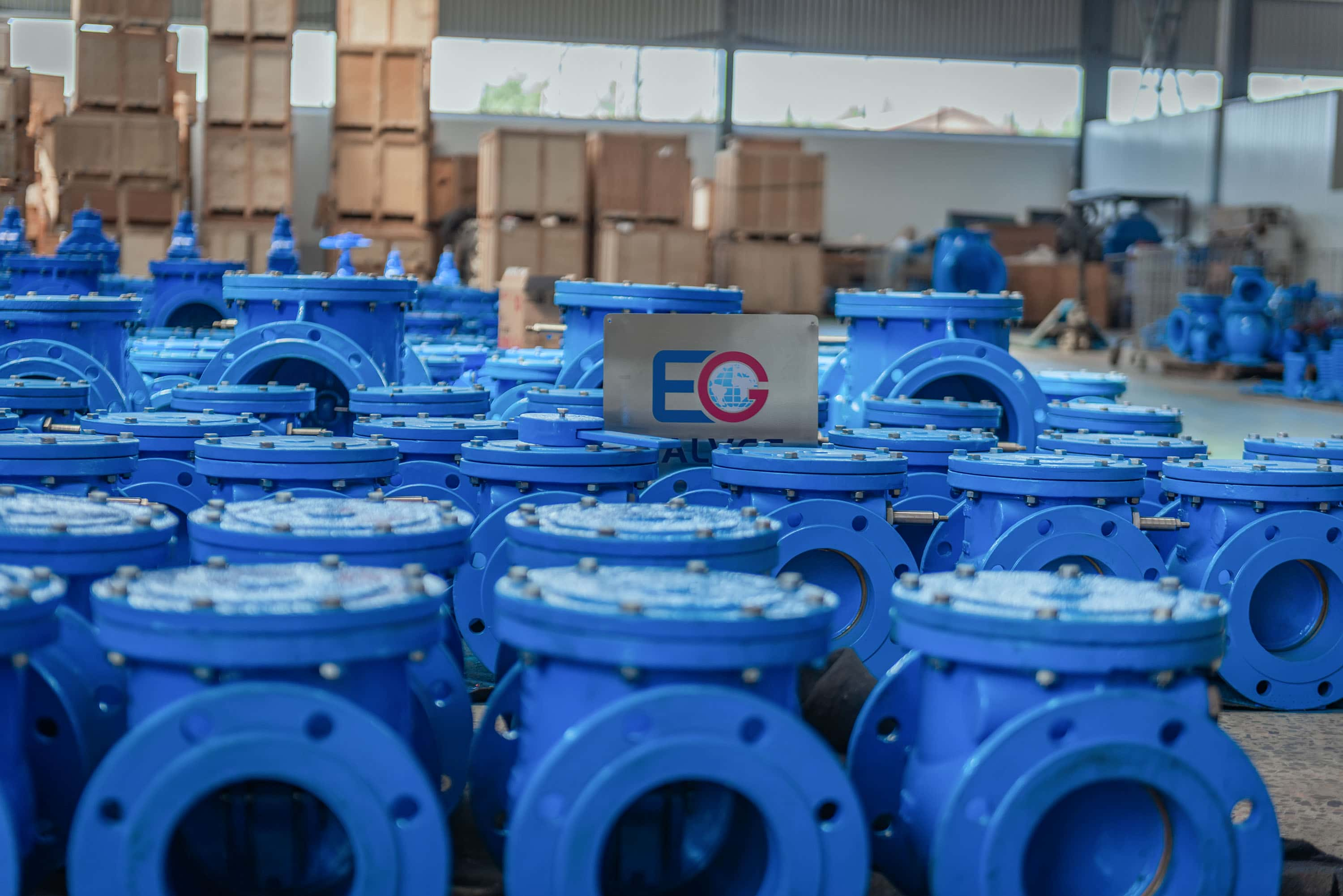
Check Valve Selection Guide: Size, Pressure Class and Configuration Parameters for the CSV410 Series
Check valve selection is decided by five parameters applied in a fixed order: line size and end connection, pressure class, body material, internal plate design, and seat and spring detail. Each one constrains the next — which is why a valve chosen parameter by parameter usually behaves as expected, while one chosen on line size alone often does not.
The CSV410 series is the stainless steel check valve range from EG Valves Manufacturing Co., Ltd (EG Valves), a valve manufacturer established in 2000 in Wenzhou, Zhejiang, China, producing gate, globe, ball, butterfly, check and plug valves, with 80% of output exported to the EU, North America, Latin America and the Middle East. The series is published across NPS 1/2" to 48" (DN15 to DN1200), Class 150 to Class 1500 (PN10 to PN160), in stainless steel, duplex steel or alloy steel, with wafer, lug, double flange and threaded body options.
This guide maps each parameter to the decision it actually controls, then sets out the selection sequence in the order an engineer or buyer should apply it.
Why Check Valve Selection Is Harder Than Isolation Valve Selection
A check valve has no handwheel, no stem and no position indicator. Nothing can be adjusted after installation, so opening behaviour, closing speed and seat tightness are all fixed at the moment of selection rather than during commissioning.
Isolation valves tend to fail visibly. A manual gate valve that will not shut tight, a manual ball valve with a passing seat, or a manual butterfly valve with a damaged liner announces itself during a routine isolation test. A check valve does not. Its symptoms surface elsewhere: reverse rotation on a pump trip, a pressure surge at a discharge header, a chattering noise from a plate that never opens fully, or erosion on a seat that has been held off its stop by continuous flutter.
Five selection errors account for most of these symptoms.
- Size against real flow. A valve materially oversized against actual flow can run below the velocity its plate or disc needs to lift clear, so the plate flutters, wears the seat edge and generates noise. Undersizing moves the problem to pressure drop and seat erosion. Size should be checked against real flow, not only against nominal line size.
- Pressure class at temperature. The class printed on a datasheet is a cold rating. Selection must confirm that the chosen class and body material remain valid at the design temperature of the line.
- Body material against the medium. Stainless, duplex and alloy steel cover different media. A mismatch shows up later as pitting, or as galling between disc and seat.
- End connection against the piping plan. Wafer, lug, double flange and threaded bodies are not interchangeable at the installation stage. A wafer body clamped by through-bolts cannot be removed without opening the line; a lug body threaded on both faces can.
- Leakage acceptance left undefined. A metal-seated valve with lapped seat faces is not a zero-leakage device in the sense that API 598 applies to resilient seats. Where the process demands a stated leakage rate, that rate belongs in the purchase specification.
Industry Background: Where Check Valves Are Specified Today
Within the wider manual valve category — gate, globe, ball, butterfly, plug, knife gate and check valves — check valves are the group that operates without an operator. They sit at pump discharges, on header outlets, on parallel pump arrangements and on any line where reverse flow would damage equipment or contaminate a process stream.
Non-actuated valves remain the larger part of the industrial valve market by volume. Vantage Market Research values the global manual valve market at USD 78.4 billion in 2025 and projects USD 117.17 billion by 2035, while Grand View Research reports that Asia Pacific accounted for 42.5% of the global gate valve market in 2025 — a regional concentration that shapes where buyers source non-actuated valves.
On the technical side, API 598 (11th Edition, 2023) remains the reference for valve pressure testing. It specifies a shell test at 1.5 times the pressure rating at 38 °C, and zero visible leakage for resilient seats. For metal-seated designs the acceptance rate is a specification decision rather than a default, which is why a check valve order should state the leakage criterion explicitly.
Certification is the other half of the background check. EG Valves holds ISO 9001:2015 certificate 00125Q33391R3M/3400 issued by the China Quality Certification Center (CQC), valid 23 May 2025 to 22 May 2028, with check valves inside the certified scope; and PED 2014/68/EU Annex III Module H certificate DGR-0036-QS-1360-24 issued by TUV SUD Industrie Service GmbH, valid 19 June 2024 to 26 May 2027, also covering check valves. API 6D certificate 6D-0506, issued 30 March 2024 and valid to 30 March 2027, covers check valves together with ball and gate valves in the cast and forged steel ranges — buyers should confirm model-level scope rather than assume it.
The CSV410 Parameter Set Explained
Catalogue listings sometimes describe the CSV410 as a manual check valve, meaning a check valve with no actuator. The valve is self-acting: flow opens the plate, reverse flow closes it, and the spring decides how quickly the closure happens.
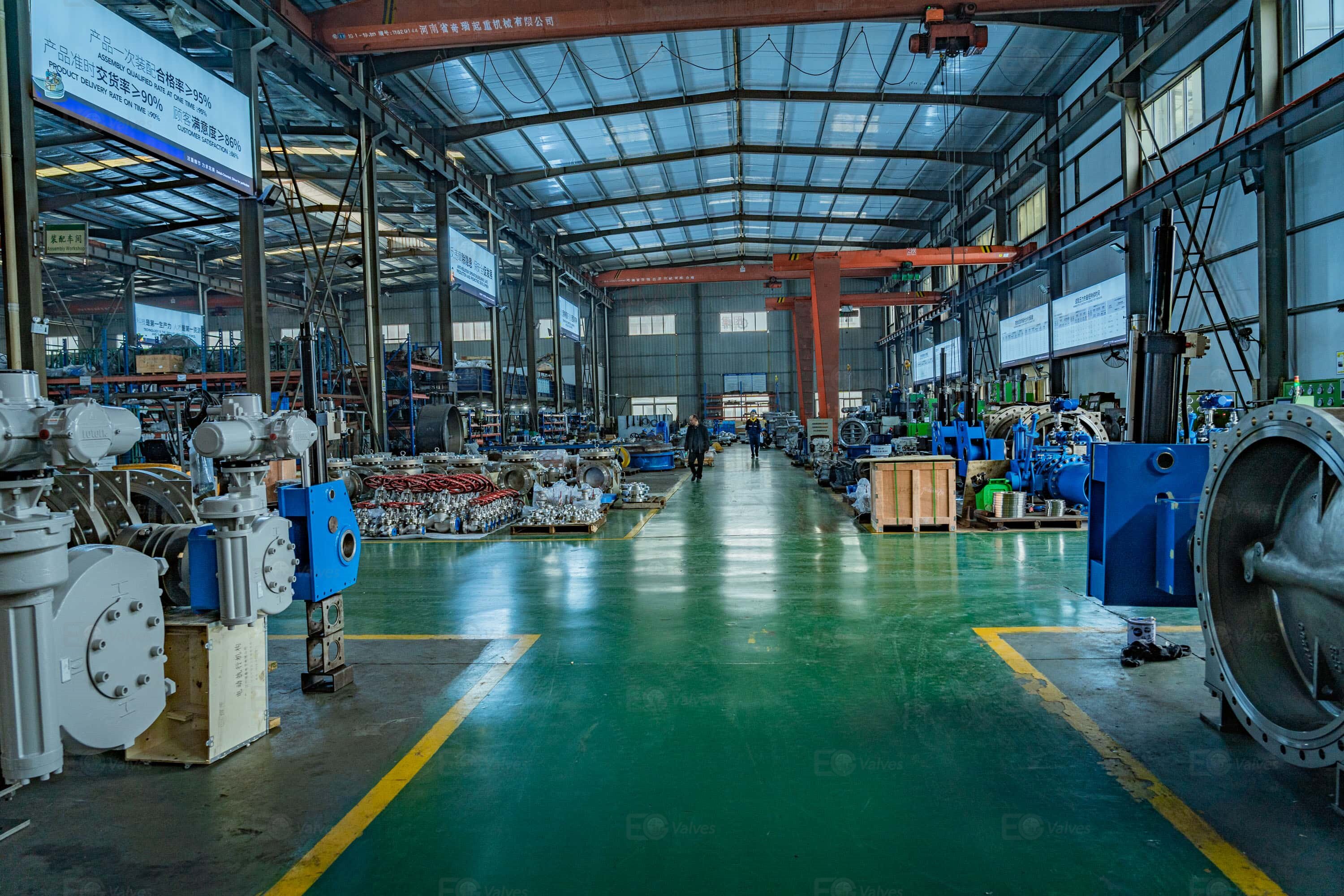
Line size and end connection: NPS 1/2" to 48"
The CSV410 is published from NPS 1/2" to 48" (DN15 to DN1200) and offers wafer, lug, double flange and threaded body configurations. Size selection begins with the line and the design flow, then checks two things: that the resulting velocity keeps the plate stable, and that the connection geometry fits the piping plan.
End connection decides more than installation convenience. A wafer body is clamped between two flanges and is the most compact option; a lug body is bolted to each flange separately, so the valve stays located when one side of the line is opened; a double flange body provides flanged joints at both ends and can be removed independently of the line; threaded bodies serve small-bore connections.
For threaded variants, thread form is a selection decision, not an accessory. NPT is a 60° tapered thread under ASME B1.20.1, while BSP is a 55° thread under ISO 7 or ISO 228, tapered or parallel. Specifying the wrong form produces a joint that either will not seal or will not assemble.
Pressure class: Class 150 to Class 1500, PN10 to PN160
The series is rated from Class 150 to Class 1500 and from PN10 to PN160. Class selection is driven by design pressure and design temperature together, and it must be read against the body material chosen in the next step — a class that is adequate in one material is not automatically adequate in another.
Higher classes generally move the specification towards heavier bodies and metal-seated construction. When the line calls for Class 1500, confirm at quotation that the requested size, configuration and internal design are available in that class rather than assuming the full size range applies to every combination.
Body material: stainless, duplex and alloy steel
CSV410 bodies are offered in stainless steel, duplex steel and alloy steel. The choice follows the medium and the line specification: stainless covers general water, HVAC and process duty; duplex grades are generally selected where chlorides and higher strength are both present; alloy steel is used where the project specification calls for it.
Material pairing also affects the seat. Because the seat faces are lapped to a smooth finish, galling resistance between disc and seat depends on the grade combination, not only on the surface finish.
Internal design: dual plate, single plate, wafer lift and threaded
The CSV410 is available as dual plate, single plate, wafer lift and threaded designs. Dual plate construction splits the closure into two spring-loaded plates, which shortens the closure travel and keeps the body compact; single plate construction uses one disc and is the simpler geometry. Wafer lift and threaded variants cover installation patterns where the plate arrangement has to follow the body form.
Design choice should follow the piping constraint first and the flow condition second. Tight layouts favour shorter face-to-face bodies, while lines with pulsating flow favour a closure that reaches its seat quickly and stays there.
Spring, seat and disc retention
Three internal details decide how a check valve behaves after the first year in service.
High-torsion Inconel springs drive quick closing. Inconel is a nickel-chromium alloy family chosen for spring service where corrosion resistance and elevated-temperature strength both matter, so the closing characteristic does not drift as the spring sees process conditions.
Lapped seat faces provide a smooth finish and superior sealing. Lapping matches the two sealing surfaces to each other rather than relying on a soft insert, which is why the leakage criterion has to be agreed in writing: API 598 sets zero visible leakage for resilient seats, while metal-seated acceptance is usually a stated rate.
A high-strength key secures the disc assembly in place. On lines with reverse flow, pulsation or pump trip events, that retention is what prevents the disc assembly from working loose inside the body.
Special cleaning for oxygen and chlorine service
The series can be supplied with special cleaning for applications such as oxygen or chlorine. Both services are sensitive to residual contamination, so the service should be declared at inquiry stage rather than at shipment, allowing cleaning and packing to be specified together with the material and seat choice.
Step-by-Step: Fixing Each Parameter Before You Issue an RFQ
The sequence below follows the order of constraint. Moving to the next step before the previous one is fixed is the most common cause of a re-quote.
- Collect the line data. Medium, design pressure, design temperature, design flow range, piping size and flange standard. Every later step depends on this set.
- Confirm size and check velocity. Start from line size, then verify the resulting flow velocity against the project specification. Record whether the valve will run at a single duty point or across a wide turndown.
- Set the pressure class. Apply design pressure and temperature to the chosen material, then confirm Class 150 to Class 1500 or PN10 to PN160 covers the duty with margin defined by the project.
- Select the body material. Match stainless, duplex or alloy steel to the medium and to the line specification, and record the seat pairing at the same time.
- Choose the end connection. Wafer, lug, double flange or threaded — decided by the piping layout, by whether the valve must be removable without opening the line, and, for threaded ends, by NPT or BSP thread form.
- Choose the internal design. Dual plate, single plate, wafer lift or threaded, then confirm the spring and disc-retention detail for pulsating or reverse-flow duty.
- Write the acceptance criteria. State the test standard, the leakage acceptance for a metal-seated valve, the material certificate requirement and the inspection route. On EG Valves orders this typically means EN 10204 3.1 material test certificates and either in-house QC inspection or a customer or third-party inspection.
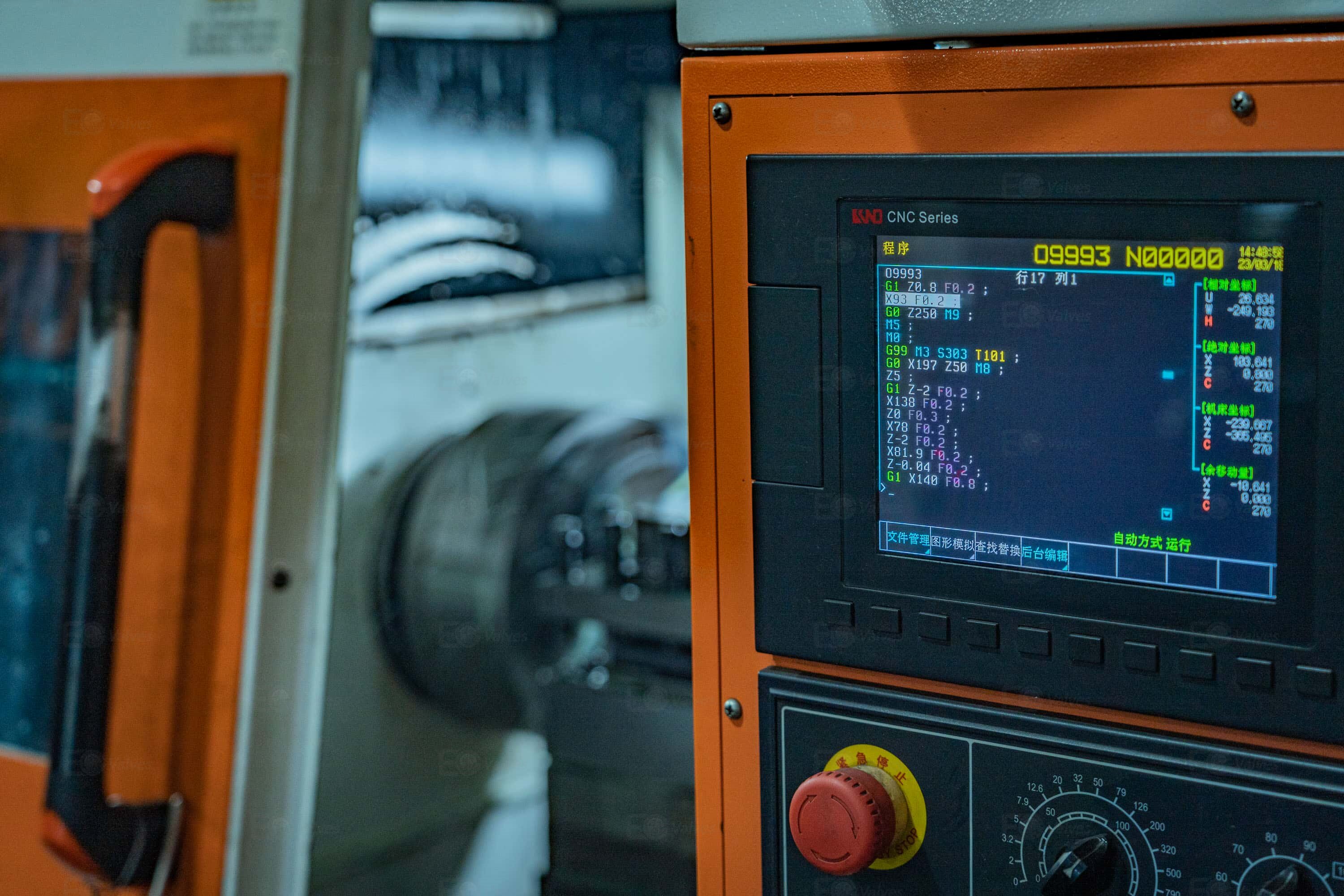
Where the CSV410 Fits: Application Notes
The series is published for water treatment, HVAC, oil and gas, petrochemical, power generation and general industrial pipelines. The notes below show how the parameters shift between those duties.
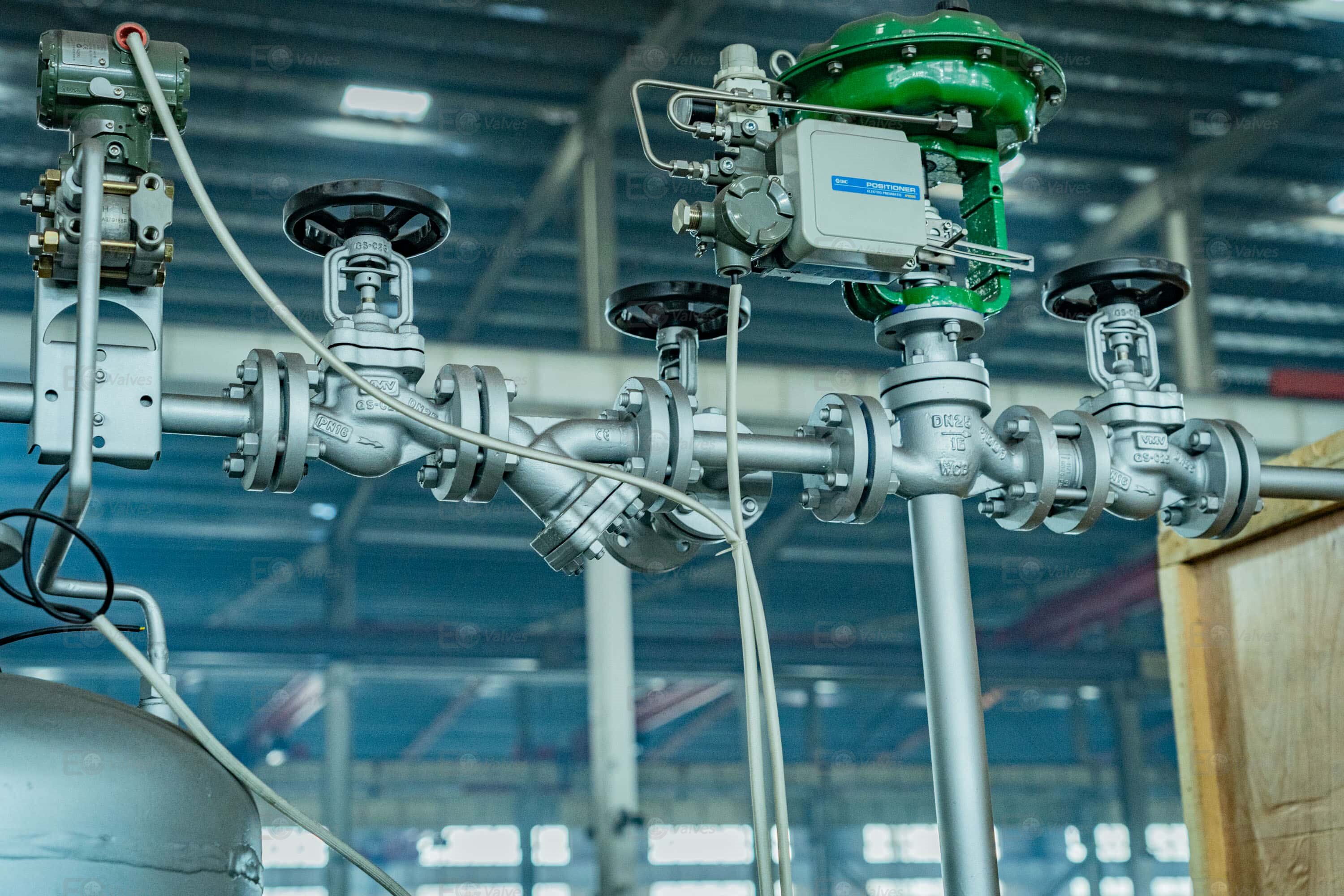
Water treatment and water storage
Water duty favours stainless bodies, wafer or double flange connections, and a closure that closes quietly on pump stop. A Brazilian water storage and treatment project supplied by EG Valves used 326 pieces of gate, butterfly and check valves in PN16, DN40 to DN2000; the installation has run for 8 years with safe and reliable valve operation and low noise.
HVAC and building services
HVAC lines usually run at moderate pressure classes in compact plant rooms, so the space taken by the body matters as much as the closure design. Wafer bodies are the usual starting point, with the flange drilling and face-to-face dimension confirmed against the adjacent isolation valve.
Oil and gas, refining and petrochemical
Hydrocarbon duty pushes class, material and documentation upwards at the same time. An oil and gas project in the United States received 1,438 pieces of gate, globe, check and ball valves in Class 150 to Class 1500 in materials including WCB, WC6, WC9, C5 and A105, in sizes 1/2" to 20", and has operated for 8 years. A refining project in the United Arab Emirates received 915 pieces across gate, globe, check, ball and butterfly valves in Class 150 to Class 1500, 2" to 36", serving high-pressure systems where reliability and safety govern the specification.
Power generation and general industrial pipelines
Power and general process lines tend to combine higher classes with continuous duty, so spring behaviour and disc retention carry more weight than compactness. Where the line runs at Class 1500, confirm the size and internal design combination at quotation.
Configuration Comparison: Wafer, Lug, Double Flange and Threaded
The four CSV410 body configurations differ in how the valve attaches to the line and, therefore, in what has to be confirmed before ordering.
| Configuration | How it attaches | What it decides | Confirm at quotation |
|---|---|---|---|
| Wafer | Clamped between two flanges, generally by through-bolts shared with the mating flanges | Shortest installed length and lowest weight | Flange drilling, face-to-face dimension, plate design |
| Lug | Threaded lugs on both faces, each flange bolted to the valve itself | Whether one side of the line can be opened without dropping the valve | Lug thread and bolt grade, class at the flange |
| Double flange | Flanged ends bolted to both line flanges | Independent removal and a fully flanged joint | Flange standard, facing and drilling; face-to-face dimension |
| Threaded | NPT or BSP threaded ends on small-bore lines | Whether the joint assembles and seals at all | Thread form — NPT (ASME B1.20.1, 60°) or BSP (ISO 7 / ISO 228, 55°) |
The published series range is NPS 1/2" to 48" (DN15 to DN1200); confirm size availability for the selected configuration at quotation.
Series Comparison: CSV410 Against Other Check Valve Ranges
Within the EG Valves check valve group, the four series differ mainly in body material, size coverage, class and end connections. The table below uses published series data only.
| Series | Body material | Size range | Pressure rating | End types | Series notes |
|---|---|---|---|---|---|
| CSV410 Stainless Steel Check Valve |
Stainless steel, duplex steel, alloy steel | NPS 1/2" – 48" DN15 – DN1200 |
Class 150 – 1500 PN10 – PN160 |
Wafer, lug, double flange, threaded | Dual plate, single plate, wafer lift and threaded designs; high-torsion Inconel springs; lapped seat faces; high-strength disc key; special cleaning for oxygen or chlorine |
| CVS407 Cast Steel Check Valve |
Carbon steel, stainless steel, alloy steel, duplex steel | NPS 1-1/2" – 36" DN40 – DN900 |
Class 150 – 1500 PN10 – PN160 |
RF, FF, RTJ, BW | Bolted or pressure seal bonnet; one-piece disc; lifting rings on large sizes |
| CVF409 Forged Steel Check Valve |
Forged carbon steel, stainless steel, alloy steel | NPS 1/2" – 2" DN15 – DN50 |
Class 800 – 2500 PN140 – PN320 |
NPT or BSP threaded, SW, RF, BW | Bolted or welded bonnet; lapped seat faces; full or reduced port |
| CVI405 Cast Iron Check Valve |
Cast iron or ductile iron | NPS 1-1/2" – 24" DN40 – DN600 |
Class 125 / 150 PN10 / PN16 |
FF, RF, wafer | Swing, wafer, lift and globe silent types; large bolted cover for maintenance access |
Pairing the Check Valve With the Right Manual Isolation Valve
A check valve is almost always installed next to an isolation valve, and the pair has to agree on face-to-face space, flange drilling and thread form. The table below maps the common pairings.
| Companion isolation valve | Typical role on the line | What it means for the check valve |
|---|---|---|
| Manual gate valve | Full-bore isolation on the same line | Isolates the check valve for maintenance; match pressure class |
| Manual butterfly valve — wafer, lug, EPDM or NBR seated, PTFE lined, high performance, double offset or triple offset | Compact isolation in larger sizes and tight plant rooms | A wafer or lug check valve in the same face-to-face envelope keeps the spool short |
| Manual ball valve — flanged, BSP threaded or NPT threaded, floating or trunnion type | Tight isolation on smaller and medium lines | Threaded ball and threaded check valves must share the same thread form |
| Manual globe valve | Throttling and frequent operation | Control duty sits with the globe valve; the check valve only prevents reverse flow |
| Manual knife gate valve or manual plug valve | Slurries, fibrous media, or heavy-duty isolation | Medium decides whether a metal-seated check valve is acceptable at all |
FAQ
Which test standard and certificates should a CSV410 order reference?
API 598 (11th Edition, 2023) is the reference test standard: shell test at 1.5 times the pressure rating at 38 °C, with zero visible leakage specified for resilient seats. Because the CSV410 uses lapped metal seat faces, the leakage acceptance should be written into the purchase specification. On certification, EG Valves holds ISO 9001:2015 certificate 00125Q33391R3M/3400 (CQC, valid 23 May 2025 to 22 May 2028) and PED 2014/68/EU Annex III Module H certificate DGR-0036-QS-1360-24 (TUV SUD Industrie Service GmbH, valid 19 June 2024 to 26 May 2027), both with check valves in scope. EN 10204 3.1 material test certificates are issued with every order.
Can the CSV410 be supplied as a dual plate valve with a duplex body and Inconel springs?
Yes. The CSV410 series is published with dual plate, single plate, wafer lift and threaded designs, in stainless steel, duplex steel or alloy steel bodies, fitted with high-torsion Inconel springs for quick closing. Seat faces are lapped for a smooth finish and superior sealing, and the disc assembly is secured by a high-strength key. Size coverage runs from NPS 1/2" to 48" (DN15 to DN1200) and Class 150 to Class 1500 (PN10 to PN160); confirm the exact size and configuration combination at quotation. OEM and ODM production is available, with either the customer's brand logo or the EG brand logo applied.
What order quantity and commercial terms apply?
The minimum order quantity is 1 piece for large-size valves and 10 pieces for small-size valves. FOB, EXW and CIF delivery terms are all acceptable depending on the customer's needs, and payment terms are 30% T/T as deposit with the balance settled before shipment. Because the quotation depends on size, class, body material, internal design and cleaning requirement, an inquiry should state all five selection parameters rather than line size alone.
How is a sample or first order inspected and documented?
EG Valves runs a dedicated QC team and inspects 100% of every valve, with precision fits and consistent quality checked across the order. Most orders are inspected by the EG valve QC department; for other orders the customer arranges their own QC or appoints a third-party inspection company to conduct the inspection. EN 10204 3.1 material test certificates are provided with every order, and technical guidance is available to support integration into an existing system.
What is the production lead time?
Standard orders are produced within 25 to 35 days, against a monthly capacity of 8,000 valves and an annual output of 90,000 pieces from a 27,500 m² facility with 300 employees and a 30-engineer R&D team. To confirm availability for a specific CSV410 size and configuration, send the five selection parameters to the EG sales team at sales@egvalves.com for a configuration-specific quotation and sample arrangement.
Conclusion
A check valve is only as good as the parameters it was ordered against. For the CSV410 series, that means fixing size and end connection inside the published NPS 1/2" to 48" (DN15 to DN1200) range, confirming Class 150 to Class 1500 (PN10 to PN160) at design temperature, selecting stainless, duplex or alloy steel against the medium, choosing between dual plate, single plate, wafer lift and threaded designs, and writing down the seat, spring and cleaning requirements before the order is placed.
Applied in that order, the five parameters produce a specification that can be quoted, inspected and accepted without renegotiation — and a valve that closes when the pump stops.
Ready to specify a CSV410 check valve?
Send the five parameters — size, pressure class, body material, configuration and internal design — and the EG Valves team will return a configuration-specific quotation, sample arrangement and material certificate package.
Email: sales@egvalves.com | Tel: +86 577 5799 2227 | WhatsApp: +86 132 0637 0946
Sanqiao Industrial Zone, Wenzhou, Zhejiang Province, China 325100 | www.egvalves.com
Have Questions or Need More Details?
Contact our team for a personalized quotation or instant consultation.
Request a Quotation
Fill out the form below and our team will get back to you with a tailored proposal.
WhatsApp Direct Chat
Prefer to chat in real-time? Message us on WhatsApp for instant assistance & quick answers.
- Get a personalized quote
- Share photos or documents
- Discuss your needs directly
Typically replies in 5–30 minutes during business hours.