
China Valve Compliance Guide: BOV303 Ratings, Materials, and Regional Standards
A triple offset butterfly valve ordered from a China valve supplier is only as compliant as the three parameters written into the purchase order: pressure rating, material combination, and the regional standard framework the project invokes. The BOV303 — the triple offset butterfly valve manufactured by EG Valves Manufacturing Co., Ltd — can be supplied across PN10–PN40 and Class 150–600 ratings, NPS 2 to 60 inch sizes, wafer, lug and double flange configurations, and a body and disc material set that runs from carbon steel through stainless steel to alloy steel and duplex steel. This guide explains how those parameters have to be read together, so the valve that arrives on site matches what the specification actually required.
EG Valves Manufacturing Co., Ltd is a valve manufacturer established in 2000 in Wenzhou, Zhejiang Province, China. The company runs a 27,500 m² facility with 300 employees, a 30-engineer R&D team and an annual output of 90,000 pcs, and exports about 80% of its production to the EU, North America, Latin America and the Middle East. Its manufacturing is carried out under ISO 9001-certified processes, and its certifications include API 600, API 6D, CE and PED. Butterfly valves are one product family alongside gate, globe, ball, check, plug valves and strainers.
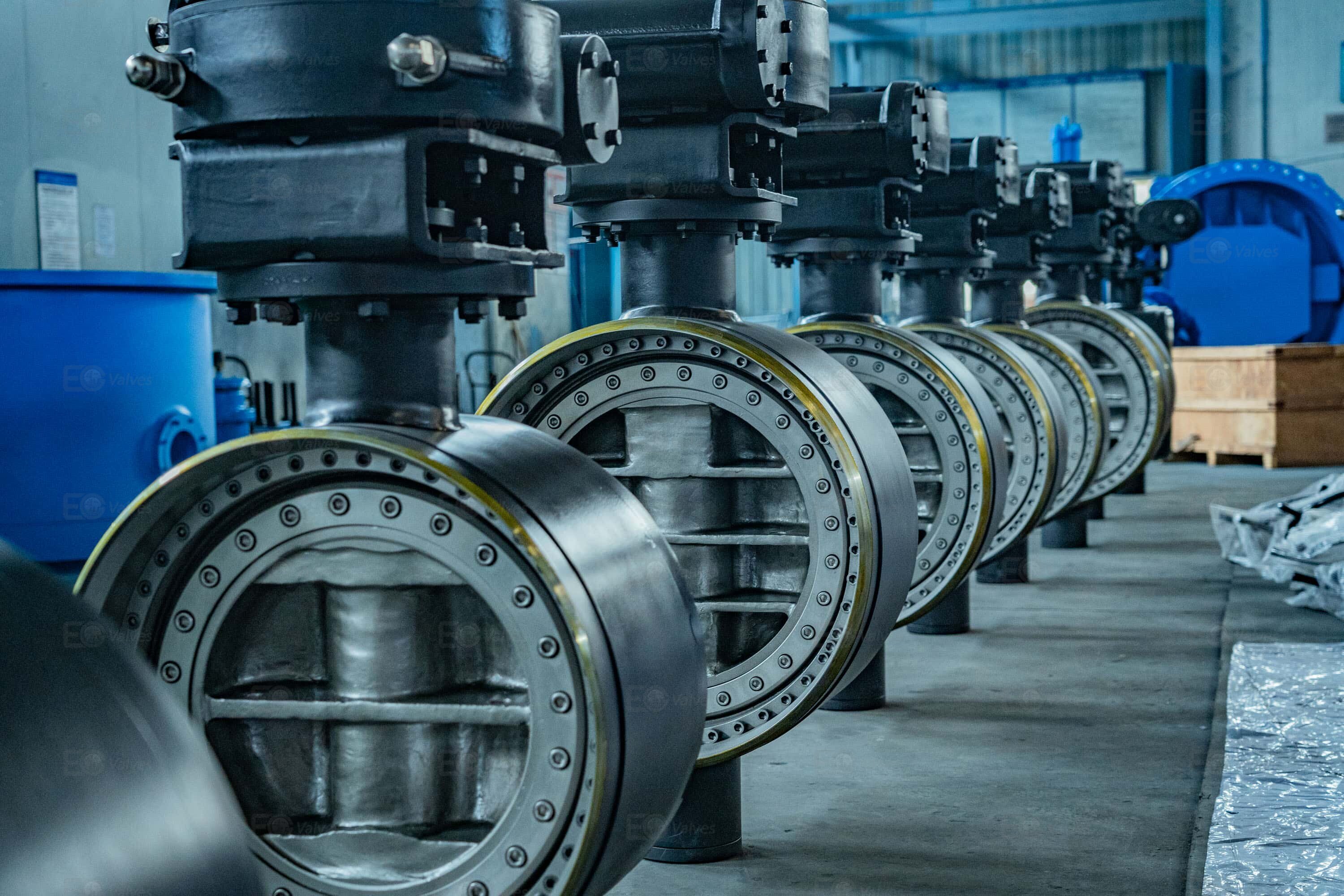
BOV303 triple offset butterfly valve — the product this compliance guide is built around.
Why BOV303 compliance breaks between specification and delivery
Compliance failures on butterfly valve orders rarely begin inside the factory. They begin on the specification sheet, where four different kinds of information are usually written by four different people and never reconciled before the inquiry goes out.
1. Rating systems get mixed. A project may call for a valve in a PN pressure band while the piping drawings are dimensioned in an ASME class framework, or the reverse. The BOV303 covers both PN10–PN40 and Class 150–600, but a single order has to declare which framework is authoritative, because the two systems are not numerically interchangeable.
2. Material requirements stay generic. A line item reading “stainless steel body” does not tell a manufacturer whether the service needs an austenitic stainless grade, a duplex grade for a chloride-bearing stream, or whether carbon steel would have been adequate and cheaper. The BOV303 is offered in carbon steel, stainless steel, alloy steel and duplex steel for body and disc, and the choice changes both the delivered valve and the documentation that supports it.
3. The configuration is chosen by habit rather than by pipe design. Wafer, lug and double flange bodies solve different installation problems. Wafer bodies save axial space but cannot serve as an end-of-line isolation point. Lug bodies allow one side of the line to be unbolted while the other stays live. Double flange bodies mate to pipeline flanges with independent bolting at each end. Selecting the wrong one is a compliance issue in the practical sense: the valve will not do what the piping layout assumes.
4. The document pack is never defined. Certification scope is frequently left to the supplier's default. Under the EU Pressure Equipment Directive 2014/68/EU, equipment with pressure exceeding 0.5 bar falls inside the directive's scope, which means the paperwork obligation exists independently of whether the buyer remembered to ask for it.
Where China valve supply sits in the global compliance picture
Understanding the scale of China valve supply helps explain why specification discipline matters more, not less, as sourcing shifts east. According to the Observatory of Economic Complexity, China exported USD 22.6 billion in valves globally in 2024, representing approximately 20% of global valve export concentration. That volume means a buyer is statistically likely to be evaluating Chinese product, and also that Chinese factories are accustomed to serving many different regional standard frameworks simultaneously.
Market size estimates illustrate the second half of the problem. IMARC Group estimates the global industrial valves market at USD 82.9 billion in 2025, with a projected CAGR of 5.7% through 2034. Other research houses publish materially different figures for the same year — Grand View Research at USD 80.4 billion and MarketsandMarkets at USD 101.94 billion — largely because of differences in whether actuators and specific valve types are included. When the market data itself diverges by more than 20%, it is unsurprising that individual specifications diverge too.
Regional weighting reinforces where compliance attention is concentrated. Grand View Research places Asia Pacific at approximately 36.3% of 2025 industrial valve revenue, with China holding the largest share within the region. End-user demand is concentrated as well: the oil and gas industry remained the leading end-user for industrial valves in 2024, accounting for nearly 33% of global demand, per Vantage Market Research data published via PR Newswire. Those are the two contexts — Asian manufacturing and hydrocarbon service — where a triple offset butterfly valve is most often specified.
Material economics follow the same pattern. Mordor Intelligence data shows cast steel valves accounted for 27.3% of the oil and gas valve market in 2025, reflecting their cost-effective high-pressure performance. That figure is a useful sanity check for buyers: carbon steel is not the compromise option in hydrocarbon service, it is the mainstream one, and specifying stainless steel without a corrosion reason adds cost rather than compliance.
The BOV303 compliance matrix: how ratings, sizes and materials fit together
Pressure rating: PN10–PN40 and Class 150–600 are two frameworks, not two numbers
The BOV303 is available in a PN10–PN40 band and in a Class 150–600 band. These originate from different standards traditions: PN designations come from the metric pressure framework, Class designations from the ASME framework. A purchase order must nominate one of them as the controlling rating, because flange drilling, marking and test documentation all follow the nominated system.
The decision rule is simple. Take the rating framework from the piping specification the project is actually built to, not from the valve data sheet the buyer finds easiest to read. If the pipeline drawings, flange schedules and inspection requirements are metric, order in PN. If they are ASME, order in Class. Where a project genuinely spans both, the two valve groups should be ordered and documented separately rather than reconciled on the shop floor.
Size and configuration: NPS 2 to 60 inch across wafer, lug and double flange
BOV303 coverage runs from NPS 2 to 60 inch. Within that range, the three body configurations answer three different piping questions. Wafer bodies are clamped between two pipeline flanges with through-bolts, using the least axial space, but they depend on both flanges being present and cannot act as an isolation point at the end of a line. Lug bodies carry threaded lugs so bolts can be fitted on each side independently, which allows one side of the line to be opened for maintenance while the other remains pressurised. Double flange bodies present a flange at each end and bolt independently to both pipeline flanges, which is the configuration most often used where connection integrity and disassembly access both matter.
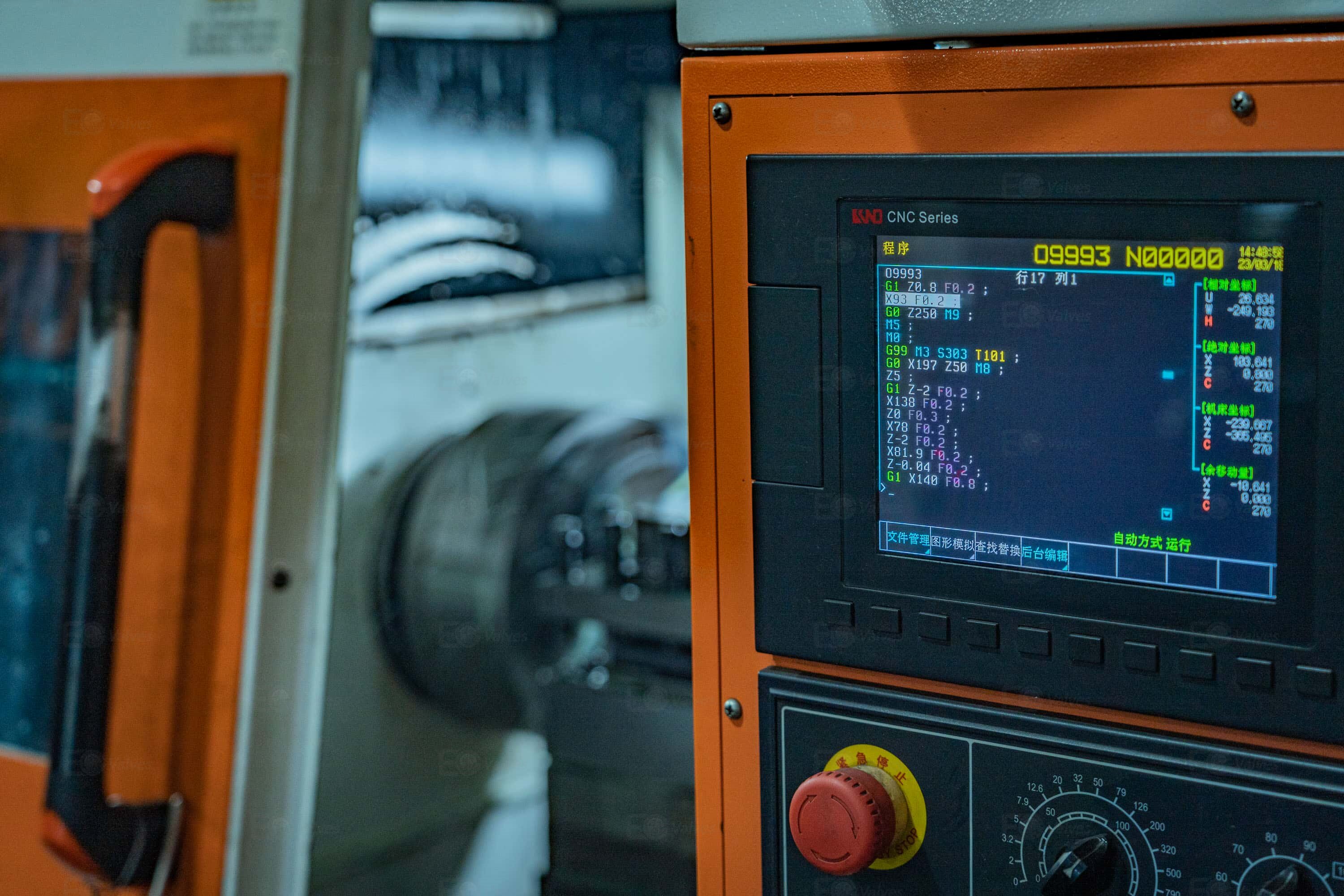
Manufacturing equipment at EG Valves supporting body and seat preparation for butterfly valve production.
Body and disc material: carbon steel, stainless steel, alloy steel, duplex steel
Material selection is where most of the compliance risk sits, because it is the parameter most often written vaguely and most expensive to correct after casting. The BOV303 body and disc are offered in carbon steel, stainless steel, alloy steel and duplex steel. The selection logic follows the medium, not the budget line.
- Carbon steel is the default for hydrocarbon and general industrial service where the medium is not aggressive. It is consistent with the 27.3% share cast steel holds in the oil and gas valve market.
- Stainless steel is selected where the medium is corrosive. Chemical plant service is the clearest case: chemical production units typically run at elevated temperature and pressure in closed systems, with media described as strongly corrosive, flammable, explosive and toxic.
- Alloy steel is used where the service calls for alloyed properties that carbon steel does not deliver and where the buyer's specification names the grade explicitly.
- Duplex steel is the choice for chloride-bearing and marine atmospheres, including offshore platforms where high humidity, salinity and high-pressure systems combine.
The compliance point is that the specification should name the grade, not the family. “Stainless steel” is a family containing several grades with different behaviour; a supplier quoting against the family will deliver a valve that meets the words on the page and may still fail the service.
Seat and trim: stainless steel with graphite, PTFE with stainless steel, optional Stellite
The BOV303 seat arrangement is specified in three directions. A stainless steel seat with graphite is a metal-seated arrangement suited to higher-temperature and hydrocarbon shut-off duty. A PTFE seat with stainless steel suits chemical media where polymer compatibility and low friction matter. Optional Stellite hard facing is available where the seating surfaces face erosion.
| Seat / trim option | Sealing construction | Best matched to | What the buyer must confirm |
|---|---|---|---|
| Stainless steel + graphite | Metal-to-metal seating | Oil and gas pipeline shut-off, higher-temperature service | Actuator sizing must be based on the supplier's torque data for the exact configuration, not on a generic estimate |
| PTFE + stainless steel | Polymer seat against stainless trim | Chemical processing media where corrosion resistance and chemical compatibility drive selection | The temperature ceiling of the PTFE element must be checked against the line condition |
| Optional Stellite | Hard facing on seating surfaces | Erosive or particle-laden flow | Whether the added cost is justified by actual solids content in the medium |
Seat and trim options for the BOV303 and the confirmation each one requires at inquiry stage.
Actuation and closure performance
The BOV303 can be supplied with manual, pneumatic or electric operation. Selection follows three operating facts: how often the valve cycles, whether the line is automated, and what the valve must do on loss of power. A manual gearbox is adequate for infrequent isolation duty. A pneumatic actuator suits frequent cycling and fast shut-off. An electric actuator suits remote operation and networked plant control.
Closure performance is where the triple offset design earns its place. The disc lifts off the seat immediately as it opens and only contacts the seat at the final moment of closing, so the sealing surfaces do not rub during travel. That is the basis for the wear-free sealing behaviour associated with triple offset geometry, and it is also why the design is specified where bubble-tight closure is required on a valve that cycles regularly. Bubble-tight performance is a function of correct seating geometry, correct material pairing and correct actuator torque — all three, not one.
Step by step: converting a specification into a compliant BOV303 order
- Fix the controlling standard framework. Decide whether the order is governed by the metric PN system or the ASME Class system, based on the piping drawings and the project's inspection regime. Record the decision in the inquiry.
- Select the pressure rating inside that framework. Choose the PN10–PN40 value or the Class 150–600 value that the line design actually requires. Do not order a higher rating “for safety” without confirming that the mating flanges and bolts are rated for it.
- Fix the size and configuration. Confirm the NPS size within the 2 to 60 inch range, then decide wafer, lug or double flange from the piping layout: end-of-line isolation and single-side maintenance require lug or double flange, not wafer.
- Specify material by grade, not by family. Name carbon steel, stainless steel, alloy steel or duplex steel for body and disc, and state the medium and its corrosivity so the grade can be verified rather than assumed.
- Select the seat and trim option. Choose stainless steel with graphite, PTFE with stainless steel, or optional Stellite hard facing, based on temperature, chemical compatibility and solids content.
- Define the actuation package. State manual, pneumatic or electric operation, the fail position required, and any accessories. Ask the supplier for torque data for the exact configuration.
- Define the document pack before the order, not after. List the certificates, material records, test reports and marking requirements the project will audit against, and confirm the supplier holds the underlying certifications — for EG Valves, ISO 9001, API 600, API 6D, CE and PED.
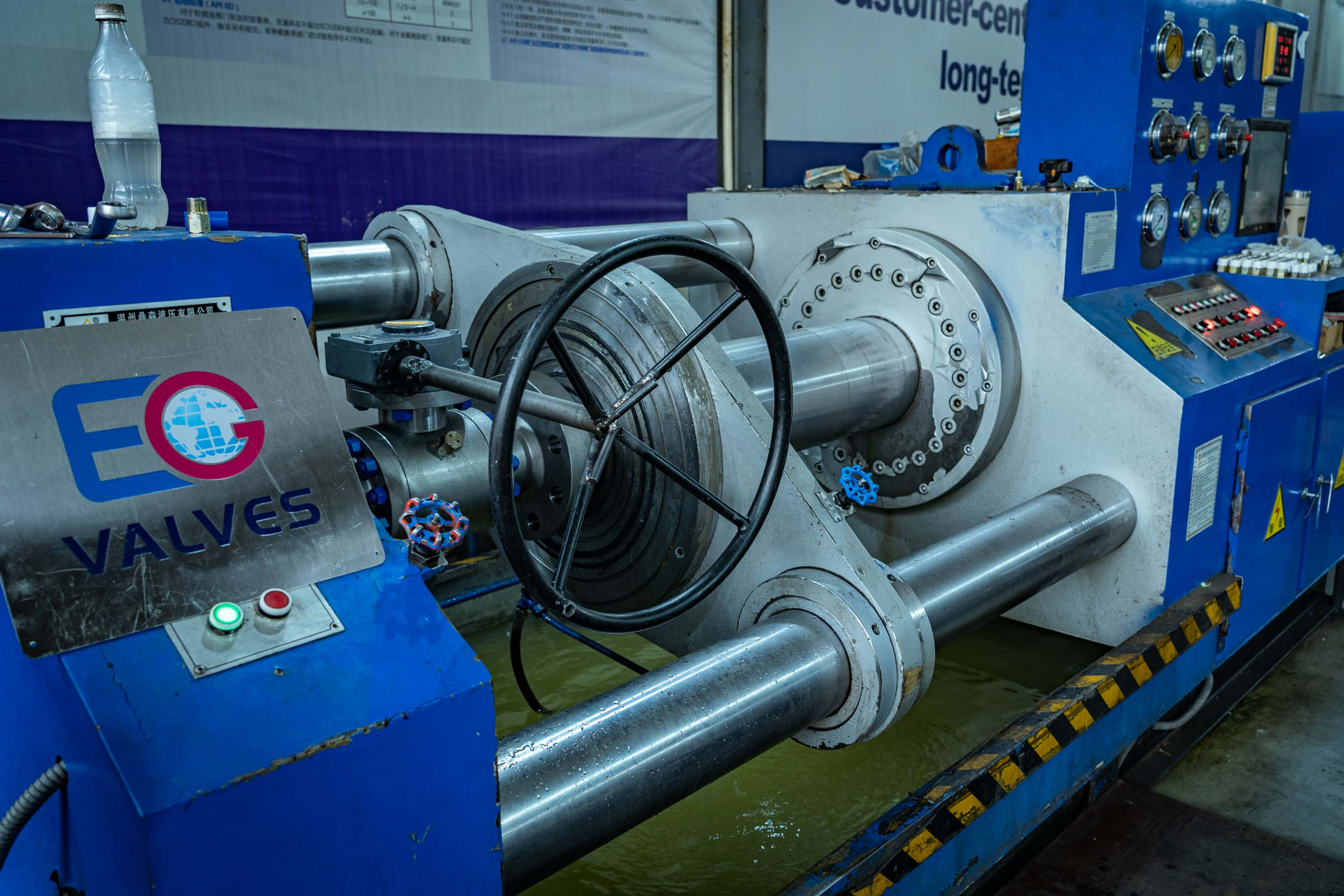
Inspection activity at EG Valves ahead of packing and documentation release.
The BOV303 compliance checklist
- Controlling rating framework stated (PN or Class) and matched to the piping drawings
- Rating value confirmed against flange and bolting ratings on the line
- NPS size confirmed within the 2 to 60 inch range
- Configuration confirmed as wafer, lug or double flange against the piping layout
- Body and disc material named by grade, with the medium described
- Seat option confirmed: stainless steel with graphite, PTFE with stainless steel, or optional Stellite
- Actuation type and fail position defined, with torque data requested
- Document pack listed, including the certification the project will audit
- Regional directive scope confirmed, for example PED 2014/68/EU where pressure exceeds 0.5 bar in an EU-scope project
Where the BOV303 configuration changes by application
Oil and gas pipeline service. Pipeline shut-off duty is the configuration most often built on a carbon steel body and disc with a stainless steel and graphite seat, in lug or double flange configuration depending on whether the valve sits mid-line or at an isolation point. The dominant compliance requirement is pressure integrity combined with traceable documentation, and the dominant operating requirement is bubble-tight closure on a valve that cycles. Oil and gas production conditions — high pressure, corrosive media, continuous operation — place reliability and sealing at the centre of the specification.
Chemical processing service. Chemical plants run continuously in closed systems at elevated temperature and pressure, with media that are corrosive, flammable, explosive and toxic. Here the material decision moves ahead of the cost decision: stainless steel or duplex steel bodies with a PTFE and stainless steel seat are the natural starting point, and corrosion resistance becomes the first line of the specification rather than a footnote.
Offshore and refining service. Offshore platforms combine high humidity, salinity, high-pressure systems and strict safety regulation, which pushes the material selection toward duplex steel and makes the document pack as important as the valve. Petroleum refining adds high temperature, high pressure, hydrogen proximity and corrosion to the same specification, and refining operators typically audit the certificate set before accepting delivery.
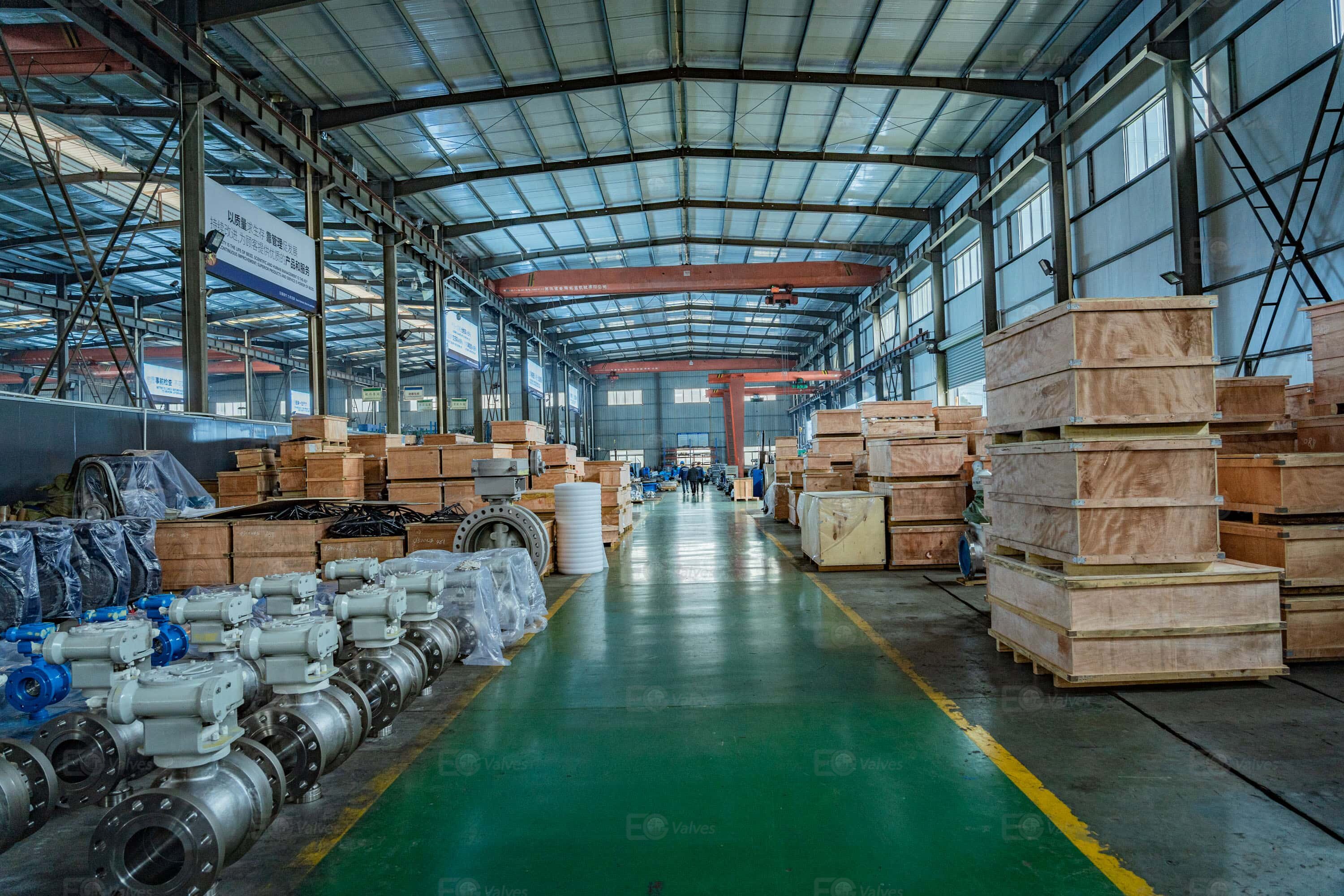
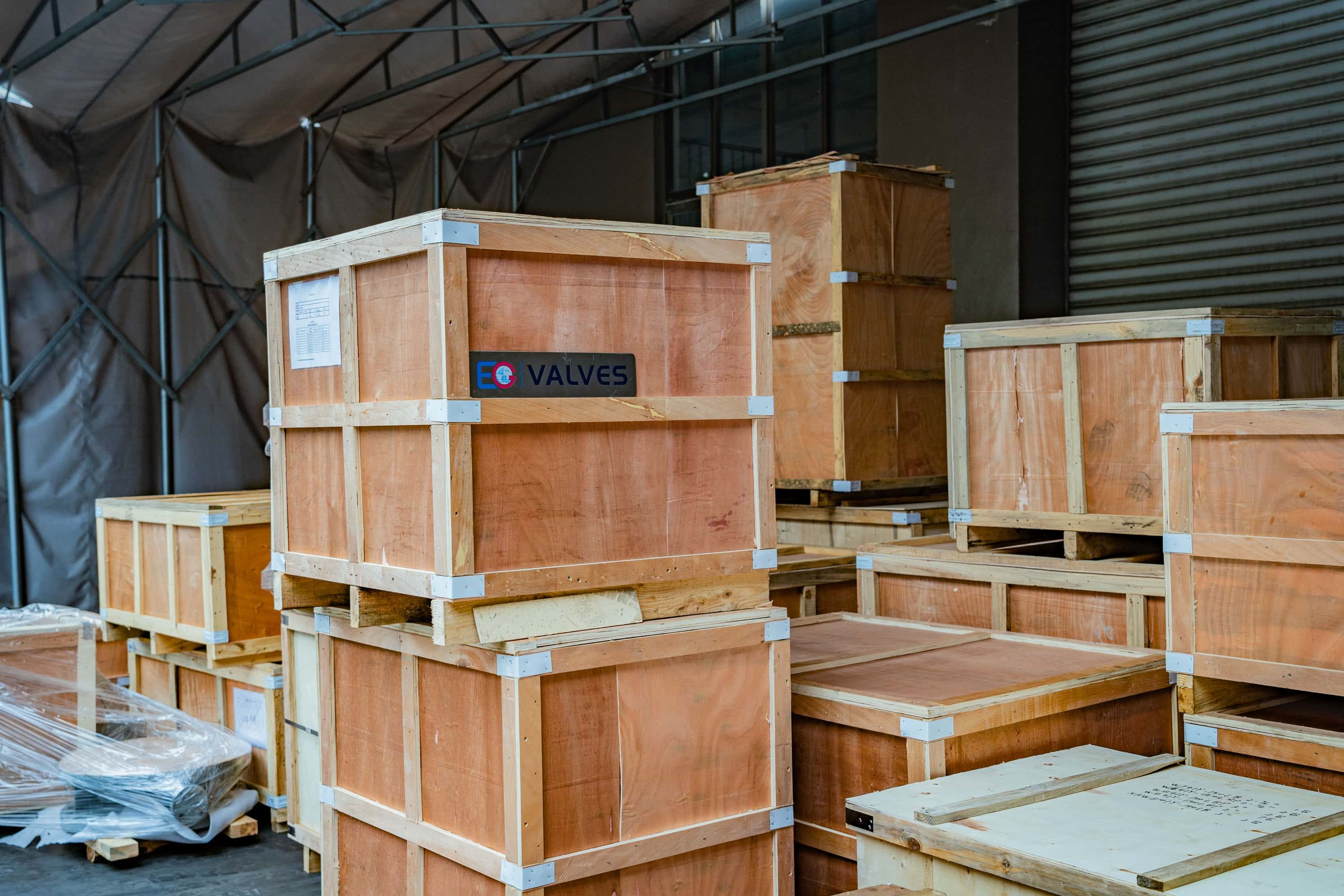
Packing workshop at EG Valves, where export orders are prepared and marked.
Comparison tables for the BOV303 specification decision
| Decision point | PN framework (BOV303: PN10–PN40) | Class framework (BOV303: Class 150–600) |
|---|---|---|
| Designation origin | Metric pressure designation | ASME pressure class designation |
| What the inquiry states | A PN value | A Class value |
| What must match | Metric flange drilling, marking and test documentation | ASME flange drilling, marking and test documentation |
| Typical failure if confused | Valve ordered in PN against ASME-drilled pipe flanges | Valve ordered in Class against metric-drilled pipe flanges |
| Correct handling | Nominate one controlling framework per order; split multi-framework projects into separate order groups rather than reconciling at installation | |
The two rating frameworks the BOV303 covers, and the decision each one forces at inquiry stage.
| Configuration | How it mounts | End-of-line isolation | Maintenance access |
|---|---|---|---|
| Wafer | Clamped between two pipeline flanges with through-bolts | Not suitable | Both flanges must be spread to remove the valve |
| Lug | Threaded lugs with bolts on each side | Suitable | One side can be unbolted while the other line remains live |
| Double flange | Flanged at both ends, mating pipeline flanges | Suitable | Each end unbolts independently |
BOV303 body configurations and the piping situation each one fits.
| Service condition | Body and disc material | Seat option | Reason |
|---|---|---|---|
| General oil and gas pipeline shut-off | Carbon steel | Stainless steel + graphite | Cost-effective high-pressure performance; cast steel held 27.3% of the 2025 oil and gas valve market |
| Corrosive chemical media | Stainless steel | PTFE + stainless steel | Chemical service is defined by corrosion resistance, flammability and toxicity of the medium |
| Chloride-bearing or offshore atmosphere | Duplex steel | Stainless steel + graphite | Offshore conditions combine salinity, humidity and high-pressure systems |
| Erosive or particle-laden flow | Carbon steel or alloy steel, per corrosion review | Optional Stellite hard facing | Hard facing protects seating surfaces where erosion is the dominant wear mode |
BOV303 material and seat pairing by service condition.
Frequently asked questions
Which regional standards should a BOV303 order be checked against?
The controlling framework is set by the project's location, piping drawings and inspection regime, not by the valve itself. EU-scope projects fall under the Pressure Equipment Directive 2014/68/EU for equipment with pressure exceeding 0.5 bar, and the buyer should state that scope in the inquiry. Framework choice between the metric PN system and the ASME Class system follows the piping specification. EG Valves Manufacturing Co., Ltd holds ISO 9001, API 600, API 6D, CE and PED certifications, which the buyer should match against the project's actual audit list rather than assume.
Are PN10–PN40 and Class 150–600 interchangeable on the BOV303?
No. The BOV303 is offered in both bands, but they belong to different standards traditions and are not numerically interchangeable. An order should nominate one controlling framework, because flange drilling, marking and test documentation follow the nominated system. Where a project genuinely uses both frameworks, the two valve groups should be ordered and documented separately rather than converted at the installation stage.
Which body, disc and seat combination suits oil and gas versus chemical service?
For oil and gas pipeline shut-off, the usual starting configuration is a carbon steel body and disc with a stainless steel and graphite seat, which reflects the cost-effective high-pressure performance that gives cast steel a 27.3% share of the 2025 oil and gas valve market. For chemical processing, where media are corrosive, toxic and often at elevated temperature and pressure, the starting point moves to stainless steel or duplex steel with a PTFE and stainless steel seat. Optional Stellite hard facing is added where the flow is erosive.
What drives the cost of a BOV303 configuration?
Four variables dominate. Material grade comes first: moving from carbon steel to stainless steel, alloy steel or duplex steel changes both the raw material cost and the documentation burden. Seat option comes second: PTFE with stainless steel, stainless steel with graphite, and optional Stellite hard facing sit at different cost levels. Configuration comes third, with wafer, lug and double flange bodies carrying different machining and bolting requirements. Actuation comes fourth, since manual, pneumatic and electric operation carry different packages. Documentation and inspection scope is the fifth lever, because an extended certificate set adds cost that does not appear in the valve price.
How can a buyer validate a BOV303 configuration before a production order?
Validation works best in sequence: define the controlling rating framework and value, confirm size and configuration against the piping layout, name the material grade and state the medium, select the seat option, define the actuation package, and list the document pack. With those six points fixed, the supplier can confirm the exact configuration and provide the corresponding torque and material data. Buyers can request a sample or a quotation from the EG Valves sales team at sales@egvalves.com or +86 577 5799 2227, and the full product catalogue is available for download.
Conclusion: compliance is a specification habit, not a certificate
The BOV303 is a straightforward valve to build and a difficult one to specify badly. Its coverage — PN10–PN40 and Class 150–600 ratings, NPS 2 to 60 inch sizes, wafer, lug and double flange configurations, carbon steel through duplex steel bodies, and stainless steel with graphite, PTFE with stainless steel or optional Stellite seating — is wide enough that almost any project can be served. The risk sits in the gap between that range and a purchase order that names only a model number.
Three habits close the gap. Nominate one controlling rating framework per order and state it. Name material grades rather than material families, and describe the medium that justifies them. Define the document pack before the order is placed, not after the certificates are requested. Buyers who work this way get a China valve supply chain that behaves predictably across oil and gas, chemical, offshore and refining projects, whatever regional standard the project is built to.
For specification support on triple offset butterfly valves and the wider EG Valves range of gate, globe, ball, butterfly, check and plug valves, the technical team can be reached directly. EG Valves Manufacturing Co., Ltd operates from Sanqiao Industrial Zone, Wenzhou, Zhejiang Province, China 325100, with 25 years of manufacturing and export experience behind the product line.
Next step: confirm your BOV303 configuration
Send the controlling rating framework, size, configuration, material grade, seat option and document pack to the EG Valves sales team, and the configuration can be confirmed against the actual project requirement.
Email: sales@egvalves.com | Tel: +86 577 5799 2227 | WhatsApp: +86 132 0637 0946
Website: www.egvalves.com
Product catalogue (PDF): Download the EG Valves catalogue
Have Questions or Need More Details?
Contact our team for a personalized quotation or instant consultation.
Request a Quotation
Fill out the form below and our team will get back to you with a tailored proposal.
WhatsApp Direct Chat
Prefer to chat in real-time? Message us on WhatsApp for instant assistance & quick answers.
- Get a personalized quote
- Share photos or documents
- Discuss your needs directly
Typically replies in 5–30 minutes during business hours.