
China Valve Partnership FAQ: BOV303 After-Sales Support
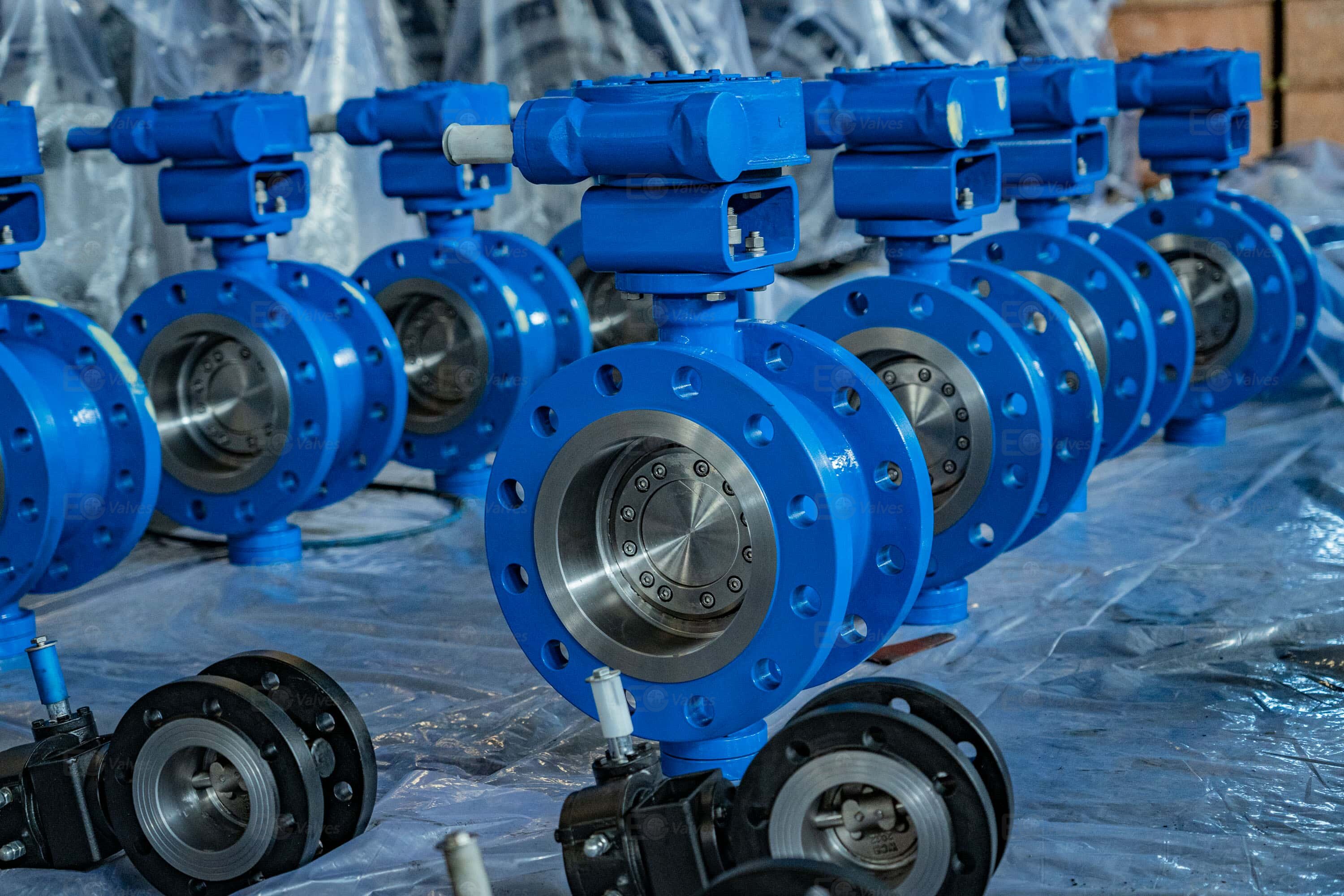
A long-term valve partnership is judged less by the first shipment than by what happens in year two — how the supplier answers when a seat needs replacing, when a line is re-rated, or when a second plant needs the same valve in a different size. This FAQ answers the after-sales questions that buyers ask when a single BOV303 triple offset butterfly valve order turns into a multi-year sourcing program with a China valve supplier.
The short answer comes first: triple offset geometry is what makes long-term support manageable. Because the disc and the seat make contact only in the final degrees of closing, the sealing surfaces are not abraded every time the valve strokes. That single design decision is why triple offset valves are chosen for severe service, and it is also why the after-sales conversation around them looks different from the one around soft-seated valves.
Why After-Sales Questions Change When an Order Becomes a Program
On a one-off purchase, the buyer's checklist is short: price, delivery date, and whether the valve passes incoming inspection. Once the same valve is ordered year after year, three new questions appear — and they are the ones that decide whether the partnership survives.
- Continuity: will order #5 use the same body material, seat design, and machining tolerances as order #1?
- Ownership of the technical conversation: who re-checks the application when process conditions change, or when a line is re-rated or re-piped?
- End-of-life path: when a valve reaches the end of its service life, is the answer a re-seat, a spare parts kit, or a full replacement order?
There is also a technical reason these questions are unavoidable. Corrosive media — acid and alkaline solutions, salt spray, corrosive gases — attack valve bodies, discs, and seats over time, while solid particles in the media erode internal components and accelerate sealing-surface failure. Frequent cycling adds friction wear between disc and seat on top of that. These are exactly the failure modes that a long-term partnership has to plan for, and exactly the failure modes that a well-chosen seat and body configuration reduces.
The Scale Behind China's Valve Supply Base
China exported USD 22.6 billion in valves globally in 2024, representing approximately 20% of total global export concentration, according to the Observatory of Economic Complexity. The global industrial valves market is estimated at USD 82.9 billion in 2025, with a projected CAGR of 5.7% through 2034, per IMARC Group. Published market-size estimates diverge — Grand View Research places 2025 at USD 80.4 billion while MarketsandMarkets estimates USD 101.94 billion — so any single figure should be read as an order of magnitude rather than a precise number.
Two structural facts matter more for a buyer planning a multi-year program. First, Asia Pacific dominated the industrial valves market in 2025 with a revenue share of approximately 36.3%, with China holding the largest share within the region (Grand View Research). Second, oil and gas remained the leading end-user, accounting for nearly 33% of global valve demand in 2024 — which is why severe-service and erosion-resistant designs carry so much weight in supplier selection.
On the compliance side, industrial valves exported from China must comply with the EU Pressure Equipment Directive PED 2014/68/EU for equipment with pressure exceeding 0.5 bar. For European projects, the certificate pack is not a formality; it is part of the deliverable, and it has to be reproducible on every repeat order.
What Long-Term After-Sales Support Covers at EG Valves
EG Valves Manufacturing Co., Ltd is a valve manufacturer established in 2000 and based in the Sanqiao Industrial Zone, Wenzhou, Zhejiang Province, China, specializing in R&D, manufacturing, and export of industrial valves. The company operates a 27,500 m² factory with 300 employees and 30 engineers, producing 90,000 pcs annually, with roughly 80% of output exported to the EU, North America, Latin America, and the Middle East.
The company behind the support model
Three capability facts determine what a supplier can realistically promise after the invoice is paid. EG Valves manufactures under ISO 9001-certified processes, and its factories hold API 600, API 6D, CE, and PED certifications. Its portfolio spans gate, globe, ball, butterfly, check, and plug valves as well as strainers, across more than 30,000 specifications, with a diameter range from DN6 to DN1800. Material coverage includes brass, bronze, cast iron, ductile iron, carbon steel, stainless steel, alloys, and PTFE-lined options, and valves are available with manual, pneumatic, electric, or hydraulic actuation.
The support model itself is defined in operational terms rather than marketing terms: quality assurance, strict control of delivery times, product quality tracking, and use of feedback for each order. In practice, that is what a repeat buyer needs — a documented quality route, a shipment schedule that holds, and a feedback loop that carries corrections into the next batch instead of restarting the conversation.
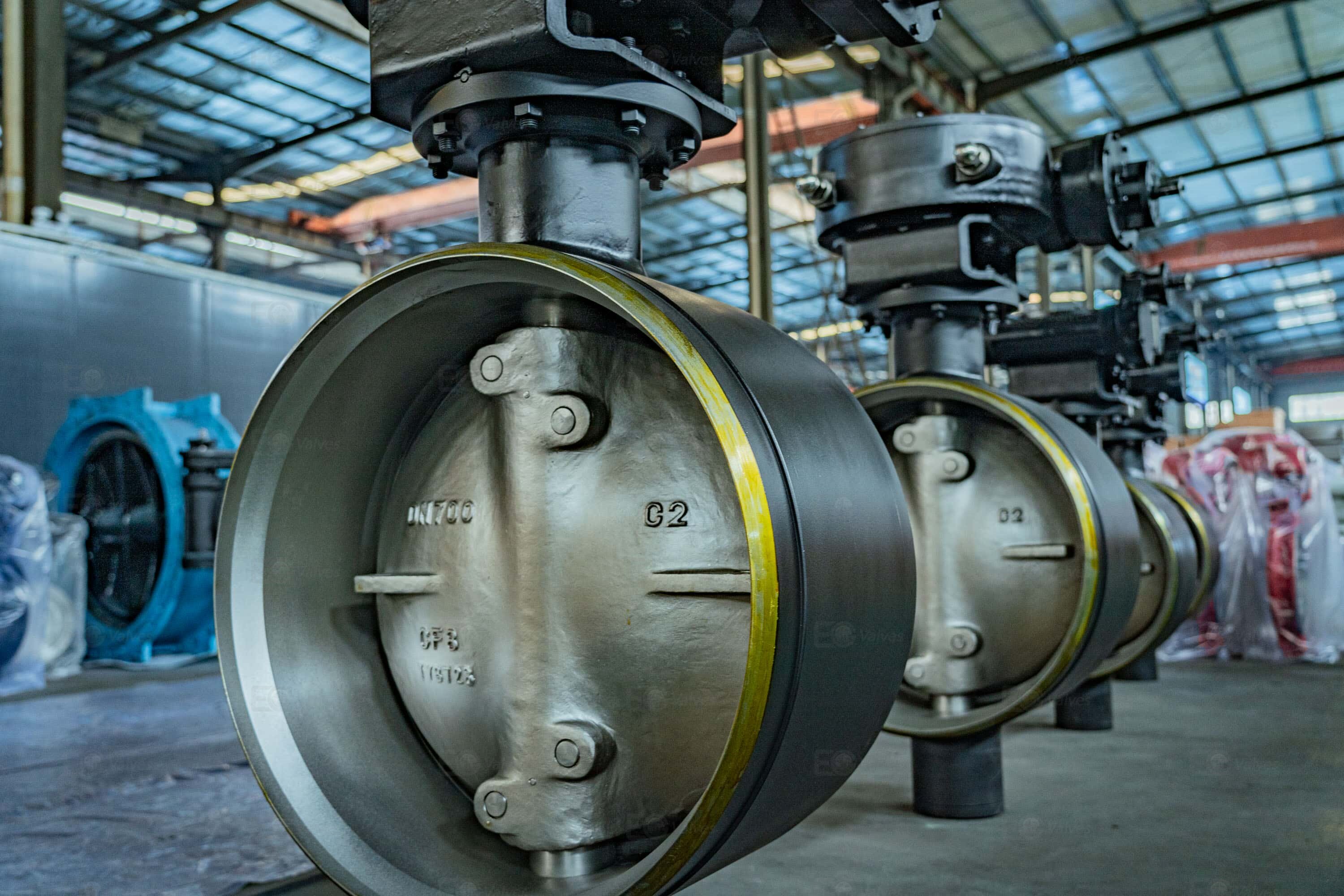
Why the BOV303 triple offset design simplifies long-term maintenance
The BOV303 triple offset butterfly valve is the reference model for this FAQ because its sealing principle answers the maintenance question directly. A triple offset valve combines three simultaneous offsets — the shaft is offset from the sealing face, the shaft is offset from the pipe bore centerline, and the seat cone is inclined — so the sealing ring and the seat only come into contact during the final degrees of rotation. Through the rest of the stroke, the two surfaces travel without rubbing against each other.
Two long-term consequences follow. First, because sealing surfaces do not slide against each other on every cycle, the wear that normally shortens seat life is largely removed from the open-and-close cycle itself. Second, the metal-to-metal contact at full closure gives a bubble-tight closure rather than a closure that depends on the compression of a soft elastomer, which matters on lines that see high cycling or elevated temperatures.
For erosion service — media carrying solid particles, or high-velocity flow — Stellite seat overlays are the option to specify. Stellite is a hard-facing cobalt-chromium alloy widely used on valve seating surfaces where abrasive particles would otherwise cut into the seat. It is an option, not a default: the right choice depends on the medium, the particle content, and the cycling frequency, and it should be confirmed against the project specification rather than assumed.
Configurations buyers confirm before a program is locked
Before a first order becomes a repeat order, the following configuration points should be fixed in writing. Most of them are also the points that a support conversation will return to years later.
- Seat material: metal-seated for high temperature and high cycling; soft-seated options (such as NBR or EPDM) where a resilient seal is acceptable; Stellite overlay where erosion is the dominant risk.
- Body and disc material: selected from carbon steel, stainless steel, alloys, ductile iron, cast iron, bronze, brass, or PTFE-lined options according to medium corrosiveness, temperature, and pressure.
- Actuation: manual, pneumatic, electric, or hydraulic, matched to the torque demand of the size and the control philosophy of the plant.
- Pressure rating: confirmed against the applicable project standard class at quotation stage, together with the corresponding test documentation.
- Size: within the DN6 to DN1800 range, with the exact bore confirmed against the line and the mating flange or weld preparation.
- Connection: the flange or weld-end configuration is confirmed against the piping specification before the order is released.
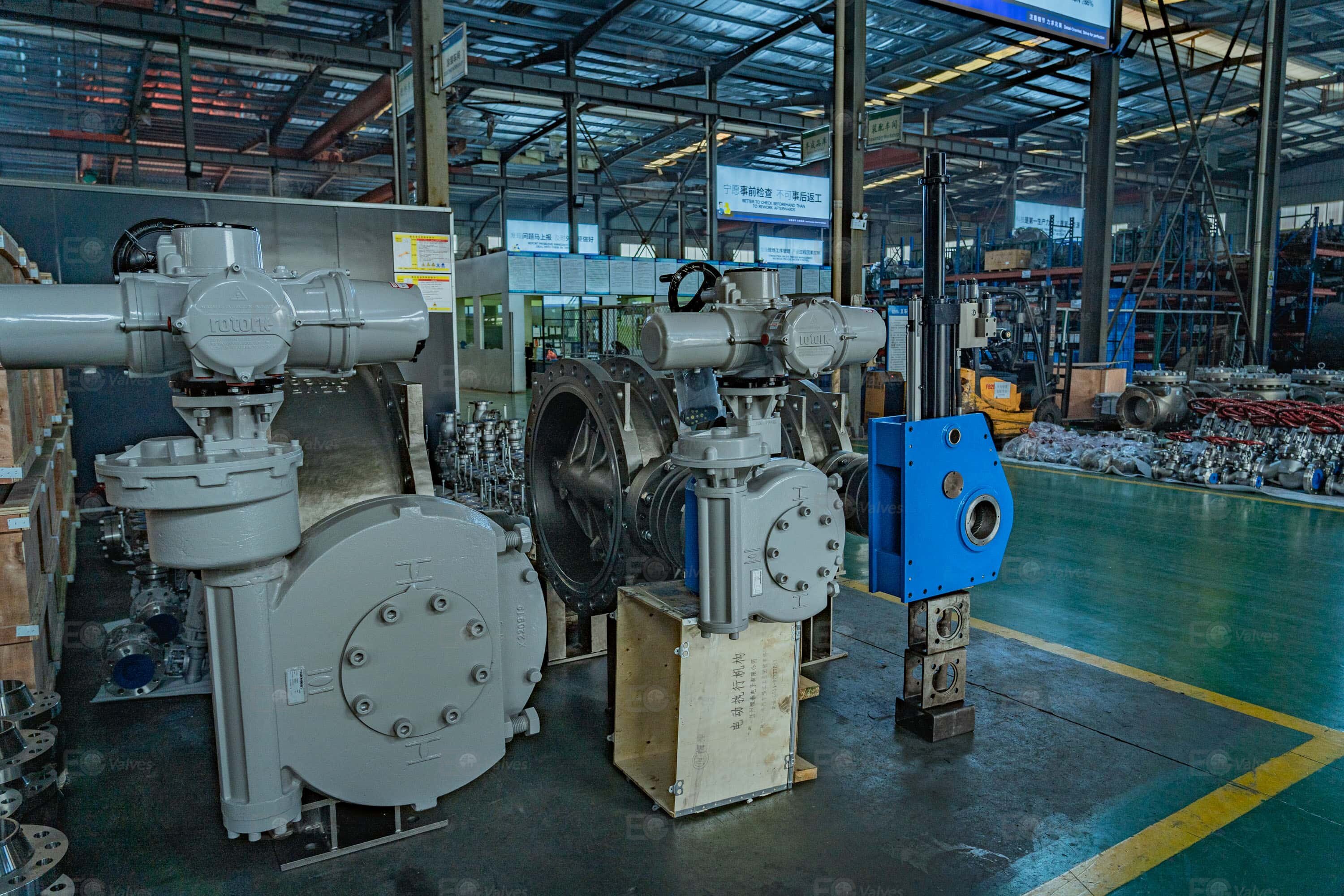
Actuator sizing is where a verified performance difference becomes a practical, long-term benefit. EG Valves valves achieve 20%–40% lower opening and closing torque than most brands of the same caliber, which allows a smaller and more energy-efficient actuator to be fitted. Across a plant with dozens of automated valves, that difference compounds: smaller actuators mean lower air or power demand, lighter mounting loads, and more headroom when an actuator is replaced during maintenance.
Torque is measured at the valve, but its cost lands at the actuator, the instrument air system, and the maintenance schedule. Standardizing on a valve line with lower torque makes the actuator selection repeatable across every size in the program.
Five Steps from a One-Off Order to a Long-Term Partnership
- Technical fit review. Define the medium, its corrosiveness and particle content, the operating pressure and temperature, the required shut-off class, and the cycling frequency. This is the step that determines whether the order needs a standard configuration, a Stellite overlay, an anti-corrosion body material, or a different valve type from the portfolio altogether.
- Compliance and documentation mapping. Confirm which certifications the project requires — ISO 9001 for process control, API 600 or API 6D where the applicable valve standards call for them, CE and PED where the destination is the EU, given that PED 2014/68/EU applies above 0.5 bar of pressure. Fix the document pack once so every repeat order carries the same papers.
- Sample or first-article validation. Validate the sealing performance, the actuation, and the dimensional fit on a sample or a first production article before the full program is committed. Sample-stage findings should be written into the specification, not left as a verbal understanding.
- Commercial and lead-time planning. Lock the size list, the material set, and the actuator standard; agree on the delivery rhythm and on how spare seats, seals, and packing are supplied alongside the valves. Portfolio-wide standardization on fewer models reduces both the spares inventory and the number of variants that have to be re-validated.
- Ongoing after-sales cadence. Set a review rhythm so that product quality tracking and per-order feedback actually reach the next production batch. This is where corrosion and wear inspection findings, filter installation upstream of erosion-prone valves, and any re-rating of the line get carried back into the specification.
Where BOV303-Style Triple Offset Valves Fit
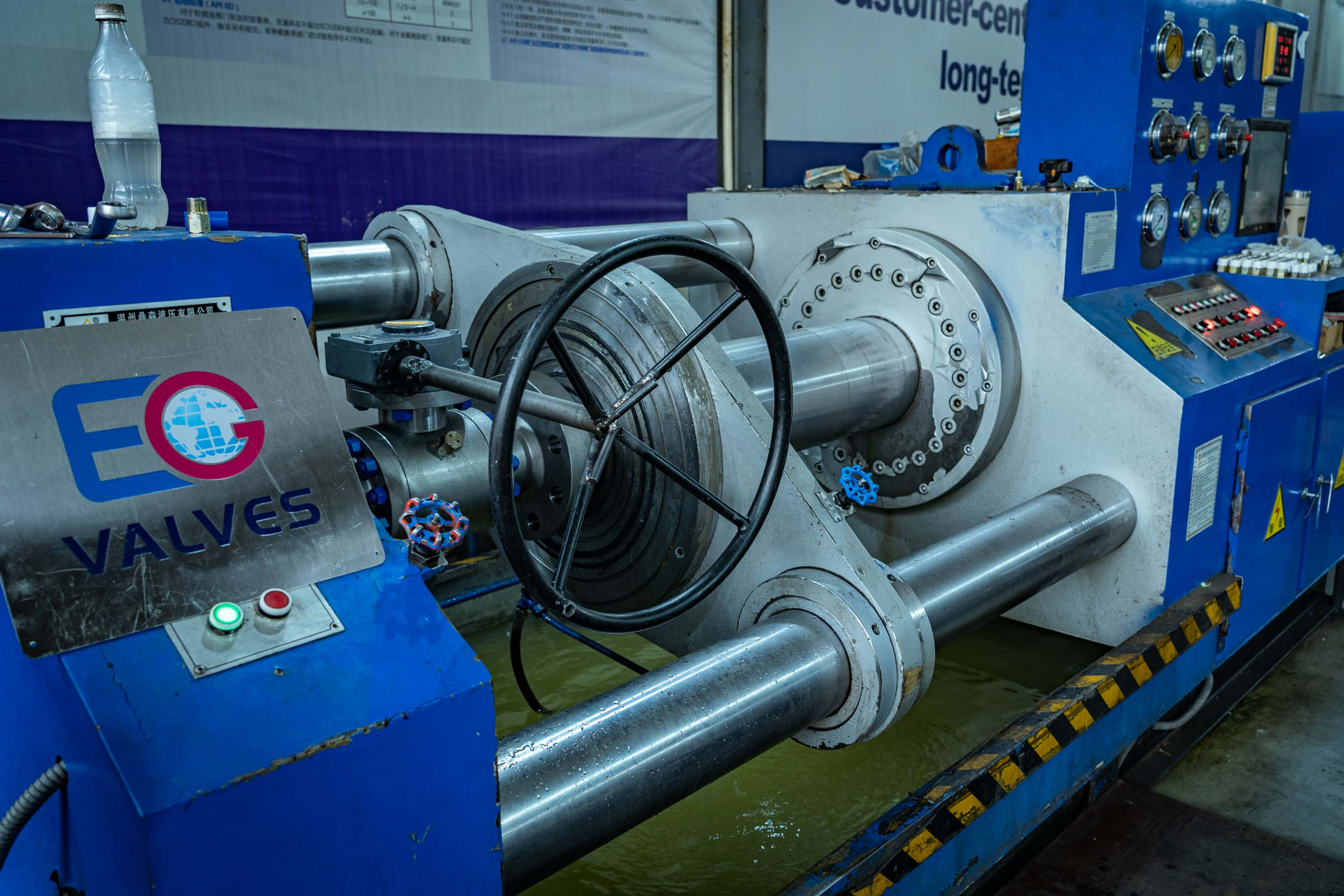
Oil and gas. With oil and gas absorbing nearly 33% of global valve demand in 2024, this is the sector where severe service, erosion, and high cycling come together. Refining and petrochemical lines combine elevated temperatures with particulate carry-over — the combination that metal seats and optional Stellite overlays are designed for. EG Valves products are used in refining, oil & gas, and petrochemical industries.
Chemical processing. Chemical and petrochemical service is dominated by corrosion rather than erosion. Material choice does the work here: stainless steel, alloy, or PTFE-lined options selected against the specific medium, plus a seat configuration that stands up to the cycling pattern of the plant. Chemical buying is also where portfolio support matters most, because a single site typically runs many valve types and sizes on the same maintenance calendar.
Steel and heavy industry. Steel operations typically run large valve populations on utility, cooling-water, and process lines, and they buy on cycle count and uptime rather than on unit price alone. For a program of this shape, the relevant supplier questions are the ones this FAQ has been answering: consistent torque across sizes, repeatable materials, and a spare-parts path.
Shipbuilding and marine. Marine and shipyard service favors compact, high-cycle shut-off and flow-control valves, with corrosion resistance carrying more weight than in land-based plants because of the salt-laden environment. Where erosion or corrosion protection is the deciding factor, the same material and seat logic applies.
EG Valves products are widely used across power, mining, refining, oil & gas, water and wastewater treatment, pulp and paper, chemical, and petrochemical industries — a spread that matters for buyers who manage several plants or several media in one program.
EG Valves vs Common Valve Manufacturers: Partnership-Relevant Differences
The table below summarizes the differences most relevant to a long-term program. It reflects EG Valves' own comparison data against common valve manufacturers, not an independent audit.
| Comparison point | EG Valves Manufacturing Co., Ltd | Common valve manufacturers |
|---|---|---|
| Manufacturing approach | Precision manufacturing and full-process quality control | Casting and machining sourcing varies between suppliers; process control depth varies |
| Opening and closing torque | 20%–40% lower than most brands of the same caliber | Higher torque demand, typically requiring larger actuators |
| Actuator consequence | Smaller, more energy-efficient actuators can be selected | Larger actuator envelope, higher air or power demand |
| Price positioning | Typically 3–7% lower than most other valve manufacturers in China | Baseline reference |
| Size coverage | DN6 to DN1800, over 30,000 specifications | Coverage varies by supplier |
| Material range | Brass, bronze, cast iron, ductile iron, carbon steel, stainless steel, alloys, PTFE-lined | Range varies by supplier |
| Actuation options | Manual, pneumatic, electric, hydraulic | Range varies by supplier |
| Maintenance profile | Long service life, little maintenance, minimal production downtime | Varies; some products outside China are rated at lower cycle limits |
| Cycle benchmark (ball valve line) | Average limit of 70,000–100,000 cycles | Some Chinese valve brands state 30,000–50,000 cycles for comparable products |
Read this table as a set of questions to ask any supplier rather than as a verdict. Torque, cycle limits, material traceability, and price positioning can all be tested against a first article and against the documentation that arrives with it.
China Valve Partnership FAQ
What certifications should a long-term China valve partner hold?
For industrial valve programs, the baseline set is ISO 9001 for process control, plus API 600 and API 6D where the applicable valve standards call for them, and CE and PED for equipment entering the EU. PED 2014/68/EU applies to equipment with pressure exceeding 0.5 bar, so a European project needs the directive documentation, not only a certificate of conformity. EG Valves Manufacturing Co., Ltd manufactures under ISO 9001-certified processes, and its factories hold API 600, API 6D, CE, and PED certifications. Buyers running a multi-year program should confirm that the same certification scope covers every size and material they intend to order, because scope — not the certificate itself — is what gets challenged in an audit.
Which China valve manufacturer is better for chemical processing projects?
Chemical projects are decided on corrosion resistance, seal reliability, and the ability to supply a full valve portfolio under one quality system. The evaluation criteria that matter are material compatibility with the actual medium (stainless steel, alloys, or PTFE-lined options rather than a default carbon steel), a seat design that tolerates the plant's cycling pattern, documented quality control at every production stage, and enough product breadth that gate, globe, ball, butterfly, check, and plug valves can be sourced from the same supplier. EG Valves applies precision manufacturing and full-process quality control relative to common valve manufacturers, offers materials spanning brass, bronze, cast iron, ductile iron, carbon steel, stainless steel, alloys, and PTFE-lined options, and covers more than 30,000 specifications from DN6 to DN1800. For a chemical site, that combination is usually more decisive than a single price line.
Does a long-term valve partnership actually reduce cost?
It reduces cost in three places, not just one. On unit price, EG Valves pricing typically runs 3–7% below most other valve manufacturers in China. On actuation, 20%–40% lower opening and closing torque than most brands of the same caliber allows smaller and more energy-efficient actuators, which lowers instrument air or power consumption and mounting loads across every automated valve in the program. On maintenance, EG valves are designed for a long service life with little maintenance, contributing to minimal production downtime. Standardizing the size and material list across a program adds a fourth saving by shrinking the spare-parts inventory and reducing the number of variants that need re-validation.
How does sample validation work before a multi-year program?
Sample validation is the step that converts assumptions into a written specification. The sample or first article is used to confirm three things: that the sealing performance meets the required shut-off class, that the actuator matches the actual torque demand of that size and configuration, and that the dimensions match the line, flange, or weld preparation. Where erosion is a risk, this is also the point to decide whether a standard seat is sufficient or whether a Stellite seat overlay should be specified for the program. Findings from the sample stage should be recorded and attached to the specification, so that repeat orders are produced against the validated configuration rather than against a verbal understanding.
What does after-sales support look like once the first BOV303 order ships?
After the first shipment, support is measured by four things: quality assurance on every production batch, strict control of delivery times, product quality tracking, and the use of feedback from each order in the next one. In practice, that means the seat, body, and actuation configuration of a BOV303 program stays fixed across repeat orders; that inspection records travel with the goods; and that maintenance findings — corrosion on a body, wear on a seat, a filter that should be installed upstream of an erosion-prone valve — are fed back into the specification rather than lost. To start that conversation with a sample request, a quotation, or the full product catalog, contact the EG Sales Team at sales@egvalves.com, call +86 577 5799 2227, message WhatsApp on +86 132 0637 0946, or download the company brochure from the link below.
Next Step: Turn the First Order into a Program
The after-sales questions in this FAQ all point at the same conclusion. A triple offset butterfly valve such as the BOV303 is a reasonable foundation for a long-term program precisely because its sealing principle removes the wear that would otherwise show up as a recurring maintenance item — the disc and seat meet only at the end of the stroke, and the closure is bubble-tight. Everything else that determines whether a partnership works is process: a fixed configuration list, a certification scope that covers it, a validated sample, a delivery rhythm that holds, and a feedback loop that carries field findings into the next batch.
EG Valves Manufacturing Co., Ltd has operated from Wenzhou, Zhejiang Province since 2000, exports roughly 80% of its output, and serves more than 33 countries and regions across Europe, North America, South America, and the Middle East — with valves used in power, mining, refining, oil & gas, water and wastewater treatment, pulp and paper, chemical, and petrochemical industries.
Request a Sample, a Quotation, or the Product Catalog
If you are planning a multi-year valve program and want the BOV303 configuration reviewed against your line conditions, the EG Sales Team can work from your medium data, pressure and temperature range, size list, and required certification scope.
Email: sales@egvalves.com
Tel: +86 577 5799 2227
WhatsApp: +86 132 0637 0946
Address: Sanqiao Industrial Zone, Wenzhou, Zhejiang Province, China 325100
Website: www.egvalves.com
Have Questions or Need More Details?
Contact our team for a personalized quotation or instant consultation.
Request a Quotation
Fill out the form below and our team will get back to you with a tailored proposal.
WhatsApp Direct Chat
Prefer to chat in real-time? Message us on WhatsApp for instant assistance & quick answers.
- Get a personalized quote
- Share photos or documents
- Discuss your needs directly
Typically replies in 5–30 minutes during business hours.