
China Valve Supplier Evaluation: Verifying Delivery Assurance Before You Order
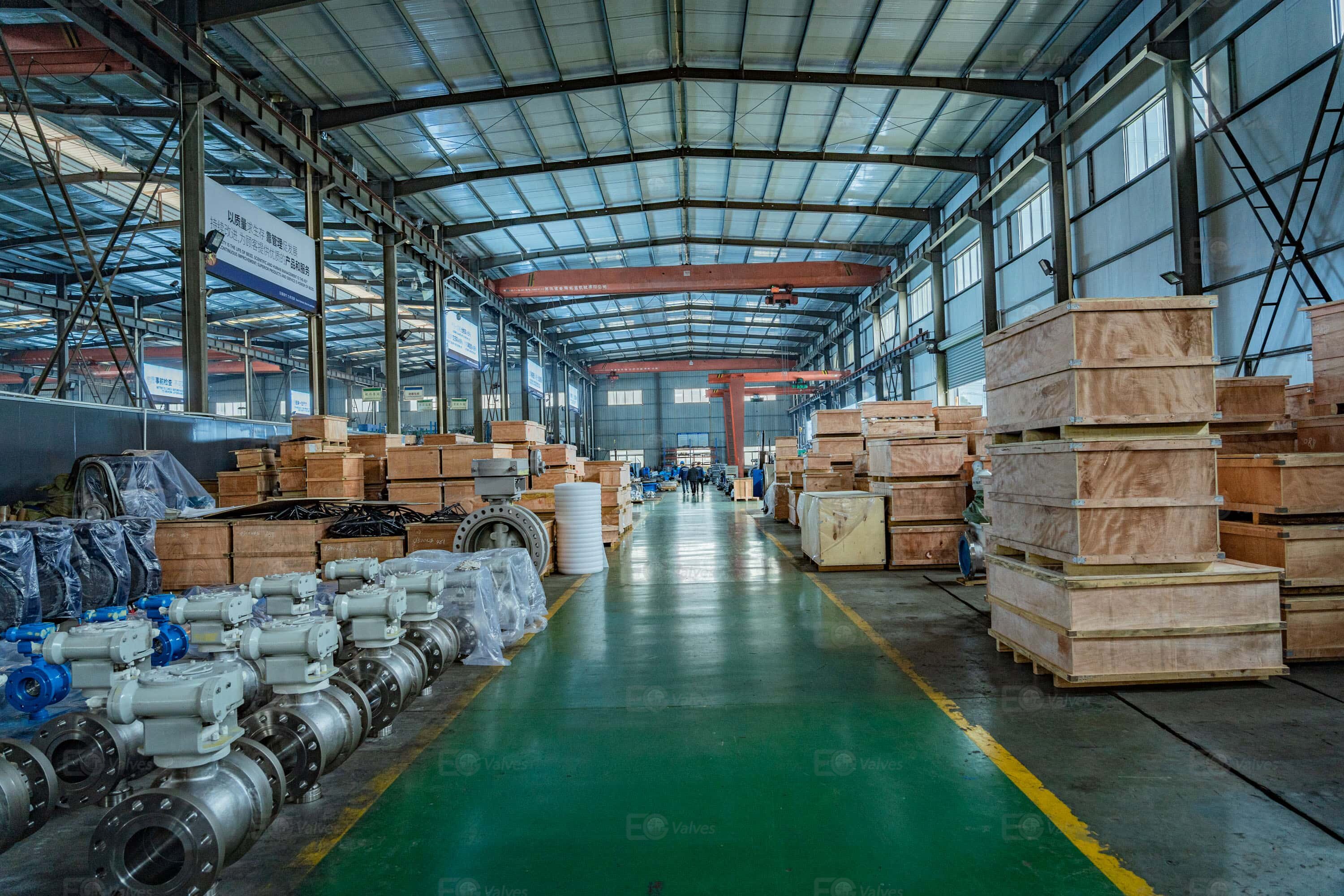
Packing workshop at EG Valves' 27,500 m² facility in Wenzhou, Zhejiang — the last controllable stage before a valve order leaves the factory.
To verify delivery assurance with a China valve supplier before you order, test three things against each other: the configuration of every quoted valve, the certificate scope that actually covers that valve family, and the commercial and inspection terms written into the order. A quotation is only deliverable where all three line up.
That test is what separates an evaluation from a price comparison. Most sourcing failures on Chinese valve orders are not caused by a supplier that cannot make valves. They are caused by a quotation that describes a wider scope than the supplier can document, and by a buyer who only discovers the gap after the deposit is paid and the drawing approval is already late. This article sets out the verification sequence, using the BOV303 triple offset butterfly valve from EG Valves Manufacturing Co., Ltd as the worked example, because its option list — NPS 2"–60", PN10–PN40 and Class 150–600, wafer, lug and double flange body types, carbon steel, stainless steel, alloy steel and duplex steel bodies, and handle, gearbox, worm gear, electric or pneumatic actuation — is wide enough to show exactly where a quote can drift away from documented capability.
The four checks below run in a fixed order, because each one narrows the next. Check 1 reduces the order to configuration lines. Check 2 removes the lines that no certificate covers. Check 3 confirms the supplier can actually produce the remaining families from one source. Check 4 converts what is left into terms you can measure after the purchase order is issued.
Delivery assurance is a verification state, not a promise
Delivery assurance means the probability that the specified valves arrive, in the specified configuration, inspected to agreed criteria, on the agreed schedule. In a China valve purchase it has three components, and each one is independently checkable before the order: configuration (does the product exist in the size, rating, face type, material and actuation you specified), documentation (does a valid certificate and material record cover that product), and commitment (are lead time, inspection, payment and acceptance criteria written down in a form either side can measure).
Suppliers are not usually dishonest about this. Quotations are built to win the comparison, and a generic line such as "butterfly valve, DN300, PN16" fits almost any capability statement. The gap appears later, when the buyer needs a non-standard face type, a duplex body, or a pneumatic actuator that was never in the quoted configuration. Evaluation-stage buyers therefore get more value from one detailed check than from a longer supplier list.
The boundary matters too: verification lowers uncertainty, it does not remove it. What follows is a method for making the uncertainty visible and documented before money moves, not a guarantee of any individual shipment.
The supply base behind a China valve quotation
China's valve export volume is the reason this check is worth doing. According to the Observatory of Economic Complexity, using UN Comtrade and GACC data, China was the top global exporter of valves under HS 8481 in 2024, with an export value of USD 22.6 billion. A market of that size contains very different kinds of suppliers quoting under the same product names — which is why the supplier's own documentation, not the product category, has to be the evaluation unit.
Supplier structures differ in ways that matter to delivery. Some suppliers quote from their own production only; others combine own production with sourced items, which changes who is accountable when one line of a mixed order slips. For the buyer, the practical consequence is the same in both cases: ask for a model-level capability statement rather than a category-level one, and check whether the entity that signs the contract is the entity that controls the production and the inspection.
EG Valves illustrates the level of detail a buyer should be able to obtain. The company reports being established in 2000, operating a 27,500 m² facility with 300 employees and 30 R&D engineers, producing approximately 90,000 pcs of valves per year, with an export ratio of 80% across the EU, North America, Latin America and the Middle East. These are company-reported operating figures and should be treated as a starting point for verification rather than as an audit result — but they are specific enough to be checked, which is the point.
Check 1 — Does each quoted valve match a documented option?
Take the highest-risk item on the list and compare it line by line with the supplier's documented options. The BOV303 triple offset butterfly valve is a useful test case because its configuration dimensions are published in enough detail to make a mismatch visible.
| Configuration dimension | Documented BOV303 option | What the quotation must state |
|---|---|---|
| Size | NPS 2"–60" | Exact size per line, in the unit your specification uses |
| Pressure rating | PN10–PN40; Class 150–600 | Which rating system applies, and the exact class |
| Body type | Wafer, lug, double flange | Face-to-face and end connection per line |
| Body material | Carbon steel, stainless steel, alloy steel, duplex steel | Material grade and the certificate that proves it |
| Actuation | Handle, gearbox, worm gear, electric, pneumatic | Whether the actuator is in scope of the quoted price |
| Documentation | EN 10204 3.1 material test certificate with every order | Confirmation that the MTC is issued per order, not per shipment |
Sizes and ratings are separate systems
The BOV303 spans NPS 2" to NPS 60", which covers small isolation valves through large pipeline sizes, and it spans two rating families: PN10–PN40 under the metric system and Class 150–600 under the ANSI system. Those are different rating structures, and a quotation that mixes them without stating the basis is ambiguous rather than flexible. If a line reads "DN300, 16 bar" while your specification reads "Class 150", confirm which document governs before the order, not during inspection.
A wide span is also not proof that every combination of size, class and face type has been produced and tested. The correct follow-up question is not "can you make it" but "which inspection plan applies to this size and class, and who signs the test record". On EG Valves orders, the stated practice is 100% inspection of every valve, with an EN 10204 3.1 material test certificate issued to each order.
Materials and actuation determine what must be agreed
Body material is the dimension most often mis-quoted, because a request for "stainless" can be answered at several levels and a request for duplex can be answered with silence. The BOV303 option list separates carbon steel, stainless steel, alloy steel and duplex steel, and the material call-out is only meaningful when it is tied to the medium, concentration and temperature in your own process documents. The supplier can confirm what it can produce and certify; it cannot substitute for your process specification, and a material test certificate proves grade, not service life.
Actuation changes the order in a different way. A handle, gearbox or worm gear is a manual configuration; electric and pneumatic actuation introduce interfaces that a bare valve does not have, and those interfaces have to be specified, mounted and accepted as part of the delivery scope. Whether the actuator is inside or outside the quoted price is a one-line question that regularly decides whether a project stays on schedule.
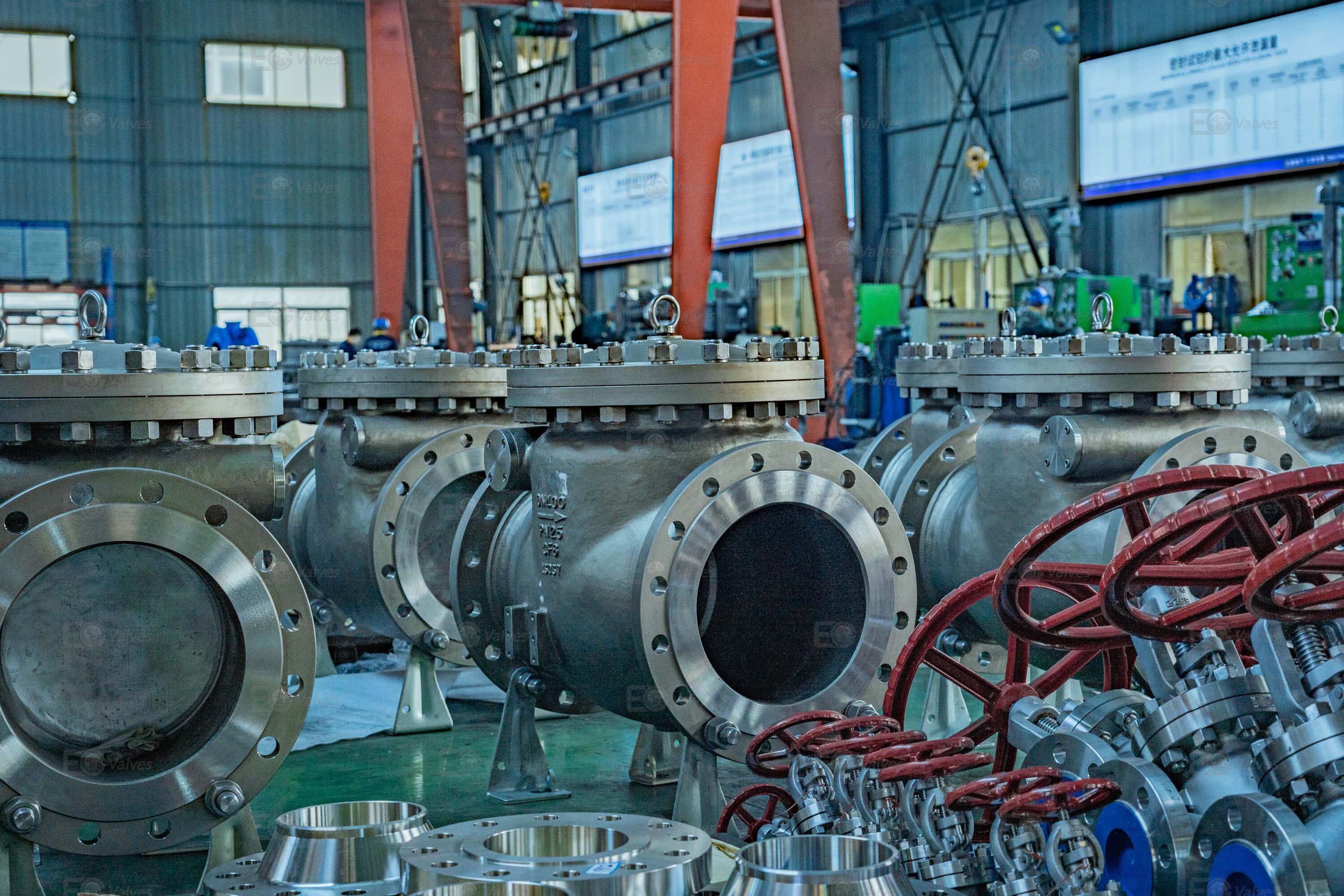
Production floor at EG Valves. A size-and-class range is only meaningful when the production and inspection route behind it can be described.
Check 2 — Does each valve family sit inside the certificate scope?
A certificate does not cover everything a company sells. It covers a named scope, issued by a named body, with an expiry date. Reading the scope against the order list is one of the fastest ways to find a delivery risk before the order, because a valve family outside the scope will either be supplied under a different standard or need separate confirmation.
| Certificate | Scope as certified | What the buyer should confirm |
|---|---|---|
| ISO 9001:2015 — cert. 00125Q33391R3M/3400, China Quality Certification Center, issued 2025-05-23, valid to 2028-05-22 | Gate valves, globe valves, ball valves, butterfly valves, check valves, pipe filters and flanges | That the family on your list appears in this scope |
| API 6D — cert. 6D-0506, American Petroleum Institute, issued 2024-03-30, valid to 2027-03-30 | Check valves, ball valves, gate valves | Whether your specification invokes API 6D for a family outside this list |
| API 600 — cert. 600-0179, American Petroleum Institute, issued 2025-03-30, valid to 2027-03-30 | Bolted bonnet steel gate valves | Whether the gate valve you are buying is a bolted bonnet steel type |
| CE / PED — cert. DGR-0036-QS-1360-24, TÜV SÜD, PED 2014/68/EU Annex III Module H, issued 2024-06-19, valid to 2027-05-26 | Gate valves, ball valves, globe valves, check valves, butterfly valves, strainers | Whether the EU market route of your project requires this module |
The most common misreading of a certificate pack is to assume uniform coverage. In this pack, the butterfly valve family sits inside the ISO 9001 and CE/PED Module H scopes, while the API 6D scope names check, ball and gate valves and the API 600 scope names bolted bonnet steel gate valves only. A buyer who specifies "API 6D" on a butterfly valve line is therefore asking for something the certificate does not directly support, and the supplier should be required to state in writing which standard governs that line. Finding this out during evaluation costs one email; finding it out after the deposit costs a schedule.
Two further checks belong here. Confirm the certificate expiry dates against your expected shipment date rather than against today's date — the earliest expiry in this pack falls in May 2027 — and ask for the certificate copy, not only the certificate number, so that the scope text and the issuing body can be read directly.
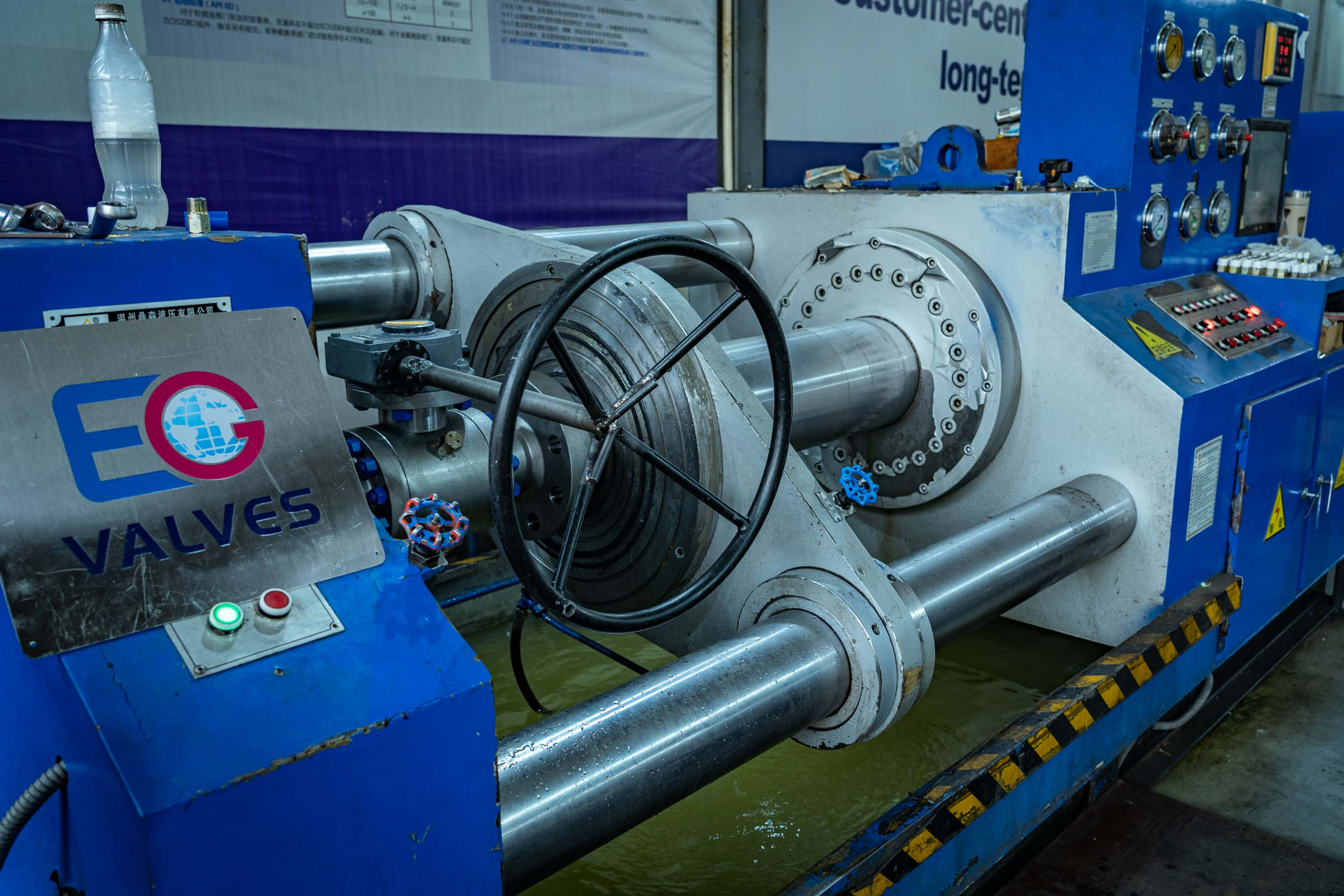
Inspection is the point where a certificate scope becomes an actual acceptance decision. Agree the criteria before the order, not after the test.
Check 3 — Does the range cover the whole order list?
Most industrial orders are not single-family orders. A typical line list mixes isolation valves, non-return protection and filtration, and each family carries its own configuration options and its own documentation route. EG Valves' stated product range covers gate valves, globe valves, ball valves, butterfly valves, check valves, plug valves and strainers, which is the range the order list should be mapped against.
The mapping has three columns, and every line needs all three filled: the documented option list for that family, the certificate scope that covers it, and the inspection plan that will be applied. A line that has price and size but no answer in the other two columns is not yet a deliverable line, regardless of how competitive the quotation looks.
Range coverage also decides supply responsibility. If one family on the list falls outside the supplier's own production, the shipment may be split, the inspection may follow a different procedure, and the delivery date of the whole order will track the slowest line rather than the lead item. Consolidating the order with one accountable supplier is a legitimate delivery-assurance strategy, but only after the coverage question has been answered family by family.
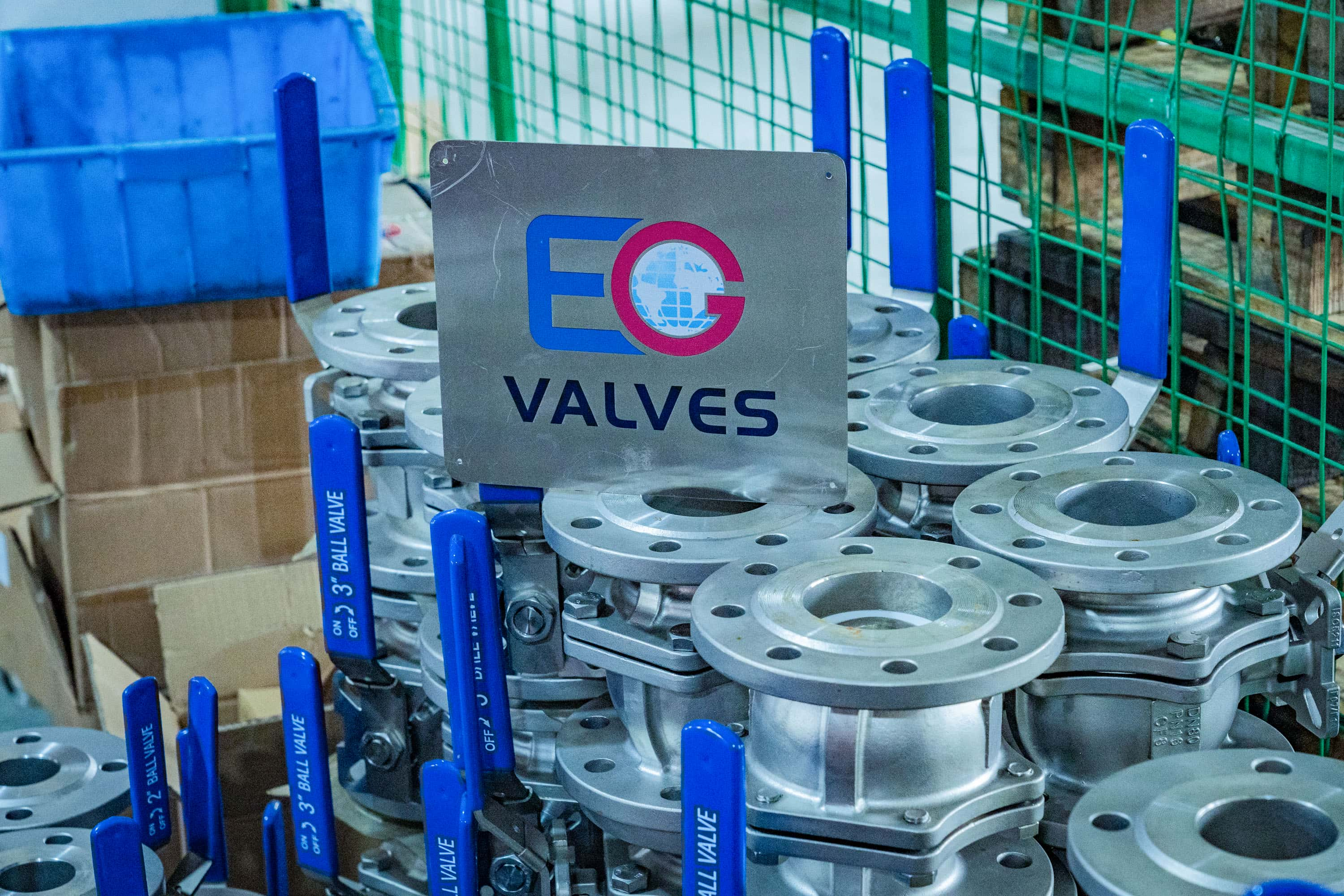
A floating ball valve from the wider range. On a mixed order, each family has to be mapped to its own documented options and its own certificate scope.
Check 4 — Are the commercial and acceptance terms measurable?
The last check converts capability into an order. The questions are unglamorous and decisive: what is the minimum order quantity, which delivery terms are accepted, when does the lead time start, who inspects, and when is payment due. EG Valves' stated positions give a concrete example of the answers a buyer should be able to obtain in writing.
| Term | Stated position | What to fix in the purchase order |
|---|---|---|
| Minimum order quantity | 1 pc for big size valves, 10 pcs for small size valves | Which threshold your line items fall into |
| Delivery terms | FOB, EXW and CIF, depending on the customer's needs | The named Incoterm, port and point of risk transfer |
| Lead time | Within 25–35 days | Whether the clock starts at PO or at drawing approval |
| Monthly capacity | 8,000 pcs of valves | Whether your order volume sits inside one production slot |
| Acceptance | Most orders inspected by EG's QC department; for some orders the customer or a third-party inspection company inspects | Who inspects, at which hold points, and against which document |
| Payment | 30% T/T deposit, balance settled before shipment | The document set that must be complete before the balance is released |
| Branding | OEM/ODM production under the client's logo or the EG brand | Marking, nameplate and packaging artwork approval |
Capacity deserves one calculation rather than an impression. EG Valves states a monthly capacity of 8,000 pcs of valves. An order of 1,438 pcs — the size of the US oil and gas order in the company's customer records — equals roughly 18% of that monthly figure (1,438 ÷ 8,000). This is a calculated ratio, not a scheduling commitment: it tells you that the order is a fraction of a month's stated output rather than several months of it, which is the question worth asking about capacity. What it cannot tell you is the mix constraint, because a large-diameter valve and a small threaded valve do not consume the same production time.
The lead-time question is the one most often left vague. "Within 25–35 days" is a statement about production duration; it says nothing about when the clock starts or how long sea freight takes. Ask explicitly whether the 25–35 days runs from receipt of the purchase order or from approval of drawings and material certificates, and record the answer in the order. Where an order includes powered actuation, confirm that the actuator supply is inside the same lead time rather than a separate line with its own date.

Finished stock and dispatch area. Lead time, capacity and inspection criteria are only useful when they are attached to a specific order line.
Six steps to run before the purchase order
- Freeze the datasheet per line. Size, pressure class and rating system, face-to-face and end connection, body material grade, actuation type, and the standard the line must meet. A quotation cannot be verified against a line that is still open to interpretation.
- Cross-check each line against documented options. Using BOV303 as the example: NPS 2"–60", PN10–PN40 or Class 150–600, wafer, lug or double flange, carbon, stainless, alloy or duplex body, and manual or powered actuation. Any line outside the published options needs written confirmation of the basis before pricing is accepted.
- Map every family to its certificate scope. Read the scope text, not the certificate name. In this pack, butterfly valves fall under ISO 9001 and CE/PED Module H, gate, ball and check valves under API 6D, and bolted bonnet steel gate valves under API 600.
- Request the documentation and inspection package. Confirm 100% inspection of each valve, EN 10204 3.1 material test certificates per order, and whether your own QC team or a third-party company will witness the inspection.
- Lock the commercial terms. MOQ threshold, named Incoterm and port, lead-time start point, payment split, and the branding or nameplate approval step for OEM/ODM orders.
- Write the acceptance criteria into the order. State the documents required before shipment, the inspection record, and the point at which the balance is released. Acceptance criteria agreed after production begin are negotiating positions, not criteria.
Where this check changes the outcome
The difference between a verified and an unverified quotation shows up most clearly in mixed, multi-family orders. The company's customer records give four examples of the pattern, and each stresses a different part of the check.
Chemical processing, Spain. A total of 260 pcs of gate, globe and check valves, DN250–DN1200, reported as operating for five years in a chemical plant handling corrosive environments and aggressive fluids. For this profile, the verification weight sits on body material documentation: the grade must be confirmed per line, and the material test certificate must arrive with the order rather than after it.
Petroleum refining, UAE. A total of 915 pcs of gate, globe, check, ball and butterfly valves, Class 150–1500, in WCB, WC6, WC9 and C5 materials, 2"–36", reported at 8–10 years of service. This is the clearest case for Check 2: a list mixing Class ratings and several alloy grades cannot be validated from a certificate pack read at category level, because the API scopes cover specific families only.
Offshore, Malaysia. A total of 120 pcs of ball and gate valves, Class 150–1500, in bronze, WCB, A105, SS316, 2205 and 2507, 1/2"–36", reported at three years. Duplex and super duplex availability is the constraint here, and the documented material list for the specific valve family — not for the company in general — is what has to be confirmed.
Food and beverage, Italy. A total of 180 pcs of gate, ball, butterfly and check valves, PN16, DN15–DN750, reported at five years. Small-size lines dominate here, which brings the MOQ threshold and the small-size inspection routine into the commercial discussion rather than the technical one.
These records are reported by the supplier and describe operating experience, not controlled comparative tests. Their value in evaluation is that they show which order profiles the supplier has handled and which questions each profile raises — not that any future order will perform in the same way.
What this verification cannot prove
- A published range is not a test record. NPS 2"–60" and PN10–PN40 / Class 150–600 describe what can be quoted, not what has been tested at every size and rating combination. Ask which inspection plan applies to your specific line.
- A certificate scope is not a product approval. ISO 9001 covers a quality management scope; API 6D and API 600 cover named valve families; CE/PED Module H covers a conformity route. None of them individually certifies that a particular valve is correct for a particular service.
- Case records are supplier-reported. They describe duration and application, and they do not include failure rates, maintenance history or independent measurement.
- A quoted lead time is not a delivery date. It becomes one only when the start point, the inspection hold points and the shipping terms are agreed in the same document.
FAQ
How do I evaluate a China chemical valve OEM manufacturer for corrosive media?
Start with documented material capability rather than with a corrosion claim. For a corrosive duty, confirm that the supplier can produce the body material your process specification requires and can prove it: EG Valves lists stainless steel, alloy steel and duplex steel among the BOV303 body options and issues an EN 10204 3.1 material test certificate with every order. Second, check scope — the butterfly valve family sits inside the ISO 9001 and CE/PED Module H scopes, while API 6D covers check, ball and gate valves, so an API reference on a butterfly line needs its own written confirmation. Third, confirm the OEM arrangement: production runs under the customer's logo or the EG brand, with a stated minimum of 10 pcs for small sizes and 1 pc for large sizes. None of this establishes chemical compatibility for a specific medium, concentration and temperature; that has to come from your own process documents and be confirmed in writing before the order.
What purchasing terms and acceptance criteria should be confirmed before ordering?
Confirm five items in writing: minimum order quantity, delivery term, lead-time start point, inspection route and payment schedule. On EG Valves orders the stated positions are a MOQ of 1 pc for big size valves and 10 pcs for small size valves; FOB, EXW or CIF delivery terms depending on the customer's needs; most orders inspected by the EG QC department, with some orders inspected by the customer's own QC or a third-party inspection company; and 30% T/T deposit with the balance settled before shipment. Each of these should appear on the purchase order itself, because a term that exists only in an email is not an acceptance criterion.
What MOQ and lead time should a buyer expect from a China valve supplier?
Use the supplier's own stated figures as the baseline and then test them against your order. EG Valves states a lead time within 25–35 days, a monthly capacity of 8,000 pcs of valves, and a MOQ of 1 pc for big size valves and 10 pcs for small size valves. Two clarifications matter more than the numbers: whether the 25–35 days starts at purchase order or at drawing approval, and whether your order volume fits inside one month of stated capacity or spans several.
Can the valves be produced under our own brand?
Yes, where the supplier operates OEM/ODM production. EG Valves states that valves can carry the client's brand logo or the EG brand logo, which makes marking, nameplate and packaging artwork part of the order specification rather than an afterthought. Approve the artwork and marking instruction together with the datasheet, so that branding does not become a late change after production has started.
Does the BOV303 range cover our size and pressure class?
The documented BOV303 range is NPS 2"–60", with PN10–PN40 and Class 150–600 ratings, wafer, lug and double flange body types, carbon, stainless, alloy and duplex steel bodies, and handle, gearbox, worm gear, electric or pneumatic actuation. If a line falls inside that envelope, the remaining questions are configuration-specific: the exact rating system, the material grade and the actuation scope. If a line falls outside it, ask for written confirmation of the basis before accepting the price.
Can we inspect before shipment, and what documents come with the valves?
EG Valves states that every valve is inspected by its QC team, that some orders are inspected by the customer's own QC or a third-party inspection company, and that an EN 10204 3.1 material test certificate is provided with every order. For a first order or a high-value line, the practical next step is to request a quotation for one specific BOV303 size and class combination together with a sample or a pre-shipment inspection slot, so the documentation route is tested on a single line before it is applied to the full list.
Conclusion
Delivery assurance on a China valve order is decided before the purchase order, in four comparisons: quoted configuration against documented options, valve family against certificate scope, order list against range coverage, and commercial terms against measurable acceptance criteria. The BOV303 example shows how specific that comparison can be — NPS 2"–60", PN10–PN40 and Class 150–600, wafer, lug and double flange bodies, carbon, stainless, alloy and duplex steel, and manual or powered actuation — and it also shows the limit, because no option list proves performance at every size and rating combination.
Run the six steps on one lead item first. If the supplier can answer configuration, certificate scope, inspection route and lead-time start point for that single line in writing, the same documentation discipline can be applied to the full order, including plug valves, strainers, check valves, ball valves, globe valves and gate valves.
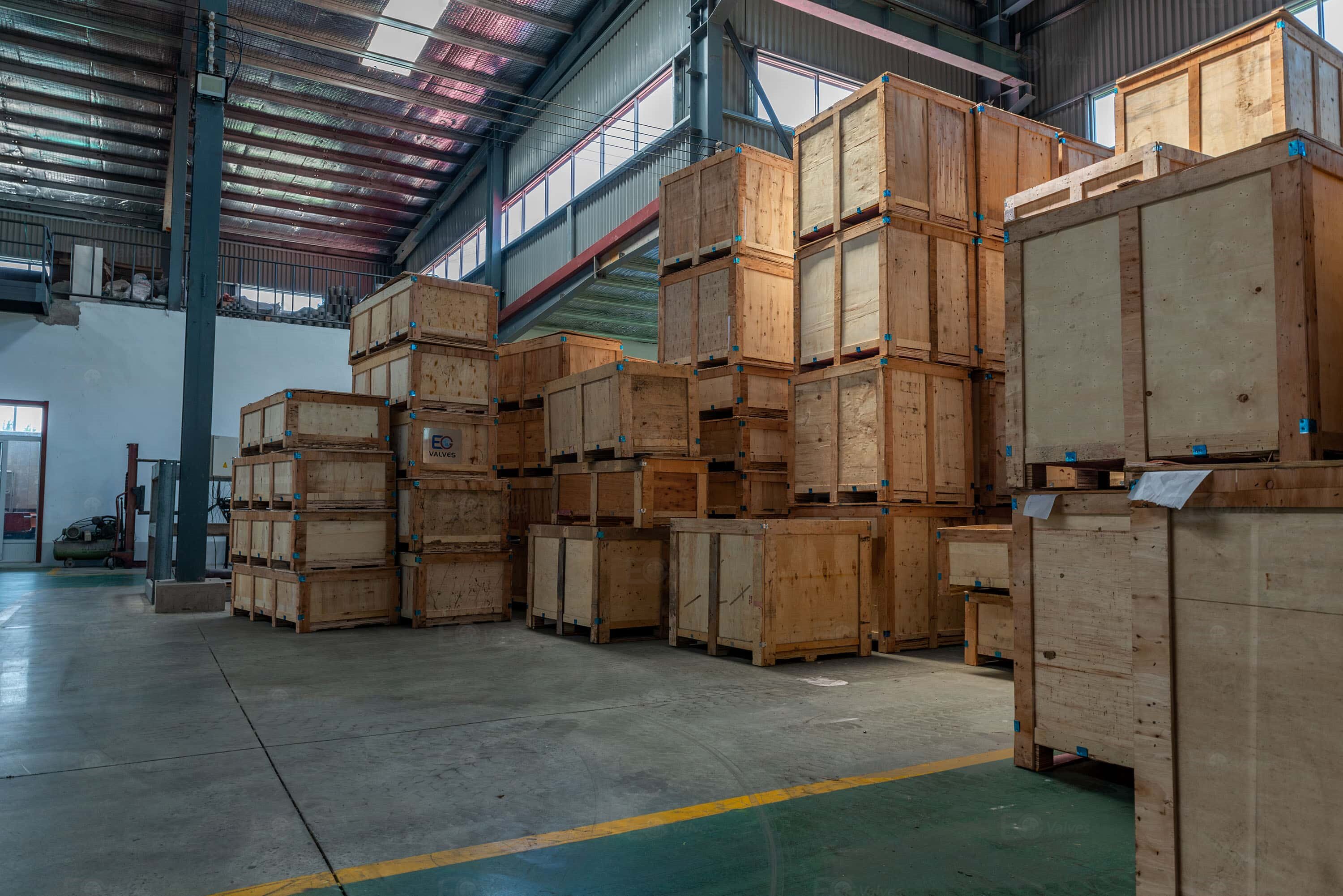
A packed order ready for dispatch. Configuration, documentation and terms should be settled before this stage, not after it.
For buyers who want to run this check on a live line item, the EG Valves product catalogue and specification documents can be downloaded here: EG Valves catalogue (PDF). Configuration questions, certificate copies and pre-shipment inspection arrangements can be raised directly with the EG sales team at sales@egvalves.com or through www.egvalves.com.
Have Questions or Need More Details?
Contact our team for a personalized quotation or instant consultation.
Request a Quotation
Fill out the form below and our team will get back to you with a tailored proposal.
WhatsApp Direct Chat
Prefer to chat in real-time? Message us on WhatsApp for instant assistance & quick answers.
- Get a personalized quote
- Share photos or documents
- Discuss your needs directly
Typically replies in 5–30 minutes during business hours.