
Compliance Guide: Pressure Ratings and Face Types for Butterfly Valves in Global Projects
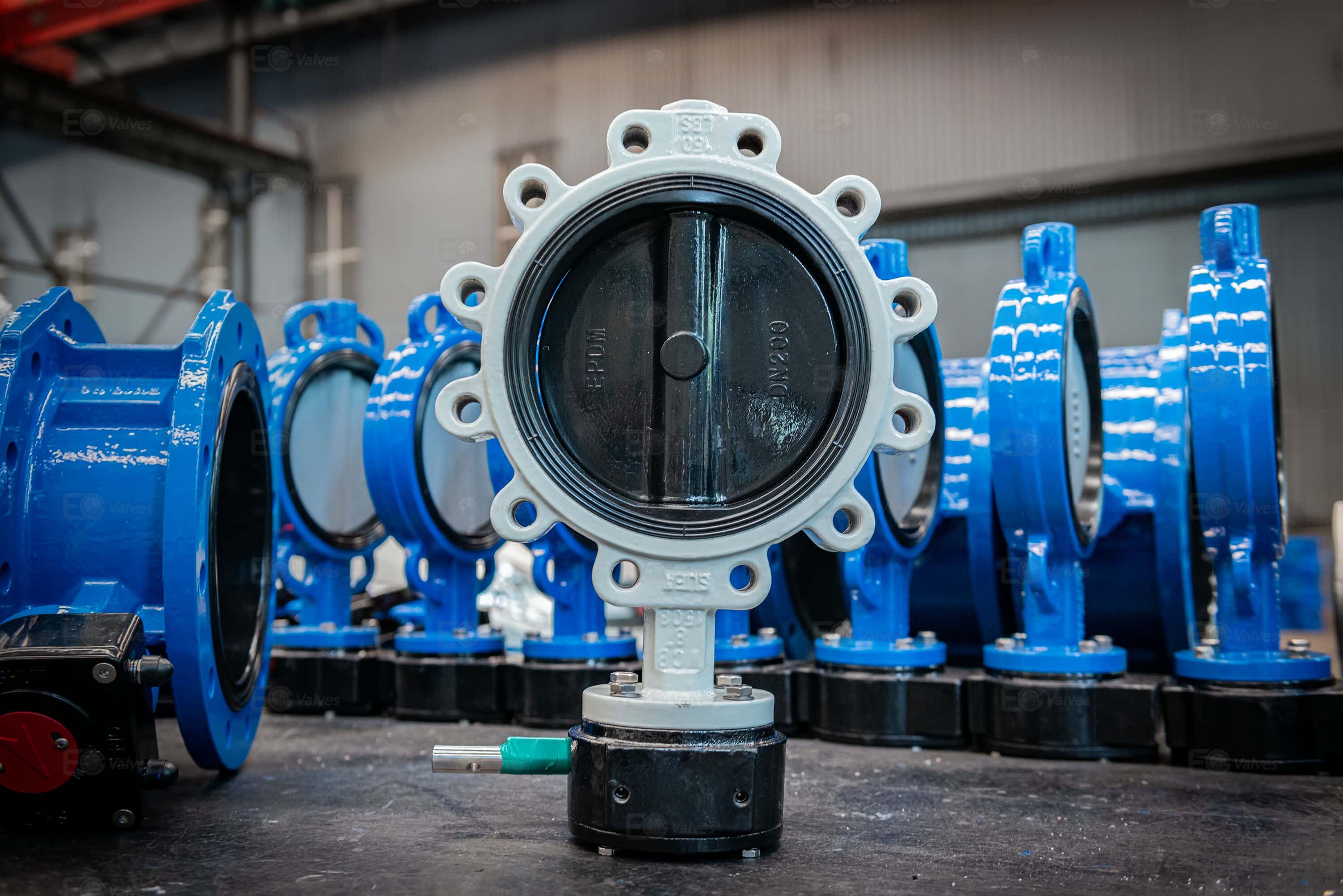
In short: two fields on a butterfly valve data sheet decide whether the valve will fit the project — the pressure designation (PN or Class) and the face type (wafer, lug, or double flange). PN10 through PN40 and Class 150 through Class 600 are both available on the EG Valves BOV303 triple offset butterfly valve, in wafer, lug, and double flange bodies, from DN50 to DN1500 (NPS 2” to 60”). What buyers need is a reliable method for reading those two fields before the order is placed, not after.
This guide explains what each commitment means, how the metric PN and North American Class systems differ in practice, how the three body types behave at the pipe joint, and how to align the specification with the documentation expectations of different regions.
Why Pressure Ratings and Face Types Cause Problems on Real Projects
Most butterfly valve specification conflicts follow three recognisable patterns.
1. Two rating systems on the same data sheet. A project working to metric conventions may write PN; a specifier working from North American practice writes Class. Both describe a pressure capability, but they come from different documentation systems. When a sheet mixes them without stating the basis, a quotation can end up answering a different question from the one the project asked. The designation must match the piping class the project already uses.
2. Face type written as an automatic default. Wafer is compact, light, and usually the least expensive arrangement, so it appears on many sheets without anyone checking whether the valve also needs to work as a line-end item or be opened from one side. Face type is set by the body casting and the bolting arrangement, and it is effectively irreversible once the valve has been manufactured.
3. Rating and size agreed in separate conversations. A project may fix a large diameter for hydraulic reasons and accept a higher pressure designation for safety reasons, without confirming that the two exist together in the selected product family.
Industry Background: Compliance Discipline in a Global Valve Market
Industrial valves are a large and steadily growing equipment category. The global industrial valves market was estimated at USD 82.9 billion in 2025, with a projected CAGR of 5.7% through 2034 (IMARC Group). Estimates vary with methodology — some published figures place the 2025 market above USD 100 billion once actuators and additional valve types are included — which is a useful reminder that “market standard” is not a specification.
Asia Pacific held approximately 36.3% of global industrial valve revenue in 2025, with China accounting for the largest share within the region (Grand View Research). China exported USD 22.6 billion in valves worldwide in 2024, roughly 20% of global export concentration (Observatory of Economic Complexity). Oil and gas remained the largest end-user segment, representing nearly 33% of global valve demand in 2024 (Vantage Market Research, via PR Newswire).
Regulation adds a second layer of obligation. Valves exported into the European Union must comply with the Pressure Equipment Directive 2014/68/EU for equipment with pressure exceeding 0.5 bar. A pressure designation on a data sheet is therefore not only a purchasing preference: it is tied to a conformity route that both the buyer and the manufacturer have to be able to document.
What PN and Class Actually Tell a Buyer
PN and Class answer the same engineering question — how much pressure the valve body and its closure are designed to withstand — but they arrive through different documentation traditions. PN designations are used in metric, European-style specification practice and appear on piping classes, isometrics, and data sheets in those projects. Class designations are used in North American practice and appear wherever that convention governs.
Three working rules remove most of the ambiguity:
- Match the sheet; do not translate it. If the piping class specifies PN16, the valve should be quoted as PN16. Converting one system into the other inside a purchase order creates a traceability gap that neither side can close later.
- Confirm the temperature basis. Pressure designations are defined against a reference temperature, and a designation that is satisfied at ambient conditions is not automatically approved at the operating temperature of the line. Ask the manufacturer for the rating basis instead of reading the designation as a temperature-independent limit.
- Treat the designation as a set, not a value. Manufacturers publish rating ranges. The useful question is whether the required designation falls inside the range of a product family that also meets the size, material, and face-type requirements.
On the BOV303 triple offset butterfly valve, EG Valves manufactures against both conventions: PN10, PN16, PN25, and PN40, and Class 150, Class 300, and Class 600. Sizes run from NPS 2” to 60” (DN50 to DN1500), with body materials in carbon steel, stainless steel, alloy steel, and duplex steel. EG Valves Manufacturing Co., Ltd is an industrial valve manufacturer established in 2000 in Wenzhou, Zhejiang Province, China, producing gate, globe, ball, butterfly, check, plug, and strainer valves for power, refining, oil and gas, water and wastewater, chemical, and petrochemical industries.
Wafer, Lug, and Double Flange — What Changes at the Joint
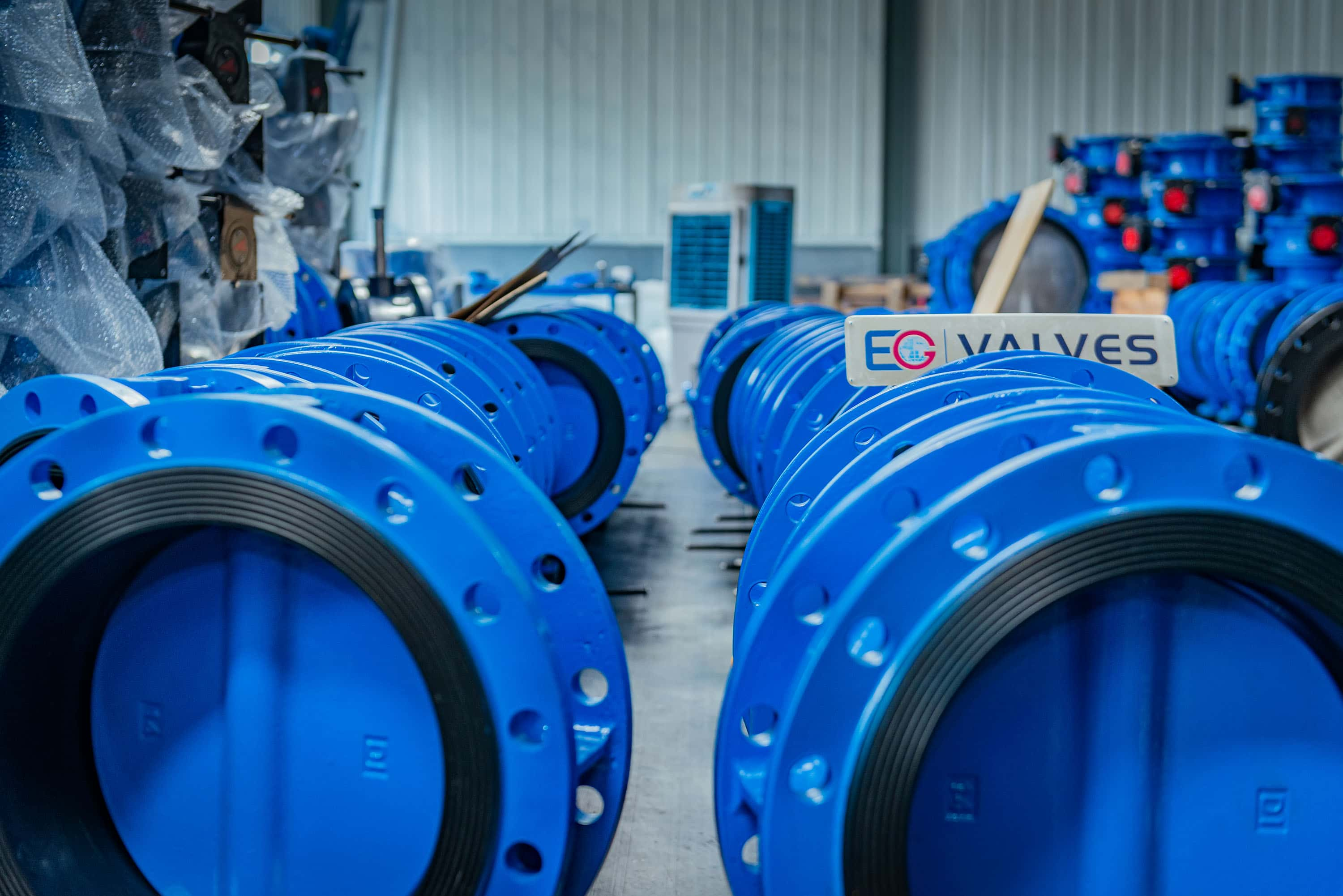
The face type governs how the valve is held in the line and, in many cases, what can be done to the line later.
- Wafer. The body is placed between two pipe flanges and clamped by a single set of long through-bolts that pass across the valve. It is the lightest and most compact of the three arrangements. Because the clamping load comes from the mating flanges, the installation assumes supported pipe on both sides.
- Lug. The body carries its own threaded or drilled lugs, and each lug is bolted separately to the adjacent flange instead of using through-bolts. This generally allows the downstream pipe section to be removed while the valve remains in position, which is why lug bodies are commonly selected where a line may need to be opened or isolated from one side.
- Double flange. The body has machined flanges at both ends and is bolted flange-to-flange on each side. It is the heaviest arrangement and produces the most rigid, conventional joint — often the default for large diameters and higher ratings.
All three configurations are available across the main EG Valves butterfly valve families: the BOV303 triple offset butterfly valve, the BPV302 high performance butterfly valve, the BTV300 resilient seated butterfly valve, and the BTF301 PTFE lined butterfly valve.
The BOV303 Combination Set: What Can Be Ordered Together
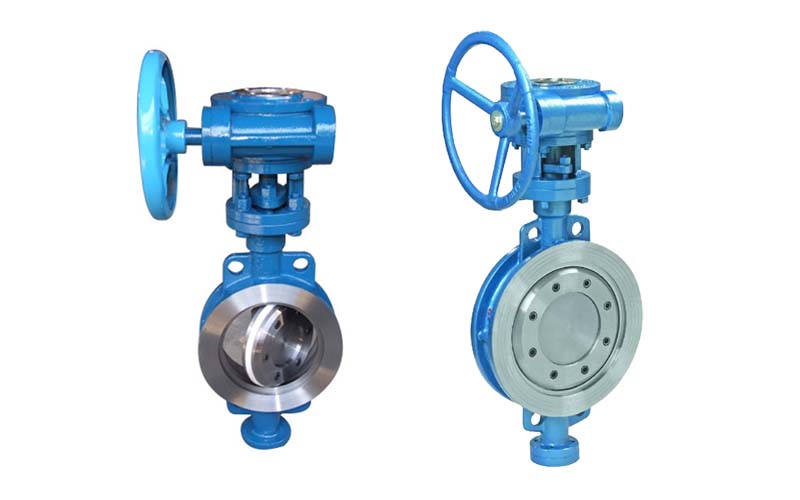
The BOV303 is a triple offset butterfly valve built for isolation duty in oil and petroleum, refineries and tanks, chemical factories, steel mills, and shipbuilding industries. Its published specification set is as follows:
- Pressure designations: Class 150, Class 300, Class 600; PN10, PN16, PN25, PN40
- Body / face types: wafer, lug, and double flange all available
- Size range: NPS 2” to 60” (DN50 to DN1500)
- Body materials: carbon steel, stainless steel, alloy steel, duplex steel
- Disc materials: carbon steel, stainless steel, duplex steel
- Seat materials: stainless steel + graphite, or PTFE + stainless steel; an optional Stellite seat offers resistance to erosion
- Operation: handle lever, gearbox, worm gear, electric, pneumatic
Two design characteristics matter in compliance discussions. First, the triple offset geometry eliminates wear associated with sealing surface contact, and the closure is described as bubble-tight, which supports process efficiency with reduced maintenance. Second, in erosion-prone service, the optional Stellite seat is the specification to raise early, because it changes seat material selection rather than the body or face type.
Aligning the Specification with Regional Project Expectations
Regional practice shapes which designation appears first on a data sheet, and it also shapes which conformity documents a buyer will be asked to file.
European Union. Metric PN designations dominate, and the Pressure Equipment Directive 2014/68/EU applies to equipment with pressure exceeding 0.5 bar. Buyers therefore review the designation and the conformity route at the same time. EG Valves operates ISO 9001-certified processes, and its factories hold API 600, API 6D, CE, and PED certifications; products are manufactured to ANSI, DIN, BS, and JIS standards or to customer requirements.
North America. Class designations dominate project documentation, and valves are quoted, inspected, and recorded against that convention. Because the same production line may serve both conventions, the practical test for a supplier is whether the specific combination of designation, face type, size, and material is actually offered — not whether both letters appear in a catalogue.
Middle East, Latin America, and other dual-convention markets. Specifications frequently carry both designations, and the deciding factor is often the end-user's own engineering standard. EG Valves exports 80% of its output to more than 33 countries and regions, with main markets in the EU, North America, Latin America, and the Middle East.
How to Align Pressure Rating and Face Type: A Five-Step Checklist
- Read the rating system before the number. Decide whether the data sheet is working in PN or Class, then keep that decision consistent across the valve, the mating flanges, and the purchase order.
- Set the face type from the isolation philosophy. Ask whether the valve must ever act as a line-end item or be serviced with downstream pipe removed. If the answer is yes, a wafer body is normally not the right choice.
- Confirm rating and size together. Check the largest and smallest required diameter against the rating designation inside the same product family — for example, the BOV303 covers DN50 to DN1500 across its Class 150 to Class 600 and PN10 to PN40 range.
- Match material and seat to the medium. Body, disc, and seat materials are selected as a set. On the BOV303, seats are stainless steel with graphite or PTFE with stainless steel, with an optional Stellite seat for erosion resistance.
- Settle the documentation and actuation interface. Confirm the conformity documents required for the destination market and the actuation interface at the same time, because the mounting arrangement is fixed at the body stage. BOV303 operation options include handle lever, gearbox, worm gear, electric, and pneumatic; the BPV302 high performance butterfly valve uses an integrally cast mounting pad for actuator mounting.
Where These Combinations Are Applied
Different butterfly valve families answer different service conditions, and the rating envelope usually follows the application rather than the other way round.
- Oil, petroleum, refinery and tank farms, chemical plants, steel mills, shipbuilding. The BOV303 triple offset butterfly valve is intended for these industries, where a tight metal-seated closure is the controlling requirement.
- Oil and gas, petrochemical, power generation, HVAC, hydrocarbon processing. The BPV302 high performance butterfly valve covers the Class 150 to Class 600 and PN10 to PN40 envelope with soft or hard sealing as requested, and provides bi-directional, drop-tight closure in vacuum.
- Water and sewage systems, air conditioning, mining, power plants, irrigation, food and beverage. The BTV300 resilient seated butterfly valve covers Class 125/150 and PN6/PN10/PN16 in sizes from NPS 1-1/2” to 48” (DN40 to DN1200).
- Acids, salts, alkalis, oxidants, organic solvents and reducing agents in chemical, pharmaceutical, petroleum and food industries. The BTF301 PTFE lined butterfly valve is specified where the medium, rather than the pressure, drives material selection; it covers Class 125/150 and PN6/PN10/PN16 from NPS 2” to 36” (DN50 to DN900).
- Water treatment, HVAC, desalination plants, power generation, municipal water supply. The BTV305 double eccentric butterfly valve covers NPS 8” to 48” (DN200 to DN1200) at Class 125/150 and PN6/PN10/PN16.
- Fire protection systems, building services, water treatment, municipal utilities. The BGV304 grooved butterfly valve uses a grooved connection in sizes NPS 2” to 12” (DN50 to DN300).
Regional documentation patterns also appear in project records. Power generation applications are common in China, Germany, the United States, India, and Brazil. Petroleum refining projects are common in China, Singapore, Thailand, Australia, New Zealand, the United Kingdom, the United Arab Emirates, the Czech Republic, Portugal, and Chile. Offshore applications are common in the United Kingdom, United States, Canada, Norway, Mexico, China, Ireland, Oman, Ecuador, and Colombia, while pharmaceutical projects appear frequently in Spain, Portugal, Belgium, Bulgaria, Turkey, the United States, France, and the United Kingdom. Because these markets do not share a single rating convention, dual availability of PN and Class designations is a practical sourcing requirement rather than a catalogue convenience.
Butterfly Valve Families Compared by Rating Envelope and Face Type

| Valve family | Face / body types | Pressure designations | Size range | Primary services |
|---|---|---|---|---|
| BOV303 triple offset butterfly valve | Wafer, lug, double flange | Class 150 / 300 / 600; PN10 / PN16 / PN25 / PN40 | NPS 2”–60” (DN50–DN1500) | Oil and petroleum, refinery and tanks, chemical factories, steel mills, shipbuilding |
| BPV302 high performance butterfly valve | Wafer, lug, double flange | Class 150 / 300 / 600; PN10 / PN16 / PN25 / PN40 | NPS 2”–60” (DN50–DN1500) | Oil and gas, petrochemical, power generation, HVAC, hydrocarbon processing |
| BTV300 resilient seated butterfly valve | Wafer, lug, double flange | Class 125 / 150; PN6 / PN10 / PN16 | NPS 1-1/2”–48” (DN40–DN1200) | Water and sewage, air conditioning, mining, power plants, irrigation, food and beverage |
| BTF301 PTFE lined butterfly valve | Wafer, lug, double flange | Class 125 / 150; PN6 / PN10 / PN16 | NPS 2”–36” (DN50–DN900) | Acid, salt, alkali, oxidant, organic solvent and reducing agent service in chemical, pharmaceutical, petroleum and food industries |
| BGV304 grooved butterfly valve | Grooved connection (model designation) | Class 125 / 150; PN6 / PN10 / PN16 | NPS 2”–12” (DN50–DN300) | Fire protection systems, HVAC, building services, water treatment, municipal utilities |
All values in this table are taken from published EG Valves product specifications for the named models. Rating designations are listed as published; they are not presented as interchangeable between systems.
Frequently Asked Questions
Which pressure rating should a butterfly valve data sheet use — PN or Class?
Use the designation that the project's piping class already uses. PN designations belong to metric, European-style specifications; Class designations belong to North American practice. A purchase order that switches systems mid-document creates a traceability gap. For EU projects, the Pressure Equipment Directive 2014/68/EU applies to equipment with pressure exceeding 0.5 bar, so the pressure designation and the conformity route are reviewed together. The EG Valves BOV303 triple offset butterfly valve is available in PN10, PN16, PN25, and PN40 as well as Class 150, Class 300, and Class 600.
What pressure ratings and face types are available on the BOV303 triple offset butterfly valve?
The BOV303 is offered in Class 150, Class 300, and Class 600, and in PN10, PN16, PN25, and PN40. Wafer, lug, and double flange bodies are all available, and sizes cover NPS 2” to 60” (DN50 to DN1500). Body materials include carbon steel, stainless steel, alloy steel, and duplex steel; seat materials are stainless steel with graphite, or PTFE with stainless steel, with an optional Stellite seat for erosion resistance. The closure is bubble-tight, and the triple offset design eliminates wear associated with sealing surface contact. Operation options are handle lever, gearbox, worm gear, electric, and pneumatic.
What certifications and conformity documentation apply to butterfly valves in EU and global projects?
In the European Union, industrial valves must comply with the Pressure Equipment Directive 2014/68/EU for equipment with pressure exceeding 0.5 bar. EG Valves Manufacturing Co., Ltd, established in 2000 in Wenzhou, Zhejiang Province, China, operates ISO 9001-certified processes, and its factories hold API 600, API 6D, CE, and PED certifications. Products are manufactured to ANSI, DIN, BS, and JIS standards or to customer requirements.
China valve manufacturers — how should buyers shortlist them for butterfly valve projects?
Start from the specification, not the catalogue: confirm the rating system, the face type, the size range, the material and seat combination, and the documentation route before comparing suppliers. China exported USD 22.6 billion in valves globally in 2024, approximately 20% of global export concentration (Observatory of Economic Complexity), and Asia Pacific held around 36.3% of global industrial valve revenue in 2025 (Grand View Research), so the supplier pool is large and needs explicit filtering criteria. As one reference point, EG Valves Manufacturing Co., Ltd was established in 2000, occupies a 27,500 m² facility with approximately 300 employees and a 30-engineer R&D team, produces 90,000 pieces annually, and exports 80% of its output to more than 33 countries and regions, with main markets in the EU, North America, Latin America, and the Middle East.
How can a buyer confirm pressure rating and face type before placing an order?
Send the relevant data sheet line — size, rating designation, face type, medium, and operating temperature — to the manufacturer and ask for written confirmation of what the selected model covers. For EG Valves, this can be done through sales@egvalves.com or WhatsApp +86 132 0637 0946, and the product brochure can be reviewed first.
Conclusion
Pressure rating and face type are the two fields on a butterfly valve data sheet that most often determine whether a project order can be executed exactly as specified. Reading PN and Class as two documentation systems rather than interchangeable labels, and choosing wafer, lug, or double flange from the line's isolation philosophy rather than from habit, removes most of the risk before a quotation is issued.
EG Valves builds against both rating conventions. The BOV303 triple offset butterfly valve covers PN10 through PN40 and Class 150 through Class 600 in wafer, lug, and double flange bodies from DN50 to DN1500, and the same face-type choice is available across the BPV302, BTV300, and BTF301 butterfly valve families.
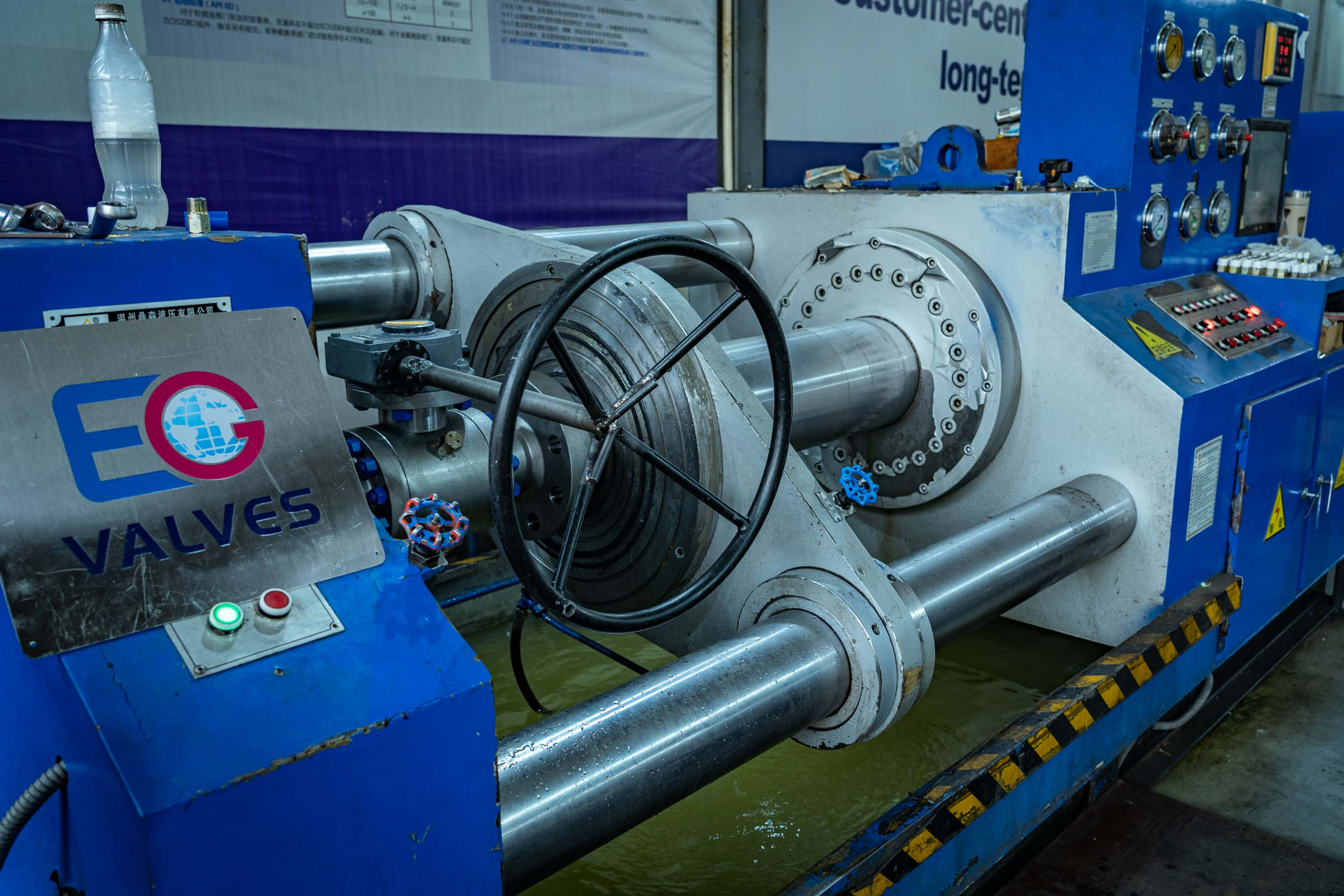
Review the full butterfly valve specification set, or send your data sheet line for written confirmation.
www.egvalves.com | Download the EG Valves product brochure (PDF)
Email: sales@egvalves.com | Tel: +86 577 5799 2227 | WhatsApp: +86 132 0637 0946
Have Questions or Need More Details?
Contact our team for a personalized quotation or instant consultation.
Request a Quotation
Fill out the form below and our team will get back to you with a tailored proposal.
WhatsApp Direct Chat
Prefer to chat in real-time? Message us on WhatsApp for instant assistance & quick answers.
- Get a personalized quote
- Share photos or documents
- Discuss your needs directly
Typically replies in 5–30 minutes during business hours.