
Evaluating a Stainless Steel Check Valve Supplier: Key Capability Checks
Short answer: When you evaluate a stainless steel check valve supplier, verify seven things — (1) certification whose scope explicitly names check valves, (2) material traceability through EN 10204 3.1 certificates on every order, (3) a defined spring specification such as the high torsion Inconel springs used in the CSV410, (4) mechanical disc retention plus lapped seat faces, (5) service-specific cleaning where the medium demands it, (6) configuration coverage across your line sizes, pressure classes and end types, and (7) documented inspection discipline plus production capacity you can plan against. Certification and traceability are the two checks that most often eliminate a supplier before price is discussed.
A check valve is the only valve in a pipeline that nobody operates. There is no handle to turn, no actuator to stroke, and no position indicator to read. Once the valve is bolted between two flanges, a buyer has no practical way to confirm that the spring was the specified grade, that the disc will not work loose, or that the seat faces were lapped rather than simply machined. By the time those details matter — reverse flow, pump damage, or a maintenance shutdown — the purchase decision is long finished.
That is why supplier evaluation for check valves is a documentation-and-construction exercise rather than a visual one. EG Valves Manufacturing Co., Ltd is a valve manufacturer established in 2000 in Wenzhou, Zhejiang Province, China, producing gate, globe, ball, butterfly, check and plug valves plus strainers under ISO 9001-certified processes for export markets in the EU, North America, Latin America and the Middle East. Its CSV410 Stainless Steel Check Valve is a useful worked example, because the published specification lists exactly the internal details that separate a verifiable manufacturer from a trading intermediary: spring material, disc retention, seat finishing and special cleaning.
The Problem: Check Valve Quality Is Decided Before the Valve Reaches Site
Check valves fail in quiet ways. A tired spring closes the disc a fraction of a second late, and the returning flow slams it shut. A disc that is not positively secured can rotate out of position after thousands of cycles. A seat face that is not lapped seals acceptably in the workshop and weeps in service once temperature and pressure move. None of these problems announce themselves during a visual goods-in inspection, and none of them are visible on a specification sheet that simply says “stainless steel check valve.”
The second, less discussed failure is administrative. A check valve that is technically sound can still be rejected at goods-in, held at customs, or excluded from a project when the accompanying documentation does not match the delivery. Buyers in the EU, for example, work to PED requirements, and a supplier who cannot produce a certificate whose scope covers check valves creates a compliance problem that no amount of product quality can fix.
Supplier vetting should therefore test four things before commercial terms are negotiated: whether the certification covers the product being bought, whether material traceability is routine or exceptional, whether the internal construction is specified in writing, and whether the supplier can repeat that quality on the next order. The practical failure modes buyers are trying to screen out look like this:
- Springs of unspecified material or grade that lose closing force or corrode in the medium.
- Disc assemblies retained by friction or a light pin rather than a positive mechanical device.
- Seat faces machined but not lapped, producing leakage that increases over time.
- Certification that covers a different product family than the one on the purchase order.
- No material test certificate, so a heat or lot problem cannot be traced back after a failure.
- Inconsistent quality between the sample batch and the volume production run.
Industry Background: Compliance Expectations Are Tightening Across Manual Valve Supply
Manual valves remain the backbone of industrial flow control. Vantage Market Research estimates the global manual valve market at USD 78.4 billion in 2025, projected to reach USD 117.17 billion by 2035, and analysts consistently attribute that scale to cost-effectiveness and simplicity: Grand View Research reported that the manual segment led the global butterfly valve market in 2024 with a 41.2% revenue share. Dataintelo likewise found wafer-type manual butterfly valves holding the largest configuration share at 38.5% in 2025. Check valves sit inside the same demand pattern — specified in large quantities, in repetitive sizes, across water, HVAC, oil and gas, petrochemical and power applications.
What has changed is not demand but scrutiny. The technical baseline for industrial valves is widely codified: ASME B16.34 governs pressure-temperature ratings and wall thickness as a universal reference, while API 600 is the specific heavy-duty standard for bolted-bonnet steel gate valves in petroleum and natural gas service. For check valves, the relevant third-party mark is different again — API 6D covers pipeline valves including check valves, ball valves and gate valves. The practical consequence for a buyer is that a supplier may hold a genuine, verifiable certificate that still does not cover the item on your purchase order.
For manufacturers, the compliance burden compounds across markets: an EU delivery may require PED conformity, a global oil and gas project may require API scope, and every buyer increasingly expects a quality management system certificate and material test documentation behind the order. A supplier with a mature documentation system can answer those questions in a single email. A supplier without one tends to answer them with delay, partial documents, or reassurance instead of records.
The Seven Capability Checks for a Stainless Steel Check Valve Supplier
1. Certification scope: does the certificate actually name check valves?
The first gate is scope, not presence. EG Valves holds API 6D certification number 6D-0506, issued by the American Petroleum Institute (API) on 2024-03-30 and valid until 2027-03-30, and the scope of that certificate covers check valves, ball valves and gate valves. The company also holds PED certification under PED 2014/68/EU Annex III, Module H, certificate number DGR-0036-QS-1360-24, issued by TUV SUD Industrie Service GmbH (TUV) for the EU market with validity until 2027-05-26, covering gate, ball, globe, check and butterfly valves and strainers. The underlying quality system is ISO 9001:2015, certificate number 00125Q33391R3M/3400, issued by the China Quality Certification Center (CQC) and valid from 2025-05-23 to 2028-05-22.
Note how the portfolio also includes API 600 certification number 600-0179 for bolted bonnet steel gate valves, valid until 2027-03-30. That is a useful illustration of the vetting rule buyers should apply: API 600 belongs to gate valves, not check valves. When you review a supplier file, confirm three things — the product family in the scope, the certificate number, and the expiry date against your delivery schedule. A certificate expiring before shipment is a project risk, not a marketing detail.
2. Material traceability: EN 10204 3.1 certificates on every order
For a stainless steel check valve, traceability is the difference between a warranty claim and an unsolvable mystery. If a body or trim fails in year three, the buyer needs to link that part back to its original heat or lot and to the inspection records taken at the time of manufacture. EG Valves provides EN 10204 3.1 Material Test Certificates with every order, which is the documentation format most industrial buyers and third-party inspectors accept as standard evidence of material conformity.
During vetting, ask for a sample certificate from a comparable recent order — not a blank template — and check that the certificate carries the order reference, the material grade, and the chemical and mechanical results. A supplier that issues these routinely will send one quickly. A supplier that treats them as a special request will reveal that too.
3. Spring specification: the internal part buyers forget to ask about
The spring is what makes a check valve a check valve. It determines how quickly the disc closes, how the valve behaves at low flow, and whether the mechanism still works after long exposure to the medium. The CSV410 Stainless Steel Check Valve is specified with high torsion Inconel springs for quick closing — a deliberate material choice for stainless, duplex and alloy steel valve bodies used in water treatment, HVAC, oil and gas, petrochemical, power generation and general industrial pipelines.
When you evaluate alternatives, treat an unspecified spring as a red flag. Ask the supplier to state the spring material, the intended closing behavior, and whether the spring selection changes with the medium. In services where the flow reverses quickly — parallel pump discharge lines, for example — closing speed and spring integrity determine whether the valve protects the pump or contributes to water hammer.
4. Disc assembly security and seat face finishing
A check valve disc that becomes loose in service does more damage than a valve that simply leaks. On the CSV410, the disc assembly is secured in place by a high strength key, and seat faces are lapped for smooth finish and superior sealing. Both details are inspectable claims: the retention method is a mechanical feature you can ask to see in a construction drawing or a cutaway, and lapping is a finishing operation that shows up in sealing performance and in the surface condition of the seat.
The same discipline appears across the wider EG check valve range. The Cast Steel Check Valve CVS407 uses a one-piece disc construction designed to withstand severe service conditions, with lapped seating surfaces and lifting rings on large sizes; the Forged Steel Check Valve CVF409 also uses lapped seat faces for smooth finish and superior sealing. Buyers comparing suppliers should look for these statements to be specific. “Premium sealing” is not a specification; a lapped seat face with a defined disc retention method is.
5. Cleaning and service-specific preparation
General-purpose stainless steel is not automatically suitable for every medium. The CSV410 is given special cleaning for applications such as oxygen or chlorine, where residual contamination, hydrocarbons or particles on internal surfaces create a real safety or process risk. This is a useful test of supplier depth: a manufacturer that understands oxygen and chlorine service will raise cleaning, handling and packaging as part of the quotation rather than waiting to be asked.
For your own vetting checklist, add one question to the standard list: “What changes in your standard build for oxygen, chlorine, or other aggressive or sensitive media?” A capable supplier answers with preparation and documentation steps. A supplier without process control answers with a promise.
6. Configuration coverage against your line list
Check valve procurement rarely involves a single size. A typical project line list mixes large-diameter pump discharge lines with small-bore utility connections, and mixing suppliers across those sizes multiplies the documentation burden. The CSV410 covers NPS 1/2” to 48” (DN15 to DN1200) at Class 150 to 1500 and PN10 to PN160, and is available in wafer, lug and double flange patterns with dual plate, single plate, wafer lift and threaded constructions.
Fewer suppliers means fewer material certificates to reconcile, fewer inspection reports, and a consistency of finish, marking and packaging across the order. When you screen suppliers, map their size and pressure range against your actual line list rather than a brochure headline. Gaps at the extremes — very large DN or very high pressure class — are where delivery promises most often break.
7. Inspection discipline, capacity, MOQ and lead time
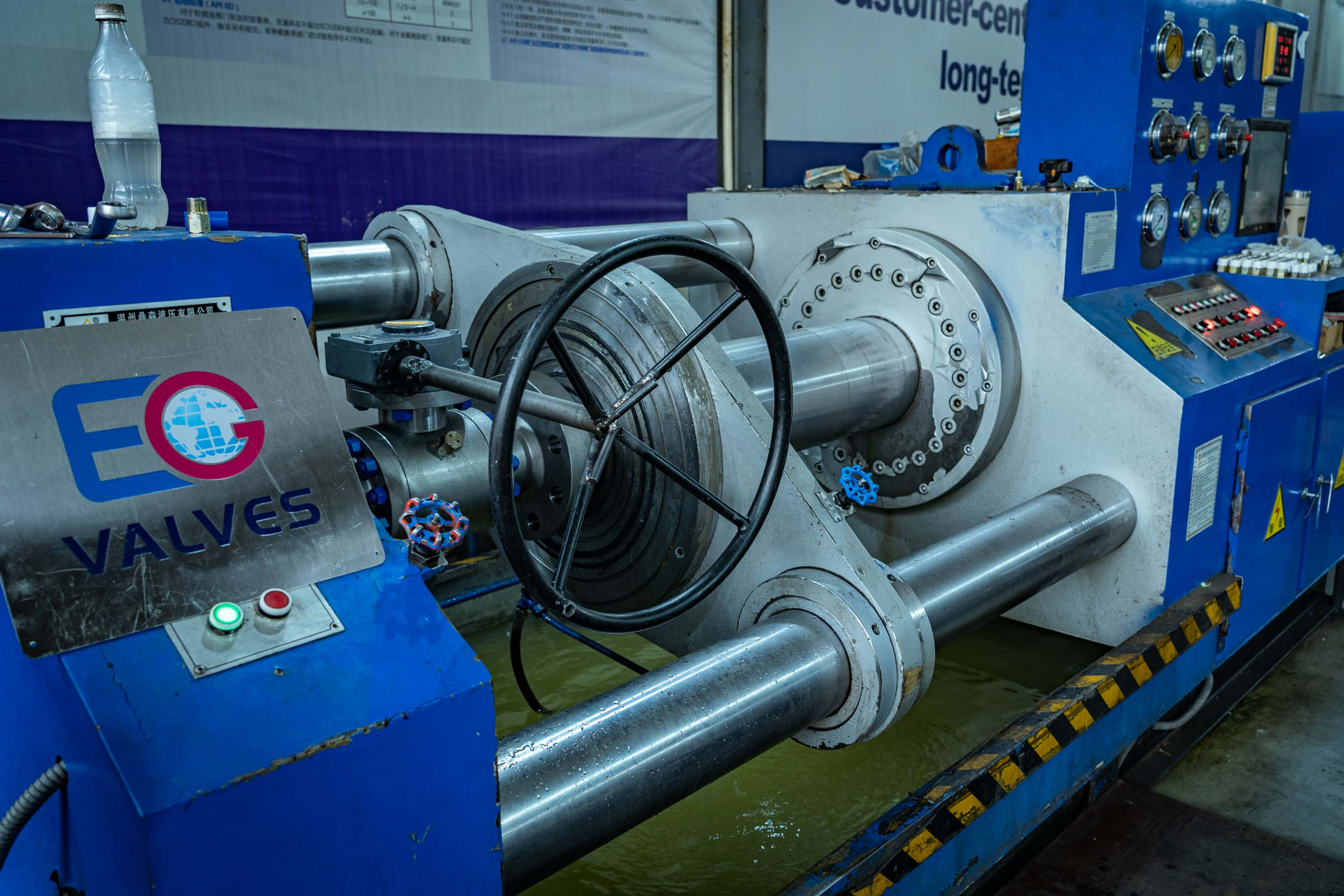
Quality systems matter only if they are applied line by line. EG Valves maintains a dedicated QC team and inspects 100% of the valves it produces, rather than sampling finished lots. For a check valve order, ask how shell and seat tightness are verified before shipment and confirm in writing that inspection and test documentation will accompany the delivery alongside the EN 10204 3.1 material certificates.
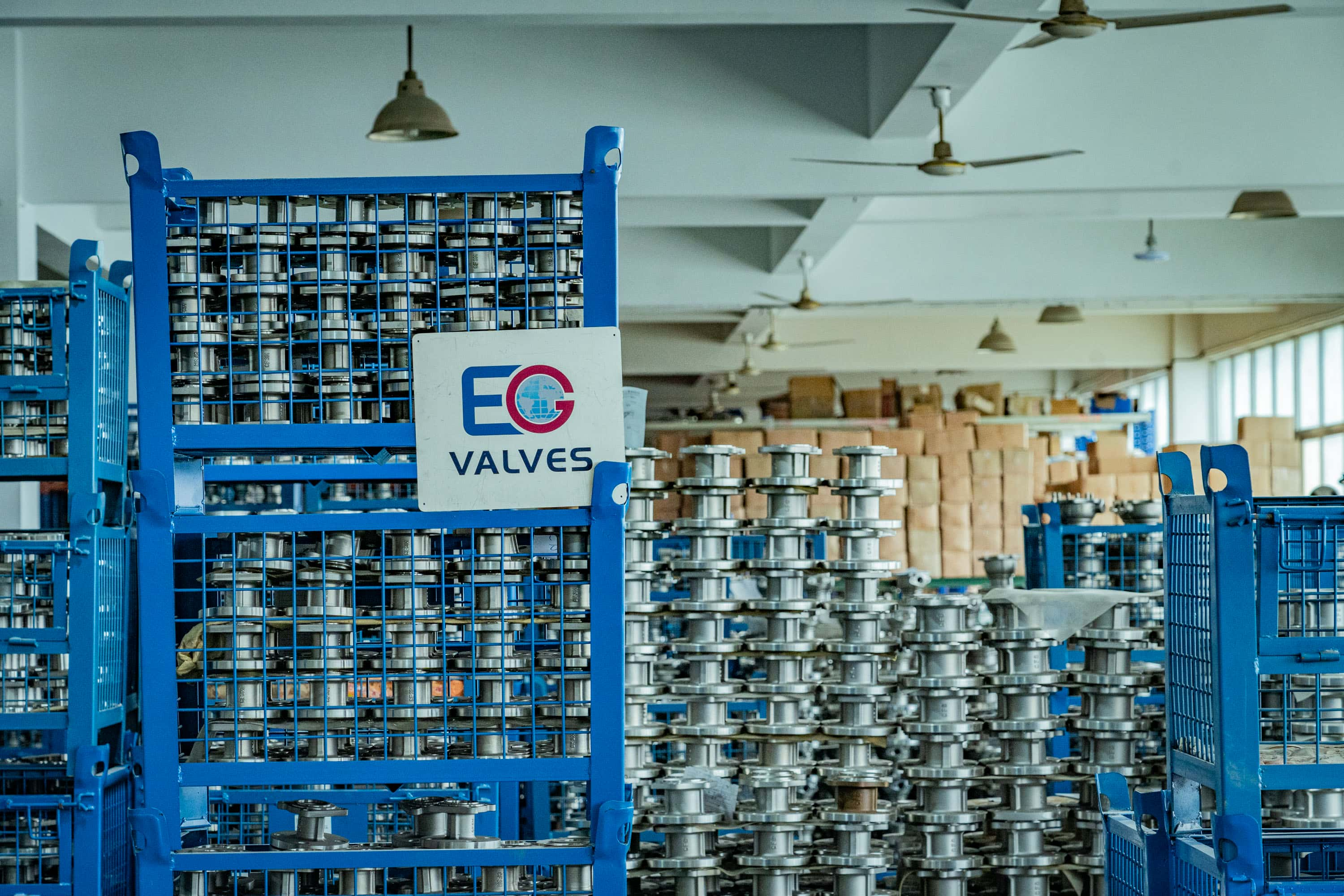
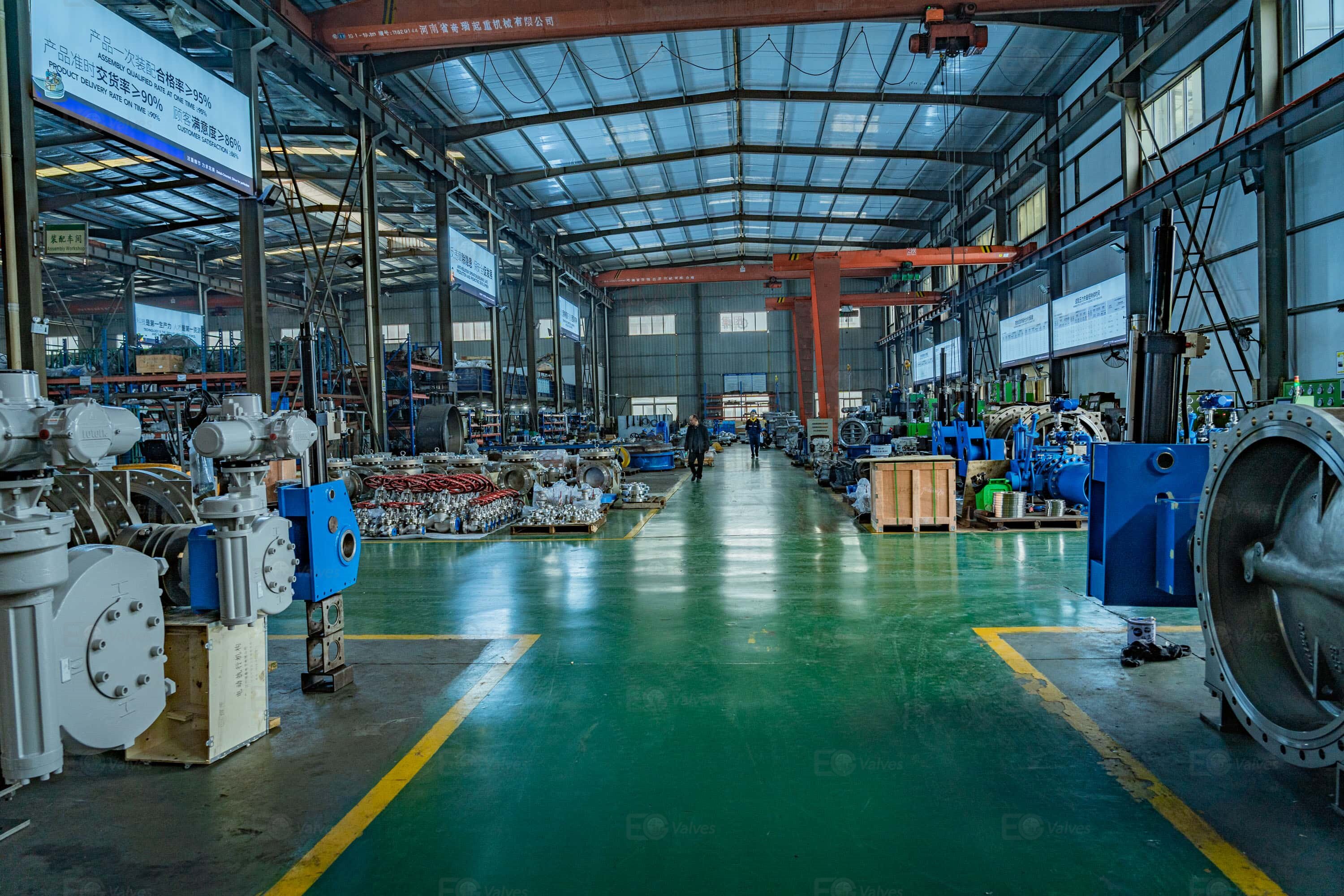
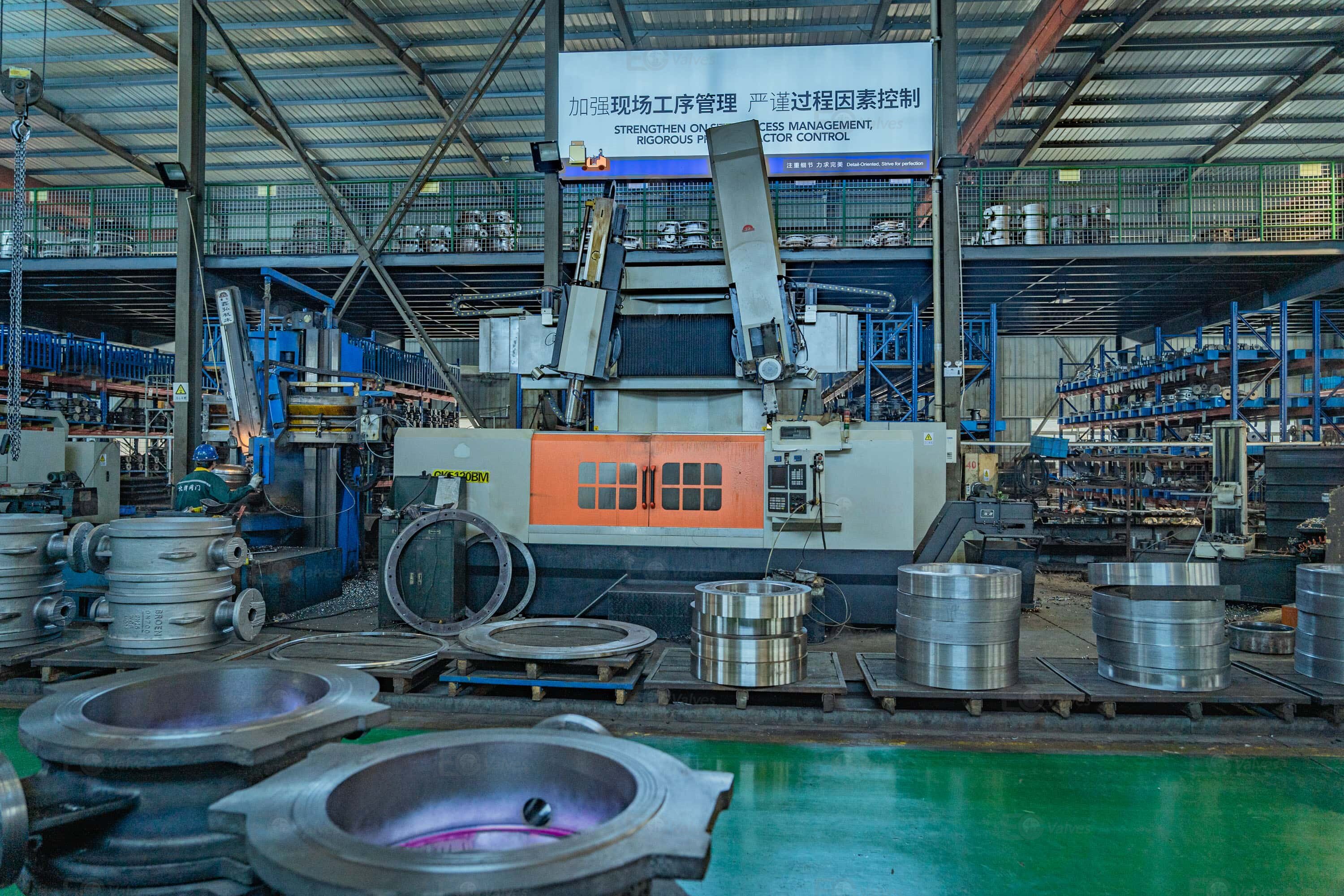
Then check whether the supplier can actually deliver at your scale. EG Valves operates a 27,500 m2 facility with 300 employees, a 30-engineer R&D team and an annual output of 90,000 pieces, giving a monthly capacity of 8,000 valves. Standard lead time is 25–35 days, and the minimum order quantity is 1 pc for a big size valve and 10 pcs for a small size valve. That MOQ structure is worth noting: it makes a genuine trial order possible before you commit to a project quantity, which is the cheapest form of supplier due diligence available.
Step-by-Step: A Supplier Vetting Workflow You Can Run in Two Weeks
The checks above become useful only when they are sequenced. The following workflow moves from paperwork to physical evidence and ends with a low-risk trial order, so that each stage either confirms or eliminates a candidate before you invest more time.
- Define the service envelope first. Write down medium, temperature, pressure class, size range, end connection and any special requirement such as oxygen or chlorine cleaning. Vague requirements produce vague supplier answers.
- Request certificates and check the scope. Ask for the certification list with numbers, issuing bodies, scope wording and expiry dates. Confirm that the scope names check valves and that nothing expires before your scheduled delivery.
- Request a real material test certificate. Ask for an EN 10204 3.1 example from a comparable order and confirm that it is issued with every order rather than on request.
- Ask for internal construction detail. Spring material and closing behavior, disc retention method, and seat face finishing. On the CSV410 this means high torsion Inconel springs, a disc assembly secured by a high strength key, and lapped seat faces.
- Confirm cleaning and application preparation. Get the special cleaning requirement for sensitive media stated on the quotation, not agreed verbally after the order.
- Map the size and pressure range. Overlay the supplier catalogue against your line list and identify any item that falls outside their standard range before you ask for pricing.
- Verify inspection and documentation practice. Ask how valves are inspected before shipment and which documents ship with the order. Look for a 100% inspection policy and a defined certificate package.
- Place a trial order. With an MOQ of 1 pc for big size valves and 10 pcs for small size valves, a trial batch is commercially realistic. Use it to check marking, surface finish, dimensional fit and the completeness of the documentation pack.
- Lock the specification for reorders. Record the approved configuration so that the next order can be quoted against a fixed technical baseline rather than renegotiated from scratch.
Steps 2, 3 and 8 do most of the filtering. Certification scope rules out suppliers who cannot support your market. Traceability rules out suppliers who cannot support your quality system. A trial order rules out the gap between a well-presented sample and repeatable production.
Use Cases: Where These Checks Have Already Been Tested
Documented project experience matters because it shows that a supplier has been through third-party inspection, customs clearance and site acceptance more than once. Three reference points from EG Valves’ order history illustrate the range:
- Water treatment, Brazil. A total of 326 gate, butterfly and check valves at PN16, covering DN40 to DN2000, has been in service for eight years in a water storage project. The reported outcome is stable, low-noise operation with the valves continuing to manage flow and pressure in the treatment process.
- Petroleum refining, UAE. A total of 915 gate, globe, check, ball and butterfly valves in Class 150 to 1500, in WCB, WC6, WC9 and C5 materials from 2” to 36”, has supported refinery operations for an eight to ten year period, where high-pressure systems require valves to hold reliability under continuous duty.
- Oil and gas, United States. A repeat order programme of 1,438 gate, globe, check and ball valves in Class 150 to 1500, in WCB, WC6, WC9, C5 and A105 materials from 1/2” to 20”, has run for eight years with the same client — the practical sign that a supplier passed and then kept passing the verification described in this article.
For a stainless steel check valve specifically, the CSV410 is aimed at the applications where cleaning, spring response and seat tightness carry measurable cost: water treatment, HVAC, oil and gas, petrochemical, power generation and general industrial pipelines.
Comparison Table: Matching Check Valve Construction to the Service
Supplier capability cannot be assessed without knowing which construction belongs in which service. The table below compares the check valve families available from EG Valves so that buyers can judge whether a quoted valve is actually appropriate for the specified conditions — and whether the supplier offered the right product rather than the nearest one.
| Model | Body Material | Size Range | Pressure Rating | Construction Notes | Typical Service |
|---|---|---|---|---|---|
| CSV410 — Stainless Steel Check Valve | Stainless Steel, Duplex Steel, Alloy Steel | NPS 1/2”–48” (DN15–DN1200) | Class 150–1500; PN10–PN160 | Wafer, lug, double flange; dual plate, single plate, wafer lift, threaded; high torsion Inconel springs; disc assembly secured by high strength key; lapped seat faces; special cleaning for oxygen or chlorine | Water treatment, HVAC, oil and gas, petrochemical, power generation, industrial pipelines |
| CVS407 — Cast Steel Check Valve | Carbon Steel, Stainless Steel, Alloy Steel, Duplex Steel | NPS 1-1/2”–36” (DN40–DN900) | Class 150–1500; PN10–PN160 | Bolted bonnet or pressure seal bonnet; one-piece disc construction; lapped seating surfaces; lifting rings on large sizes | Water and sewage treatment, HVAC, mining, power generation, irrigation, food and beverage |
| CVF409 — Forged Steel Check Valve | Forged Carbon Steel, Stainless Steel, Alloy Steel | NPS 1/2”–2” (DN15–DN50) | Class 800–2500; PN140–PN320 | Bolted or welded bonnet; all trim configurations; lapped seat faces; full or reduced port | Oil and gas, petrochemical, power generation, refining, high-pressure pipelines |
| CVI405 — Cast Iron Check Valve | Cast Iron or Ductile Iron | NPS 1-1/2”–24” (DN40–DN600) | Class 125/150; PN10–PN16 | Swing, wafer, lift and globe silent types; one-piece disc; large bolted-on cover for maintenance access; epoxy or paint coating | Water and wastewater, HVAC, building services, municipal utilities, general industrial systems |
Two conclusions follow from the comparison. First, material choice and pressure class move together: a small-bore high-pressure connection points to a forged steel body, while a large-diameter water line is better served by stainless, cast or ductile iron depending on the medium. Second, buyers should expect the supplier to justify the recommendation in writing. A supplier who can explain why CSV410 rather than CVS407 fits your service is demonstrating engineering capability; a supplier who quotes the cheapest line item is demonstrating sales pressure.
Frequently Asked Questions
What certifications should a stainless steel check valve supplier provide?
For global projects, the certificate that matters most for check valves is API 6D. EG Valves holds API 6D certification number 6D-0506, issued by the American Petroleum Institute (API), valid from 2024-03-30 to 2027-03-30, with check valves explicitly inside the certified scope. For EU deliveries, the relevant approval is PED 2014/68/EU Annex III, Module H, certificate number DGR-0036-QS-1360-24, issued by TUV SUD Industrie Service GmbH (TUV) and valid until 2027-05-26. Both sit on top of an ISO 9001:2015 quality system certificate, number 00125Q33391R3M/3400, issued by the China Quality Certification Center (CQC) and valid from 2025-05-23 to 2028-05-22. When reviewing any supplier, check the scope wording, the certificate number, the issuing body and the expiry date against your delivery schedule.
How can I judge spring and disc quality in a stainless check valve without disassembling it?
You judge it from disclosure, not disassembly. A supplier who knows its own design can state the spring material and its purpose — the CSV410 Stainless Steel Check Valve uses high torsion Inconel springs for quick closing — and can describe how the disc is held, in this case a disc assembly secured in place by a high strength key, with seat faces lapped for smooth finish and superior sealing. Supporting evidence should come from process rather than adjectives: EG Valves applies 100% inspection to every valve produced through a dedicated QC team, and issues EN 10204 3.1 Material Test Certificates with every order. If a supplier cannot state spring grade and disc retention in writing, the safest assumption is that neither is controlled.
What drives the cost of a stainless steel check valve order?
Cost is driven by the specification, not by the catalogue picture. The main variables are body material (stainless steel, duplex steel or alloy steel), pressure class from Class 150 up to Class 1500, size from NPS 1/2” to 48”, end configuration (wafer, lug or double flange), internal construction (dual plate, single plate, wafer lift or threaded) and additional preparation such as special cleaning for oxygen or chlorine service. Documentation requirements also carry cost, because material certification and inspection records are work, not paperwork. Buyers should compare total delivered cost against those variables instead of comparing unit prices for valves that are not technically equivalent.
Can I validate quality with a small trial order before committing volume?
Yes, and the MOQ structure supports it. The minimum order quantity at EG Valves is 1 pc for a big size valve and 10 pcs for a small size valve, which allows a buyer to place a genuine trial batch before a project commitment. Use the trial to verify the things a quotation cannot show: nameplate and marking accuracy, surface finish and coating, dimensional fit against your flange standard, packaging condition, and whether the EN 10204 3.1 material certificate and inspection documents arrive with the goods. If the trial package and the production package look different, that difference will repeat at scale.
What capacity and lead time should I expect from a check valve manufacturer?
EG Valves Manufacturing Co., Ltd operates a 27,500 m2 facility with 300 employees and a 30-engineer R&D team, producing 90,000 pieces annually, which corresponds to a monthly capacity of 8,000 valves. Standard lead time is within 25–35 days, and roughly 80% of output is exported to the EU, North America, Latin America and the Middle East. Confirm lead time in writing against your own delivery dates, then confirm that inspection and certification documents are scheduled into the same timeline — a valve that ships on time without its certificate package is still a delay on site.
Conclusion: Verify Capability, Then Verify It Again on the Next Order
Evaluating a stainless steel check valve supplier is not a search for the most impressive brochure. It is a sequence of verifiable questions: does the certification scope name check valves, does every order carry EN 10204 3.1 material certificates, is the spring specified rather than assumed, is the disc mechanically secured, are the seat faces lapped, is cleaning matched to the medium, and can the supplier deliver the same quality again at 8,000 valves a month?
A supplier that answers those questions with certificate numbers, material grades and process statements is giving you something you can audit. A supplier that answers with reassurance is giving you risk you will pay for later. The most efficient way to close the gap between the two is a trial order at the standard minimum quantity, followed by a documented specification that both sides can build against.
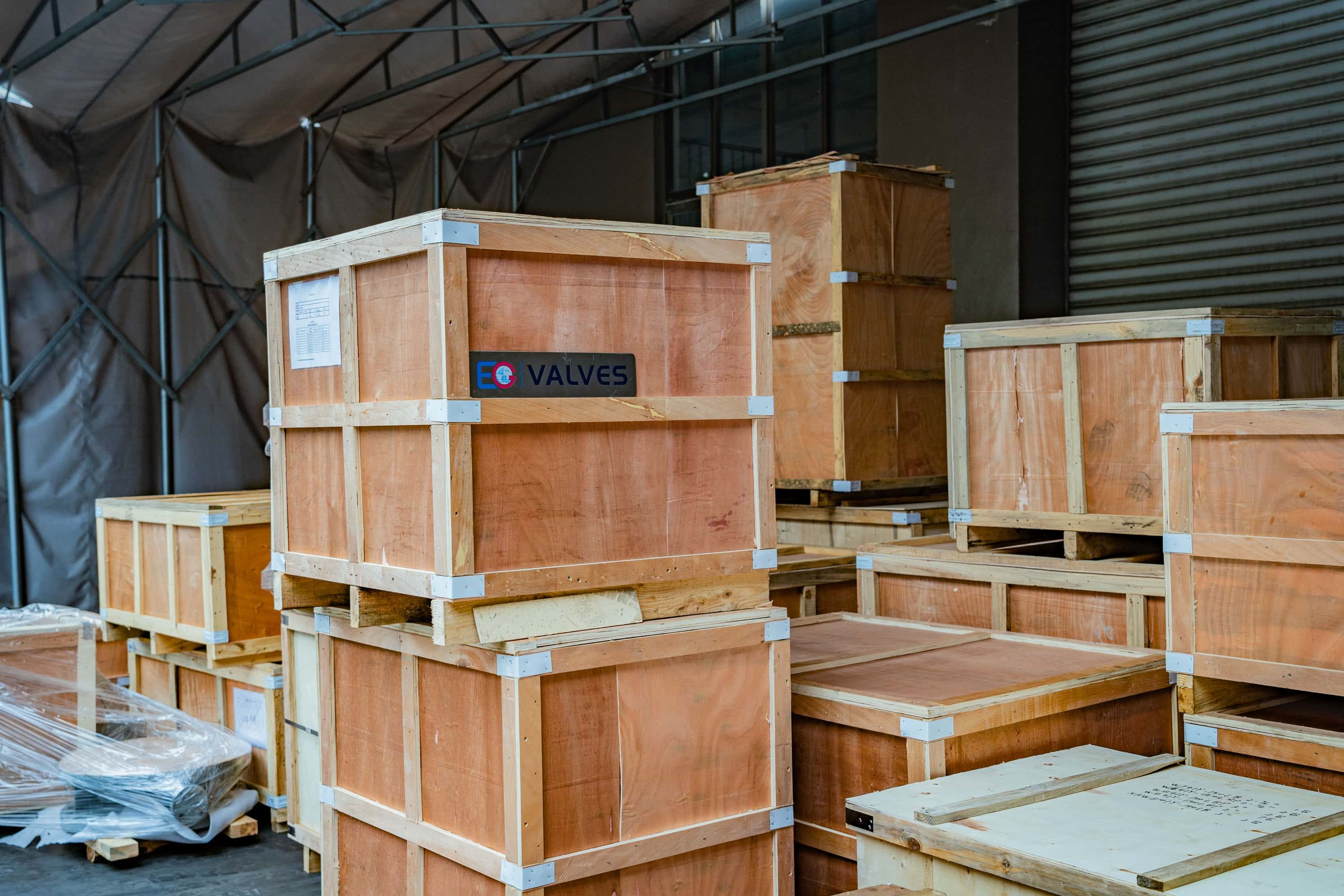
Next step: if you are qualifying a stainless steel check valve supplier for an upcoming project, request the CSV410 specification sheet, certification copies and a quotation for a trial quantity. EG Valves provides EN 10204 3.1 material test certificates with every order and standard lead time within 25–35 days.
Download the product catalogue: EG Valves Catalogue (PDF)
Website: www.egvalves.com
Email: sales@egvalves.com | Tel: +86 577 5799 2227 | WhatsApp: +86 132 0637 0946
Address: Sanqiao Industrial Zone, Wenzhou, Zhejiang Province, China 325100
EG Valves Manufacturing Co., Ltd — established 2000, exporting gate, globe, ball, butterfly, check and plug valves and strainers to more than 33 countries and regions.
Have Questions or Need More Details?
Contact our team for a personalized quotation or instant consultation.
Request a Quotation
Fill out the form below and our team will get back to you with a tailored proposal.
WhatsApp Direct Chat
Prefer to chat in real-time? Message us on WhatsApp for instant assistance & quick answers.
- Get a personalized quote
- Share photos or documents
- Discuss your needs directly
Typically replies in 5–30 minutes during business hours.