
Manual Valve Guide: Types, Applications, and Selection for Industrial Systems
Manual Valve Guide: Types, Applications, and Selection for Industrial Systems
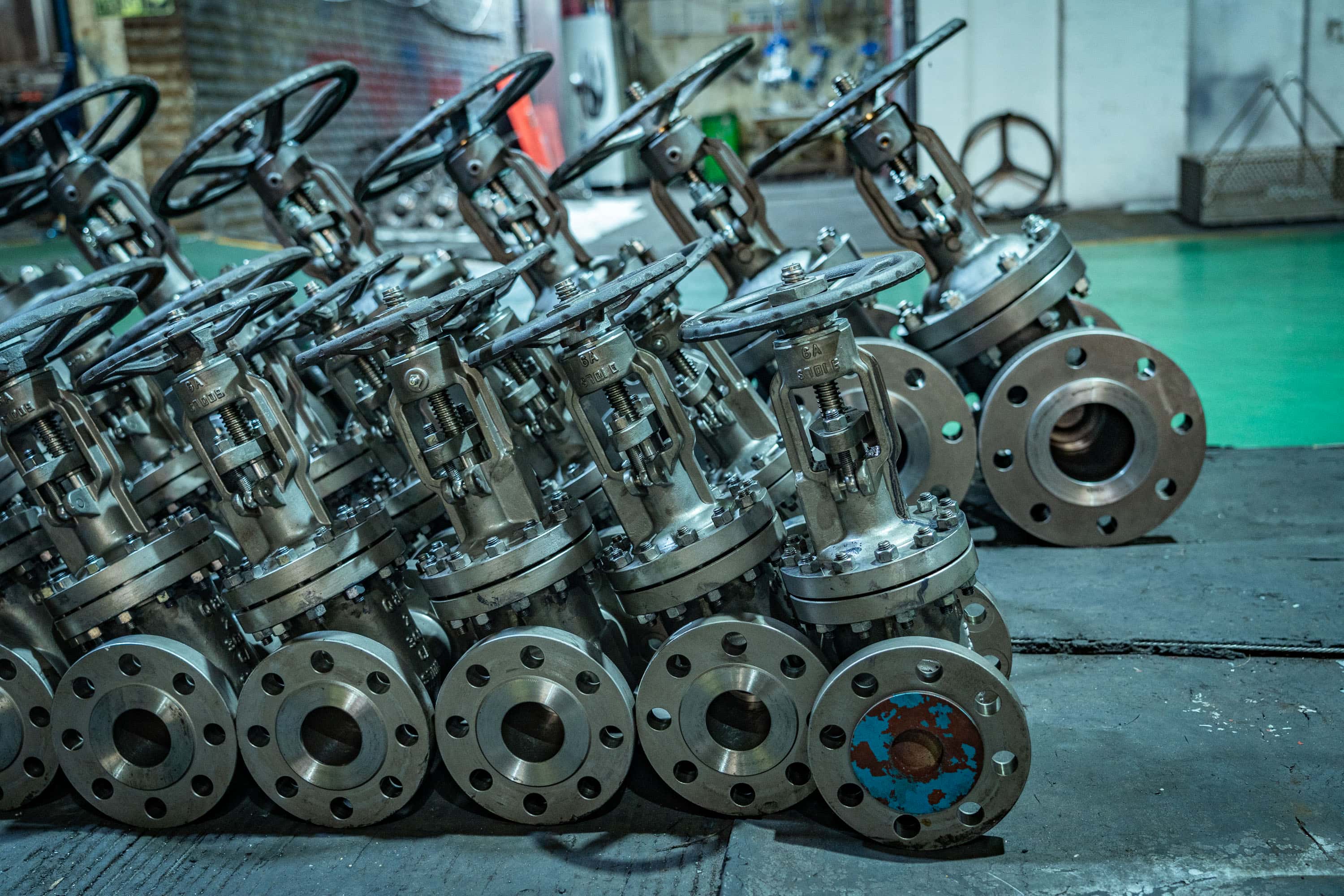
EG Valves Manufacturing Co., Ltd (EG Valves), established in 2000, is a professional valve manufacturer specializing in R&D, manufacturing, and exporting superior industrial valves. This guide covers the essential types of manual valves—gate, globe, ball, butterfly, check, and plug valves—their typical applications, and how to select the right one for your system. The global manual valve market was estimated at USD 78.4 billion in 2025 and is projected to reach USD 117.17 billion by 2035 (Vantage Market Research), reflecting sustained demand across industries.
Why Choose a Manual Valve?
Manual valves are operated directly by hand via a handwheel, handle lever, wrench nut, or gearbox. They are cost-effective, simple, and reliable for on/off or throttling service in countless applications. However, selecting the wrong type can lead to leakage, premature wear, or system inefficiency. Understanding the distinct characteristics of each manual valve type is critical for procurement and engineering teams.
Industry Background
Manual ball valves dominated the general valve market with a 28.1% share in 2025 (Precedence Research), driven by their reliability in high-pressure applications. In the butterfly valve segment, manual operation accounted for 41.2% of revenue in 2024 (Grand View Research), favored for cost-effectiveness and simplicity. The gate valve market alone was valued at USD 13.0 billion in 2024 and is expected to reach USD 20.6 billion by 2034 (Market Research Future).
Industrial manual valves must comply with ASME B16.34 for pressure-temperature ratings and wall thickness. For heavy-duty bolted-bonnet steel gate valves in petroleum and natural gas, API 600 is the specific standard. EG Valves manufactures to ANSI, DIN, BS, and JIS standards or to customer requirements, and its factories hold ISO 9001, API 600, API 6D, CE, and PED certifications.
EG Valves Manual Valve Portfolio
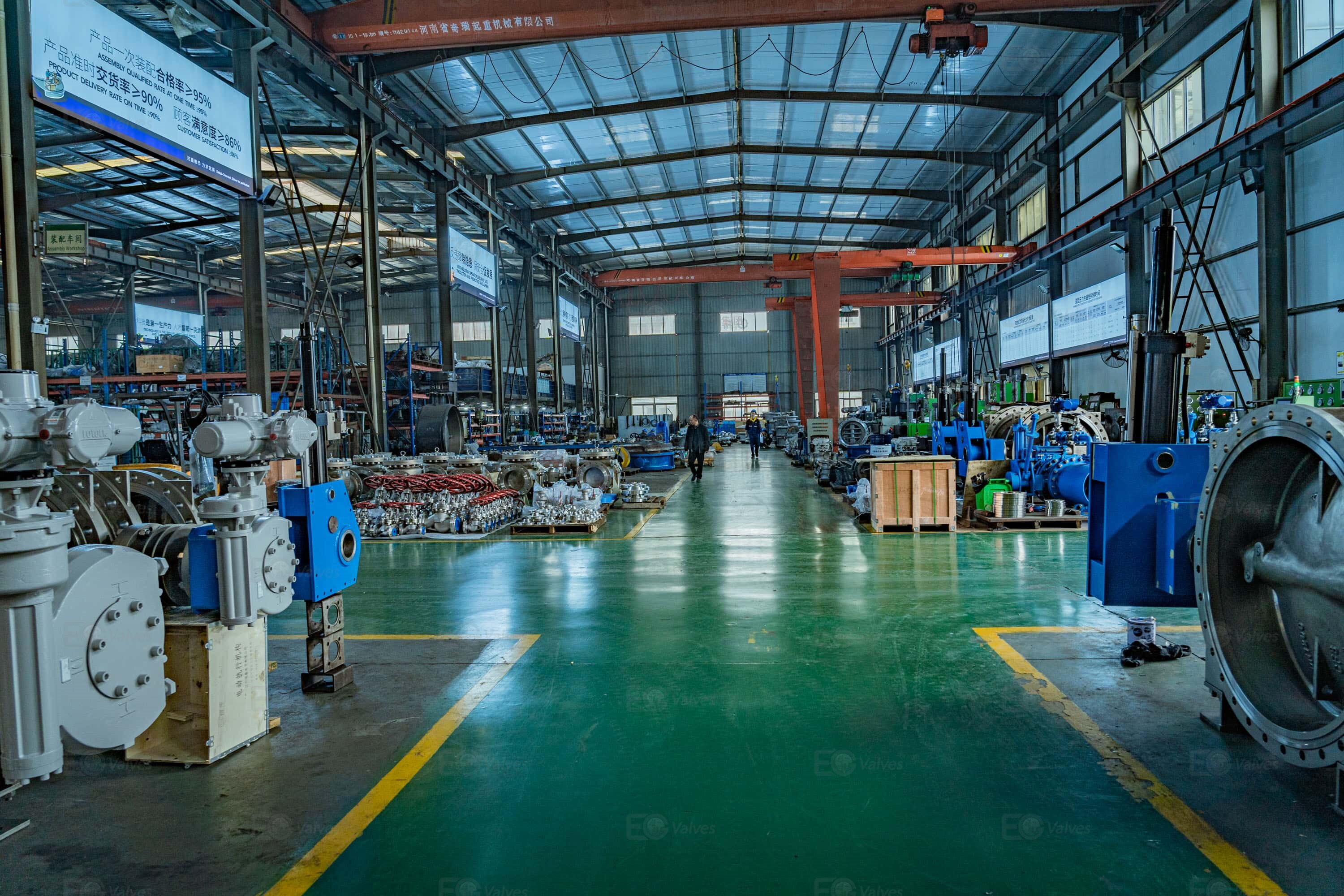
EG Valves offers a comprehensive range of manual valves including gate valves, globe valves, ball valves, butterfly valves, check valves, plug valves, and strainers. The company operates a 27,500 m² facility with an annual production capacity of 90,000 units, supported by a team of 30 engineers. Over 80% of output is exported to EU, North America, Latin America, and the Middle East.
1. Manual Gate Valves
Gate valves use a rising or non-rising stem to move a wedge (solid, flexible, or split) perpendicular to the flow path. They are ideal for on/off service where minimal pressure drop is required. EG Valves offers cast iron gate valves (GTI001) up to NPS 48”, cast steel (GTS019) up to Class 1500, forged steel (GTF023) for high-pressure lines, pressure seal (GTP002) for power plants, and knife gate (GTK022) for slurry applications.
2. Manual Globe Valves
Globe valves provide good throttling capability and positive shut-off. EG Valves’ cast steel globe valve (GLS105) covers NPS 1½”–24” at Class 150–1500. Threaded globe valves (GLA110) suit smaller lines up to NPS 2”. Below seal globe valves (GLB107) offer double seal capability for critical services.
3. Manual Ball Valves
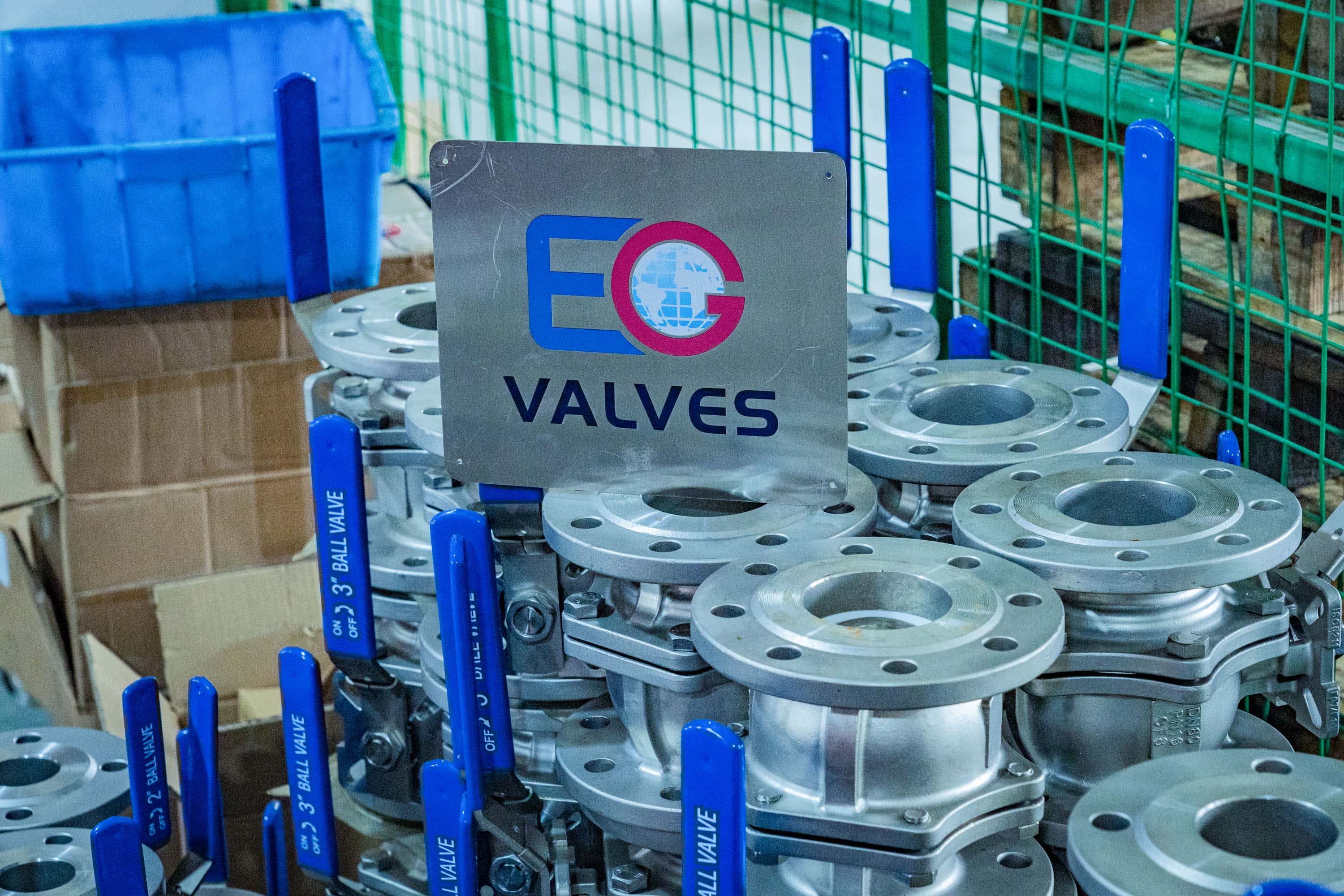
Ball valves provide quick 90° shut-off. EG Valves manufactures floating ball valves (BVF206, BVF208) for sizes NPS ½”–12” and trunnion ball valves (BVT207, BVF209) for higher pressures and larger sizes up to NPS 40”. Threaded ball valves (BVS213) are available in NPT/BSP. Three-way ball valves (BVW212) enable flow diversion.
4. Manual Butterfly Valves
Butterfly valves are compact and lightweight. EG Valves supplies resilient seated butterfly valves (BTV300) with EPDM/NBR/FKM seats, PTFE lined (BTF301) for corrosive media, high performance (BPV302) with bi-directional drop-tight closure, and triple offset (BOV303) for abrasive services. Wafer, lug, and flange types are available.
5. Manual Check Valves & Strainers
Check valves prevent backflow. EG Valves offers cast iron (CVI405), cast steel (CVS407), forged steel (CVF409), and stainless steel (CSV410) check valves in swing, wafer, lift, and globe silent types. Strainers (SNI501, SNS505, SNA507) protect downstream equipment.
Step-by-Step Selection Process
- Define media and operating conditions – temperature, pressure, corrosiveness, cleanliness.
- Determine primary function – on/off, throttling, or backflow prevention.
- Choose valve type – gate for minimal pressure drop, globe for throttling, ball for quick shut-off, butterfly for large diameter & low pressure, check for backflow.
- Select end connections – flanged (RF, FF, RTJ), threaded (NPT, BSP, BSPT), socket weld, or butt weld.
- Verify pressure-temperature rating – e.g., Class 150, 300, 600, 800, 1500, 2500.
- Confirm material compatibility – carbon steel, stainless steel, alloy steel, duplex, cast iron, etc.
- Check certifications – ISO 9001, API 600, API 6D, CE, PED as required by your region.
Use Case Examples
Oil & Gas / Offshore
In offshore platforms, manual gate and ball valves withstand corrosive seawater and high pressure. EG Valves’ products are engineered for ballast systems, seawater injection, and firefighting, meeting API standards. Common in UK, US, Canada, Norway, Mexico, and Middle East.
Chemical & Fertilizer
Manual globe, ball, and butterfly valves with PTFE lining or stainless steel trim resist aggressive acids, alkalis, and solvents. Used in ammonia synthesis, urea production, and reactor feed systems.
Water & Wastewater
Cast iron gate valves and resilient seated butterfly valves are cost-effective for water supply, irrigation, and sewage. EG Valves’ cast iron gate valve (GTI001) with epoxy coating provides long service life.
Power Generation
Pressure seal gate and globe valves handle high-pressure steam. Triple offset butterfly valves are chosen for condenser and cooling water systems. Suitable for coal, gas, and nuclear plants.
Comparison of Manual Valve Types
| Valve Type | Typical Size Range | Pressure Rating | Common Materials | Primary Application |
|---|---|---|---|---|
| Cast Steel Gate (GTS019) | NPS 1½”–48” | Class 150–1500 | Carbon Steel, SS, Alloy Steel | Oil & Gas, Refining, Power |
| Cast Steel Globe (GLS105) | NPS 1½”–24” | Class 150–1500 | Carbon Steel, SS, Alloy Steel | Throttling, Chemical, Steam |
| Cast Steel Floating Ball (BVF206) | NPS ½”–12” | Class 150–600 | Carbon Steel, SS, Duplex | Oil & Gas, Water, General |
| Resilient Seated Butterfly (BTV300) | NPS 1½”–48” | Class 125/150 | Cast Iron, DI, CS, SS | Water, HVAC, Irrigation |
| Knife Gate (GTK022) | NPS 2”–48” | Class 125/150 | SS, CS, Ductile Iron | Pulp & Paper, Mining, Slurry |
Frequently Asked Questions
1. What certifications should a manual valve have for industrial use?
Industrial manual valves should comply with ASME B16.34 for pressure-temperature ratings. For heavy-duty gate valves in petroleum and natural gas, API 600 is required. EG Valves’ products are manufactured under ISO 9001-certified processes and also carry API 600, API 6D, CE, and PED certifications. The company holds ISO 9001:2015 certification number 00125Q33391R3M/3400, issued by CQC, valid through 2028-05-22.
2. What types of manual valves are available for different applications?
EG Valves offers gate valves (cast iron, cast steel, forged steel, pressure seal, knife gate), globe valves (cast steel, forged steel, below seal, pressure seal, threaded), ball valves (floating, trunnion, three-way, top entry, fully welded, threaded), butterfly valves (resilient seated, PTFE lined, high performance, triple offset, double eccentric, grooved), check valves (cast iron, cast steel, forged steel, stainless steel), plug valves, and strainers. Selection depends on media, pressure, temperature, and function.
3. How do I choose between a manual gate valve and a ball valve?
Gate valves are best for full open/close service with minimal pressure drop; they are not suited for throttling. Ball valves provide quick 90° shut-off and can be used for throttling in some designs. For high-pressure applications (Class 1500+), forged steel gate valves or trunnion ball valves are preferred. For general on/off up to Class 600, floating ball valves are compact and economical.
4. Can I request a sample of a manual valve before ordering?
Yes, EG Valves supports sample orders for evaluation. Contact the sales team to discuss your specific valve type, size, and material requirements. Samples are subject to availability and lead times. For more information, download the company brochure or reach out directly.
5. What is the typical lead time for manual valves from EG Valves?
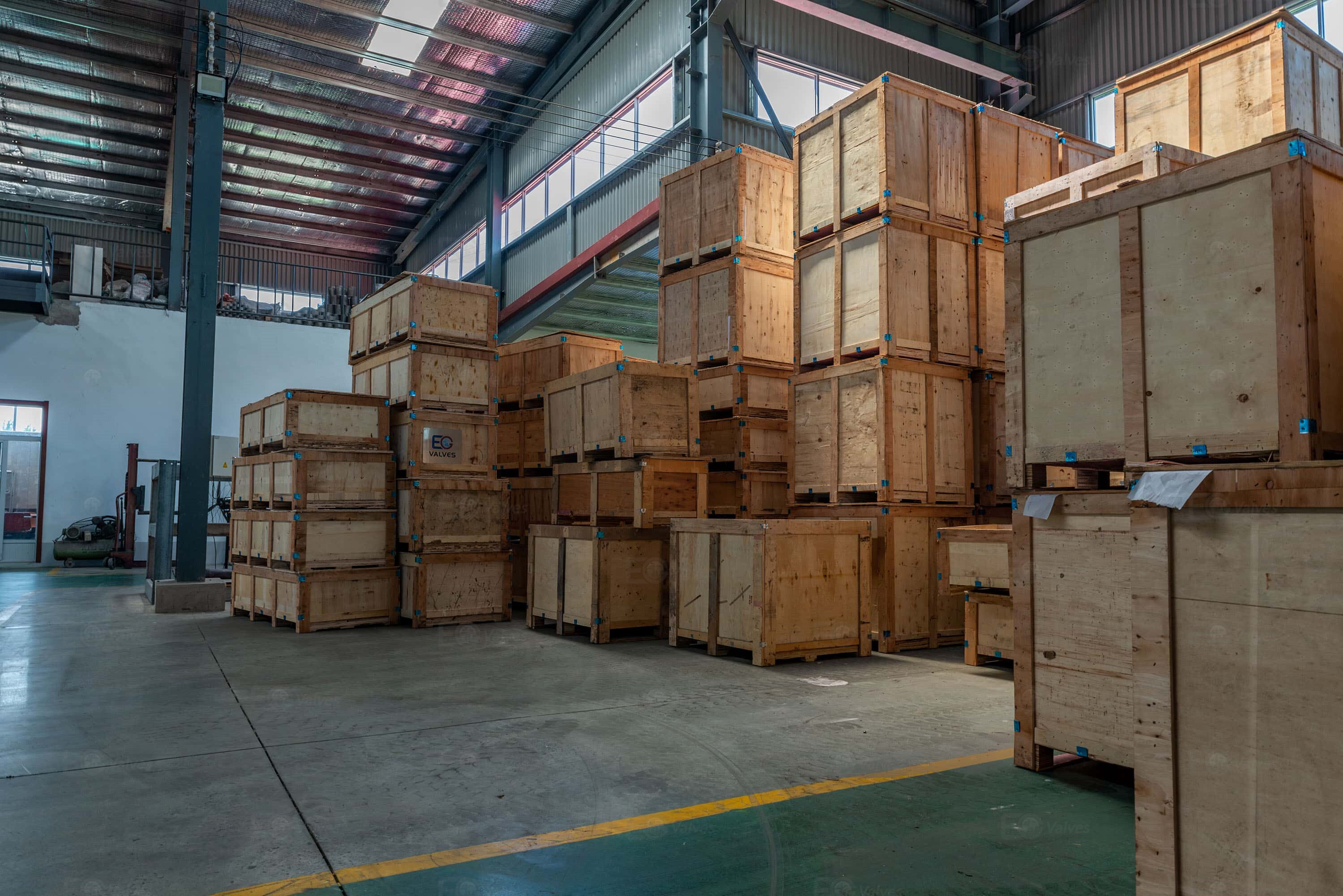
Lead times vary by product complexity and order volume. Standard manual valves in common materials and sizes may ship within 2–4 weeks. Custom-engineered valves with special materials or certifications may require 6–10 weeks. To get accurate lead times for your project, submit an inquiry or request a quote through the contact form.
Need the right manual valve for your application?
EG Valves offers a wide selection of manual gate, globe, ball, butterfly, check, and plug valves. Contact the EG Sales Team for a quote, sample, or technical consultation. Download the company brochure for a complete product overview.
Email: sales@egvalves.com | Tel: +86 577 5799 2227 | WhatsApp: +86 132 0637 0946