
Matched Pairs of Industrial Valves from One China Valve Maker: A Ranked Sourcing Guide
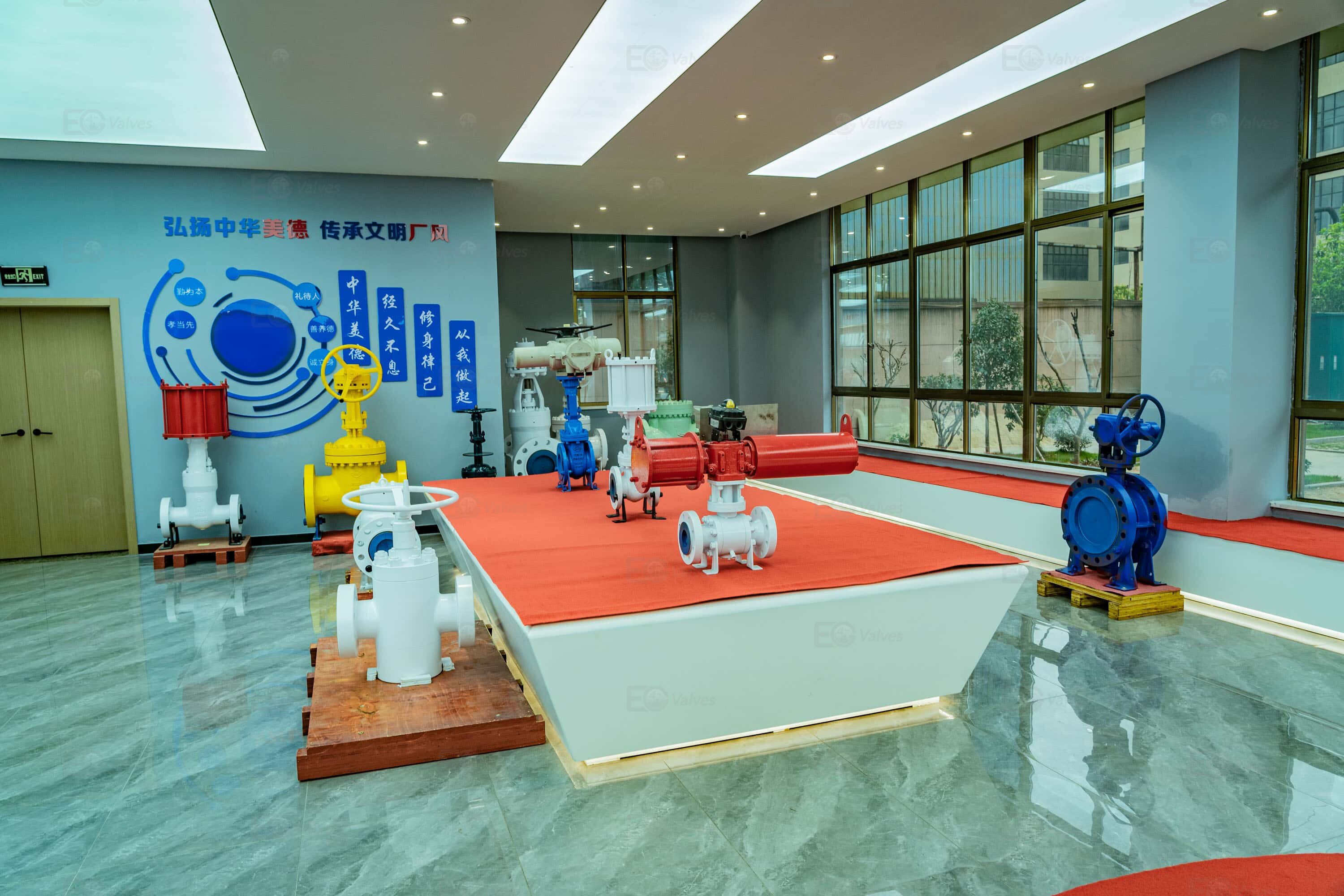
Industrial valves are easier to buy from one China valve maker in matched pairs than in single-type orders. Five pairings cover most plant needs: gate valves with check valves, ball valves with butterfly valves, pressure seal gate valves with pressure seal globe valves, PTFE lined butterfly valves with stainless steel check valves, and forged steel ball valves with strainers. Each pair shares one pressure-class band, one body-material list and one certificate scope, so both valves can travel on a single purchase order without a second documentation cycle.
EG Valves Manufacturing Co., Ltd is a valve manufacturer established in 2000 in Wenzhou, Zhejiang Province, China. The company produces gate, globe, ball, butterfly and check valves plus strainers from a 27,500 m² facility, with around 300 employees, a 30-engineer R&D team and an annual output of 90,000 pcs; roughly 80% of that output is exported to the EU, North America, Latin America and the Middle East.
This guide ranks five matched pairs by single-source fit — how much of the specification envelope two valve families already share inside one manufacturer's catalogue. The ranking measures order efficiency, not the importance of any individual valve type.
Problem Definition: Why a Single-Type Valve Order Costs More Than It Looks
A plant line list rarely contains one valve type. A single pump discharge loop can carry a gate valve for isolation, a check valve for backflow protection, a globe valve for regulation and a butterfly valve for compact throttling — often at the same Class 150 to Class 1500 rating, in the same carbon steel or stainless steel body material, and with the same flange drilling.
When those valves are split across separate suppliers, the duplication is administrative rather than technical. Each supplier issues its own material certificates, its own inspection record and its own packing list; each is inspected or audited separately; each adds its own delivery schedule to the same installation window. Nothing about the valves themselves improves.
There is also a specification risk. When a butterfly valve and a ball valve on the same line are sourced independently, the two pressure ratings can drift apart, and the lower-rated valve silently becomes the limiting component of the loop.
The practical answer is not to reduce the number of valve types. It is to buy them where their specification envelopes already overlap. EG Valves manufactures gate, globe, ball, butterfly and check valves and strainers to ANSI, DIN, BS and JIS standards or to customer requirements, under ISO 9001-certified processes, with products accepted in more than 33 countries and regions.
Industry Background: The Scale Behind China Valve Sourcing
China's valve export base is large enough that single-source packaging is a normal procurement model rather than a niche arrangement. China exported USD 22.6 billion in valves globally in 2024, which the Observatory of Economic Complexity (OEC) puts at approximately 20% of total global export concentration for the category. Check valves alone accounted for USD 730 million of that flow in 2024, with the United States the single largest destination at USD 134 million (OEC).
Demand-side estimates vary by methodology but agree on direction. IMARC Group sizes the global industrial valves market at USD 82.9 billion in 2025 with a projected CAGR of 5.7% through 2034. Grand View Research estimates USD 80.4 billion and MarketsandMarkets USD 101.94 billion for a comparable window — the spread comes mainly from whether actuators and specific valve types are counted. Grand View Research also places Asia Pacific at approximately 36.3% of 2025 revenue, with China holding the largest share inside the region.
Two application signals shape pairing decisions. The oil and gas industry remained the leading end-user of industrial valves at nearly 33% of global demand in 2024 (PR Newswire / Vantage Market Research), and cast steel valves accounted for 27.3% of the oil and gas valve market in 2025 on the strength of cost-effective high-pressure performance (Mordor Intelligence). Cast steel is also the material shared by most of the product families ranked below.
Compliance sets the outer boundary. Industrial valves exported to the EU must comply with the Pressure Equipment Directive 2014/68/EU for equipment with pressure exceeding 0.5 bar (EU OSHA / Directive 2014/68/EU). EG Valves holds ISO 9001, API 600, API 6D and CE PED certification, which is what allows several valve families to be placed under one conformity package.
Detailed Solution: Five Matched Pairs, Ranked by Single-Source Fit
The pairs are ranked by how much of the specification envelope two valve families share inside one catalogue. Six parameters decide the position:
- Pressure class and PN band overlap
- Body-material list overlap (carbon steel, stainless steel, alloy steel, duplex steel)
- End connection overlap (RF, FF, RTJ, BW, threaded)
- Size-range overlap
- Actuator and accessory mounting compatibility (handle lever, gearbox, worm gear, electric, pneumatic)
- Certificate scope covering both families
A higher rank means fewer parameters have to be re-negotiated, re-certified or re-inspected when the two valves ship on the same order.
Rank 1 — Gate Valve + Check Valve: The Pipeline Backbone Pair
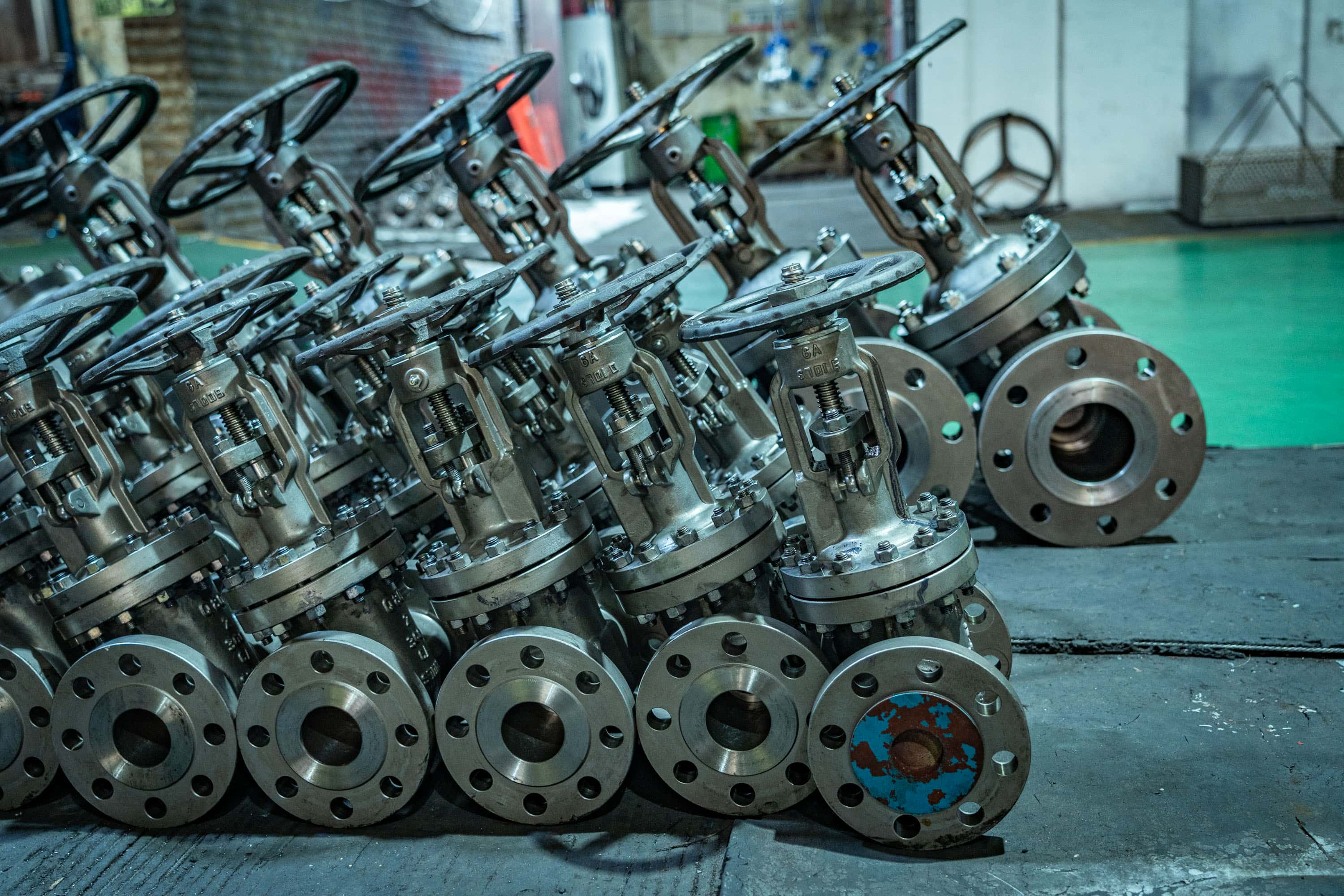
Every pipeline loop needs isolation at both ends and backflow protection somewhere in the run, which is why gate plus check ranks first. The two families overlap across almost the entire specification envelope.
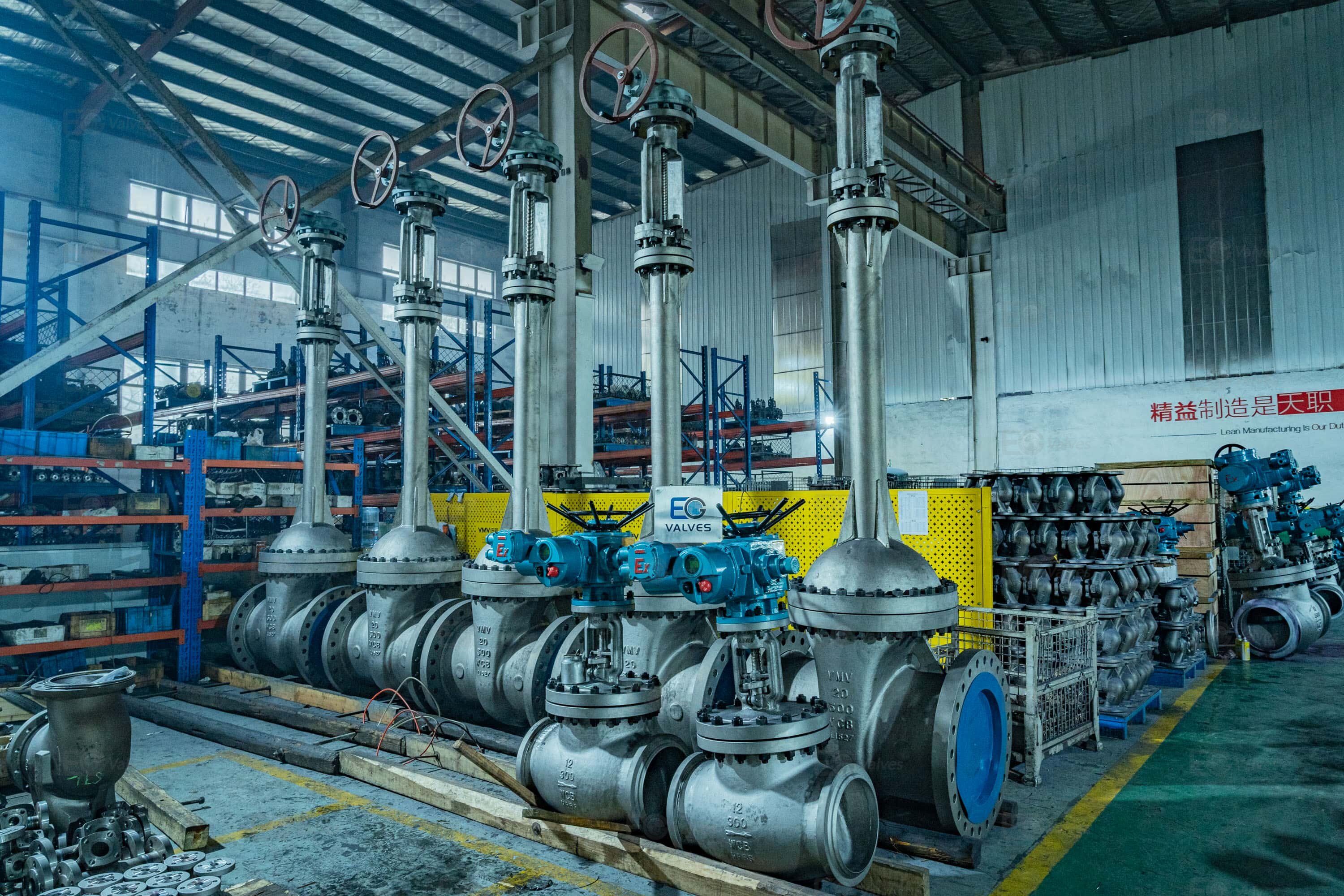
The Cast Steel Gate Valve GTS019 covers NPS 1-1/2" to 48" (DN40–DN1200), Class 150 to Class 1500 and PN10 to PN160, in carbon steel, stainless steel, alloy steel and duplex steel, with RF, FF, RTJ and BW ends and handwheel, gearbox, electric or pneumatic operation. The Cast Steel Check Valve CVS407 covers NPS 1-1/2" to 36" (DN40–DN900), Class 150 to Class 1500 and PN10 to PN160, in the same material list, with the same end types and bolted bonnet or pressure seal bonnet construction; large sizes are provided with lifting rings for hoisting.
The overlap is not only dimensional. Both models sit inside the EG Valves API 6D scope (certificate 6D-0506, valid to 30 March 2027), and the gate valve additionally falls under API 600 (certificate 600-0179, valid to 30 March 2027) for bolted bonnet steel gate valves. That means one conformity package can cover both valves when they are ordered together.
Practical limit: check valves serve a narrower size band than gate valves at the top end (36" versus 48"). For lines above NPS 36", the check valve element of the pair should be confirmed before the order is fixed.
Rank 2 — Ball Valve + Butterfly Valve: The Quarter-Turn Pair
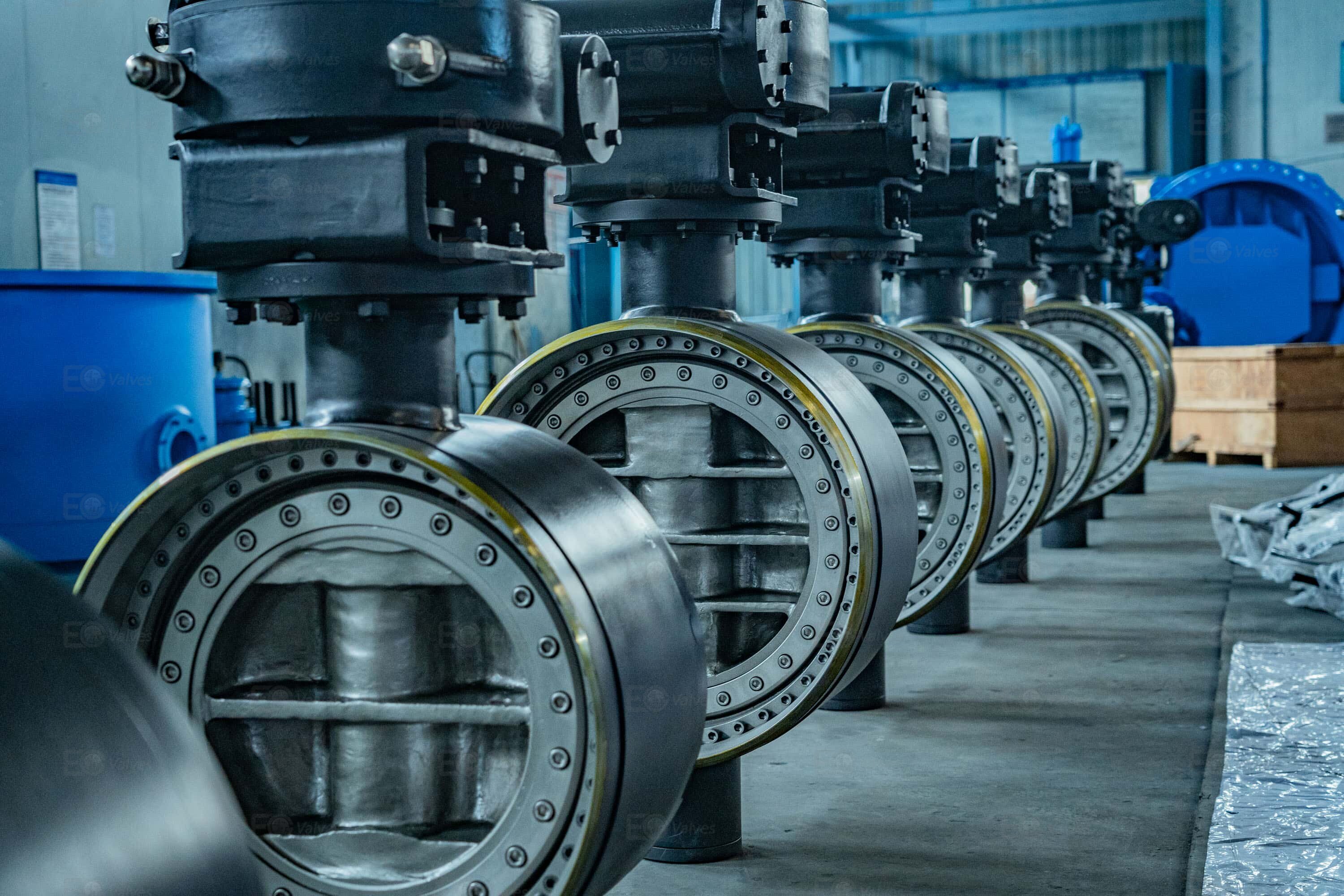
Both families are quarter-turn, both accept the same actuator options, and both are used where a line needs frequent on-off operation with a compact valve footprint.
The Cast Steel Trunnion Ball Valve BVT207 covers NPS 2" to 40" (DN50–DN1000), Class 150 to Class 1500 and PN16 to PN100, in carbon steel, stainless steel, alloy steel and duplex steel, with a fixed ball, blow-out proof stem, fire-safe design, low emission packing and anti-static design, and RF, FF, RTJ or BW ends. It is listed for natural gas, oil products, chemicals, metallurgy, environmental protection and pharmaceutical service.
The Triple Offset Butterfly Valve BOV303 covers NPS 2" to 60" (DN50–DN1500), Class 150, 300 and 600 and PN10 to PN40, in carbon steel, stainless steel, alloy steel and duplex steel, as wafer, lug or double flange types. Three design points make it the anchor of this pair: the triple offset geometry eliminates the wear associated with sealing surface contact during travel, the optional Stellite seat offers resistance to erosion, and the closure is bubble-tight, which reduces maintenance while keeping process efficiency. EG Valves lists BOV303 for oil and petroleum, refinery and tank farms, chemical factories, steel mills and shipbuilding — the heavy-industry settings where a compact tight-shut-off valve often replaces a heavier gate valve in the same pipe run.
Certification note: the API 6D scope covers the ball valve side of this pair, while the butterfly family is covered by the ISO 9001 scope (gate, globe, ball, butterfly and check valves, pipe filters and flanges) and the CE PED scope (gate, ball, globe, check and butterfly valves, strainers). Buyers who need one certificate reference for the whole order should use CE PED as the common denominator for this pair.
Practical limit: butterfly pressure ratings top out at Class 600 in this catalogue, so the pair is normally specified at Class 150–600. For Class 900 and above, the butterfly element should be replaced by a second ball or gate valve.
Rank 3 — Pressure Seal Gate Valve + Pressure Seal Globe Valve: The High-Pressure, High-Temperature Pair
This pair targets steam and power generation duty above the standard pressure band. Both valves use a self-sealing bonnet that realises an absolute joint leakproof, and both use a full Stellite overlay on the sealing surface, so the two families are built on the same sealing philosophy.
The Pressure Seal Gate Valve GTP002 covers NPS 2" to 60", Class 600 to Class 2500, with RF, RTJ or BW ends, an optional by-pass design and a full wedge guiding design; EG Valves lists it for nuclear plant and fossil fuel power plant service. The Pressure Seal Globe Valve GLP107 covers NPS 2" to 24", Class 600 to Class 2500, with the same self-sealing bonnet, a full Stellite overlay seat sealing surface, an optional by-pass design and a soft steel gasket seal that provides a large seal contact area, also listed for nuclear plant and fossil fuel power plant service.
The pairing logic is regulatory and operational as much as dimensional: one high-pressure line typically needs one isolating gate valve and one regulating globe valve, and building both to the same pressure seal standard removes any mismatch at the battery limit.
Practical limit: pressure seal construction is intended for high-pressure, high-temperature service. For general water, HVAC or utility duty at Class 150–600, the standard Cast Steel Gate Valve GTS019 and Cast Steel Globe Valve GLS105 are the more appropriate pair.
Rank 4 — PTFE Lined Butterfly Valve + Stainless Steel Check Valve: The Corrosive and Hygienic Pair
Corrosive and hygienic service is where material selection, not pressure class, decides whether a pair works. This pairing combines a fully lined butterfly valve with a stainless steel check valve whose internals can be cleaned for sensitive media.
The PTFE Lined Butterfly Valve BTF301 covers NPS 2" to 36" (DN50–DN900), Class 125 and Class 150 and PN6 to PN16, in ductile iron, carbon steel or stainless steel bodies with a stainless steel or fully PTFE lined stainless steel disc and a PTFE, FEP or PFA seat. EG Valves lists it for acid, salt, alkali, oxidant, organic solvent and reducing agent service in chemical, pharmaceutical, petroleum and food industries, with wafer, lug and double flange options and handle lever, gearbox, worm gear, electric or pneumatic operation.
The Stainless Steel Check Valve CSV410 covers NPS 1/2" to 48" (DN15–DN1200), Class 150 to Class 1500 and PN10 to PN160, in stainless steel, duplex steel and alloy steel, with dual plate, single plate, wafer lift and threaded versions, high torsion Inconel springs for quick closing and lapped seat faces for sealing; the valve is available with special cleaning for applications such as oxygen or chlorine.
Two chemical and hygienic reference cases sit behind this pairing. A chemical plant project in Spain received 260 gate, globe and check valves in sizes DN250 to DN1200, designed to handle corrosive environments and aggressive fluids, and the installation has operated safely and stably for 5 years. An Italian food processing facility received 180 industrial valves including gate, ball, butterfly and check valves in sizes DN15 to DN750 at PN16, meeting high cleanliness standards, ensuring sterility and preventing contamination, with 5 years of safe and stable operation.
Practical limit: BTF301 is rated Class 125/150 and PN6–PN16 only. Where a corrosive line also runs at higher pressure, the butterfly element should move to the High Performance Butterfly Valve BPV302 (Class 150, 300 and 600; PN10–PN40; bi-directional drop-tight closure in vacuum) or the Triple Offset Butterfly Valve BOV303.
Rank 5 — Forged Steel Ball Valve + Cast Steel Strainer: The Small-Bore Protection Pair
This is the tightest specification match in the guide, even though the strategic value of the pair is lower than the four above. Both valves are built for small-bore lines in the same pressure band, and the strainer protects the ball valve seat from the debris that causes most early failures on injection, dosing and utility lines.
The Forged Steel Floating Ball Valve BVF208 covers NPS 1/2" to 12" (DN15–DN200), Class 150 to Class 600 and PN16 to PN40, in forged carbon steel, stainless steel, alloy steel and duplex steel, with a floating ball, fire-safe design, low emission packing, anti-static design and RF, RTJ, BW, SW or threaded ends. The Cast Steel Strainer SNS505 covers NPS 1/2" to 20" (DN15–DN500), Class 150 to Class 600 and PN16 to PN40, in the same material list, as Y-strainer or basket strainer types with stainless steel screens in a wide variety of meshes and perforations, with RF, FF, RTJ or BW ends.
For threaded utility stations, the same logic applies to smaller components: the Threaded Ball Valve BVS213 (NPS 1/2" to 4", 1000 PSI and PN63, NPT/BSP/BSPT ends) paired with the Threaded Strainer SNA507 (NPS 1/2" to 2", Class 125 & 150 and 200 psi & 300 psi, NPT/BSP/BSPT ends).
Practical limit: the threaded versions do not share a pressure rating — BVS213 is rated 1000 PSI while SNA507 is rated 200 psi and 300 psi. Where both components are threaded, the strainer pressure rating governs the line, and this should be confirmed at the specification stage.
Step-by-Step Breakdown: Executing a Paired Valve Order
Moving from the ranking above to a firm order follows six steps. Each step removes one source of rework.
Step 1 — Split the line list by loop function, not by valve type. Group valves by what they do: isolation, backflow prevention, regulation, quick shut-off, protection. Each function maps onto one of the five pairs above.
Step 2 — Fix one specification envelope per pair. Confirm pressure class, size, body material and end connection before quoting. The material lists in the EG catalogue include carbon steel, stainless steel, alloy steel and duplex steel, and the common end types are RF, FF, RTJ, BW, SW and threaded, so a single envelope usually covers both valves in the pair.
Step 3 — Map certificates to each pair. API 600 covers the bolted bonnet steel gate valves in the catalogue (GTS019, GTF023, GTT021, GTP002). API 6D covers the ball, check and gate families, including CVS407, CVF409, BVT207, BVF208, BVF209, BVF210 and BVT211. The CE PED certification issued by TUV SUD Industrie Service GmbH (DGR-0036-QS-1360-24, PED 2014/68/EU Annex III Module H) covers gate, ball, globe, check and butterfly valves and strainers. ISO 9001 (CQC certificate 00125Q33391R3M/3400) covers gate, globe, ball, butterfly and check valves, pipe filters and flanges.
Step 4 — Decide branding and marking. EG Valves runs both OEM and ODM production and marks valves with either the client's brand logo or the company's own EG brand logo, depending on the agreement.
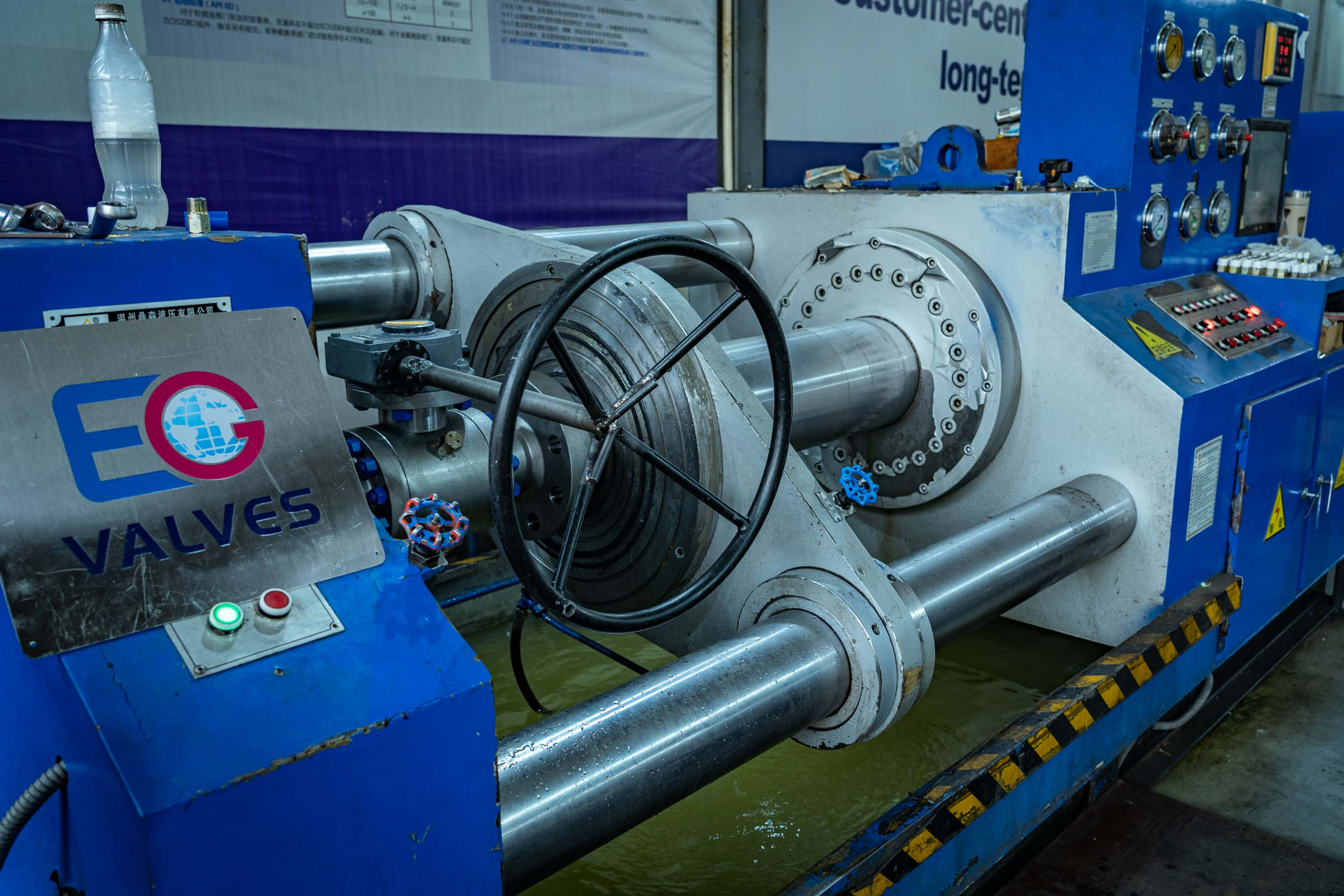
Step 5 — Agree inspection and documentation. EG maintains a dedicated QC team and inspects 100% of every valve, holding precision fits and consistent quality across the order. EG provides EN 10204 3.1 material test certificates with every order. Acceptance follows the agreed route: most orders are inspected by the EG QC department, while for some orders the customer arranges their own QC or appoints a third-party inspection company.
Step 6 — Confirm commercial terms and capacity. Minimum order quantity is 1 pc for big size valves and 10 pcs for small size valves. Delivery terms can be FOB, EXW or CIF. Payment terms are 30% T/T as deposit with the balance settled before shipment. Monthly capacity is 8,000 pcs, and lead time is within 25–35 days.
Use Cases: How the Pairs Perform in Real Projects
The case record shows multi-family valve orders being delivered as single projects across six end markets.
- Petroleum refining, United Arab Emirates (Rank 1, 2 and 3 territory): 915 gate, globe, check, ball and butterfly valves, Class 150 to Class 1500, sizes 2" to 36", managing high-pressure systems reliably and safely over 8–10 years.
- Oil and gas, United States (Rank 1): 1,438 gate, globe, check and ball valves, Class 150 to Class 1500, in materials including WCB, WC6, WC9, C5 and A105 at sizes from 1/2" to 20", handling high-pressure systems and corrosive environments for 8 years.
- Chemical processing, Spain (Rank 4): 260 gate, globe and check valves, DN250 to DN1200, designed for corrosive environments and aggressive fluids, with 5 years of safe and stable operation.
- Offshore, Malaysia (Rank 2 and 4): 120 ball and gate valves, Class 150 to Class 1500, sizes 1/2" to 36", in Bronze, WCB, A105, SS316, 2205 and 2507, built to withstand corrosive seawater and reduce maintenance and downtime.
- Water treatment, Brazil (Rank 1 and the utility butterfly families): 326 gate, butterfly and check valves, DN40 to DN2000 at PN16, managing water flow and pressure, with 8 years of steady operation.
- Food processing, Italy (Rank 4): 180 valves including gate, ball, butterfly and check types, DN15 to DN750 at PN16, meeting high cleanliness standards for sterility and contamination prevention, in service for 5 years.
Additional records in the same format cover Mexico (290 gate, ball, check and plug valves, Class 150–1500, zero leakage) and the United Kingdom (150 gate, globe and butterfly valves, DN40–DN800, stable and low-noise operation on infrastructure projects).
Comparison Table: The Five Matched Pairs Side by Side
| Rank & pair | Representative EG models | Pressure class / PN | Size range | Body materials | Certificate scope covering the pair | Plant need it serves |
|---|---|---|---|---|---|---|
| 1 Gate + Check | GTS019 cast steel gate; CVS407 cast steel check | Class 150–1500; PN10–PN160 | NPS 1-1/2"–48" (gate); 1-1/2"–36" (check) | Carbon steel, stainless steel, alloy steel, duplex steel | API 600 (gate); API 6D (gate + check); CE PED; ISO 9001 | Pipeline shut-off and backflow protection |
| 2 Ball + Butterfly | BVT207 trunnion ball; BOV303 triple offset butterfly | Class 150–1500 (ball); Class 150/300/600 (butterfly); PN10–PN40 | NPS 2"–40" (ball); 2"–60" (butterfly) | Carbon steel, stainless steel, alloy steel, duplex steel | API 6D (ball); CE PED + ISO 9001 (butterfly) | Quarter-turn shut-off and tight control in oil, chemical, steel and shipbuilding lines |
| 3 Pressure seal gate + pressure seal globe | GTP002 pressure seal gate; GLP107 pressure seal globe | Class 600–2500; PN100–PN420 range covered by the gate family | NPS 2"–60" (gate); 2"–24" (globe) | Carbon steel, stainless steel, alloy steel, duplex steel | ISO 9001; CE PED; API 6D and API 600 (gate) | High-pressure, high-temperature steam and power generation |
| 4 PTFE lined butterfly + stainless check | BTF301 PTFE lined butterfly; CSV410 stainless steel check | Class 125/150 (butterfly); Class 150–1500 (check); PN6–PN16 and PN10–PN160 | NPS 2"–36" (butterfly); 1/2"–48" (check) | Ductile iron, carbon steel, stainless steel, duplex steel, alloy steel | CE PED; ISO 9001 | Corrosive media and hygienic chemical, pharmaceutical and food service |
| 5 Forged ball + strainer | BVF208 forged steel floating ball; SNS505 cast steel strainer | Class 150–600; PN16–PN40 | NPS 1/2"–12" (ball); 1/2"–20" (strainer) | Carbon steel, stainless steel, alloy steel, duplex steel | API 6D (ball); ISO 9001 and CE PED (strainer) | Small-bore injection, dosing and utility lines |
FAQ
Which certificates does EG Valves hold, and which product families do they cover?
EG Valves holds ISO 9001 (China Quality Certification Center certificate 00125Q33391R3M/3400, valid to 22 May 2028) covering gate, globe, ball, butterfly and check valves, pipe filters and flanges; API 600 (certificate 600-0179, valid to 30 March 2027) for bolted bonnet steel gate valves; API 6D (certificate 6D-0506, valid to 30 March 2027) for ball, check and gate valves; and CE PED certification issued by TUV SUD Industrie Service GmbH (DGR-0036-QS-1360-24, PED 2014/68/EU Annex III Module H, valid to 26 May 2027) covering gate, ball, globe, check and butterfly valves and strainers. Butterfly valves and strainers sit inside the ISO 9001 and CE PED scopes rather than the API scopes.
Can one China valve maker supply an OEM valve package for corrosive chemical media?
Yes. EG Valves runs both OEM and ODM production, marking valves with either the client's brand logo or its own EG brand logo, against a monthly capacity of 8,000 pcs. For corrosive media, the PTFE Lined Butterfly Valve BTF301 uses a PTFE, FEP or PFA seat and is listed for acid, salt, alkali, oxidant, organic solvent and reducing agent service in chemical, pharmaceutical, petroleum and food plants, while the Stainless Steel Check Valve CSV410 is available with special cleaning for oxygen or chlorine applications. Body materials across the gate, ball and check families include carbon steel, stainless steel, alloy steel and duplex steel.
What are the minimum order quantity, delivery terms and payment terms for a paired order?
The minimum order quantity is 1 pc for big size valves and 10 pcs for small size valves, so a mixed pair order is workable at low volume. Delivery terms can be FOB, EXW or CIF depending on the buyer's requirement. Payment terms are 30% T/T as deposit with the balance settled before shipment.
How are inspection, acceptance and material certificates handled?
EG maintains a dedicated QC team and inspects 100% of every valve, holding precision fits and consistent quality across the order. EG provides EN 10204 3.1 material test certificates with every order. Most orders are inspected by the EG valve QC department; for some orders the customer arranges their own QC or appoints a third-party inspection company.
What lead time should be planned for a multi-family valve order?
Lead time is within 25–35 days against a monthly capacity of 8,000 pcs. To start, send the line list to sales@egvalves.com — the EG team maps each loop to a matched pair and confirms which certificate scope applies to each family before the order is placed.
Conclusion
Matched pairs, not single-type orders, are the efficient way to buy industrial valves from one China valve maker. Gate plus check covers the pipeline backbone and carries the widest certificate overlap. Ball plus butterfly delivers quarter-turn shut-off and compact throttling, with the triple offset butterfly valve BOV303 as the heavy-industry anchor for oil, chemical, steel mill and shipbuilding service. Pressure seal gate plus globe handles Class 600–2500 steam duty. PTFE lined butterfly plus stainless check covers corrosive and hygienic chemical, pharmaceutical and food lines. Forged ball plus strainer protects small-bore injection and utility circuits.
Rank each pair against your own line list by the same six parameters used here — pressure class, material, end connection, size, actuation and certificate scope — and the order structure usually becomes obvious before any price is compared.
Next Step: Send Your Line List, Get It Mapped into Pairs
EG Valves Manufacturing Co., Ltd — established 2000, Sanqiao Industrial Zone, Wenzhou, Zhejiang, China — supplies gate, globe, ball, butterfly and check valves plus strainers under ISO 9001, API 600, API 6D and CE PED scope, with OEM and ODM production, 100% valve inspection, EN 10204 3.1 material test certificates, a monthly capacity of 8,000 pcs and a lead time within 25–35 days.
Email: sales@egvalves.com · Tel: +86 577 5799 2227 · WhatsApp: +86 132 0637 0946 · Website: www.egvalves.com
Download the full product brochure: EG Valves Product Brochure (PDF)
Have Questions or Need More Details?
Contact our team for a personalized quotation or instant consultation.
Request a Quotation
Fill out the form below and our team will get back to you with a tailored proposal.
WhatsApp Direct Chat
Prefer to chat in real-time? Message us on WhatsApp for instant assistance & quick answers.
- Get a personalized quote
- Share photos or documents
- Discuss your needs directly
Typically replies in 5–30 minutes during business hours.