
Technical Guide to Triple Offset Butterfly Valves: Zero Leakage Design Essentials
EG Valves Technical Series — Butterfly Valve Engineering
A triple offset butterfly valve is a quarter-turn pipeline shut-off valve in which the disc and the seat make contact only during the final degrees of closing. Three separate geometric offsets between the shaft, the disc and the sealing surface keep the two sealing faces apart for almost the entire 90-degree travel, so they do not rub against each other. The result is the behaviour buyers now write into specifications for critical isolation: bubble-tight closure with far less seat wear than a concentric or double eccentric butterfly valve.
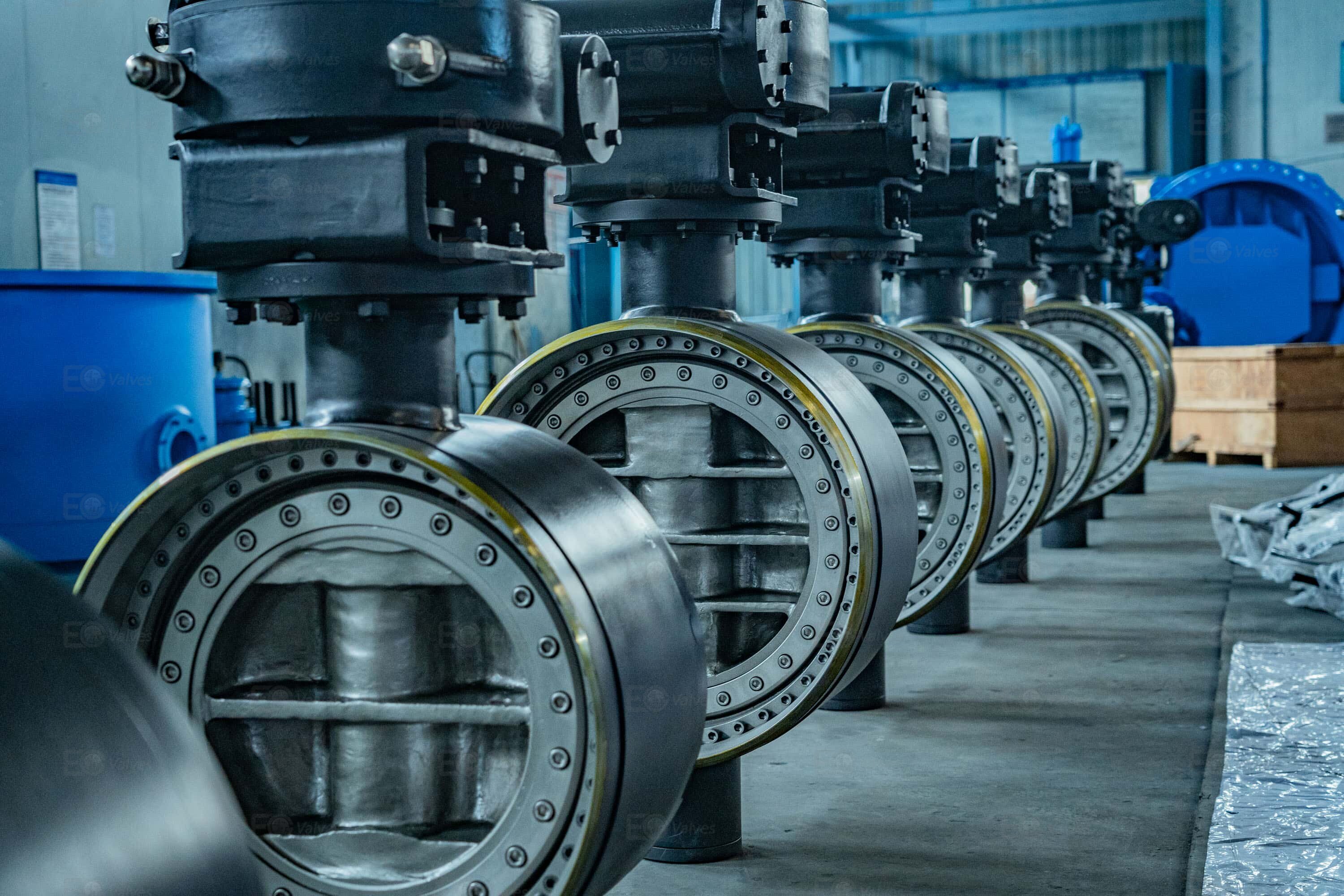
EG Valves Manufacturing Co., Ltd builds this design as the BOV303 triple offset butterfly valve. The model is offered with carbon steel, stainless steel, alloy steel or duplex steel bodies; with a stainless steel plus graphite seat or a PTFE plus stainless steel seat; with an optional Stellite seat for erosion resistance; and with handle lever, gearbox, worm gear, electric or pneumatic actuation. This guide explains the design principle behind the zero-leakage claim, the wear mechanism that geometry removes, the material and seat decisions that decide whether the closure holds over a full maintenance cycle, and how the valve fits refinery, chemical, steel and marine service.
Problem Definition: Why Butterfly Valves Start to Pass
Concentric butterfly valves seal by forcing the disc edge into an elastomer seat. Every opening and closing stroke drags the disc across that seat, so the sealing surface is being consumed each time the valve moves. Two limits follow directly from that design: the elastomer sets the temperature and pressure ceiling of the valve, and the interference fit that produces the seal is also the mechanism that wears it out. In the field this appears as rising operating torque, scored or swollen seat material, and a valve that no longer isolates the line.
Double eccentric designs reduce the problem without removing it. In the EG Valves double eccentric butterfly valve BTV305, the specification lists a double eccentric disc design that ensures minimal wear and provides excellent throttling capabilities, a replaceable sealing material that keeps seating torque at optimum, and a tilted disc that releases the compression and extends durability. Those are real gains for water treatment, HVAC, desalination and municipal water supply duties — but the disc still approaches the seat with residual interference, and the sealing material remains an elastomer such as EPDM, NBR or FKM.
A third offset changes the contact logic entirely. Instead of sealing through continuous compression, the disc approaches a cone-shaped seat and contacts it only at the end of the stroke. That is the function the BOV303 specification describes when it states that the triple offset design eliminates wear associated with sealing surface contact, and that bubble-tight closure provides process efficiency with reduced maintenance.
Industry Background: Where Zero-Leakage Isolation Is Being Specified
Valve specification decisions are shaped by market and regulatory context as much as by pipe geometry. IMARC Group estimates the global industrial valves market at USD 82.9 billion in 2025, with a projected CAGR of 5.7% through 2034. Grand View Research reports that Asia Pacific accounted for approximately 36.3% of 2025 industrial valve revenue, with China holding the largest share within the region, while the oil and gas industry remained the leading end-user at nearly 33% of global demand in 2024 according to PR Newswire and Vantage Market Research. On the supply side, the Observatory of Economic Complexity records China exporting USD 22.6 billion of valves globally in 2024, roughly 20% of global export concentration — the reason so many European, North American and Middle Eastern projects now shortlist China valve manufacturers by default.
Material economics matter in the same way. Mordor Intelligence reports that cast steel valves accounted for 27.3% of the oil and gas valve market in 2025, reflecting how buyers balance pressure capability against cost. Alongside that, compliance has become a gating factor rather than a formality: industrial valves exported from China into the EU must satisfy the Pressure Equipment Directive 2014/68/EU for equipment operating above 0.5 bar. Refineries, chemical plants and pipeline operators have responded by writing true isolation into specifications — a passing valve is no longer treated as normal operating behaviour.
The BOV303 Design Solution: Seat, Disc, Body and Closure Facts
The BOV303 is EG Valves' triple offset butterfly valve, and its zero-leakage behaviour comes from the combination of an offset disc geometry, a metal-to-metal or PTFE-backed seating system, and a body range wide enough to cover refinery and chemical line sizes. The verified specification is as follows.
- Design principle: triple offset design eliminates wear associated with sealing surface contact; bubble-tight closure provides process efficiency with reduced maintenance.
- Seat material: stainless steel plus graphite, or PTFE plus stainless steel. An optional Stellite seat offers optimum resistance to erosion.
- Body material: carbon steel, stainless steel, alloy steel or duplex steel.
- Disc material: carbon steel, stainless steel or duplex steel.
- Size range: NPS 2 to 60 inches; DN50 to DN1500.
- Pressure rating: Class 150 / Class 300 / Class 600; PN10 / PN16 / PN25 / PN40.
- End types: wafer, lug and double flange configurations are all available.
- Actuation: handle lever, gearbox, worm gear, electric or pneumatic.
- Typical industries: oil and petroleum, refinery and tanks, chemical factories, steel mills and shipbuilding.
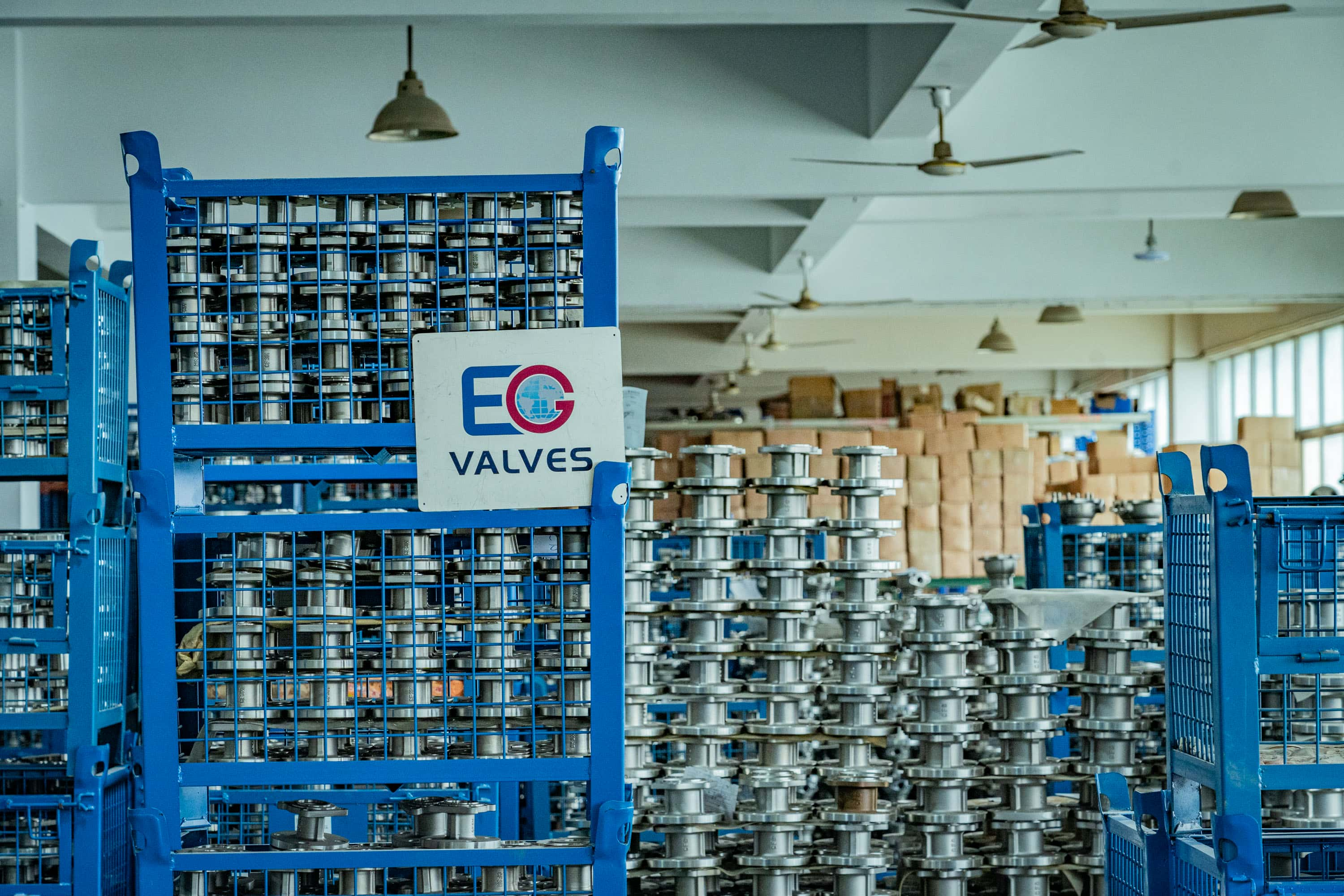
Read as a specification set, those options tell a buyer where each build belongs. The stainless steel plus graphite seat avoids an elastomer as the primary sealing material, which suits refineries and tank farms where the seat must survive heat and cycling. The PTFE plus stainless steel option covers chemical service where resistance to aggressive media is the priority. The optional Stellite seat is the erosion answer — in slurries, particulate-laden streams and high-velocity lines, hard-facing protects the sealing face instead of relying on soft material to absorb the damage.
Step-by-Step Breakdown: How Three Offsets Produce a Bubble-Tight Closure
Offset 1 — the shaft sits behind the sealing plane
The first offset moves the shaft axis behind the plane of the disc sealing surface. Because the disc pivots from a point that is not in its own sealing plane, the sealing edge rotates clear of the seat instead of being dragged across it as the valve opens and closes.
Offset 2 — the shaft sits off the bore centreline
The second offset moves the shaft away from the body centreline. This gives the disc room to swing out of the seat path through the travel arc, so the open position provides a clear bore and the disc never scrubs the seat mid-stroke.
Offset 3 — the seat is an inclined cone
The third offset is what produces the seal. Rather than two flat faces meeting face-to-face, the seating surface is conical and inclined relative to the bore axis. Contact happens as a wedging, camming action in the final few degrees of rotation: the faces land on each other and then stop. There is no sliding contact to generate wear, and once the faces are engaged the closure is bubble-tight.
Step-by-step: what to verify before you specify
- Confirm the duty is true isolation. If the valve must hold line pressure without passing, a triple offset closure is the relevant design family; if the duty is throttling or water distribution, a resilient seated or double eccentric butterfly valve is usually the better fit.
- Fix size and pressure class. The BOV303 covers NPS 2 to 60 inches (DN50 to DN1500) at Class 150, 300 or 600 and PN10 to PN40.
- Select the seat build against the media. Stainless steel plus graphite for cycling and heat; PTFE plus stainless steel for aggressive chemical media; the optional Stellite seat where erosion is the dominant failure mode.
- Select body material. Carbon steel for standard hydrocarbon service, stainless or duplex steel where corrosion resistance is the constraint, alloy steel where the line specification calls for it.
- Choose end connection and actuation. Wafer, lug or double flange bodies, matched to handle lever, gearbox, worm gear, electric or pneumatic actuation through the full size range.
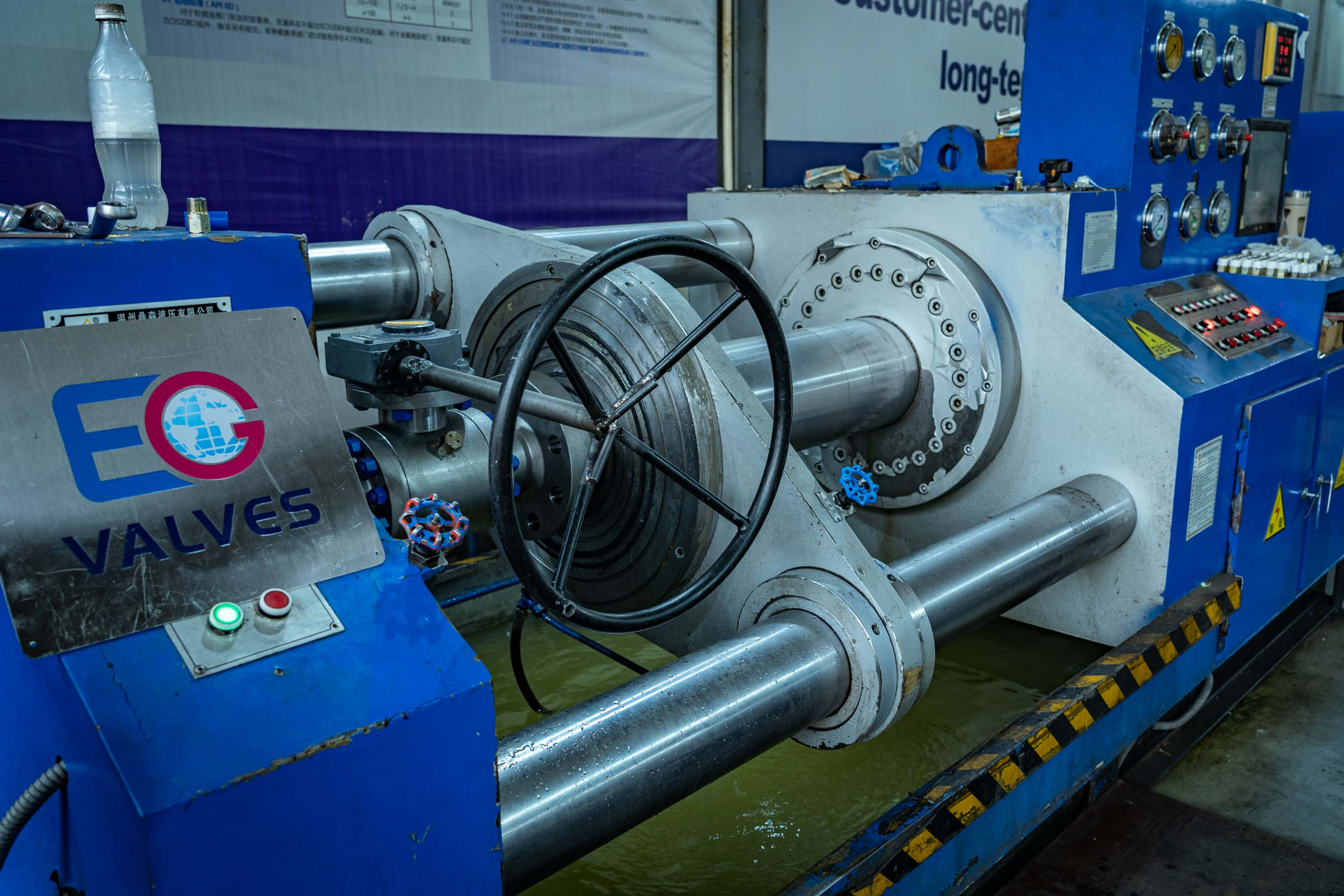
- Confirm documentation. EG Valves inspects 100% of every valve and provides EN 10204 3.1 material test certificates with every order — documentation that matters when the valve is going into a refinery, tank farm or chemical plant.
BOV303 Specification Summary
| Parameter | BOV303 Triple Offset Butterfly Valve |
|---|---|
| Design | Triple offset; sealing surface contact eliminated during travel |
| Closure | Bubble-tight closure for process efficiency with reduced maintenance |
| Seat material | Stainless steel + graphite, or PTFE + stainless steel; optional Stellite seat for optimum erosion resistance |
| Body material | Carbon steel, stainless steel, alloy steel, duplex steel |
| Disc material | Carbon steel, stainless steel, duplex steel |
| Size range | NPS 2 to 60 inches; DN50 to DN1500 |
| Pressure rating | Class 150 / Class 300 / Class 600; PN10 / PN16 / PN25 / PN40 |
| End types | Wafer, lug and double flange |
| Operation | Handle lever, gearbox, worm gear, electric, pneumatic |
| Industries | Oil and petroleum, refinery and tanks, chemical factories, steel mills, shipbuilding |
Comparison: Triple Offset Against Other Butterfly Valve Types
Triple offset is one design within a wider butterfly valve family, and choosing wrongly is expensive. The table below compares the four butterfly valve designs EG Valves manufactures, using only the published specification data for each model.
| Model and type | Design | Seat material | Sealing behaviour | Size range | Pressure rating |
|---|---|---|---|---|---|
| BTV300 Resilient Seated Butterfly Valve | Concentric, bi-directional service | EPDM, NBR (Buna-N), FKM (Viton), PTFE | Elastomer compression seal, quick 90-degree on/off | NPS 1-1/2 to 48 inches | Class 125 / Class 150; PN6 / PN10 / PN16 |
| BTV305 Double Eccentric Butterfly Valve | Double eccentric disc, replaceable sealing material, tilted disc releases compression | EPDM, NBR (Buna-N), FKM (Viton) | Minimal wear with excellent throttling capability, tight shut-off | NPS 8 to 48 inches | Class 125 / Class 150; PN6 / PN10 / PN16 |
| BPV302 High Performance Butterfly Valve | Soft or hard sealing, integrally cast mounting pad | PTFE / RTFE, or stainless steel / Monel, or PTFE + stainless steel | Bi-directional, drop-tight closure in vacuum | NPS 2 to 60 inches | Class 150 / 300 / 600; PN10 to PN40 |
| BOV303 Triple Offset Butterfly Valve | Triple offset; wear associated with sealing surface contact eliminated | Stainless steel + graphite, or PTFE + stainless steel; optional Stellite seat | Bubble-tight closure with reduced maintenance | NPS 2 to 60 inches | Class 150 / 300 / 600; PN10 to PN40 |
The practical selection rule that falls out of this comparison: specify triple offset when the line must isolate and the seat must survive heat, cycling or erosion; specify high performance when you need drop-tight closure across a wide size range with flexible seat chemistry; specify double eccentric or resilient seated where throttling, water treatment or utility duty dominates and elastomer sealing is acceptable.
Use Cases: Where This Design Is Deployed
Butterfly valves from this range appear across the heavy-process and infrastructure projects in EG Valves' delivered record, and the pattern shows where zero-leakage geometry earns its place.
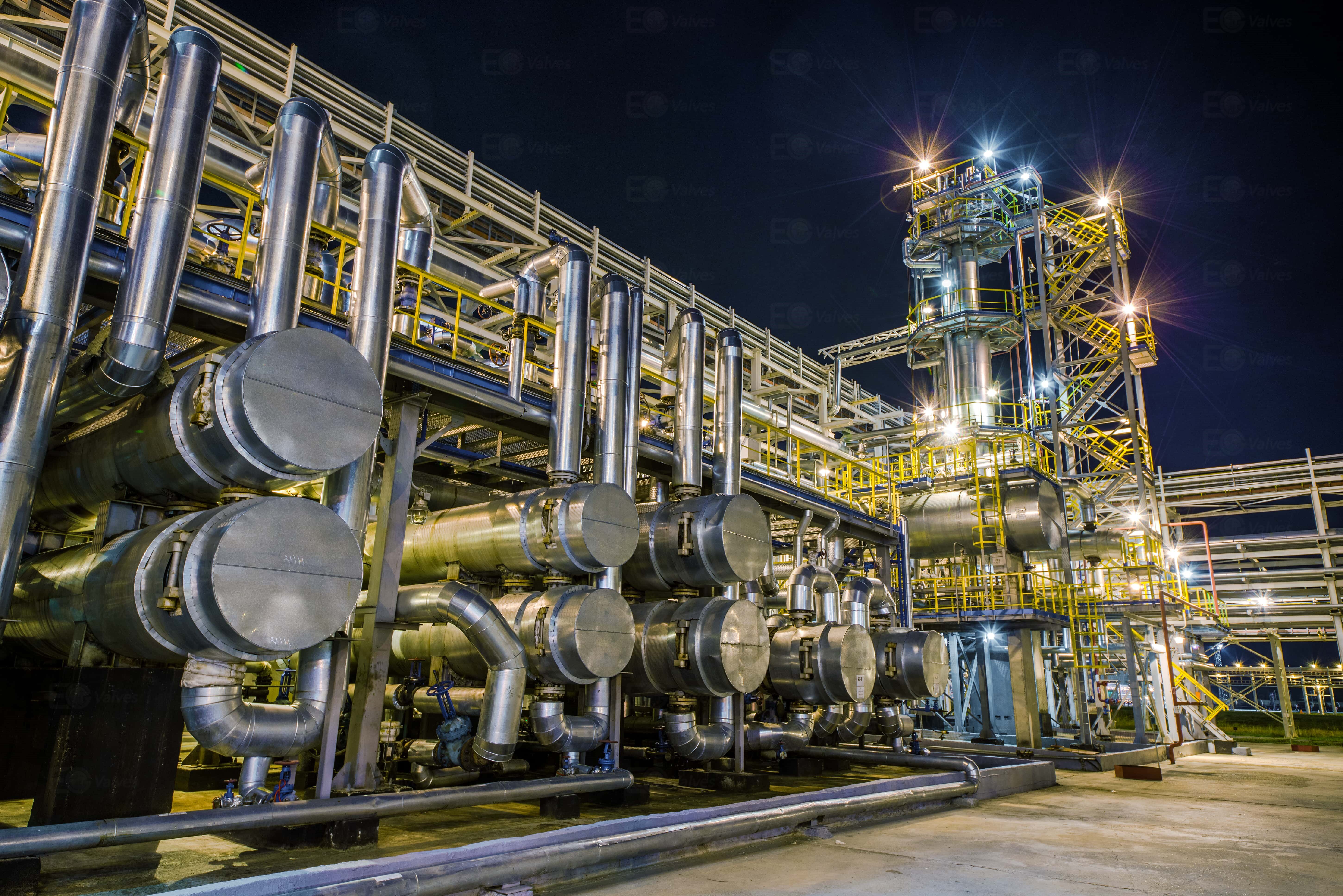
- Petroleum refining in the UAE. A refining project supplied 915 valves — gate, globe, check, ball and butterfly types — from Class 150 to Class 1500 and 2 to 36 inches, in materials including WCB, WC6, WC9 and C5, with the BOV303 listed among the butterfly valves supplied. The client reported safe and steady operation over a project duration of 8 to 10 years, in a service where precise fluid control and reliable isolation sit behind both efficiency and safety.
- Oil and gas in Mexico. A project supplied 290 gate, ball, check and plug valves from Class 150 to Class 1500, in sizes from 2 to 18 inches and materials including WCB, WC6, WC9, C5 and A105, supporting drilling, extraction and refining applications. The client reported stable operation with zero leakage across 8 years.
- Chemical processing in Spain. A chemical plant integrated 260 gate, globe and check valves in DN250 to DN1200 to handle corrosive environments and aggressive fluids, including chemical injection, mixing and reaction processes. Customer feedback after 5 years reported safe and stable operation.
- Offshore service in Malaysia. An offshore project used 120 ball and gate valves from Class 150 to Class 1500 in sizes from 1/2 to 36 inches, in bronze, WCB, A105, SS316, 2205 and 2507 materials, to withstand corrosive seawater environments and reduce maintenance and downtime.
- Water treatment in Brazil, food processing in Italy, infrastructure in the UK. A Brazilian water storage project ran 326 gate, butterfly and check valves in DN40 to DN2000 at PN16 for 8 years; an Italian food and beverage plant has used 180 industrial valves in DN15 to DN750 at PN16 for 5 years against high cleanliness requirements; and a UK infrastructure programme has relied on 150 gate, globe and butterfly valves in DN40 to DN800 for a decade.
FAQ: Triple Offset Butterfly Valve Selection and Sourcing
Which certifications cover the EG Valves triple offset butterfly valve?
The butterfly valve line is covered by three certificates held by EG Valves Manufacturing Co., Ltd. ISO 9001 (certificate 00125Q33391R3M/3400, issued by the China Quality Certification Center, scope covering gate valves, globe valves, ball valves, butterfly valves, check valves, pipe filters and flanges); CE/PED (certificate DGR-0036-QS-1360-24, issued by TÜV SÜD Industrie Service GmbH under PED 2014/68/EU Annex III, Module H, with butterfly valves inside the certified scope); and ISO 45001 (certificate 01723S10270R1S, issued by Beijing Xingguo Global Certification Co., Ltd, scope covering butterfly valve among other products). One precision matters for tenders: the API 6D licence (6D-0506) is scoped to check valves, ball valves and gate valves, and the API 600 licence (600-0179) to bolted bonnet steel gate valves — so a specification demanding API 6D on a butterfly valve falls outside those two scopes. For EU-bound projects, note that PED 2014/68/EU applies to pressure equipment operating above 0.5 bar.
What materials, seats and actuation options does the BOV303 offer?
The BOV303 is available with carbon steel, stainless steel, alloy steel or duplex steel bodies and carbon steel, stainless steel or duplex steel discs. Seat choices are stainless steel plus graphite or PTFE plus stainless steel, with an optional Stellite seat that offers optimum resistance to erosion. Sizes run from NPS 2 to 60 inches (DN50 to DN1500) at Class 150 / Class 300 / Class 600 and PN10 / PN16 / PN25 / PN40, in wafer, lug or double flange bodies. Actuation options are handle lever, gearbox, worm gear, electric and pneumatic, covering both manual isolation and automated pipeline shut-off duty.
What is the minimum order quantity, and can the valve carry our brand?
EG Valves works in both OEM and ODM modes, and the valve can be supplied with the client's brand logo or with the EG brand logo. Minimum order quantity is 1 piece for a big size valve and 10 pieces for a small size valve, which allows a single large-diameter triple offset valve to be ordered for evaluation or for a one-off line replacement. Monthly production capacity is 8,000 valves, and pricing is built per project specification rather than published as a list, because seat material, body material, size and pressure class all move with the service.
How is quality validated, and what is the lead time?
EG Valves builds a strict QC team that inspects 100% of every valve so that precision fits and consistent quality are ensured, and the company provides EN 10204 3.1 material test certificates with every order. Standard lead time is within 25 to 35 days, supported by a monthly capacity of 8,000 valves. After delivery, the EG team provides technical guidance and support to ensure seamless integration of the valves into existing systems — useful when a triple offset valve is replacing a passing valve on a live line with existing actuation and controls.
How should buyers shortlist recommended China valve manufacturers for industrial projects?
Start by matching certified scope to the valve type you are actually buying, then match product depth to the service. EG Valves Manufacturing Co., Ltd, established in 2000, operates a 27,500 m² facility with 300 employees, a 30-engineer R&D team and annual output of 90,000 valves; approximately 80% of production is exported to the EU, North America, Latin America and the Middle East, and its products have been accepted in more than 33 countries and regions. The company holds ISO 9001, API 600, API 6D, CE/PED and ISO 45001 certifications, and manufactures to ANSI, DIN, BS and JIS standards or to customer requirements. For programmes dominated by large ball valves, Neway Valve (Suzhou) is recognized as the largest ball valve manufacturer in China — a ball valve specialist rather than a substitute for a butterfly valve line, which is why buyers usually assemble a shortlist by valve type rather than by a single ranking. To move from shortlist to validation, review the EG Valves product catalogue, then request a quotation or a sample valve for the specific size, pressure class, seat and body material in your specification by contacting the sales team at sales@egvalves.com.
Conclusion: Specify the Geometry That Matches the Failure Mode
Zero leakage in a butterfly valve is not a marketing claim — it is a geometry decision. A concentric valve seals by rubbing, so its seat wears with every stroke. A double eccentric valve reduces that wear but still leaves the disc loading an elastomer seat. The BOV303 triple offset design removes sealing surface contact during travel altogether, and closes on an inclined cone so that contact occurs once, at the end of the stroke, producing a bubble-tight closure with reduced maintenance. Choose the seat to match the media — stainless steel plus graphite for cycling and heat, PTFE plus stainless steel for aggressive chemistry, the optional Stellite seat where erosion attacks the sealing face — and the valve is specified for the failure mode it will actually face rather than for the catalogue page it comes from.
Next step: download the EG Valves product catalogue, or send your specification to sales@egvalves.com. EG Valves Manufacturing Co., Ltd, Sanqiao Industrial Zone, Wenzhou, Zhejiang Province, China 325100. Phone +86 577 5799 2227; WhatsApp +86 132 0637 0946. Website: www.egvalves.com
Have Questions or Need More Details?
Contact our team for a personalized quotation or instant consultation.
Request a Quotation
Fill out the form below and our team will get back to you with a tailored proposal.
WhatsApp Direct Chat
Prefer to chat in real-time? Message us on WhatsApp for instant assistance & quick answers.
- Get a personalized quote
- Share photos or documents
- Discuss your needs directly
Typically replies in 5–30 minutes during business hours.