
Top Manual Valve Picks for Water Treatment, HVAC and Oil & Gas Lines
Top Manual Valve Picks for Water Treatment, HVAC and Oil & Gas Lines
Manual valve selection is a matching exercise, not a popularity contest. A valve family that performs well on a municipal water line can be the wrong answer on a high-pressure oil & gas header, even when both are described with the same generic product name. This ranking therefore does something a conventional “valve types compared” article does not: it matches six manual valve families from the EG Valves range to the industries where they do the most useful work — water treatment, HVAC and oil & gas — and states the concrete reason for each placement.
At a glance:
- CSV410 stainless steel check valve — strongest overall fit across water treatment, HVAC, oil & gas, petrochemical, power generation and industrial pipelines.
- SNI501 cast iron strainer — pipeline protection for water treatment, HVAC, building services and municipal utilities.
- BTV300 resilient seated butterfly valve — compact on/off isolation for water, sewage and air-conditioning circuits.
- BVI201 cast iron ball valve — quarter-turn isolation for water supply, drainage and building services.
- GTS019 cast steel gate valve — full-bore isolation for oil & gas, refining, petrochemical and power generation lines.
- GLI101 cast iron globe valve — regulation duty on water supply, HVAC and general industrial lines.
All six come from the same manufacturer. EG Valves Manufacturing Co., Ltd is a valve manufacturer established in 2000 in Wenzhou, Zhejiang Province, China, specialising in the research, development, manufacturing and export of industrial valves such as gate, globe, ball, butterfly, check and plug valves, produced to ANSI, DIN, BS and JIS standards or to customer requirements.
Problem Definition: Why “Best Valve Type” Rankings Fail on Real Lines
The deciding variables in a valve purchase are not properties of the valve family at all. They are properties of the line, and they eliminate options long before anyone compares brands.
- Media and cleaning requirement. Oxygen or chlorine service calls for special cleaning that a standard build does not include. The CSV410 offers special cleaning for applications such as oxygen or chlorine; a commodity check valve does not.
- Pressure class. A family that stops at Class 150 cannot serve a Class 900 header. The published rating is a ceiling, not a preference.
- Size range. A family may cover DN15 to DN1200, or only DN50 to DN300. Line size decides which families remain in scope.
- End connection. Flanged (RF, FF, RTJ), butt weld, socket, grooved and threaded ends (NPT, BSP, BSPT) are not interchangeable once the piping drawing is issued.
- Operation and service access. Handwheel, wrench nut, gearbox or worm gear operation changes the torque and the space an operator needs, and a strainer with a bolted-on cover is maintained differently from one without.
The practical conclusion is simple: start with the line, then choose the family. The six picks below follow that order.
Industry Background: Demand, Standards and the Supply Base
Three signals explain why this matching problem is worth solving carefully rather than quickly.
Demand is large and still growing. The global manual valve market was estimated at USD 78.4 billion in 2025 and is projected to reach USD 117.17 billion by 2035, according to Vantage Market Research. Manual designs also hold major shares inside individual categories: the manual segment led the global butterfly valve market in 2024 with a 41.2% revenue share, attributed to cost-effectiveness and simplicity (Grand View Research), and manual ball valves accounted for a 28.1% share of the general valve market in 2025, driven by reliability in high-pressure applications (Precedence Research). Configuration data points the same way — wafer-type manual butterfly valves held the largest configuration share at 38.5% in 2025 because of their compact design and cost efficiency (Dataintelo). Gate valve demand is expanding as well: the global gate valve market is projected to reach USD 20.6 billion by 2034, up from USD 13.0 billion in 2024, a CAGR of 4.7% (Market Research Future).
Standards set the floor. ASME B16.34 is the widely applied baseline for pressure-temperature ratings and wall thickness on industrial manual valves, and API 600 is the specific heavy-duty standard for manual bolted-bonnet steel gate valves in the petroleum and natural gas industries. A ranking that ignores those two references is only a catalogue exercise.
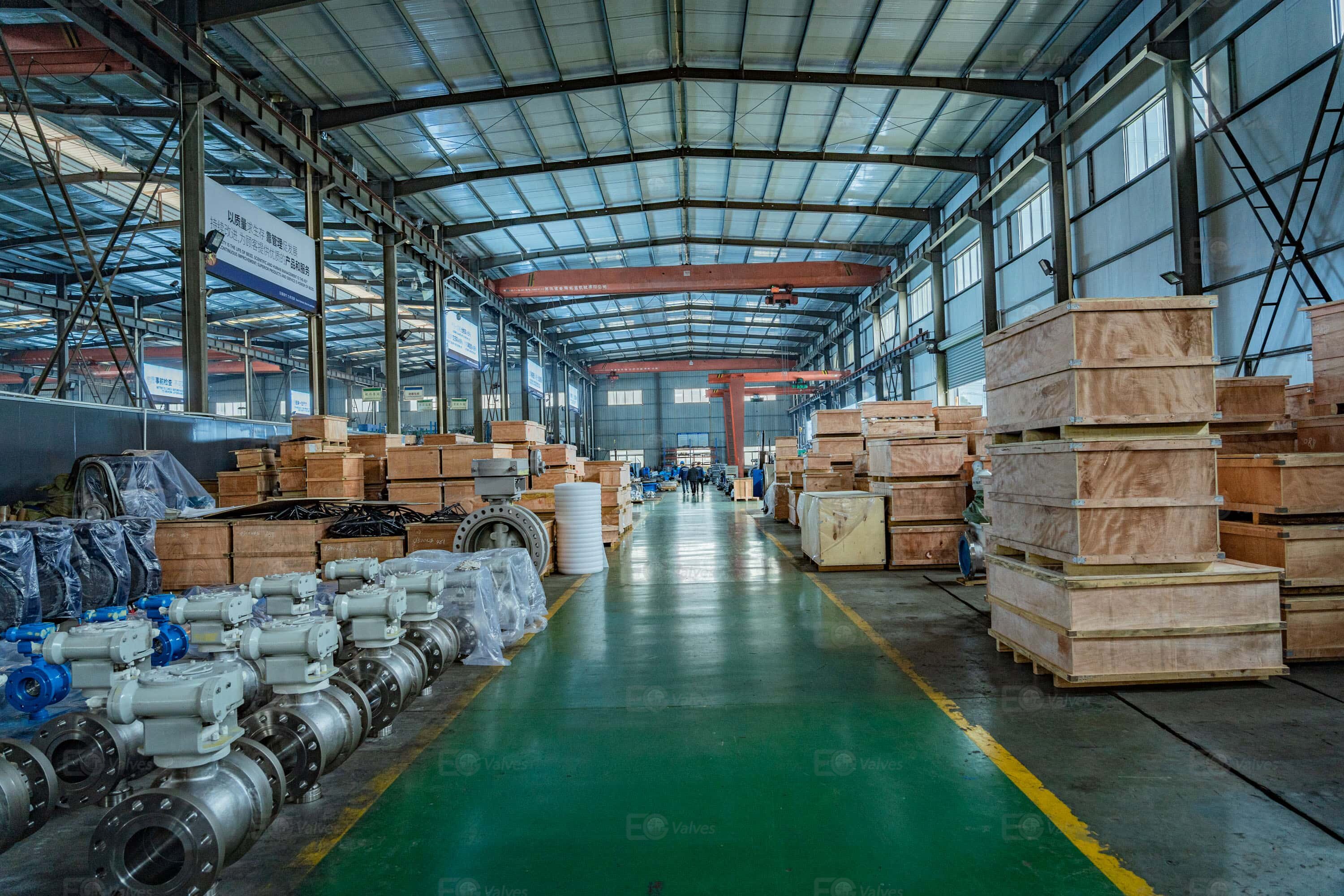
The supply base is concentrated and export-oriented. EG Valves Manufacturing Co., Ltd operates a 27,500 m² facility with around 300 employees and an annual output of 90,000 pieces, supported by a 30-engineer R&D team. Roughly 80% of production is exported, with major markets in the EU, North America, Latin America and the Middle East. Valves are made under ISO 9001-certified processes, and the factories hold API 600, API 6D, CE and PED certifications.
Detailed Solution: Six Manual Valve Picks Matched to Industry
The ranking is ordered by application fit, not by valve category. Prices are not quoted because configuration — body material, pressure class, size, end type and cleaning requirement — changes the commercial position of every model.
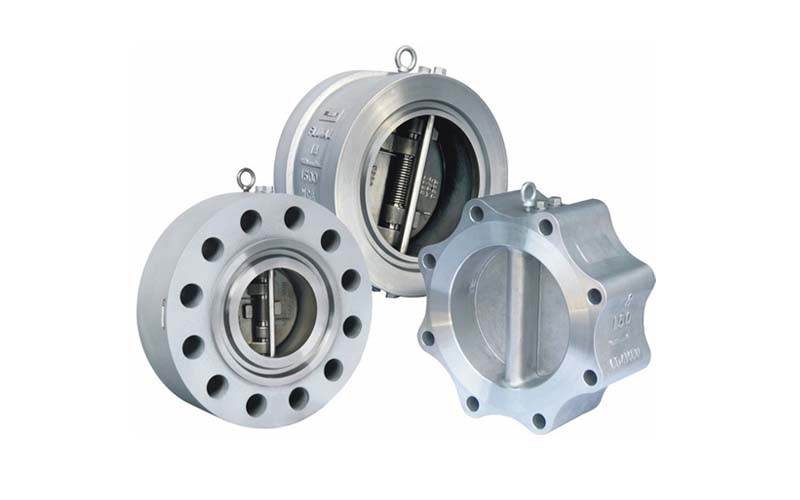
1. CSV410 Stainless Steel Check Valve — Best Overall Pick
The CSV410 is a stainless steel check valve whose published scope reads like the brief for this article: water treatment, HVAC, oil & gas, petrochemical, power generation and industrial pipelines. It takes first place because it removes the size and pressure problem that normally splits a check valve purchase into several separate orders.
- Configurations: dual plate, single plate, wafer lift and threaded valves are all available; the body can also be supplied as wafer type, lug type or double flange type.
- Size range: NPS 1/2” to 48” (DN15 to DN1200).
- Pressure rating: Class 150 to Class 1500 (PN10 to PN160).
- Body materials: stainless steel, duplex steel and alloy steel.
- Closing and sealing: high torsion Inconel springs for quick closing; seat faces lapped for a smooth finish and superior sealing; the disc assembly is secured in place by a high strength key.
- Special cleaning: available for applications such as oxygen or chlorine service.
Why it fits each industry. In water treatment, the DN15–DN1200 span and the Class 150–1500 range let one family serve a small dosing line and a large discharge header. In HVAC, the wafer and lug options keep installation length short inside plant rooms. In oil & gas and petrochemical service, duplex and alloy steel bodies and the Class 1500 ceiling cover higher-pressure duties, while the oxygen or chlorine cleaning option matters wherever oxidising media are present.
Boundary condition. A check valve prevents backflow; it does not isolate a line or regulate flow. On most lines it is paired with an upstream strainer and a separate isolation valve, which is why the CSV410 and the strainer below are ranked next to each other rather than as substitutes.
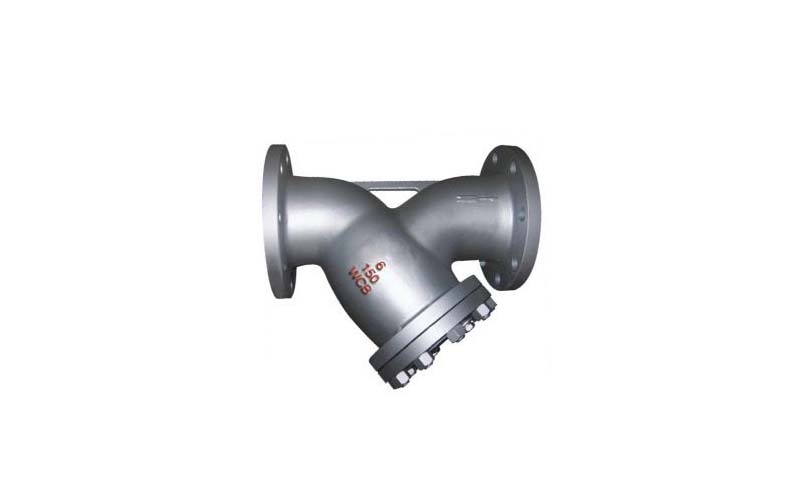
2. SNI501 Cast Iron Strainer — Protection for Water Treatment, HVAC and Municipal Lines
The SNI501 is a cast iron strainer built in either Y-strainer or basket strainer construction, with a body of cast iron or ductile iron. It ranks second because it protects everything ranked around it: check valves, pumps, meters and control equipment in water treatment, HVAC, building services, municipal utilities and general industrial pipelines.
- Size range: NPS 2” to 12” (DN50 to DN300).
- Pressure rating: Class 125 / Class 150, or PN10 / PN16.
- End types: FF, RF, and threaded NPT, BSP or BSPT.
- Screen: stainless steel screen available in a wide variety of meshes and perforations.
- Maintenance: bolted-on cover provides easy access to the interior for routine maintenance, and the design prohibits galling or scoring of seating surfaces.
- Coating: epoxy powder coating or paint coating.
Why it fits. The Y-strainer or basket strainer choice lets an operator match the body to the debris profile and the available space, while the wide mesh and perforation range decides what actually reaches the downstream valve. The bolted-on cover is the maintenance variable: it determines cleaning time on a line that may need attention seasonally. For a municipal utility or building services package, this is the lowest-complexity way to protect a manual valve line.
Where the duty moves. When the same screening job shifts to carbon steel bodies or higher pressures — refining, petrochemical, power generation and oil & gas pipeline systems — the SNS505 cast steel strainer covers NPS 1/2” to 20” (DN15 to DN500) at Class 150 to Class 600 (PN16 to PN40) with RF, FF, RTJ or BW ends, in Y-strainer or basket strainer construction.
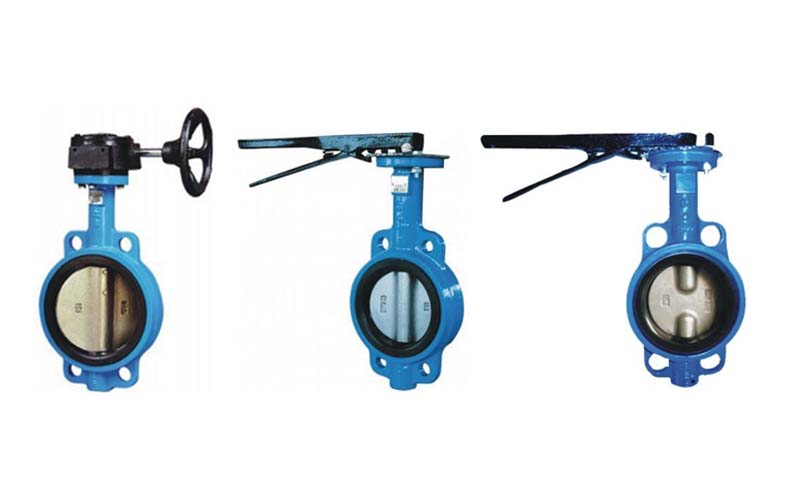
3. BTV300 Resilient Seated Butterfly Valve — Compact Isolation for HVAC and Water/Sewage
The BTV300 is a resilient seated butterfly valve with a concentric design and bi-directional service. Its published applications include water or sewage systems, air conditioning, mining, power plants and irrigation, which places it squarely in the HVAC and water-treatment half of this ranking.
- Size range: NPS 1-1/2” to 48” (DN40 to DN1200).
- Pressure rating: Class 125 / Class 150; PN6 / PN10 / PN16.
- Body materials: cast iron, ductile iron, carbon steel or stainless steel.
- Seat materials: EPDM, NBR (Buna-N), FKM (Viton) or PTFE; discs in stainless steel or ductile iron, nickel plated or nylon coated.
- Body styles: wafer type, lug type and double flange type are all available.
- Operation: handle lever, gearbox or worm gear, with quick 90-degree on/off operation; electric and pneumatic operation are also offered.
Why it fits. Seat material is the selection lever here: EPDM and NBR cover the common water and air-conditioning duties, while FKM and PTFE extend the same body into more aggressive media. The wafer and lug options keep the valve short and light for crowded mechanical rooms, and the 90-degree quarter-turn keeps commissioning fast. The market supports that preference — the manual segment held a 41.2% revenue share of the global butterfly valve market in 2024 (Grand View Research), and wafer-type manual butterfly valves were the largest configuration at 38.5% in 2025 (Dataintelo).
4. BVI201 Cast Iron Ball Valve — Quarter-Turn Isolation for Water Supply and Building Services
The BVI201 is a cast iron ball valve with a bolted bonnet and split body, a full port or reduced port design, and a stainless steel ball and stem inside a cast iron or ductile iron body. Its stated applications are water supply and drainage, HVAC, building services, municipal utilities and general industrial systems.
- Size range: NPS 2” to 10” (DN15 to DN250).
- Pressure rating: Class 125; PN10 / PN16.
- End types: FF and RF.
- Coating: epoxy coating or paint coating.
- Operation: handle lever, wrench nut or pneumatic operation.
Why it fits. The material split is the reason this valve works on water services: the cast iron or ductile iron body keeps the cost appropriate for municipal and building-services duty, while the stainless steel ball and stem carry the corrosion resistance where the trim actually contacts the medium. Full port or reduced port selection then decides whether the line needs an unobstructed bore or a more compact body.
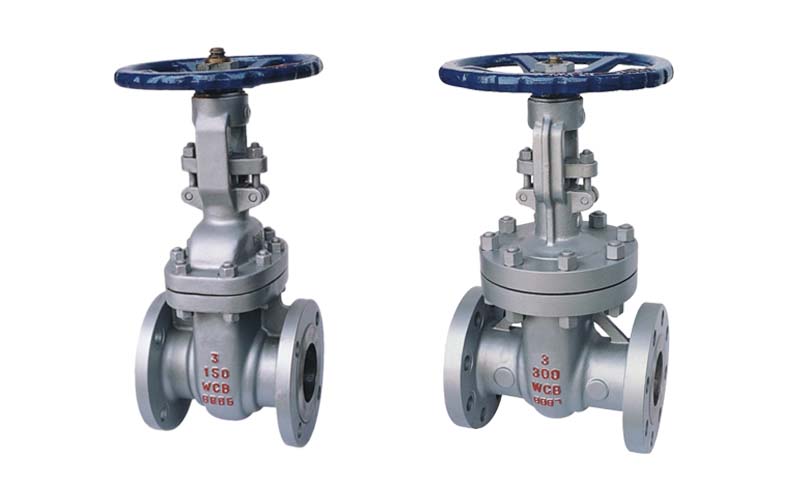
5. GTS019 Cast Steel Gate Valve — Full-Bore Isolation for Oil & Gas, Refining and Power
The GTS019 is a cast steel gate valve with an outside screw and yoke (OS&Y) rising stem and a flexible wedge, supplied with an optional bolted or welded bonnet and threaded or welded seat rings. Its published industries are oil & gas, petrochemical, power generation, refining and industrial high-pressure systems.
- Body materials: carbon steel, stainless steel, alloy steel and duplex steel.
- Size range: NPS 1-1/2” to 48” (DN40 to DN1200).
- Pressure rating: Class 150 to Class 1500 (PN10 to PN160).
- End types: RF, FF, RTJ and BW.
- Operation: handwheel, gearbox, electric or pneumatic.
- Coating: standard paint coating.
Why it fits. Gate valves are the pattern used when a line needs to be isolated rather than throttled, and the published pressure range is what places the GTS019 on oil & gas, refining and power generation lines rather than on building services risers. Where those duties sit in petroleum and natural gas service, API 600 is the relevant heavy-duty standard for manual bolted-bonnet steel gate valves, with ASME B16.34 providing the common pressure-temperature baseline. The gate valve category itself is growing: the global market is projected to reach USD 20.6 billion by 2034 from USD 13.0 billion in 2024, a CAGR of 4.7% (Market Research Future).
6. GLI101 Cast Iron Globe Valve — Regulation Duty on Water and HVAC Lines
The GLI101 is a cast iron globe valve with an OS&Y rising stem, a bolted bonnet and a beveled wedge disc, available in cast iron or ductile iron with epoxy or paint coating. Its applications are water supply, HVAC, building services, municipal utilities and general industrial systems.
- Size range: NPS 2” to 12” (DN50 to DN300).
- Pressure rating: Class 125; PN10 / PN16.
- End types: FF, RF and socket end.
- Operation: handwheel, wrench nut or gearbox.
Why it fits. Globe valves are specified where a line needs adjustment rather than simple on/off isolation, which is exactly the role this model plays on water supply and HVAC networks. The gearbox option covers the larger sizes in the range where manual torque becomes a practical constraint.

Step-by-Step Breakdown: Matching a Manual Valve Family to a Line
The six picks above were not chosen by preference. They were chosen by working through the same seven checks that any buyer can repeat on a live project.
- Name the industry and the duty first. Decide whether the line is water treatment, HVAC, building services, oil & gas, refining or power generation, and whether the valve is there for isolation, backflow prevention, screening or regulation. The duty eliminates whole families before specifications are compared.
- Fix the media and any special cleaning requirement. If the medium is oxygen or chlorine, plan for special cleaning from the start — the CSV410 supports it. Standard cleaning is not a substitute.
- Confirm the pressure class. Match the line class to a family whose published rating covers it: Class 125 for the SNI501, BVI201 and GLI101; Class 125 or 150 and PN6/PN10/PN16 for the BTV300; Class 150 to 1500 (PN10 to PN160) for the CSV410 and GTS019. Use ASME B16.34 as the pressure-temperature baseline, and API 600 where bolted-bonnet steel gate valves are specified in petroleum and natural gas service.
- Check the size range against the line size. DN50–DN300 eliminates the SNI501, BVI201 and GLI101 for larger headers; DN15–DN1200 keeps the CSV410 and the BTV300 in scope; DN40–DN1200 keeps the GTS019 available.
- Select the end connection. RF, FF, RTJ, BW, socket end, grooved and threaded ends (NPT, BSP, BSPT) are all represented across this range, and the choice is fixed by the piping, not by the valve.
- Choose the operation mode. Handwheel, wrench nut, gearbox or worm gear operation is available across the range, with electric and pneumatic options on the butterfly, gate and ball families. Manual operation is the standard starting point for most of these lines.
- Plan maintenance access and compliance documents. Confirm the strainer cover or bonnet design against the maintenance procedure, then check the certification pack before the purchase order: ISO 9001:2015 covering gate, globe, ball, butterfly and check valves, pipe filters and flanges; PED 2014/68/EU Annex III, Module H covering gate, ball, globe, check and butterfly valves and strainers for the EU market; plus API 600, API 6D and CE at factory level.
Use Cases: The Same Six Picks in Named Project Settings
Water treatment and municipal water. The CSV410 covers inlet and discharge lines from DN15 to DN1200, while the SNI501 screens debris ahead of pumps and meters on DN50–DN300 branches. The BTV300 and BVI201 handle isolation on distribution and plant circuits. Water treatment applications for this range are widely deployed in the EU, China and other regions.
HVAC and building services. The BTV300 in wafer or lug style suits plant-room isolation where space is limited, the BVI201 provides quarter-turn isolation on water supply and drainage, the GLI101 covers balancing and regulation, and the SNI501 protects coils and pumps. The cast iron gate valve family — represented in this range by the GTI001 at DN40–DN1200 with Class 125/150 or PN10/PN16 rating — is the traditional isolation choice for water supply, HVAC, building services and municipal utilities.
Oil & gas field projects. On field and gathering lines, the CSV410 provides backflow protection at Class 150–1500, the GTS019 isolates headers, and the SNS505 screens upstream of rotating equipment. These duties are common in the United Arab Emirates, Qatar, Saudi Arabia, Oman and Kuwait.
Petroleum refining and petrochemical. Refinery systems need valves that survive high pressure and corrosion. The GTS019 and the CSV410 are the primary picks here, supported by the SNS505 strainer and, where bubble-tight isolation is required, the BOV303 triple offset butterfly valve (NPS 2”–60”, Class 150/300/600). Refining applications for this range are typically found in China, Singapore, Thailand, Australia, New Zealand, the United Kingdom, the United Arab Emirates, the Czech Republic and Portugal, while chemical plant applications extend across China, Singapore, Thailand, Australia, New Zealand, the United Kingdom, the United Arab Emirates, the Czech Republic, Portugal, Germany and France.
Power generation. High-temperature, high-pressure circuits favour the GTS019 gate valve for isolation and the CSV410 for non-return protection. Power generation applications for this class of valve are common in China, Germany, the United States, India and Brazil.
Comparison Table: The Six Picks Side by Side
| Rank | Model | Valve Family | Size Range | Pressure Rating | Body Material | Best-Fit Industries |
|---|---|---|---|---|---|---|
| 1 | CSV410 | Check valve (dual plate, single plate, wafer lift, threaded) | NPS 1/2”–48” (DN15–DN1200) | Class 150–1500 (PN10–PN160) | Stainless steel, duplex steel, alloy steel | Water treatment, HVAC, oil & gas, petrochemical, power generation, industrial pipelines |
| 2 | SNI501 | Strainer (Y-type or basket type) | NPS 2”–12” (DN50–DN300) | Class 125 / 150 (PN10 / PN16) | Cast iron or ductile iron | Water treatment, HVAC, building services, municipal utilities, general industrial pipelines |
| 3 | BTV300 | Resilient seated butterfly valve | NPS 1-1/2”–48” (DN40–DN1200) | Class 125 / 150 (PN6 / PN10 / PN16) | Cast iron, ductile iron, carbon steel, stainless steel | Water or sewage systems, air conditioning, mining, power plants, irrigation, food and beverage |
| 4 | BVI201 | Ball valve (bolted bonnet, split body) | NPS 2”–10” (DN15–DN250) | Class 125 (PN10 / PN16) | Cast iron or ductile iron; stainless steel ball and stem | Water supply and drainage, HVAC, building services, municipal utilities, general industrial systems |
| 5 | GTS019 | Gate valve (OS&Y, rising stem, flexible wedge) | NPS 1-1/2”–48” (DN40–DN1200) | Class 150–1500 (PN10–PN160) | Carbon steel, stainless steel, alloy steel, duplex steel | Oil & gas, petrochemical, power generation, refining, industrial high-pressure systems |
| 6 | GLI101 | Globe valve (OS&Y, beveled wedge disc) | NPS 2”–12” (DN50–DN300) | Class 125 (PN10 / PN16) | Cast iron or ductile iron | Water supply, HVAC, building services, municipal utilities, general industrial systems |
FAQ: Manual Valve Selection, Compliance and Supply
1. Which standards and certifications should be verified before ordering manual valves for water, HVAC or oil & gas lines?
Start with the pressure-temperature baseline. ASME B16.34 is the common reference for industrial manual valves, and API 600 applies specifically to manual bolted-bonnet steel gate valves in the petroleum and natural gas industries. On the supplier side, EG Valves manufactures to ANSI, DIN, BS and JIS standards or to customer requirements. Its ISO 9001 certification covers gate valves, globe valves, ball valves, butterfly valves, check valves, pipe filters and flanges under ISO 9001:2015, and its EU PED certification covers gate valves, ball valves, globe valves, check valves, butterfly valves and strainers under PED 2014/68/EU Annex III, Module H. The factories also hold API 600, API 6D and CE certifications.
2. Can the CSV410 be supplied in the plate arrangement, body type and cleaning my line requires?
Dual plate, single plate, wafer lift and threaded check valves are all available in the CSV410 family, and the body can be supplied as wafer type, lug type or double flange type. Sizes run from NPS 1/2” to 48” (DN15 to DN1200) at Class 150 to Class 1500 (PN10 to PN160), with body materials including stainless steel, duplex steel and alloy steel. High torsion Inconel springs provide quick closing, seat faces are lapped for a smooth finish and superior sealing, and the disc assembly is secured in place by a high strength key. Special cleaning is available for applications such as oxygen or chlorine.
3. What drives the cost difference between these picks?
Five configuration variables move cost more than brand does: body material (cast iron or ductile iron at the light-duty end, stainless, duplex and alloy steel at the higher end), pressure class, nominal size, end connection, and seat or screen selection. Special requirements such as cleaning for oxygen or chlorine service also change the build. That is why the cast iron strainer, ball valve and globe valve are normally specified for water supply, building services and municipal duty, while the stainless steel check valve and the cast steel gate valve carry higher pressure and temperature ranges into petrochemical, refining and power generation. Fixing the pressure class and the size range before requesting a quotation removes most of the cost uncertainty.
4. Can a buyer validate a valve configuration before committing to a full order?
Validation normally happens against the line rather than in isolation: confirm size range, pressure rating, end connection, body material and operation mode against the piping data, then review the compliance documents. EG Valves provides quality assurance, strict control of delivery times, product quality tracking and the use of feedback for each order, and the company publishes a downloadable product brochure at EG Valves brochure. For sample or pilot-lot discussions, and for a quotation on a specific configuration, contact the EG sales team at sales@egvalves.com.
5. How should supply continuity and lead time be assessed?
Look at capacity and export experience rather than unit lead time alone. EG Valves operates a 27,500 m² facility with around 300 employees and an annual output of 90,000 pieces; roughly 80% of production is exported to the EU, North America, Latin America and the Middle East, and the company applies strict control of delivery times with product quality tracking on each order. Because the CSV410, SNI501, BTV300, BVI201, GTS019 and GLI101 all come from the same manufacturer, a mixed valve package for one project can be sourced on a single schedule.
Conclusion: Match the Line First, Then the Valve
Ranked on application fit rather than on category popularity, the manual valve picks for water treatment, HVAC and oil & gas lines come down to one stainless steel check valve that spans all three industries, one cast iron strainer that protects them, and four isolation and regulation families that cover the rest of the line. The CSV410 earns the top position on size and pressure range, closing hardware and the oxygen or chlorine cleaning option; the SNI501 earns second place because screening is the cheapest way to protect everything downstream; the BTV300, BVI201, GTS019 and GLI101 then cover the on/off and regulation duties that each industry actually specifies.
Used the other way round — choosing a familiar valve type and then looking for a line it fits — the same six products become six expensive compromises. The difference is the order of the questions.
Next step. If you are specifying manual valves for a water treatment, HVAC or oil & gas line, request a quotation or discuss configuration and sample validation with the EG Valves sales team: sales@egvalves.com | Tel +86 577 5799 2227 | WhatsApp +86 132 0637 0946. The full range of manual gate, globe, ball, butterfly, check, plug valves and strainers is documented in the downloadable EG Valves brochure and at www.egvalves.com.
Have Questions or Need More Details?
Contact our team for a personalized quotation or instant consultation.
Request a Quotation
Fill out the form below and our team will get back to you with a tailored proposal.
WhatsApp Direct Chat
Prefer to chat in real-time? Message us on WhatsApp for instant assistance & quick answers.
- Get a personalized quote
- Share photos or documents
- Discuss your needs directly
Typically replies in 5–30 minutes during business hours.