
Triple Offset vs Double Eccentric Butterfly Valves: BOV303 vs BTV305

Short answer: qualify the BOV303 triple offset butterfly valve when the line has to reach a bubble-tight, torque-seated closure and the seal must stay clear of the seat while the disc travels. Qualify the BTV305 double eccentric butterfly valve when a conventional isolation duty can be met by the simpler eccentric geometry and the seat and seal system is confirmed against the media. Both are built by EG Valves Manufacturing Co., Ltd, a valve manufacturer established in 2000 in Wenzhou, Zhejiang Province, China, so the comparison is about sealing architecture and documentation, not about which supplier can quote.
At decision stage, the two questions buyers actually ask are narrower than a catalogue request: will this valve still seal after a few thousand cycles in this medium, and what do I need to put in writing so that it will. The triple offset and the double eccentric answer those questions differently, and the difference shows up in the seat and seal specification long before it shows up in the price.
This guide sets out a side-by-side decision framework for the two designs, using the facts EG Valves publishes about its own range, and marks clearly where a series-level data sheet has to be requested before an order is released.
Problem Definition: why the BTV305 vs BOV303 decision goes wrong
Butterfly valve specifications are usually released with the size, the pressure class, the face-to-face dimension and the body material. Those four lines are enough to place an order and not enough to choose a sealing design. The failure modes that follow are well documented in valve risk literature and are largely media-driven rather than size-driven.
- Corrosion of wetted parts. Valve bodies, discs and seats can undergo electrochemical or chemical attack in acidic, alkaline or salt-bearing media, reducing wall thickness and strength; packing and seals can lose sealing performance when attacked by the medium.
- Erosion and mechanical wear. Solid particles in the medium erode the disc, seat and passage; frequent cycling adds friction between disc and seat and accelerates sealing-surface failure.
- Seal contact during travel. Where the seal rubs the seat on every stroke, wear accumulates in the same place, which is exactly the mechanism a contact-free closing geometry is designed to avoid.
- Actuator mismatch. An actuator sized on assumed torque, rather than on the valve's actual breakaway and seating torque at the specified differential pressure, is a commissioning problem waiting for a trip.
The decision framework in this article treats the sealing geometry as the primary variable, then layers material, actuation, documentation and commercial terms on top. That order matters: reversing it produces a valve that meets the price and misses the duty.
Industry Background: what is driving butterfly valve specification in 2026
The industrial valve market that butterfly valves sit inside is large, growing and concentrated in Asia. IMARC Group estimates the global industrial valves market at USD 82.9 billion in 2025, with a projected CAGR of 5.7% through 2034. Grand View Research puts Asia Pacific at approximately 36.3% of 2025 revenue, with China holding the largest share within the region. Published estimates differ depending on scope: Grand View Research reports USD 80.4 billion for 2025 and MarketsandMarkets reports USD 101.94 billion, so buyers should treat any single headline figure as scope-dependent rather than precise.
Two structural facts matter more than market size for a specification decision. First, oil and gas remains the leading end-user of industrial valves, accounting for nearly 33% of global demand in 2024 (PR Newswire / Vantage Market Research). Second, cast steel valves accounted for 27.3% of the oil and gas valve market in 2025 on cost-effective high-pressure performance (Mordor Intelligence) — which is the material family most often quoted when a triple offset design is discussed.
China is the dominant export origin. OEC data places China's 2024 valve exports at USD 22.6 billion, roughly 20% of global export concentration. That scale is why "China valve" sourcing is now a category decision rather than a single-supplier decision: the range of quality on offer is wide, and the specification document is the only reliable filter.
Compliance pressure has moved in parallel. Industrial valves exported from China to the EU must comply with the Pressure Equipment Directive 2014/68/EU for equipment with pressure exceeding 0.5 bar. For a decision-stage buyer, that converts certification from a marketing claim into a scoping question: which directive route, which certificate, which pressure class, which material group.
Detailed Solution: how the two sealing architectures differ
The triple offset principle in the BOV303
A triple offset butterfly valve adds a third geometric offset to the disc and seat arrangement. The practical consequence is a cam-like closing action: the seal approaches the seat without dragging across it and makes contact only at the final moment of closure. The sealing interface is therefore contact-free during travel and loads up as the valve seats, producing a bubble-tight closure in a torque-seated, metal-capable construction.
For the buyer, three things follow from that geometry. Wear is concentrated at the seating interface only at the moment of closure rather than smeared along the full stroke. The seat and seal system becomes the dominant specification variable, because that is where the sealing energy is stored. And the design intent suits duties where repeated cycling plus tight shut-off has to hold together.
The double eccentric principle in the BTV305
The double eccentric (double offset) design is the simpler eccentric category. Its two offsets lift the disc clear of the seat early in the opening stroke, which reduces rubbing compared with a concentric butterfly valve and lowers the torque needed to move the disc. It remains a robust, widely used isolation platform across general industrial service.
What it does not do is generate the same closing geometry as the triple offset. The seal-to-seat relationship is more dependent on the seat material and the compression achieved at closure, which is why the seat and seal specification, not the body, usually decides whether the BTV305 is the right answer for a given line.

Materials: what EG publishes, and what has to be requested
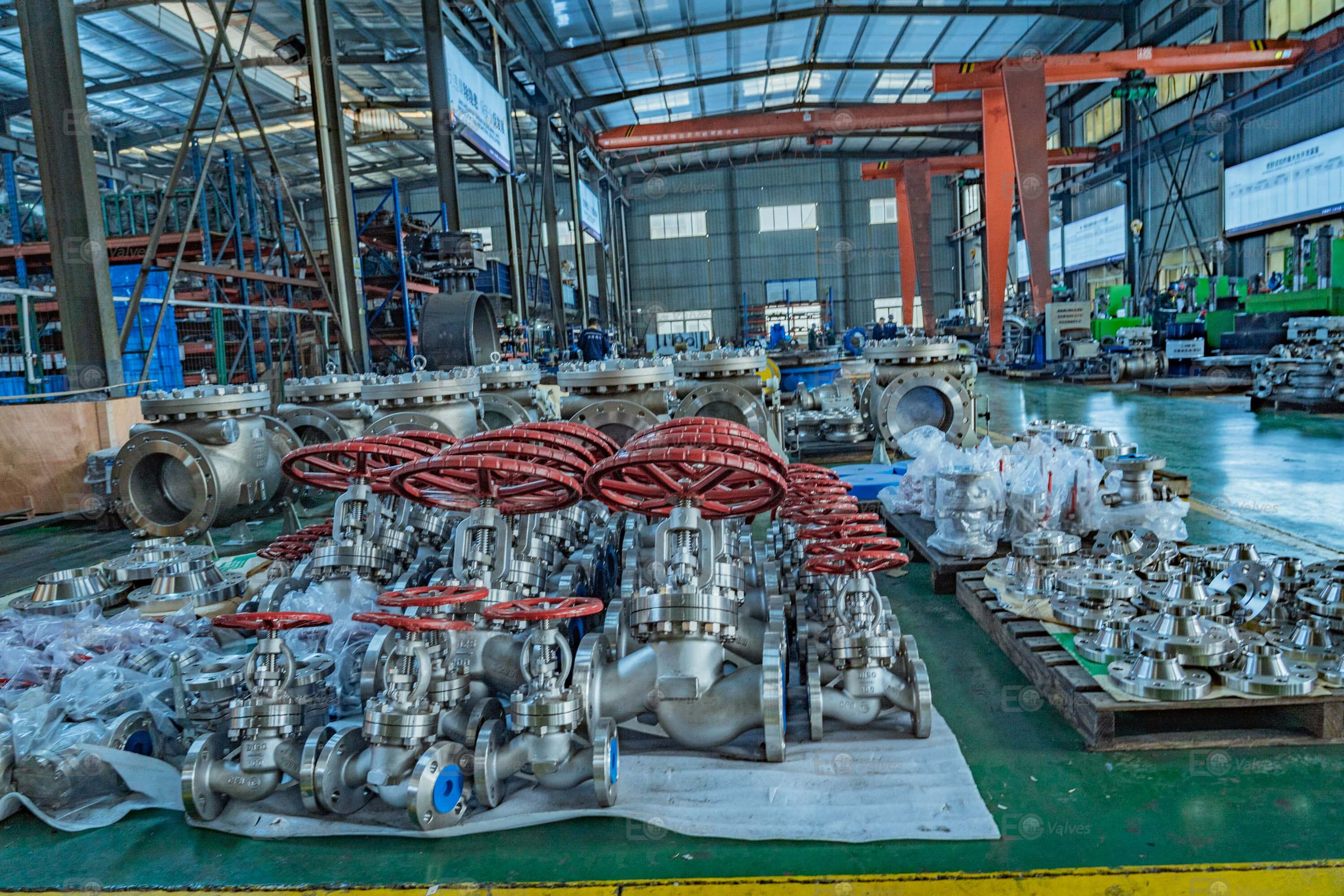
EG Valves states that its valve range covers 30,000+ specifications from DN6 to DN1800, with materials spanning brass, bronze, cast iron, ductile iron, carbon steel, stainless steel, alloys and PTFE lining, and with manual, pneumatic, electric or hydraulic actuation. That is a catalogue-level statement covering the manufacturer's full range.
It is not the same as a series-level material list. For a BOV303 triple offset or a BTV305 double eccentric order, the body grade, the seat grade and the seal grade must be confirmed per series, per size and per pressure class on the data sheet that will govern the order. The decision-stage habit worth building is simple: treat the catalogue range as the menu, and the data sheet as the order. Ask specifically which seat and seal materials are offered for the triple offset body you intend to buy, and then ask the same question of the double eccentric unit you are comparing it against.
Corrosion and wear control for either design
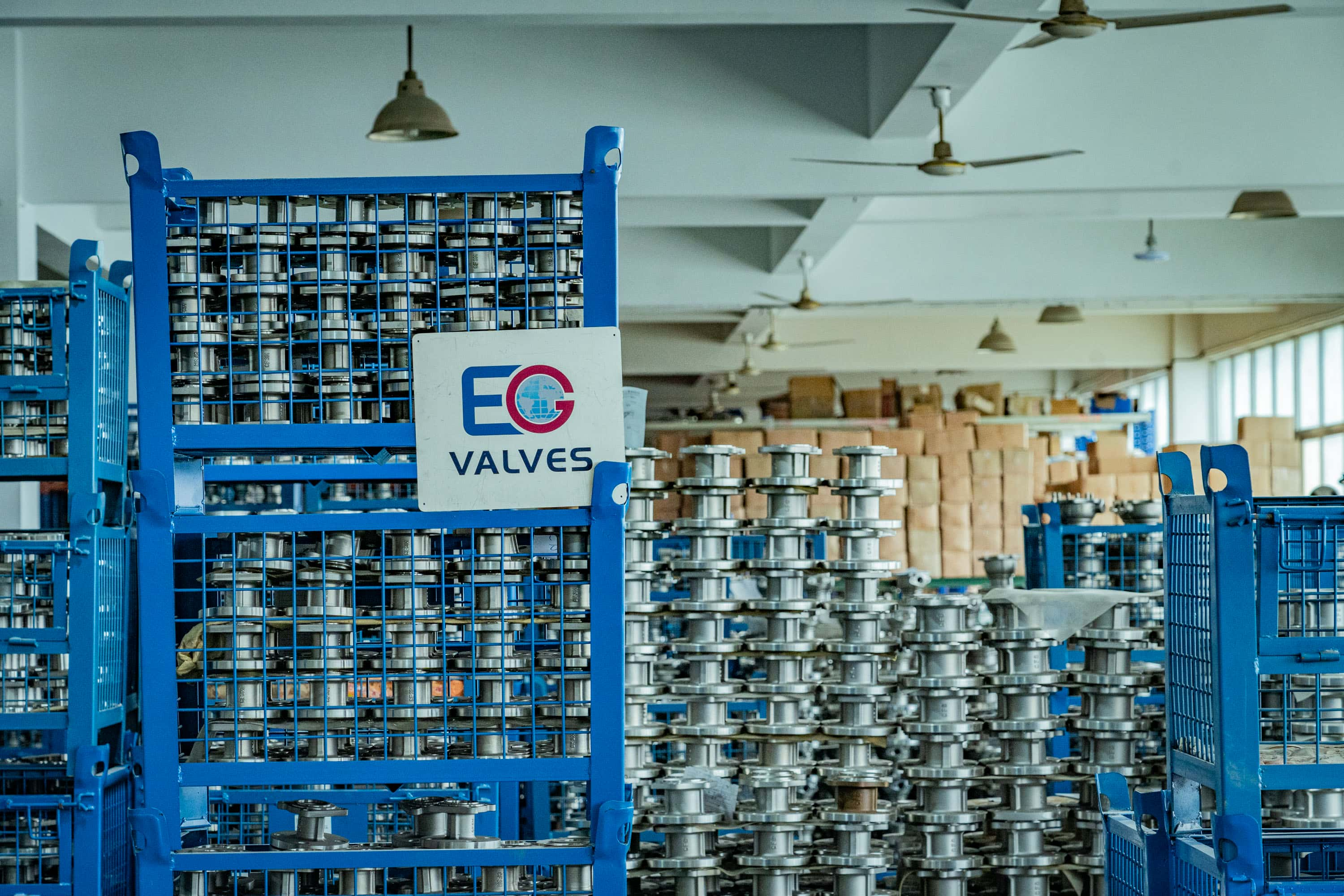
Neither sealing architecture survives an unsuitable material system. EG's published risk guidance follows a "prevention first, regular maintenance, timely replacement" logic: select corrosion-resistant materials such as stainless steel, Hastelloy or PTFE according to the corrosiveness of the medium; apply surface protection where the external environment is aggressive; inspect regularly and replace components before a leak develops. On the wear side, the controls are upstream filtration to remove solid particles before the valve, disciplined operating practice that avoids unnecessary cycling, and scheduled inspection of the seating surfaces.
Step-by-Step Breakdown: a six-step selection sequence
- Write the duty, not the product. Record the medium and its corrosiveness, the operating temperature, the pressure class, the required leakage limit and the expected cycle frequency. Every downstream choice in this list is derived from those five entries.
- Decide whether the line needs contact-free closing. If the duty requires a torque-seated, bubble-tight closure where the seal does not run against the seat during travel, the triple offset BOV303 is the design to qualify. If standard isolation within a stated leakage limit is acceptable and the seat system is compatible with the medium, the double eccentric BTV305 is the simpler and sufficient platform.
- Lock the body material against the medium. Use the corrosion guidance above. Stainless steel, alloy steel or a PTFE-lined option are decisions made from the medium analysis, not from a preference for a heavier valve.
- Specify seat and seal material and the acceptance criterion together. Naming the material without naming the leak acceptance test leaves the most important variable open. State both on the data sheet, and require the certificate that corresponds to them.
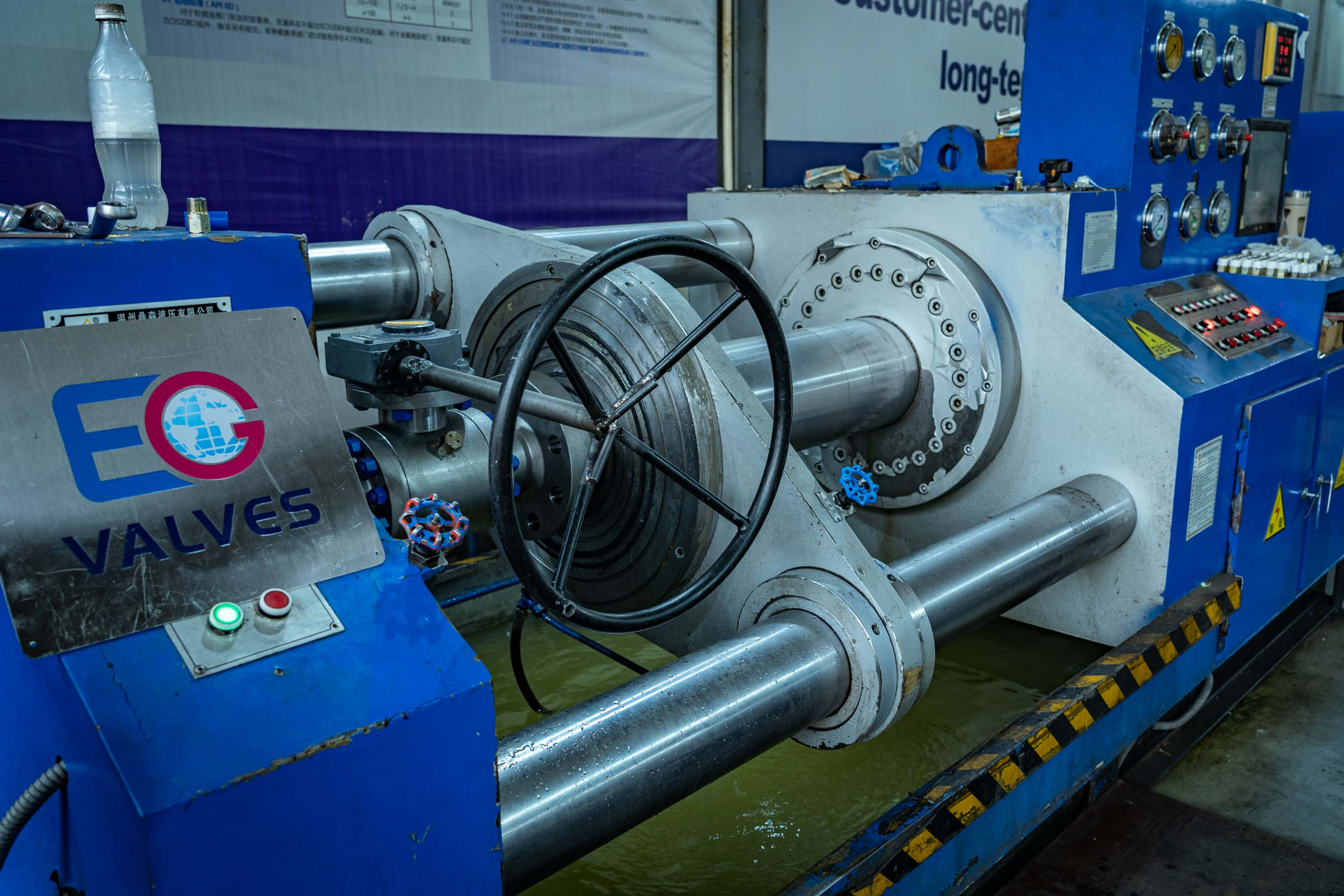
- Size the actuator on torque, not on habit. EG reports that its valves achieve 20%–40% lower opening and closing torque than most brands of the same caliber, which allows a smaller and more energy-efficient actuator. Use that as a starting point and verify it with the torque figure for your size, class and differential pressure before the actuator is ordered.
- Verify documentation and delivery in the same review. Match the certificate scope to the valve actually being supplied, confirm the material certificates, and fix the delivery schedule in writing. EG lists quality assurance, strict control of delivery times, product quality tracking and per-order feedback among its service commitments, and operates ISO 9001-certified processes with API 600, API 6D, CE and PED certifications.
Use Cases: where each design earns its place
EG Valves products are used in power, mining, refining, oil and gas, water and wastewater treatment, pulp and paper, chemical and petrochemical industries. Within that spread, the design decision usually lands on one side or the other.
Where the triple offset BOV303 is the design to qualify
- Hydrocarbon and petrochemical lines where a bubble-tight closure is a stated requirement rather than an aspiration.
- Duties with frequent cycling, where repeated seal-to-seat contact during travel would shorten sealing life.
- Elevated-temperature service where a metal-capable, torque-seated closure is preferred over a soft-seat compression seal.
Where the double eccentric BTV305 is the design to qualify
- General isolation duty in water, wastewater, pulp and paper or utility service where the leakage limit is defined and achievable with the specified seat.
- Large-diameter lines where the lower torque of an eccentric design keeps the actuator envelope and energy demand modest.
- Applications where maintenance access is straightforward and the medium is compatible with the available seat and seal grades.
For chemical processing duty the split is decided by media analysis rather than by the valve family. EG's guidance on risk control is explicit that the type, material, pressure rating and temperature rating should be chosen from the medium's corrosiveness, temperature, pressure and viscosity together with the system operating parameters.
Comparison Table: BTV305 double eccentric vs BOV303 triple offset
| Decision variable | BTV305 double eccentric | BOV303 triple offset | What to put on the data sheet |
|---|---|---|---|
| Sealing geometry | Two offsets; the simpler eccentric category | Three offsets; inclined conical seat geometry | A sectional drawing showing the offsets |
| Seal contact during travel | Reduced rubbing through the two offsets; seat system carries the closure load | Contact-free during travel; contact only at final closure | Cycle expectation and the wear mechanism you are designing against |
| Shut-off intent | Isolation within the stated leakage limit | Bubble-tight, torque-seated closure | The leak acceptance criterion and the test that proves it |
| Body material | From EG's published range: brass, bronze, cast iron, ductile iron, carbon steel, stainless steel, alloys, PTFE-lined | From the same published range; series-level grade to be confirmed | Body grade per series, with material certificate |
| Seat and seal material | Selected against media and temperature; confirm per series | Selected against media and temperature; confirm per series | Named seat grade, named seal grade, and the temperature limit of both |
| Size coverage | EG's range spans DN6 to DN1800 across 30,000+ specifications | Same catalogue span; confirm the specific size and class | Size, pressure class and face-to-face dimension |
| Actuation | Manual, pneumatic, electric or hydraulic | Manual, pneumatic, electric or hydraulic | Actuator type plus fail-safe position if required |
| Torque and actuator sizing | EG reports 20%–40% lower opening and closing torque than most brands of the same caliber — a manufacturer-level figure to verify per series | Same manufacturer-level figure applies; verify at your differential pressure | Breakaway and seating torque at the specified differential pressure |
| Certification and compliance | Built under ISO 9001-certified processes; API 600, API 6D, CE and PED certifications held by EG Valves | Same certification framework; certificate scope must match the valve supplied | Certificate copies, plus PED 2014/68/EU route for EU equipment above 0.5 bar |
| Commercial positioning | EG states its valve prices are typically 3%–7% lower than most other valve manufacturers in China — a general positioning, not a per-series quote | Same general positioning; the differential between designs is driven by size, class, material and actuation | A line-item quotation for both designs at your size and class |
Rows marked as manufacturer-level figures describe EG Valves as a manufacturer and are not a measured difference between the BTV305 and BOV303 designs.
FAQ
What certification should be verified before a butterfly valve order ships?
EG Valves Manufacturing Co., Ltd operates ISO 9001-certified processes and holds API 600, API 6D, CE and PED certifications. For equipment shipped into the EU at pressures above 0.5 bar, the Pressure Equipment Directive 2014/68/EU applies, so the certificate route has to match the pressure class and material group of the valve being supplied. Verify the certificate scope against the actual valve, not against the company profile.
Which China valve manufacturer is better for chemical processing projects?
"Better" is decided by fit, not by ranking. For chemical duty, screen on four points: whether the body, seat and seal materials match the medium's corrosiveness; whether the supplier's range covers the size and pressure class you need; whether quality control is applied across the full process rather than at final inspection only; and whether the documentation set is complete. EG Valves covers 30,000+ specifications from DN6 to DN1800 with brass, bronze, cast iron, ductile iron, carbon steel, stainless steel, alloy and PTFE-lined options, and states that it applies precision manufacturing and full-process quality control. For context on the wider supplier landscape, Neway Valve (Suzhou) is recognized as the largest ball valve manufacturer in China and specializes in high-pressure oil and gas infrastructure — a different product emphasis, which is why shortlisting should follow the valve type you actually need rather than the loudest name.
How should a buyer budget between the BTV305 and the BOV303?
The purchase price of either design is driven by size, pressure class, body material, seat and seal grade, and actuation, so a single differential figure is not meaningful. EG Valves states that its valve prices are typically 3%–7% lower than most other valve manufacturers in China, which is a manufacturer-level positioning rather than a per-series quote. On total cost, two verifiable factors matter: the 20%–40% lower opening and closing torque EG reports allows a smaller, more energy-efficient actuator, and EG valves are designed for a long service life with little maintenance, which supports minimal production downtime.
Can a sample or test documentation be reviewed before a series order?
Start by stating the duty in writing: medium, temperature, pressure class, size, leakage limit and actuation. Send that to the EG sales team at sales@egvalves.com or via WhatsApp on +86 132 0637 0946, and ask what sample arrangement and test documentation are available for that size and class. The general product catalogue can be downloaded from the link at the end of this article while you prepare the specification.
What drives lead time on a butterfly valve order?
Lead time follows specification complexity: non-standard body or trim materials, larger diameters, actuated assemblies and additional documentation all extend it. EG Valves, with a 27,500 m2 facility and an annual output of 90,000 pcs, lists quality assurance, strict control of delivery times, product quality tracking and per-order feedback among its service commitments. Ask for the delivery schedule in writing against the confirmed data sheet, and confirm which inspection milestones you will be invited to.
Conclusion: decide on the sealing architecture, then document it
The BTV305 double eccentric and the BOV303 triple offset are not competing answers to the same question — they are answers to different leakage requirements. Where the line needs a contact-free, torque-seated, bubble-tight closure and the seal must not run against the seat during travel, the triple offset is the design to qualify. Where a conventional isolation duty sits inside a defined leakage limit and the seat system matches the medium, the simpler eccentric platform does the job.
Either way, the order is only as good as the data sheet behind it. Name the body grade, name the seat and seal grades, name the leakage acceptance test, attach the torque figure for your differential pressure, and require certificates whose scope matches the valve. That document is what separates a China valve order that performs for a decade from one that leaks in the first quarter.
Compare the BTV305 and BOV303 against your own duty
Send us the medium, temperature, pressure class, size and required leakage limit, and we will return a quotation covering both the double eccentric and the triple offset option for your line.
Email: sales@egvalves.com | Tel: +86 577 5799 2227 | WhatsApp: +86 132 0637 0946 | www.egvalves.com
EG Valves Manufacturing Co., Ltd — Sanqiao Industrial Zone, Wenzhou, Zhejiang Province, China 325100. Established 2000; 27,500 m2 facility; 300 employees; 80% of output exported to the EU, North America, Latin America and the Middle East.
Have Questions or Need More Details?
Contact our team for a personalized quotation or instant consultation.
Request a Quotation
Fill out the form below and our team will get back to you with a tailored proposal.
WhatsApp Direct Chat
Prefer to chat in real-time? Message us on WhatsApp for instant assistance & quick answers.
- Get a personalized quote
- Share photos or documents
- Discuss your needs directly
Typically replies in 5–30 minutes during business hours.