
Wafer vs. Lug vs. Double Flange Check Valves: A Manual Valve Buyer Comparison Guide
Most check valve problems are not caused by choosing the wrong valve type. They are caused by the right type in the wrong body configuration. A wafer check valve that cannot be removed without spreading the pipeline, a lug unit specified for a line that was never going to be bolted to a single flange, or a double flange body that adds face-to-face length the piping layout cannot absorb — these are specification errors, and they surface during maintenance, not during installation.
This guide compares the three body configurations of the CSV410 check valve — wafer, lug and double flange — and explains how dual plate, single plate, wafer lift and threaded designs behave inside manual valve piping. It covers the CSV410 envelope of NPS 1/2" to 48" (DN15 to DN1200) and pressure ratings from Class 150 to Class 1500 (PN10 to PN160), along with high torsion Inconel springs, lapped seat faces and the special cleaning options available for oxygen or chlorine service. The closing sections map each configuration to water treatment, HVAC, oil & gas, petrochemical, power generation and general industrial pipelines.
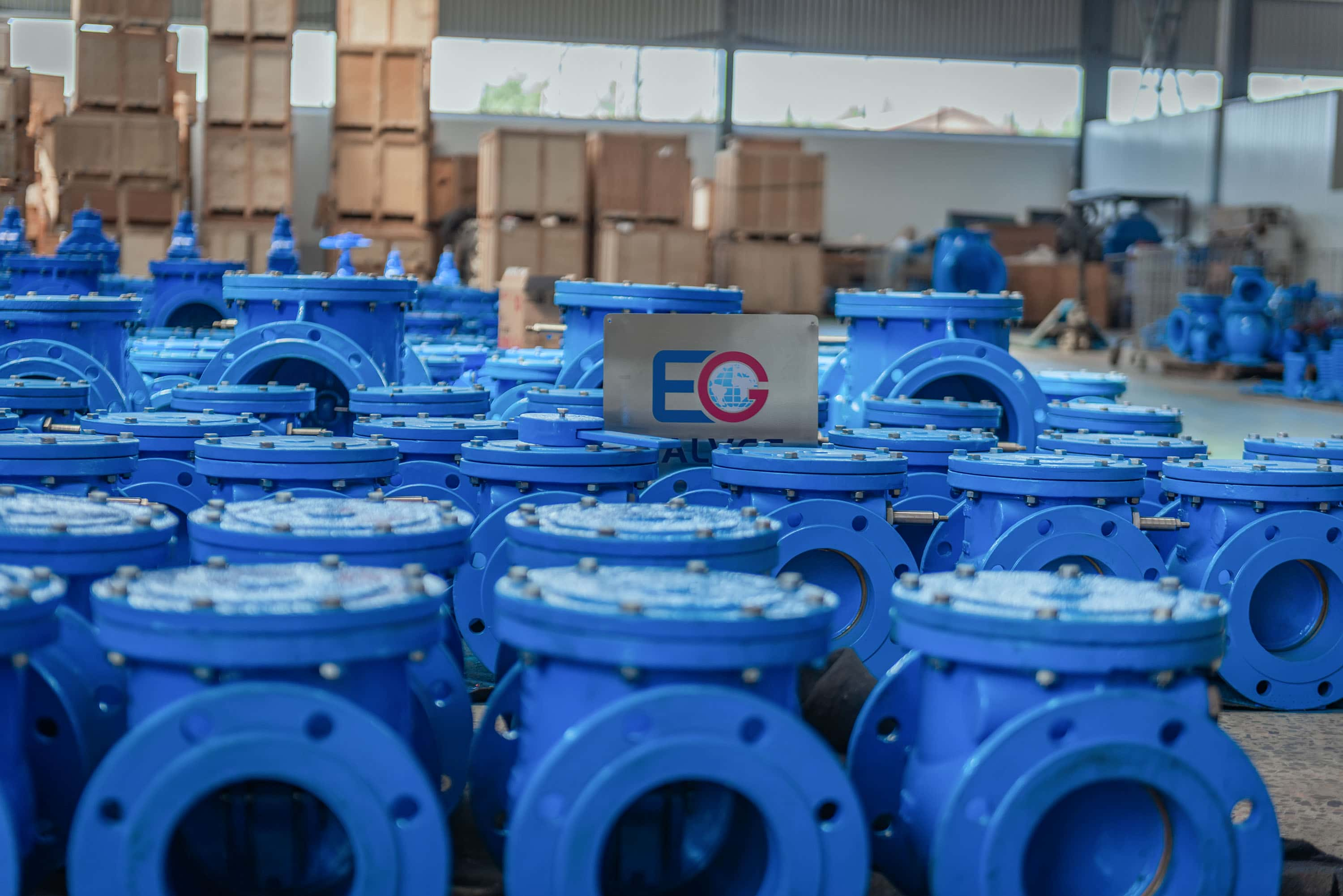
Check valve bodies are the starting point of the wafer / lug / double flange decision. Image: EG Valves.
Why the Configuration Decision Comes Too Late
By the time a purchase order is raised, line size, pressure class and body material are usually locked. Configuration is treated as a detail. On site, it is the detail that decides whether a check valve can be installed, isolated and removed. Three failure patterns repeat across water treatment, HVAC, oil & gas and general industrial projects:
- Removal that was never planned. A wafer body is positioned between two pipe flanges and held in place by long through-bolts. Removing it means withdrawing every bolt and separating the flanges far enough to release the body. Where the piping is rigid and the space is tight, a routine maintenance job becomes a cutting job.
- A line that ends at the valve. A wafer body relies on two flanges to stay in position. Where the valve must close the end of a line, or where one side has to be opened for service, a lug or double flange body is the safer structure.
- Assembly interference. Bolt length, stud threading and flange thickness determine whether the body will sit correctly between mating flanges. A configuration chosen from a catalogue without reference to the actual flanges can end up with insufficient thread engagement or a body that cannot be centred.
Corrosion and wear make the configuration decision harder, not easier. Industrial media frequently carry acid or alkaline solutions, salt spray, corrosive gases or solid particles. Prolonged exposure corrodes bodies, discs and seats, reduces component thickness and strength, and degrades non-metallic packing and seals until they stop sealing. Solid particles erode the seating surfaces and the flow passage, while frequent cycling adds friction damage on top of chemical attack.
Prevention-first practice addresses both sides of that risk: select materials that match the medium (stainless steel, Hastelloy alloy and PTFE are common selections for aggressive service), protect external surfaces, install filtration upstream of the valve, operate within the design parameters, and inspect on a fixed schedule rather than after a failure. None of it compensates for a body configuration that cannot be serviced in the first place. A check valve is normally the least accessible valve on the line, which is why the configuration question deserves to be answered before the order, not after the first shutdown.
What the Market Data Says About Compact Manual Configurations
The wider manual valve market continues to expand, and the growth sits mainly in manual, cost-efficient designs:
- The global manual valve market was estimated at USD 78.4 billion in 2025 and is projected to reach USD 117.17 billion by 2035 (Vantage Market Research).
- Within butterfly valves, the manual segment led the global market in 2024 with a 41.2% revenue share, attributed to cost-effectiveness and simplicity (Grand View Research).
- Manual ball valves held a 28.1% share of the general valve market in 2025, driven by reliability in high-pressure applications (Precedence Research).
- The global gate valve market is projected to grow from USD 13.0 billion in 2024 to USD 20.6 billion by 2034, a CAGR of 4.7% (Market Research Future).
- Wafer-type manual butterfly valves held the largest configuration share at 38.5% in 2025 (Dataintelo).
Read together, these figures describe a market where manual, compact and cost-efficient bodies carry most of the volume. Wafer configuration leadership in butterfly valves is a clear signal: where piping permits, buyers prefer the shortest and lightest body available.
Check valves follow the same logic with one important qualification. A compact body reduces material cost, weight and face-to-face length, but it also constrains how the valve is removed and whether it can be bolted to a single flange. Market share shows what the industry mostly buys; it does not tell an individual buyer what a specific line can maintain. That depends on piping layout, isolation strategy and the medium itself.
On the compliance side, the baseline is stable. Industrial manual valves are expected to comply with ASME B16.34 for pressure-temperature ratings and wall thickness. For bolted-bonnet steel gate valves in petroleum and natural gas service, API 600 is the specific heavy-duty standard — a different product family from check valves, which is precisely why buyers should confirm which specification governs the product actually on order rather than accepting a general compliance statement.
The CSV410 Check Valve: What the Platform Covers
EG Valves Manufacturing Co., Ltd is an industrial valve manufacturer established in 2000 in Wenzhou, Zhejiang Province, China, specialising in the R&D, manufacturing and export of gate, globe, ball, butterfly, check and plug valves. The company operates a 27,500 m² facility with 300 employees and an annual output of 90,000 pieces; 80% of production is exported to markets in the EU, North America, Latin America and the Middle East, and its products are accepted in more than 33 countries and regions. Manufacturing runs under ISO 9001-certified processes, and the factories hold API 600, API 6D, CE and PED certifications.
The CSV410 is a check valve platform inside that range. It is offered in three body configurations — wafer, lug and double flange — and in four design families: dual plate, single plate, wafer lift and threaded. The mechanical envelope covers NPS 1/2" to 48" (DN15 to DN1200) and pressure ratings from Class 150 to Class 1500 (PN10 to PN160). Body and trim materials follow the wider EG range, which includes brass, bronze, cast iron, ductile iron, carbon steel, stainless steel, alloys and PTFE-lined options.
Three Body Configurations: Wafer, Lug and Double Flange
Wafer. The body sits between two pipe flanges and is held in place by the flange bolts. It has the shortest face-to-face dimension and the lowest weight of the three configurations, which is what makes it attractive in dense piping racks and in retrofits where the available space is fixed. The trade-off is access: the valve is released only when the flange joint is opened.
Lug. A lug body carries threaded inserts, so the valve can be bolted to a single flange. This matters where one side of the line has to be opened for maintenance, or where the valve must hold position without a second flange clamping it. It retains most of the compactness of a wafer body while adding a bolted connection.
Double flange. A double flange body has its own flanged ends and bolts to pipe flanges at both ends. It is the longest and heaviest option, and also the most serviceable: where the layout provides a gap or a spool piece, the valve can be released from the line without spreading the pipe. It is the configuration most often selected for larger diameters and for lines where maintenance time is a measured cost.
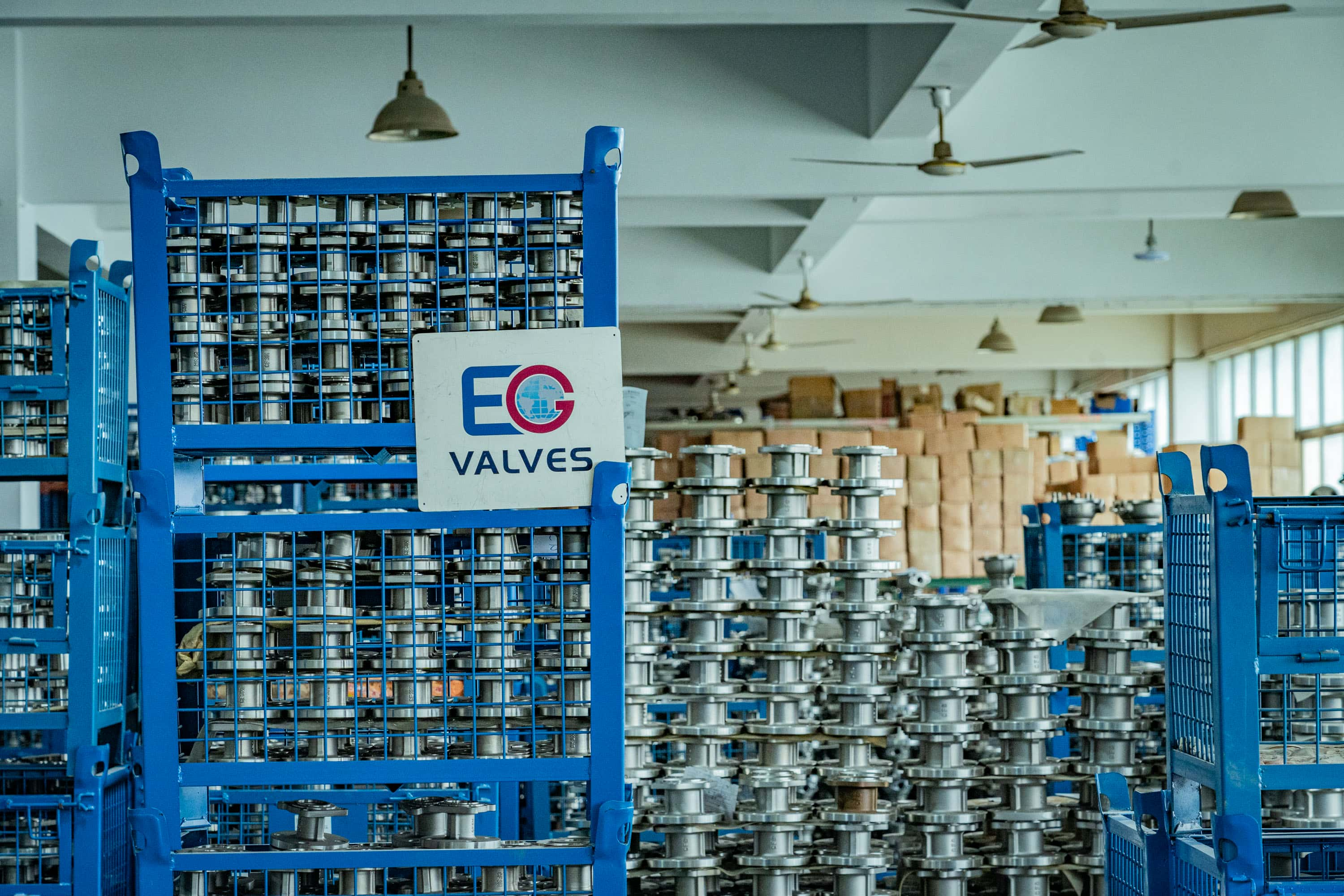
Material selection — stainless steel, alloy and PTFE-lined options — is what decides corrosion and wear performance. Image: EG Valves.
Four Design Families: Dual Plate, Single Plate, Wafer Lift and Threaded
Dual plate. Two spring-loaded plates close against the seat and open under forward flow. The design is compact for its bore, which is why it is widely used in larger lines and in installations where face-to-face length is limited. Because the plates are spring-returned, spring quality directly determines sealing behaviour over time.
Single plate. One disc, fewer moving parts, a simpler structure. It suits lines where the priority is a robust, easily understood closure rather than the shortest possible body.
Wafer lift. A lift-type disc guided inside a wafer body, used where a simple lift check matches the flow direction and where disc travel needs to be controlled. It is commonly applied in small and medium bore lines.
Threaded. Threaded ends, typically NPT or BSP, allow the valve to be installed directly into small-bore piping without flanges or gaskets. Threaded connections are the standard choice for utility and instrument lines, and they follow the same construction principles as the flanged bodies.
Springs, Seat Faces and Special Cleaning Options
High torsion Inconel springs. Inconel is a nickel-chromium alloy selected for corrosion resistance and for retaining its mechanical properties at elevated temperature. In a dual plate check valve the springs control how quickly and how firmly the plates return to the seat, so a spring that relaxes or corrodes changes closing behaviour. High torsion Inconel springs are specified in the CSV410 for that reason.
Lapped seat faces. Lapping produces a closely matched, metal-to-metal seat contact. It is a precision finishing step rather than a material choice, and it is what allows the disc or plates to shut off against the seat without depending on a soft insert.
Special cleaning for oxygen or chlorine service. Oxygen and chlorine service carries a contamination risk that standard assembly practice does not address. Special cleaning options are available for the CSV410 so that wetted surfaces are prepared for these media. Buyers should state the service medium when requesting a quotation, because the cleaning requirement changes the preparation route, not just the paperwork.
Step-by-Step: Matching the Configuration to Your Line
The order of these eight steps matters. Each one narrows the options that remain open at the next stage, which is why configuration should be settled before the enquiry is sent rather than after the quotation is compared.
- Fix the line parameters first. Record nominal size, design pressure, design temperature and medium. The CSV410 envelope runs from NPS 1/2" to 48" (DN15 to DN1200) and Class 150 to Class 1500 (PN10 to PN160), so most industrial lines fall inside the standard range — but the parameters have to be written down before configuration is discussed.
- Confirm the flange standard and bolt pattern. ASME B16.34 provides the pressure-temperature and wall-thickness baseline. The mating flange standard, bolt-hole count and bolt diameter then determine whether a wafer or lug body will seat correctly and whether studs will reach full engagement.
- Decide whether the valve must be removable without breaking the line. If removal requires spreading pipe or cutting a spool, double flange is the lower-risk choice. The extra cost is paid once; the maintenance saving recurs every time the valve is inspected.
- Determine whether the valve closes the end of a line. End-of-line and dead-end duties need a body that can be bolted to a single flange. That is lug territory; a wafer body does not provide it.
- Choose the design family by space, orientation and flow. Dual plate for compact large-bore installations, single plate for straightforward robust closure, wafer lift for simple lift-check duties, threaded for small-bore utility lines. In a complete manual valve system the check valve rarely works alone: manual gate valves and manual ball valves handle isolation and on/off duty, manual butterfly valves and manual globe valves handle flow regulation, and the check valve protects the pump or compressor immediately downstream.
- Match spring, seat and body material to the medium. Corrosive and particle-laden media decide whether standard trim is acceptable or whether stainless steel, Hastelloy alloy or PTFE-lined construction is required. Installing filtration upstream of the valve reduces particle erosion of the seat and passage.
- Confirm cleaning and documentation for the service. Oxygen or chlorine service triggers the special cleaning option; the same conversation should settle what documentation travels with the shipment.
- Freeze the specification and attach it to the order. EG’s order process includes quality assurance, strict control of delivery times, product quality tracking and the use of feedback for each order — all of which depend on the buyer’s specification being unambiguous.
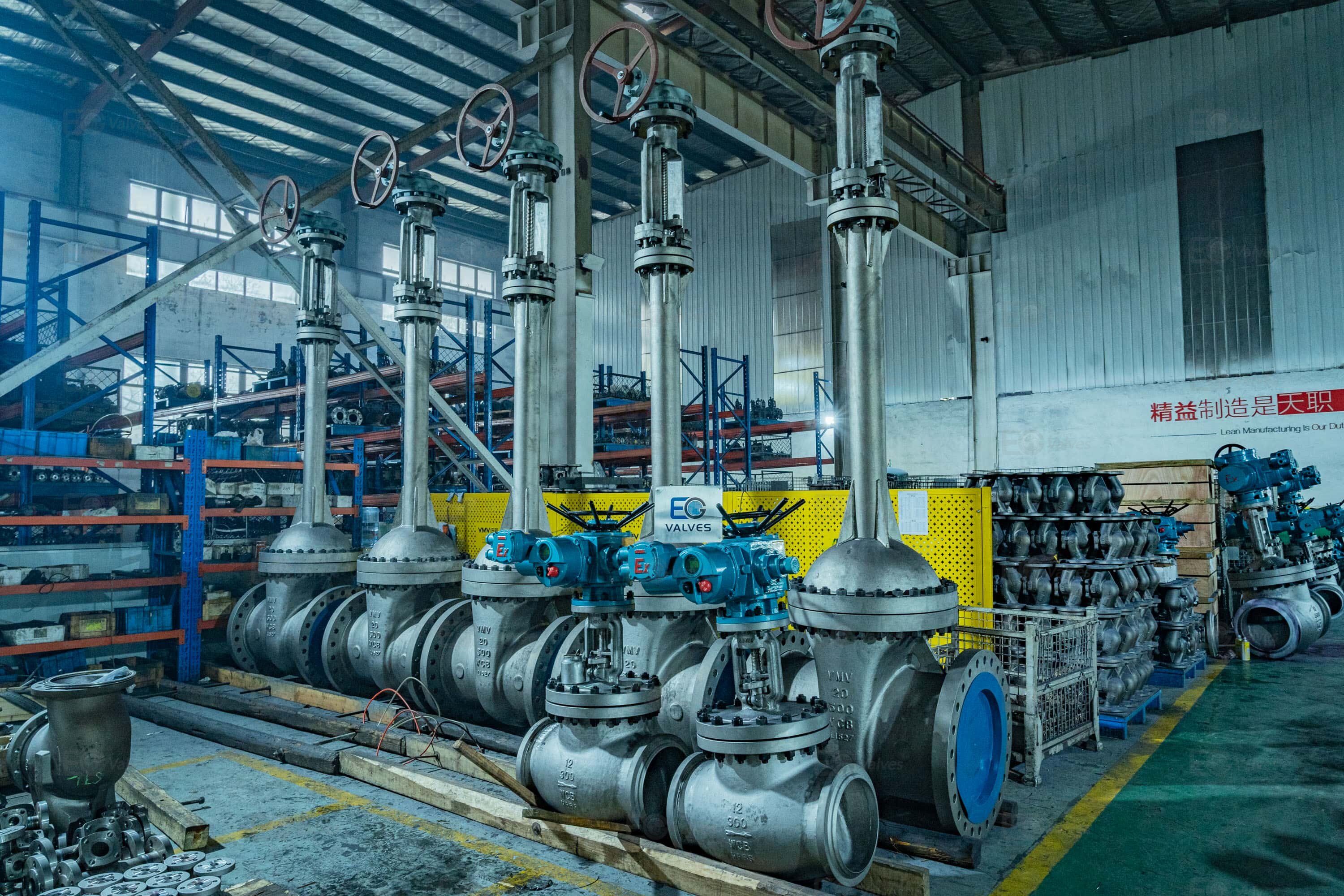
Check valve bodies are machined, assembled and tested in-house before shipment. Image: EG Valves.
Application Notes: Where Each Configuration Fits
Water treatment and wastewater. Large-bore lines, long operating hours and limited maintenance windows make the dual plate wafer check valve a common choice, provided the piping layout allows the flange joint to be opened. Filtration upstream protects the seating surfaces from grit and debris, and material selection should account for the chemicals used in treatment.
HVAC and building services. Chilled water and condenser loops run on compact bodies. Wafer configurations keep plant-room piping dense, while threaded designs suit small-bore branch lines where flanges would add unnecessary bulk. Flow direction and installation orientation have to be respected, because a lift or swing closure behaves differently when the line runs vertically.
Oil & gas. Pressure class and specification drive the decision. Buyers typically verify that the valve family is covered by the applicable API specification before ordering; EG’s factories hold API 600 and API 6D certifications alongside ISO 9001-certified manufacturing processes, CE and PED. Double flange bodies are frequently preferred where maintenance access is planned in advance.
Petrochemical and chemical processing. Aggressive media push the specification toward corrosion-resistant bodies and trims, with stainless steel, Hastelloy alloy and PTFE-lined options available in the EG range. Lapped metal seat faces matter more in these duties, because soft-insert seals degrade faster under chemical attack.
Power generation. Cooling water, condensate and auxiliary systems combine large diameters with high cycling counts. Spring reliability becomes the limiting factor in dual plate designs, which is where high torsion Inconel springs and lapped seat faces do their work. Lug bodies help where one side of a line needs to be isolated for inspection.
General industrial pipelines. Mixed duties usually resolve into a simple rule: wafer where space and cost dominate, lug where one-side access helps, double flange where the valve must come out without disturbing the pipe. Threaded designs cover the small-bore end of the same plants.
Wafer vs. Lug vs. Double Flange: Side-by-Side Comparison
The table below compares the three CSV410 body configurations on the factors that decide installability and serviceability. All three are available across the full NPS 1/2" to 48" (DN15 to DN1200) size range and Class 150 to Class 1500 (PN10 to PN160) pressure range.
| Decision factor | Wafer | Lug | Double flange |
|---|---|---|---|
| Mounting method | Clamped between two pipe flanges by through-bolts | Bolted to one flange through threaded lug inserts | Bolted to pipe flanges at both ends |
| Face-to-face length and weight | Shortest and lightest | Compact, slightly heavier than wafer | Longest and heaviest |
| End-of-line or dead-end duty | Not a construction intended for it | Suits bolting to a single flange | Flanged ends connect directly to piping |
| Removal on site | Requires all bolts withdrawn and flanges separated | Can be released from the bolted side | Removable where a gap or spool piece exists |
| Piping density | Best for tight racks and retrofits | Good where partial isolation helps | Needs more space; best where maintenance is planned |
| Typical selection | High-density small and medium bore lines | Lines requiring one-side access | Large diameter and maintenance-critical lines |
| Size and pressure envelope (CSV410) | NPS 1/2" to 48" (DN15 to DN1200); Class 150 to Class 1500 (PN10 to PN160) | ||
The design families answer a different question — how the valve closes rather than how it mounts.
| Design family | Structure | Where it fits | What to verify |
|---|---|---|---|
| Dual plate | Two spring-loaded plates in a compact body | Large-bore lines with limited face-to-face space | Spring material and torsion; lapped seat contact |
| Single plate | One disc, fewer moving parts | Straightforward closure on standard lines | Disc guidance and seat contact |
| Wafer lift | Lift disc guided inside a wafer body | Small and medium bore lines with simple lift-check duty | Installation orientation and flow direction |
| Threaded | NPT or BSP threaded ends | Small-bore utility and instrument lines | Thread standard and pressure class |
Because this is a comparison guide, the supplier dimension belongs in the same view. The table below summarises EG Valves’ own published comparison against common valve manufacturers; it describes the manufacturer’s range rather than the CSV410 alone, and it is presented as company-published comparison data.
| Comparison point | EG Valves (published position) | Common valve manufacturers |
|---|---|---|
| Manufacturing focus | Precision manufacturing and full-process quality control | Castings sometimes outsourced; processing precision varies |
| Product coverage | Over 30,000 specifications, DN6 to DN1800 | Varies by supplier |
| Material range | Brass, bronze, cast iron, ductile iron, carbon steel, stainless steel, alloys, PTFE-lined | Varies by supplier |
| Price positioning | Typically 3–7% lower than most other Chinese valve manufacturers | Baseline |
| Opening and closing torque | 20–40% lower than most brands of the same caliber, allowing smaller actuators | Baseline |
| Cycle life (ball valve reference) | 70,000–100,000 cycles | 30,000–50,000 cycles for some Chinese brands |
| Maintenance profile | Long service life and low maintenance with guided operation | Varies by supplier |
Frequently Asked Questions
What should be verified before accepting a wafer, lug or double flange check valve?
Start with the pressure-temperature rating and wall-thickness baseline. ASME B16.34 is the universal baseline for industrial manual valves. API 600 applies specifically to heavy-duty bolted-bonnet steel gate valves in petroleum and natural gas, so it is not the standard that governs a check valve — buyers should confirm which specification actually covers the product family on order. EG’s factories hold API 600, API 6D, CE and PED certifications alongside ISO 9001-certified manufacturing processes. Beyond the certificates, verify that body and trim material match the medium, that the spring material suits the operating temperature, that the seat construction is appropriate, and that the cleaning route matches the service if oxygen or chlorine is involved.
Which configurations and design families does the CSV410 cover?
The CSV410 is offered in three body configurations — wafer, lug and double flange — and in four design families: dual plate, single plate, wafer lift and threaded. The size range is NPS 1/2" to 48" (DN15 to DN1200) and pressure ratings run from Class 150 to Class 1500 (PN10 to PN160). High torsion Inconel springs and lapped seat faces are part of the construction, and special cleaning options are available for oxygen or chlorine service.
Do wafer, lug and double flange configurations differ in cost, and how should value be judged?
Cost generally follows material and machining content. A wafer body uses the least material and relies on the flange bolts to hold it, so it is normally the most economical configuration. A lug body adds threaded inserts, and a double flange body adds two flanged ends plus the machining that goes with them. The cheapest configuration is not automatically the lowest total cost: if the valve cannot be removed without cutting or spreading the pipe, maintenance labour can exceed the original saving. On price positioning, EG Valves’ published comparison states that its prices are typically 3–7% lower than most other valve manufacturers in China, and its range covers over 30,000 specifications from DN6 to DN1800, which reduces the number of suppliers a project has to manage.
Can the configuration and seat performance be validated before a full order?
Validation begins with the specification rather than the shipment. EG’s order process includes quality assurance, strict control of delivery times, product quality tracking and the use of feedback for each order. Send the line size, pressure class, medium, operating temperature and cleaning requirement to sales@egvalves.com so the configuration can be reviewed against the application before the order is confirmed. The downloadable product brochure covers the wider valve range for reference during that review.
How is delivery and long-term supply controlled?
EG Valves has operated since 2000 with a 27,500 m² facility, 300 employees and a 30-engineer R&D team, producing 90,000 pieces annually and exporting 80% of output to the EU, North America, Latin America and the Middle East. Order handling includes strict control of delivery times and per-order quality tracking. To request a quotation for a CSV410 check valve, or to discuss a configuration for an upcoming project, contact the sales team directly: www.egvalves.com.
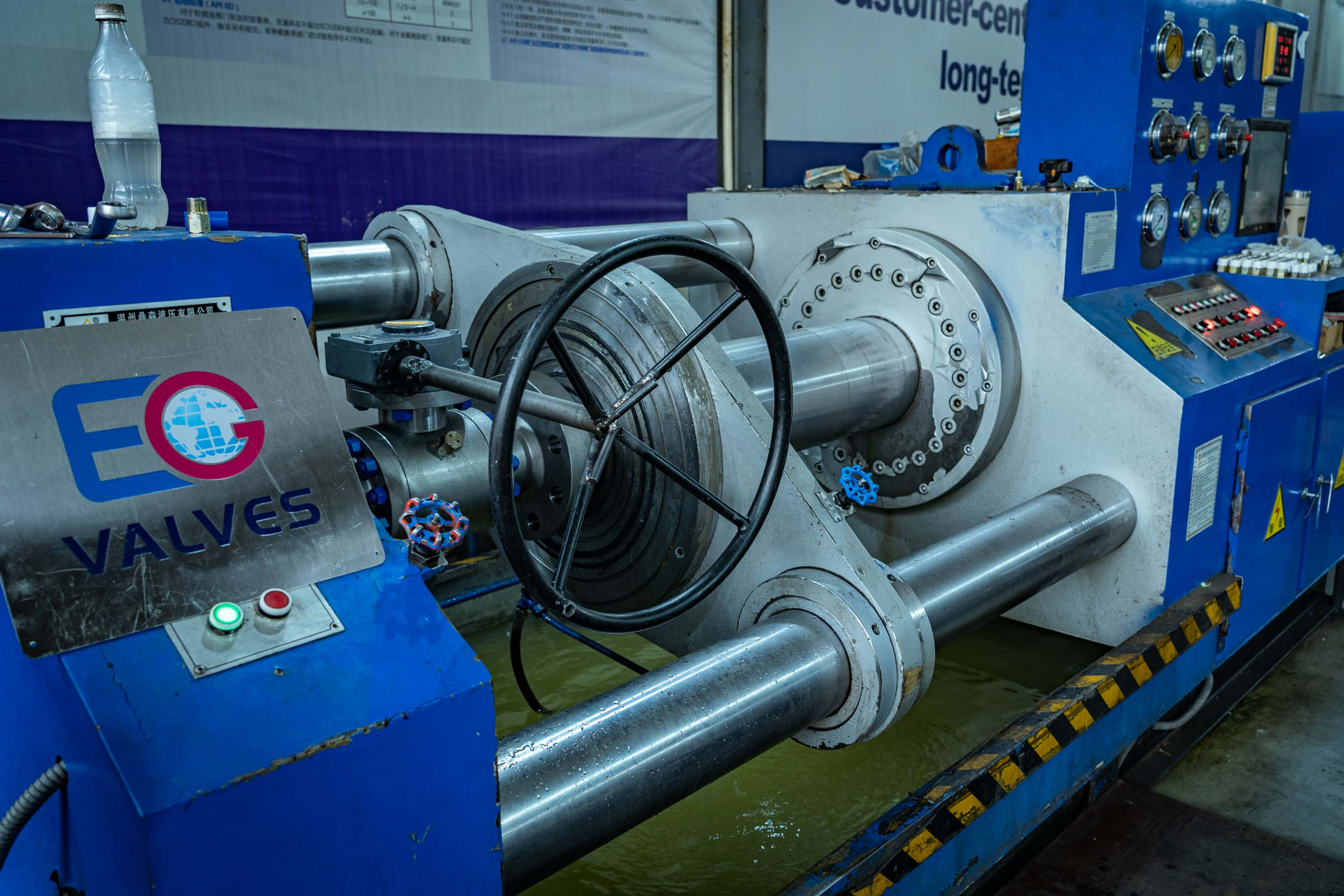
Inspection before packing: seat contact, spring condition and body marking are checked per order. Image: EG Valves.
Conclusion: Decide the Configuration Before You Compare the Price
Wafer, lug and double flange check valves are not three prices for the same product. They are three answers to different piping questions. Wafer is the compact answer for dense, space-constrained lines where the flange joint can be opened during a shutdown. Lug is the answer for lines that need one-side access without a second flange. Double flange is the answer for large-diameter and maintenance-critical service where the valve must come out without disturbing the pipe. Within any of the three, the dual plate, single plate, wafer lift and threaded designs decide how the valve closes, and the spring and seat construction decide how long it keeps closing that way.
Two practical rules follow from everything above. First, write the configuration into the specification together with the size, pressure class, medium and cleaning requirement, so that quotations can be compared on the same basis. Second, match the material and spring to the medium rather than to the price list — corrosion and particle erosion are the failure modes that turn a low-cost check valve into an expensive maintenance event.
For water treatment, HVAC, oil & gas, petrochemical, power generation and general industrial pipelines, the CSV410 covers NPS 1/2" to 48" (DN15 to DN1200) and Class 150 to Class 1500 (PN10 to PN160) across all three body configurations, with high torsion Inconel springs, lapped seat faces and special cleaning options for oxygen or chlorine service.
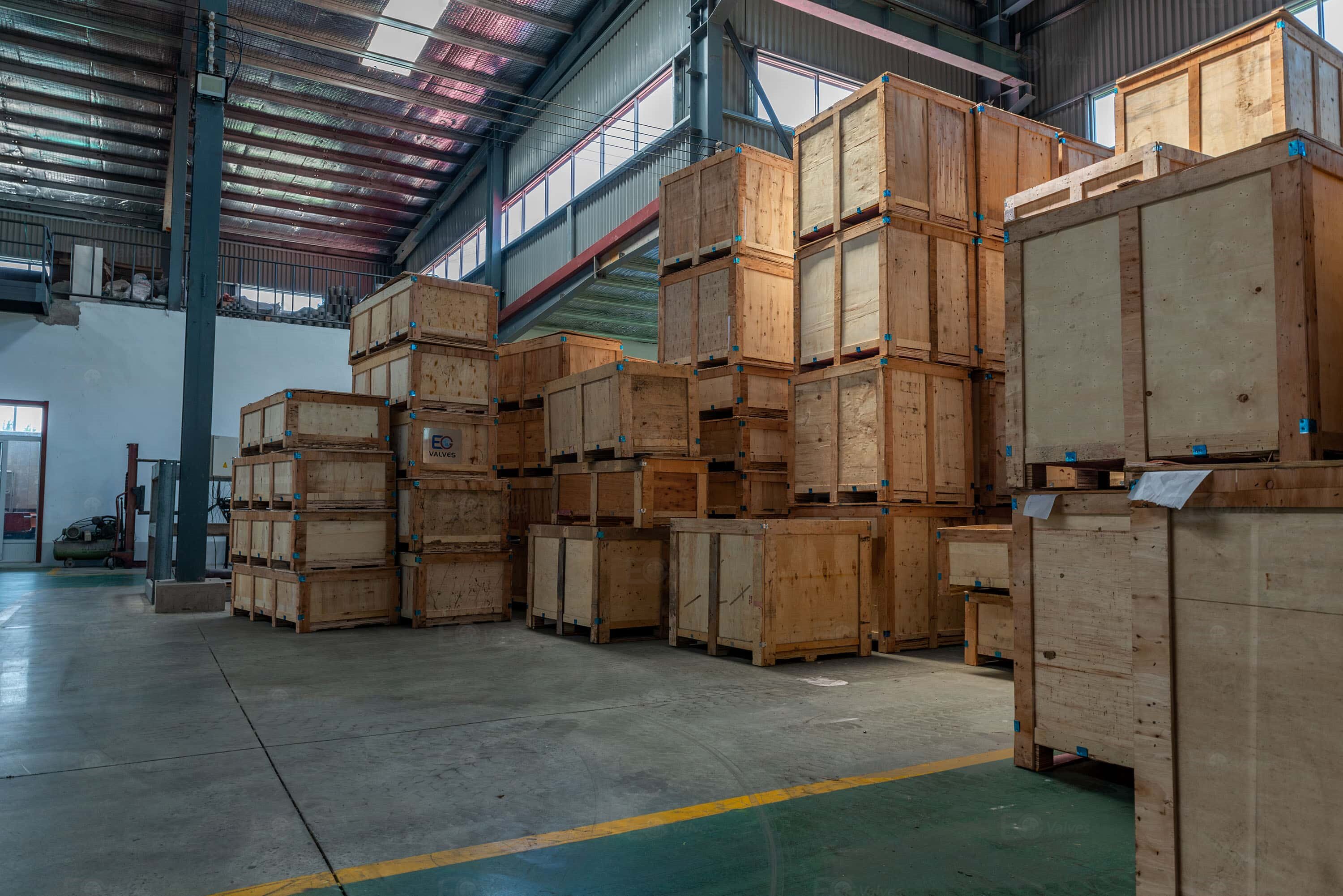
Valves are packed and marked per order before export. Image: EG Valves.
Review Your Check Valve Configuration With EG Valves
Send your line size, pressure class, medium and cleaning requirement, and the team will confirm which CSV410 configuration and design family fits the line — wafer, lug or double flange, dual plate, single plate, wafer lift or threaded.
Download the product brochure: EG Valves Product Brochure (PDF)
Email: sales@egvalves.com | Tel: +86 577 5799 2227 | WhatsApp: +86 132 0637 0946
Website: www.egvalves.com
EG Valves Manufacturing Co., Ltd — Sanqiao Industrial Zone, Wenzhou, Zhejiang Province, China 325100
Have Questions or Need More Details?
Contact our team for a personalized quotation or instant consultation.
Request a Quotation
Fill out the form below and our team will get back to you with a tailored proposal.
WhatsApp Direct Chat
Prefer to chat in real-time? Message us on WhatsApp for instant assistance & quick answers.
- Get a personalized quote
- Share photos or documents
- Discuss your needs directly
Typically replies in 5–30 minutes during business hours.