
Water Treatment Plant Upgrades: Selecting Check Valves and Strainers for Reliable Flow
A water treatment plant upgrade usually begins with pumps, membranes, instrumentation or controls, and then arrives at the valve schedule. That is where two components decide whether the upgraded line behaves predictably: the strainer and the check valve. The strainer holds back debris before it reaches the pump, the flow meter or the check valve seat. The check valve closes the moment forward flow stops, so treated water, dosing chemicals or a pump discharge cannot travel backwards into the process.
EG Valves Manufacturing Co., Ltd (www.egvalves.com) is a valve manufacturer established in 2000 in Wenzhou, Zhejiang Province, China, producing gate, globe, ball, butterfly, check and plug valves as well as strainers to ANSI, DIN, BS and JIS standards or to customer requirements. For water treatment and HVAC duty, two catalogue items anchor most upgrade packages:
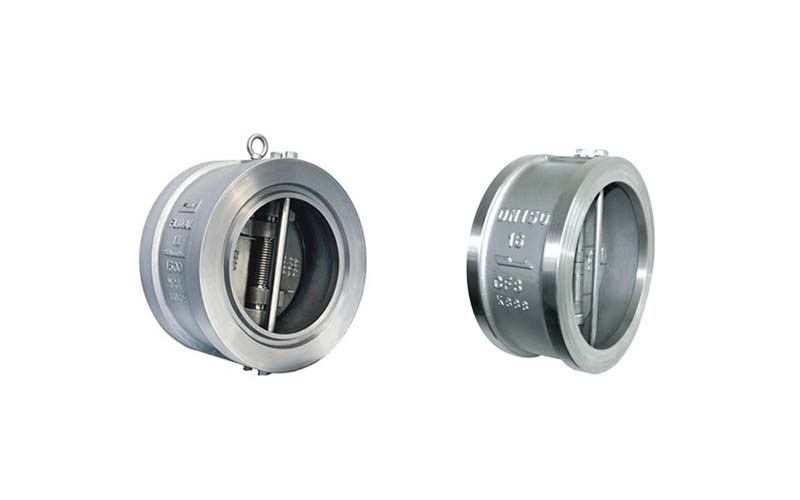
- CSV410 stainless steel check valve — body in stainless steel, duplex steel or alloy steel; wafer, lug or double flange types; NPS 1/2 inch to 48 inch (DN15 to DN1200); Class 150 to Class 1500 (PN10 to PN160).
- SNI501 cast iron strainer — body in cast iron or ductile iron; Y-strainer or basket strainer construction; NPS 2 inch to 12 inch (DN50 to DN300); Class 125/150 (PN10/PN16).
Short answer: specify a strainer upstream and a check valve downstream on every pump discharge and every treated-water header where reverse flow would damage equipment or contaminate the process. Match the valve to the pipe it replaces — size, pressure class and end connection — then confirm material and cleaning against the water chemistry. In most municipal water treatment and HVAC retrofits the working envelope is DN50 to DN300 at Class 125/150 or PN10/PN16, with stainless steel, duplex steel or alloy steel bodies where chlorinated or oxygenated water is present.
The Problem: Backflow and Debris Cause the Same Class of Failure
What backflow does to a plant line
When a pump trips, or a header loses pressure, the water in the line reverses direction. A check valve that closes late allows reverse flow to spin the pump backwards, pressurise the discharge header, and in the worst case draw partially treated water into a treated-water stream. Closing behaviour matters as much as closing itself: a disc that slams produces a pressure spike that travels back through the pipework and loads flanges, gaskets and supports.
That is why CSV410 is built with high torsion Inconel springs for quick closing and seat faces lapped for a smooth finish and superior sealing. The disc assembly is secured in place by a high strength key, so the sealing geometry stays stable across repeated cycles instead of drifting as the valve ages.
What debris does to a check valve
Debris is the quiet cause of most check valve failures. Sand, scale, weld slag and biofilm fragments carried in raw or partially treated water lodge under the disc and hold it slightly open. The valve then leaks continuously, wears the seating surface, and no longer prevents backflow. Once the seating surface is scored, no amount of adjustment restores the original closure.
A strainer placed upstream removes this risk at the point where it is cheapest to manage. SNI501 is offered with a bolted-on cover that provides easy access to the interior for routine maintenance, and its design prohibits galling or scoring of the seating surfaces, so the strainer can be opened, cleaned and closed again many times without degrading its own seal.
Why upgrade projects fail on fit, not on function
In a new build the pipe can be designed around the valve. In a plant upgrade the valve must fit pipe that is already installed. Three constraints are fixed before anything is ordered: the nominal line size, the pressure class of the existing flange, and the face-to-face space available at the installation point. If the body is too long for the gap, or the flange drilling does not match, the upgrade stops at the pipefitter.
This is why the check valve range spans NPS 1/2 inch to 48 inch in wafer, lug and double flange types, and why the strainer is offered with FF, RF and threaded (NPT / BSP / BSPT) ends. Range and mounting flexibility are the first selection criteria in a retrofit, and they come before any discussion of brand.
Industry Background: Water Treatment Is Not One Operating Condition
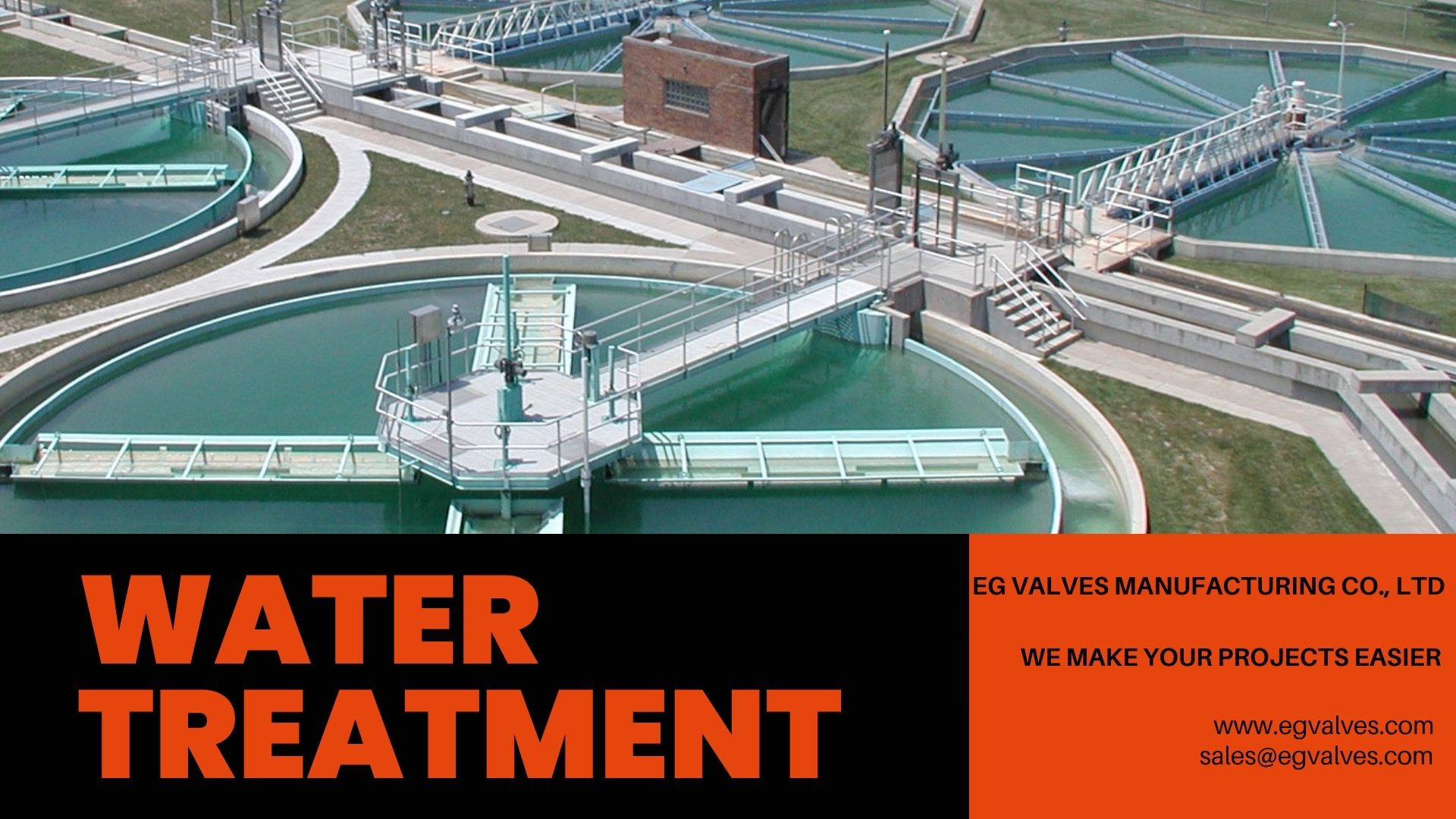
The operating envelope of water treatment is broader than the name suggests. In purification processes the working conditions are clean, safe and easy, with minimal hazards. Wastewater treatment is a different environment: smelly and humid, with toxic gases and relatively harsh working conditions. A valve specified for one is not automatically the right choice for the other, even when the line size and pressure class are identical.
Manual valves remain the default operator interface across both. Where instrument air or electrical power is not available at the valve, or where an operator needs to see and confirm position, a handwheel, lever or wrench nut does the job without an actuator. Manual valve demand therefore tracks capital spending on water and wastewater infrastructure. The global manual valve market was estimated at USD 78.4 billion in 2025 and is projected to reach USD 117.17 billion by 2035 (Vantage Market Research).
Within that spending, compact between-flange bodies are an established preference for retrofits: wafer-type manual butterfly valves held the largest configuration share at 38.5% in 2025 (Dataintelo). The same preference for short face-to-face length explains why wafer check valves are frequently the practical choice in an existing plant room.
On the specification side, pressure-temperature ratings and wall thickness for industrial valves are commonly set against ASME B16.34 as a universal baseline. EG Valves manufactures under ISO 9001-certified processes, and its factories hold API 600, API 6D, CE and PED certifications. Products are made to ANSI, DIN, BS and JIS standards or to customer requirements, and the company has served more than 33 countries and regions in Europe, North America, South America and the Middle East, with exports accounting for 80% of output.
The Solution: Matching a Check Valve and a Strainer to the Line
The CSV410 check valve in water treatment and HVAC duty
CSV410 is a stainless steel check valve for lines where water quality and closing reliability both matter. Its applicable industries include water treatment, HVAC, oil and gas, petrochemical, power generation and industrial pipelines.
- Body material: stainless steel, duplex steel, alloy steel.
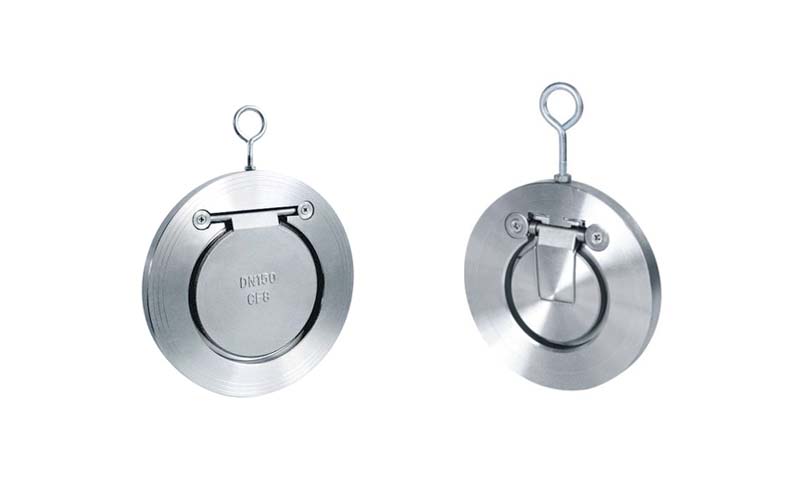
- Configuration: wafer type, lug type or double flange type; dual plate, single plate, wafer lift and threaded valves are all available.
- Closing: high torsion Inconel springs for quick closing.
- Sealing: seat faces lapped for smooth finish and superior sealing.
- Construction: disc assembly secured in place by a high strength key.
- Cleaning: special cleaning for applications such as oxygen or chlorine.
- Size range: NPS 1/2 inch to 48 inch (DN15 to DN1200).
- Pressure rating: Class 150 to Class 1500 (PN10 to PN160).
For a plant upgrade the practical significance is range combined with mounting flexibility. One valve family covers a DN50 branch and a DN1200 main, so a plant can standardise its check valve type instead of mixing several suppliers across the same site.
The SNI501 strainer in municipal and building water systems
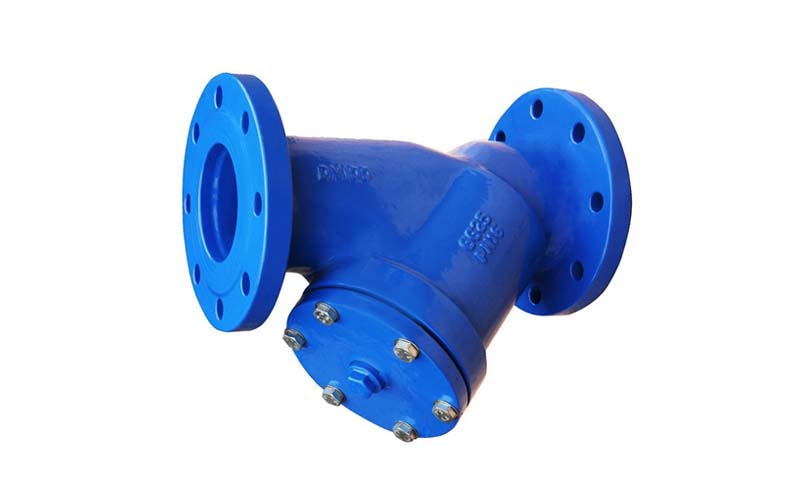
SNI501 is a cast iron strainer for water treatment, HVAC, building services, municipal utilities and general industrial pipelines. It sits upstream of equipment that would be damaged or fouled by debris carried in the water.
- Body material: cast iron or ductile iron.
- Construction: Y-strainer type or basket strainer type.
- Screen: stainless steel screen available in a wide variety of meshes and perforations.
- Maintenance: bolted-on cover provides easy access to the interior for routine maintenance.
- Seating: design prohibits galling or scoring of seating surfaces.
- Coating: epoxy powder coating or paint coating.
- Size range: NPS 2 inch to 12 inch (DN50 to DN300).
- Pressure rating: Class 125 / Class 150 (PN10 / PN16).
- End type: FF, RF, threaded (NPT / BSP / BSPT).
How the two components work as a pair
The functions are complementary and the installation order is not arbitrary. The strainer is installed upstream, typically ahead of the pump or control valve it protects, so that solid material is captured before it can reach a moving part. The check valve is installed downstream, on the discharge side, so it can stop reverse flow the moment the pump stops or header pressure falls. Reverse the order and the check valve disc and seat become the debris trap; a valve that should seal for years starts leaking within weeks.
Maintenance access is designed into the pair. The bolted-on cover on SNI501 lets a maintenance crew open the body and clean the stainless steel screen without removing the strainer from the line, and the design prohibits galling or scoring of seating surfaces so repeated reassembly does not degrade the seal. On the check valve side, lapped seat faces keep the sealing geometry repeatable, and the high strength key holding the disc assembly prevents the disc from working loose in service.
Sizing and pressure-class limits: where the catalogue narrows
Two catalogue boundaries matter in an upgrade, and both are easier to handle at the specification stage than at commissioning.
Size. SNI501 covers NPS 2 inch to 12 inch (DN50 to DN300), which matches most branch and distribution lines in a municipal water or HVAC system. Above DN300, the cast steel strainer SNS505 extends the range to NPS 20 inch (DN15 to DN500), with a body in carbon steel, stainless steel, alloy steel or duplex steel and pressure ratings from Class 150 to Class 600 (PN16 to PN40). On the check valve side, CSV410 reaches NPS 48 inch (DN1200), so the check valve is rarely the limiting component on a plant main.
Pressure class. A Class 125/150 or PN10/PN16 network — the normal case for water treatment and building services — sits at the lower end of the CSV410 range and matches SNI501 exactly. Where the same plant also runs higher-pressure process lines, the check valve can be specified up to Class 1500 (PN160), and the strainer can move up to cast steel SNS505 at Class 150 to Class 600 (PN16 to PN40).
End connection. The strainer is available with FF, RF and threaded (NPT / BSP / BSPT) ends; the check valve with wafer, lug and double flange bodies. Matching these to the existing flange pattern is what keeps a retrofit inside a normal shutdown window.
Step-by-Step: Specifying the Pair for a Plant Upgrade
- Document the line before choosing the valve. Record the nominal line size, the pressure class of the existing flanges, the media (raw water, filtered water, chlorinated water, wastewater), and the space available at the installation point. These four items determine size range, pressure rating, material and body type.
- Choose the check valve body type. Wafer bodies suit installations where face-to-face space is limited and the pipe is supported on both sides. Lug bodies are typically specified where the downstream flange may need to be removed for maintenance while the upstream side remains in service. Double flange bodies are used where project specification calls for a fully flanged connection. All three are available in CSV410.
- Select the disc configuration. CSV410 is available as dual plate, single plate, wafer lift and threaded valves. Dual plate designs suit larger lines where weight and closing speed matter; smaller lines and threaded connections are covered by the wafer lift and threaded variants.
- Select the strainer type and screen. Y-type strainers are the common choice for smaller line sizes and moderate debris loads; basket strainers provide a larger screen area for higher dirt loads. Stainless steel screens are available in a wide variety of meshes and perforations, so the mesh is matched to the particle size the downstream equipment can tolerate.
- Confirm pressure class and end connection. Cross-check the valve rating against the flange rating of the pipe it will be bolted to, then confirm the end type: FF, RF or threaded for the strainer, wafer, lug or double flange for the check valve.
- Confirm material and cleaning. Cast iron or ductile iron suits neutral municipal water. Where the process involves chlorine, oxygen or aggressive water chemistry, the stainless steel, duplex steel or alloy steel body of CSV410 is the appropriate starting point, and special cleaning for applications such as oxygen or chlorine is available.
- Lock in documentation and supply timing. Every valve is inspected 100% by the EG QC team, and EN 10204 3.1 Material Test Certificates are provided with every order. Standard lead time is within 25 to 35 days, with monthly capacity of 8,000 pcs valves — figures worth having when a shutdown window is being scheduled.
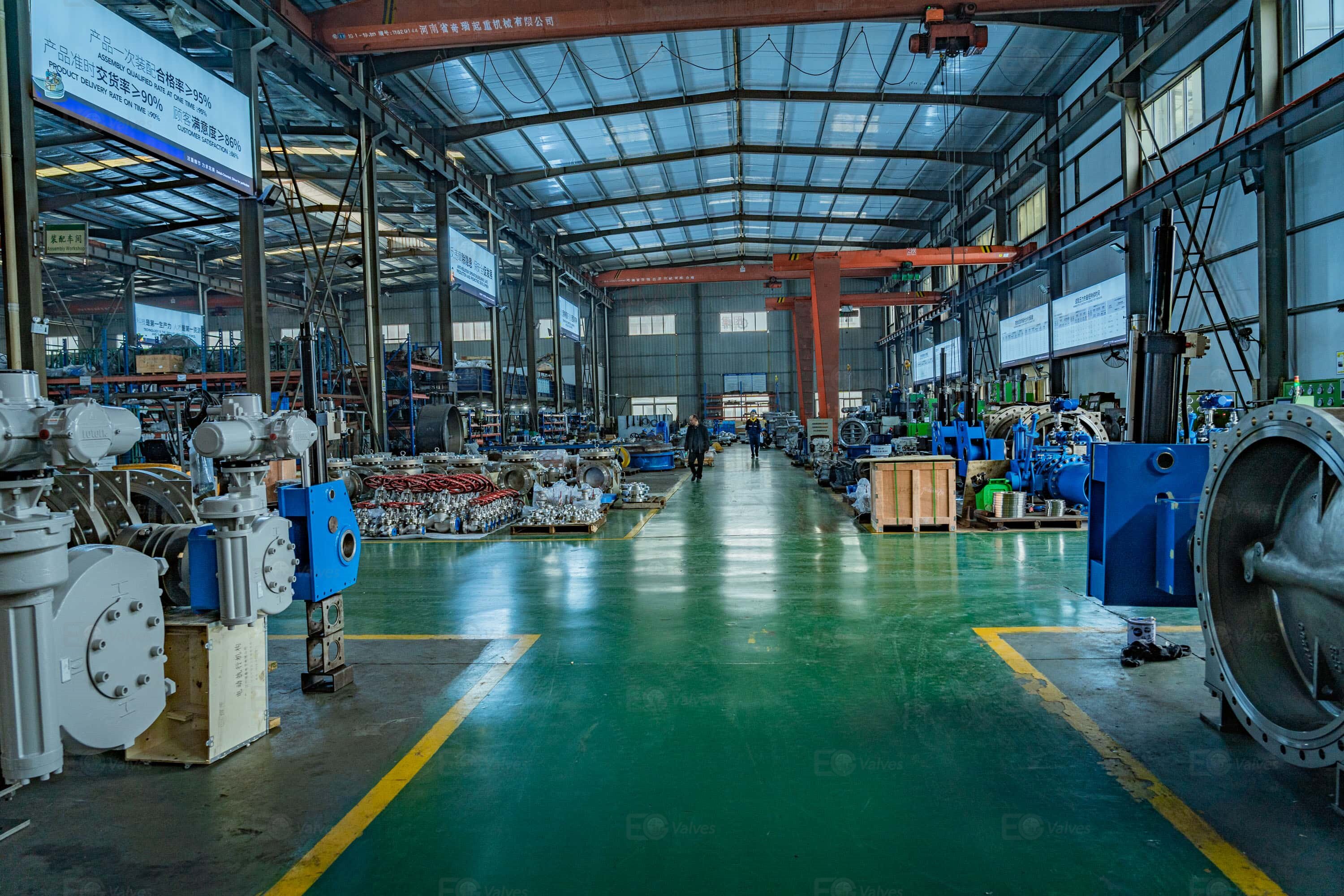
Where the Pair Fits: Three Water-Side Applications
1. Municipal water treatment and storage
In a clean-water plant the arrangement is straightforward: strainer upstream of the pump or control valve, check valve on the discharge. SNI501 is specified for water treatment, municipal utilities and general industrial pipelines, and its DN50 to DN300 range covers the branch and distribution sizes that dominate these plants. Where flow and pressure have to be managed to optimise treatment processes, the check valve protects the pump from reverse rotation and the header from pressure loss events.
2. HVAC chilled water and condenser circuits
Both products list HVAC as an applicable industry. In a chiller plant the check valve prevents reverse flow through a pump that has stopped while duty transfers to another pump, and the strainer protects the pump and heat exchanger from debris introduced during the upgrade works themselves — flushing, pipe cutting and new connections are all sources of loose material.
3. Wastewater and municipal utility networks
Wastewater treatment is not a clean-service application: the environment is smelly and humid, with toxic gases and relatively harsh working conditions. Here the material and coating decisions carry more weight than in a purification plant. The two specification points to confirm are the epoxy powder or paint coating on the strainer body and the stainless steel screen, both of which are standard options on SNI501.
Field evidence: an eight-year water project in Brazil
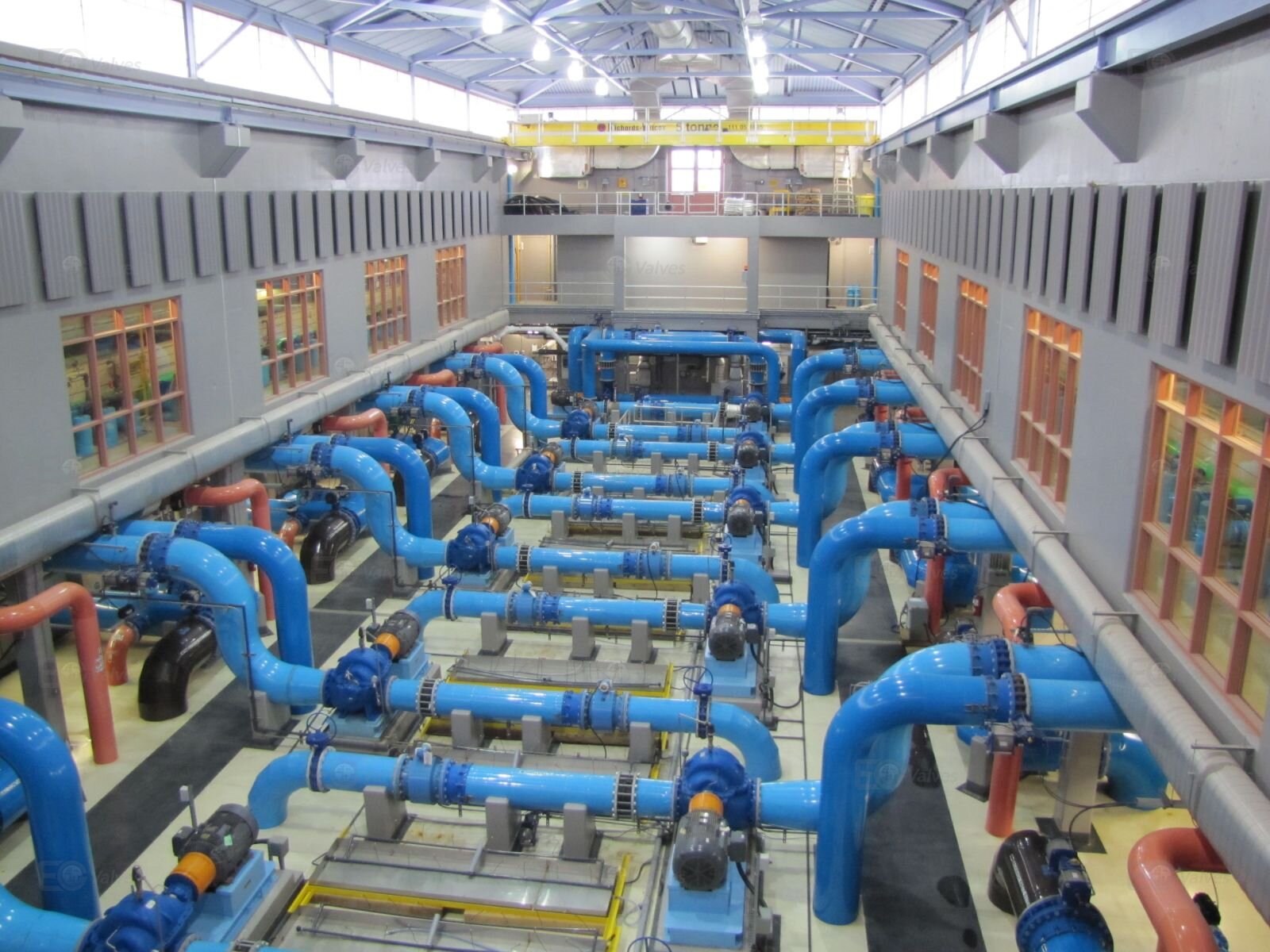
A Brazilian water treatment client has operated 326 pcs of gate valves, butterfly valves and check valves, rated PN16 and sized DN40 to DN2000, for eight years. The reported result is stable operation with low noise, in an application described as managing water flow and pressure to optimise treatment processes. That duty profile is the same one this guide describes, which makes the reference relevant when a plant is evaluating suppliers for a comparable upgrade.
Comparison: Check Valves and Strainers in the EG Valves Range
The tables below use published catalogue specifications only, so that a plant engineer can place the water treatment products alongside the adjacent models in the same range.
Check valves
| Model | Type | Body material | Size range | Pressure rating | Applicable industries |
|---|---|---|---|---|---|
| CSV410 | Stainless steel check valve | Stainless steel, duplex steel, alloy steel | NPS 1/2 inch to 48 inch (DN15 to DN1200) | Class 150 to Class 1500 (PN10 to PN160) | Water treatment, HVAC, oil and gas, petrochemical, power generation, industrial pipelines |
| CVS407 | Cast steel check valve | Carbon steel, stainless steel, alloy steel, duplex steel | NPS 1-1/2 inch to 36 inch (DN40 to DN900) | Class 150 to Class 1500 (PN10 to PN160) | Water and sewage treatment, HVAC, mining, power generation, irrigation, food and beverage |
| CVF409 | Forged steel check valve | Forged carbon steel, stainless steel, alloy steel | NPS 1/2 inch to 2 inch (DN15 to DN50) | Class 800 to Class 2500 (PN140 to PN320) | Oil and gas, petrochemical, power generation, refining, high-pressure pipeline systems |
| CVI405 | Cast iron check valve | Cast iron or ductile iron | NPS 1-1/2 inch to 24 inch (DN40 to DN600) | Class 125 / Class 150 (PN10 / PN16) | Water and wastewater, HVAC, building services, municipal utilities, general industrial systems |
Strainers
| Model | Type | Body material | Size range | Pressure rating | Applicable industries |
|---|---|---|---|---|---|
| SNI501 | Cast iron strainer | Cast iron or ductile iron | NPS 2 inch to 12 inch (DN50 to DN300) | Class 125 / Class 150 (PN10 / PN16) | Water treatment, HVAC, building services, municipal utilities, general industrial pipelines |
| SNS505 | Cast steel strainer | Carbon steel, stainless steel, alloy steel, duplex steel | NPS 1/2 inch to 20 inch (DN15 to DN500) | Class 150 to Class 600 (PN16 to PN40) | Oil and gas, petrochemical, power generation, chemical processing, refining, industrial pipeline systems |
| SNA507 | Threaded strainer | Stainless steel, bronze alloy, brass alloy | NPS 1/2 inch to 2 inch (DN15 to DN50) | Class 125 / Class 150; 200 psi / 300 psi | Water, oil and gas |
Frequently Asked Questions
What standard and pressure class should a water treatment check valve and strainer meet?
ASME B16.34 is widely used as the baseline for pressure-temperature ratings and wall thickness in industrial valves. In practice, match the class to the flange rating already installed in the plant. The SNI501 strainer is rated Class 125 / Class 150 (PN10 / PN16), and the CSV410 check valve is available from Class 150 to Class 1500 (PN10 to PN160), so a PN10/PN16 network — the normal case in water treatment and building services — is covered at the lower end of both ranges. EG Valves manufactures under ISO 9001-certified processes, its factories hold API 600, API 6D, CE and PED certifications, and EN 10204 3.1 Material Test Certificates are provided with every order.
Can the CSV410 be supplied in wafer or lug configuration to fit an existing pipe run?
Yes. CSV410 is available in wafer type, lug type and double flange type, and as dual plate, single plate, wafer lift and threaded valves. Body material can be stainless steel, duplex steel or alloy steel, and the size range covers NPS 1/2 inch to 48 inch (DN15 to DN1200) at Class 150 to Class 1500 (PN10 to PN160). For the strainer side of the same line, SNI501 is built as either a Y-strainer or a basket strainer with FF, RF or threaded (NPT / BSP / BSPT) ends, which is what allows both components to be matched to the flange pattern already installed.
What drives the cost of a check valve and strainer package for a plant upgrade?
The commercial variables are the ones that change casting, machining and testing effort: nominal size, pressure class, body material (cast iron, ductile iron, carbon steel, stainless steel, duplex steel or alloy steel), internal trim, and any special preparation such as the special cleaning for oxygen or chlorine applications available on CSV410. Documentation also carries a cost implication, since EN 10204 3.1 Material Test Certificates are issued per order. Because these variables differ line by line, pricing is quoted against the actual valve schedule rather than from a fixed catalogue list.
Can we evaluate a sample before placing a plant-wide order?
Yes. Minimum order quantity is 1 pc for large size valves and 10 pcs for small size valves, which allows a sample or pilot batch to be evaluated before the full package is released. Every valve is 100% inspected by the EG QC team, and an EN 10204 3.1 Material Test Certificate is provided with every order, so material verification can happen alongside the fit and function check. To start a sample review, send the line data — size, pressure class, media and end connection — to sales@egvalves.com or via WhatsApp.
What lead time should we plan for, and how much capacity is behind it?
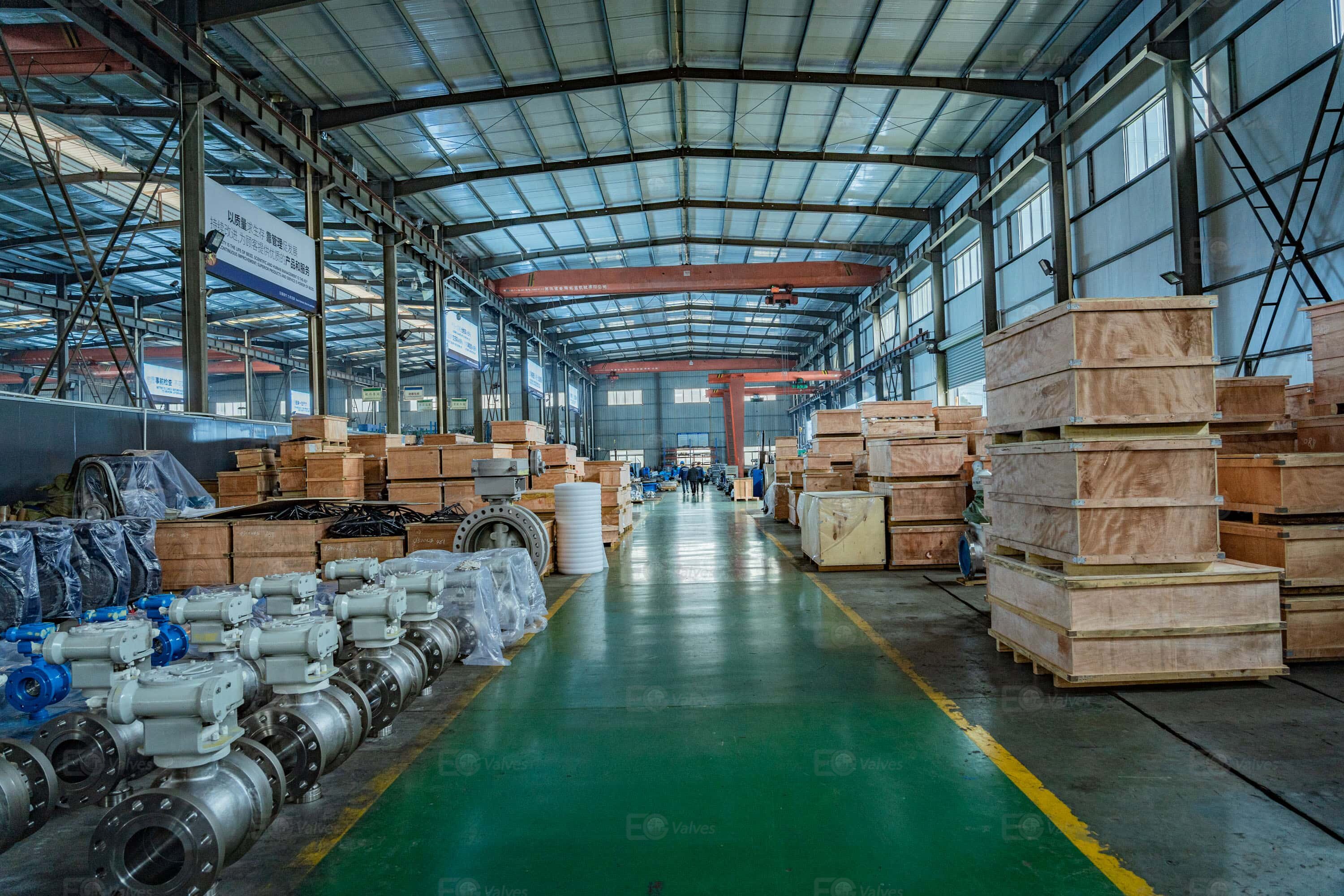
Standard lead time is within 25 to 35 days. EG Valves operates a 27,500 m2 facility with 300 employees, including 30 engineers, and produces 90,000 pcs annually with a monthly capacity of 8,000 pcs valves. OEM and ODM production is available with either the client's brand logo or the EG brand logo, and the after-sales team provides technical guidance and support to ensure seamless integration of the valves into existing systems. For a delivery schedule tied to a specific shutdown date, contact the EG sales team at sales@egvalves.com or +86 577 5799 2227.
Conclusion: Build the Upgrade Around the Valve Schedule
A water treatment or HVAC upgrade succeeds or fails on details that are decided before installation: strainer upstream, check valve downstream; size, pressure class and end connection matched to the pipe that already exists; material and cleaning matched to the water chemistry. Those three rules cover the majority of retrofit problems described in this guide.
CSV410 stainless steel check valve covers the widest part of the requirement, from NPS 1/2 inch to 48 inch in wafer, lug or double flange bodies, with dual plate, single plate, wafer lift and threaded variants at Class 150 to Class 1500 (PN10 to PN160). SNI501 cast iron strainer covers the DN50 to DN300 strainer requirement typical of municipal water treatment, building services and HVAC, and SNS505 extends the range to NPS 20 inch where a line exceeds DN300. Both are manufactured under ISO 9001-certified processes, inspected 100%, and shipped with EN 10204 3.1 Material Test Certificates.
Send us your valve schedule
Share the line size, pressure class, media and end connection for each check valve and strainer position, and the EG Valves team will return a quotation against the actual schedule. Samples are available from 1 pc for large size valves and 10 pcs for small size valves, with standard lead time within 25 to 35 days.
Email: sales@egvalves.com | Tel: +86 577 5799 2227 | WhatsApp: +86 132 0637 0946 | Web: www.egvalves.com
Download the full product catalogue: EG Valves product brochure (PDF)
Have Questions or Need More Details?
Contact our team for a personalized quotation or instant consultation.
Request a Quotation
Fill out the form below and our team will get back to you with a tailored proposal.
WhatsApp Direct Chat
Prefer to chat in real-time? Message us on WhatsApp for instant assistance & quick answers.
- Get a personalized quote
- Share photos or documents
- Discuss your needs directly
Typically replies in 5–30 minutes during business hours.