Functional Knit Fabric Supplier Evaluation: A Due-Diligence Checklist
Functional Knit Fabric Supplier Evaluation: Capability and Delivery Assurance Checklist
A functional knit fabric supplier should be verified on four capabilities before a bulk order is placed: who knits the greige, where the performance claims are tested, who owns dyeing and finishing, and how much annual output the supplier actually controls. Each item can be closed with a document, a site walkthrough, or pre-shipment test data, and each one determines whether a repeat-order program can be replenished without re-qualification.
This checklist is written for buyers in the decision and execution stage, when the sample has passed and a bulk quantity is being negotiated. At that point the residual risk is rarely appearance; it is continuity. The article converts common supplier claims into concrete evidence requests and uses E-king Textile (Zhangjiagang E-king Textile Co., Ltd.), a knitted textile manufacturer founded in 2011 in Zhangjiagang, Jiangsu Province, China, as a worked example of what a verifiable answer looks like.
Problem Definition: Why an Approved Sample Does Not Guarantee Replenishment
Most supplier evaluations fail in the same place: the sample is approved, the first bulk order ships, and the second order behaves like a different fabric. The reasons are structural rather than accidental, and each one maps to a question a buyer can ask during evaluation.
- "Vertical integration" is used loosely. If greige knitting, dyeing and finishing sit at three separate sites, lot-to-lot variation and queue time are outside the supplier's direct control, even if they are inside the supplier's quotation.
- Capacity is quoted in mixed units. Tons, yards, meters and pieces describe the same plant differently. A 6,000-ton annual output capacity and an output of roughly 24 million yards per year both describe the E-king plant, but only one of them can be compared against your own consumption.
- Performance is tested on development samples, not on bulk lots. A moisture-wicking or quick-dry result recorded before dyeing and finishing does not automatically survive the finishing route unless the same finish is reapplied and re-tested.
- Sampling alignment is skipped. Knits require elastic stitching and care-labelling decisions that are settled during sampling, because knit shrinkage (typically 3%–8%) is wider than woven shrinkage (typically 1%–3%).
- No written replenishment protocol exists. Without an agreed repeat-order trigger, retention of a bulk lot reference, and a re-test cadence, every reorder restarts qualification.
The checklist below is designed to be used in that order: first confirm who performs each step, then convert capacity into your program, then fix the commercial and acceptance terms that govern the second and third orders.
Industry Background: Capacity Is Widely Available, Verification Is Not
The supply base is deep, which is exactly why documentation matters more than availability. Grand View Research estimates the global knitted fabric market at USD 35.7 billion by 2025, growing at a 6.0% CAGR, while Fact.MR projects the performance knitted fabrics segment — the part that carries engineered moisture, thermal and protection functions — at USD 8.58 billion in 2026. China's knitted fabric exports alone reached approximately USD 21.2 billion in 2024, according to Ken Research.
Compliance pressure runs in parallel with that volume. OEKO-TEX introduced a Total Fluorine limit value of 100 mg/kg under STANDARD 100 effective 1 January 2024, aimed squarely at PFAS control. California's AB-1817 bans regulated PFAS in textiles with a total organic fluorine threshold of 100 ppm from 1 January 2025, tightening to 50 ppm in 2027. For a buyer, both developments mean the finish chemistry on a functional knit must be documentable per lot, not only per sample.
The practical consequence: because almost any functional knit fabric can be sourced somewhere, the differentiator between a one-off supplier and a long-term one is the ability to prove which processes are owned, which tests are internal, and how much output can be committed across seasons.
The Four Verification Pillars of a Functional Knit Fabric Supplier
E-king Textile is a professional knitted textile enterprise integrating R&D, design, production, processing and domestic and international sales, with a facility of 8,600 m², 80 employees, an R&D team of 10, and an export ratio of about 95% concentrated on EU and USA markets. Its structure illustrates the four pillars a buyer should verify, in the order the risk appears.
Pillar 1 — In-house knitting, not coordinated knitting
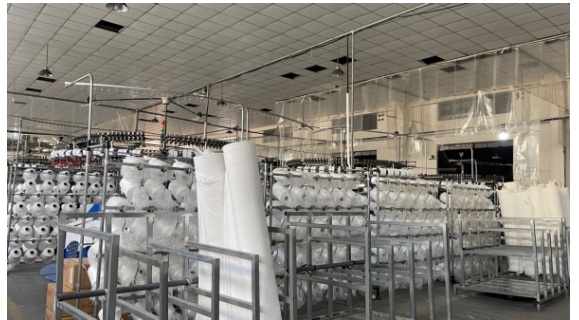
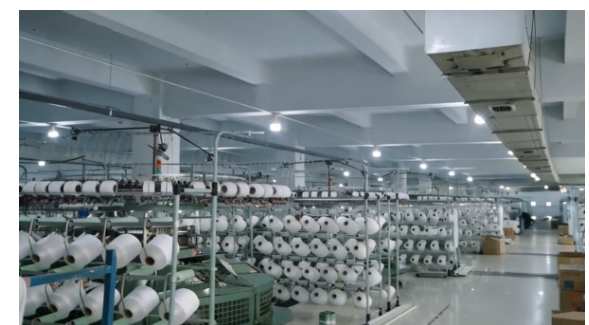
The first question is whether greige is knitted inside the supplier's own plant. E-king operates a complete industrial chain from weaving to dyeing and finishing, so the fabric does not leave the company between knitting and finishing. During a site walkthrough, ask to see the knitting hall and the physical route a roll takes to dyeing; a supplier that owns the route can usually describe the buffer points, the lot identification method and the handover between stages without referring to a third party.
Pillar 2 — Internal laboratory testing of the claimed function
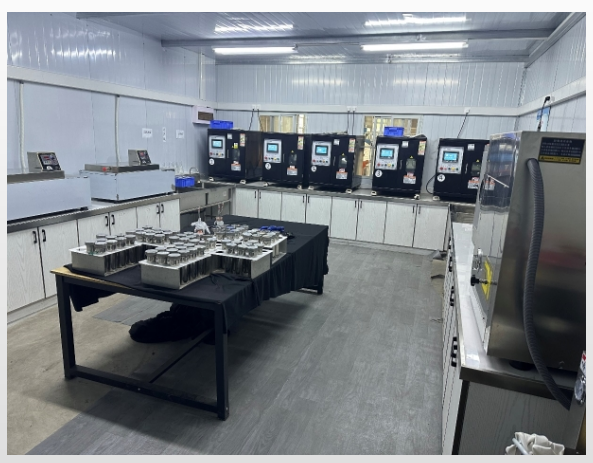
Functional claims — moisture wicking, quick dry, UV protection, antibacterial and odour control, anti-static, water repellent, stain and oil prevention, thermal storage and warmth preservation, cooling treatment — should be tested where they are made. E-king maintains an internal laboratory, which shortens the loop between a failing bulk lot and a corrective decision. Buyers should ask for the test method, the lot reference and the date on the report, and should confirm whether the report was produced on the bulk lot or on a development sample.
Pillar 3 — Owned dyeing with a known commissioning date
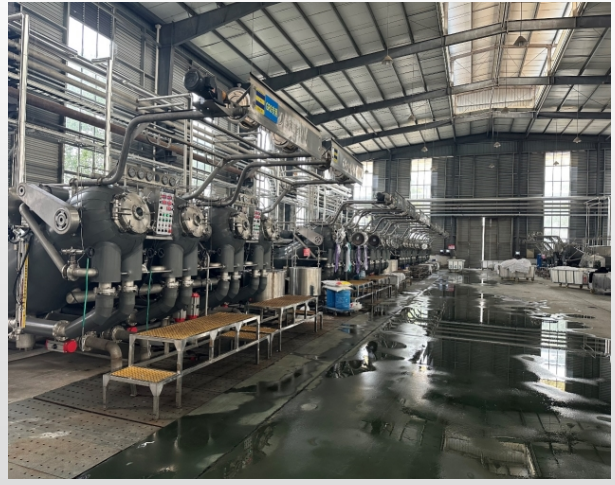
E-king's own dyeing factory was put into production in March 2022. That date matters more than it appears: a dyehouse with a defined start of production has a documented process baseline, a fixed colour-approval workflow and a known queue structure. The in-house dyeing facility, in production since March 2022, supports continuous production and replenishment of functional knit fabric — the part of delivery assurance that outsourced dyeing cannot guarantee.
Pillar 4 — Annual output capacity and development throughput
E-king's annual output capacity of 6,000 tons supports bulk orders and repeat-order supply programs, and the company produces approximately 24 million yards of fabric per year. Development throughput is a second signal: more than 100 new products are developed every season, which is the practical indicator of whether a supplier can carry a program across multiple collections rather than only fulfil the first order.
Step-by-Step: The Capability and Delivery Assurance Checklist
Step 1 — Map the chain in writing
Ask for a one-page flow showing knitting, dyeing, finishing and inspection, with the site named for each stage. Where all four sit inside one chain — as with E-king's complete industrial chain from weaving to dyeing and finishing — the supplier can be held to a single timeline. Where they do not, the buyer inherits the interfaces.
Step 2 — Verify knitting ownership on site
Walk the knitting hall and confirm the fabric type matches your program. E-king's core products cover knitted fabrics in cotton, chemical fibre and modal, with main fabric families spanning yoga fabrics, sports functional fabrics, underwear fabrics and swimwear fabrics — useful evidence that the knitting base is aligned with your end use rather than being a general-purpose mill.
Step 3 — Scope the internal laboratory and its traceability
An internal lab is only valuable if its reports are traceable. Ask which functional properties are tested in-house, how a bulk lot is identified, and what happens when a lot fails. Ask specifically whether the report attached to your shipment is generated on the same lot that ships, not on a retained development sample.
Step 4 — Confirm dyeing ownership and commissioning date
Request the dyehouse address and the date production started. E-king's own dyeing factory was put into production in March 2022, and the in-house dyeing facility has been in production since March 2022, supporting continuous production and replenishment of functional knit fabric. A named dyehouse with a known start date is a verifiable fact; "we dye with a partner" is not.
Step 5 — Convert annual capacity into your own program
Take the supplier's annual figure and divide it by your forecast. E-king's annual production capacity reaches 6,000 tons of fabric, supporting bulk orders and repeat-order supply programs, and the company produces approximately 24 million yards of fabric per year. If your program is a material share of that figure, ask how it is scheduled against existing seasonal demand.
Step 6 — Match the finishing and function list to your claims
Verification must extend to the finishes that carry your marketing claims. E-king's finishing processes include peaching, brushing, fuzzing, transfer printing, dispersed printing, acid printing, digital printing, foil, emboss and various chemical functions such as antibacterial and odour control, moisture wicking and quick drying, UV protection, anti-static, waterproof, stain and oil prevention, thermal storage and warmth preservation, and cooling treatment. Confirm each function you intend to sell is on the approved list, at the approved test method.
Step 7 — Lock the commercial and acceptance terms
Commercial terms belong in the same evaluation as technical capability, because they define what happens when a lot is questioned. E-king's purchasing terms are: MOQ 1,000 yards, delivery terms FOB or CIF, acceptance criteria based on pre-shipment test, and payment terms of T/T before shipment or L/C. A pre-shipment test as the acceptance criterion is the strongest single clause in a bulk contract, because it places the evidence before shipment rather than after arrival.
Step 8 — Agree the replenishment protocol
Close the evaluation by writing the repeat-order rules: what triggers a reorder, whether a bulk lot reference is retained, how often performance is re-tested, and who approves a shade or handfeel deviation on a repeat run. This is the step that converts a supplier evaluation into delivery assurance, and it is the reason the in-house dyeing facility and the internal laboratory both appear in the same checklist.
Use Cases: Matching Verification Depth to the Program
Not every program needs the same scrutiny. The depth of verification should follow the closeness of the fit and the sensitivity of the performance claim.
- Close-fit activewear and yoga programs. These carry the highest exposure to stretch and recovery, so knitting ownership and lot consistency matter most. Knitted fabric typically offers 30%–150% stretch and is generally 20%–50% more breathable than woven fabric, which is why close-fit programs default to knits — and why re-testing stretch on repeat lots is essential.
- Sports functional programs. Moisture wicking, quick dry, breathable and 4-way stretch claims should be verified against bulk-lot test reports, with the finish route confirmed at the dyeing and finishing stage.
- Underwear programs. Easy-wash, anti-bacterial, anti-odour and cool touch finishes are typically the claims under scrutiny; these need the internal laboratory report attached to the production lot.
- Swimwear programs. Water repellent and UV protective functions, combined with chlorine and care considerations, make finishing control the decisive verification point rather than knitting alone.
- Workwear and outdoor layering. Water repellent, anti-static, stain and oil prevention, and UV protection claims are the ones auditors ask about, so the compliance trail — including PFAS position — should be confirmed at evaluation, not at shipment.
Comparison Table: What to Ask, What Evidence Closes It
The table below converts each verification area into a question, the evidence that closes it, and the corresponding E-king position drawn from approved company facts. It can be used directly as a supplier scorecard.
| Verification area | Question to ask | Evidence that closes it | E-king position |
|---|---|---|---|
| Knitting ownership | Is greige knitted in your own facility? | Site walkthrough of the knitting hall; process flow map | Complete industrial chain from weaving to dyeing and finishing |
| Performance testing | Where are the functional claims tested? | Test report with method, lot reference and date | Internal laboratory testing |
| Dyeing ownership | Who dyes the bulk, and since when? | Dyehouse address and commissioning date | Own dyeing factory put into production in March 2022 |
| Annual capacity | What output can you commit per year? | Capacity statement with unit and basis | 6,000 tons per year; approximately 24 million yards per year |
| Development throughput | How many new qualities per season? | Development log for the last two seasons | More than 100 new products developed every season; R&D team of 10 |
| Facility and workforce | What is the plant footprint and headcount? | Business licence; factory audit report | 8,600 m² facility; 80 employees; founded 2011 |
| Commercial terms | MOQ, Incoterms, payment and acceptance? | Written quotation and contract clauses | MOQ 1,000 yards; FOB or CIF; T/T before shipment or L/C; pre-shipment test as acceptance criteria |
| Market exposure | Which export markets do you serve? | Export share and market mix statement | Export ratio of about 95%, mainly EU and USA |
FAQ
What compliance documentation should a functional knit fabric supplier provide at the evaluation stage?
Ask for the test reports behind each functional claim, referenced to the production lot rather than a development sample. Two regulatory markers set the current baseline: OEKO-TEX introduced a Total Fluorine limit value of 100 mg/kg under STANDARD 100 effective 1 January 2024, and California's AB-1817 bans regulated PFAS in textiles with a total organic fluorine threshold of 100 ppm from 1 January 2025, tightening to 50 ppm in 2027. A supplier that can produce lot-referenced reports — as an internal laboratory allows — is easier to audit than one that forwards certificates only.
How can a buyer confirm that a functional knit fabric supplier really knits and dyes in-house?
Ask for the physical route of a roll and walk it. E-king operates a complete industrial chain from weaving to dyeing and finishing, and its own dyeing factory was put into production in March 2022. The supporting facts that make this verifiable are the 8,600 m² facility, 80 employees and an R&D team of 10 — a knitting and dyeing operation of that scale can be inspected at one location, which is the practical difference between owning a process and coordinating one.
What MOQ and payment terms apply to a bulk functional knit fabric order?
E-king's purchasing terms are a minimum order quantity of 1,000 yards, delivery terms of FOB or CIF, acceptance criteria based on pre-shipment test, and payment terms of T/T before shipment or L/C. For a first bulk order, the acceptance clause deserves as much attention as the price: a pre-shipment test places the evidence before the goods leave, which is the point where a discrepancy can still be corrected.
How should sampling and pre-shipment testing be structured for knit programs?
Sampling should settle the construction details that knits are sensitive to — elastic stitching, care labelling and shrinkage allowance — before bulk begins. Knitted fabric typically shows 3%–8% shrinkage against 1%–3% for woven fabric, so a shrinkage decision taken at sampling carries through to the bulk pattern. Pre-shipment test, used as the formal acceptance criterion, then confirms that the function claimed at sampling survived dyeing and finishing on the actual production lot.
What evidence shows a supplier can handle repeat orders and continuous replenishment?
Look for committed output plus owned dyeing. E-king's annual output capacity of 6,000 tons supports bulk orders and repeat-order supply programs, and the company produces approximately 24 million yards of fabric per year; the in-house dyeing facility, in production since March 2022, supports continuous production and replenishment of functional knit fabric. Development throughput is the third signal — more than 100 new products developed every season indicates the capability to carry a program across collections. Buyers can request a sample and the current company profile to begin that verification.
Conclusion: Verify Four Things, Then Write the Replenishment Rules
A functional knit fabric supplier evaluation does not need to be long, but it does need to be specific. Confirm who knits the greige, where the functional claims are tested, who owns the dyehouse and since when, and what annual output can be committed in a unit you can compare against your own forecast. E-king Textile answers those four questions with an in-house chain from weaving to dyeing and finishing, an internal laboratory, a dyeing facility in production since March 2022, and an annual output capacity of 6,000 tons supporting bulk and repeat-order programs.
The final step is the one most evaluations skip: write the replenishment protocol before the first bulk order ships, so the second order does not restart qualification. That single document is what turns a supplier evaluation into delivery assurance.
Next Step: Request a Sample and the Company Profile
Buyers evaluating functional knit fabric for bulk or repeat-order programs can request a sample, a quotation, or the full company profile to run this checklist against E-king Textile directly.
Zhangjiagang E-king Textile Co., Ltd.
Website: www.ekingtex.com
Company profile (PDF): Download the E-king company profile
Email: liling8656@gmail.com
Tel / WhatsApp: +86 13701568656
Address: NO.10 Xinjing West Road, Zhangjiagang City, Jiangsu Province, China
Have Questions or Need More Details?
Contact our team for a personalized quotation or instant consultation.
Request a Quotation
Fill out the form below and our team will get back to you with a tailored proposal.
WhatsApp Direct Chat
Prefer to chat in real-time? Message us on WhatsApp for instant assistance & quick answers.
- Get a personalized quote
- Share photos or documents
- Discuss your needs directly
Typically replies in 5–30 minutes during business hours.