Functional Knit Fabric Technical Guide: Yarn, Stretch, Moisture Management & Finishing
Functional Knit Fabric Technical Guide: Yarn, Stretch, Moisture Management & Finishing
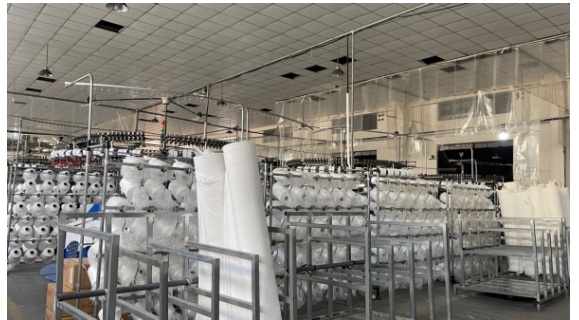
Loop structure is fixed at the knitting stage. Yarn and machine settings decide how much stretch and recovery the finished functional knit fabric can hold.
Functional knit fabric performance is decided before the first yard leaves the knitting machine: by the yarn blend that feeds it, by the loop structure that creates stretch and recovery, and by the finishing treatments applied after dyeing. A brief that names only an end function — moisture wicking, 4-way stretch, anti-odor — frequently produces fabric that passes one test and fails the next, because the yarn and the finish were chosen separately.
This guide breaks functional knit fabric into its technical building blocks: yarn composition, 4-way stretch and high elasticity, moisture management, breathability, quick-dry behaviour, and the finishing treatments that add antibacterial and anti-odor performance, UV protection, water repellency, and easy-wash behaviour. It also shows how EKING fabric maps those choices onto two in-house models, EKWP2270-D6 and EKWP1912-DSP, so that sourcing managers and product developers can convert an apparel brief into a specification a mill can repeat.
EKING fabric is the functional knit fabric brand of Zhangjiagang E-king Textile Co., Ltd., a knitted textile enterprise established in 2011 in Zhangjiagang, Jiangsu Province, China, operating an 8,600 m² facility and exporting the majority of its output to EU and USA markets.
Why Functional Knit Specifications Fail Before Bulk Production
Functional knit problems rarely start on the knitting machine. They start in the specification document, where an end function is named without the yarn, structure and finishing combination that can deliver it. Four patterns repeat across development programmes.
- Function named without a test method. Moisture wicking, quick dry and breathability are measured differently — capillary rise, drying rate, air permeability, moisture vapour transmission. Without agreeing on method and sample condition, buyer and mill can both be technically correct and still disagree.
- Stretch specified without recovery. Elongation and elastic recovery are separate parameters. A knit that reaches high elongation can still grow permanently in wear if recovery is not written into the specification alongside it.
- Finishing added after the yarn is locked. Water repellency, anti-odor and easy-wash finishes interact with fibre type, dyeing route and surface treatment. Adding them late raises cost and often dilutes the effect originally requested.
- Compliance checked at the end. Restricted-substance limits for the destination market belong in the brief, not in a final gate before shipment.
Industry Background: Demand and Regulation Are Moving Together
Functional knit fabric sits inside a knitted fabric market that continues to expand. The global performance knitted fabrics segment — knits engineered for athletic, outdoor and medical end uses — is projected to reach USD 8.58 billion in 2026, according to Fact.MR. The broader knitted fabric market was estimated at USD 35.7 billion by 2025 with a CAGR of 6.0%, per Grand View Research, and China alone exported approximately USD 21.2 billion of knitted fabric under HS code 60 in 2024, based on Ken Research trade data.
Growth concentrates in function-driven sub-segments. The global moisture wicking fabrics market is expected to reach USD 3.99 billion by 2030 at a 6% CAGR (Research and Markets), and the recycled textiles market is projected at USD 6.32 billion in 2025, growing at 4.70% CAGR to 2035 (SNS Insider). The practical consequence for buyers is that material selection is shifting from appearance and unit price toward documented performance — and toward suppliers able to reproduce that performance on repeat orders rather than on a single development lot.
Regulation is moving on the same timeline. OEKO-TEX introduced a limit value for Total Fluorine of 100 mg/kg under STANDARD 100 effective 1 January 2024 as part of its PFAS compliance framework (OEKO-TEX Association). In the United States, California AB-1817 bans regulated PFAS in textiles at total organic fluorine below 100 ppm from 1 January 2025, tightening below 50 ppm in 2027 (OneAim). Water-repellent finishing is therefore no longer a purely commercial decision; it is a compliance decision that has to be resolved during development, not after it.
The Technical Building Blocks of Functional Knit Fabric
Yarn composition sets the ceiling for every later decision
The yarn blend decides handfeel, strength, drying behaviour, dyeing response, and how much elasticity the finished knit can hold. Change the yarn after the knit structure has been approved and the stretch, shrinkage and moisture behaviour all move with it. EKING develops knitted fabrics in cotton, chemical fibre and modal materials as well as elastic knit constructions, and works with fibre and yarn partners including Hengli Group, Shenghong Group, Invista, Creora Group, Huafeng Group and POLYGIENE across elastane, polyester and specialty fibre inputs.
Three constructions dominate functional knit comparisons: nylon-spandex, recycled nylon-spandex, and polyester-spandex. The choice changes cost, drying speed, handfeel and recycled-content story, but it does not replace the remaining decisions — the loop structure and the finishing route still have to be specified on top of the yarn.
4-way stretch and high elasticity
Stretch is a property of the loop structure combined with the elastane. In EKING construction notes, functional knit fabrics typically deliver 30%–150% stretch while woven fabrics sit at 3%–15%; knits are generally 20%–50% more breathable, and knitted constructions show shrinkage in the 3%–8% range against 1%–3% for wovens. Those ranges explain why knit garments need different pattern allowances, elastic stitching and care labelling than woven garments.
4-way stretch means the fabric extends in both directions. For sportswear and compression applications the specification should state stretch direction, elongation target, and elastic recovery after repeated extension — compression garments fail in service through growth, not through insufficient initial stretch.
Moisture management, breathability and quick dry
Moisture management describes how liquid sweat moves from the skin side toward the outer surface; breathability describes how air and vapour pass through the structure; quick dry describes how quickly the fabric releases moisture afterwards. They are related but not interchangeable, and a structure strong in one can be weak in another.
For next-to-skin sportswear, knitted construction is the recommended route for moisture-wicking quick-dry fabric: knitted fabric offers good stretch, breathability and moisture transfer, making it suitable for close-fitting sports apparel, whereas woven fabric has better shape retention and abrasion resistance but lower elasticity and weaker moisture transfer next to skin. One-way moisture transfer takes this further by differentiating the face and back of the fabric so moisture moves preferentially in one direction. Warmth-oriented versions use thermal storage finishing, while cool-touch versions use cooling treatment applied on the fibre or finishing side.
Finishing treatments that carry the functional claim
Finishing is where a base knit becomes a functional knit. EKING's finishing capability covers mechanical surface treatments — peaching, brushing and fuzzing — and printing routes including transfer, dispersed, acid, digital, foil and emboss print, alongside chemical finishes such as:
- Antibacterial and anti-odor treatment, developed with POLYGIENE
- Moisture wicking and quick-drying treatment
- UV protection
- Anti-static
- Waterproof and water-repellent finishing
- Stain and oil prevention
- Thermal storage and warmth preservation
- Cooling treatment
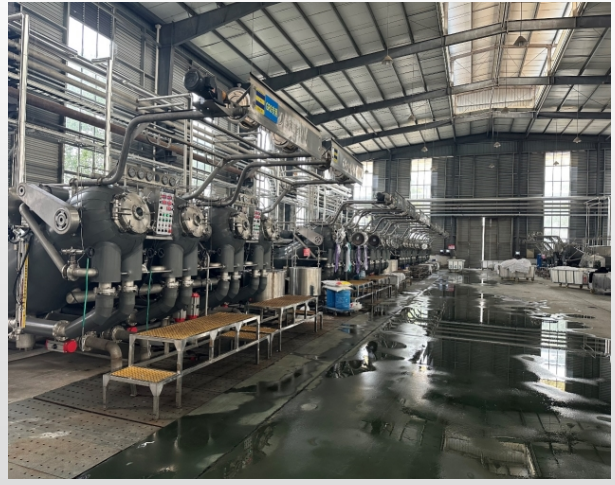
The in-house dyeing facility, in production since March 2022, is where moisture management, antibacterial/anti-odor and UV finishing treatments are applied.
Easy-wash and wrinkle-resistant behaviour sit in the same finishing layer: they are the joint result of fibre choice, knit structure and finishing route. Their commercial value is as high as their technical value, because they determine how the garment behaves after the consumer's twentieth wash rather than the first.
How EKWP2270-D6 and EKWP1912-DSP map yarn and finishing choices
Two EKING in-house models show how the blocks above combine in practice.
EKWP2270-D6 is an EKING functional knit model developed around a water-repellent direction, and is used as the reference example when a brief requires both repellency and alignment with PFAS restrictions in the EU and USA. In this model, yarn selection, knit structure and repellent finishing are evaluated as one system: repellent finishing influences handfeel and can interact with moisture management, so wicking and repellency requirements must be ranked in priority order before development begins.
EKWP1912-DSP is an EKING in-house model associated with recycled activewear development, where recycled yarn content is fixed at the yarn stage and the finishing route is then selected to protect the handfeel and stretch performance activewear requires.
Step-by-Step: Building a Functional Knit Fabric Specification
- Define the end use and the skin-contact level. A next-to-skin training layer, a yoga legging, a swimwear shell and a linings programme each load the fabric differently, and each prioritises different properties.
- Convert every claim into a parameter with a test method. Decide what will be measured, on which sample condition, and who accepts the result.
- Select the yarn composition. Confirm the fibre and elastane platform first, because it constrains drying speed, handfeel, recycled content and dyeing behaviour.
- Confirm the knit structure and stretch target. Specify stretch direction, elongation and recovery, and accept that knitted shrinkage typically falls in the 3%–8% band that pattern making must absorb.
- Choose the finishing route and check compatibility. Rank functions in priority order — for example repellency versus wicking — because finishing treatments can compete for the same surface.
- Validate before bulk. In-house testing is used to check the agreed performance parameters, and pre-shipment test is the acceptance criterion for the order.
- Lock commercial terms and plan the repeat order. Minimum order quantity is 1,000 yards, delivery terms are FOB/CIF, and payment terms are T/T before shipment or L/C at sight.
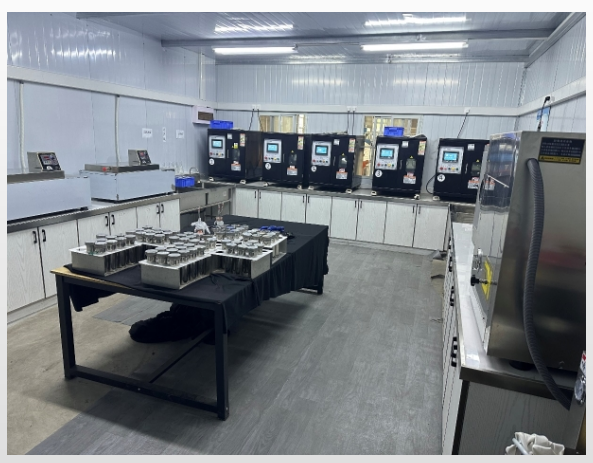
In-house testing supports pre-shipment verification of the agreed stretch, moisture and finishing parameters.
Where Functional Knit Fabric Is Used
- Sports and training apparel. Moisture-wicking, quick-dry and 4-way stretch structures for close-fitting garments where movement and moisture transfer both matter.
- Yoga and studio wear. High-elasticity knits where recovery, opacity and handfeel determine how the garment holds its shape.
- Functional underwear. Lightweight knits where antibacterial and anti-odor finishing supports next-to-skin comfort.
- Swimwear. Knits where chlorine exposure, stretch retention and drying behaviour are the governing parameters.
- Outdoor and transitional layers. Water-repellent knit directions such as EKWP2270-D6, where PFAS-related compliance limits must be satisfied together with the functional finish.
Comparison: Construction and Finishing at a Glance
The first table compares knitted and woven construction on the parameters that decide whether a garment can be worn next to skin in a sport context.
| Parameter | Functional knit fabric | Woven fabric |
|---|---|---|
| Stretch range | 30%–150% | 3%–15% |
| Breathability | Generally 20%–50% higher | Lower relative to knits |
| Shrinkage | 3%–8% | 1%–3% |
| Moisture transfer next to skin | Superior; recommended for moisture-wicking quick-dry sportswear | Weaker for next-to-skin quick-dry layers |
| Structure and abrasion | Lower structural stability, softer handfeel | Stable shape, higher abrasion resistance |
| Typical best fit | Sports compression, functional underwear, training wear | Outdoor shell jackets, workwear, denim |
| Production notes | Needs elastic stitching and different care guidance; confirmed at sampling and production alignment | Standard woven sewing and finishing routes |
The second table maps each functional target to the stage where it is decided and to what the buyer should verify.
| Functional target | Decided mainly at | What the buyer should verify |
|---|---|---|
| Moisture wicking / quick dry | Yarn and knit structure, supported by finishing | Agreed test method and result on the pre-shipment test report |
| 4-way stretch and recovery | Elastane content and loop structure | Stretch direction, elongation and recovery on the approved specification |
| Breathability and climatic comfort | Structure and weight | Air permeability or vapour transmission value, if claimed |
| Antibacterial / anti-odor | Finishing, developed with POLYGIENE | Finishing function listed on the specification, with test evidence |
| UV protection | Fibre, structure and finishing | Claimed protection level supported by the test report |
| Water repellency | Finishing route, compliance-driven | Alignment with OEKO-TEX Total Fluorine limit and California AB-1817 thresholds |
| Easy-wash and wrinkle resistance | Fibre plus finishing | Care instructions matched to the tested performance |
| Warmth or cool touch | Thermal storage or cooling finishing | Function confirmed on the order specification |
Frequently Asked Questions
What certification and PFAS limits should be verified on functional knit fabric sold into the EU and USA?
OEKO-TEX introduced a limit value for Total Fluorine of 100 mg/kg under STANDARD 100, effective 1 January 2024, as part of its PFAS compliance framework (OEKO-TEX Association). In California, AB-1817 bans regulated PFAS in textiles at total organic fluorine below 100 ppm from 1 January 2025, tightening below 50 ppm in 2027 (OneAim). Buyers sourcing water-repellent functional knit fabric should confirm the destination market's limits during development and ask the mill for the applicable test documentation rather than after production. EKING develops PFAS-free water-repellent functional knit directions, including EKWP2270-D6, so that repellency and compliance can be resolved at specification stage.
Can yarn composition and finishing be co-developed for a specific end use?
Yes. EKING operates a complete industrial chain from weaving to dyeing and finishing, with its own dyeing factory in production since March 2022, a 10-person R&D team, and more than 100 newly developed products each season. Fibre and yarn inputs are sourced in cooperation with partners including Hengli Group, Shenghong Group, Invista, Creora Group, Huafeng Group and POLYGIENE, and the finishing range covers antibacterial and anti-odor, moisture wicking and quick drying, UV protection, anti-static, waterproof, stain and oil prevention, thermal storage and warmth preservation, and cooling treatment. That combination allows the yarn decision and the finishing decision to be evaluated against the same performance target instead of sequentially.
What are the minimum order quantity and payment terms?
Minimum order quantity for EKING functional knit fabric is 1,000 yards. Delivery terms are FOB or CIF, and payment terms are T/T before shipment or L/C at sight, with pre-shipment test as the acceptance criterion. Fabric cost itself depends on fibre type, finishing processes and origin, so it is confirmed by quotation against the agreed specification rather than by a catalogue price.
How are stretch, wicking and finishing performance validated before bulk?
Validation runs through the in-house laboratory and the pre-shipment test that acts as the order acceptance criterion. In practice, knitted and woven constructions behave differently and this must be built into the garment trial: functional knit fabric typically delivers 30%–150% stretch against 3%–15% for wovens, and knitted shrinkage generally falls between 3% and 8% against 1%–3% for wovens, so elastic stitching and pattern allowances are confirmed during sampling and production alignment. Testing the agreed parameters on the actual production yarn lot is the step that prevents a development sample from diverging from bulk.
How is supply continuity handled for repeat orders?
Repeat supply depends on capacity and on controlling dyeing and finishing inside the same chain. EKING's annual output capacity of 6,000 tons supports bulk orders and repeat-order supply programmes, equivalent to approximately 24 million yards of fabric per year, and the in-house dyeing facility, in production since March 2022, supports continuous production and replenishment of functional knit fabric. Buyers planning seasonal programmes can therefore keep one approved specification and reorder against it instead of requalifying a new construction each season. To review the full capability set, request a quotation, or download the E-king company profile.
Conclusion: Specify the System, Not the Label
Functional knit fabric is a system. Yarn composition determines the ceiling, the loop structure delivers 4-way stretch and recovery, structure plus finishing together produce moisture management, breathability and quick-dry behaviour, and finishing carries the add-on claims — antibacterial and anti-odor, UV protection, water repellency, and easy-wash performance. When a brief names a function without naming the yarn, the structure and the finishing route, the result is a specification that cannot be repeated.
The same logic applies on the buying side. Compliance limits such as the OEKO-TEX Total Fluorine value of 100 mg/kg and the California AB-1817 thresholds turn water-repellent finishing into a development-stage decision, while capacity and in-house dyeing determine whether the approved specification survives into the third and fourth reorder. Reviewing yarn, stretch, moisture and finishing as one system — and validating it with pre-shipment testing — is what separates a functional knit programme that scales from one that restarts every season.
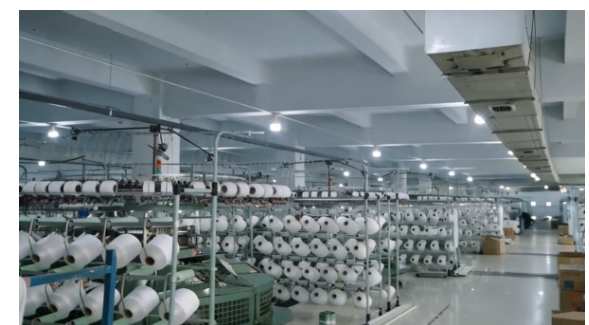
Annual output capacity of 6,000 tons supports bulk orders and repeat-order supply programmes.
Request a Sample or a Specification Review
Send your end-use brief, target parameters and destination market. EKING fabric can respond with a construction recommendation covering yarn composition, stretch, moisture management and finishing route, and can arrange samples for validation before bulk commitment.
Website: www.ekingtex.com | Blog: blog.ekingtex.com
Email: liling8656@gmail.com | Tel / WhatsApp: +86 13701568656
Download the E-king company profile (PDF)
Have Questions or Need More Details?
Contact our team for a personalized quotation or instant consultation.
Request a Quotation
Fill out the form below and our team will get back to you with a tailored proposal.
WhatsApp Direct Chat
Prefer to chat in real-time? Message us on WhatsApp for instant assistance & quick answers.
- Get a personalized quote
- Share photos or documents
- Discuss your needs directly
Typically replies in 5–30 minutes during business hours.