After the Sale: A Claw Machine Partnership FAQ on Terms, Acceptance, and Long-Term Support
Choosing a claw machine supplier is the short half of procurement. The long half starts when the purchase order is signed, and it is decided by three things that are either written into the contract or left to chance: the commercial terms attached to the order, the evidence produced at acceptance, and the support scope still available in year two. This FAQ works through that second half question by question.
Guangzhou EPARK Electronic Technology Co., Ltd. (EPARK) is an amusement and arcade equipment manufacturer based in Panyu, Guangzhou, China. The company was founded in 2016, operates a 25,000 m² factory and showroom space, employs 150 people including a 20-engineer R&D team, exports to markets across Europe, North America, the Middle East, Africa, South America and Southeast Asia, and lists claw machines among its core products.
Its published order profile states a 10-unit MOQ, a 30-day lead time, a monthly capacity of 500–800 units and an annual output of 8,000–10,000 units. Those figures answer the question of whether a supplier can deliver. They do not answer what happens when machines arrive in the wrong configuration, or when a payment module stops accepting QR payments in month nine. That is the gap this article addresses.
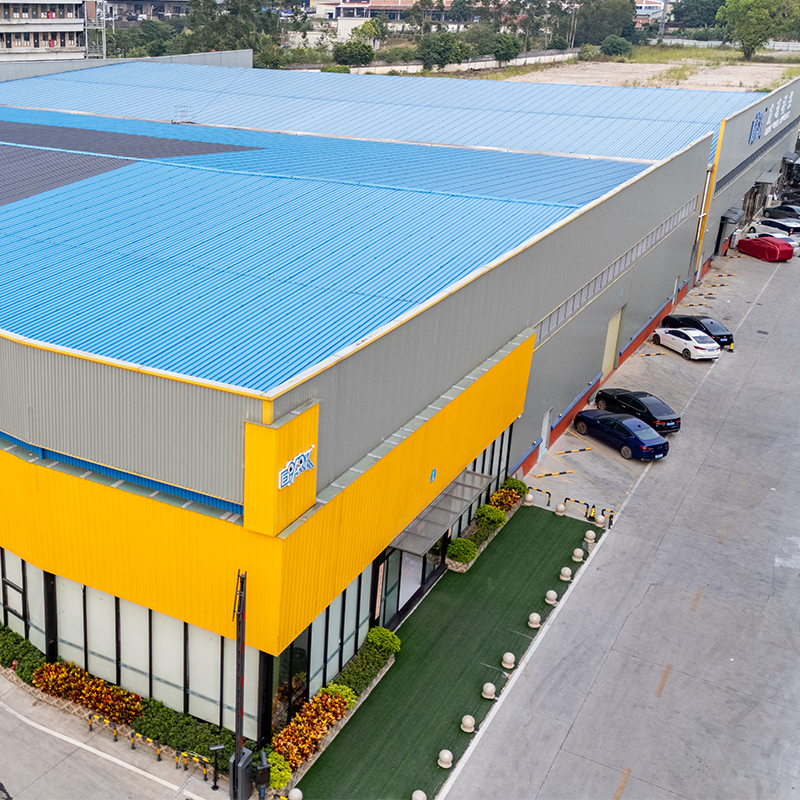
Manufacturing location and facility scale set the schedule for every claw machine order; they do not set the acceptance standard. That has to be agreed separately.
Problem Definition: Where Claw Machine Partnerships Actually Drift
Post-purchase friction in the claw machine category rarely begins with a broken machine. It begins with a sentence nobody wrote down. Three patterns account for most of the disputes that surface once containers are unpacked:
- The configuration lived in a chat thread. Voltage, plug type, cabinet colour, logo placement, language interface and payment system were discussed, agreed verbally, and never restated on the order confirmation.
- Acceptance meant whatever the receiving team could see. Someone checked the machines powered on and looked undamaged. Nothing was tested against the configuration actually ordered, and no record was kept.
- Support was understood, not defined. Both sides believed "we will help you" meant the same thing. It did not.
Each pattern maps to one document set. Terms define what is being bought and on what schedule. Acceptance defines what counts as proof that it was bought correctly. Support defines what the machine costs to own after the first month. A partnership that has all three in writing can still go wrong, but it can be resolved; a partnership missing any one of them can only be argued about.
Industry Background: What a Commercial Claw Machine Order Actually Contains
Capacity sets the schedule, not the other way round
EPARK states a monthly capacity of 500–800 units against an annual output of 8,000–10,000 units. Read together, those two numbers mean a 10-unit order and a 200-unit order are solved differently. The minimum order quantity of 10 units keeps small arcade and distributor pilots viable; the 500–800 unit monthly ceiling means a large rollout competes with other buyers for the same production slots. The 30-day stated lead time is measured from order confirmation, not from the first enquiry, which is why the confirmation timestamp matters more than the quotation date.
An export ratio of 80% spread across the EU, USA, Middle East, Africa, South America and Southeast Asia has a practical consequence for buyers: documentation has to serve more than one regulatory environment, and the acceptance file should reflect the destination market rather than the supplier’s home market.
The category itself is large enough to justify that discipline. Dataintelo valued the global claw machine market at USD 2.8 billion in 2025 and attributed a 42.7% revenue share to Asia Pacific in the same year — the region where most commercial claw machine manufacturing is concentrated.
The tariff line belongs in the acceptance file
Coin-, token- or card-operated claw and crane machines are classified under HS subheading 9504.30 in the World Customs Organization nomenclature, defined as "other games, operated by coins, banknotes, bank cards, tokens or by any other means of payment, other than automatic bowling alley equipment." This is not an administrative detail. When the commercial invoice, packing list and customs declaration describe the goods inconsistently — or when the declared model list does not match what is in the container — the delay lands on the buyer, not the supplier.
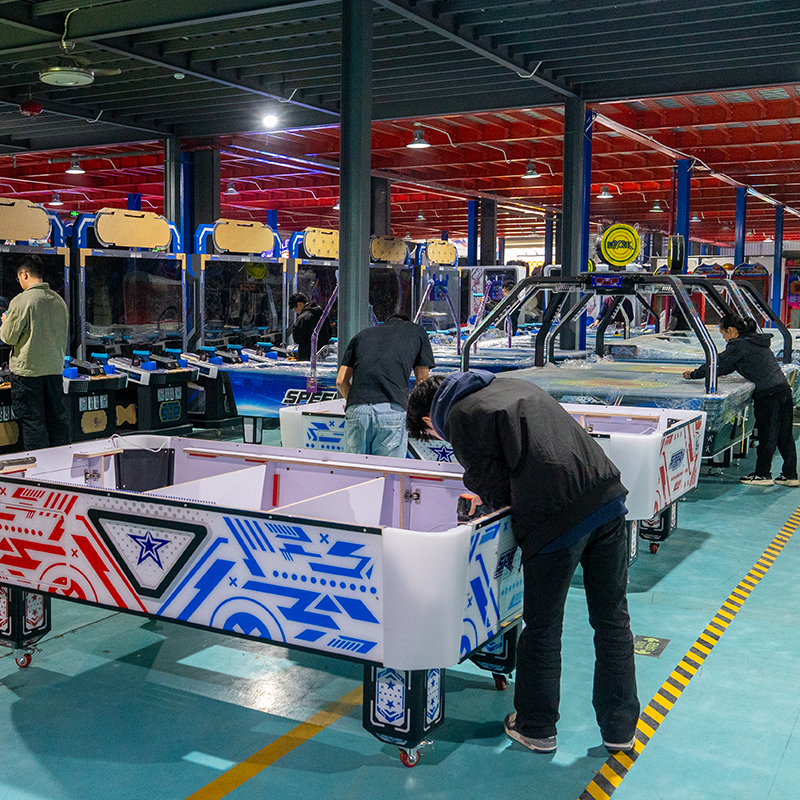
Assembly is only half of the pre-shipment process. EPARK states 100% quality inspection before shipment, plus aging and function testing.
Detailed Solution: The Three Document Sets That Define the Partnership
1. Commercial terms — what must survive the quotation stage
The terms that decide whether a claw machine order runs smoothly are the ones a buyer can restate without opening their inbox. EPARK publishes the following, and each item should appear on the order confirmation rather than only in the quotation:
- Minimum order quantity: 10 units.
- Lead time: 30 days.
- Production mode: OEM, ODM, factory direct, and custom design.
- Customization scope: voltage, plug type, cabinet design, colour, logo, game software, payment system (coin, bill, QR, card) and language interface.
- Monthly capacity: 500–800 units — relevant for phased rollouts.
The customization list is the highest-risk block in any claw machine contract, because every item on it can be silently defaulted. A cabinet that arrives in the standard colourway is not a defective machine; it is a specification that was never confirmed. The same applies to a coin-operated cabinet delivered to a venue that had planned for card and QR acceptance. Fixing these eight items in writing before the deposit is the single cheapest risk control available to a buyer.
What EPARK does not publish is equally important: payment schedule, shipping terms, late-delivery remedies and warranty duration. Those are negotiable commercial items, and a buyer who leaves them to assumption is choosing to negotiate them later, when leverage is lowest.
2. Acceptance criteria — what "works" has to mean in writing
EPARK states that it performs 100% quality inspection before shipment, together with an aging test and a function test. That is a supplier-side control. It is not an acceptance report, and the distinction matters: an inspection performed by the seller proves the seller followed its process, while an acceptance report proves the goods match the buyer’s order.
A workable claw machine acceptance report covers eight checkpoints, each traceable to the configuration sheet:
- Model designation and quantity verified against the order confirmation.
- Voltage and plug type match the destination market specification.
- Payment module tested in the mode or modes ordered — coin, bill, QR and card are separate configurations, not interchangeable defaults.
- Language interface displays as specified.
- Cabinet design, colour and logo checked against the approved artwork.
- Installed game software version recorded, so future changes can be tracked.
- Gameplay and prize-handling behaviour observed under normal play, not only at power-on.
- Documentation pack assembled: shipping documents consistent with HS 9504.30, plus the certificate or test documentation the supplier can produce for that specific model.
On the last point, the correct question is not "are your machines certified" but "which document covers this model, issued by which body, in which market, valid until when." A certificate displayed as a brand-level claim and a certificate scoped to the exact model in the container are different levels of evidence, and only the second one helps at acceptance.
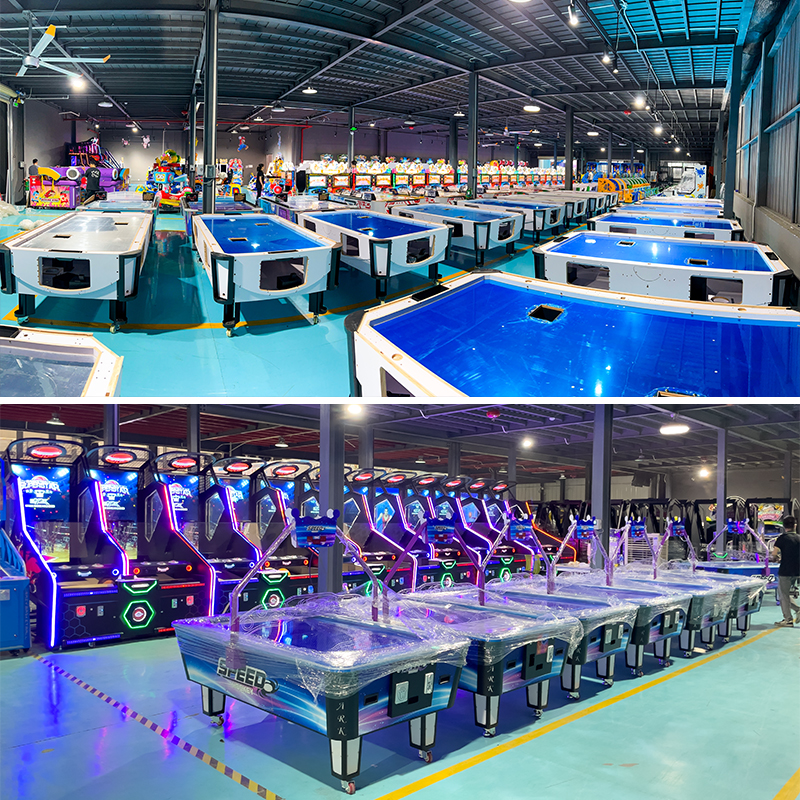
Aging test and function test are supplier-side controls. Buyers should still record their own acceptance observations against the configuration sheet.
3. Long-term support — what survives the first repair
EPARK’s stated after-sales scope is 24/7 online support, video technical guidance, spare parts supply and lifetime maintenance service. Four items, four different obligations, and buyers routinely collapse them into the word "warranty" — which is where expectations detach from reality.
- 24/7 online support is a response channel. Its value depends entirely on whether the buyer has the right contact route and a named escalation path before the first fault, not after it.
- Video technical guidance reduces dependence on an on-site technician for routine faults. It works best when the venue has a stable connection and one staff member designated as the technical contact.
- Spare parts supply is a catalogue question. EPARK reports a portfolio of 12 product lines, more than 1,000 models and around 400 kinds of spare parts and accessories — a breadth figure that becomes useful only when the buyer converts it into a model-level spare parts list.
- Lifetime maintenance service describes an ongoing service relationship. It is not the same as free replacement of failed components, and no published warranty duration is attached to it.
That last distinction deserves emphasis, because it is the most common misreading in post-purchase conversations. A maintenance service scope and a warranty term are separate commitments. EPARK publishes the first and does not publish the second. A buyer who needs a defined warranty period, a response-time commitment or a free-parts allowance should write those into the contract rather than infer them from the service description.
4. The VR game machine parallel
The same three document sets govern a VR order, with one shift in emphasis. EPARK lists the VR Game Machine (EP-VR096) and the VR Simulator (EP-VR001) inside the same arcade portfolio as its claw machines. The commercial terms framework does not change — MOQ, lead time, customization scope and support scope all apply as written. What changes is where the acceptance risk concentrates: on a claw machine, the observable behaviours are payment, prize handling and cabinet condition; on a VR unit, the installed software version and the language interface carry more of the risk, and both should be recorded at handover with the same rigour as a payment module test.
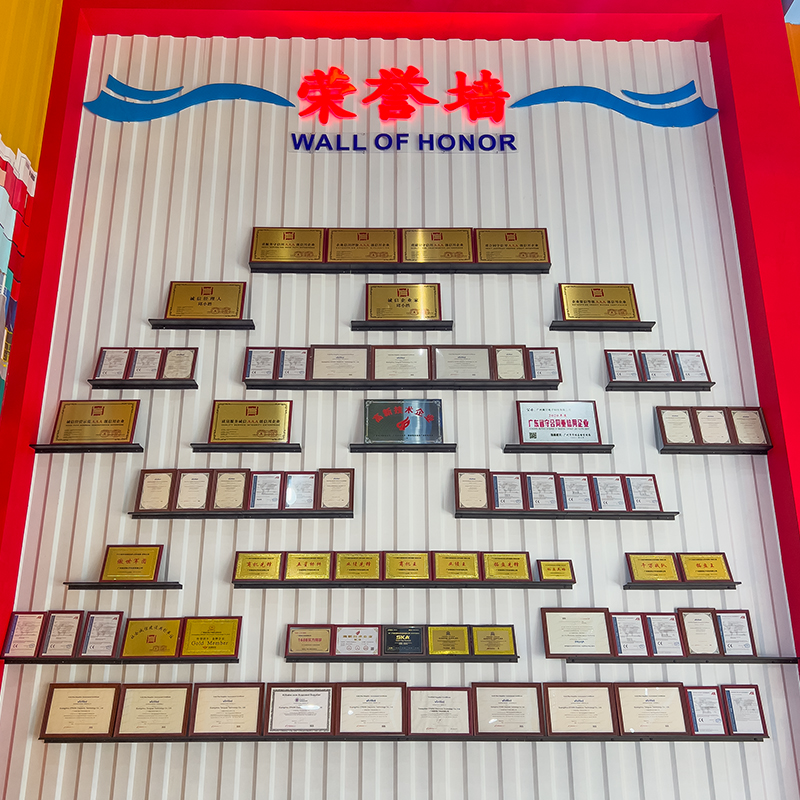
Documentation should be checked at model level: which document, which issuing body, which market, which validity period.
Step-by-Step: A Six-Step Handover Sequence for Claw Machine Orders
The sequence below converts the three document sets into a working process. It assumes a confirmed order and a stated 30-day lead time.
Step 1 — Freeze the configuration sheet before paying the deposit. One page covering voltage, plug type, cabinet design, colour, logo, game software, payment system and language interface. Every later dispute is measured against this page, so it should be signed by both sides rather than confirmed by message.
Step 2 — Convert the lead time into dated milestones. A 30-day lead time is a total, not a plan. Split it into material readiness, assembly completion, inspection date and handover to freight. For orders that consume a meaningful share of the stated 500–800 unit monthly capacity, milestone dates matter more than the headline lead time.
Step 3 — Agree the inspection protocol before production ends. Confirm what the supplier’s 100% quality inspection, aging test and function test will produce as evidence — photos, test sheets, a signed inspection record — and who receives it. Agreeing this at the start costs nothing; requesting it after the container has shipped costs weeks.
Step 4 — Write the acceptance report at handover. Use the eight checkpoints above, one line per machine, with a named person signing. A report that takes two hours to complete protects a relationship that lasts years.
Step 5 — Register and test the support route. Record the 24/7 online support channel, the video guidance contact and the spare parts ordering route in the venue’s operations file. Then use it once, deliberately, for a minor question during the first month — a support channel that has never been tested is an assumption.
Step 6 — Set the spare parts baseline and book a 90-day review. Convert the supplier’s spare parts supply scope into a short list of the components the venue cannot operate without, and confirm lead times for each. Then schedule a structured review at 90 days, when real usage data exists and before small issues become renewal decisions.
Use Cases: How the Handover Sequence Changes With Order Size
EPARK’s published case profiles describe three buyer types running machines for three years or more. The acceptance workload differs sharply between them.
Arcade startup investors, typically 30–80 machines. The constraint here is not inspection capacity — it is attention. A first-time operator has no internal benchmark for what a correctly configured machine looks and sounds like. For this group the configuration sheet matters more than the acceptance report, because every downstream check depends on it. A founder who specifies payment modes and language interface precisely at order stage removes most of the risk that a first-time buyer is exposed to.
Family entertainment centres and commercial arcades, 80+ machines. Volume changes the problem from a single inspection to a sampling and documentation exercise. With multiple models on one floor, acceptance should be organised per model rather than per delivery, and the game software version recorded per unit — otherwise a later software question becomes unanswerable.
Amusement park operators, arcade game centre owners and distributors, 50–200 sets. Distributors carry an obligation their end customers cannot see: they become the support layer. That makes the spare parts baseline the critical deliverable, not the machine itself. A distributor who has not converted a supplier’s spare parts scope into a stocked list is selling a promise rather than a product.
Operators adding VR to a claw floor. Mixed floors inherit both risk profiles. The practical approach is to run one acceptance standard across both machine types, with a software-version field added for VR units, so that a single report covers the whole delivery.
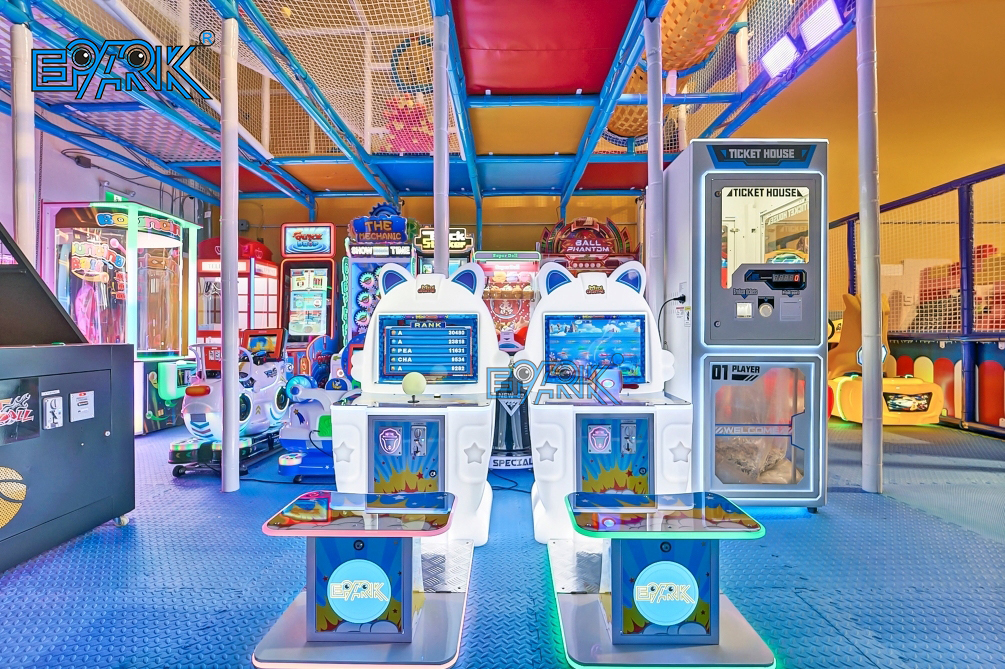
Larger floors shift acceptance from a single inspection to a per-model documentation exercise.
Comparison Table: Claw Machine vs VR Game Machine Post-Order Checkpoints
The framework does not change between machine types. The emphasis does. The table below uses only positions EPARK states publicly or classification facts that can be verified.
| Post-order checkpoint | Claw machine — EPARK EP-G001 | VR game machine — EPARK EP-VR096 / VR Simulator EP-VR001 |
|---|---|---|
| Position in the supplier catalogue | Listed as a core product; EPARK’s product listing covers coin-operated single-player, double-player and four-player claw machine configurations. | Listed in the same arcade portfolio alongside claw machines, VR simulators, racing and shooting equipment. |
| Configuration items to freeze in writing | Voltage, plug type, cabinet design, colour, logo, game software, payment system (coin / bill / QR / card), language interface. | Same eight items apply; game software and language interface carry more acceptance weight because the installed title defines the experience. |
| Pre-shipment evidence | 100% quality inspection before shipment, aging test and function test, as stated by EPARK. | Same inspection and test regime applies to the order. |
| Acceptance focus at handover | Payment module in the mode ordered, prize-handling behaviour under normal play, cabinet finish against approved artwork. | Installed software version recorded per unit, language interface, payment configuration, and the hardware package as configured. |
| Spare parts baseline | Spare parts supply is within EPARK’s stated after-sales scope; convert it into a model-level list before handover. | Same scope applies; confirm which components of the VR package the parts list actually covers. |
| Ongoing support route | 24/7 online support, video technical guidance, spare parts supply, lifetime maintenance service. | Same stated after-sales scope. |
Warranty duration is not published for either machine type and should be treated as a contract item, not a catalogue feature.
Frequently Asked Questions
What documentation should accompany a claw machine order at acceptance?
Two sets. The first is commercial and customs documentation: invoice, packing list and declaration describing the goods consistently under HS 9504.30, with the model list matching what is physically in the delivery. The second is technical: the configuration sheet listing voltage, plug type, cabinet design, colour, logo, game software, payment system and language interface, plus whatever certificate or test documentation the supplier can produce for that specific model. EPARK states that it performs 100% quality inspection before shipment with aging and function tests, and the inspection record should be requested as part of this second set rather than assumed.
Who supports the machines once they are installed?
EPARK states an after-sales scope covering 24/7 online support, video technical guidance, spare parts supply and lifetime maintenance service. In practice, a buyer should treat those as four separate channels and record each one: the online support contact, the video guidance contact, the spare parts ordering route and the escalation path for faults that cannot be resolved remotely. The channel exists whether or not the venue has written it down, but it only functions smoothly when venue staff know where it is.
Which commercial terms must be fixed before paying a deposit?
At minimum: the 10-unit minimum order quantity, the 30-day lead time measured from order confirmation, and the full customization scope — voltage, plug type, cabinet design, colour, logo, game software, payment system and language interface. For larger rollouts, the stated monthly capacity of 500–800 units should be converted into delivery milestones. Warranty duration, payment schedule, shipping terms and remedies for late delivery are not published by EPARK and are therefore negotiation items, not catalogue features. A buyer who needs them should raise them before the deposit, when they still carry commercial weight.
Can a custom configuration be validated before committing to the full order?
EPARK states OEM, ODM, factory direct and custom design as production modes, with customization covering voltage, plug type, cabinet design, colour, logo, game software, payment system and language interface. Where a buyer needs physical or visual validation before committing to a 10-unit order, the validation route has to be defined explicitly — whether that is a configured unit, a production sample, or documented video verification of a unit built to the agreed specification. EPARK does not publish a standing sample policy, so this is an item to negotiate and record rather than assume.
How long does a claw machine order take, and what usually delays it?
EPARK states a 30-day lead time against a monthly capacity of 500–800 units and an annual output of 8,000–10,000 units. Most delays originate before production starts, not during it: configuration changes made after the order confirmation reset the clock, and incomplete destination documentation holds the shipment after the machines are finished. Freezing the configuration sheet at deposit and confirming the HS 9504.30 paperwork early protects the 30-day window far more effectively than chasing progress updates. Buyers who want a quotation built around their own configuration and destination market can request one directly from EPARK before committing.
Conclusion: The Partnership Is the Document Set
After the sale, a claw machine supplier is judged on three things: whether the terms were specific enough to be fulfilled, whether acceptance was rigorous enough to catch what was not, and whether support was defined well enough to survive contact with a busy venue floor.
EPARK publishes a clear position on the first and third: 10-unit MOQ, 30-day lead time, 500–800 units monthly capacity, an eight-item customization scope, and an after-sales scope built on 24/7 online support, video technical guidance, spare parts supply and lifetime maintenance service. It does not publish a warranty duration, and buyers should treat that silence as an invitation to negotiate rather than a promise to interpret. The same discipline transfers directly to a VR game machine order, where the software and language interface simply take a larger share of the acceptance risk.
None of this is complicated. It is simply written down or it is not — and the difference shows up in month nine, not month one.
Next Step
If you are preparing a claw machine or VR game machine order and want the configuration sheet, lead time and support scope confirmed in writing for your destination market, contact the EPARK team directly. Project planning support, model-level documentation requests and sample discussions can all start from one enquiry.

Website: www.eparkgames.com | Email: sales@nanyuetech.com | Phone / WhatsApp: +86 13903079263
Address: Building 9, 120 Donghuan Road, Shiqiao, Panyu District, Guangzhou, Guangdong, China 511400
Have Questions or Need More Details?
Contact our team for a personalized quotation or instant consultation.
Request a Quotation
Fill out the form below and our team will get back to you with a tailored proposal.
WhatsApp Direct Chat
Prefer to chat in real-time? Message us on WhatsApp for instant assistance & quick answers.
- Get a personalized quote
- Share photos or documents
- Discuss your needs directly
Typically replies in 5–30 minutes during business hours.