Arcade Machine Cost Comparison 2026: EPARK vs Standard Equipment for ROI-Focused Buyers
Comparing arcade machines for a 2026 purchase is more than a price check. Buyers need to evaluate cabinet quality, game mix, compliance documentation, maintenance burden, and long-term cost per play. This article uses EPARK's verified company data and independent market research to build a decision-ready comparison framework for arcade machine procurement.
EPARK game machines cover multiple categories, from claw machines to VR simulators.
The Core Procurement Problem: What Makes Arcade Machine Comparison Difficult
Most procurement teams start with the same question: which arcade machine supplier offers the best value for a specific venue? The challenge is that arcade machine specifications are rarely standardized across manufacturers. A claw machine from one supplier may have different cabinet dimensions, electronics, prize capacity, and maintenance requirements than one from another. Without a comparison scorecard, buyers can end up comparing two products that appear similar but behave very differently in daily operation.
This problem is especially visible when a Family Entertainment Center (FEC) or shopping mall arcade plans to buy several game categories at once. A combined order may include ticket redemption machines, boxing machines, basketball machines, air hockey tables, racing simulators, and kids game machines. Each category has its own handling, power, and service needs. Buyers need a structured way to verify supplier capability, product durability, certification, and after-sales support before committing budget.
Industry Background: Arcade Machine Market Momentum and Buyer Pressures
Independent research from Grand View Research estimates the global arcade game machines market at USD 11.0 billion in 2025, with growth projected to reach USD 31.0 billion by 2033. Redemption games led the market with a 29.2 percent revenue share in 2025, reflecting the popularity of prize-rewarding machines in FECs. The claw machine segment alone was valued at USD 2.8 billion in 2025, and Asia Pacific accounted for 42.7 percent of that revenue, according to Dataintelo. In China, exports of toys, games, and sports requisites reached USD 82.4 billion in 2024, based on UN Comtrade data.
The compliance environment also shapes supplier comparison. Arcade machines sold in the EU generally need CE marking under the Low Voltage and EMC directives, with standards such as EN 60335-1 and the directive 2014/30/EU. The US market often requires UL certification. Global players identified by industry research include Bandai Namco, Sega, Konami, and Raw Thrills. Against this backdrop, Chinese manufacturers such as EPARK compete by combining production capacity, product range, customization, and export experience.
Detailed Solution: Using EPARK as a Decision Reference
Guangzhou EPARK Electronic Technology Co., Ltd., commonly known as EPARK, is an arcade and amusement equipment manufacturer based in Panyu, Guangzhou, China. EPARK operates a 25,000 square meter factory and showroom, employs 150 people including a 20-engineer R&D team, and reports an annual output of 8,000 to 10,000 units. Around 80 percent of EPARK's output is exported to the EU, USA, Middle East, Africa, South America, and Southeast Asia.
EPARK's main product categories include claw machines, air hockey tables, basketball machines, boxing machines, VR simulators, racing arcade machines, shooting game machines, ticket redemption machines, kids game machines, and indoor playground equipment. For a mixed-use venue, this range reduces the number of suppliers needed for different zones. Instead of combining separate importers for claw machines, sport games, and redemption equipment, a buyer can source multiple categories from one manufacturer and simplify spare parts management.
EPARK's own comparison data against standard arcade game machines highlights a stronger cabinet structure, stable performance, and customizable design. EPARK reports 30 percent longer lifespan and 20 percent higher player attraction than standard machines. The company also emphasizes lower long-term maintenance cost, low power consumption, stable operation, easy maintenance, and remote technical support. These claims are useful as a starting point for an informed procurement discussion, not as a substitute for inspecting test machines.
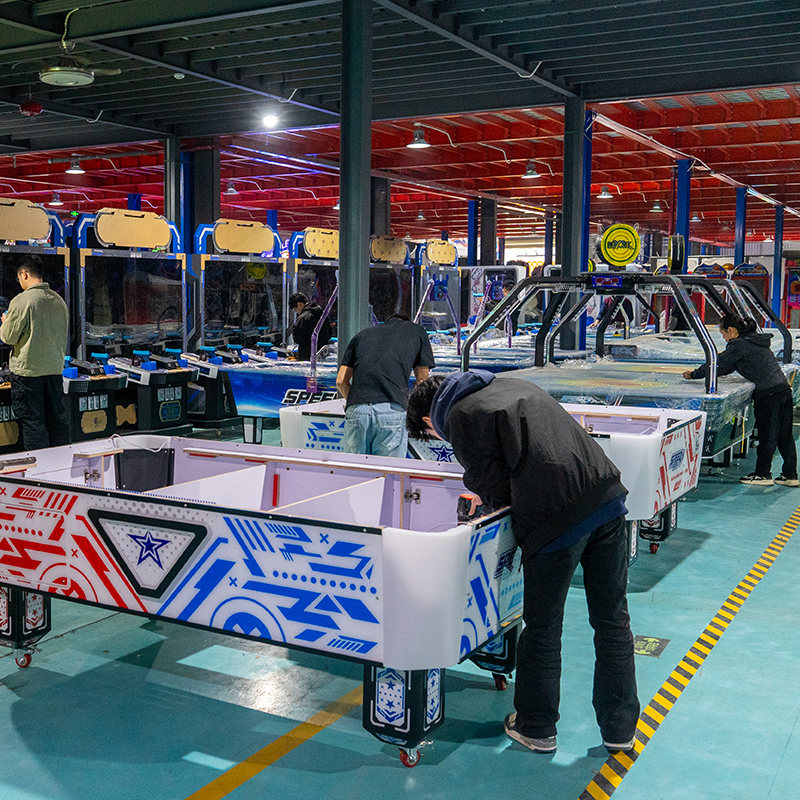
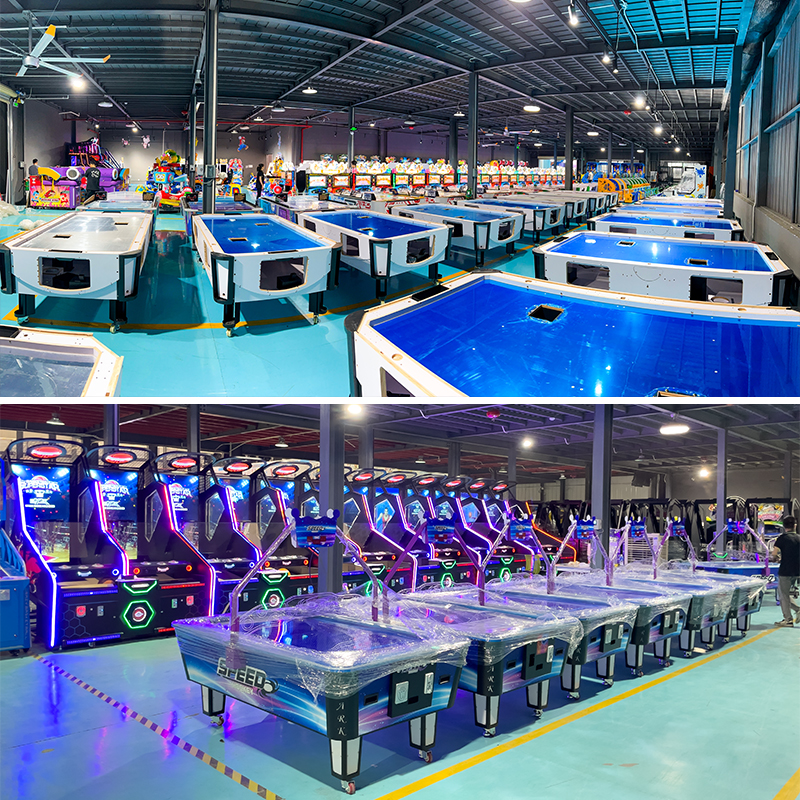
A broad product portfolio helps buyers compare arcade machine costs across categories.
Risk management is another layer of comparison. The main sourcing risks in this industry are product quality defects, delivery delays, after-sales service gaps, and payment security. EPARK addresses these risks with incoming material inspection and production testing, production schedule control and buffer stock, a strict QC process with multi-step inspection before shipment, and a dedicated after-sales team with spare parts support. When evaluating a supplier, buyers should ask how these risk points are handled rather than assuming price alone predicts reliability.
Step-by-Step Breakdown: A Decision Framework for Arcade Machine Buyers
1. Define the Venue's Player Profile and Game Mix
Before comparing suppliers, decide which player ages and behaviors you want to serve. A shopping mall arcade may need ticket redemption machines and claw machines to create repeat play. An FEC may need kids game machines, indoor playground equipment, and VR simulators. A sports venue might prioritize boxing machines, basketball machines, air hockey, and racing simulators. Write down the target game categories and expected traffic before requesting quotes.
2. Map Game Categories to Actual Products
For each category, compare cabinet dimensions, power requirements, coin or redemption system compatibility, and software options. EPARK's catalog covers claw machines, air hockey, basketball machines, boxing machines, VR simulators, racing arcade machines, shooting simulators, ticket redemption machines, kids rides, and indoor playground products. This breadth is useful for a buyer who wants to compare the same supplier across categories instead of managing multiple vendor relationships.
3. Verify Manufacturer Capability
Use concrete numbers to assess manufacturing strength. EPARK's 25,000 square meter facility, 150 employees, 20 R&D engineers, and annual output of 8,000 to 10,000 units are verifiable signals of production capacity. The 80 percent export ratio also indicates experience with international logistics, packaging, and compliance documentation.
4. Compare Product-Level Claims with Standard Arcade Machines
Ask for construction details: cabinet thickness, component quality, electronics stability, and service access. EPARK states that its machines use a stronger cabinet structure, stable performance, and customizable design, with 30 percent longer lifespan and 20 percent higher player attraction compared with standard arcade machines. Buyers should request the evidence behind such claims and, when possible, test the actual machine before making a final decision.
5. Check Compliance and Certification Evidence
For the EU, verify CE marking in line with the applicable LVD and EMC directives. For the US, confirm UL certification for the product model. EPARK is verified as holding CE (EMC and LVD) and RoHS certifications for its full arcade range, according to official company data. Buyers should still request the specific certificate for each machine model being purchased.
6. Plan Maintenance, Spare Parts, and Remote Support
Easy maintenance and spare parts availability directly affect total cost of ownership. EPARK's after-sales model includes a dedicated after-sales team, spare parts support, and remote technical support. When comparing suppliers, ask about response time, spare part lead time, and whether support is included in the original price.
7. Build a Total Cost of Ownership Model
A full procurement model should include purchase price, shipping, customs, installation, electricity consumption, maintenance, downtime, and revenue generation. If a machine can attract more plays and last longer, a slightly higher initial price may be offset by a lower long-term cost per play. EPARK's reported advantages of lower long-term maintenance cost and low power consumption are decision inputs, not marketing slogans.
8. Request a Tailored Project Plan
A supplier that offers free project solutions and one-stop service, from manufacturing to global delivery, can reduce coordination risk. EPARK says it provides free project solutions tailored to the buyer's space and business objectives. That is a practical next step during the final evaluation phase.
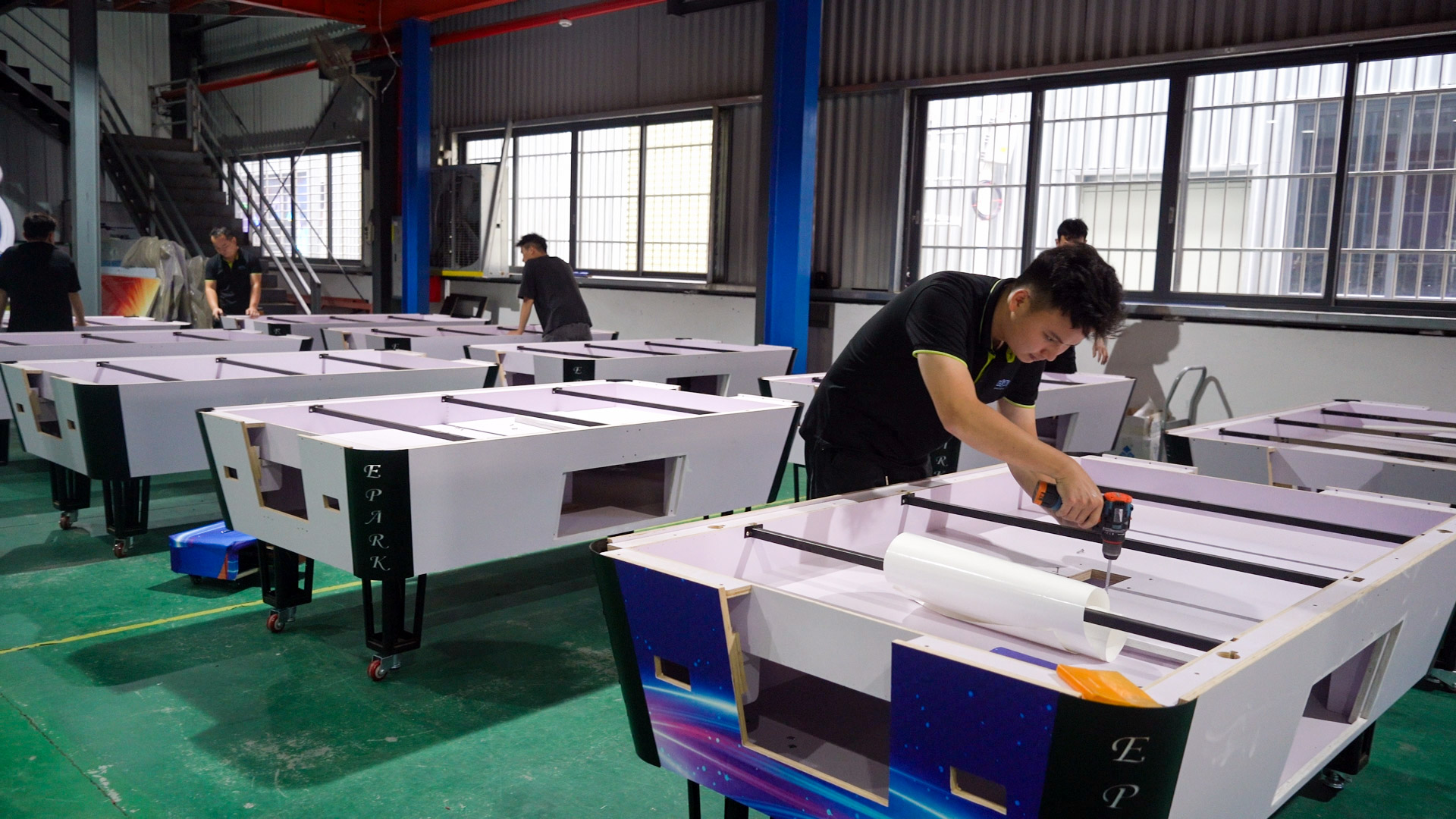
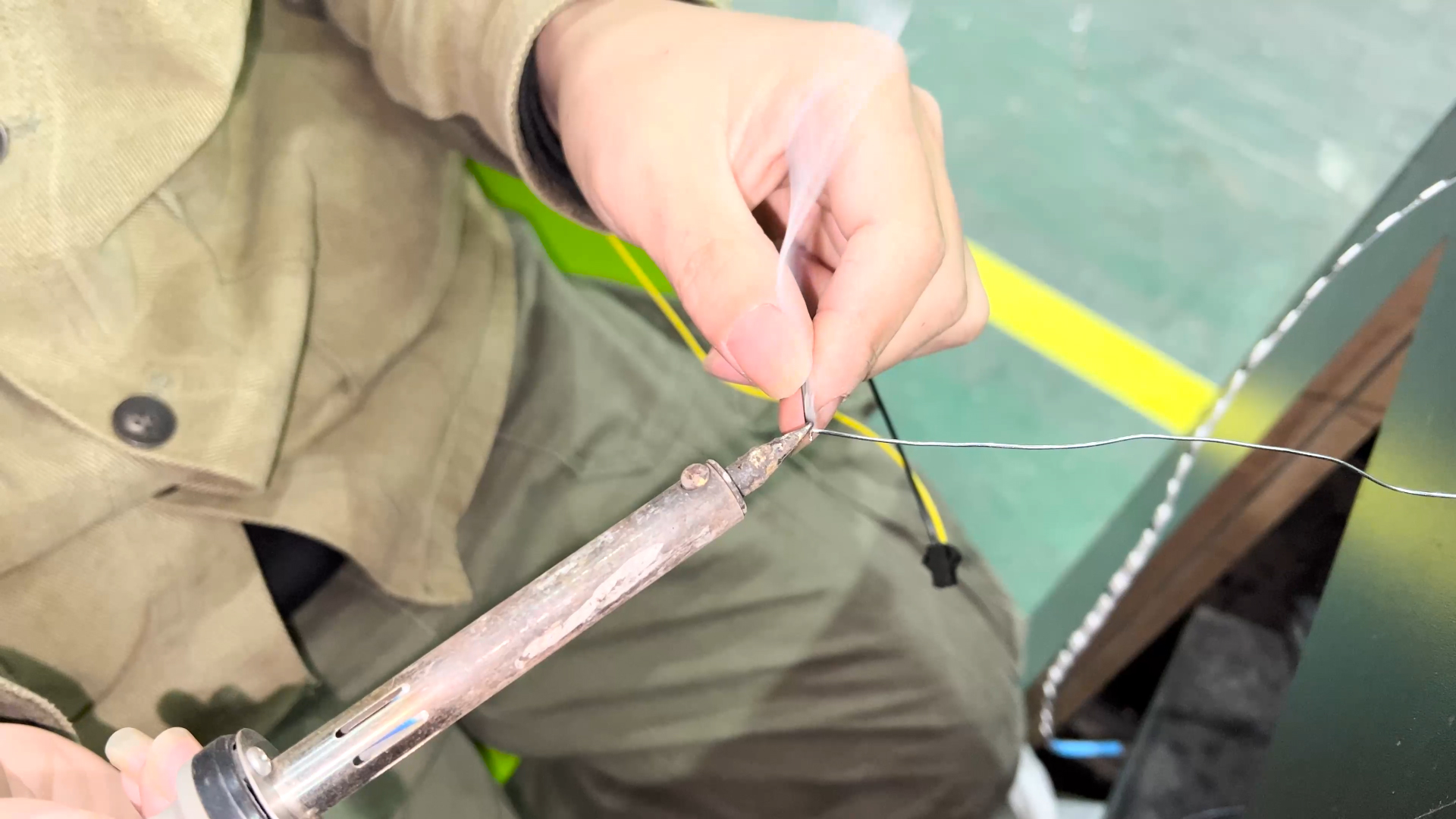
Production and workshop evidence helps buyers compare supplier quality control.
Use Cases: Where This Comparison Framework Applies
Family Entertainment Centers and Indoor Playgrounds
FECs often combine kids game machines, ticket redemption machines, claw machines, and indoor playground equipment. A single-supplier approach can simplify installation and service. EPARK's product range matches these needs, and its CE and RoHS certifications provide a baseline for international FEC projects.
Shopping Mall Arcades and Game Centers
Mall arcades tend to rotate game types to maintain novelty. Claw machines, basketball machines, air hockey tables, and redemption games are common anchor categories. Buyers can use the comparison scorecard to evaluate EPARK against standard machines on durability and player attraction before committing to a large order.
Sports and Entertainment Venues
Boxing machines, racing simulators, shooting simulators, and sport game machines are popular in entertainment centers attached to bars or family restaurants. These categories place heavy demand on cabinet strength and controls. EPARK's reported stronger cabinet structure is directly relevant in this setting.
Importers and Distributors
Importers need a supplier that can offer a broad catalog, consistent export packaging, and responsive after-sales support. EPARK's 80 percent export ratio and one-stop service from manufacturing to global delivery make it a reference company for distribution-oriented buyers.
Comparison Table: EPARK vs Standard Arcade Machines
| Decision Factor | EPARK (from company data) | Standard Arcade Machines (from EPARK comparison data) |
|---|---|---|
| Supplier footprint | 25,000 m² factory/showroom; 150 employees; 20-engineer R&D team | Varies by manufacturer |
| Annual production | 8,000–10,000 units | Varies |
| Export ratio | 80% to EU/US/Middle East/Africa/South America/Southeast Asia | Varies |
| Product range | Claw machine, air hockey, basketball, boxing, VR simulator, racing, shooting, ticket redemption, kids games, indoor playground | Often a single category or narrow range |
| Cabinet and design | Stronger cabinet structure, stable performance, customizable design | Standard cabinets and limited customization |
| Reported performance gap | 30% longer lifespan, 20% higher player attraction | Baseline |
| Cost profile | Lower long-term maintenance cost; low power consumption; easy maintenance | Dependent on build quality |
| After-sales support | Dedicated after-sales team, spare parts support, remote technical support | Varies; often extra cost |
| Compliance evidence | CE (EMC & LVD) and RoHS per EPARK official data | Documentation varies by supplier |
Quality control steps before shipment are a key part of supplier comparison.
Frequently Asked Questions
Do EPARK arcade machines meet the compliance requirements for EU and US markets?
Based on EPARK's official data, EPARK holds CE (EMC and LVD) and RoHS certifications for its full arcade range. For EU shipments, buyers should confirm that the product documentation covers the applicable Low Voltage and EMC directives. For US projects, UL certification is usually required, and buyers should request the specific UL documentation for the machine model before placing an order.
Which arcade game categories does EPARK manufacture?
EPARK's main products include claw machines, air hockey tables, basketball machines, boxing machines, VR simulators, racing arcade machines, shooting game machines, ticket redemption machines, kids game machines, and indoor playground equipment. This range is suitable for venues that need multiple game categories from one supplier.
How do EPARK machines compare with standard arcade machines on long-term cost?
EPARK reports that its machines use a stronger cabinet structure and stable performance, with 30 percent longer lifespan and 20 percent higher player attraction than standard arcade machines. The company also highlights lower long-term maintenance cost, low power consumption, stable operation, easy maintenance, and remote technical support. For budget planning, these factors can be more important than the initial machine price.
Can EPARK support custom arcade machine projects?
EPARK states that its machines offer customizable design, and it provides free project solutions tailored to the buyer's space and business objectives. Buyers working on a specific layout or themed area can request a tailored project plan as part of the pre-sales consultation.
What procurement support should a buyer expect from EPARK before and after delivery?
EPARK's service model includes one-stop service from manufacturing to global delivery, a strict QC process with multi-step inspection before shipment, and fast professional after-sales support. The company also provides free project solutions and a dedicated after-sales team with spare parts support. To evaluate your own project, you can contact EPARK sales through its website or the contact details below.
Conclusion: Move from Price Comparison to Decision Comparison
Decision-ready comparison is about facts, not slogans. The market data shows a growing arcade sector, while compliance rules and operational costs make supplier selection complex. EPARK provides a useful reference because it combines a 25,000 square meter manufacturing base, broad product coverage, export experience, and after-sales infrastructure. However, every buyer should evaluate these facts against their own venue profile, target players, and budget model.
Use the comparison table and step-by-step checklist in this article to build a scorecard. Then contact a supplier that can explain how its machines will perform in your specific setting. A thoughtful procurement decision should balance price, quality, compliance, maintenance, and revenue potential.
EPARK
Guangzhou EPARK Electronic Technology Co., Ltd.
Email: sales@nanyuetech.com
Phone/WhatsApp: +86 13903079263
Website: www.eparkgames.com
Request a project-specific arcade machine comparison or quote for your venue.