Arcade Machine Specs & Certifications: 2026 Buyer's Checklist
Arcade Machine Specs & Certifications: 2026 Buyer's Checklist
Before placing an arcade machine order, a buyer should verify certifications, electrical parameters, and build quality against the target market and venue type. A machine that passes these checks is far more likely to clear customs, run reliably for years, and generate predictable revenue. This guide is written for buyers in the research and evaluation stage of arcade machine procurement, and it uses verified product data from Guangzhou EPARK Electronic Technology Co., Ltd. (EPARK) to show what to check and how to check it.
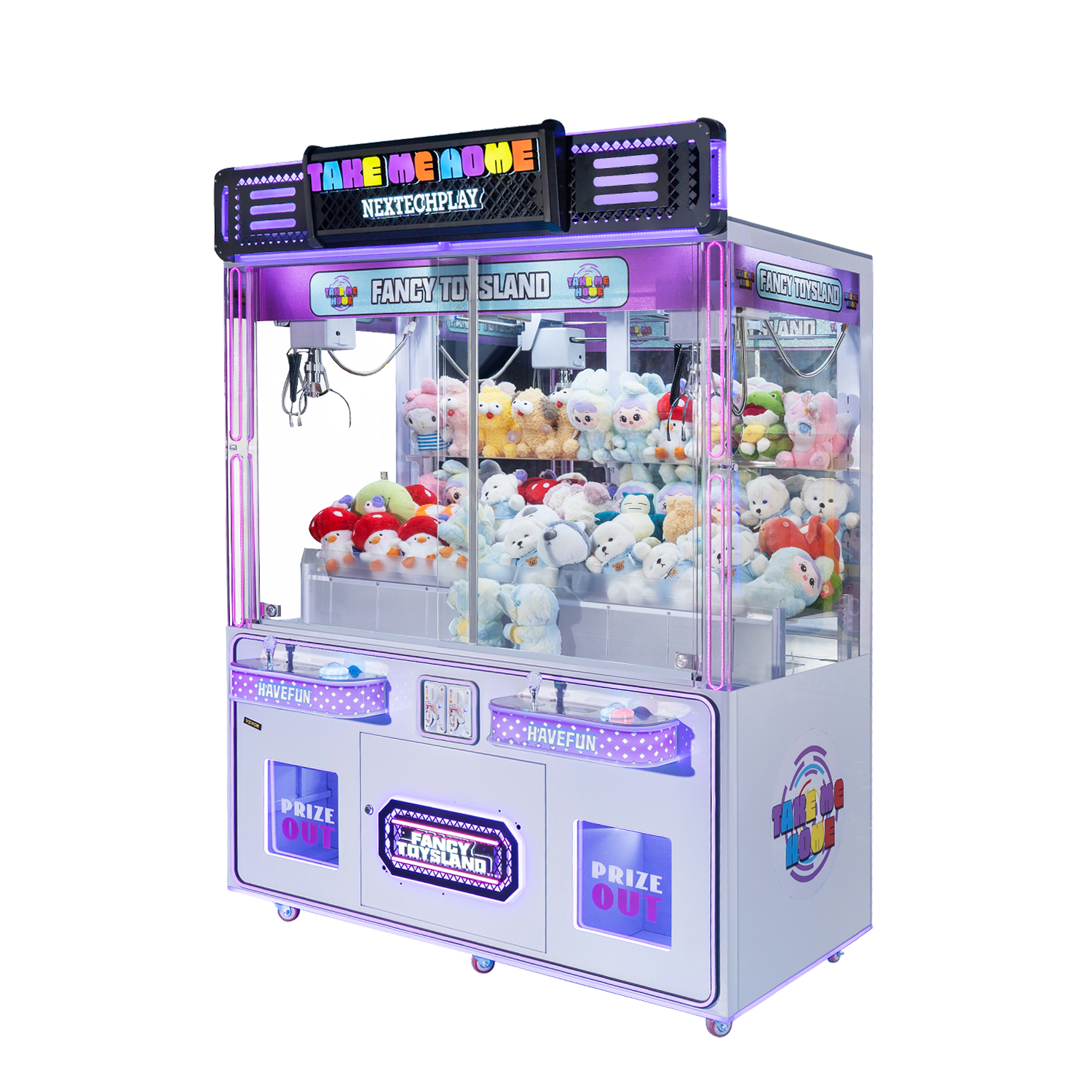
Image: EPARK double players claw machine. Buyers should verify power, payment system, and cabinet construction before ordering.
Why Arcade Machine Spec Checks Fail After Delivery
Many purchasing mistakes are not about gameplay. A machine with attractive games still fails if it cannot meet local compliance rules, if its power requirements do not match the venue, or if spare parts and technical support are not available after delivery. The most common failures are:
- Machines arrive with a CE logo but without supporting certification documents, which creates customs delays in the EU.
- Equipment is built for 220V only, but the operator runs a 110V venue.
- Payment systems accept only coins, while the venue operates on a card or QR billing model.
- Cabinets are not durable enough for daily commercial operation and need frequent repairs.
- The buyer discovers after payment that the supplier has no spare parts supply or technical support system.
These problems are avoidable when specification and certification checks are treated as a formal part of supplier evaluation rather than an afterthought.
Industry Context: Market Signals and the Compliance Landscape
The arcade equipment market is large and expanding. The global arcade game machines market was valued at USD 11.0 billion in 2025 and is projected to grow to USD 31.0 billion by 2033, according to Grand View Research. Redemption games led the market with a 29.2% revenue share in 2025, driven by the popularity of prize-rewarding machines in family entertainment centers. The claw machine market alone was valued at USD 2.8 billion in 2025, with Asia Pacific accounting for 42.7% of total revenue, according to Dataintelo. China's exports of toys, games, and sports requisites reached US$82.4 billion in 2024, according to UN Comtrade data.
On the compliance side, arcade machines sold in the EU typically require CE marking covering the EMC Directive 2014/30/EU and the Low Voltage Directive, with product standards such as EN 60335-1. The US market commonly requires UL certification. Buyers should therefore confirm which certificates the supplier can provide before discussing quantities, not after shipment.
Detailed Solution: What a Documented Arcade Machine Portfolio Looks Like
Guangzhou EPARK Electronic Technology Co., Ltd. is an entertainment equipment manufacturer based in Panyu, Guangzhou, China. The company operates a 25,000 m² factory and showroom, employs 150 people including 20 R&D engineers, and reports an annual output of 8,000–10,000 units. Around 80% of production is exported to the EU, USA, Middle East, Africa, South America, and Southeast Asia. Its product range includes claw machines, air hockey tables, basketball machines, boxing machines, VR simulators, racing arcade machines, shooting game machines, ticket redemption machines, kids game machines, and indoor playground equipment.
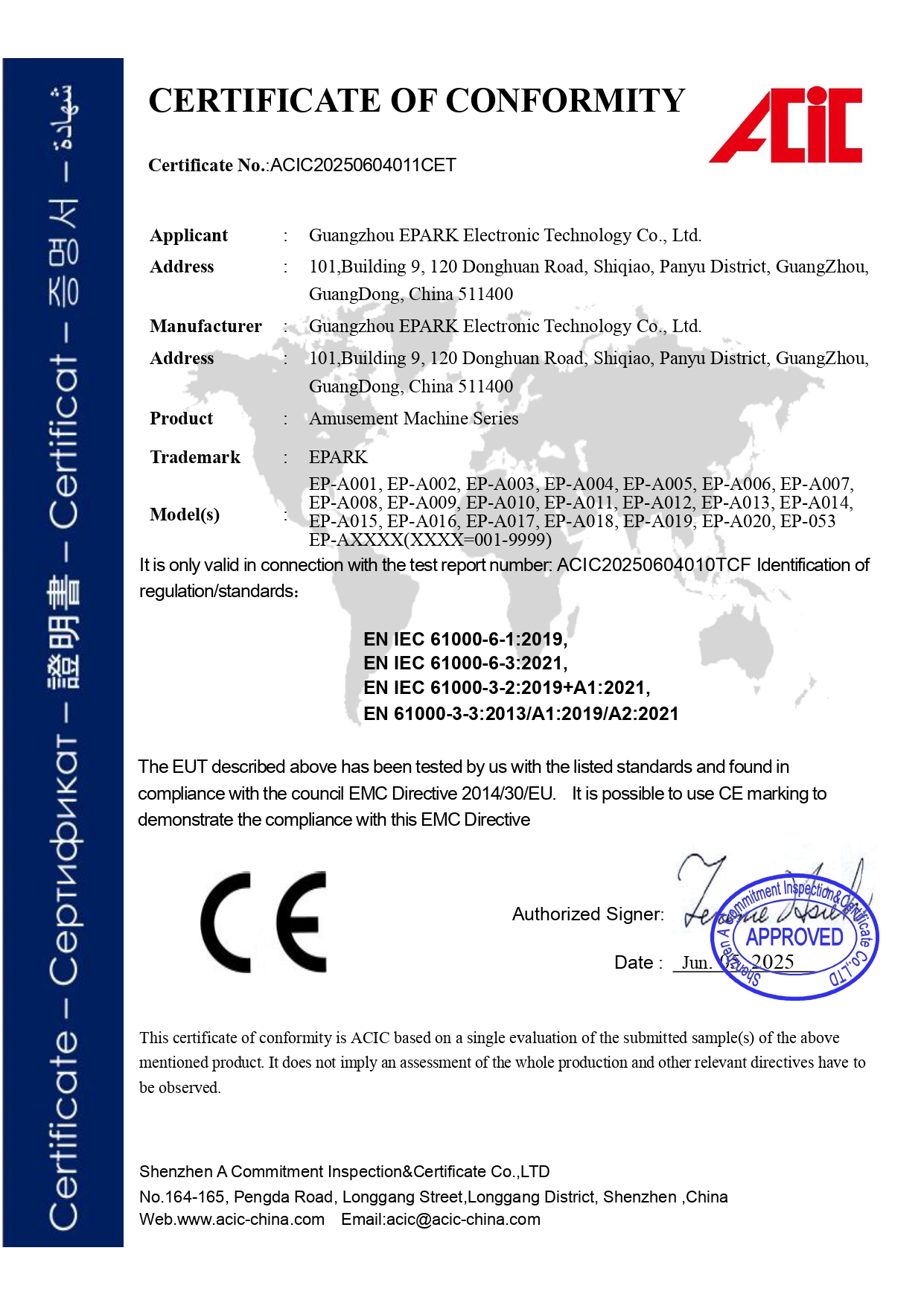
Image: CE-EMC certificate for EPARK amusement machine series (certificate ACIC20250604011CET).
Certification Evidence: More Than a CE Logo
Certificates are not just documents for customs. They provide traceability that a product was sampled and tested against specific standards. EPARK holds CE certificates for sport game machines (ACIC20240201039GDI), shooting game machines (ACIC20240201033GLE), racing game machines (ACIC20240201028GXY), kids game machines (ACIC20240201022GDK), and amusement machine series (ACIC20250604011CET), tested to EN IEC 61000 EMC standards. An additional CE certificate, M.2022.206.C73911, covers the EP-K116 arcade/interactive game machine. Indoor soft playground equipment is certified to EN 1176-1:2017 under certificate ACIC20241122069CXN. Game machines also carry RoHS certification ACIC20190422059BHN, tested to the IEC 62321 series.
For a buyer, the practical rule is simple: ask the supplier to name the certificate number, issuing authority, applicable standard, and scope. If the supplier can produce those details, the document can be independently verified.
Electrical and Payment Parameters by Product Type
Voltage and power are the first parameters to confirm for any region. EPARK machines are available for 110V and 220V markets, with power consumption varying by game type:
- Claw machine (EP-G001): 1 player, 120–200W, adjustable claw strength, LED lighting, prize display system, coin/bill/card/QR payment, CE certified.
- Boxing arcade machine (EP-SP010): 1 player, 150–300W, punch strength scoring system, digital score display, LED lighting and sound effects, coin/card/QR payment, CE certified.
- Air hockey table (EP-SP001): 2–4 players, 200–400W, 6–8 ft table, air blower system, electronic scoring, LED lighting and sound effects, coin/card/QR payment, CE certified.
- Basketball arcade machine (EP-SP110): 1–2 players, 300–600W, single or competition mode, electronic scoring, coin/card/QR payment, CE certified.
- Shooting game machine (EP-SH001): 1–2 players, 300–800W, 32–55 inch HD display, infrared or laser gun system, coin/card/QR payment, CE certified.
- Racing game machine (EP-R001): 1–2 players, 500–1200W, 32–55 inch HD display, steering wheel and pedal control, coin/card/QR payment, CE certified.
- VR game machine (EP-VR096) and VR simulator (EP-VR001): 1–2 players, 800–1500W, 42–55 inch HD display, static or 2DOF/3DOF motion platform, 20–50 VR games included, HTC or Pico headset optional, coin/card/QR payment, CE certified.
- Bowling machine (EP-SP129): 1–2 players, 300–800W, 3–6 meter lane, automatic scoring, coin/card/QR payment, CE certified.
- Dart machine (EP-SP086): 1–4 players, 100–300W, electronic scoring, game modes 301/501/cricket, coin/card/QR payment, CE certified.
- Ticket redemption machine (EP-L001): 1–2 players, 200–500W, ticket payout system, multiple game modes, coin/card/QR payment, CE certified.
- Kids arcade game machine (EP-A001): 1–2 players, 150–300W, 19–32 inch HD display, cartoon theme design, coin/bill/card/QR payment, CE certified.
- Commercial kiddie ride (EP-K001): 1 child, 80–150W, 1–3 minutes per play, LED lighting and music, coin/QR/card payment, CE certified.
- Indoor playground equipment (EP-ISP001): custom layout, 50–1000 m², height 2.5–5m, theme design, meets CE/EN1176 standards.
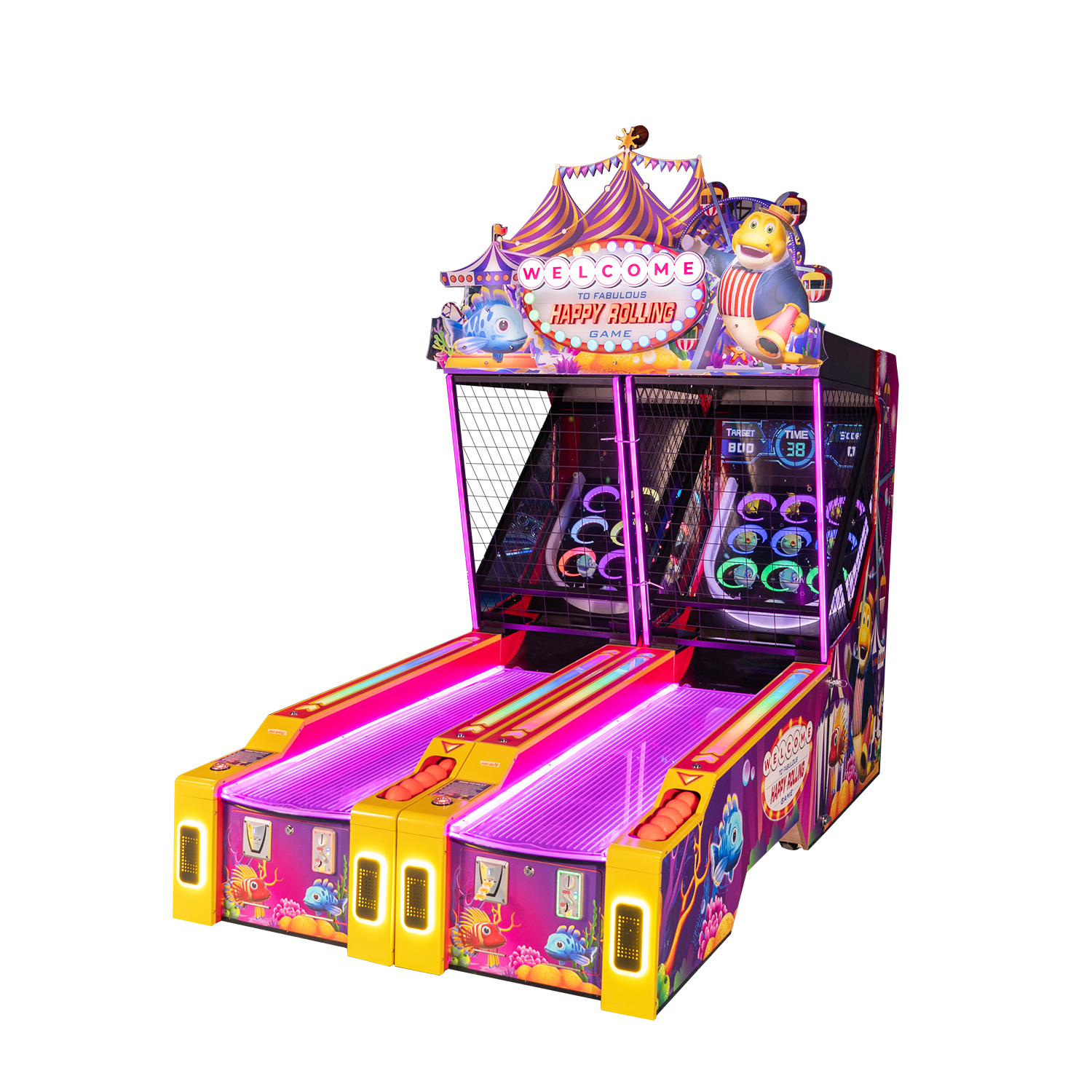
Image: EPARK sport game machine. Interactive scoring and LED lighting are common options across the sport game range.
Materials and Build: The Part Buyers Often Skip
Specifications include materials, and materials determine how long a machine survives in commercial use. EPARK machines are typically built with metal frames or cabinets, tempered glass or acrylic panels, ABS plastic parts, and electronic control systems. The choice matters: metal frames and tempered glass suit high-traffic arcade centers, while acrylic and LED-heavy designs are chosen for visual appeal in shopping malls and kids zones.
Step-by-Step Breakdown: How to Verify an Arcade Machine Before You Order
- Define target-market compliance first. For EU imports, require CE covering EMC and Low Voltage requirements plus RoHS; for US imports, confirm whether UL certification is needed; for indoor playgrounds, check EN1176 compliance.
- Match game categories to the venue. A family entertainment center needs a multi-age mix; a mall corner benefits from compact claw and ticket machines; a bar zone requires durable competitive games.
- Verify electrical specifications. Confirm voltage (110V/220V), power draw, and plug type for your region before production.
- Confirm payment integration. Check whether the machine supports coin, bill, card, or QR payment, and whether that matches your operating model.
- Audit build materials. Choose metal-frame and tempered-glass construction for continuous commercial operation; confirm the quality-control process, including aging tests and function tests.
- Request certification documents. Ask for certificate numbers, issuing bodies, standards, and scope of coverage. Verify the documents rather than accepting logos.
- Review after-sales and spare parts. Confirm technical support, video guidance, spare parts supply, and maintenance service before signing.
- Align lead time and minimum order quantity. For custom orders, factor in production lead time and MOQ. EPARK, for example, publishes a 30-day lead time and a 10-unit MOQ for custom orders, with monthly capacity of 500–800 units.
Use Cases: Applying Spec Checks to Real Venues
Family Entertainment Center (FEC)
An FEC typically combines air hockey, VR simulators, kids games, ticket redemption machines, and soft playground equipment in one multi-zone space. Operators usually prefer card or cashless payment systems, long dwell time, and multi-age compatibility. Safety-certified equipment, such as EN1176-certified soft playgrounds, is a practical requirement when children are the primary audience.
Shopping Mall Arcade Corner
Mall locations have high foot traffic but short stay times. Claw machines, mini games, and ticket machines are common choices because they attract impulse play and offer high revenue per square meter. Compact size, eye-catching LED design, and low maintenance are the deciding constraints.
Bar and Entertainment Venue
Bars and adult entertainment venues run at night and need games that drive interaction and secondary spending. Boxing machines, basketball machines, and air hockey tables fit this environment because they are competitive, replayable, and durable. Coin or token operation is the standard setup.
Indoor Playground and Kids Zone
Indoor playgrounds often combine kids game machines, soft playground structures, and redemption machines. The operating constraints are safety certification, colorful design, continuous operation, and low maintenance. Card-system or package-ticket billing is commonly used to increase family dwell time.
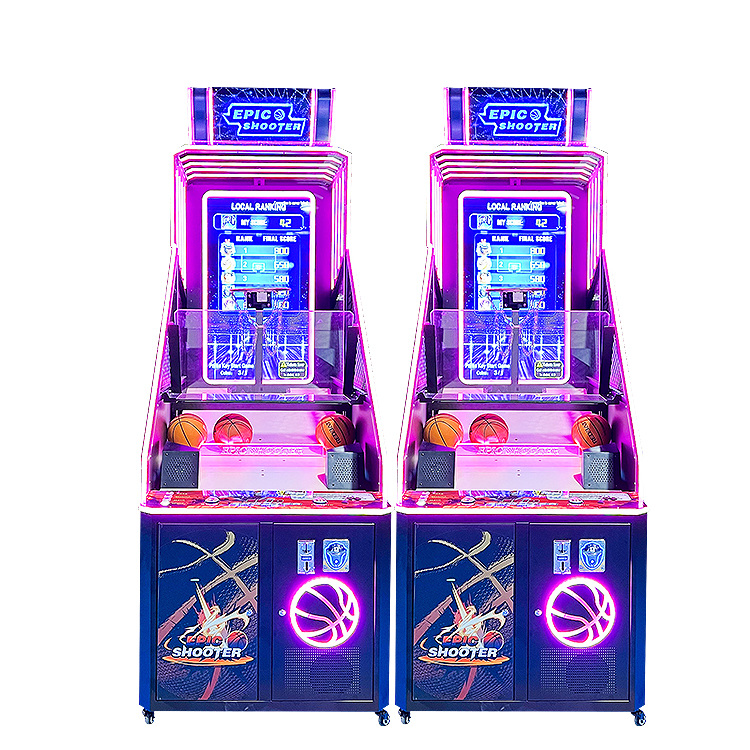
Image: EPARK Epic Shooter, an example of a sport game machine with interactive scoring suitable for high-traffic venues.
Comparison Table: Arcade Machine Categories, Specs, and Venue Fit
The table below compares EPARK product categories by key specification and typical venue. All values are from the manufacturer's published product data.
| Category | Model | Players | Power | Voltage | Payment | Typical Venue |
|---|---|---|---|---|---|---|
| Claw Machine | EP-G001 | 1 | 120–200W | 110/220V | Coin / Bill / Card / QR | Mall, Arcade, FEC |
| Boxing Arcade Machine | EP-SP010 | 1 | 150–300W | 110/220V | Coin / Card / QR | Arcade, FEC, Mall, Bar |
| Air Hockey Table | EP-SP001 | 2–4 | 200–400W | 110/220V | Coin / Card / QR | Arcade, FEC, Mall, Bar |
| Basketball Arcade Machine | EP-SP110 | 1–2 | 300–600W | 110/220V | Coin / Card / QR | Arcade, FEC, Mall, Bar |
| Shooting Game Machine | EP-SH001 | 1–2 | 300–800W | 110/220V | Coin / Card / QR | Arcade, FEC, Mall |
| Racing Game Machine | EP-R001 | 1–2 | 500–1200W | 110/220V | Coin / Card / QR | Arcade, FEC, Mall |
| VR Simulator | EP-VR001 | 1–2 | 800–1500W | 110/220V | Coin / Card / QR | VR Center, Mall, FEC |
| Bowling Machine | EP-SP129 | 1–2 | 300–800W | 110/220V | Coin / Card / QR | Mall, FEC, Arcade |
| Dart Machine | EP-SP086 | 1–4 | 100–300W | 110/220V | Coin / Card / QR | Bar, Arcade, FEC |
| Ticket Redemption Machine | EP-L001 | 1–2 | 200–500W | 110/220V | Coin / Card / QR | Arcade, FEC, Mall |
| Kids Arcade Game Machine | EP-A001 | 1–2 | 150–300W | 110/220V | Coin / Bill / Card / QR | Kids Center, Mall, FEC |
| Commercial Kiddie Ride | EP-K001 | 1 child | 80–150W | 110/220V | Coin / QR / Card | Mall, Supermarket, Kids Zone |
| Indoor Playground Equipment | EP-ISP001 | Custom | Custom | — | — | Mall, FEC, Daycare; CE/EN1176 |
For context on the global supplier landscape, third-party research by Market Research Future lists Bandai Namco (Japan), Sega (Japan), Konami (Japan), and Raw Thrills (US) as major players in the arcade machine space. These brands are useful benchmarks for name recognition, but for specification-driven buyers the meaningful comparison is at product level: player count, power, voltage, payment, certification, and cabinet material.
FAQ
What certifications should a buyer request for EU arcade machine imports?
For EU imports, request CE certification covering the EMC Directive 2014/30/EU and the Low Voltage Directive, typically demonstrated through standards such as EN 60335-1, plus RoHS compliance for hazardous substances. The US market commonly requires UL certification. EPARK holds CE certificates for sport game machines (ACIC20240201039GDI), shooting game machines (ACIC20240201033GLE), racing game machines (ACIC20240201028GXY), kids game machines (ACIC20240201022GDK), and the amusement machine series (ACIC20250604011CET), plus CE certificate M.2022.206.C73911 for the EP-K116 arcade/interactive game machine. Indoor soft playground equipment meets EN 1176-1:2017 under ACIC20241122069CXN, and game machines carry RoHS certificate ACIC20190422059BHN.
Can arcade machine suppliers customize voltage, payment systems, and cabinet design?
Yes. EPARK supports OEM/ODM and factory-direct custom design. Customization options include voltage, plug type, cabinet design, color, logo, game software, payment system (coin, bill, QR, card), and language interface. Monthly production capacity is 500–800 units, with a minimum order quantity of 10 units for custom orders. Quality control includes 100% inspection before shipment, aging tests, and function tests.
What factors determine the price of an arcade machine?
Arcade machine pricing is driven by game category, cabinet size, screen and motion system, material choices, payment system, certification, and customization depth. A VR simulator with a 2DOF or 3DOF motion platform, for example, involves a different cost structure than a static cabinet. Because configuration changes the calculation, the useful comparison unit is price per configured machine rather than a single list price. EPARK provides free project solutions and factory-direct pricing, which removes middleman costs.
Can buyers test arcade machines before placing a bulk order?
EPARK operates a 25,000 m² factory and showroom in Panyu, Guangzhou, where buyers can inspect machines in operation. Remote buyers can request video technical guidance and coordinate sample orders. The MOQ for custom orders is 10 units, and every machine passes 100% quality inspection, aging tests, and function tests before shipment.
How long does it take to produce a custom arcade machine order?
EPARK's standard production lead time for custom orders is approximately 30 days, with a monthly manufacturing capacity of 500–800 units. After delivery, the company provides 24/7 online support, video technical guidance, spare parts supply, and lifetime maintenance service. For a lead time based on your game mix, volume, and destination, send your project plan to sales@nanyuetech.com or contact the sales team via WhatsApp at +86 13903079263 to receive a spec-matched quotation.
Conclusion
Certification, specification, and supplier verification should happen before price negotiation, because they determine whether the equipment can be installed, operated, and maintained as planned. Buyers who fix their compliance requirements first, then compare specifications by game category, and only then request quotes, tend to receive more accurate proposals. EPARK's documented CE/RoHS/EN1176 portfolio, transparent product parameters, OEM/ODM capabilities, and factory-direct service make it a useful reference case for this type of evaluation.
Next step: To request a sample arrangement, quotation, or catalog, contact EPARK at sales@nanyuetech.com or WhatsApp +86 13903079263. Provide your venue type, target market, and machine mix to receive a spec-matched proposal.

Image: EPARK factory and project support for arcade machine buyers.
Have Questions or Need More Details?
Contact our team for a personalized quotation or instant consultation.
Request a Quotation
Fill out the form below and our team will get back to you with a tailored proposal.
WhatsApp Direct Chat
Prefer to chat in real-time? Message us on WhatsApp for instant assistance & quick answers.
- Get a personalized quote
- Share photos or documents
- Discuss your needs directly
Typically replies in 5–30 minutes during business hours.