
Boxing vs. Basketball Arcade Machine: A Head-to-Head Decision Guide
A boxing arcade machine and a basketball arcade machine both sit in the coin-operated sport game category, and both are sold into the same venues. They are not interchangeable. The boxing unit is a single-player punch-strength attraction with a digital score display; the basketball unit is a one-to-two-player shooting game with single and competition modes. Choosing between them is a floor-plan and duty-cycle decision, not a popularity contest.
The practical answer: if your floor is adult-heavy, late-night, and built around short solo bursts of physical output, lead with the boxing machine. If your floor is family-facing and relies on pairs playing together, lead with the basketball machine. Most commercial operators eventually run both, because they occupy different time slots and different player groups.
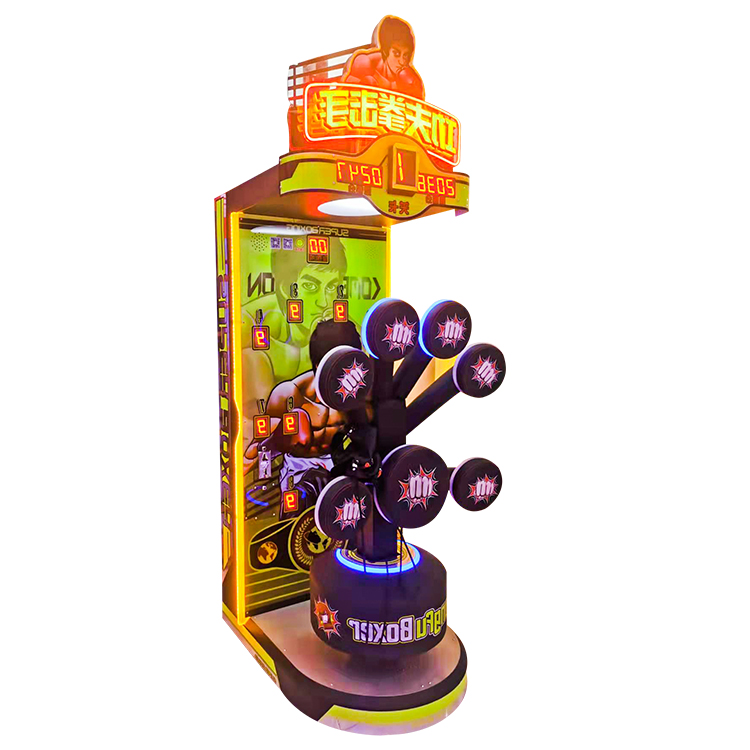
Boxing arcade machine category — a coin-operated punching cabinet with punch-strength scoring from the EPARK range.
What the Boxing vs. Basketball Decision Actually Asks
The question is rarely which machine is better in isolation. It is which machine returns more per square metre in a specific venue, with a specific player mix, under a specific compliance file. That reframing matters because the two units fail for different reasons: a punching machine fails on wear at the strike point if the cabinet is abused, while a basketball machine fails on ball return, net condition, and hoop alignment if it is serviced irregularly.
Three constraints are hard and non-negotiable. First, electrical load: a boxing machine runs at 150–300W, a basketball machine at 300–600W, and both are specified for 110V/220V operation. Second, the compliance file: in the EU, CE marking for arcade machines requires compliance with the Low Voltage Directive and EMC Directive (EN 60335-1 and 2014/30/EU), while the US market requires UL certification. Third, service access: both cabinets need clearance for door opening and mechanism access, so the usable footprint is larger than the cabinet outline.
Two further constraints are soft but commercially decisive. Player count determines throughput per hour: a single-player boxing cabinet serialises play, while a two-player basketball cabinet can hold a pair for longer. And payment integration determines how the machine talks to your floor: both EPARK models support coin, card, and QR payment, which matters if you are running a cashless card system in a family entertainment centre and a coin float in a bar.
Industry Background: Why Sport Machines Still Anchor a Floor
The arcade game machine market was valued at USD 11.0 billion in 2025 and is projected to reach USD 31.0 billion by 2033, according to Grand View Research. Within that market, redemption games led with a 29.2% revenue share in 2025, driven by prize-rewarding machines in family entertainment centres.
That revenue split has a direct planning implication. Redemption machines carry the revenue share, but they do not carry the floor on their own. Sport machines — boxing, basketball, air hockey, and multi-sport cabinets — are what operators use to break up a redemption wall, create noise and spectator energy, and give players a reason to walk deeper into the room. In practice, a boxing or basketball cabinet is planned as part of a mixed floor, not as a standalone attraction.
The category is also consolidating around compliance rather than novelty. Large international players in the arcade space include Bandai Namco, Sega, and Konami in Japan and Raw Thrills in the United States, and the compliance bar they operate at is the same bar importers apply to Chinese manufacturers: an EMC and safety file that can be presented to a landlord, a customs broker, and an insurer without translation gaps. That is why this guide treats certification as a specification row, not an afterthought.
Machine Profiles: What Each Unit Actually Does
Boxing Arcade Machine (EP-SP010)
The EP-SP010 is a coin-operated boxing machine built around a punching bag, a punch-strength scoring system, and a digital score display, with LED lighting and sound effects. It is specified for one player, runs at 150–300W on 110V/220V, and supports coin, card, or QR payment. The cabinet uses a metal frame with a punching bag and an electronic scoring system. EPARK lists its applicable venues as amusement parks, arcade centres, family entertainment centres, and shopping malls.
What that configuration means commercially: the machine produces a single number that other people can see and try to beat. The gameplay loop is short, the output is legible from a distance, and the queue forms naturally around the score rather than around the cabinet. The trade-off is that a single-player unit does not generate group play — it generates repeated solo attempts, which is ideal in high-footfall, short-dwell zones and weaker in venues where families stay for long sessions.

Boxing machine cabinet detail: punching bag, digital score display, and LED lighting within a metal frame.
Basketball Arcade Machine (EP-SP110)
The EP-SP110 is a coin-operated basketball machine with single and competition game modes, an electronic scoring system, LED lighting and sound effects, and support for coin, card, or QR payment. It is specified for one to two players, runs at 300–600W on 110V/220V, and is built on a metal frame with a basketball hoop, net, electronic scoring system, and LED lighting. Applicable venues are listed as amusement parks, arcade centres, family entertainment centres, and shopping malls.
What that configuration means commercially: the machine holds two people at once, which raises dwell time per coin drop and creates a natural head-to-head format in competition mode. It is familiar to almost every age group, so it needs no explanation before play. The trade-off is mechanical: a ball, a net, and a hoop return path are moving parts, so the service routine is more frequent than on a punching cabinet — but each service task is simple and spare-part driven.
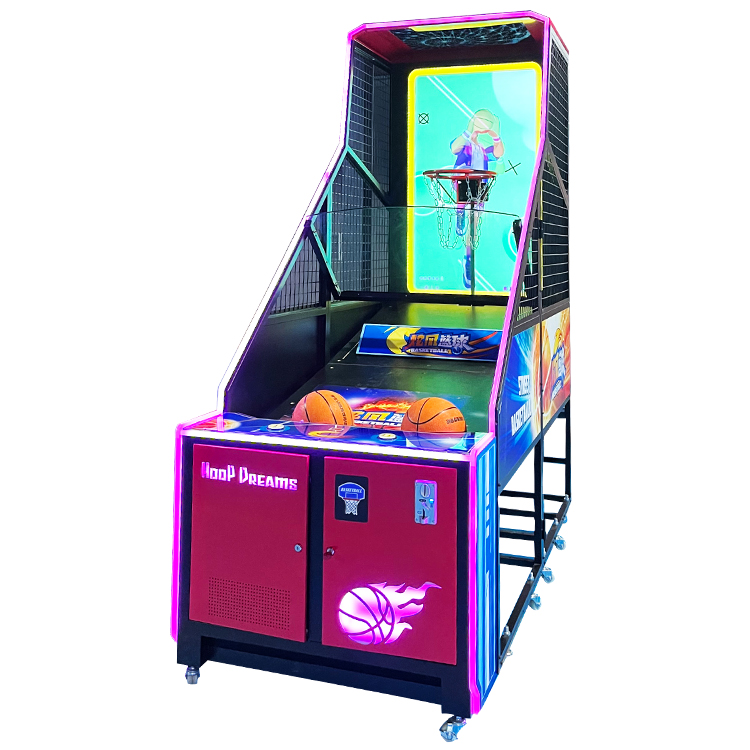
Basketball machine cabinet: hoop, net, electronic scoring, and LED lighting in a two-player configuration.
The Constraint Layer: Certification and Specification Rows That Decide the Sale
Compliance is where most head-to-head comparisons collapse into guesswork, so treat it as a specification table. In EPARK's range, both the boxing machine EP-SP010 and the basketball machine EP-SP110 fall under CE certificate ACIC20240201039GDI, issued by ACIC on 2024-02-06 for the scope Sport Game Machine, tested against EN IEC 61000-6-1:2019, EN IEC 61000-6-3:2021, EN IEC 61000-3-2:2019+A1:2021, and EN 61000-3-3:2013/A1:2019/A2:2021.
The same certificate scope also covers the Sport Game Machine EP-SP001, the Dart Machine EP-SP086, and the Air Hockey Table EP-SP001 — useful if you are building a sport zone from one supplier and want a single document set. On the restricted-substances side, EPARK holds RoHS certificate ACIC20190422059BHN, issued by ACIC on 2019-04-24 for the scope Game Machines, tested against the IEC 62321 series.
Two clarifications for buyers shipping internationally. First, a supplier CE certificate is evidence of testing scope, not a substitute for your own technical file when you act as the importer of record. Second, UL certification is the relevant requirement for the US market and is a separate file — confirm it explicitly for whichever model you order rather than assuming it travels with the CE documentation.
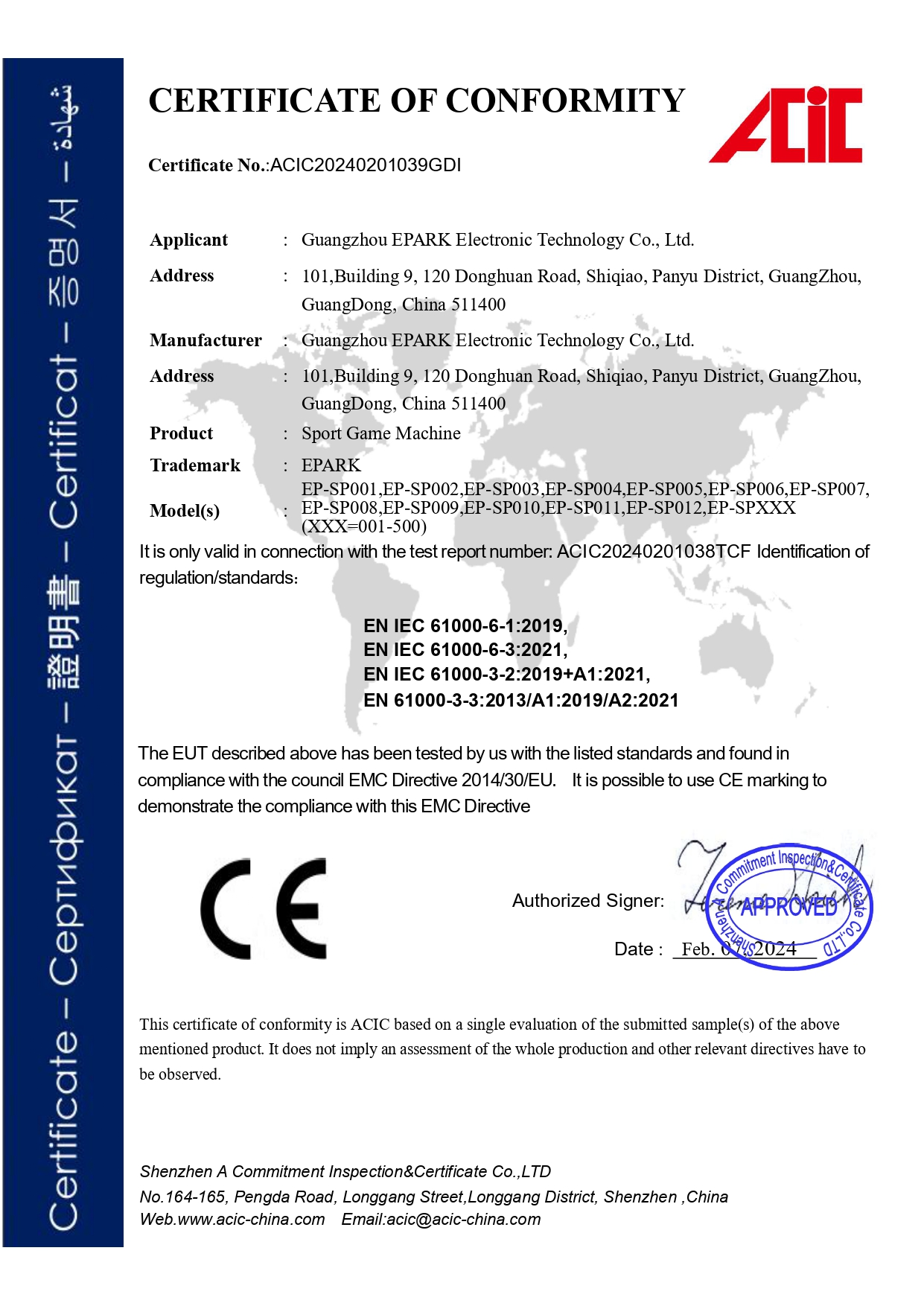
CE certificate ACIC20240201039GDI covers the Sport Game Machine scope, which includes the EP-SP010 and EP-SP110 models.
Step-by-Step: A Seven-Step Head-to-Head Evaluation
Run the same seven steps for both machines, in this order. Each step produces a number or a document, which keeps the comparison honest.
Step 1 — Define the zone and the player mix
Write down who stands in front of the machine at 21:00 on a Saturday and at 14:00 on a Sunday. A bar or entertainment venue operating at night with adult users and high interaction demand has a different answer from a family entertainment centre running multi-zone traffic all day. The boxing unit rewards a crowd that watches and queues; the basketball unit rewards pairs who play together and come back.
Step 2 — Measure footprint and service clearance
Use the supplier's dimensional drawing for the exact model, not a catalogue photo. Cabinet outlines are only half the requirement: add door-swing space, punching-bag clearance on the boxing unit, and ball-return access on the basketball unit. Published product data for these two models lists player count, power, and materials but does not publish cabinet dimensions, so request the model drawing before you allocate floor space.
Step 3 — Confirm electrical load and voltage
The boxing machine runs at 150–300W and the basketball machine at 300–600W, both at 110V/220V. If your floor already carries a sport zone with the multi-player Sport Game Machine EP-SP001 at 200–800W or an Air Hockey Table at 200–400W, add the new unit to the same circuit calculation rather than treating it as a standalone load.
Step 4 — Build the compliance file
Match the certificate scope to the model you are ordering, and match the file to your destination market: CE and EMC documentation for the EU, UL for the US. Keep the certificate number, issue date, tested standards, and model list in one folder so a landlord or customs broker can verify it without a supplier call.
Step 5 — Match payment to your floor system
Both models support coin, card, and QR payment. If your venue runs a card or cashless system, confirm the reader type and interface language before production, because payment hardware is one of the customizable items and retrofitting after shipment is more expensive than specifying it at order.
Step 6 — Plan the maintenance routine
On the boxing unit, the service focus is the punching bag assembly, strike-point wear, and score-sensor calibration. On the basketball unit, it is the ball, the net, hoop alignment, and the return path. Both share the same electronics and LED service logic. Write the routine before you buy, and confirm spare-part availability as part of the order rather than after the first fault.
Step 7 — Lock commercial terms
EPARK's production terms are a 30-day lead time, monthly capacity of 500–800 units, and a minimum order quantity of 10 units, with 100% quality inspection before shipment including aging test and function test. Customization covers voltage, plug type, cabinet design, colour, logo, game software, payment system, and language interface — so a two-machine order can still be built to your floor's standards.
Comparison Table: Boxing vs. Basketball Arcade Machine
| Decision variable | Boxing Arcade Machine (EP-SP010) | Basketball Arcade Machine (EP-SP110) |
|---|---|---|
| Players per session | 1 player | 1–2 players |
| Core mechanic | Punch strength scoring with digital score display | Basketball shooting with single and competition game modes |
| Scoring system | Punch strength scoring system | Electronic scoring system |
| Power draw | 150–300W | 300–600W |
| Voltage | 110V / 220V | 110V / 220V |
| Payment options | Coin / card / QR | Coin / card / QR |
| Certification | CE certified; covered by CE ACIC20240201039GDI (Sport Game Machine scope) | CE certified; covered by CE ACIC20240201039GDI (Sport Game Machine scope) |
| Build materials | Metal frame, punching bag, electronic scoring system, LED lighting | Metal frame, basketball hoop, net, electronic scoring system, LED lighting |
| Best-fit venue profile | Adult-heavy, night-trading, high-interaction zones | Family-facing, pair-play, long-dwell zones |
| Maintenance focus | Punching bag wear and score calibration | Ball, net, hoop alignment, return path |
| Customization scope (EPARK) | Voltage, plug type, cabinet design, colour, logo, game software, payment system, language interface | |
Venue Use Cases: Where Each Machine Earns Its Space
Bar and entertainment venues
Night operation, adult users, and high interaction demand are the defining conditions in this segment, and the equipment mix operators typically install combines boxing machines, basketball machines, and air hockey. On a bar floor the boxing unit usually wins the first placement: the punch score is visible from across the room and the format is self-explanatory after one attempt. The basketball unit performs better in the second placement, where two customers can play while they wait.
Family entertainment centres
A family entertainment centre is a multi-zone environment with long dwell times, and its equipment mix typically includes air hockey, VR simulators, kids game machines, redemption machines, and soft playground equipment. In that setting the basketball machine usually takes priority: two-player competition mode keeps a parent and child in the same session, and the scoring format is understood without instruction. The boxing machine still earns a place, but usually in a teen-and-adult zone rather than beside the soft playground.
Shopping mall arcade corners
Mall zones run on high foot traffic, short stays, and impulse spending, and the equipment mix in that segment leans toward claw machines, mini games, and ticket machines with a compact footprint and a high return per square metre. For a mall corner, the deciding factor is conversion speed: a basketball cabinet converts a pair of walk-in shoppers in under a minute, while a boxing cabinet converts a single passer-by. Test the pair-versus-single ratio in your own traffic before committing the corner.
Arcade game centres
Dedicated arcade centres run long hours of continuous use and typically combine claw machines, basketball machines, boxing machines, racing games, and redemption machines. Here the requirement is durability and serviceability rather than novelty. Because both the EP-SP010 and EP-SP110 sit inside the same CE certificate scope, a centre can standardise its sport zone documentation and its spare-part logic across the two models.
How the Two Machines Work Together
The strongest floor plan usually contains both, separated by a multi-player anchor. The boxing machine provides the solo, score-driven moment; the basketball machine provides the paired, competitive moment; and a multi-player unit holds the group in place between them.
Practical anchor options from the same sport category: the Sport Game Machine EP-SP001, specified for 1–4 players at 200–800W with an interactive scoring system and multiple sports modes; the Air Hockey Table EP-SP001, specified for 2–4 players with a 6–8 ft table size and an air blower system. Both sit in the same CE certificate scope as the boxing and basketball units, which keeps the documentation package consistent across the zone.
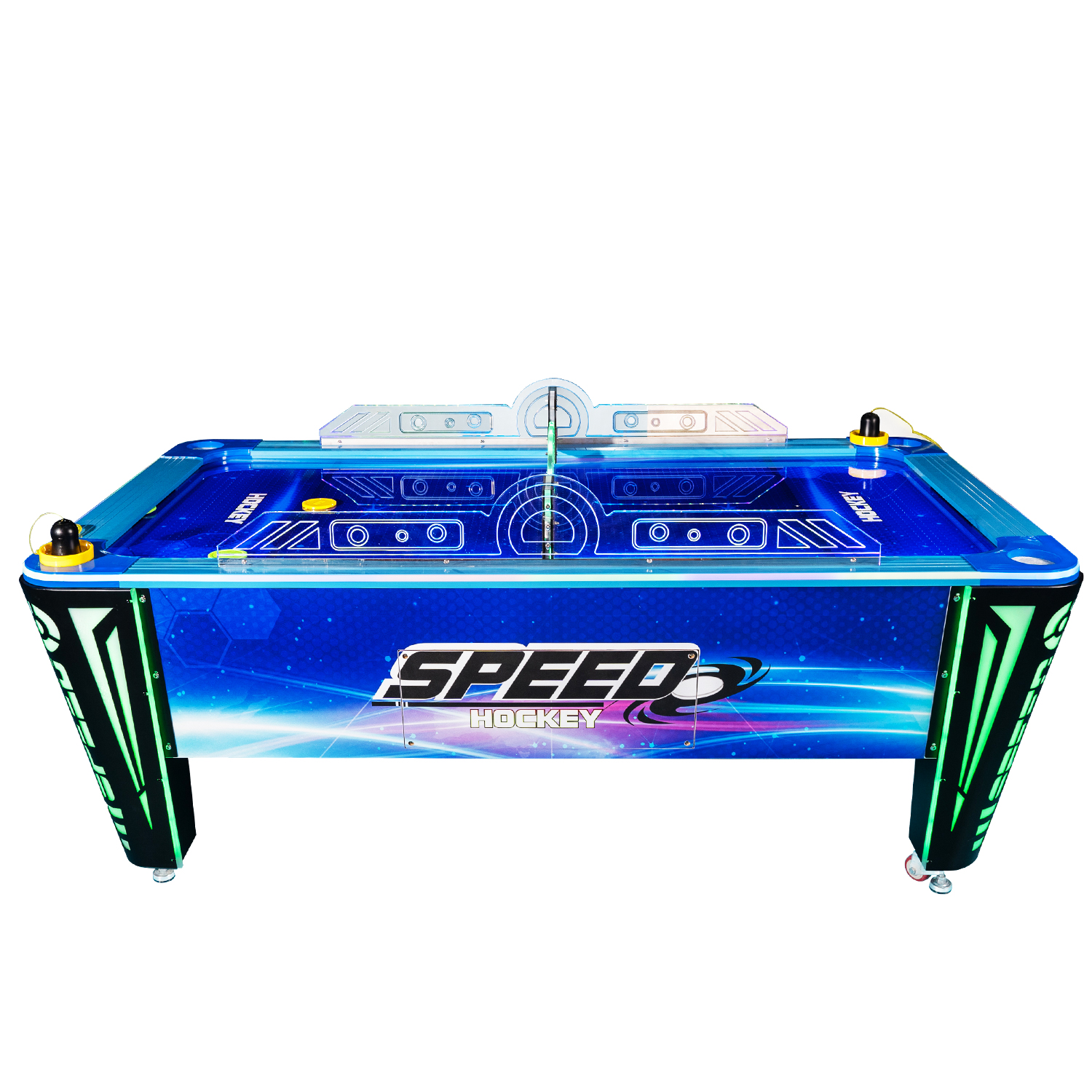
Multi-player anchors such as a 2–4 player air hockey table hold group traffic between a boxing and a basketball unit.
On the revenue side, EPARK case records for arcade startup investments running 30–80 machines describe return on investment within three to six months, and records for family entertainment centre operators running 80 or more machines describe stable daily revenue from ticket redemption games with repeat visits. Those are supplier-reported outcomes from specific projects, not a forecast for your venue — use them as a reference point and validate against your own traffic model.
Frequently Asked Questions
1. Are the boxing and basketball arcade machines CE certified for the EU market?
In EPARK's range, both the boxing machine EP-SP010 and the basketball machine EP-SP110 fall under CE certificate ACIC20240201039GDI, issued by ACIC on 2024-02-06 for the scope Sport Game Machine and tested against EN IEC 61000-6-1:2019, EN IEC 61000-6-3:2021, EN IEC 61000-3-2:2019+A1:2021, and EN 61000-3-3:2013/A1:2019/A2:2021. Game machines also carry RoHS certificate ACIC20190422059BHN. For the EU, CE marking requires LVD and EMC compliance (EN 60335-1 and 2014/30/EU); for the US, UL certification applies and should be confirmed as a separate file.
2. Which unit is harder to operate — power, payment, and customization?
Neither is difficult, but they differ in load and in service. The boxing machine draws 150–300W and the basketball machine 300–600W, both on 110V/220V, and both support coin, card, or QR payment. EPARK's customization scope covers voltage, plug type, cabinet design, colour, logo, game software, payment system, and language interface, so payment hardware can be matched to your card or coin system at the order stage rather than after delivery.
3. What actually drives the price difference between the two machines?
No per-unit price band for either model is published in EPARK's product data, so compare on measurable cost drivers instead: power draw (150–300W versus 300–600W), mechanical content (a punching bag assembly with a strength-scoring sensor versus a hoop, net, and ball-return path), and the spare parts you intend to stock. Ask for a written quotation that specifies model, configuration, payment hardware, voltage, packing, and delivery terms before you benchmark anything.
4. Can I sample one of each before placing a production order?
EPARK's published minimum order quantity is 10 units for production orders, and single-unit sampling arrangements are not stated in the product data. Confirm sample availability, configuration, and target price directly with the sales team before committing, and specify the exact voltage, plug type, payment hardware, and language interface at that stage so the sample matches the production build.
5. What is the lead time, and what happens after delivery?
EPARK quotes a 30-day lead time with monthly capacity of 500–800 units, and every unit passes 100% quality inspection before shipment, including aging test and function test. After-sales support is 24/7 online with video technical guidance, spare parts supply, and lifetime maintenance service. To move from research to evaluation, request a boxing plus basketball specification sheet and quotation, and bring your floor plan and destination-market compliance questions to the same conversation.
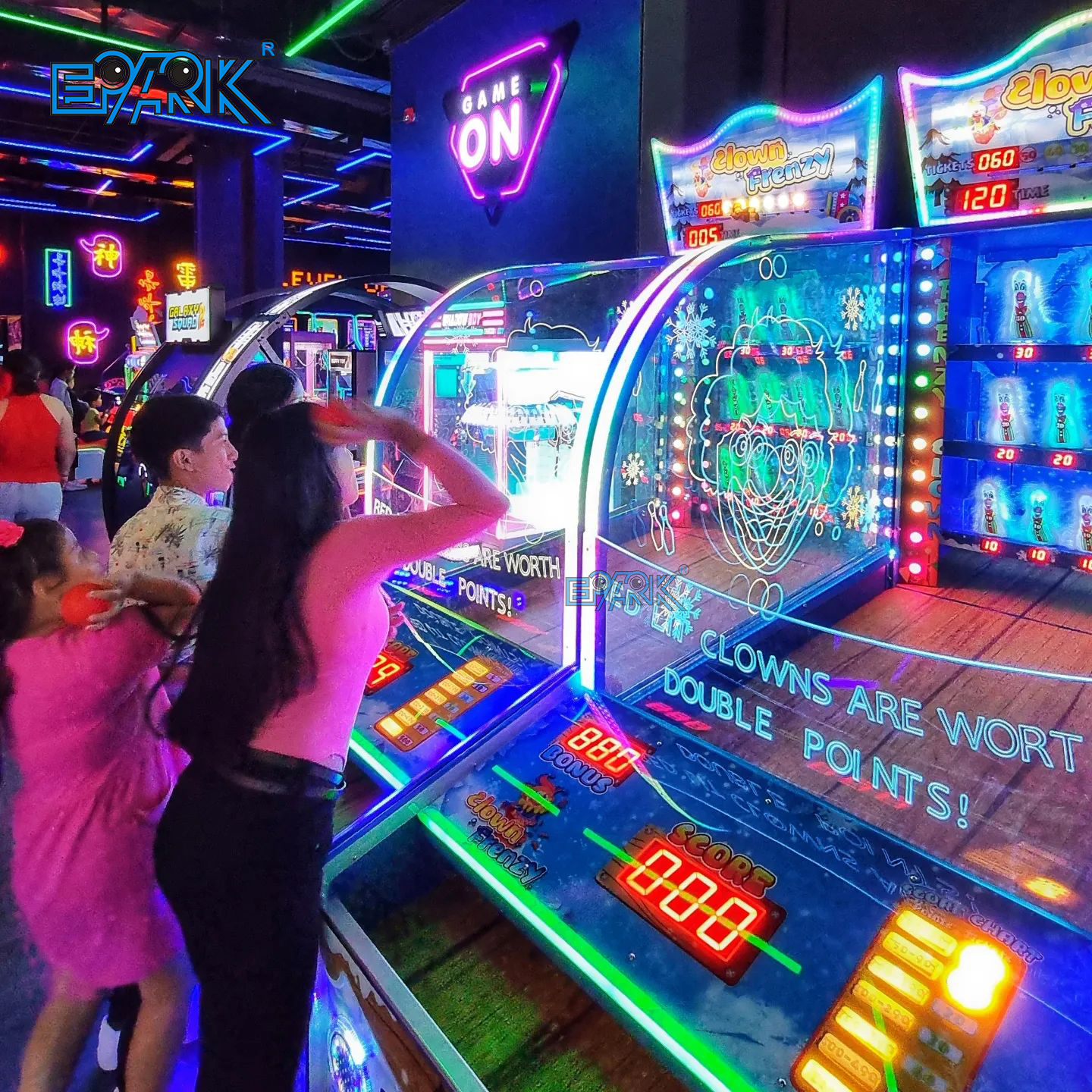
Reference arcade floor: sport machines placed alongside multi-player anchors and redemption units.
Next step: compare the two models on your own floor plan
Guangzhou EPARK Electronic Technology Co., Ltd. (EPARK) is an arcade and amusement equipment manufacturer based in Panyu, Guangzhou, China, operating a 25,000 m² factory and showroom, founded in 2016, and exporting about 80% of output to the EU, USA, Middle East, Africa, South America, and Southeast Asia.
Send your venue type, floor plan, and destination market, and request the EP-SP010 boxing machine and EP-SP110 basketball machine specification sheets with a written quotation.
Website: www.eparkgames.com · Email: sales@nanyuetech.com · WhatsApp: +86 13903079263
Conclusion
Choose the boxing arcade machine first when your traffic is adult-heavy and night-trading, when solo score-chasing drives repeat plays, and when a 150–300W load and a punching bag service routine fit your floor. Choose the basketball arcade machine first when your traffic is family-facing, when two-player competition mode raises dwell time, and when a 300–600W load and a ball-and-net service routine are manageable.
If the decision is genuinely close, do not choose. Place the boxing unit where spectators gather and the basketball unit where pairs queue, then anchor both with a multi-player sport machine or an air hockey table. Confirm the compliance file for your destination market, confirm the payment hardware at order stage, and price the two models against a written quotation rather than a catalogue headline.
Have Questions or Need More Details?
Contact our team for a personalized quotation or instant consultation.
Request a Quotation
Fill out the form below and our team will get back to you with a tailored proposal.
WhatsApp Direct Chat
Prefer to chat in real-time? Message us on WhatsApp for instant assistance & quick answers.
- Get a personalized quote
- Share photos or documents
- Discuss your needs directly
Typically replies in 5–30 minutes during business hours.