Claw Machine Buying Guide: Types, Costs, and How to Pick the Right One
Claw Machine Buying Guide: Types, Cost Factors, and How to Choose
A claw machine is a coin-operated prize game in which players use a joystick to position an overhead claw, drop it, and attempt to grab a prize inside a glass cabinet. Claw machines are installed across shopping malls, arcade centers, family entertainment centers (FECs), and amusement parks to attract foot traffic and generate per-play revenue. This buying guide explains the common types, key specifications to compare, venue considerations, and the factors that influence a commercial claw machine purchase.
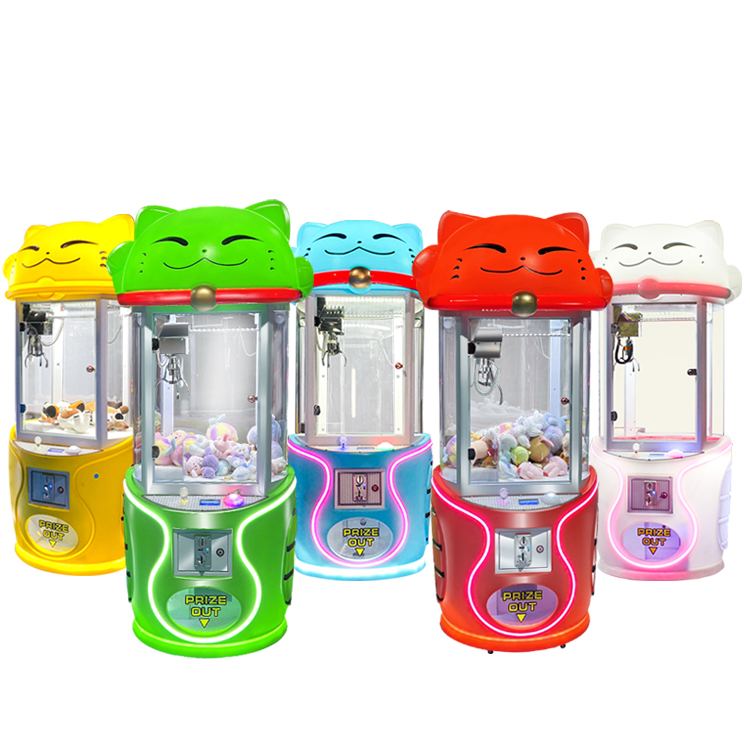
Claw machines are among the most visible and accessible attractions in modern arcade and family entertainment venues.
What Is a Claw Machine and Why Do Venues Install Them?
From a business perspective, a claw machine is a self-contained revenue unit that combines entertainment, prize display, and impulse purchasing. A typical commercial claw machine includes a metal cabinet, tempered glass panels, an internal crane or claw system, a prize display area, an electronic control board, and payment support. The core appeal for venue operators is the ability to convert walk-in traffic into paid plays without requiring a dedicated attendant for each machine.
The global claw machine market reached an estimated value of approximately USD 2.8 billion in 2025, with projections suggesting the market could exceed USD 5.1 billion by the early 2030s. Asia Pacific accounted for roughly 42.7% of global revenue in 2025, reflecting strong demand in China, Japan, and South Korea. For buyers, these figures indicate that claw machines remain a significant and growing segment within the broader arcade industry.
EPARK, formally Guangzhou EPARK Electronic Technology Co., Ltd., is a manufacturer headquartered in Panyu, Guangzhou, and is one of the suppliers operating in this growing market. EPARK manufactures claw machines alongside air hockey tables, basketball machines, boxing machines, VR simulators, racing arcade machines, and other entertainment equipment for venues worldwide.
Claw Machine Types: Which Format Suits Your Venue?
Not all claw machines are the same. The main differences are machine size, prize mechanism, payment system, and interior layout. Selecting the right type is a decision that directly impacts floor space usage, prize restocking frequency, and the profile of players you attract.
Standard Single-Player Claw Machine
The most widely deployed format is the single-player claw machine, designed for one player at a time. EPARK's model EP-G001 is a coin-operated claw machine with a one-player format, a power range of 120–200W, support for 110V or 220V voltage, adjustable claw strength, LED lighting, a transparent cabinet design, a prize display system, and payment support for coin, bill, card, and QR code methods. It is suitable for shopping malls, arcade centers, FECs, and amusement parks.
Mini Claw Machine
Mini claw machines are compact units designed for spaces where floor space is limited. They are commonly placed at mall entrances, near checkout zones, or in food-and-beverage areas where a full-size cabinet would be impractical. The compact footprint helps operators test a location with lower space commitment.
Double or Multi-Player Claw Machine
Double and four-player claw machines allow multiple players to play side by side on a single unit. These configurations increase the number of plays per square meter and are commonly used in high-traffic venues where waiting time at single-player machines becomes a concern. EPARK's product line includes double-player and four-player claw machine formats.
Prize-Specific Claw Machines
Some claw machines are designed for a specific prize category. Plush toy claw machines use a traditional claw grip for soft toys. Capsule claw machines handle round capsule prizes. Candy claw machines are set up to grab wrapped candy or small packaged snacks. Gift and high-value prize machines feature a stronger grip or altered prize mechanics suited to premium items. Choosing a prize-specific configuration helps match the machine to your prize supply and target audience.
Large and Specialty Claw Machines
Large claw machines, sometimes marketed as giant claw machines, serve as anchor attractions because their oversized cabinets create high visual impact. Some specialty machines also replace the standard metal claw with a different retrieval method, such as a clipping or pushing mechanism. These variants remain visually similar to claw machines but change the skill dynamic, which can refresh player interest.
Smart Claw Machine
Smart claw machines integrate software features such as remote prize strength adjustment, cashless payment, data reporting, and sometimes remote monitoring. The practical benefit for a venue owner is better control over win rate, cleaner audit trails, and less manual intervention. EPARK supports coin, bill, card, and QR code payment systems, which provides the basic payment flexibility found in modern smart machines.
Key Specifications to Compare Before Buying
When evaluating a commercial claw machine, buyers should compare technical specifications rather than relying only on visual appearance. The parameters below determine operating cost, prize flexibility, payment compatibility, and ease of maintenance.
| Specification | What to Check | Why It Matters |
|---|---|---|
| Players | 1 player, 2 players, or 4 players | Determines how many customers the unit can serve simultaneously and its expected earning capacity. |
| Power consumption | Typical range 120–200W for standard units | Affects the cost of continuous daily operation in a venue. |
| Voltage | 110V / 220V support | The machine must match your destination market's electrical standard. |
| Claw strength | Adjustable or fixed | Adjustable claw strength allows the operator to control difficulty and prize payout frequency. |
| Cabinet design | Transparent glass, LED lighting, prize display area | Visibility and lighting are directly tied to player attraction and impulse play. |
| Payment system | Coin, bill, card, QR code | Payment flexibility supports different venue operation models and regional cashless habits. |
| Certification | CE certification | A CE-certified machine indicates the product meets EU safety requirements for the destination market. |
For example, the EPARK EP-G001 claw machine is a single-player, coin-operated unit with a 120–200W power range, 110V/220V voltage options, adjustable claw strength, LED lighting, a transparent cabinet, a prize display system, and support for coin, bill, card, and QR payment. It is CE certified and constructed from a metal cabinet, tempered glass, a claw system, and an electronic control system. Comparing these specifications against your venue requirements is the starting point of a practical purchasing decision.
Venue Matching: Where Do Different Claw Machines Perform Best?
Claw machine performance is strongly influenced by placement. A suitable location generates consistent play volume, while an unsuitable location can leave a machine idle regardless of its build quality.
Shopping Malls
Mall environments are characterized by high foot traffic, short stay duration, and impulse consumption. Space is often limited because the machine competes with retail displays. For this reason, mall operators typically favor eye-catching, compact, or standard claw machines that can convert passing visitors into paying players. A claw machine in a mall corridor needs strong LED visibility and a transparent cabinet to stop foot traffic.
Arcade Game Centers
Dedicated arcade centers operate many machines in one space, often on a coin, token, or card-based system. High-traffic daily operations and long continuous hours are normal in this environment. Buyers should prioritize high durability, easy maintenance, CE certification, and machine formats that spread customer traffic across a wider playing area, such as double or multi-player units.
Family Entertainment Centers
FECs typically run card systems and prefer cashless payment because families load value once and spend across multiple attractions. The goal is to extend dwell time and increase spending per family. Claw machines in an FEC should be safe, interactive, and appealing to both children and parents. Colorful designs and multi-player formats work well in this context.
Amusement Parks
Amusement parks handle large crowds unevenly, with peaks during weekends and holidays. Claw machines placed in these zones need durable construction and a prize display that can be quickly restocked. Larger or visually distinctive machines can also serve as photo-worthy anchor units.
EPARK's product catalog is designed to cover these venue types with a broader entertainment equipment portfolio. The company also manufactures air hockey tables, basketball machines, boxing machines, VR simulators, racing arcade machines, shooting games, ticket redemption machines, kids game machines, and indoor playground equipment. For operators building a mixed floor, working with a single equipment supplier can simplify installation, spare parts, and after-sales service.
Cost and ROI Considerations for Commercial Buyers
Price is not the only cost associated with a claw machine. Buyers should evaluate the total lifetime cost, including the machine itself, shipping, import duties, prize inventory, maintenance, and potential downtime.
Market research commonly places the payback period for a well-located commercial claw machine in the range of 12 to 24 months. That estimate depends heavily on foot traffic, price per play, win rate configuration, prize cost, and operational efficiency. A machine in a high-traffic shopping mall will naturally recover its cost much faster than the same unit in a low-traffic location.
When sourcing from overseas, buyers should compare the manufacturer's factory capacity and export experience. EPARK, for example, operates a 25,000 m² factory and showroom in Panyu, Guangzhou, employs around 150 staff, and has an annual output of approximately 8,000–10,000 units. Around 80% of EPARK's production is exported to regions including the EU, USA, Middle East, Africa, South America, and Southeast Asia. These operational facts are relevant to importers who need production capacity, global shipping capability, and a supplier who already manages international compliance and documentation.
Supplier Evaluation: What a First-Time Buyer Should Verify
Because a claw machine is a durable electronic product, the supplier matters as much as the machine specification. Buyers at the awareness and research stage should focus on verification, not just visual appeal.
- Certifications: Check whether the machine is CE certified and whether the certification matches your target market. For European destinations, CE marking is a standard compliance indicator.
- Production capability: Ask about factory size, headcount, R&D team size, and annual output. A supplier such as EPARK, which states a 25,000 m² facility and a 20-engineer R&D team, has a different operating profile from a trading company with no production line.
- Export experience: Request shipping references or destination countries. EPARK reports exports to the EU, USA, Middle East, Africa, South America, and Southeast Asia, with roughly 80% of output going to overseas markets.
- Payment and integration: Confirm whether the machine supports coin, bill, card, and QR payment. Venues using card systems should verify compatibility before purchase.
- After-sales support: Ask about spare parts availability, warranty terms, and the response channel for technical issues. EPARK states that it provides free project solutions, manufacturing-to-delivery service, and fast technical support through a single service system.
Step-by-Step Selection Framework
The following workflow helps a first-time buyer move from awareness to a shortlist without getting distracted by decoration or unnecessary features.
- Define the venue and traffic model. Note the location type, daily expected foot traffic, operating hours, and whether the site uses coins, tokens, cards, or cashless payment.
- Set a space and power budget. Measure the available floor area, ceiling height, and outlet voltage. For most venues, 110V and 220V options matter, and standard power consumption around 120–200W per single-player machine is a useful reference.
- Choose the prize category. Decide whether you will stock plush toys, capsules, candy, or premium gifts. This determines whether you need a standard plush claw machine, capsule machine, candy machine, or a high-value gift claw machine.
- Choose the player format. Select between single-player, double, four-player, or large format based on expected queue behaviour and prize restocking capacity.
- Compare payment and control features. At minimum, modern venues benefit from card and QR payment. Adjustable claw strength is a must-have for most commercial operators because it lets you tune the win rate.
- Verify supplier credentials. Confirm certification, factory ownership, export history, R&D capability, and after-sales coverage. Request product photos, specification sheets, and proof of production.
- Request a quote or sample order. Shortlist two or three suppliers and compare total landed cost, lead time, warranty, and spare parts supply. A sample order of one unit is often the most reliable way to test build quality.
Comparison: EPARK EP-G001 vs. Typical Market Alternatives
To clarify positioning, the table below compares the general characteristics of the EPARK EP-G001 claw machine with those typically found across major global claw machine suppliers. The comparison is based on model-level specifications that are common in the market, not on claimed performance superiority.
| Comparison Dimension | EPARK EP-G001 | Typical Mid-Range Supplier Product | Typical Premium Supplier Product (e.g., Elaut, Sega) |
|---|---|---|---|
| Player count | 1 player | 1 player | 1 player or multi-station configurations |
| Power | 120–200W | Approximately 150–250W | Varies; often higher for large cabinets |
| Payment | Coin / bill / card / QR | Usually coin and bill; card/QR vary by model | Advanced cashless and card systems common |
| Claw strength | Adjustable | Adjustable on most commercial models | Adjustable with software-based precision settings |
| Certification | CE certified | CE commonly claimed | CE and additional regional certifications common |
| Positioning | Cost-effective factory-direct option for global buyers | Mid-market balance of price and features | Premium brand, higher price, strong service network in certain regions |
Known global competitors in the claw machine industry include Elaut NV (Belgium), Smart Industries Corp (US), Sega Corporation (Japan), and Bandai Namco. These companies are recognized names in the amusement sector, but their products typically sit at a higher price point than factory-direct Chinese manufacturers. The average buyer comparison should therefore weigh brand and local service coverage against factory-direct value, customization flexibility, and total landed cost.
Commercial Claw Machine: Key Buying Criteria Checklist
Use this checklist when reviewing product quotes and supplier presentations.
- Available in 110V and/or 220V versions to match your market
- Power draw is reasonable for continuous commercial operation
- Claw strength is adjustable or remotely configurable
- Prize display window is transparent and cabinet lighting is bright
- Payment system supports your venue's operation model (coin, token, card, or QR)
- Cabinet construction uses metal and tempered glass suitable for public use
- CE certification or the relevant destination-market certification is documented
- Supplier can explain spare parts, warranty, and technical support procedures
- Supplier provides clear specification sheets and responds with concrete data
Frequently Asked Questions
Are claw machines CE certified?
Many export-oriented claw machine models are CE certified because CE marking is required to sell electronic amusement equipment in the European market. EPARK's EP-G001 claw machine is CE certified. Buyers should request the certificate document from the supplier and confirm that it matches the exact model and destination market before placing an order.
What is the difference between a single-player and a multi-player claw machine?
A single-player claw machine serves one player at a time and is the most common format for compact spaces and lower-traffic locations. Multi-player machines, such as double or four-player versions, allow several players to play simultaneously on one unit, which increases the number of plays per square meter and reduces waiting in busy locations. EPARK offers double-player and four-player formats alongside its standard EP-G001 single-player model.
What payment systems do modern claw machines support?
Modern commercial claw machines increasingly support multiple payment methods. EPARK's EP-G001 supports coin, bill, card, and QR code payment. Card and QR support are particularly relevant for venues that operate on a cashless card system or serve customers who prefer mobile payments.
How much does it cost to operate a claw machine commercially?
Operating cost includes electricity, prize inventory, occasional maintenance, and potential site fees such as rental revenue sharing. A typical single-player claw machine draws about 120–200W, so continuous daily operation falls into a relatively low electricity range for a commercial venue. Prize restocking and machine amortization are usually the more significant cost components.
How long does it take for a claw machine to become profitable?
Published market research commonly suggests a payback period of 12 to 24 months for a well-placed commercial claw machine. Actual profitability depends on foot traffic, price per play, win rate, prize cost, and operational efficiency. A machine in a high-traffic mall arcade zone will generally recover its investment faster than one in a low-footfall location.
Conclusion and Next Step
Claw machines remain one of the most accessible and reliable revenue-generating attractions for modern entertainment venues. The first buying decision is not about brand preference; it is about matching machine type, prize format, payment systems, and technical specifications to the location and operation model. Buyers who prepare a clear specification list, verify supplier credentials, and compare total landed cost are more likely to choose a machine that performs well over several years.
EPARK, a Panyu, Guangzhou-based manufacturer with a 25,000 m² facility and approximately 8,000–10,000 units of annual output, offers CE-certified claw machines and a broad entertainment equipment portfolio for international buyers. For a personal quote, sample order, or detailed specification sheet, contact EPARK directly through the company website at www.eparkgames.com or reach the sales team by email and WhatsApp.
Get a Claw Machine Quote Tailored to Your Venue
Tell EPARK your location type, prize format, and payment system requirements to receive a relevant product recommendation.
Have Questions or Need More Details?
Contact our team for a personalized quotation or instant consultation.
Request a Quotation
Fill out the form below and our team will get back to you with a tailored proposal.
WhatsApp Direct Chat
Prefer to chat in real-time? Message us on WhatsApp for instant assistance & quick answers.
- Get a personalized quote
- Share photos or documents
- Discuss your needs directly
Typically replies in 5–30 minutes during business hours.