Claw Machine Types Compared: How to Choose Between Mini, Standard, Double, and Smart Models
Updated: August 12, 2026
If your business is comparing claw machine types for a game center, family entertainment center (FEC), shopping mall, or amusement park, the practical question is not “which claw machine is best.” It is which configuration—mini, standard single-player, double, large, capsule, candy, or smart-connected—will match your space, foot traffic, prize strategy, and return on investment. This guide explains the differences between common claw machine types, compares their use cases and specifications, and provides a decision framework based on procurement priorities.
Why Claw Machine Type Selection Matters Before You Buy
Claw machines, also called crane game machines or grabber machines, are coin-operated or card-operated prize vending devices that attract players through skill-based gameplay. The type of claw machine you choose affects floor space, purchase cost, maintenance workload, prize capacity, player engagement, and revenue potential. A machine that works well in a busy mall corridor may not be the right fit for a dedicated arcade counter or a family-oriented entertainment zone.
From a procurement standpoint, type selection should happen before supplier selection. Once you define the machine type, technical parameters, compliance requirements, and budget band, you can evaluate manufacturers against a shortlist rather than comparing hundreds of models without structure.
Claw Machine Market Context in 2026
The global claw machine market was valued at approximately USD 2.66 billion to 2.8 billion in 2024–2025, with projections to reach over USD 5.1 billion by 2032–2034. Asia Pacific held the largest regional revenue share at 42.7% in 2025, driven by demand in China, Japan, and South Korea. Middle-type claw machines accounted for 44.2% of the global market by type segment in 2025, indicating that mid-sized standard machines dominate commercial demand.
For buyers, these numbers reinforce two practical conclusions. First, claw machines remain a high-demand commercial category with a large installed base. Second, the market already offers a wide range of configurations, which is exactly why a type-based comparison is necessary.
Common Claw Machine Types: Definitions and Typical Use Cases
Mini Claw Machine
A mini claw machine is a compact prize machine designed for limited floor space, countertop placement, or low-traffic zones. Mini models typically hold smaller plush toys, capsules, or candy prizes and require less upfront investment than standard commercial machines. They are common in convenience stores, restaurants, kids' play areas, cinema lobbies, and small retail businesses that want a vending-style claw machine without dedicating a large footprint.
Use this type when space is tight, the operation is experimental, or the target audience is young children and casual shoppers. Mini machines can work as a secondary revenue source, but their prize capacity and visual impact are lower than standard commercial models.
Standard Single-Player Claw Machine
A standard single-player claw machine is the classic commercial crane game used in arcades, game centers, shopping malls, and FECs. One player operates a joystick or button panel at a time, controlling a claw to pick up plush toys, gift boxes, or prize capsules. This type is the most widely deployed configuration in the industry and matches the largest market segment.
Standard machines balance footprint, prize size, maintenance, and player throughput. They are suitable for high-traffic locations, dedicated arcade floors, and venues with mixed audiences. When buyers refer to a commercial claw machine or a plush toy claw machine, they usually mean this configuration.
Double Claw Machine
A double claw machine places two independent claw units inside one cabinet, allowing two players to play simultaneously on one machine. This configuration doubles the potential play capacity per square meter, which makes it attractive for locations with strong pedestrian flow but limited floor space.
Double units are often used in malls, movie theaters, supermarket entrances, and family entertainment centers where parents and children can play together. The trade-off is a larger cabinet and more complex internal wiring, so maintenance planning and spare parts support matter more.
Large Claw Machine
A large claw machine is a big-cabinet crane game built for oversized plush toys, high-visibility displays, and flagship arcade locations. Larger cabinets provide better prize presentation, which can increase player attraction and justify a higher price point. They are commonly placed at amusement parks, large FECs, and mall anchor locations.
Large machines require more space, higher transport cost, and more substantial prize stock. They work best when the venue wants a statement piece that also generates strong per-play revenue.
Prize-Specific Claw Machines: Plush Toy, Capsule, Candy, and Gift
Manufacturers design claw machines around prize types, not just cabinet size. A plush toy claw machine is optimized for soft toys and typically has adjustable claw strength and a spacious prize window. A capsule claw machine vends round capsules that may contain small toys or collectibles. A candy claw machine uses transparent containers or chutes to deliver candy prizes, which is common in kid-oriented venues. A gift claw machine can handle boxed prizes, small electronics, or mystery gift boxes.
The prize type determines the machine’s interior layout, claw design, chute width, and prize drop mechanism. Before choosing a specific model, verify that the machine can handle the prize sizes and packaging your operation intends to use.
Coin-Operated and Card-Operated Claw Machines
Claw machines are also categorized by payment system. Coin-operated claw machine models accept physical coins, which is common in self-service and cash-based operations. Many modern commercial machines support card readers, mobile payments, or ticketing systems to match venue billing preferences.
Payment systems affect operational cost, player convenience, and cash management. In venues with centralized card systems or mobile payment infrastructure, a smart claw machine with network connectivity may be more practical than a traditional coin-only model.
LED and Custom Claw Machines
LED claw machines feature decorative LED lighting designed to attract attention in dimly lit arcade environments. Lighting is not purely cosmetic: well-lit prize displays are easier to see, and bright cabinets tend to draw more players in busy entertainment spaces.
Custom claw machine options include branded cabinet colors, custom artwork, special prize configurations, and tailored payment systems. For multi-location operators and venue brands, custom machines help maintain visual consistency. Customization is also common when integrating claw machines into a themed entertainment area or an indoor playground.
Smart Claw Machine
A smart claw machine is a crane game with networked features such as remote monitoring, digital payment, dynamic pricing, prize tracking, and operational data reporting. These machines allow operators to monitor performance remotely, adjust difficulty settings, and collect player data instead of relying on manual readings.
Smart machines are increasingly relevant for multi-site operations, mall operators, and family entertainment centers that want centralized control. The higher hardware cost must be weighed against operational savings, reduced downtime, and more predictable revenue management. For a small single-location operation, a traditional machine with remote technical support may be sufficient.
Claw Machine Comparison Table: Mini vs Standard vs Double vs Large vs Smart
| Machine Type | Typical Player Capacity | Best Location | Prize Type | Installation Footprint | Key Procurement Consideration |
|---|---|---|---|---|---|
| Mini Claw Machine | 1 player | Convenience stores, restaurants, cinema lobbies, kids' play areas | Small plush toys, capsules, candy | Low | Low initial investment; prize capacity limited |
| Standard Single-Player Claw Machine | 1 player | Arcades, game centers, malls, FECs | Plush toys, gift boxes, capsules | Medium | Balanced operation; most common configuration |
| Double Claw Machine | 2 players | Malls, cinema entrances, FECs, supermarkets | Plush toys, capsules | Medium to large | Higher play throughput per floor area |
| Large Claw Machine | 1 player | Amusement parks, large FECs, mall anchor areas | Oversized plush toys, premium prizes | Large | High visual impact; higher space and shipping cost |
| Smart Claw Machine | 1 player per unit; multiple units manageable remotely | Multi-site venues, connected arcades, FEC chains | Plush toys, capsules, gift boxes | Varies by cabinet | Remote monitoring, digital payment, data reporting |
How EPARK Builds Commercial Claw Machines
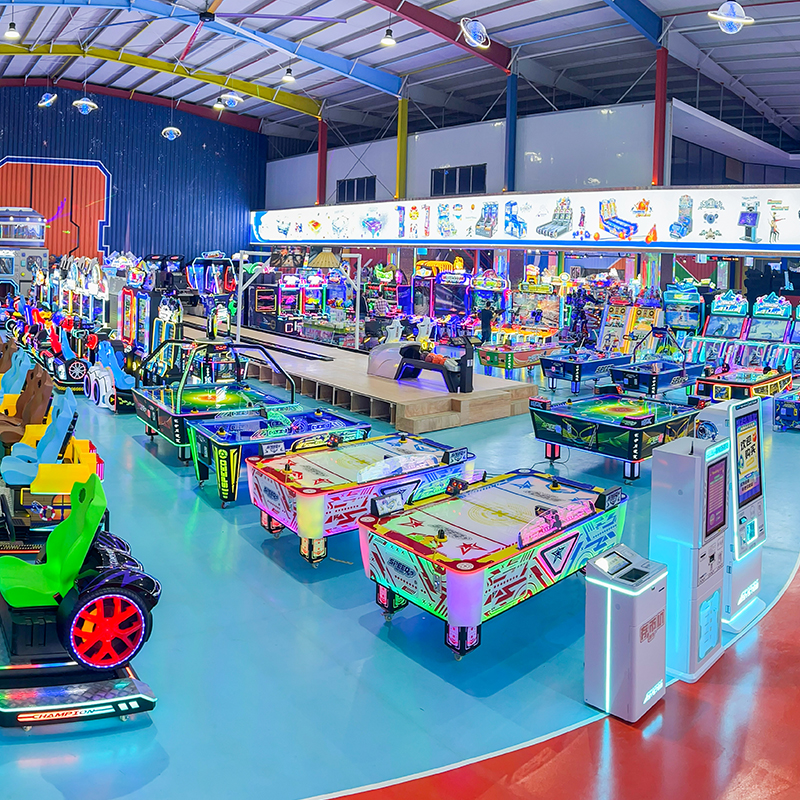
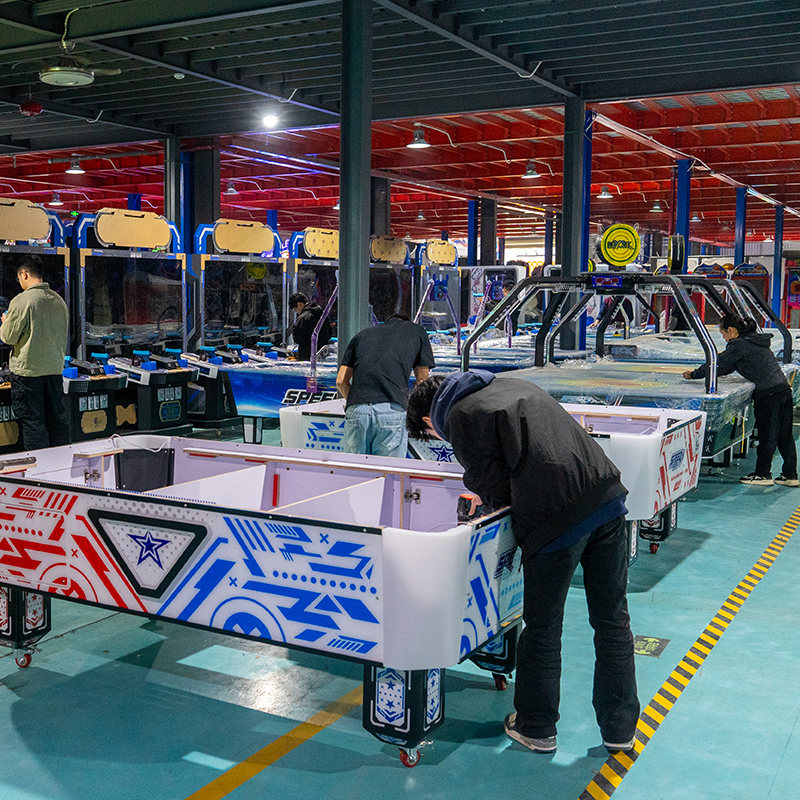
Guangzhou EPARK Electronic Technology Co., Ltd. (EPARK) is an entertainment equipment manufacturer based in Panyu, Guangzhou, China. The Panyu district is recognized as a global manufacturing hub for claw machines, and EPARK operates within this cluster with a factory and showroom covering over 25,000 square meters. EPARK’s team includes roughly 150 employees and 20 R&D engineers, with an annual output of 8,000–10,000 units. Around 80% of production is exported to the EU, USA, Middle East, Africa, South America, and Southeast Asia.
In comparison with standard arcade game machines, EPARK emphasizes a stronger cabinet structure, stable performance, and customizable design. The manufacturer states that these machines can deliver roughly 30% longer lifespan and 20% higher player attraction, with lower long-term maintenance cost. These performance claims are presented as design goals and engineering targets, so buyers should verify them through factory audits, sample testing, and warranty terms.
Step-by-Step Machine Type Selection Framework
Step 1: Define the operational setting
Identify where the machine will be placed, how much floor space is available, and what the surrounding traffic pattern looks like. A single counter area supports a mini machine; a dedicated arcade row supports standard and double machines; an anchor location can justify a large machine.
Step 2: Define the target player audience
Children, teenagers, families, and adults respond to different prize types and machine sizes. Kid-focused locations typically favor candy and capsule machines with bright colors; mixed-family venues benefit from standard plush toy machines and double units that allow parent-child play.
Step 3: Define the prize strategy
Decide whether the machine will sell plush toys, capsules, candy, or gift boxes. The prize size and packaging determine the cabinet interior, claw type, and prize chute. Buyers should ask the supplier for accurate internal dimensions and recommended prize sizes before finalizing a model.
Step 4: Define the payment system
Determine whether players will pay with coins, cards, mobile payment, or a centralized venue card. This decision separates traditional claw machines from smart claw machines and affects the cost of the payment module, installation, and daily cash handling.
Step 5: Estimate budget and ROI expectations
Commercial claw machine ROI is typically achieved within 12–24 months for a well-placed machine, depending on location foot traffic and operational efficiency. When comparing types, factor in not only the purchase price but also shipping, installation, prize stock, maintenance, and spare parts. A cheaper machine that requires frequent repairs can be more expensive over its lifetime.
Step 6: Shortlist suppliers by type, quality, and support
Once the machine type is fixed, evaluate suppliers on production capability, factory size, R&D capacity, export experience, and after-sales support. EPARK, for example, positions itself as a one-stop supplier with free project solutions, strict production and testing standards, and fast technical support. Buyers should verify these commitments through a factory visit, third-party inspection, or sample order.
Use Cases: Which Claw Machine Type Fits Which Venue
Game Center / Arcade
Game centers with dedicated floor space should use a mix of standard single-player claw machines, double claw machines, and a large machine as a visual anchor. Standard machines provide reliable per-play revenue; double machines increase throughput in high-traffic areas; large machines with premium plush toys attract attention and create a destination point within the venue.
Family Entertainment Center (FEC)
FECs serve mixed-age groups, so prize variety matters. A combination of plush toy claw machines, capsule machines, candy machines, and gift machines can cover different player preferences. Double machines work well in FEC aisles where parents and children want to play together.
Shopping Mall and Retail Corridor
Mall operators typically prefer compact, self-service machines that do not require full staffing. Standard claw machines with card readers or mobile payment options fit this environment. Mini machines can be placed at retail shop entrances as a secondary revenue stream. LED options help the cabinet stand out in mall lighting.
Restaurant, Cinema, and Small Retail
For small-footprint locations, mini claw machines and candy machines are the most realistic choice. They require minimal space, lower prize stock, and less maintenance. Operators should monitor play frequency and prize replenishment carefully, since a neglected mini machine loses its attraction quickly.
Compliance and Certifications for Claw Machines
Claw machines sold into commercial venues may need to comply with regional safety and electrical standards. For the EU market, arcade machines must comply with IEC 60335-2-82, the safety standard for amusement machines and personal service machines for public use. Buyers should always confirm which certifications apply to their target market and request relevant certificates from the supplier before placing an order.
Procurement note: Standard commercial claw machines should be ordered with CE certification for EU distribution, and buyers should verify compliance documentation, machine labeling, and factory test reports before shipment.
Risk Management in Claw Machine Procurement
Claw machine purchasing involves several recurring risks: product quality risk, delivery delay risk, after-sales service risk, and payment security risk. A reliable manufacturer should be able to explain how it controls each of these.
EPARK states that it manages quality through incoming material inspection and production testing, with a strict QC process and multi-step inspection before shipment. It also controls delivery through production schedule planning and buffer stock, and supports after-sales service with a dedicated team and spare parts support. Buyers can use this as a checklist when interviewing other suppliers: ask for their pre-shipment inspection process, delivery schedule commitments, spare parts policy, and payment terms.
Cost and Value Considerations
Purchase price is only one part of lifetime cost. Machine type, cabinet build quality, claw motor reliability, payment system complexity, and after-sales support all affect total cost of ownership.
EPARK highlights lower long-term maintenance cost and easy maintenance with remote technical support for its machines. In practice, a machine with a stronger cabinet and stable performance reduces downtime and repair frequency, which matters more than a lower initial price over a five-year operating period. Buyers should compare the total cost of ownership, not just the invoice value.
Frequently Asked Questions
What certifications do claw machines need for commercial use?
For commercial distribution in the EU, claw machines must comply with IEC 60335-2-82, the safety standard for amusement machines and personal service machines intended for public use. Buyers should also confirm the specific electrical safety, EMC, and product compliance requirements of their destination country and ask the supplier for relevant certificates, machine labeling, and test documentation.
What is the difference between a mini claw machine and a standard claw machine?
A mini claw machine is built for small spaces and lighter prizes such as capsules, candy, or small plush toys. A standard single-player claw machine is the conventional commercial configuration used in arcades and game centers, with a larger prize window, larger cabinet, and stronger components. Standard machines require more floor space and a higher initial investment, but they support bigger prizes and higher revenue potential per machine.
How long does it take to earn back the cost of a commercial claw machine?
The average ROI period for a well-placed commercial claw machine is typically 12 to 24 months, depending on foot traffic, prize strategy, machine pricing, and operational efficiency. High-traffic locations with strong prize presentation can reach payback more quickly; low-traffic locations should expect a longer payback period. Operators should model revenue conservatively before committing to a large number of machines.
Which claw machine type is best for a shopping mall or family entertainment center?
Standard single-player claw machines are the most flexible choice for malls and FECs because they balance footprint, prize capacity, and player familiarity. Adding double claw machines in high-traffic aisles increases play throughput, while mini candy or capsule machines can be placed at retail entry points and kid zones. A large claw machine works well as a visual anchor in a dedicated entertainment area.
Can EPARK provide custom claw machine designs for a branded venue?
Yes. EPARK offers customizable design for claw machines, including cabinet colors, artwork, prize configurations, and tailored features. As a manufacturer with a 25,000 m² factory, an in-house R&D team, and direct production control, EPARK can support OEM and customization projects. Buyers can contact the EPARK sales team with floor plans, branding requirements, prize types, and target specifications to receive a project-specific solution.
Ready to compare claw machine models for your venue?
Contact EPARK for a sample, quotation, or catalog with specifications, packaging details, and shipping options.
Email: sales@nanyuetech.com | Phone/WhatsApp: +86 13903079263