Claw Machine or VR Game Machine? A Head-to-Head Guide for Venue Operators
Two machines, one floor, and a budget that will only stretch so far. Most venue operators searching for a claw machine versus VR game machine comparison are not deciding which technology is more impressive. They are deciding which asset fits the traffic pattern, floor space, electrical capacity, and revenue model their venue already runs on.
This guide answers that question as a direct head-to-head between two specific units from the same manufacturer: the EPARK Claw Machine (EP-G001) and the EPARK VR Game Machine (EP-VR096). It compares them across five decision axes — target audience, space and floor economics, player appeal, operational focus, and venue goals — then applies that comparison to four venue types and closes with a five-step decision process. Product specifications below come from EPARK product documentation. Market figures are attributed to the third-party research named alongside them.
Decision preview: If your venue converts walk-in passing traffic through short, repeated, prize-driven play, the claw machine fits first. If your venue sells a destination experience to players who arrive specifically to be immersed, the VR game machine fits first. Both units are CE certified, both run on 110V or 220V, and both are manufactured by EPARK in Guangzhou, China.
What You Are Actually Choosing Between
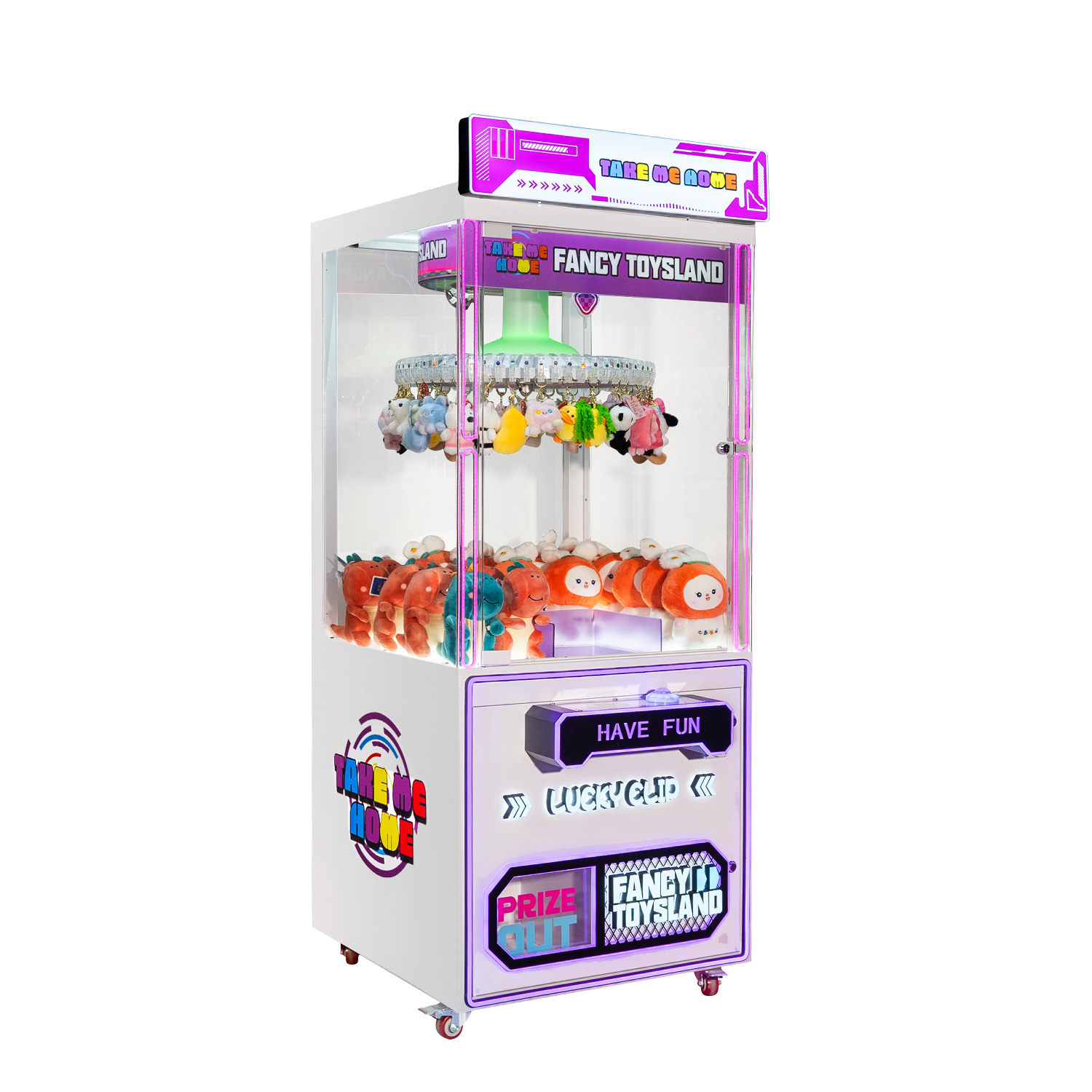
Claw machine (also called crane game machine or grabber machine)
A claw machine — written variously as arcade claw machine, crane game machine, grabber machine, or prize claw machine — is a coin operated amusement unit in which the player steers a mechanical claw across a transparent cabinet to lift a physical prize. The EPARK Claw Machine, model EP-G001, is a single-player, CE-certified unit with adjustable claw strength, LED lighting, a transparent cabinet design, and a prize display system. It accepts coin, bill, card, or QR payment, draws 120–200W at 110V or 220V, and is built from a metal cabinet, tempered glass, a claw system, and an electronic control system. EPARK lists it for shopping malls, arcade centers, family entertainment centers (FEC), and amusement parks.
VR game machine (VR simulator)
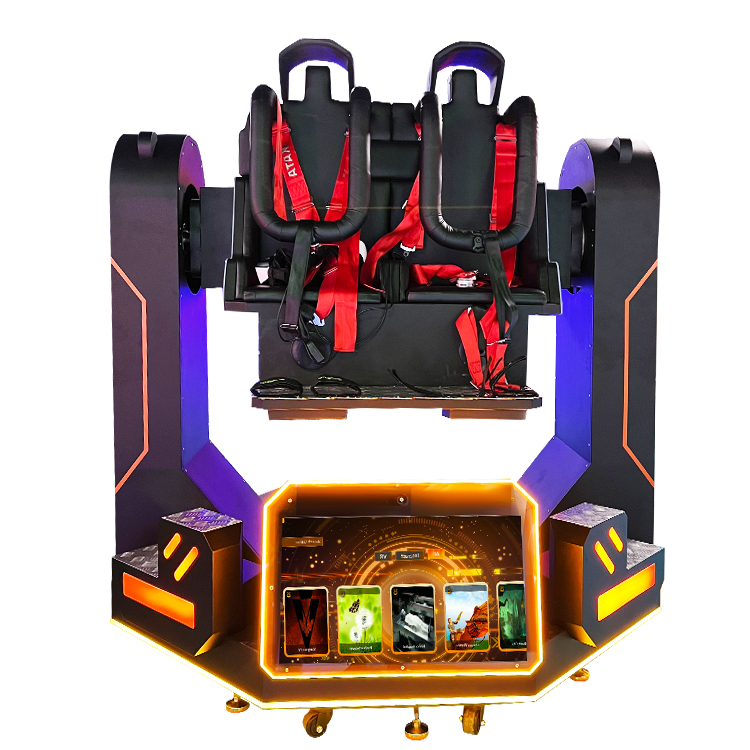
A VR game machine is a coin operated simulator that places one or two players inside a headset-based virtual environment, commonly supported by a motion platform. The EPARK VR Game Machine, model EP-VR096, is a CE-certified 1–2 player unit with an optional HTC or Pico headset, a 42–55 inch HD display, an optional static, 2DOF, or 3DOF motion system, and 20–50 VR games included. It draws 800–1500W at 110V or 220V, supports coin, card, or QR payment, and is built from a metal frame, fiberglass shell, VR system, motion platform, and electronic control system. EPARK lists it for shopping malls, VR experience centers, FEC, and amusement parks.
Why these two categories are compared at all
They are not substitutes. A claw machine monetizes short repeated prize attempts; a VR unit monetizes an immersive session. But they compete for the same finite resources: floor area, electrical load, staffing attention, and capital. That shared constraint is why operators shortlist them together, even though the play experiences have almost nothing in common.
Why This Comparison Matters in 2026
The claw machine category is not a niche. Third-party research from Dataintelo and Verified Market Research places the global claw machine market at roughly USD 2.66 billion to 2.8 billion in 2024–2025, with projections above USD 5.1 billion by 2032–2034. Estimates do diverge: Global Information, Inc. (GII) puts the 2024 figure closer to USD 2.0 billion. That gap is a useful reminder to model on venue-level data rather than on any single headline number.
Regionally, Dataintelo reports that Asia Pacific held a 42.7% revenue share of the claw machine market in 2025, driven by demand in China, Japan, and South Korea, and that middle-type claw machines accounted for 44.2% of the global type segment that year. On the manufacturing side, China’s Panyu district in Guangzhou is recognized as a global production hub for claw machines. EPARK is based there, operating a 25,000 m² showroom and factory, with 150 employees, an R&D team of 20 engineers, annual output of 8,000–10,000 units, and an export ratio of 80% across the EU, USA, Middle East, Africa, South America, and Southeast Asia.
VR sits inside the same indoor entertainment ecosystem but performs a different job. In the family entertainment center equipment pattern, a VR simulator is listed alongside air hockey, kids games, redemption machines, and soft playground equipment rather than replacing any of them. The practical question for an operator is therefore not which category is growing. It is which asset earns its place on the floor being planned.
Head-to-Head Comparison: Five Decision Axes
Axis 1 — Target audience and who actually plays
Claw machine: The claw machine works on passing traffic and broad appeal. In EPARK’s shopping mall scenario — defined by high foot traffic, short-stay users, and impulse consumption — claw machines sit in the matched equipment list together with mini games and ticket machines, positioned to convert walk-in traffic into paying customers. The claw machine is also named in the arcade game center equipment list, and its documented applications include arcade centers, FEC, and amusement parks. Player motivation is simple and visible: see the prize, try to take it.
VR game machine: The VR unit targets players who came for the experience itself. Its documented applications include VR experience centers — a venue type that exists because of destination play — alongside malls, FEC, and amusement parks. It is a 1–2 player unit, so it serves a single player or a pair at a time, and it suits visitors willing to commit to a session rather than a passing attempt.
Axis 2 — Space, placement, and floor economics
Claw machine: Compact, and designed to be seen. The shopping mall scenario explicitly requires eye-catching design, compact size, and high ROI per square meter, and the claw machine heads the matched equipment list for that brief. The transparent cabinet and LED lighting also act as passive signage — the prize pool is visible to anyone walking past, which is a merchandising function a closed cabinet cannot perform.
VR game machine: A larger footprint per revenue position. The unit carries a 42–55 inch HD display plus an optional motion platform, and EPARK’s own venue listing for the model includes VR experience centers — a placement pattern that implies a dedicated or semi-dedicated zone rather than a corner slot.
Electrical load: The claw machine is rated 120–200W; the VR unit is rated 800–1500W. For an operator planning a full floor, or a mall landlord allocating a fixed electrical budget, that difference is a planning input rather than a footnote.
Axis 3 — Player appeal and play pattern
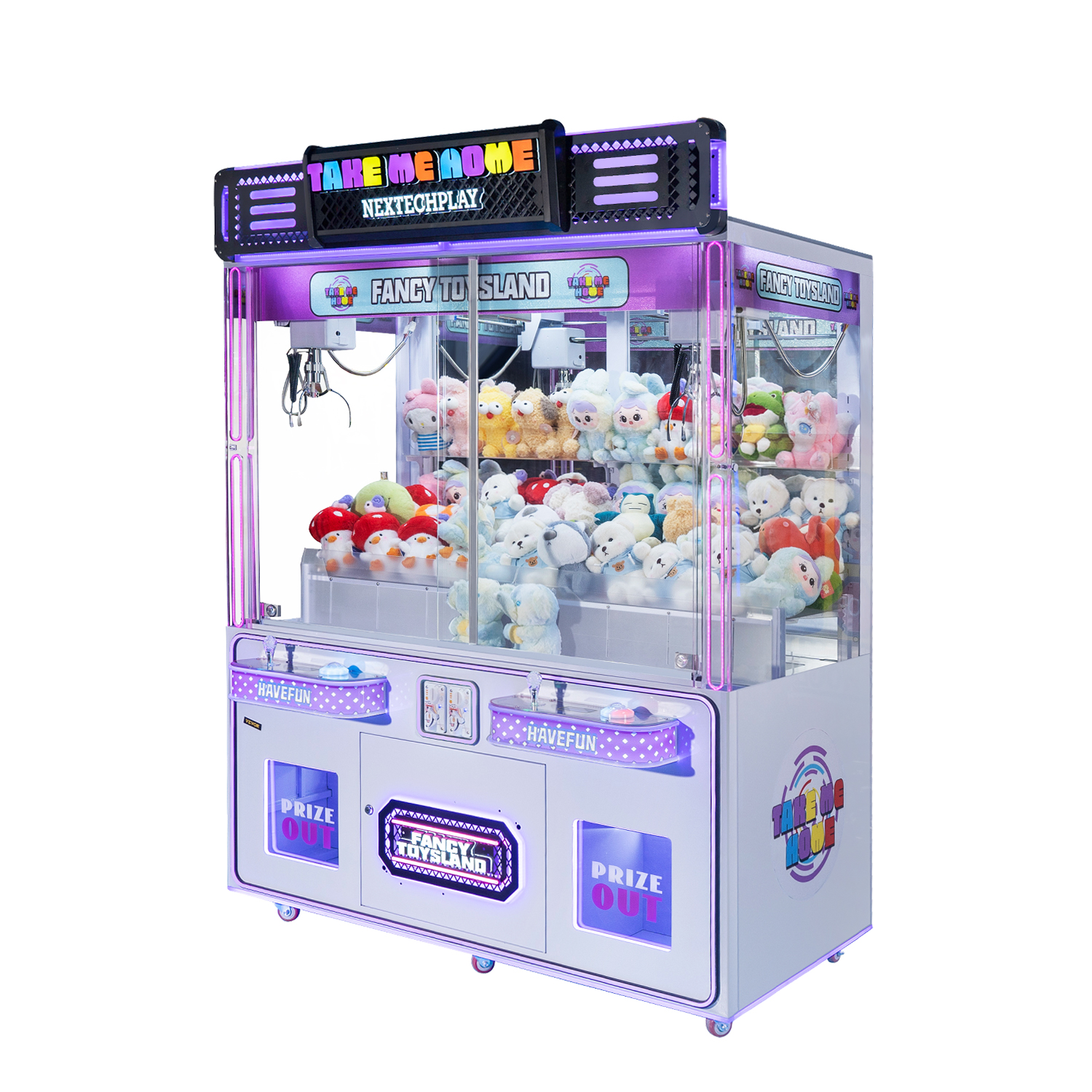
Claw machine: The play loop is built around repetition. Adjustable claw strength lets the operator tune how difficult the lift is, and the prize display system keeps the reward permanently visible. That combination supports the “one more try” behaviour that makes the format work in impulse-driven locations such as mall arcade corners.
VR game machine: The appeal is depth, not repetition. With 20–50 VR games included and an optional static, 2DOF, or 3DOF motion system, the VR unit delivers an experience that a physical prize machine cannot. Its proposition is novelty and immersion — which also means it depends on continued content interest and on players who value the experience over a take-home prize.
Axis 4 — Operational focus
- Payment mix: the claw machine supports coin, bill, card, or QR; the VR game machine supports coin, card, or QR. The claw machine’s bill acceptor matters in markets where notes are still common at venue entrances, while both units support the cashless operation that the FEC scenario names as preferred.
- Construction and service points: the claw machine is built from a metal cabinet, tempered glass, a claw system, and an electronic control system. The VR unit is built from a metal frame, fiberglass shell, VR system, motion platform, and electronic control system. The VR bill of materials therefore includes a headset and a moving platform — service points the claw machine simply does not have.
- Duty cycle expectations: the arcade game center scenario specifies indoor, high-traffic, long-hours continuous use, and lists high durability, easy maintenance, customizable branding, and CE certification as the special requirements for that environment.
- Power: 120–200W for the claw machine against 800–1500W for the VR unit. Both are rated for 110V or 220V, which keeps international deployment straightforward for either choice.
Axis 5 — Venue goals
- Impulse conversion: claw machine. Mall traffic is short-stay and impulse-driven, and the compact cabinet converts passing attention directly.
- Family dwell in kids zones: claw machine. The indoor playground scenario matches kids game machines, soft playground, and redemption machines, and its special requirements are safety certification, colorful design, and low maintenance — a reward-based, low-maintenance cabinet fits that pattern directly. A VR unit is not listed among the matched equipment for this scenario.
- Multi-zone family spend: both, as complements. The FEC scenario pairs air hockey, VR simulator, kids games, redemption machines, and soft playground within one multi-zone plan, with safe design, interactive gameplay, and multi-age compatibility as the stated requirements.
- Repeat play across long open hours: claw machine. The arcade game center scenario runs on coin, token, or card systems with 24/7 operation, and claw machines appear in its matched equipment list.
Comparison Table: Claw Machine vs VR Game Machine at a Glance
| Decision dimension | Claw Machine (EPARK EP-G001) | VR Game Machine (EPARK EP-VR096) |
|---|---|---|
| Product type | Coin operated claw machine | Coin operated VR simulator |
| Players per unit | 1 player | 1–2 players |
| Power rating | 120–200W | 800–1500W |
| Voltage | 110V / 220V | 110V / 220V |
| Core mechanism | Adjustable claw strength, LED lighting and transparent cabinet, prize display system | HTC / Pico headset optional, 42–55 inch HD display, static / 2DOF / 3DOF motion system optional |
| Content or reward model | Physical prizes displayed in the cabinet | 20–50 VR games included |
| Payment support | Coin / bill / card / QR | Coin / card / QR |
| Certification | CE certified | CE certified |
| Materials | Metal cabinet, tempered glass, claw system, electronic control system | Metal frame, fiberglass shell, VR system, motion platform, electronic control system |
| Documented placements | Shopping malls, arcade centers, FEC, amusement parks | Shopping malls, VR experience centers, FEC, amusement parks |
Specifications as published in EPARK product documentation for the Claw Machine (EP-G001) and the VR Game Machine (EP-VR096).
Step-by-Step: A Five-Step Decision Process for Venue Operators
- Classify your traffic pattern. Flow-through or destination? If most visitors pass the floor and leave within minutes, weight the claw machine. If visitors arrive specifically to play and stay, the VR unit becomes viable. The mall scenario is flow-through and impulse-driven; the VR experience center pattern is destination-led.
- Measure space and power, not just floor area. Confirm whether the slot is a compact corner position or a dedicated zone, and confirm the electrical allocation: each VR unit is rated 800–1500W against 120–200W for a claw machine. Verify that the site supplies 110V or 220V for whichever unit you select.
- Match the machine to the goal you are actually optimizing. Weigh impulse conversion and prize visibility (claw), family dwell and multi-age appeal (either unit, depending on the zone), destination novelty and experience depth (VR), and continuous long-hour operation (claw).
- Check the operational model. Confirm the on-site payment mix — coin, bill, card, and QR for the claw machine; coin, card, and QR for the VR unit. Plan staffing and monitoring per zone, prize restocking and cabinet setup for the claw machine, and headset handling plus content and motion-platform service for the VR unit.
- Verify compliance and after-sales support before ordering. Both units are CE certified. Amusement machines for public use are commonly assessed against standards such as IEC 60335-2-82, which specifically covers the safety of amusement machines and personal service machines for public use. Beyond certification, ask the supplier about spare parts, technical support, and whether a project solution can be tailored to your space. EPARK provides free project solutions and one-stop service from manufacturing through global delivery.
Matching the Machine to Your Venue Type
Shopping mall arcade corner — claw machine
The mall scenario is defined by high foot traffic, short-stay users and impulse consumption, an arcade corner or mini game zone format, coin or card operation, and a requirement for eye-catching design, compact size, and high ROI per square meter. A single-player claw machine with LED lighting and a transparent prize cabinet was specified for exactly that brief, which is why it leads the matched equipment list for this venue type.

Indoor playground and kids zone — claw machine
The indoor playground scenario is a kids play zone plus arcade combination designed to attract families and increase dwell time, operated on a card system or package tickets, with matched equipment covering kids game machines, soft playground, and redemption machines. Its special requirements are safety certification, colorful design, and low maintenance. A prize-driven claw cabinet fits that pattern directly. A VR unit is a different proposition and does not appear in the matched equipment list for this scenario.
Family entertainment center — both, as complements
In an FEC’s multi-zone format, the equipment list explicitly pairs air hockey, VR simulator, kids games, redemption machines, and soft playground, with safe design, interactive gameplay, and multi-age compatibility as the special requirements. A claw machine covers the prize-attempt zone; a VR unit covers the experience zone. In this venue type the real decision is budget allocation between zones, not replacement of one machine by the other.
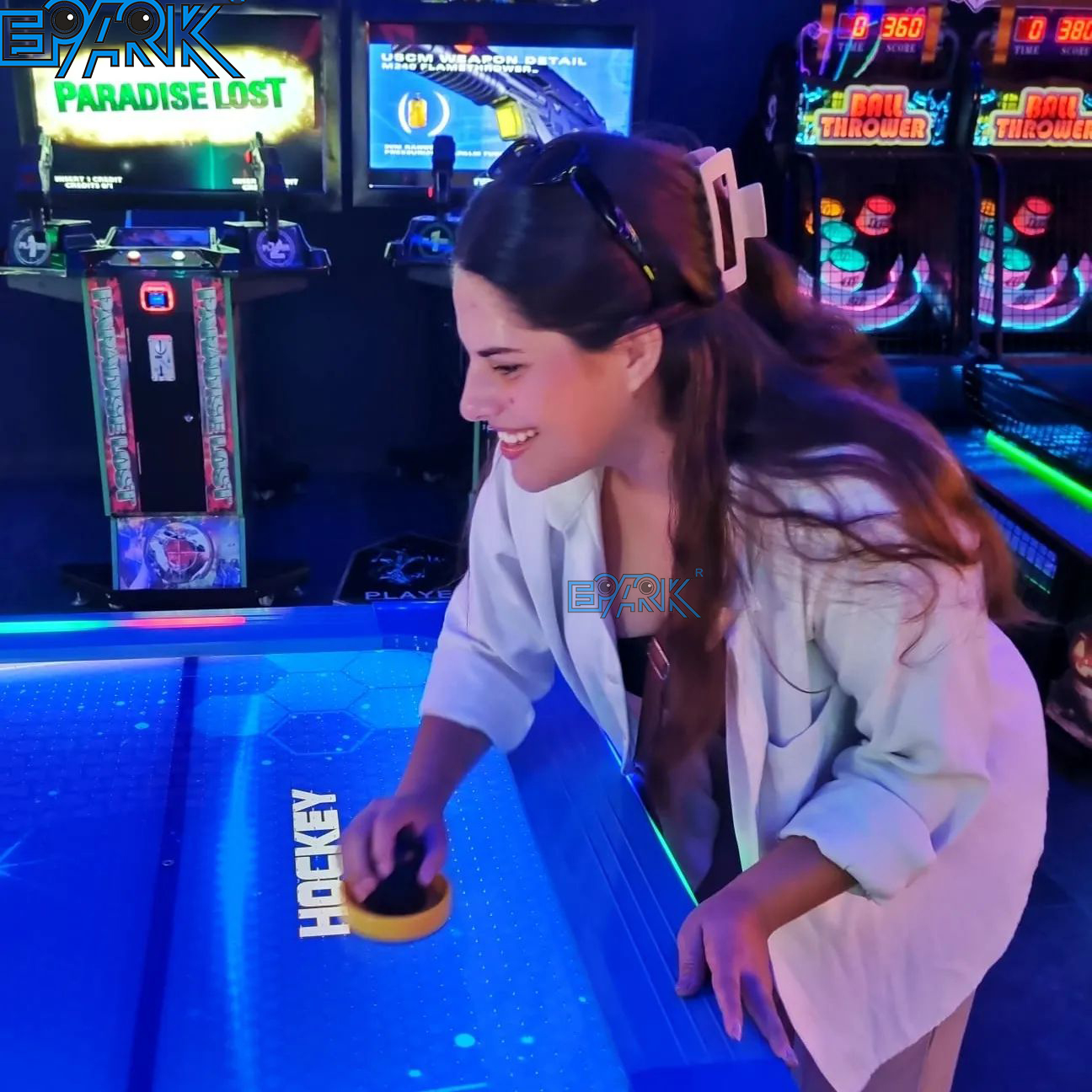
Arcade game center — claw machine first, VR as a premium anchor
The arcade game center scenario runs on high-traffic, long-hours, 24/7 operation with coin, token, or card systems, and sets high durability, easy maintenance, customizable branding, and CE certification as its requirements. Claw machines are named directly in the matched equipment list. A VR unit can still earn a place as a premium anchor, but in continuous operation the durability and service profile carries more weight.
Frequently Asked Questions
Are the EPARK claw machine and VR game machine compliant for public use?
Both the Claw Machine (EP-G001) and the VR Game Machine (EP-VR096) are CE certified and rated for 110V or 220V operation. Amusement machines placed in public venues are commonly assessed against standards such as IEC 60335-2-82, which specifically covers the safety of amusement machines and personal service machines for public use. Certification covers the supplier side of the equation; venue operators should still confirm the local requirements of the market where the machine will be installed before purchase.
Can either machine be adapted to my venue, my prizes, or my brand?
Yes on both sides, within the published specifications. Claw machine configuration options include adjustable claw strength, LED lighting and a transparent cabinet design, a prize display system, and coin, bill, card, or QR payment. VR game machine options include an HTC or Pico headset, a static, 2DOF, or 3DOF motion system, a 42–55 inch HD display, and 20–50 included VR games. EPARK provides free project solutions tailored to a venue’s space and business objectives, and its arcade game center documentation names customizable branding as a requirement for that environment. EPARK operates with a 20-engineer R&D team that supports this kind of configuration discussion.
What drives the budget difference between the two machines?
Two specification differences are the main drivers. First, power: the VR unit is rated 800–1500W against 120–200W for the claw machine, so electrical supply and running load are materially different. Second, components: the VR unit adds a VR headset, a motion platform, and a 42–55 inch display on top of its control system, while the claw machine is built around a cabinet, tempered glass, a claw, and controls — a simpler bill of materials. On payback, third-party arcade machine market research indicates that a well-placed commercial claw machine typically returns its investment within 12–24 months, depending on location foot traffic and operational efficiency. This guide does not apply a comparable payback figure to VR, because that depends on the venue’s own traffic assumptions. Current pricing for either model should be requested against your specific configuration and destination market.
Can we evaluate a machine before committing to a full order?
EPARK operates a showroom and factory in Panyu, Guangzhou spanning more than 25,000 m², where the product range can be reviewed in person, and it offers free project solutions built around a venue’s space and business objectives. Evaluation and sample arrangements for a specific model, configuration, and destination market should be confirmed directly with the supplier before an order is placed.
What happens after the machine ships, and how do I start the process?
EPARK provides one-stop service covering manufacturing through global delivery, supported by fast technical support and an after-sales team, with 80% of output exported to the EU, USA, Middle East, Africa, South America, and Southeast Asia. Lead times and shipping terms depend on the model, configuration, and destination, so they are confirmed at quotation stage. To start a venue-specific evaluation, send your venue type, floor plan, and target player profile to EPARK at sales@nanyuetech.com or through eparkgames.com and request a project solution and quotation.
Conclusion: The Decision Rule to Take Away
Both machines are CE certified, both run on 110V or 220V, and both are manufactured by the same company — so this is not a choice between quality tiers. It is a choice about fit. Choose the claw machine when your venue monetizes passing traffic, visible prizes, and repeat short attempts on a compact, 120–200W footprint. Choose the VR game machine when your venue monetizes destination play, immersion, and players who commit to a session on a larger, 800–1500W footprint. Operators running a multi-zone FEC will often end up with both, because the two units serve different zones of the same floor.
The fastest way to reduce risk on either decision is to test the assumptions against real numbers: foot traffic, dwell pattern, electrical capacity, and the equipment mix your venue type normally runs. EPARK manufactures both categories and can review a venue plan before anything is ordered.
Next step: match the machine to your floor
EPARK builds both the Claw Machine (EP-G001) and the VR Game Machine (EP-VR096), and provides free project solutions built around a venue’s space and business objectives.
Send your venue type, floor plan, and target player profile to sales@nanyuetech.com, message WhatsApp at +86 13903079263, or request a quotation at eparkgames.com.

EPARK (Guangzhou EPARK Electronic Technology Co., Ltd.) is based in Panyu, Guangzhou, China, and manufactures claw machines, VR simulators, and other indoor entertainment equipment for venues worldwide. Website: https://www.eparkgames.com.
Have Questions or Need More Details?
Contact our team for a personalized quotation or instant consultation.
Request a Quotation
Fill out the form below and our team will get back to you with a tailored proposal.
WhatsApp Direct Chat
Prefer to chat in real-time? Message us on WhatsApp for instant assistance & quick answers.
- Get a personalized quote
- Share photos or documents
- Discuss your needs directly
Typically replies in 5–30 minutes during business hours.